
Tech
Google froze its open source bug bounty program due to a ‘significant rise’ in AI submissions


Blaming a “significant rise” in AI submissions, Google has paused its open source bug bounty program until next year.
Last year, TechCrunch reported that cybersecurity experts were warning of that AI slop posed a serious risk to bug bounty programs. Looks like that’s the issue confronting Google’s Open Source Software Vulnerability Rewards Program, where researchers were rewarded for finding vulnerabilities in the company’s open source software.
In posts on X and the program website, Google said the bug bounty program was paused as of October 1, with a promise to provide “an update” in the first quarter of 2027. According to Tom’s Hardware, Google engineers and open source maintainers were overwhelmed by reports that were invalid or contained hallucinations.
“This pause is due to a significant rise in automated submissions, the vast majority of which are not valid,” the company said.
In the meantime, participants are encouraged to consider Google’s other bug bounty programs.
>

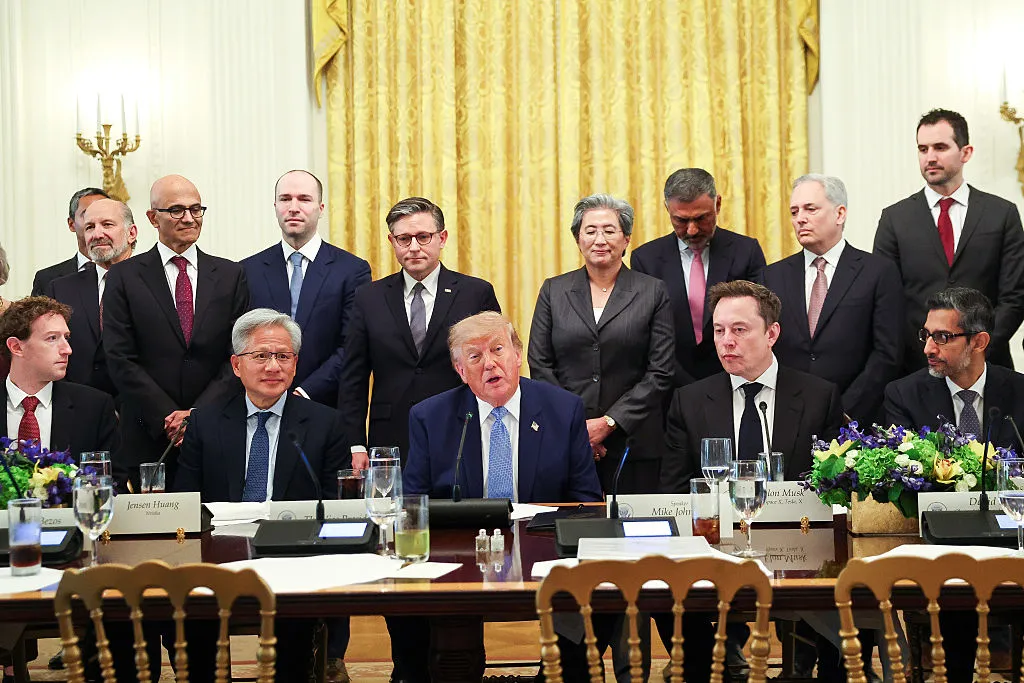
President Donald Trump hosted many of the biggest names in artificial intelligence this week — in part to announce that the U.S. government isn’t calling it artificial intelligence anymore. Now it’s super intelligence.
On the latest episode of TechCrunch’s Equity podcast, Kirsten Korosec, Sean O’Kane, and I discussed the motivation behind the meeting and what effect it might have on the AI industry. We were all pretty skeptical that the “Joint Commitment on Frontier Responsibilities” that the executives signed will amount to much, especially since — as Sean noted — it’s “deeply non-binding,” at least from a legal prospective. (Instead, Trump said he considers it “morally binding.”)
Kirsten suggested that the meeting’s real significance may have been as “a rebranding effort around AI.” (An effort that continued this weekend with Trump’s announcement of a new Super Intelligence Force.) For her, the big message was, “AI is going to kill us, it’s scary, it is going to take jobs — but super intelligence is not.”
Keep reading for a preview of our conversation, edited for length and clarity.
Anthony Ha: Officially, by order of the president of the United States, it’s not artificial intelligence anymore, it’s super intelligence. We were talking about this last week, because this is something [Trump has] been hinting at — he doesn’t do hints, he’s been saying [it] for a while. But now it’s signed into executive order. If you’re an official U.S. representative, you are supposed to say super intelligence, not artificial intelligence.
And this was also part of this broader announcement around AI safety, which I think is both interesting for this pact that was announced, but also the fact that it happened at all. It seemed to have come together fairly quickly, because just two weeks ago, a week ago, President Trump was saying, “We don’t need any of this, we need to lead in AI, we can’t constrain it in any way, we don’t need any regulation, anyone who’s saying that there’s any danger from AI is essentially a Chinese or Democratic plant.” And yet all these AI CEOs got together with him earlier this week and signed this pact.
Kirsten Korosec: Leading up to that, we should say, not only was there pushback on regulation, and we can talk about whether this executive order even does any of that — I would say no, there’s a little bit of theater there — but the important and interesting thing is that just days ago, Anthropic was really in the doghouse, if you will, in terms of what was happening behind the scenes with President Trump.
That all changed when [Anthropic CEO] Dario Amodei was invited to a 10 p.m. dinner. He had this sit-down, and then just days later, we had this luncheon, and at this luncheon, we have pretty much every tech power broker from every major tech company that exists. So Mark Zuckerberg was there, Jeff Bezos was there, Elon Musk was there, Dario of course was there, they were all there.
I’m wondering if any of you watched the press conference that happened afterwards, which there’s been many, many memes about, because of the interesting, funny behavior when you bring a bunch of tech CEOs together.
But I guess my bigger question for both of you is: What does this all mean? And does it mean anything?
Sean O’Kane: How much time do you have? First off, sure, they had dinner, Trump and Dario. If you read the Time magazine interview that Trump just did, your guess is as good as mine as to how informed he was that that dinner was even going to be happening, which is a strange reality to live in, but it’s just the one we inhabit.
I will also say one other thing that makes me skeptical — surprise, surprise — of how repaired the relationship is between the administration and Anthropic, is that for as much as there are clearly people trying to put those two groups together, the Defense Department is still very adamant that Anthropic is terrible and woke and and a national security risk. Emil Michael goes off on Anthropic every other day on X, it seems. I think there’s still some distance there despite Dario showing up to this thing.
As far as the agreement and all of that, let’s be real, they misspelled the United States on the agreement that they all signed. It is also just deeply non-binding. I mean, it is completely voluntary. I think my favorite aspect about it was that Trump described it as quote “morally binding,” which is just a level of abstraction and terminology that I’ve never heard of before.
Anthony: In terms of Anthropic and their relationship with the Trump administration, there’s been a sort of a lot of reporting, especially during that big blow up with the Defense Department, that different parts of the White House had different relationships with Anthropic. The Treasury Secretary seemed to be a big fan, whereas the Defense Department — definitely not big fans, or at least unhappy with some of the conditions that Anthropic were trying to put on the use of their technology.
In that sense, it feels like nothing has necessarily changed. There are people in the White House who want to use Anthropic’s technology, want them involved in these decisions, and others who really, really, really, really don’t.
In terms of the agreement, it seems not super meaningful. What is meaningful is just the fact that they felt that this was something worth doing. As indicated by the fact that they misspelled United States, it seemed like they rushed to put all of this together. [But] the fact that this kind of gesture was needed seems significant, even if I don’t think the agreement itself is going to lead to any major changes.
Kirsten: I do think that there was one important thing that happened. And to me, this is the point of it, which was a rebranding exercise around AI. “AI is going to kill us, it’s scary, it is going to take jobs, but super intelligence is not.” This isn’t my personal belief. To me, that was the message.
When you purchase through links in our articles, we may earn a small commission. This doesn’t affect our editorial independence.
>
Welcome back to TechCrunch Mobility, your hub for the future of transportation and now, more than ever, the role AI is playing in it. To get this in your inbox, sign up here for free — just click TechCrunch Mobility!
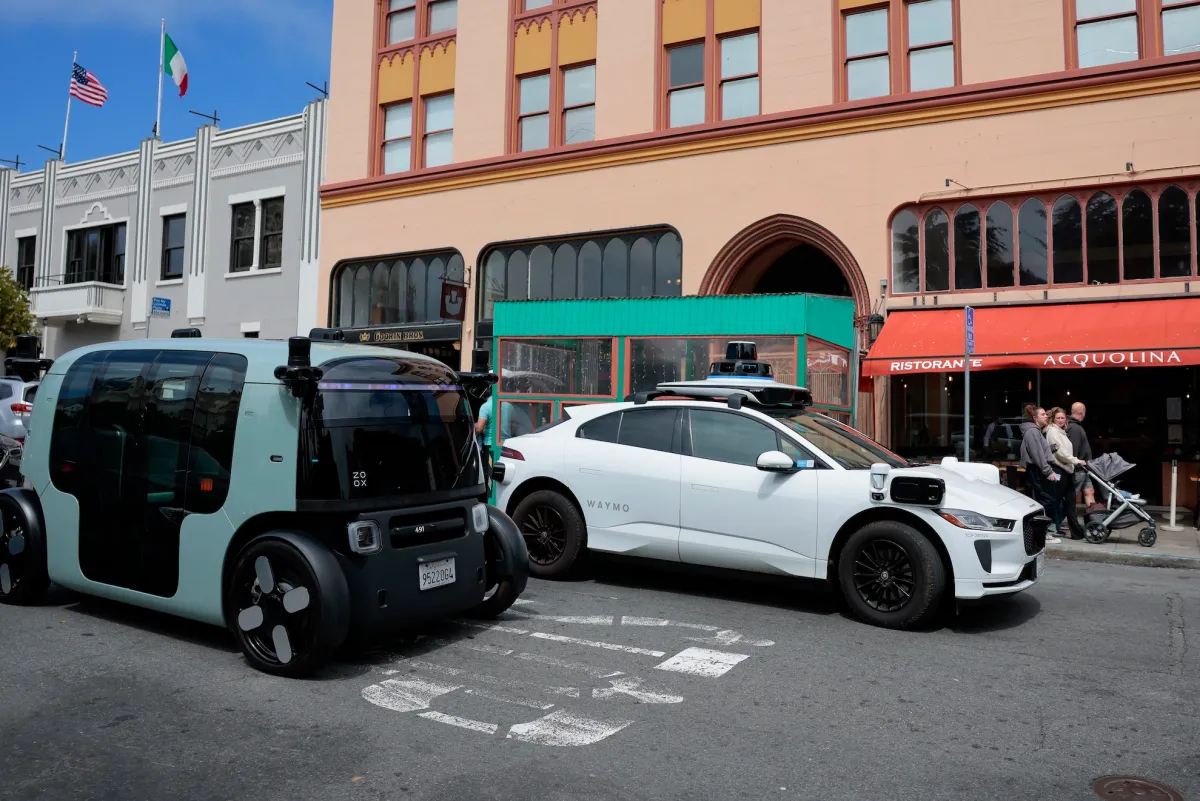
On an average day in San Francisco, you might see dozens (hundreds?) of Waymo robotaxis zipping around the city — and with little disruption. But, as TechCrunch has reported, there have been numerous incidents of robotaxis impeding traffic, driving into crime scenes, and interfering with first responders. And not just in the Bay Area. In some cases, companies have relied on first responders to move their robotaxis.
These disruptions are occurring in the early stages of the robotaxi era. California has a new law hoping to get ahead of the problem before the next impending wave of robotaxis land.
Senate Bill 1246, which was signed into law by Governor Gavin Newsom this week, sets a series of new rules for AVs designed to improve safety and response times when they become disabled or interfere with emergency responders. The law also creates ways to hold these companies accountable if they don’t.
Autonomous vehicle technology companies like Tesla, Waymo, and Zoox will have to provide first responders with local, on-the-ground support when their robotaxis cause problems and could also face penalties if a robotaxi blocks police or firefighters for more than 30 minutes.
The law also says AV developers can only employ remote drivers who are based in the United States and those drivers must hold a U.S. driver’s license. They must also notify cities, towns, and other local jurisdictions about the location and status of vehicles during system-wide failures and must provide “local incident technicians” who can assist with AV accidents and obstructions.
There are still some details to hammer out, which the Department of Motor Vehicles will handle since it’s the main regulator of autonomous vehicles in the state. But when this law goes into effect in July 2028, will it actually keep robotaxis out of the way of emergency responders?
It likely won’t, but hopefully this law reduces the chaos and raises the accountability when something does happen.
Perhaps the better question is will other states follow California’s lead or wait for the federal government to weigh in?
Deals!

Harbinger, the EV startup, landed a $300 million deal to supply FedEx with 2,000 of its electric trucks.
HyperGuest, an Israeli travel tech startup, raised $25 million from AMI, the investment arm of Apax Partners.
REGENT Craft, the developer and manufacturer of the all-electric Seaglider, extended its collaboration with the U.S. Marine Corps Warfighting Lab, pushing the total value of the contract to $19.25 million.
Quartermaster, an Arlington, Virginia-based maritime intelligence startup, raised $140 million in a Series B round. About $100 million came from Insight Partners, defense-focused firm Overmatch Ventures, and First Round Capital. The remaining $40 million came in the form of a debt facility from investment bank Stifel.
Voltaback, a French fleet management software startup, raised €2.8 million from European investment fund Serena.
Notable reads and other tidbits

When Aurora announced it would have 30,000 autonomous trucks on the road by the end of 2030, I admit that I raised at least one of my eyebrows. I interviewed CFO David Maday to find out exactly how the company plans to accomplish this and why he’s confident it will succeed.
BMW unveiled its new 2027 3 Series and it’s offering essentially the same car for gas and electric. Guess which one is cheaper?
DoorDash shared more about its new drone delivery business DoorDash Air, including the autonomous aircraft and its ground-based systems approach.
Kodiak has landed Ikea as a customer and will begin driverless deliveries on public highways later this year. The trucks will haul Ikea products without anyone in the cab on a 219-mile stretch of Interstate 45 between Houston and Dallas, according to the company.
Lyft agreed to pay $272.5 million to settle a lawsuit accusing the ride-hailing company of violating California law by misclassifying drivers as independent contractors, instead of employees. The settlement wraps up violations that occurred before Prop 22 was approved by voters, which allows companies like Uber and Lyft to classify drivers as contractors.
Northeastern University tested 21 late-model vehicles from 17 automakers and 30 companion mobile apps. The upshot: cars are collecting a trove of personal data and sharing it with a lot of tech companies, including Adobe, Contentsquare, Google, Microsoft, Meta, Snap, and Yahoo.
SpaceX’s Starship rocket reached Earth orbit for the first time, though not without some drama along the way.
Rivian reported a record-setting quarter of sales thanks to the new R2 SUV. And it’s still forecasting between 65,000 and 70,000 vehicles this year. But it is experiencing a few hiccups with its newest EV. The company issued a recall for its R2 SUV over fasteners on its high-voltage battery pack that might not be properly tightened, which can cause a loss of power while driving.
We’ll finish this roundup with a few notable Tesla news item. The company sold more than 480,000 EVs in the third quarter, the second strong quarter in a row for the company after a softer start to the year. The company has delayed its Roadster 2 event again due to bad weather.
And while Tesla’s traditional automotive business may be clicking along, it really wants to be considered an AI and robotics company. One year ago, Elon Musk laid out his fourth Master Plan, which he claims will deliver “amazing abundance” through robotaxis, robots, and AI. As Sean O’Kane noted in his recent piece, “What that means, more than a year later, is still tricky to pin down.”
It did just pin down more money to try. The company secured $30 billion in fresh credit lines that could be used to scale its future products, including the Optimus robot and the Cybercab robotaxi.
One more thing …
The countdown begins! Disrupt 2026, TechCrunch’s annual tech conference in San Francisco, is just days away. I mentioned this last week and I am here to share this again. I’m offering you a 30% discount on tickets to Disrupt with code mobility30.
Why go? Well, I am interviewing Rivian CEO RJ Scaringe onstage October 13. I will also interview Mikell Taylor, director of robotics strategy at GM; Shield AI CTO Nathan Michael; and Waabi founder and CEO Raquel Urtasun on a panel entitled “Building AI Systems When Failure Is Not an Option.” Sean O’Kane will interview Also CEO Chris Yu; Yuri Sagalov, managing director at General Catalyst; and Shan Shan, investment manager at Baillie Gifford in “How to Win When You’re Not Building AI.” Plus, hear from execs and engineers from Cerebras, Nvidia, OpenAI, and Replit to name a few. Check out the full agenda here.
Speaking of Disrupt, here is a profile of MyMonthly Car, one of the Startup Battlefield 200 participants that earned a spot to exhibit at the event.
When you purchase through links in our articles, we may earn a small commission. This doesn’t affect our editorial independence.
>
As promised, President Donald Trump has announced the formation of a new Super Intelligence Force, which he said will be led by national intelligence director Jay Clayton and other members of his administration.
“The Super Intelligence Force is tasked with coordinating the effort of the Federal Government to ensure that America continues to lead the World in Super Intelligence, which many say is bigger than the Industrial Revolution, and the Internet, and will protect the interests, and improve the lives, of all Americans,” Trump said in a Sunday morning post on his social network Truth Social.
Back in September, in response to an AI safety debate that the president has largely dismissed as a hoax created by “Radical Left Dumocrats,” Trump said he would nevertheless form an AI Force and appoint an AI czar (“Only High I.Q. individuals need apply!”).
Since then, Trump signed an executive order seeking to rebrand AI as “super intelligence,” a term seemingly embraced, with some stumbles, by the tech executives who gathered at the White House this week to sign a non-binding safety pledge. (The pledge included an impressive typo.)
So it’s only natural that Trump’s new task force is named in accordance with this new branding. The Wall Street Journal reports that Clayton will chair the Super Intelligence Force, effectively making him the new AI/SI czar, with Federal Trade Commission Chair Andrew Ferguson, Undersecretary of War for Research and Engineering Emil Michael, and Office of Personnel Management Director Scott Kupor serving as vice chairs.
The task force will have reportedly 120 days to create a report on the risks and opportunities presented by AI. Clayton, who previously said that it would be irresponsible for the United States to “back away” from AI while countries like China advance, made similar comments to the WSJ, insisting that one of the biggest risks is “not being first.”
The task force’s charter reportedly says that it will “develop plans for responding to SI-enabled threats to our society, while preventing overregulation and regulatory capture that would stifle innovation and competition.”
When you purchase through links in our articles, we may earn a small commission. This doesn’t affect our editorial independence.
>
Packers’ Edgerrin Cooper expected to miss rest of season with Achilles injury, Matt LaFleur says

Man City fight back to beat struggling Arsenal

World Grand Prix Darts 2026 results: Luke Humphries beats Gerwyn Price
-

 movies5 months ago
Search For Canadian TV Actor Stewart McLean Now Homicide Investigation
-

 Fashion9 years ago
These ’90s fashion trends are making a comeback in 2017
-
Fashion9 years ago
According to Dior Couture, this taboo fashion accessory is back
-
Fashion9 years ago
Model Jocelyn Chew’s Instagram is the best vacation you’ve ever had
-
Fashion9 years ago
Emily Ratajkowski channels back-to-school style
-
Fashion9 years ago
9 Celebrities who have spoken out about being photoshopped
-

 Anime4 months ago
Rurouni Kenshin: Hokkaido Arc Manga Takes 1-Issue Break – News
-

 Anime3 months ago
HIDIVE to Stream English Dubs for The World Is Dancing, The Forsaken Saintess and Her Foodie Roadtrip in Another World, The Dangers in My Heart: The Movie Anime – News