
movies
CAA Taps NFL, Sony Music And Time Inc. Vet Dasha Smith As Chief Operating Officer


CAA has hired former NFL, Sony Music and Time Inc. executive Dasha Smith as Chief Operating Officer.
In her most recent post as EVP and Chief Administrative Officer at the NFL, Smith was a member of Commissioner Roger Goodell’s Executive Operating Committee. She helped shape the league’s enterprise strategy and oversaw a broad portfolio of business functions, including technology, AI and innovation, data and analytics, strategy and business intelligence, human resources, inclusion, social responsibility and philanthropy, and league office administration.
At Sony Music, Smith was EVP, Global Chief Human Resources Officer for Sony Music Entertainment, and Managing Director, Office of the Chairman, at GCM Grosvenor, a global alternative investment firm, where she led a number of corporate functions.
During her nearly 10-year stint at Time Inc., Smith led global employee relations and employment law functions. She also served as a senior attorney in the Time Warner publishing division’s business and legal affairs department, focusing on M&A.
Smith began her legal career at Latham & Watkins, Covington & Burling, and Paul, Weiss, Rifkind, Wharton & Garrison.
“Dasha is a remarkably talented, accomplished and energetic leader with a deep understanding of how global organizations operate at their very best,” CAA Co-Chairman and CEO Bryan Lourd said in a statement. “We look forward to welcoming her to our senior management team and benefiting from her significant experience helping to guide leading media and sports organizations.”
A board member at financial advisory firm CAPTRUST and investment management firm Cohen & Steers, Smith also serves as a trustee for nonprofit organizations focused on education and the arts.
“I have tremendous respect for the industry leadership position that CAA and its management team continue to build on every year,” she said in a statement. “Even greater is my appreciation for its widely admired, consistent mission to deliver the best possible service and resources to its clients. Joining a culture with that kind of clarity and purpose is an extraordinary opportunity.”
>
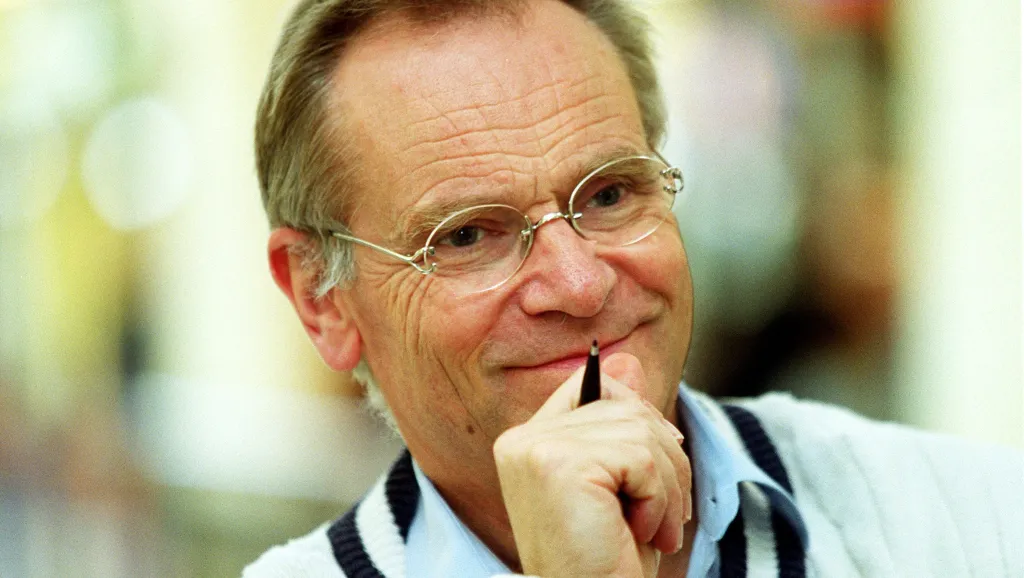
Jeffrey Archer, the prolific British author and former politician, has died at the age of 86.
Archer’s publisher HarperCollins confirmed his death in a statement, revealing that the Kane & Abel writer died “suddenly and peacefully at home” on Monday. A cause of death was not disclosed.
Archer, a former Conservative member of parliament, sold more than 300 million books during a writing career that spanned five decades.
HarperCollins claims that Lord Archer is the only author ever to have been a #1 bestseller in fiction, short stories, and non-fiction
Archer’s work was adapted for the screen on many occasions, including the 1985 CBS miniseries based on Kane & Abel, which starred Peter Strauss as Abel Rosnovski and Sam Neill as William Lowell Kane.
ITV adapted First Among Equals in 1986, starring Jeremy Child, James Faulkner, David Robb, Tom Wilkinson, while Not a Penny More, Not a Penny Less was adapted by the BBC in 1990.
His political career, which included a spell as the Conservative Party’s deputy chairman, was interrupted by a four-year spell in prison in 2001 after he was found guilty of lying and cheating in a 1987 libel case against The Daily Star newspaper.
More follows
>

As Alejandro G. Iñárritu’s Digger entered a box-office death spiral, two familiar defenders appeared.
Guillermo del Toro blasted as “entirely petty” an IGN post suggesting moviegoers save their money and wait to stream the Tom Cruise vehicle, whose budget has been estimated as high as $180 million, praising Digger instead for its ambition and theatrical scale.
Alfonso Cuarón, meabnwhile, posted a series of old critical pans of a number of films whose regard grew exponentially, Blade Runner, 2001: A Space Odyssey, Metropolis and The Shining among them.
It looked like two members of the Mexican filmmaking triumvirate long ago christened “the Three Amigos” circling the wagons around the third. In fact, they have been doing some version of this for nearly three decades.
Long before the Oscars and nine-figure budgets, Cuarón, del Toro and Iñárritu became each other’s private critics, advisers and occasional unofficial editors, quietly shaping films from Amores Perros and Y Tu Mamá También to Gravity, Birdman and Crimson Peak.
Cuarón and del Toro met in Mexico’s film and television world in the late 1980s, most famously around Televisa’s Twilight Zone-like anthology La Hora Marcada, whose orbit also included future three-time Oscar-winning cinematographer Emmanuel “Chivo” Lubezki.
Iñárritu came from a different world. He made his name in Mexico City radio before moving into advertising and directing. He met Cuarón in the mid-1990s, when Cuarón was already working in Hollywood, and has described him as an early mentor.
The trio really took shape around Amores Perros. Cuarón encouraged Iñárritu to show his 2000 debut to del Toro, who according to a 2006 Los Angeles Times profile watched it, called Iñárritu early in the morning and told him two things: He had made a masterpiece, and it was too long. Soon del Toro was in Mexico City arguing with Iñárritu over the edit.
It established a pattern. Over the years, the three became trusted sounding boards on one another’s films. For a time they even formalized the relationship, creating Cha Cha Cha Films in 2007 and striking a production deal with Universal.
By then, the friends were becoming Hollywood powers, producing a series of films both intensely personal and enormously profitable. Birdman, made for roughly $18 million, grossed more than $100 million worldwide. Del Toro’s roughly $20 million The Shape of Water approached $200 million.
Their budgets rose, and the bets paid off. Cuarón’s $100 million-plus Gravity grossed roughly $700 million, while Iñárritu’s notoriously difficult $135 million The Revenant made more than $530 million.
Hollywood rewarded them accordingly. Beginning with Cuarón’s win for Gravity in 2014, the Three Amigos won the directing Oscar an astounding five times in six years: Cuarón twice, Iñárritu twice and del Toro once.
Three friends from Mexico had come close to monopolizing Hollywood’s highest directing honor.
Now there is Digger.
It is Iñárritu’s first Hollywood studio film since The Revenant. He returned to Mexico in between for 2022’s intensely personal, Spanish-language Bardo — a Netflix release that was similarly divisive — but has said the idea for Digger came in the aftermath of The Revenant and took a full ten years to bring to the screen.
He began writing it with Mexican playwright and screenwriter Sabina Berman in 2017 and approached Cruise years before cameras finally rolled. With Cruise, the decade-in-the-making project finally got its green light, along with its massive budget. It was Iñárritu’s biggest Hollywood swing since The Revenant. This time, the gamble didn’t pay off.
What Digger means for Iñárritu, or for the extraordinary run of Hollywood success enjoyed by the Three Amigos, remains to be seen. But its failure comes just a year after Bong Joon Ho’s similarly ambitious Mickey 17, another $100 million-plus Warner Bros. bet on an Oscar-winning international auteur, struggled at the box office.
Arriving as the far safer Paramount subsumes Warner Bros., it may be a very long time before Hollywood places another nine-figure wager of this kind.
For nearly 30 years, Cuarón and del Toro have been among the few people willing to tell Iñárritu when they think he’s gotten something wrong. With Digger, they became two of the loudest voices insisting everyone else had.
>
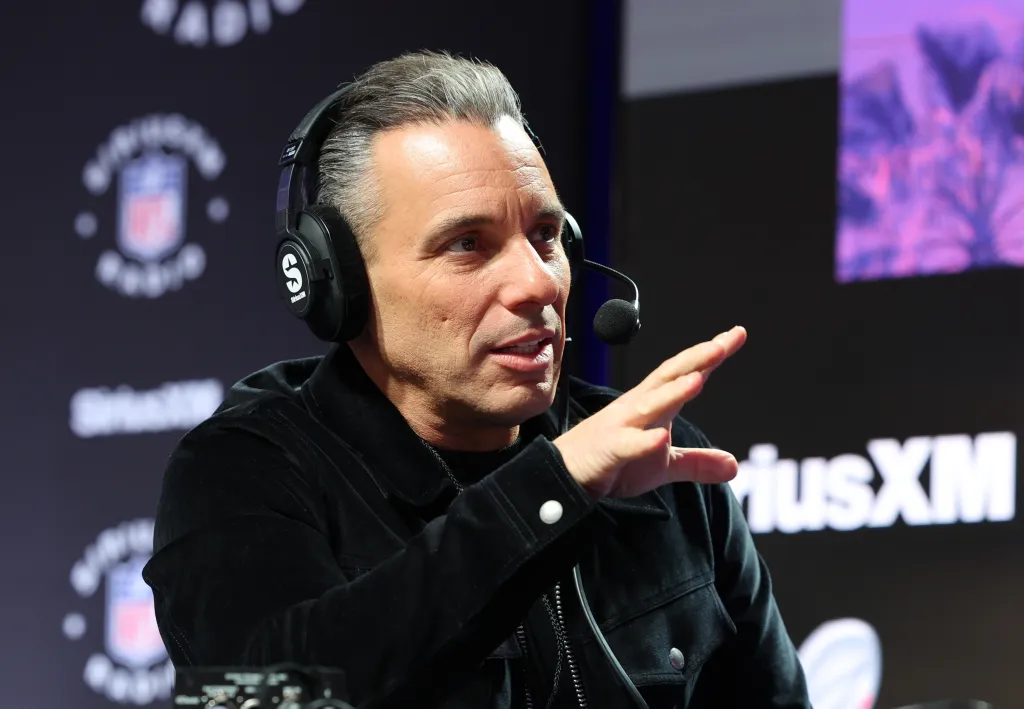
Sebastian Maniscalco isn’t generally viewed as a particularly controversial comic — but he’s found himself in the hot seat this week, scrutinized over a recent SiriusXM changeover in which he’s prominently involved.
Earlier this year, as we first reported, SiriusXM replaced its long-running Raw Comedy channel (Channel 99) with Sebastian Maniscalco’s Comedy Radio, a 24/7 branded channel centered on Maniscalco and his show with Pete Correale. The announcement wasn’t an immediate lightning rod. But now, an online dialogue surrounding it is gaining steam.
As laid out in a piece by nonprofit Stand Up for Stand Up, the change has been harmful to working-class comics who depended on Raw Dog airplay and the royalties that come with it. What’s happened, they’ve shown, is that over 75% of total plays have become concentrated among the industry’s upper echelon of comics — living and dead — severely impacting passive residual income going to comics at lower levels.
Maniscalco’s new channel “is crushing middle class comedians who rely on payments from the company to pad income,” wrote comedian Matt Ruby in a Monday installment of his Substack Funny How: Letters to a Young Comedian. “Now some are fighting back. (Thanks to them!)”
Ruby linked to social posts from comics including Liz Miele and Greg Stone, who lay out the issue in full.
“This year, the Raw channel on SiriusXM became Sebastian Maniscalco’s channel. Great. Fine. Celebrities have taken over channels before. Never been an issue,” Miele says in a video posted to Instagram (view it here.)
“The problem is,” Miele explains, “Raw went from playing 800 working class comedians to now playing less than 300 celebrity comedians like Joan Rivers, Johnny Carson, Bob Hope, Norm Macdonald. Just dead comic, dead comic, dead comic, and then a plethora of very famous alive comedians that might not even know about this extra income that they’re about to receive.”
In contrast, Miele said, “every workin- class comedian that has been kicked off the channel is quite aware” of the change, “and it is devastating. Because of this action, hundreds of comedians will no longer be able to have these royalties. Working class comedians, people that only make money on the road, that have no safety net, that depend on this money to just survive, are going from having that money to nothing.”
Previously, Miele said, Maniscalco was perhaps unaware of the impact that his SiriusXM rebrand is having on the broader comedy community. “But now you know, and you can help us. You can fix this. We would love to be reincorporated into the channel and start getting the streams and plays that we were getting before you took it over.”
Deadline has reached out to reps for SiriusXM and Maniscalco for comment; we’ll update the story if and when statements come in.
>

Megyn Kelly Slams ‘Immoral’ Lack of Due Process in Cornell Rape Case
Is Nebraska's next QB a Manhunter? How Matt Rhule wound up on HBO's "Lanterns"

Jeffrey Archer Dead: ‘Kane & Abel’ Author & Politician Was 86
-

 movies5 months ago
Search For Canadian TV Actor Stewart McLean Now Homicide Investigation
-

 Fashion9 years ago
These ’90s fashion trends are making a comeback in 2017
-
Fashion9 years ago
According to Dior Couture, this taboo fashion accessory is back
-
Fashion9 years ago
Model Jocelyn Chew’s Instagram is the best vacation you’ve ever had
-
Fashion9 years ago
Emily Ratajkowski channels back-to-school style
-
Fashion9 years ago
9 Celebrities who have spoken out about being photoshopped
-

 Anime4 months ago
Rurouni Kenshin: Hokkaido Arc Manga Takes 1-Issue Break – News
-

 Anime3 months ago
HIDIVE to Stream English Dubs for The World Is Dancing, The Forsaken Saintess and Her Foodie Roadtrip in Another World, The Dangers in My Heart: The Movie Anime – News