
Tech
Facebook tests going Reels-first in India


Meta has started testing a new Facebook UX in India that sends some users directly into full-screen video when they open the app, putting Reels front and center.
First outlined in July by Facebook head Tom Alison, the test is designed to offer a more immersive, video-forward user experience. Alison said at the time that Meta planned to begin testing it later in the year in “video-heavy countries” outside the U.S., though he didn’t specify where. The company would explore bringing the user experience to the U.S. next year, he said.
Users included in the test can opt out and return to a Feed-first experience, Meta said. The classic feed will remain available as a second tab on the Facebook app.
The test comes as Meta’s moves to make video more central to Facebook. Last year, the company said all new videos posted to Facebook would be shared as Reels, regardless of their length or format, and it even renamed the app’s Video tab to “Reels”. Meta has previously said young adults spend about 60% of their time on Facebook watching videos.
India has long been a testing ground for Meta’s video efforts, particularly its push into short-form video. In 2020, Instagram began testing a dedicated Reels tab in the country, months after India banned TikTok. The company also tested a Reels-first experience for some Instagram users in India and South Korea last year that similarly sent them directly into the video UX when they opened the app.
The new test comes as video consumption rises across Meta’s apps in India. At least 97% of users surveyed in Meta-commissioned studies said they watch video on its platforms daily, and 89% of Gen Z respondents said they use Reels every day, per the figures the company released in June. Meta has described Reels as increasingly becoming India’s “personal and primary screen.”
India is Facebook’s largest market by users, with Meta’s advertising tools indicating an audience of more than 400 million people in the country.
When you purchase through links in our articles, we may earn a small commission. This doesn’t affect our editorial independence.
>

Recalls are no joke. Take the one that sidelined every Chevy Bolt made between 2017 and 2022: A problem at an LG battery factory caused some parts inside the cells to be installed improperly, which ultimately cost LG $1.9 billion.
Pretty much every major manufacturer has to deal with recalls. In the EV space alone, Volkswagen, Stellantis, Hyundai, Toyota and others have all suffered through them.
“The majority of those major quality issues could have been caught with CT scanning. And the reason why they weren’t is because it’s way too slow to do any kind of statistical sampling,” Eric Moch, co-founder and CEO of Glimpse, told TechCrunch.
To help companies find more defects, Glimpse has developed a way for battery manufacturers to inspect cells 10 to 30 times faster by significantly boosting throughput on their existing CT scanners. Using Glimpse’s software, manufacturers could scan tens of thousands of cells per day, up from the current handful, Moch said. A customer “super scanner” that Glimpse is developing with partners could complete a scan in a second or two, he added.
Batteries aren’t the only parts to suffer from costly defects, of course, so Glimpse is launching a new product, the company exclusively told TechCrunch. Called Explore, the product will let customers in industries such as aerospace, automotive, electronics and medical devices use the startup’s image processing software to speed up quality control checks using CT scanners in their labs and development environments.
Glimpse currently has over 100 customers such as Anker, Lucid and the U.S. Navy, and currently generates revenue in the “mid seven-figure” range, Moch said. Customers include both buyers and sellers of batteries.
To wring more speed out of traditionally slow CT scanners, the startup has written its own image processing pipeline, which compresses scans and cleans them up. It’s built around deep learning algorithms, and much of the initial processing happens on edge computers deployed at a customer’s site. “It does all of the heavy lifting before sending the output to the cloud,” Moch said.
Altogether, the combination of quality improvements and compression make for clear images that load within seconds in a web browser, the company claims. “You don’t have to wait minutes or even sometimes hours for that data to load,” he said.
Alongside scanned images, Glimpse’s dashboard will also show customers part measurements they specify. In the case of batteries, it might measure the distance between layers in a battery cell. If they start deviating from the norm, Glimpse’s software will flag it and highlight it in the scanned images. “They can see with their own eyes the defects that they care about,” Moch said. The deep learning algorithms also take into account customer input, retraining themselves along the way.
Customers who don’t have their own CT scanners can ship parts to Glimpse, which will use its own CT scanner in the Boston area. The company said it is opening a second Scan On Demand center in the San Francisco Bay Area.
“We expect this scanning service to actually be a bigger market. You can spend a couple hundred bucks or a few thousand dollars on Glimpse, and you don’t have to buy a very expensive piece of equipment,” Moch said. “And one day, when it makes sense for you, you buy the scanner and then you run our software on top of it.”
When you purchase through links in our articles, we may earn a small commission. This doesn’t affect our editorial independence.
>
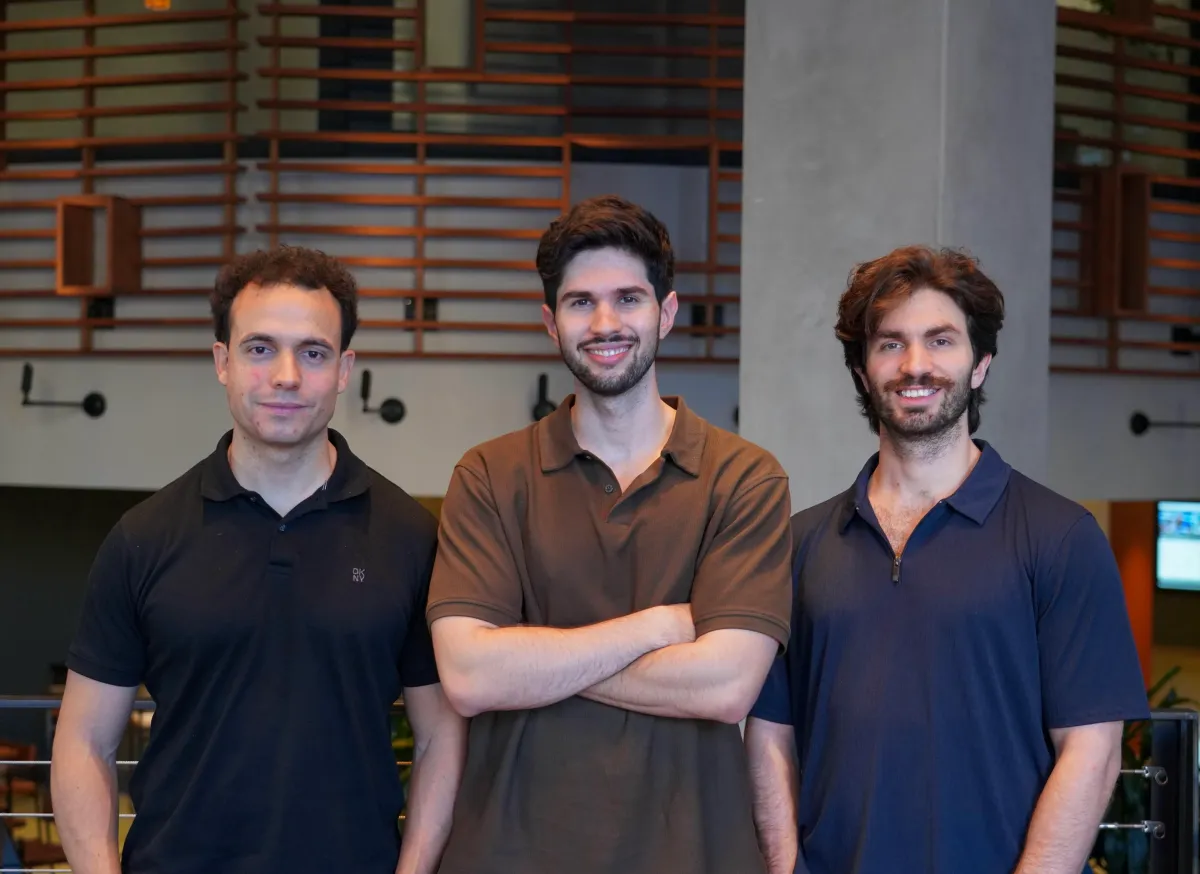
When Flai was raising its seed round last year, it was just a team of three people pounding the pavement to get car dealerships to use the startup’s software to manage phone calls, emails, and texts. But CEO Ari Polakof was already looking to a more agentic future, where Flai’s AI would handle far more.
One year later, that future has arrived. The startup is working with more than 10 of the top 50 dealer groups in the country, and its AI is being used to answer and engage with customers, run outbound campaigns, and schedule appointments — 50,000 per month — across both sales and service. This has led to a 20x increase in revenue, Polakof told TechCrunch in an exclusive interview.
Flai says this deep integration is helping the startup set itself apart from others trying to get car dealers hooked on AI. The growth is attracting investors, too. On Tuesday, Flai said it had raised a $27 million Series A funding round led by automation-focused firm Base10 Partners. The round included funding from dealers (Friedkin Group and Findlay Automotive), Toyota’s venture arm, Y Combinator, and First Round Capital.
Polakof said Flai’s growth is coming from customers who see the bigger vision of what is essentially an AI-powered customer relationship management software built from the ground up and tailored to the specific need of each dealer.
“Sure, we do answer the phone calls, but we’re following up with customers, we’re alerting the leadership whenever they need to take a look at something, maybe because the customer’s mad, or because you forgot to respond, or promised them something next week,” Polakof said. “We’ve grown quite a bit from just a phone solution to more of a platform. There are plenty of AI companies coming in, but I think that really speaks about the opportunity.”
Flai claims its software is also flexible. Earlier this year it launched with a luxury dealer in Puerto Rico where customers “switch between Spanish and English mid-conversation,” Flai co-founder Juan Alzugaray wrote in a LinkedIn post. “We started where we always do: inbound service calls. It went well enough that they added sales. And now the group is rolling Flai out across all 8 of their stores,” he wrote.
The result of all this is that dealerships are selling more cars, making more money, and “customers are getting answers faster,” according to one of the groups Flai works with.
Perhaps unsurprisingly, Polakof said much of Flai’s customer growth has come from the dealers talking up the product to their peers.
“If you really do great by them, they also do great by you, and they recommend you, and talk about you,” he said. This has led to Flai generating half of its revenue from new customers, according to Polakof.
Customers are making these referrals because they like Flai’s software, Polakof said, but also because they get up and running quickly. Flai’s software can be live in a dealership 10 days after a contract is signed, and he tells his team — which is now up to around 40 people — that they need to respond to customers within 20 minutes “at most.”
“The common experience, especially around automotive [software] vendors, is — and many are almost traumatized by this — is that they sign the contract and then the company disappears,” he said “I’m fully focused on making sure that we treat every customer as if they’re our only customer, especially because I know how hard it was to get the first one.”
That speed and customer experience, combined with the knowledge Flai has developed on how dealerships work and what they need, is what Polakof said protects the startup from products like Muse, which Meta has pitched as a one-shot solution for small businesses.
“You get a group of really smart people, and you spend all your days, all your time thinking very deeply about this one space — it’s just so hard to envision that any other platform outside of the space can come in and start going after your customers,” he said.
For all this momentum, there is still one customer Polakof hasn’t been able to land: his own local dealership.
“I’m actually trying much harder than I should to make them a customer,” he laughed. “I’m sure we will get them by next year.”
When you purchase through links in our articles, we may earn a small commission. This doesn’t affect our editorial independence.
>

Type One Energy, a Knoxville, Tennessee-based startup founded in 2019 to build fusion power plants, announced Tuesday morning that it has raised $200 million from investors.
The funding helps the startup move up the ranks of the top-funded fusion power companies. But fusion is a costly field to work in. It sits at the cutting edge of plasma physics, materials science, and advanced computation, and even $200 million doesn’t always go far.
Even so the new Series B should get the company halfway to paying for a 400-megawatt commercial power plant, Type One CEO Christofer Mowry told TechCrunch. If Type One can bring it online by 2034, he added, the company could complete its first power plant using less capital than many of its competitors, even with one or more subsequent rounds of funding.
The secret, Mowry said, is Type One’s business model. The company will design the power plant and many of its components, then turn to “bespoke” network of suppliers chosen for the project to build them, he said. Most fusion startups rely on suppliers for some components, but Type One plans to go further.
That approach keeps costs down. “The amount of capital that we need to raise to commercialize fusion at Type One is just a different order of magnitude than if you were going to be vertically integrated,” Mowry said, referring to companies that make most of their own parts in-house.
“Why would I want to spend on bricks and mortar?” he added. “I used to run a big nuclear manufacturing company. That’s expensive.”
The fusion startup has already started assembling a roster of partners. Type One will build its first two fusion devices on the Tennessee Valley Authority’s Bull Run site, and infrastructure consultant AECOM is working on engineering for Infinity Two, the initial commercial power plant. Competitor Commonwealth Fusion Systems has licensed its high-temperature superconducting magnet technology to Type One, and the technology will help form the backbone of Type One’s reactor design.
By relying on outside suppliers, Type One becomes what’s known as an integrator, a company that assembles a product from parts made by others. That minimizes its own risk from activities like manufacturing, but it introduces a different kind of risk.
The upside is access to partners that may have more expertise in certain areas, like AECOM, the infrastructure consultant working on Infinity Two. “They have 10,000 people, most of them are engineers of one kind. We’re never going to have 10,000 people,” Mowry said.
The downside is that integrators have less control over their suppliers than an in-house team does. The most famous recent example might be Boeing, which relied on Spirit AeroSystems to supply fuselage sections for the 737 and 787 airliners. After a series of quality-control failures, including a door plug blowing out on an Alaska Airlines flight in 2024, Boeing bought Spirit, bringing it in-house to improve standards.
Type One is betting that it can manage the integration risk, and that it will be lower than the risk of doing everything in house. “These business models are successful because they let companies focus on managing risk and developing a high level of competency in their slice of the value chain,” Mowry said.
The round was led by repeat investor Breakthrough Energy Ventures and Clutterbuck Capital, with participation from Lowercarbon Capital, Siemens Energy Ventures, and SiteGround Capital. The company had previously raised at least $82.5 million.
When you purchase through links in our articles, we may earn a small commission. This doesn’t affect our editorial independence.
>

China Open: Novak Djokovic claims 102nd career title, Carlos Alcaraz wins Japan trophy

Krystian Bielik: Cardiff City defender banned over Portsmouth incident

It’s Official: Paramount and Warner Bros. Discovery Are Merged
-

 movies5 months ago
Search For Canadian TV Actor Stewart McLean Now Homicide Investigation
-

 Fashion9 years ago
These ’90s fashion trends are making a comeback in 2017
-
Fashion9 years ago
According to Dior Couture, this taboo fashion accessory is back
-
Fashion9 years ago
Model Jocelyn Chew’s Instagram is the best vacation you’ve ever had
-
Fashion9 years ago
Emily Ratajkowski channels back-to-school style
-
Fashion9 years ago
9 Celebrities who have spoken out about being photoshopped
-

 Anime4 months ago
Rurouni Kenshin: Hokkaido Arc Manga Takes 1-Issue Break – News
-

 Anime3 months ago
HIDIVE to Stream English Dubs for The World Is Dancing, The Forsaken Saintess and Her Foodie Roadtrip in Another World, The Dangers in My Heart: The Movie Anime – News