Tech
Flai’s AI dealership software is booking 50,000 appointments per month
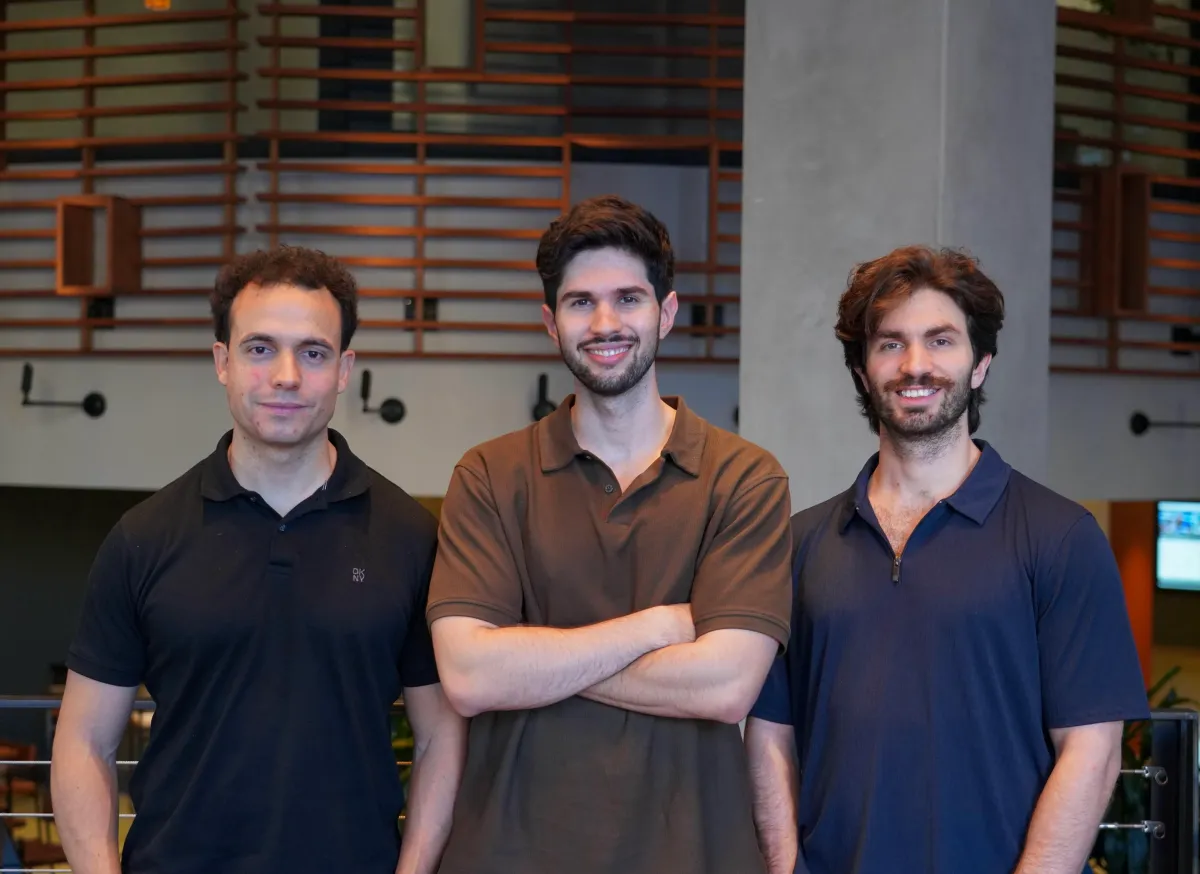
When Flai was raising its seed round last year, it was just a team of three people pounding the pavement to get car dealerships to use the startup’s software to manage phone calls, emails, and texts. But CEO Ari Polakof was already looking to a more agentic future, where Flai’s AI would handle far more.
One year later, that future has arrived. The startup is working with more than 10 of the top 50 dealer groups in the country, and its AI is being used to answer and engage with customers, run outbound campaigns, and schedule appointments — 50,000 per month — across both sales and service. This has led to a 20x increase in revenue, Polakof told TechCrunch in an exclusive interview.
Flai says this deep integration is helping the startup set itself apart from others trying to get car dealers hooked on AI. The growth is attracting investors, too. On Tuesday, Flai said it had raised a $27 million Series A funding round led by automation-focused firm Base10 Partners. The round included funding from dealers (Friedkin Group and Findlay Automotive), Toyota’s venture arm, Y Combinator, and First Round Capital.
Polakof said Flai’s growth is coming from customers who see the bigger vision of what is essentially an AI-powered customer relationship management software built from the ground up and tailored to the specific need of each dealer.
“Sure, we do answer the phone calls, but we’re following up with customers, we’re alerting the leadership whenever they need to take a look at something, maybe because the customer’s mad, or because you forgot to respond, or promised them something next week,” Polakof said. “We’ve grown quite a bit from just a phone solution to more of a platform. There are plenty of AI companies coming in, but I think that really speaks about the opportunity.”
Flai claims its software is also flexible. Earlier this year it launched with a luxury dealer in Puerto Rico where customers “switch between Spanish and English mid-conversation,” Flai co-founder Juan Alzugaray wrote in a LinkedIn post. “We started where we always do: inbound service calls. It went well enough that they added sales. And now the group is rolling Flai out across all 8 of their stores,” he wrote.
The result of all this is that dealerships are selling more cars, making more money, and “customers are getting answers faster,” according to one of the groups Flai works with.
Perhaps unsurprisingly, Polakof said much of Flai’s customer growth has come from the dealers talking up the product to their peers.
“If you really do great by them, they also do great by you, and they recommend you, and talk about you,” he said. This has led to Flai generating half of its revenue from new customers, according to Polakof.
Customers are making these referrals because they like Flai’s software, Polakof said, but also because they get up and running quickly. Flai’s software can be live in a dealership 10 days after a contract is signed, and he tells his team — which is now up to around 40 people — that they need to respond to customers within 20 minutes “at most.”
“The common experience, especially around automotive [software] vendors, is — and many are almost traumatized by this — is that they sign the contract and then the company disappears,” he said “I’m fully focused on making sure that we treat every customer as if they’re our only customer, especially because I know how hard it was to get the first one.”
That speed and customer experience, combined with the knowledge Flai has developed on how dealerships work and what they need, is what Polakof said protects the startup from products like Muse, which Meta has pitched as a one-shot solution for small businesses.
“You get a group of really smart people, and you spend all your days, all your time thinking very deeply about this one space — it’s just so hard to envision that any other platform outside of the space can come in and start going after your customers,” he said.
For all this momentum, there is still one customer Polakof hasn’t been able to land: his own local dealership.
“I’m actually trying much harder than I should to make them a customer,” he laughed. “I’m sure we will get them by next year.”
When you purchase through links in our articles, we may earn a small commission. This doesn’t affect our editorial independence.
>
Tech
HiPHI: A Large-Scale Benchmark for High-Precision Human Motion and Object Interaction

More Information
Humanoid robots must learn to balance, move, and interact with objects across an enormous range of situations, but the data available for this training has clear limits. Internet video shows diverse behavior but cannot capture precise physical states. Laboratory motion capture systems record accurate movement but usually cover only a narrow set of actions. This white paper examines HiPHI, a 617.5-hour whole-body human motion dataset captured with optical motion capture at sub-millimeter accuracy. It includes 245.7 hours of human-object interaction with synchronized object trajectories and meshes, and organizes coverage using FrameNet, a linguistic framework for human action. The paper also introduces a benchmark suite for measuring motion diversity and interaction grounding, and reports results from policies trained on the dataset and deployed on a physical Unitree G1 humanoid robot.
>
Tech
Bloom raises $3.6M to become the ‘Alibaba’ of American manufacturing
When Justin Kosmides co-founded Bloom in 2023, his goal was to create a savior for the mobility industry. He had seen many e-bike and e-scooter companies fail because of an inability — or an unwillingness — to outsource some of the hardest problems, like logistics, manufacturing, or building a supply chain. He wanted to convince survivors and new entrants to let Bloom handle that work for them.
Then Donald Trump got re-elected and started shotgun-blasting tariffs on dozens of countries, partially to jump-start U.S. manufacturing. This accelerated a hardware scene that was already heating up in this country and, suddenly, it was more than just mobility companies looking to beef up their domestic supply chain. Robotics startups, drone-makers, and many more started to pop up.
That was an opportunity for Bloom, which is based in Detroit, but to tackle it, the startup had to partially reinvent itself. Instead of performing some of those harder, behind-the-scenes tasks, which was a big part of the original plan, Bloom shifted to a pure marketplace model, in which it connects buyers and sellers. It’s now focused on making, essentially, supply chain AI agents that Bloom’s customers use to find specific types of suppliers, parts, or manufacturing and engineering services.
The reinvention slowed Bloom’s fundraising plans. But the company has now made over 2,000 matches for more than 140 companies, and it wants grow faster. In an interview earlier this year, Kosmides, who is Bloom’s CEO, said his startup is like AI-driven version of Alibaba did in China, where it created a marketplace for contract manufacturers.
Investors are finally buying in. On Wednesday, Bloom announced a $3.6 million seed round led by SNAK Venture Partners, a marketplace-focused investment firm. Also joining were Flyover Capital (an early stage investor that focuses on flyover states), and deep tech firm Mana Ventures. Local backers included Detroit Venture Partners, Invest Detroit Ventures, and the Michigan Outdoor Innovation Fund.
Kosmides, sounding relieved, said in the interview that he’s “excited to be done with fundraising and get to back to building.”
No, then yes
SNAK first met with Bloom in April of last year, in the early stages of this reinvention. So early, in fact, that the firm passed on the chance to invest in the startup’s pre-seed round.
“We liked the founder and the thesis and passed anyway: we wanted to see more traction,” the firm wrote in a blog post. “We said so plainly and kept tracking the company.”
Bloom kept in touch with SNAK as it worked through becoming a more software-focused startup. By May of this year, Bloom had made as much revenue in five months as it did in all of 2025. SNAK also said the number of memberships on its platform had grown fivefold “with low churn,” meaning few customers were canceling.
“This is meant to reiterate that for us, a pass on pre-seed is not always a pass forever. We are fortunate to have a super focused thesis that allows us to track a small set of interesting early stage companies and build a relationship over time,” the firm wrote.
Kosmides said the fundraising scene has been a bit ruthless for startups like Bloom. Proving your value to investors in a world where the leading AI models keep improving can be an uphill battle.
“To find investors to actually write a term sheet, not follow one, is getting harder and harder,” he said. “That’s just this new era that we’re in, with everyone trying to figure out what’s real and what’s not, what to invest in.”
Bloom did court other term sheets, Kosmides said. But SNAK, which was founded by longtime retail executive Sonia Nagar, is “who you want in your camp” to “build a hopefully category-defining marketplace for mobility, and drones, and all this hardware.”
Matchmaking and discovery
Bloom’s platform handles both sides of a supplier relationship. Some customers use the platform to post contract opportunities, while others use it to bid on those opportunities. Bloom handles quoting, booking, and payment all on its platform, and it now helps match companies with suppliers that can do contract manufacturing, assembly, design and engineering, freight, warehousing, repairs, and even hazardous-materials shipping.
“Our friends at the parts marketplaces like Fictiv, Xometry, MacroFab and others are really good yesteryear marketplaces for finding one particular part,” Kosmides said. “But when you’re XYZ Drone Company, or an electric motorcycle company, and you need to find a provider that meets all these requirements have them all bid on this opportunity, that’s a lot more complicated than finding a CNC part.”
Making this system work well is a big part Bloom’s reinvention, and it involved ingesting a lot of data about each provider on the platform. A lot of that was public data — how a company describes itself on its website, for instance. But around 30-40% of that data is coming directly from the companies, Kosmides said. Add in the data being generated as the startup onboards more customers and makes more matches, and you have Bloom’s edge, he said.
“You can build the craziest model for scraping data but you would never get to that accuracy,” he said. “We started with manually booking services, and then built in layers and pieces and understanding as we built up the provider network, as we built out more and more transactions, and so it’s only getting better and better.”
Kosmides believes this is all a better way to strike up supplier relationships, and that it also makes it easier for startups to get off the ground. But he also thinks Bloom’s platform will help create opportunities for small manufacturers who may not have big marketing budgets or sales teams.
He gave an example of one Michigan-based contract manufacturer that, until it started working with Bloom, was taking on odd jobs like refurbishing Nest thermostats and Bird scooters, or working with Chick-fil-A displays. That same company is now bidding on drone assembly contracts.
“The ability to discover, and the ability to do matchmaking, that is what I think is truly missing” from U.S. manufacturing, he said. “That just doesn’t exist electronically.”
When you purchase through links in our articles, we may earn a small commission. This doesn’t affect our editorial independence.
>
Tech
Healthleap raises $38M for its AI that flags hospital patients who may need a closer look
Healthleap, a startup building an AI platform that reads patient records to identify patients at risk of undiagnosed illnesses, has raised $38 million in seed and Series A funding, TechCrunch has exclusively learned.
The financing includes an $8 million seed round co-led by Sequoia Capital and First Round Capital, and a $30 million Series A led by Hummingbird Ventures. The company is not disclosing its valuation.
Founded in South Africa in 2022 by siblings Jemima and Josiah Meyer (pictured above), the startup initially offered a clinical nutrition tool Jemima had built for dietitians. But the company later pivoted and built a more general-purpose platform that aims to identify patients admitted to hospitals who may be suffering from conditions like malnutrition or delirium that aren’t often identified early enough, CEO and co-founder Josiah Meyer told TechCrunch.
“A patient’s chart holds two kinds of data. Labs, weights, and vital signs sit in structured fields, but the most telling signs sit in clinicians’ written notes: poor appetite, recent weight loss, muscle loss, trouble swallowing. Our developing approach is extracting affirmative or negated mentions of these clinical concepts in an easily extensible and scalable way,” Josiah said.
The company’s platform is currently deployed in more than 50 hospitals, where it screens patients for conditions such as malnutrition and delirium, he said. The startup has also built programs to identify aspiration pneumonia, pressure ulcers, and risk of readmission for congestive heart failure, which Josiah said are undergoing further clinical validation.
To find patients that may be at risk of an illness or were undiagnosed, Healthleap plugs into a hospital’s electronic health record system and uses language models to pull information from written notes, such as references to recent weight loss or difficulty swallowing. That analysis is then fed into its risk models, alongside structured information such as lab reports and vitals to surface patients who may need a closer look. The company notes that its software doesn’t diagnose patients, only highlights items for additional review.
“Each night, we analyze every adult inpatient’s record: lab results, vital signs, weights, medications, diet orders, diagnoses, clinicians’ notes, and more,” Josiah explained. “Each morning, we write a risk score into the care team’s existing workflow with a dashboard accessible that holds additional information about the patients’ trends.”
Malnutrition likely served as a useful starting point for Healthleap, as it’s a condition that often goes undiagnosed and can adversely impact patient recovery in a variety of ways. Research suggests 20% to 50% of hospital inpatients are malnourished, and some studies have linked malnutrition with longer stays, impaired wound healing, infections and other complications, as well as higher morbidity and mortality.
Josiah said Healthleap has grown from three hospital partners to more than 50 over the past year, and its customers now include Penn Medicine, Cedars-Sinai, Intermountain, Houston Methodist and Emory Healthcare. Revenue has grown more than 10x over the same period, he said, though he didn’t disclose specifics.
The startup sells three-year contracts priced according to a hospital’s licensed bed count, and also uses an outcome-based pricing model. “We use the hard ROI that the hospital finance team validates and attributes to us as the measurable ROI. Based on that, we contractually ensure that we deliver multiples of the contract price. To date, every customer has seen a 5x hard ROI or more, in some cases over 20x annual total ROI,” Josiah said.
At the Hospital of the University of Pennsylvania, Healthleap says its malnutrition program resulted in $23.8 million in annualized financial impact, of which $6.3 million came from additional reimbursement and $17.5 million from shorter hospital stays.
Healthleap plans to spend the fresh cash on engineering, product, sales, and customer success as it adds support for identifying more conditions. Meyer said the company ultimately wants to cover more than 40 major health conditions and expand into outpatient and home care.
When you purchase through links in our articles, we may earn a small commission. This doesn’t affect our editorial independence.
>
-
movies5 months agoSearch For Canadian TV Actor Stewart McLean Now Homicide Investigation
-
Fashion9 years agoThese ’90s fashion trends are making a comeback in 2017
-
Fashion9 years agoAccording to Dior Couture, this taboo fashion accessory is back
-
Fashion9 years agoModel Jocelyn Chew’s Instagram is the best vacation you’ve ever had
-
Fashion9 years agoEmily Ratajkowski channels back-to-school style
-
Fashion9 years ago9 Celebrities who have spoken out about being photoshopped
-

Anime4 months agoRurouni Kenshin: Hokkaido Arc Manga Takes 1-Issue Break – News
-
Anime3 months agoHIDIVE to Stream English Dubs for The World Is Dancing, The Forsaken Saintess and Her Foodie Roadtrip in Another World, The Dangers in My Heart: The Movie Anime – News