
movies
Raj Shamani, Host Of ‘Figuring Out’ Podcast In India, Signs With WME

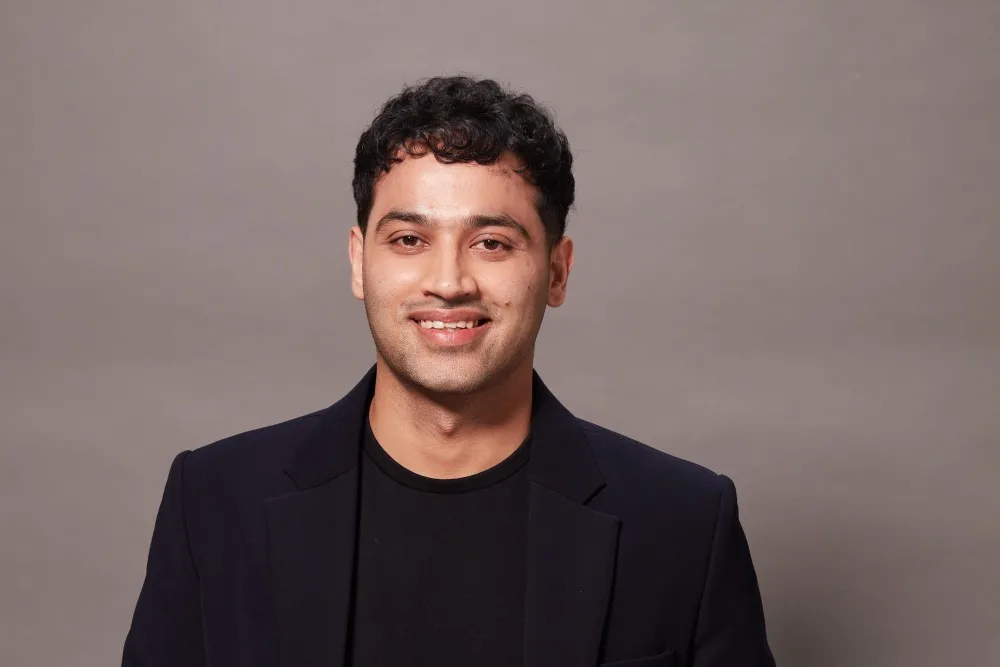
EXCLUSIVE: Raj Shamani, who hosts the hit Figuring Out podcast that has featured guests including Emmanuel Macron and Bill Gates, has signed with WME.
The Indian entrepreneur, investor and author has signed in all areas.
His pod, Figuring Out with Raj Shamani, has nearly 20 million subscribers, making it one of the world’s biggest podcasts on YouTube, according to WME, along with being the number one ranked podcast on Spotify in India.
In Figuring Out, guests like Macron, Gates, Michael Phelps, Andrew Huberman and Sunita Williams discuss business, wealth, health, relationships and human behavior.
Shamani is also the founder of Figuring Out Media, an education-first business, along with the Figuring Out Academy. He has invested in a number of other businesses and products and is a keynote speaker including at the UN Youth Assembly and World Government Summit. In 2022 he wrote Build, Don’t Talk, a “practical guide teaching essential life skills not covered in school.”
Shamani said: “Where you are born should never determine what knowledge you have access to or how big you’re allowed to dream. I started in a small room in Indore, India, with no network and no access, and built Figuring Out on a simple belief: the world’s most valuable knowledge shouldn’t only belong to people who can get into the right rooms. We wanted to bring that access to everyone. I believe education-led media can help billions of people think better and build extraordinary lives. By joining forces with WME, we can take this mission to the world and build a truly global institution together.”
WME has Indian mega-stars on its books including Ranveer Singh and Alia Bhatt.
>
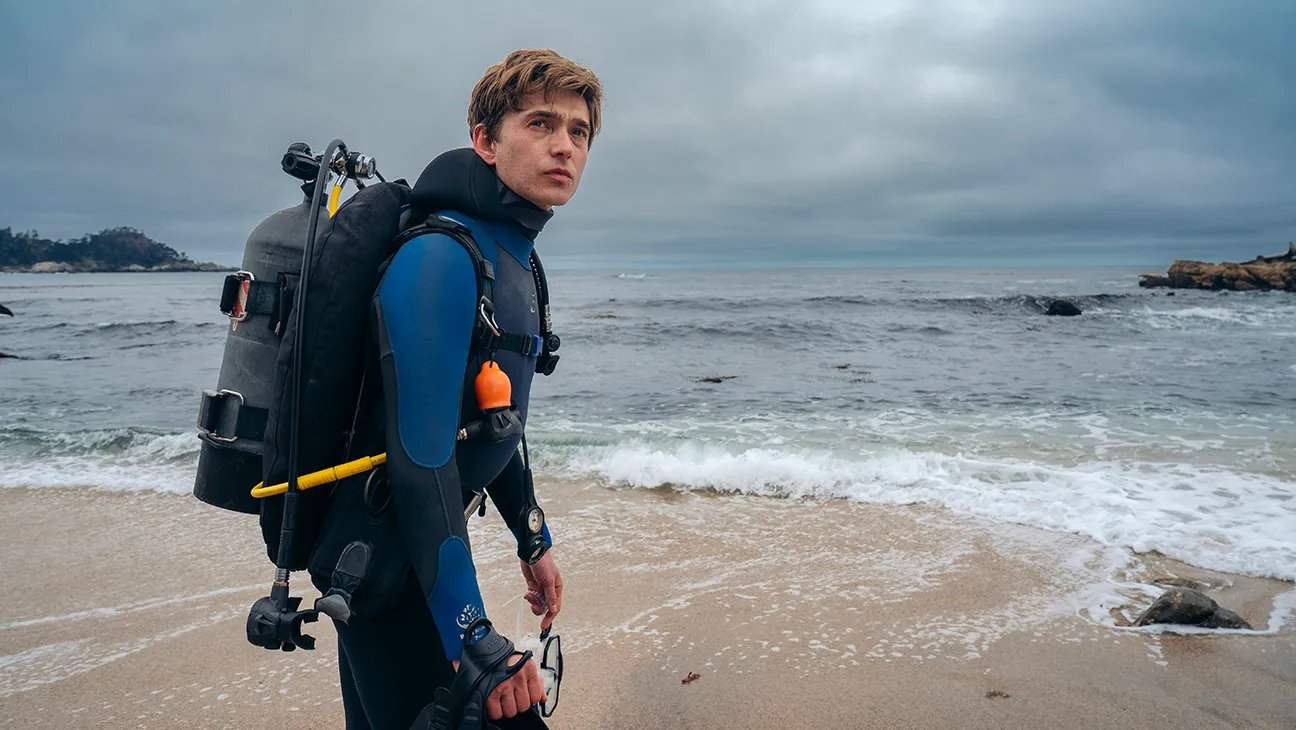
The survival thriller, directed by Brian Duffield, hits theaters on Oct. 16.

Austin Abrams as Jay Gardiner in 20th Century Studios’ Whalefall.
Jennifer Clasen/20th Century Studios
>

Andrew Garfield doesn’t look exactly like Sam Altman.
But the Oscar-nominated actor found a way to try to capture the essence of the OpenAI CEO he portrays in Luca Guadagnino‘s Artificial.
An attempt to use prosthetics to better resemble Altman was unsuccessful (“totally ridiculous,” according to Guadagnino), so much so that Garfield laughed as he recalled how badly that experiment went when reminded of it by The Hollywood Reporter on the red carpet ahead of Artificial‘s world premiere at the 2026 New York FIlm Festival.
Instead, ironically for the tech-forward film, Garfield relied on a classic acting technique and human conversations (an analog version of crowdsourcing).
“When you’re first learning about acting, one of the techniques, Stanislavski, is you go through the play and you see what this person says about other characters. You see what other characters say about him,” Garfield told THR. “So I tried to speak to as many people as possible who know Sam or who have experiences and interactions with Sam to glean more of an objective, moral side, looking in point of view. Everyone is an unreliable narrator. I felt like I needed to absorb as much as possible, put it in the cauldron, put it in the pot, put it on simmer and then [use] my own instincts and interpretation and point of view, because any other actor would have played it differently. I know that I needed to play it in the way that I wanted to play it.”
Artificial tells the story about both the origins of OpenAI and the rise of the artificial intelligence phenomenon, including the Silicon Valley figures at the forefront of the technology. Garfield, like his fellow castmembers in the film, looked to interviews and videos of his real-life counterpart, with Anora breakout Yura Borisov, who plays OpenAI co-founder Ilya Sutskever, also taking a surprisingly ethereal approach.
“I hit a wall, and it was a couple of days before we started to shoot,” Borisov explained of his preparations. “We have the same birthdays (Dec. 8), and I imagined, ‘OK maybe we have some spiritual connection because of this, and I can just relax and create my own character inspired by him.’”
Not Suitable for Work alum Will Angus plays former OpenAI researcher turned Anthropic co-founder Dario Amodei and relished playing the exec at a time when he was somewhat under the radar.
“When we were shooting the movie, [Amodei] definitely wasn’t as in the zeitgeist as he is now, so it was very cool to learn about it from the ground floor,” Angus told THR. “We treated him well. … He really had this anxiety to make sure that AI was morally aligned with humanity so I kind of enjoyed being in that role.”
Amodei has pushed for federal safety regulations around the technology and, just last month, called for an industrywide slowdown of AI development to give safety measures time to catch up.
When asked if he believes Amodei’s AI safety concerns, Angus was cautiously optimistic.
“I hope he’s doing the best he can to make sure AI’s aligned with human goals,” he said. “I don’t know. I hope so.”
Neon, which acquired Artificial after Amazon MGM Studios abruptly dropped the nearly completed film in June, plans a Christmas Day release for the movie, which was written by Saturday Night Live alum Simon Rich and also stars Ike Barinholtz as Elon Musk, Monica Barbaro as OpenAI CTO Mira Murati, Cooper Hoffman, Mark Rylance, Will Price, Chris O’Dowd, Billie Lourd, Zosia Mamet, Jason Schwartzman, Cooper Koch, Thaddea Graham, Nicholas Hamilton and Angus Imrie.
>

It’s been an encouraging year for South Korea’s Busan International Film Festival (BIFF), which has received recognition from the International Federation of Film Producers Associations (FIAPF) and also been designated a pathway to an Oscars’ nomination.
FIAPF announced in March that BIFF has been added to its list of “A-list festivals” joining the ranks of festivals such as Berlin, Venice and Cannes. A few months later, the Academy of Motion Pictures Arts and Sciences (AMPAS) announced that the top prize winners of six international festivals, including Busan, will automatically qualify for submission to the Best International Feature Film category of the Oscars. This places BIFF in a select gathering alongside Cannes, Berlin, Venice, Sundance and Toronto.
Jung Hanseok, who took up the post of BIFF festival director last year, says these developments are already “having a positive effect on both the number and quality of submissions to the festival. They give filmmakers a meaningful additional incentive to submit their work to BIFF.”
BIFF only introduced a fully-fledged competition section last year, handing out awards in six categories, including Best Film, which has become the pathway to the Oscars, along with Best Director, Special Jury Award, Best Actor, Best Actress and an Artistic Contribution Award.
Last year, Gloaming In Luomu, from Korean-Chinese filmmaker Zhang Lu, was awarded Best Film, with Taiwan’s Shu Qi taking Best Director for Girl. The festival also has a Vision Awards ceremony – recognising films across both the ‘Vision – Korea’ and ‘Vision – Asia’ sections – in which a wide range of independent juries hand out prizes.
“Compared with the competition sections of longer-established festivals, BIFF’s Competition is still very new,” Jung cautions. “So one of our early challenges was to communicate its value and build confidence in the section as quickly as possible. I think the FIAPF recognition and the new Academy pathway have helped accelerate that process.”
Jung cites China as one territory where filmmakers’ interest in BIFF has risen, due to the fact that filmmakers invited to A-list festivals are more likely to receive attention when applying for public support.
“We’ve seen similar changes in Japan, where key industry figures have been noticeably more proactive and receptive towards BIFF’s Competition than they were last year,” he says. “Some filmmakers may now be able to envision a longer-term path that begins with winning the Busan Award for Best Film and continues into an Oscar campaign.”
He adds that Korean filmmakers are also waking up to this possibility. Korea’s Oscars committee has already submitted Lee Chang-dong’s Possible Love as its official entry, which is currently receiving an Oscars-qualifying run in Korean theatres before streaming on Netflix. In theory, a Best Film Award win from Busan could make a second Korean film eligible.
However, BIFF’s Competition section embraces the whole of Asia and this year’s line-up of 14 titles also spans films from China, Taiwan, Japan, Uzbekistan, Indonesia and Iran (see here for the full line-up), so the field is wide open. Chinese director Zhang Yimou is heading the seven person jury that will decide on the awards.
Jung says he didn’t really appreciate the impact of the new Competition section last year, until he was planning this year’s festival: “We’ve sensed a much more positive and receptive atmosphere around the Competition section than we did in its first year. For that reason, our main priority this year has been the stability and consolidation of the Competition,” he says.
“In the longer term, BIFF intends to remain grounded in an Asian perspective and in values that emerge from within Asia when operating the section. At the same time, we want to continue asking ourselves what exactly ‘Asian’ should mean in that context.”
When asked about the competition selection criteria, Jung says it’s “quite simply, the quality of each individual film”. He adds that the 14 selected titles, when look at together, “should form a compelling cinematic landscape that reveals something of contemporary Asian cinema as it exists today. One notable difference this year is that the quality is more consistent across the Competition, while the overall standard of the line-up has also risen.”
The festival opens tonight (Tuesday, October 6) with a screening of Kim Jong-kwan’s The Table: Day And Night, and with Kim Minha (Pachinko) hosting the opening ceremony. Other talent attending the festival includes Michelle Yeoh, who is being honored as Asian Filmmaker of the Year; Hong Kong filmmaker Ann Hui, who is receiving the Camellia Award; Maggie Gyllenhaal, presenting her short film Flesh Impact in Special Screenings; and French actress Isabelle Huppert, who will meet local audiences with her latest film, All About Corinne.
The stacked talent list also includes Iranian filmmaker Majid Majidi, who has Midday Meal in competition and will be making his first visit to the festival; Japanese anime master Rintaro, who worked in the same era as the legendary manga artist Tezuka Osamu; and Alfonso Cuaron, in town for a special IMAX screening of Gravity and the Asian Premiere of Jonás Cuarón’s Campeón Gabacho.
In total, BIFF is screening 246 films – five more than last year and marking the festival’s largest lineup since 2019 – and is opening one day earlier than in previous years. Jung explains that BIFF has also increased the number of screenings from Thursday through Sunday, when attendance is at its highest. “These were all practical improvements intended to give audiences greater convenience and more opportunities to see films,” he says. “The response so far has been very positive. Even before on-site ticket sales begin, online bookings alone suggest that this year’s total attendance could surpass last year.”
In addition to the Competition and Vision selections, the festival’s major sections include Gala Presentation, which is showing six titles including Hirokazu Kore-eda’s Look Back and Yeon Sang-ho’s Paradise Lost; and Icons, which this year is showing 16 titles including Ira Sachs’ The Man I Love, Ryusuke Hamaguchi’s All Of A Sudden, Pedro Almodovar’s Bitter Christmas, Christian Mungiu’s Fjord and Lav Diaz’s Let Us Through, Dear Ancestors.
On Screen is world premiering initial episodes from three highly anticipated series: Netflix’s The Blue Road and Dead-End Job and Disney’s The Remarried Empress. The Blue Road director Han Jun-hee will be on hand during Netflix’s Creative Asia day to present a masterclass entitled “Making Unexpected Stories Resonate”.
BIFF’s popular Open Cinema section, which offers free open-air screenings at its iconic Busan Cinema Center, is showing eight films including Look Back, Banjong Pisanthanakun’s Inherit, and Ervin Han and Raúl García’s Annecy award-winning animation The Violinist.
This year’s special programmes include ‘Those Beautiful Years, Ahn Sung-ki’, focusing on the late Korean actor, and a Japanese animation special: ‘Masterpieces of Madness, Exhilarating Prospects 12+1’. The annual ‘Carte Blanche’ programme invites prominent figures from the world of cinema to personally select films that have profound influenced them. This year’s guests include Korean filmmaker Kim Jee-woon, Chinese actress Fan Bingbing, and Korean cinematographer Hong Kyung-pyo.
The Flash Forward section for non-Asian first and second-time filmmakers is screening eight titles include Stephanie Ahn’s Bedford Park and Javier Calvo and Javier Ambrossi’s La Bola Negra. Other major sections include A Window On Asian Cinema, Korean Cinema Today, World Cinema, Wide Angle, focusing on short films and documentaries, and Midnight Passion.
While BIFF prides itself on showcasing cinema from across the Asian continent, it’s also the case that many public audience members, not to mention press and industry, are attending the festival to catch up with the latest Korean cinema. In this respect, BIFF is also riding a positive trend as local cinema began to revive at the beginning of this year, following a long period of declining box office and audience apathy that held back post-pandemic recovery.
Starting from the Lunar New Year holiday in February, Korea has enjoyed a string of domestic hits including historical drama The Kings Warden, Yeon Sang-ho’s Colony, Na Hong-jin’s Hope, and horror film Salmokji: Whispering Water.
Also climbing up the 2026 Top Ten chart is Hur Jin-ho’s political thriller The Assassin(s), which premiered at Toronto International Film Festival and has so far grossed nearly $18M since its release over the recent Chuseok holiday. However, the film had to withdraw from its planned BIFF participation due to the huge row that erupted when right-wing critics accused the film of historical inaccuracy. The Directors Guild of Korea has recently come out in support of the film.
Controversy aside, however, Korean cinema currently has a lot to celebrate, and the recent success of The Odyssey and Spider-Man: Brand New Day in this market have also brought relief to the territory’s beleaguered cinema operators. Jung welcomes this return of Korean audiences to physical theatres, although he cautions there’s still work to be done to return the local industry to full health.
“The fact that cinema attendance is increasing compared with last year suggests that there are encouraging signs of recovery,” he says. “In particular, several Korean films and major Hollywood releases have helped younger audiences – who make up an important part of Korea’s cinema-going public – become accustomed once again to the experience of going to a movie theatre to watch a film.
“At the same time, it remains very difficult for small and mid-budget films both to secure financing and to obtain theatrical releases,” he continues. “Government policy in this area is becoming more active, but we will need more time before we can judge its effects.”
Busan International Film Festival is taking place October 6-15 at Busan Cinema Centre and multiple venues across the city. The festival’s industry platform, Asian Contents & Film Market (ACFM), kicks off on Saturday, October 10 and runs until Tuesday, October 13.
>

F1 Q&A: Hamilton, Malaysia, wet races, Red Bull and Ford and the future of engines

South Korea captain apologises for gloating over military service exemption

NFL 2026 results and highlights: Bijan Robinson stars as Atlanta Falcons blow away New Orleans Saints 45-24 in second win of NFL season | NFL News
-

 movies5 months ago
Search For Canadian TV Actor Stewart McLean Now Homicide Investigation
-

 Fashion9 years ago
These ’90s fashion trends are making a comeback in 2017
-
Fashion9 years ago
According to Dior Couture, this taboo fashion accessory is back
-
Fashion9 years ago
Model Jocelyn Chew’s Instagram is the best vacation you’ve ever had
-
Fashion9 years ago
Emily Ratajkowski channels back-to-school style
-
Fashion9 years ago
9 Celebrities who have spoken out about being photoshopped
-

 Anime4 months ago
Rurouni Kenshin: Hokkaido Arc Manga Takes 1-Issue Break – News
-

 Anime3 months ago
HIDIVE to Stream English Dubs for The World Is Dancing, The Forsaken Saintess and Her Foodie Roadtrip in Another World, The Dangers in My Heart: The Movie Anime – News