
Aaron Sorkin on the set of The Social Reckoning with his Frances Haugen actor, Mikey Madison.
Everett Collection


You will be redirected back to your article in seconds
With shorts from Renee Zhan, RZA, Ernest Dickerson, and David Moreau — not to mention, evil puppets escaped from Jim Henson’s Creature Shop(!) — the ninth “V/H/S” could maybe use a little shuffle.
ad
>

EXCLUSIVE: The NCIS franchise is back to heating things up for CBS on Tuesday nights.
The lineup delivered the broadcaster the top finish during Tuesday’s primetime window, averaging 5.49 million viewers, up 39% from last year’s premiere Tuesday.
That’s thanks in part to the launch of NCIS: New York. The series premiere, which welcomes back LL Cool J as Sam Hanna and Scott Caan and Nick Schaeffer, delivered 5.62 million viewers in the 9 p.m. hour. That is up 53% year-over-year in the time period, which was previously occupied by NCIS: Origins.
New York was second only to the stalwart original, whose Season 24 debut raked in 6.45 million viewers to become the series’ most-watched episode in more than two years, since the Season 21 finale in May 2024. The audience was also up 21% year-over-year.
While NCIS: Origins might’ve been the least-watched of the three, it was a heavyweight in its time period. The Season 3 premiere tallied 4.39 million viewers in the 10 p.m. hour, up 20% compared to its year-ago premiere in the 9 p.m. hour and up 56% from the year-ago time period premiere of NCIS: Sydney.
All three shows had some big milestones to offer. In addition to the return of LL Cool J and Scott Caan, Michael Weatherly also rejoined the flagship series this season Anthony “Tony” DiNozzo Jr. On Origins, Mark Harmon joined the cast as Leroy Jethro Gibbs.
>
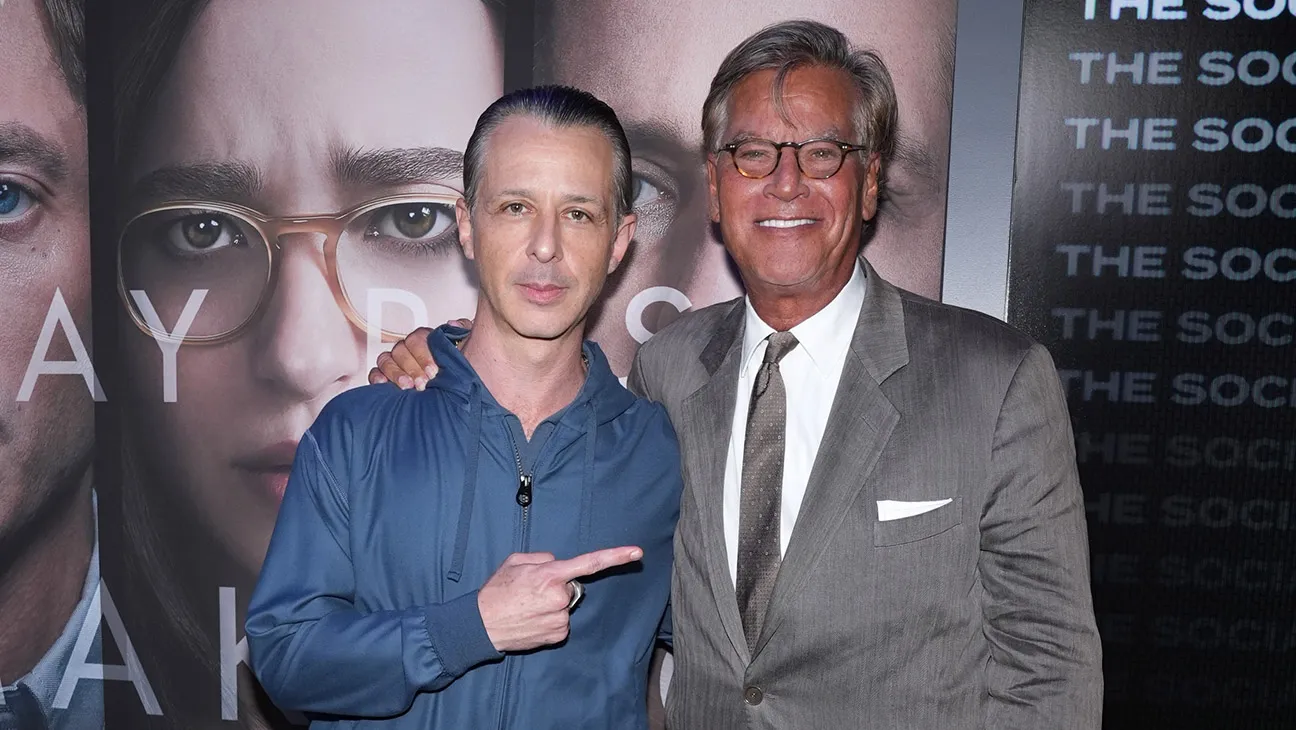
Aaron Sorkin had no intention of returning to the world of Facebook.
Of course, people tried to talk him into it. They’d ask, “What about Russia’s interference in the 2016 election via Facebook? What about the Facebook-Cambridge Analytica data scandal? What about the platform’s role in the Rohingya genocide?” But the Oscar-winning writer of 2010’s The Social Network remained determined not to go back to that well.
Then something happened that should terrify every current or aspiring writer — Sorkin suffered the longest stretch of writer’s block he’d ever experienced. Fortunately, in 2023, two books hit the shelves from former Facebook product manager-turned-whistleblower Frances Haugen (The Power of One) and former WSJ tech reporter Jeff Horwitz (Broken Code), chronicling their efforts to expose Facebook’s concerted prioritization of profit and engagement over public safety.
Feeling inspired for the first time in over a year, Sorkin proceeded to meet with each of them to conduct further research. But he still didn’t have a way into a potential Social Network companion movie until Haugen volunteered a personal anecdote.
“I asked Frances a question, which was, ‘One day you were a Facebook whistleblower. The day before that, you weren’t. What happened?’” Sorkin tells The Hollywood Reporter in support of The Social Reckoning’s Oct. 9 release. “She happened to mention casually, ‘I had a friend who was radicalized by spending too much time on Facebook.’ Suddenly, I got an idea for what is now the opening scene of the film, and it started to look like a movie.”
Written and directed by Sorkin, The Social Reckoning begins with a lengthy sequence involving a character named Kayleigh, who is standing outside her broken-down vehicle on the side of the highway. When a Black police officer and his Latina superior arrive later and suspect Kayleigh of driving under the influence, the interaction devolves into the kind of “Karen” meltdown video that often went viral during the pandemic. Mr. Robot fan favorite Portia Doubleday, as Kayleigh, plays the racially charged encounter with chilling intensity in her first acting role since 2020. Her inciting incident is eventually bookended in equally shocking fashion.
Once he had his table-setter for a Haugen and Horwitz-centered story, Sorkin would not let anything get in his way, even when he couldn’t reunite with the director and lead actor of The Social Network, David Fincher and Jesse Eisenberg. Fincher informed him that his Netflix deal precluded him from returning to the director’s chair. He was, however, the first person to read Sorkin’s script, calling it “nitroglycerin.” Then, in an unexpected twist, Eisenberg declined the offer because he was unwilling to reaffiliate himself with the man behind his most signature role, Facebook creator Mark Zuckerberg.
Undaunted, Sorkin took on directing duties himself, casting Oscar winner Mikey Madison as Haugen and Emmy winner Jeremy Allen White as Horwitz, before recruiting his Molly’s Game and The Trial of the Chicago 7 actor Jeremy Strong to fill the shoes of the controversial tech billionaire.
“I went to Jeremy Strong, who I believe is our best American actor under 50 years old. He gives a thunderous performance in the film,” Sorkin asserts. “I was my second choice to direct. David Fincher is my first choice to direct everything, but David had an exclusive deal at Netflix. So he became an enthusiastic cheerleader.”
As for the future, Sorkin doesn’t have any current plans to helm a Zuckerberg trilogy capper, but, as became the case with The Social Reckoning, he’s certainly open to it if a compelling idea materializes organically. “If a good story comes along and it takes place at Facebook, sure,” adds Sorkin.
Below, during a conversation with THR, Sorkin also explains why he’s both optimistic and pessimistic about the various AI-related issues that have emerged since Haugen blew the whistle in 2021.
***
Aaron Sorkin on the set of The Social Reckoning with his Frances Haugen actor, Mikey Madison.
Everett Collection
Over the years, there’s probably been no shortage of potential stories that could have constituted a Social Network follow-up: the 2016 election, Cambridge Analytica, Myanmar. Did you test-drive any of those ideas before Frances Haugen’s story became undeniable?
I was not looking to get back into the world of Facebook at all. Those moments that you mentioned, people would suggest to me, “Hey, you should write another movie about Facebook, Cambridge Analytica, Myanmar, et cetera.” But I just didn’t see where the good movie was. And then a few years ago I was experiencing an epic bout of writer’s block. It lasted longer than a year. I was banging my head against the wall. I just couldn’t. I didn’t have any ideas of what to do next. It felt like I was never going to have another idea.
Then I met Frances Haugen [after the release of her book The Power of One]. After really spending hours over a period of months talking to her and hours over a period of months talking to Jeff Horwitz, what I had was a lot of information. But it still wasn’t in the shape of a movie until I asked Frances a question, which was, “What was the inciting action? One day you were a Facebook whistleblower. The day before that, you weren’t. What happened?” And she happened to mention casually, “I had a friend who was radicalized by spending too much time on Facebook.” Suddenly, I got an idea for what is now the opening scene of the film, and it started to look like a movie.
Before a film can be anything else, before it can be relevant, before it can be thought provoking, it has to be good. It has to work as a movie. It has to work as something that you watch while you’re eating popcorn. And that’s what I found with Frances. Not only was this, as it happened, a very important story, but what I was immediately attracted to was, This is a good movie. It’s a whistleblower movie. It’s a newspaper movie in the vein of All the President’s Men, The Insider and Spotlight.
Jesse Eisenberg didn’t want to be further associated with Mark Zuckerberg, and David Fincher was confined to the high steel of Netflix. After those setbacks, did you ever waver about moving forward?
I didn’t. You’re right that Jesse just didn’t want to be conflated any longer with Mark Zuckerberg. So I went to Jeremy Strong, who I believe is our best American actor under 50 years old. He gives a thunderous performance in the film. You’re right again that I was my second choice to direct it. David Fincher is my first choice to direct everything, but David had an exclusive deal at Netflix. So he became an enthusiastic cheerleader. He was the first person to read the script.
Jeremy Strong, as Mark Zuckerberg, in Aaron Sorkin’s The Social Reckoning.
Sony Pictures
So many new problems have emerged since Frances Haugen testified to Congress in 2021. AI was force-fed into the mainstream the following year, opening an entirely new can of worms across social media and virtually every other walk of life. Is this all a losing battle at this point?
It feels that way, doesn’t it? It feels like the horse has bolted the barn. But this film, in spite of the final sequence, actually ends on an optimistic note. Frances, in a David-versus-Goliath story, picks up a rock and hurls it at Goliath and hits. And there are two Davids, really, because print journalism is the other David. They also hit tech with a rock.
Yes, I very much appreciated the film’s defense of actual journalists.
I was asked the other day, “What movies would I like to see Hollywood make?” And my answer was more movies where print journalists are the heroes.
Hollywood loves the rule of three, so do you see yourself completing your Zuckerberg trilogy someday?
I didn’t think that there would be a second one. I wasn’t eager to get back in this world. Whenever I’m done with something, I’m always like Sisyphus at the bottom of the mountain again. This movie opens Oct. 9. On Oct. 10, I’m going to be at the bottom of the mountain, and I will have no idea. So if a good story comes along and it takes place at Facebook, sure.
This question was prompted by that recent image of Zuckerberg at the White House with the other AI bros. Does it make your blood boil to know that your life’s work has been fed into their AI models in order to generate a poor imitation?
Yes, but what drives me crazier is the fact that we need laws passed, and it’s not going to happen as long as those tech bros, the billionaire tech oligarchs, are financing the campaigns for the people who have to make the laws.
As far as film and television and AI go, I’ll be called crazy for this, but I’m optimistic because I think the audience is going to reject it. If you woke up tomorrow morning and found out that John Lennon’s “Imagine” was written by a machine, you would suddenly find the song kind of silly. We may not know the name of the person who wrote a song, the name of the person who directed a movie or the name of the person who wrote a movie, but we’re going to find out that it matters to us that it was a person. Our relationship to art is illogical, and I think we’re going to find out that the human element is important to us.
I was optimistic a few weeks ago when a now-former Anthropic researcher [Jacob Coxon] sounded the alarm about the threat level facing humanity. Other AI insiders and leaders then validated his warnings, and it seemed like we were finally heading in the right direction. But since then, the White House has done everything possible to downplay and minimize those concerns, essentially doing the Leslie Nielsen “nothing to see here” routine. So I want to share your optimism, but I’m struggling to.
You’re 100 percent right. I’m not nuts. There is no reason for optimism until we’ve changed out this set of leaders.
***
The Social Reckoning opens in theaters on Oct. 9.
>
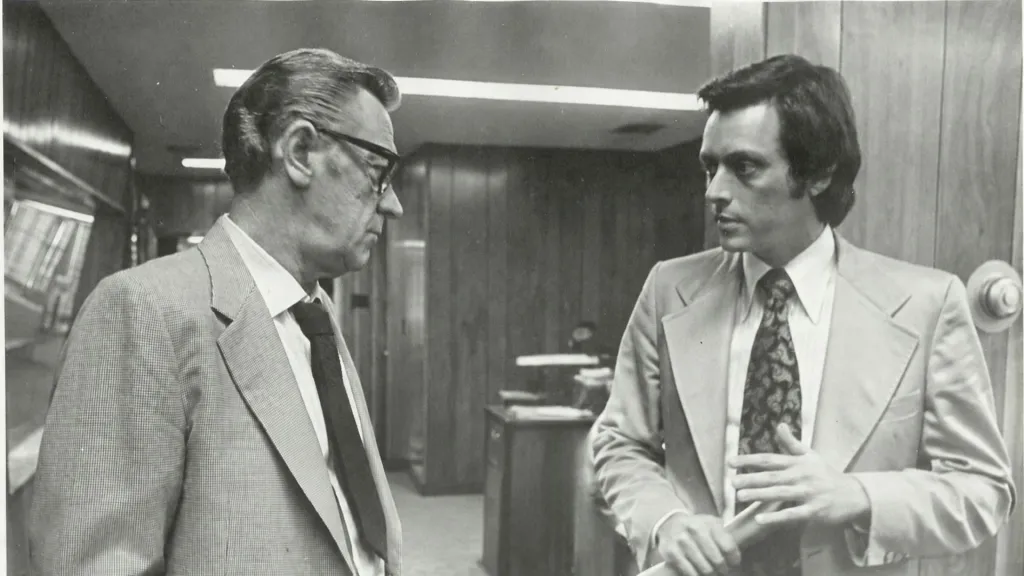
Stephen Carbone, whose pioneering half-century career as an agent and entertainment strategist saw him rise to lead the commercial divisions at ICM and later CAA, has died. He was 84.
His daughter, Stephanie, told Deadline that Carbone died August 28 of cholangiocarcinoma, a rare and aggressive cancer.
During his career, Carbone worked with such agency giants as Jeff Berg, Jim Wiatt, Mike Ovitz and Ron Meyer. He helped revolutionize the commercial endorsement landscape by forging a bridge between Hollywood’s top-tier talent and global corporate brands.
He launched and built the celebrity endorsements and commercial department at ICM, rising to EVP and worldwide head of its commercial division. His family said Carbone specialized in securing endorsement deals for artists who never had considered associating themselves with consumer products.
After 16 years at ICM, Carbone moved in 1993 to CAA, where he headed its commercial unit. He was charged with putting the agency’s top clients in fields including TV spots, tour support, interactive media and advertising-supported productions. He and his division landed endorsement deals for virtually every major star of network TV represented by the agency during his tenure.
Over the decades he worked with such top talent as Jimmy Stewart, Paul Newman, Gene Kelly, Burt Lancaster, Gregory Peck, Fred Astaire, William Holden, Jessica Tandy, Natalie Wood, Meryl Streep, Arnold Schwarzenegger, Richard Gere, Sigourney Weaver, Leonard Nimoy, Liza Minnelli, Jacqueline Bisset, Jodie Foster and Sharon Stone.
Carbone also helped put together a landmark deal for credit card giant Visa to sponsor part of Paul McCartney’s 1990 tour, a first for the former Beatle.
He also repped test pilot and flying Gen. Chuck Yeager, the first person to break the sound barrier, for more than 30 years. Carbone worked with Richard D. Zanuck, Lili Fini Zanuck and Mike Medavoy to develop a film project about Yeager at 20th Century Fox.
Born on September 21, 1941, in New York City, Carbone would graduate from Holy Cross College. After finishing school, he was accepted as a scholarship student in the professional class of the legendary acting teacher Sanford Meisner at the American Academy of Performing Arts.
Carbone began his agency career in the New York mailroom of ICM predecessor GAC. After a short stint there, he was hired at APA, where he quickly rose to be the youngest agent ever to run a Variety Television department in a major agency. He then was picked by Harry Abrams to join him in opening the New York office of Abrams Rubaloff, then one of the top commercial agencies in the country.
During the past three decades, Carbone had a consulting business, working with such top U.S. ad agencies as DDB, Lowe and Partners, Leo Burnett and IPG. He also served as an entertainment strategist for corporations including Hallmark, Burger King, Starbucks, Northwest Airlines, Poloroid and Max Factor.
Along with his daughter, Carbone is survived by his son-in-law, Adrien, and granddaughter, Julia. Donations in his memory may be made to the Cholangiocarcinoma Foundation.
>


Search For Canadian TV Actor Stewart McLean Now Homicide Investigation


These ’90s fashion trends are making a comeback in 2017
According to Dior Couture, this taboo fashion accessory is back
Model Jocelyn Chew’s Instagram is the best vacation you’ve ever had
Emily Ratajkowski channels back-to-school style
9 Celebrities who have spoken out about being photoshopped


Rurouni Kenshin: Hokkaido Arc Manga Takes 1-Issue Break – News


HIDIVE to Stream English Dubs for The World Is Dancing, The Forsaken Saintess and Her Foodie Roadtrip in Another World, The Dangers in My Heart: The Movie Anime – News