
Tech
Motorola Expands Android 17 Update: These Razr and Edge Phones Are Getting It

Motorola expands its Android 17 rollout to the Razr Ultra, Edge 60 Fusion, Edge 60 Pro, and Signature. See which phones are getting the update and what’s new.
The post Motorola Expands Android 17 Update: These Razr and Edge Phones Are Getting It appeared first on TechRepublic.
>
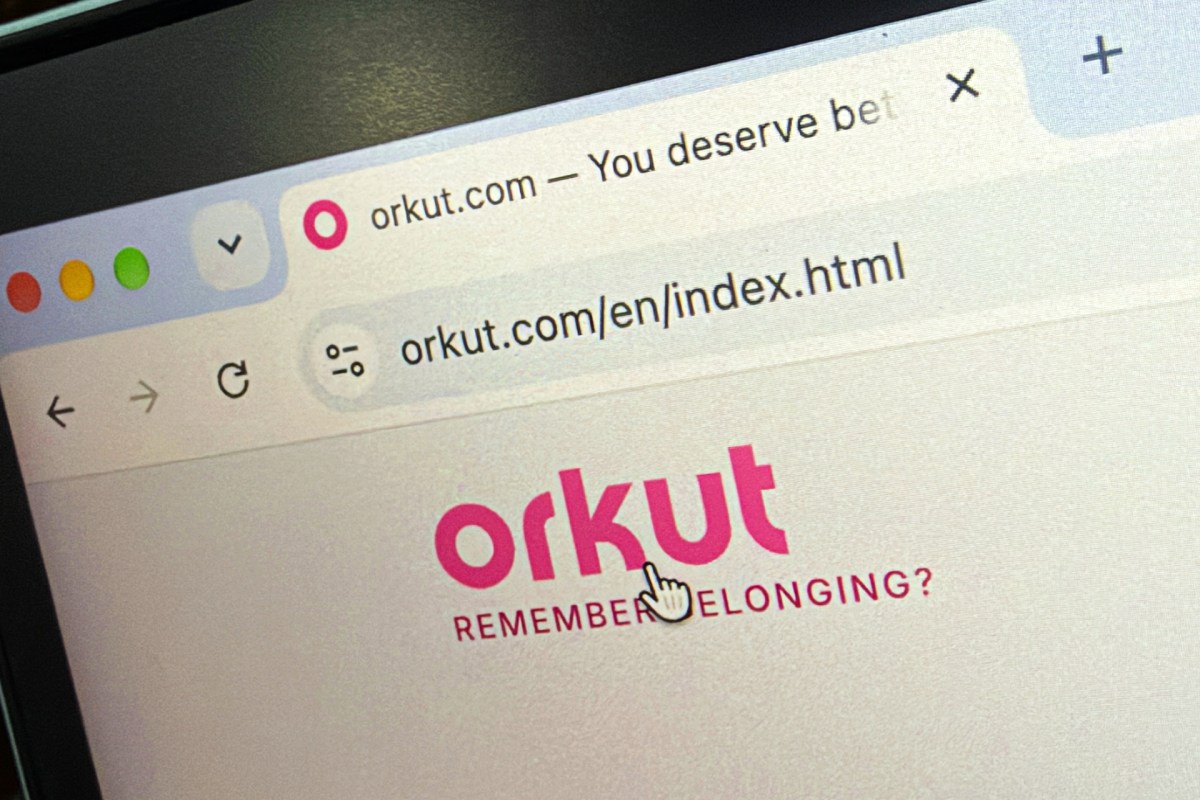
Orkut, the once-popular social networking platform that shut down more than a decade ago, may finally be making a comeback, as its founder has called on users to help revive it with a renewed focus on friendship, community, and human connection.
In a post on X on Thursday, Orkut Büyükkökten, the founder of the eponymous social network, urged users to visit Orkut.com and add their names in support of bringing it back, as well as invite others to join.
Orkut first debuted in 2004 as a side project by Büyükkökten, 51, while he was at Google. The social network went on to become hugely popular in India and Brazil but later lost ground to Facebook. Google eventually shut it down in September 2014, shifting its focus to other platforms, including Google+ and YouTube.
In a letter published on Orkut.com, Büyükkökten criticized how social media has evolved over the past two decades, particularly the growing influence of algorithms and AI-generated content. “Artificial intelligence is extraordinary technology, but it’s dissolving the one premise that made social networking special and worth building: that there was a person on the other side,” he wrote.
“I know how to get there: we rebuild the internet we first loved. The one with authentic people, real connection, and genuine belonging,” Büyükkökten added.
This is not the first time Büyükkökten has explored a return to social networking. In 2016, two years after Orkut’s shutdown, he launched another social network, Hello, focused on connecting people through shared interests. The platform shut down in 2020 after attracting more than 2 million downloads worldwide, compared with Orkut’s about 300 million active users.
In 2022, Büyükkökten hinted at another social networking venture in a note on Orkut.com, saying that he was “building something new.” He did not offer further details. Two years later, he told WIRED he was working on a social network that would “leverage AI and machine learning” to bring people together and build communities. That platform has yet to launch.
Now, Büyükkökten is asking people to register their support for Orkut’s return. He has, however, not clarified whether a new version of the platform is already in development or whether it will ever launch.
An email sent to Orkut seeking comment from Büyükkökten did not elicit a response.
When you purchase through links in our articles, we may earn a small commission. This doesn’t affect our editorial independence.
>
Build your first custom mechanical keyboard with this beginner’s guide to parts, compatibility, pricing, assembly, and keyboard software.
The post How to Build a Custom Mechanical Keyboard: Beginner’s Guide appeared first on TechRepublic.
>

I wrote this week about the bleak economics of consumer AI – but where some see a crisis, others see an opportunity.
Olivia Moore covers consumer AI as a partner at Andreessen Horowitz – and on Monday, she released a report on the top 100 consumer AI apps. ChatGPT is still the biggest player by a mile, but smaller players like Suno and ElevenLabs are showing real staying power. Even more interesting is what we don’t see, as Moore’s report details half a dozen consumer categories that seem to be completely untouched by AI.
Moore sees a huge opportunity in consumer AI, particularly if the industry can tap into revenue streams beyond just subscriptions and API charges. On a call this week, I talked with her about the unusual economics of consumer AI and why it’s still early days for the category.
This interview has been edited for length and clarity.
It’s an interesting moment for a report about consumer AI, since we’ve seen OpenAI pivot back to enterprise this year. It’s inspired a lot of pessimism about the overall revenue picture for consumer AI, including from me. But I take it you’re more optimistic?
I agree with you that OpenAI has moved back towards the enterprise. To me, it’s not necessarily a pivot because they’re still launching a lot in consumer. It’s more of an expansion. But I don’t blame them, as much as I love consumer, because almost all of the AI revenue thus far has come from subscriptions and then token usage. And that is much more concentrated on the enterprise and prosumer side.
How can consumer AI products change that revenue problem? The State of Markets report reminded us that just 2.2% of U.S. households are paying for AI. Do we need that number to rise before the market becomes attractive?
I actually don’t know if I want to see that user number increase. I’m more interested in getting back to a world where the consumer is monetized in a way that isn’t subscription dollars out of their own pocket.
I think it’s very easy in Silicon Valley, with people who are high-income and have corporate cards to pay for those tools, to say, “oh well, I’d rather pay for the product.” But I think most people would actually rather have free access to something and see some ads, and then they can decide if they want to subscribe or not to make the ads go away.
The other challenge is the marginal cost of AI services, which is still a lot higher than classic internet services like Facebook or Google Search. Do you see a lot of these services finding ways to keep those costs down, whether it’s open-source or other lightweight models?
Yeah, I think we’re seeing improvements there. Even ChatGPT now has a Go plan, which is just $8 a month, and I’m assuming it runs on cheaper models. We don’t necessarily need frontier intelligence for every task, and so that could mean cheaper models, especially for some consumer use cases. It could also mean more consumer companies building on top of open-source models. We’ve heard a lot of that from our founders lately, and it really feels like it’s starting to change.
The problem is that right now, the users driving the revenue are doing coding and other technical automation, where they probably do need frontier intelligence. I think as we get more people building for the consumer, where the model is not the product, we’ll start to see lower-cost models used more often.
It’s unusual to talk about technical automation in a consumer service, which feels like another unique feature of AI. Are we starting to blur the lines between consumer and enterprise?
I wrote an article about this maybe a year or so ago called The Great Expansion trying to get at this. Pre-AI, you would have companies like Canva that were consumer-first and often took six or seven years to even add teams or enterprise plans. Now we’re seeing companies like Gamma, ElevenLabs, and Cursor that start as consumer and within 18 months become majority-enterprise businesses.
Almost all of what we think of as consumer AI, I would argue, is prosumer AI. This really comes out on the revenue list, where there’s basically like three categories that power users are spending on. There’s product-building apps, so like Lovable, Replit, and Fal. There’s product marketing, which is AI ad generators like Higgsfield or HeyGen. Then there’s general work management, like Manus, Fireflies AI, and Granola. Those are like being paid for by consumers to start with, but I would argue that they’re not consumer in the way that we would think about pre-AI.
There are also all these whitespace categories: social apps, dating apps, marketplaces, retail, travel, finance, health. There are no entrants in our top 100 list in those categories, which is pretty surprising. And that’s what I think we need to see over the next six months.
So maybe we haven’t really seen true consumer AI yet?
It’s definitely very early.
When you purchase through links in our articles, we may earn a small commission. This doesn’t affect our editorial independence.
>

Remember Orkut? Its founder wants to bring it back
Titans, Dolphins lead race for No. 1 pick in 2027 NFL Draft four games into season
How to Build a Custom Mechanical Keyboard: Beginner’s Guide
-

 movies5 months ago
Search For Canadian TV Actor Stewart McLean Now Homicide Investigation
-

 Fashion9 years ago
These ’90s fashion trends are making a comeback in 2017
-
Fashion9 years ago
According to Dior Couture, this taboo fashion accessory is back
-
Fashion9 years ago
Model Jocelyn Chew’s Instagram is the best vacation you’ve ever had
-
Fashion9 years ago
Emily Ratajkowski channels back-to-school style
-
Fashion9 years ago
9 Celebrities who have spoken out about being photoshopped
-

 Anime4 months ago
Rurouni Kenshin: Hokkaido Arc Manga Takes 1-Issue Break – News
-

 Anime3 months ago
HIDIVE to Stream English Dubs for The World Is Dancing, The Forsaken Saintess and Her Foodie Roadtrip in Another World, The Dangers in My Heart: The Movie Anime – News