
‘Rebellion,’ courtesy of Migration Media/Max Farrar
Courtesy of Migration Media/Max Farrar


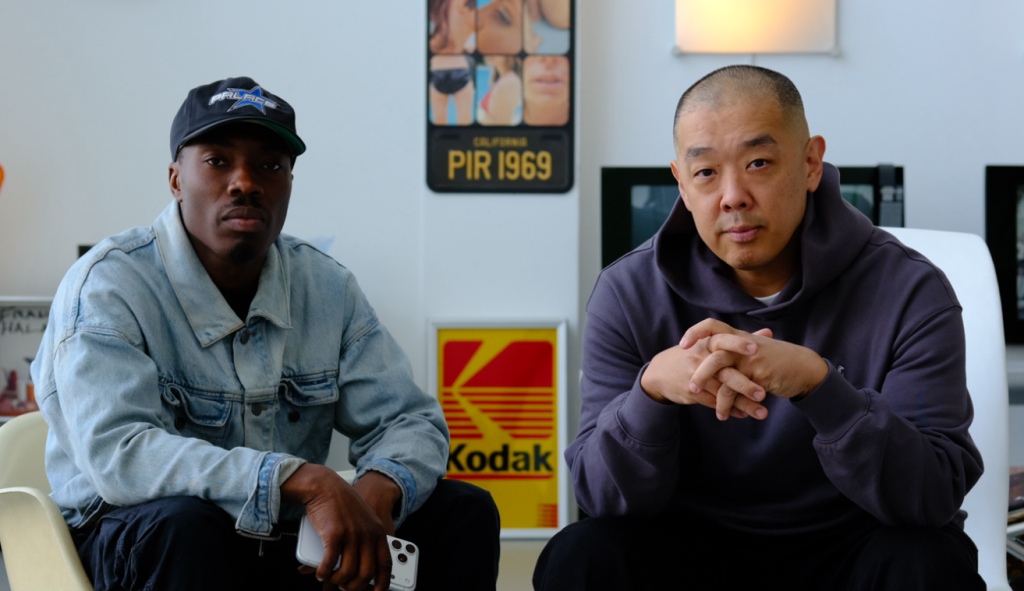
EXCLUSIVE: FREEAgent, the podcast series hosted by creative entrepreneur Kenny Annan-Jonathan, returns today for its second season.
In its first run, the pod became known for its high-profile guests, with names across fashion, business, and sports joining Annan-Jonathan to discuss their careers. Guests included Naomi Osaka’s longtime agent Stuart Duguid and veteran executive Rich Kleiman.
FREEAgent season two launches today with an episode featuring streetwear pioneer Jeff Staple.
“Everyone knows Jeff as ‘the Pigeon Dunk guy,’ but his story is much deeper than that,” Annan-Jonathan said of Staple. “He’s a trailblazer and one of the forefathers of global streetwear. He’s celebrating 30 years of STAPLE.”
Staple is one of the most influential designers and creative execs of his generation. He launched STAPLE, an independent streetwear brand, in 1997. Over its decades-long run, STAPLE has collaborated with companies like Nike, Google, New Balance, Timberland, Puma, and LVMH. Staple is perhaps best known for creating the iconic Nike SB “Pigeon” Dunk — one of the most influential sneakers of all time. Staple is also the founder of Reed Art Department, an influential creative and marketing agency.
Annan-Jonathan continued: “The real substance of our conversation centres on his redesigned agency and what it means to bridge the gap between the corporate and creative worlds. He’s a cultural translator who understands both sides. Most creators are raw. They don’t always know how to convert their creativity into revenue or communicate their message commercially. Jeff’s story gives you details about the projects he pursued, the times he was turned down, and what he had to do to make things work.”
FREEAgent episodes will once again drop weekly. The guests are predominantly high-profile figures working between sports and creative arts who rarely speak publicly, yet still wield widespread influence in their industry.
“Season one was really good. I think it was a powerful introduction,” Annan-Jonathan said, adding that he is simply aiming to “widen the knowledge pool” and “build on the conversations that came before” in his second season.
“You might listen to Rich Kleiman and learn one part of the story. Then, when you hear one of his counterparts within the same space, you get a clearer picture of the wider ecosystem,” Annan-Jonathan explained.
“Then you can hear from someone in an adjacent business or on the brand side, and you gain more insight into how brands work with law and legal teams. From there, you understand how talent managers and the people behind the businesses work.”
He added: “My goal is to cover the ecosystem of sports, entertainment, and media—from the point of inception, whatever that may be, all the way to the end.”
Annan-Jonathan added that the FREEAgent podcast also gives him the opportunity to celebrate important cultural figures who are rarely championed publicly for their work.
“Season two is about continuing to stand on the shoulders of giants while celebrating people doing amazing things,” he said. “I think people should be given their flowers.”
Annan-Jonathan is the founder of the marketing and talent management agency The Mailroom and media house Trnsmission. In 2023, he was appointed Creative Director of English Premier League side Crystal Palace, the first such role established at a professional English club. He is also Sports Director at the Cannes Lions International Festival of Creativity.
FREEAgent podcast episodes drop weekly. The Jeff Staple episode is live now.
>
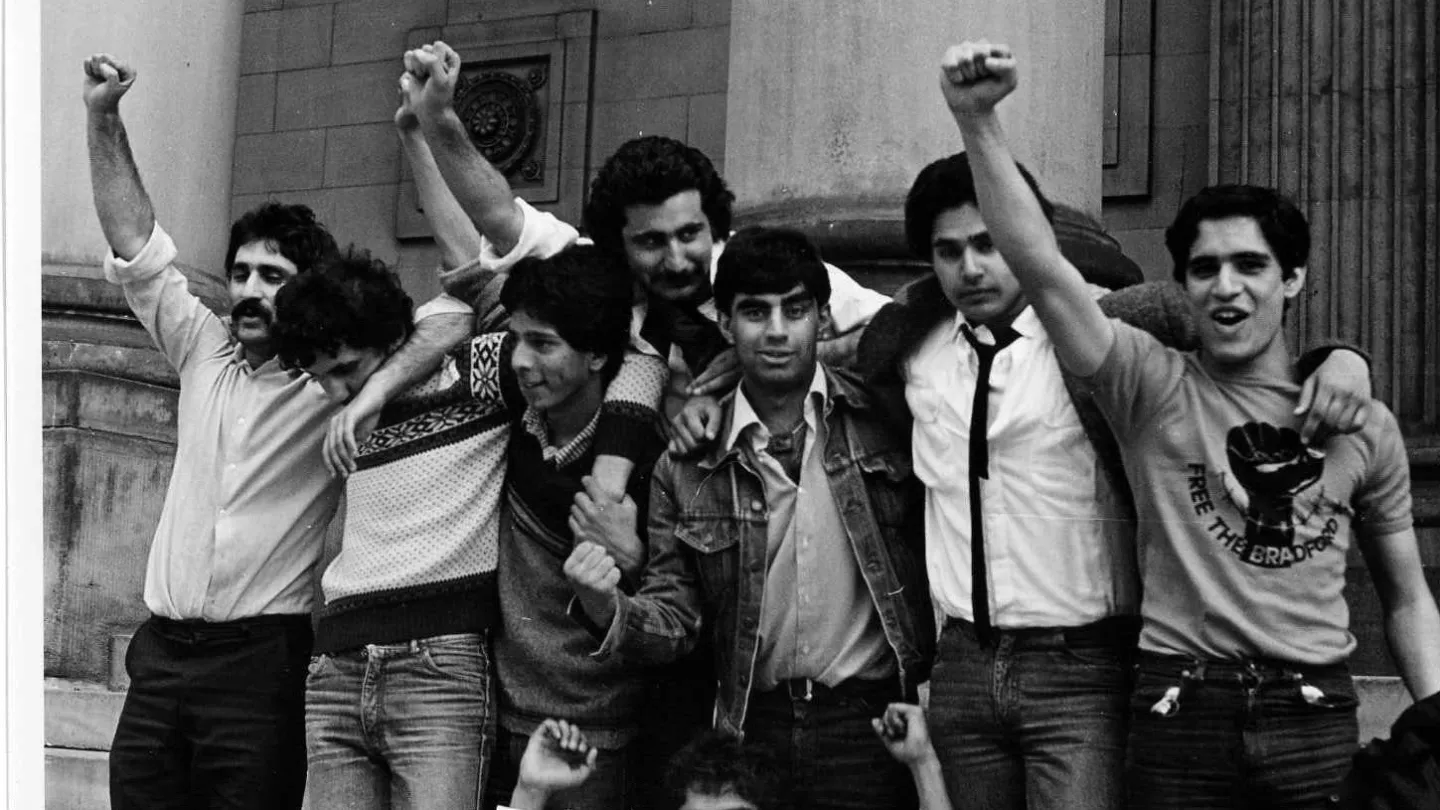
Bradford, near Leeds, is a city in the north of England. During the Industrial Revolution, it was known as THE place for wool manufacturing. Nowadays, it has a reputation for its South Asian food scene, among other things.
And in the early 1980s, it made national and global headlines when 12 young South Asian men stood trial on terrorism charges for preparing to defend their community from a racist attack. Activist filmmakers Ken Fero (Ultraviolence) and Tariq Mehmood’s documentary Rebellion, from Migrant Media, a collective of radical documentary filmmakers with a focus on stories about race, class and resistance, retraces their story and broader impact. Mehmood is, in fact, one of the Bradford 12.
Rebellion world-premieres as part of the 70th edition of the BFI London Film Festival (LFF) on Oct. 14. “Revolution is the beat that drums through this electrifying story about the landmark case against the Bradford 12,” the festival website notes.
Fero talked to THR about how timely Rebellion feels today amid a renewed rise of far-right politics, why it was a journey of more than 30 years, the importance of involving the community in making the film and why cinema can be a weapon.
Rebellion feels very timely. How long did you work on it, and did you know early on that this would be a historic film that also reflects on our presence?
I met Tariq Mehmood in 1991, making another film called Britain’s Black Legacy, which was looking at the history of self-defense against racist attacks in the U.K. from ’61 to ’91. Tariq told me about the Bradford 12, and I thought, well, I’ve never heard of the Bradford 12. I’ve heard of the Mangrove Nine; I’ve heard of the Birmingham Six; and I’ve heard about all these miscarriages of justice. But the Bradford 12 were really not very well known.
So he said we should make a film about it. Fast forward 33 years later – we got busy in the meantime making films: we decided now’s the time to tell [this story]. It took about 30 years because we wanted the story to percolate and see what happens. As time passed, we began to see and get a sense that the political situation in the U.K. was changing. [Just look at the] growth of the far-right, for example, and the vilifying of migrants, trying to create a scapegoat for the political problems.
S, we decided, let’s make the film. The time is right. It took three or four years to make, and obviously the fact that it’s coming out now when the far-right, or proto-fascist groups, are beginning to take to the streets, [makes it timely].
There have been groups of people dressed in black with masks on roaming the streets of the U.K., trying to target migrants. When fascists and racists take to the streets, they don’t differentiate between someone who has a U.K. passport and is a citizen and who isn’t. It could be anyone who looks different. That’s what people have to realize – this is a serious question around race, but it’s actually also a question of all our liberties; it’s a question of all our lives, and it’s a question of all our hopes and dreams that these people want to crush.
‘Rebellion,’ courtesy of Migration Media/Max Farrar
Courtesy of Migration Media/Max Farrar
The film gives one a sense of history repeating itself…
There’s a line in the film which goes something like: The grandchildren of the people who marched in the ’80s with the far-right are now burning down hostels with asylum seekers. There’s a fundamental problem here of the lack of political activity in working-class communities. There hasn’t been any effort to go into white working-class communities and say, “Your problems are created by Elon Musk, not by migrants,” and I think that’s one of the things the film politically tries to do.
Tell me more about how you see Elon Musk’s role, who has expressed support for various right-wing European politicians …
It’s a complex area to discuss, but fundamentally, if you take [Reform UK head and right-wing British politician Nigel Farage], for example, and if you take any of the far-right groups that are becoming popular in Italy, in Germany, in France, and if you see what’s happening on the streets in France with police attacking children, there is a huge shift politically internationally. Let’s not even talk about Trump.
There’s a huge shift to the right, and the shifts to the right historically have always happened when there’s a sense that people are getting organized. Over the past few years, there’s been so much growing resistance, particularly among young people. You can talk about many countries where there have been revolutions against very established governments, and we’ve seen many countries in the Global South falling, and that’s a threat to capitalism, and it’s a threat to imperialism.
I think they want to generate friction within their own countries, so it distracts people from what’s really going on. So people are trying to pit people against each other, creating “the other,” whether the other is in any European country or whether it’s Iran, and we must have international solidarity. We must have communities working together. We have to take on capitalism and defeat it.
Rebellion is just a film. It’s a documentary. It won’t cause a revolution. It may cause some small rebellions, which would be great in some places.
There is a vibe of activism but also hope to the film. How important is that for you?
Of course, the other side of this [story] is that this was an incredible victory. It’s a story of hope. It’s a story of unity, and it shows that in any situation, whether it’s the 1980s, 2026 or whatever happens in the future, if people actually organize and support each other, it is possible to defeat the forces of evil, whatever you want to define them as.
‘Rebellion,’ courtesy of Migration Media/Max Farrar
Courtesy of Migration Media/Max Farrar
Tell me more about how key the idea of resistance is to your filmmaking and Migrant Media films.
If you see any documentary that we’ve made, it’s always been about resistance. It’s always about hope. The situations are deadly, serious and painful. But within any painful situation, when there’s any oppression, there are always people who are fighting, and that’s what we want to do. We want to give people hope. We want to give the young generation hope. They’re on the streets, whether it’s about environmentalism, whether it’s about Gaza, whether it’s about Black Lives Matter, and there are connections between all these struggles.
So, you see Rebellion and the Bradford 12 as a possible inspiration for them?
For 12 young [South] Asians in 1981 to take on the British establishment, to take on not just the police, not just the government, but the security services, and for a jury to find them all not guilty is an incredible feat.
And if you make a parallel again to today with, for example, the question around [the activist group] Palestine Action [that has been designated as a terrorist organization in the U.K. since 2025], where people are taking a stand and they are being accused of being terrorists as well. The difference now, of course, is that terrorism is enshrined within the legal system in a way where it’s been politicized to an extent that has never been done before. So now we have 95-year-old ex- preachers who are protesting around Palestine and getting put into prison.
We’re not alarmists. We don’t want things to be tragic. We don’t want there to be this kind of political violence. But if we ignore it, it’s at the peril of all of us. So we have to raise these issues. But have to give people hope.
I noticed how the resistance movements we see in the film cut across activists from various backgrounds: South Asian folks, whether Muslim, Catholic or other, groups of Black people, Jewish activists, and so on. Given today’s divisions around Gaza, I was fascinated to see this.
Yes, Tariq in the film mentions how much support the Bradford 12 got from progressive Jewish organizations and how they really learnt a lot from progressive Jewish organizations. Many Jewish people supported the Bradford 12 and vice versa.
‘Rebellion,’ courtesy of Migration Media/Max Farrar
Courtesy of Migration Media/Max Farrar
There has been much debate about how political or not cinema can and should be…
I think it was Wim Wenders who once said something like, “The news tells you every day that there’s no hope.” You watch it every day, and eventually you believe it. And of course, many filmmakers have taken that position, not just documentary filmmakers, but fiction filmmakers as well. But for us, this is a political subject for sure.
The film was made politically as well, and for us, that’s really important. Lots of people who were in the Bradford 12 were editorial consultants, and they took part. We organized a kind of Third Cinema event. [Third Cinema, which originated in Latin America in the 1960s, focuses on social justice and resistance against imperialism and uses guerrilla filmmaking techniques.] So the trial scene in the film, which takes up about a third of the film, was actually all shot on one day with the community. There were no [professional] actors involved.
We made a callout and had about 120 people coming, which included people from the Bradford 12, their grandchildren, their children, people from the community. We had some filmmakers, we had bakers, we had street cleaners, we had everybody coming because they were really interested in the story, and then they became part of history and part of the film’s history. That was our first venture into reconstruction, but it was done using a Third Cinema approach, where you involve people and tell the story as you go along.
What’s your hope for the film?
The hope we have is that whoever watches the film can come away and feel that wherever there’s injustice, they should fight it within their lives, that it’s possible to have hope. Some of the lessons from the Bradford 12 are that you can’t do this on your own. You have to organize – whether it’s around an issue in your local community, whether it’s an international issue, whether it’s a national issue. And it is not just organizing through social media, but it’s [important] to meet, to eat together, to dream together, to fight together.
>
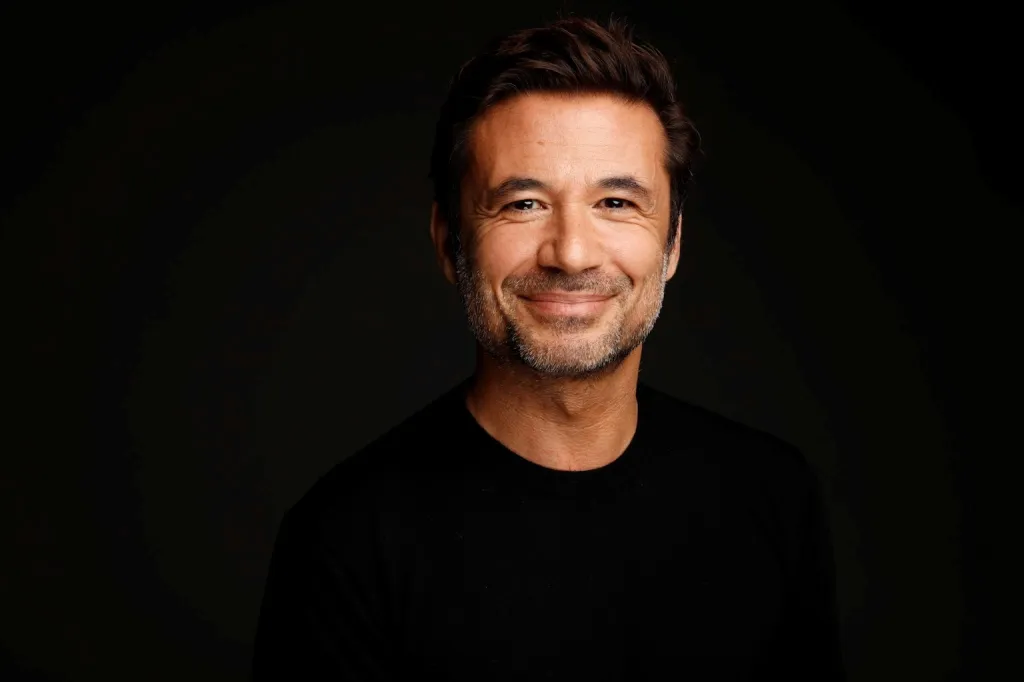
YouTube is not “invested in producing content.”
That was the message today from the platform’s European chief Pedro Pina, as he continues his tour of the biggest TV events in the world convincing traditional TV gatekeepers that they should work with YouTube.
Pina was speaking alongside RTL Deutschland CEO Stephan Schmitter, telling the audience that YouTube is a distributor and revenue sharer, not a producer trying to take work away from the traditional players.
“We believe there are incredible companies around the world who know what beautiful content looks like,” said Pina. “The audience is in command of their own choices and the only thing we need to make sure is that the content can be delivered [on our platform]. We want RTL and partners to understand the YouTube platform really well. As a platform we are not invested in producing content.”
YouTube and RTL have been working together for more than a decade. Last year, RTL became one of the traditional broadcasters that signed up for a new tool allowing them to better surface full episodes and seasons of shows. It has full episodes and news channels on YouTube.
Pina pointed to the success of RTL shows on YouTube like long-running action series Cobra 11, which “speaks to the core of what we know about YouTube, being all about fandom.” “You are activating fandom and the people that are fans of Cobra 11,” he added.
He had a message for potential new partners like RTL, pointing out that “we cannot be successful if our partners cannot be successful and that stems from our revenue model, video by video, minute by minute, where we share revenue that we generate from content that stays on the platform.”
YouTube good for democracy
The likes of RTL and the BBC air plenty of news on YouTube and Pina argued today that YouTube can help with democracy in this regard.
“YouTube is a huge platform where all voices can be represented, all arguments presented and what’s important is to make sure all voices are there,” said Pina. “The more traditional players start being on YouTube, the more a cross section of voices can be heard and that can only be good for democracy.”
YouTube is one of the big talking points at MIPCOM and Pina has been to several of these big events of late. At the recent Edinburgh TV Festival, he argued that the Google-owned behemoth is not a “villain” for the traditional broadcasting business.
>
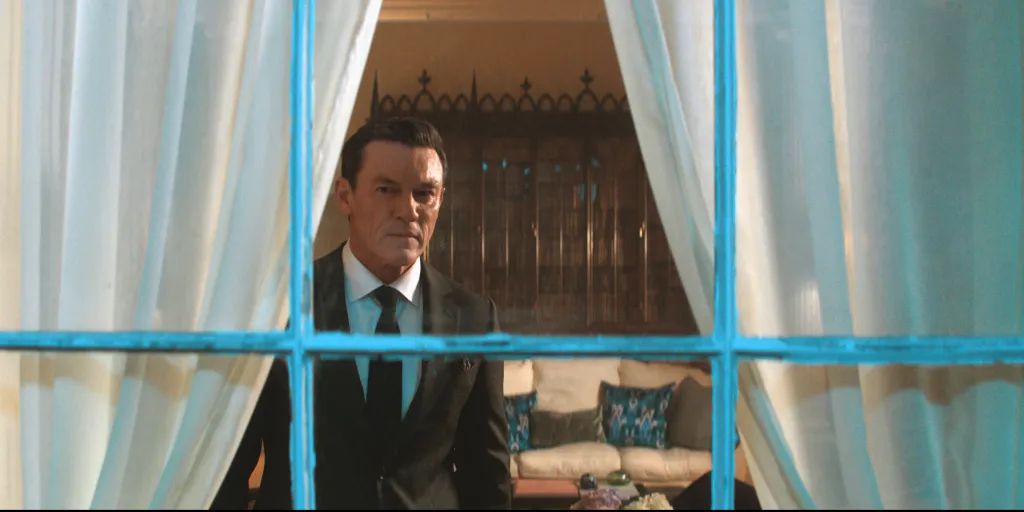
Luke Evans has said his new ITV thriller The Party “offers a glimpse into the British class system” that remains “particularly visible” in the UK.
Evans said the adaptation of the Elizabeth Day novel, which launched on ITV last night, shows how the class system “remains more prevalent here than in almost any other country.”
The Sarah Solemani-adapted thriller sees Evans play journalist Martin Gilmour, who is shaped by his lifelong friendship with the wealthy and charismatic politician Ben Fitzmaurice (Tom Cullen). Having met at an elite boarding school, Martin and Ben have an unbreakable bond. Three decades on, Martin is invited to Ben’s lavish birthday party at the Fitzmaurice’s country pile, but Martin fears that the publicity of Ben’s bid for Conservative leader will dredge up the secrets of their past with tragic consequences.
The Hobbit star Evans, who grew up in a village in Wales and comes from a working-class background, said he “relates to the way Martin climbs the ladder and manoeuvres his way into the upper echelons of society.”
“The idea of being born with a silver spoon is very much alive and well,” said Evans. “Other countries may have class divisions, but ours are particularly visible. The show shines a light on a world I didn’t know much about as a working-class boy.”
Evans said this close-knit examination of the British class system will serve The Party well when ITV Studios is shopping it to global buyers, as he chatted to Deadline at MIPCOM, where it is one of the distributor’s key titles alongside shows like Steven Moffat’s Number 10.
It was Evans, in fact, who brought the hit novel from the How to Fail podcast host to ITV Studios-owned World Productions, with whom he had worked on ITV’s hit drama The Pembrokeshire Murders.
Evans read The Party during the pandemic and thought it had “the perfect ingredients for a great drama.” His company Stoic Productions has a production credit.
“I’ve always liked the behind-the-scenes and developmental side of projects because you learn so much about how a book can be adapted into a script,” he said. “Being on the production side of a project has taught me that you really have to believe in people. There are peaks and troughs. As an actor, I look at things differently from someone who isn’t in that position, so I think I was able to bring some value to the post-production process.”
Evans is constantly keeping an eye on buzzy IP, reading “stories, newspaper articles, ideas or simply something that inspires me,” he said.
He was attracted to the character of Martin because he’s “complex, deep and thoughtful.” “I understood Martin very quickly,” he added. “I thought he would be a great role to play and an interesting journey to go on. He’s ambitious and ruthless, but also comes with danger, tragedy and consequences. Martin is covered in scars and carrying secrets, and all of that makes for a compelling story.”
The Party launched last night on ITV to a peak of nearly 1.5 million viewers and will likely accrue many more on ITVX. ITV Studios is selling The Party at MIPCOM.
>


Search For Canadian TV Actor Stewart McLean Now Homicide Investigation


These ’90s fashion trends are making a comeback in 2017
According to Dior Couture, this taboo fashion accessory is back
Model Jocelyn Chew’s Instagram is the best vacation you’ve ever had
Emily Ratajkowski channels back-to-school style
9 Celebrities who have spoken out about being photoshopped


Rurouni Kenshin: Hokkaido Arc Manga Takes 1-Issue Break – News


HIDIVE to Stream English Dubs for The World Is Dancing, The Forsaken Saintess and Her Foodie Roadtrip in Another World, The Dangers in My Heart: The Movie Anime – News