
Anime
Sonic Racing CrossWorlds Game Reveals Year 2 Roadmap; Sonic the Hedgehog: Memories and Beyond Short Film Reveals Debut Date – News


Sega revealed on Friday a roadmap for Year Two of its Sonic Racing CrossWorlds game. Year Two will launch on November 3 and the company streamed a video showcasing the new updates.
Year Two will launch with “Duel Mode,” a Gadget System upgrade, two new characters Bayonetta and Aigis, and two new machines: McLaren Racing and Butterfly Witch.
The game will release its Godzilla collaboration on November 3 with the launch of Year Two and its Evangelion collaboration in January 2027. The Evangelion collaboration will include two new characters and three new machines.
The Virtual Sanrio Puroland collaboration will launch in Q2 2027 and contain two new characters and two new machines. The Segaland Pack containing the Segaland course, three new machines, and the Midgar Pack (Working Title) from the Final Fantasy VII Remake series will launch in Q3 2027. Sega will release the Reload Revival Royal Pack from the Persona series in Q4 2027.
The season pass content for Year Two will include the Sega Controllers Decal Pack, Consoles Pack, and a pack containing the character Super Shadow and machine Super Dark Flare.
Sega also streamed a trailer for the Sonic the Hedgehog: Memories and Beyond 35th anniversary short film on Friday. The video reveals the short film will debut on November 12
Sega released the game in September 2025 for PlayStation 5, PlayStation 4, Xbox One, Xbox Series X|S, Nintendo Switch, and PC via Steam and Epic Games Store. The game got a release digitally for Nintendo Switch 2 on December 3. There is a Switch 2 upgrade pack for owners of the Switch version, and progress carries over. The physical Switch 2 release with the full game on the cartridge shipped on March 26.
Sonic Racing CrossWorlds features guests from other Sega franchises including Hatsune Miku, Like a Dragon’s Ichiban, and Persona 5‘s Joker. The game previously had a crossover with the Nickeledeon animated series SpongeBob SquarePants, and also collaborated with CAPCOM for a Mega Man crossover.
The game also collaborated with both Pac-Man and Minecraft as part of Year One. Classic Sonic launched on June 23, Axel from Crazy Taxi debuted in August, and Amigo from Samba de Amigo joined the game in September.
The game also added music from Sega‘s Rhythm Thief & the Emperor’s Treasure, Feel the Magic: XY/XX, The Rub Rabbits!, and Space Channel 5. The game had collaborations with the Teenage Mutant Ninja Turtles and Avatar: The Last Airbender franchises as part of Year One. The Teenage Mutant Ninja Turtles: Mutant Mayhem collaboration debuted in July 2025, and the Avatar Legends collaboration debuted in October 2025.
An animation project for the game debuted in August 2024.
Source: Press release
>
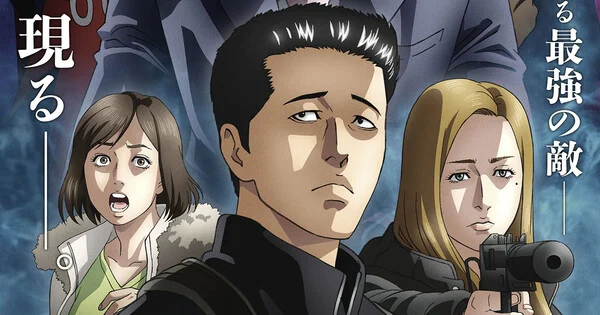
The official website for the television anime adaptation of Katsuhisa Minami‘s The Fable manga announced on Wednesday six cast members and the January 9 premiere for the anime’s second season. The website also unveiled a visual:

© 南勝久・講談社/アニメ「ザ・ファブル」製作委員会

© 南勝久・講談社/アニメ「ザ・ファブル」製作委員会
The newly announced cast includes (pictured above from left to right):
The anime will premiere on NTV on January 9 at 12:55 a.m. JST (effectively, January 10).

© 南勝久・講談社/アニメ「ザ・ファブル」製作委員会
The returning cast includes :
Ryōsuke Takahashi (Armored Trooper Votoms, Phoenix, Ozma) is returning to direct the anime at Tezuka Productions. Sci-fi writer Yūya Takashima is again handling the series composition, and writing the scripts with Mayumi Morita (Black Jack TV, Vampire Knight). Returning character designers include Kyūma Ōshita and Saki Hasegawa. Yasuyuki Urakami (Detective Conan) is returning as the sound director. Yo Tsuji (Ron Kamonohashi’s Forbidden Deductions) is the new music composer.
The anime premiered in April 2024 and aired for two continuous cours (quarters of a year). Disney+ is streaming the series worldwide, and Hulu is streaming the series in the United States. The anime also has an English dub.
Kodansha USA Publishing is releasing the original manga in English, and it describes the series:
When you’re the infamous “genius killer” hitman The Fable, many things come easy. Being a normal person, however, isn’t one of them. In fact, being told that he can’t kill anyone for a while may just be the hardest job he’s ever taken…
Minami launched the original manga in Kodansha‘s Weekly Young Magazine in November 2014, and ended the series in November 2019. The manga has 22 compiled book volumes. The series won Best General Manga at the 41st annual Kodansha awards in 2017.
The original manga inspired two live-action films, which opened in Japan in June 2019 and June 2021, respectively.
Minami launched the The Fable: The Second Contact manga as a sequel to the first manga in July 2021. The sequel manga ended its serialization in July 2023. The manga serves as the “second part” to the overall manga franchise. Kodansha released the manga’s ninth and final volume in November 2023. The manga’s third part The Fable: The third secret launched in March 2025. Kodansha‘s K MANGA service is releasing the manga as a simulpub.
The manga is inspiring the The Fable: Manga Build Roguelike roguelike deckbuilder game from Kodansha Game Creators’ Lab and developer Mono Entertainment.
Sources: The Fable anime’s website, Comic Natalie
>
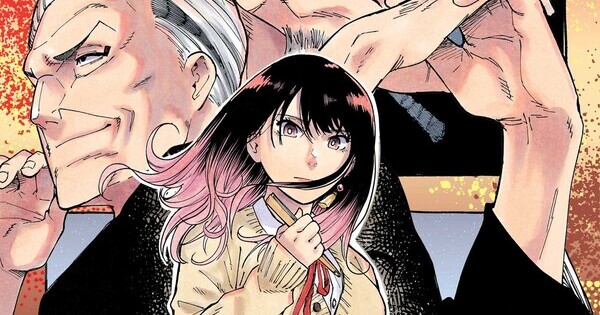
Volume four is where I truly fell in love with Akane-banashi, for one specific reason: Issho Arakawa. As much as I love Akane as a protagonist and have grown to love her growth and journey over the run of the series, Issho is equally important and valuable to the strength of the series for how unique a “villain” he really is. There’s often discussion about compelling villains and “reasonable” ones who are supposed to have potentially good ideas but poor execution, like many of the Shonen Jump villains of yore. But Issho Arakawa isn’t a world-destroying supervillain; he’s the pinnacle of an art form, and he believes he is responsible for its security and sanctity. His confrontation with Akane is compelling and thrilling, setting much of the foundation for the series that, upon rereading it for this review, I have to commend Yūki Suenaga‘s foresight; so many important plot points are set up in this single volume. If the first three volumes didn’t fully hook you, volume four is absolutely the make-or-break for the series. If Akane’s confrontation with Issho doesn’t compel you to continue, then not much that comes after will.
Speaking of, volumes 4-6 begin the Zenza Training Arc, in which Akane’s proper entrance into the professional world of Rakugo truly begins. While the first arc introduced the major motion and players, as well as setting Akane up as our protagonist to care for, the Zenza Arc takes the rose colored glasses off the portrayal of rakugo as a profession; almost immediately, Akane is forced to confront that she is no longer protected by her master, Shiguma, or his disciples, and that the working world is one filled with people whose petty grievances, lust for power, and enjoyment of mundane hierarchy can mean the end of one’s career no matter how talented you happen to be. This arc is a bit of a downer, as the story grinds to a halt while the writers focus on how brutal the professional world of “art” can be, hammered home by a heavy focus on the sexism inherent in the rakugo world.
This latter part is offset by the newest rakugoka master that Akane trains under, the harsh, beautiful, and commanding Urara Ransaika. Urara and Akane are an interesting substitute teacher/pupil combination, with Urara’s no-nonsense approach offsetting the narrative about being a woman in a supposed man’s world; there’s not a lot of “girl power” narrative here, just the cold, hard facts that while men’s sexism can kneecap people, in a performance art, it is the strength of one’s art and the response of the crowd that truly matters. These volumes also help develop the secondary cast more, as Rokuro, Hikaru, Kaisei, and Karashi all get some time to shine and get better known by the audience, rather than being treated as one-off characters with flat development; these characters are also professionals working on their craft, and the manga treats them as such.
As far as her development as a protagonist is concerned in general, though, Akane continues to be one of the best Jump, if not manga, protagonists in a while. She does suffer real setbacks, and the juxtaposition of her innate performing skills with her lack of interpersonal ones makes her fun to watch; rather than simply succeeding on the merit of just her performance, multiple characters continue to point out that she is essentially a spoiled child floating on that same talent, and that at some point, she’s going to have to contend with the fact that her limited roster of stories, her acumen, and her overall focus, avenging her father, are all going to eventually leave her hanging if she doesn’t figure out how to actually be both a professional and an artist. As volume six comes to a close, we get more insights into the fascinating workings of Issho, as well as Kaisei’s backstory, where his cool and almost seductive demeanor from the earlier volumes is replaced by one of contempt for Akane; after all, as Issho’s main pupil, and someone who seems to owe much of his life to Issho, what other feeling could Kaisei have towards the girl everyone is talking about instead of him? Still, Kaisei also sees value in Akane, dropping a hint, or a trap, at her feet before the close of the volumes: a Zenza training event held by Ikken Arakawa, one of the Arakawa 4.
There is a little bit of weakness, though, as some of the narrative about Akane’s confrontations with toxic co-workers, superiority and hierarchy, and the conflict between her wunderkind status and the reality that she has had everything handed to her but has developed very little of her own skillset is undercut by her being saved in the story by those same connections; her petty attempt to get back at a toxic Futatsume costs her respect and job opportunities, but she’s also summarily saved almost immediately by the all-star cast of “main characters” that orbit her as the actual main character of a manga. This is perhaps nitpicking, as the manga is still excellent and the narrative compelling, but Akane being thrown into the professional world only to have Rokuro (and by extension, her own master and then Urara) swoop in to save the day, and Akane swaying hearts and minds with her performance, are maybe the most fantastical parts of the narrative. The “villains” of this arc, so to speak, are dispatched by the narrative and sheepishly converted to allies, rather than presenting any realistic stumbling point. Maybe that’s the jaded adult in me who has seen how workplace toxicity is often never truly fair or punished, and that people who don’t deserve to succeed often do, while those who work exceptionally hard find their dreams in flames, but it does make some of this arc’s narrative a bit juvenile in execution.
>
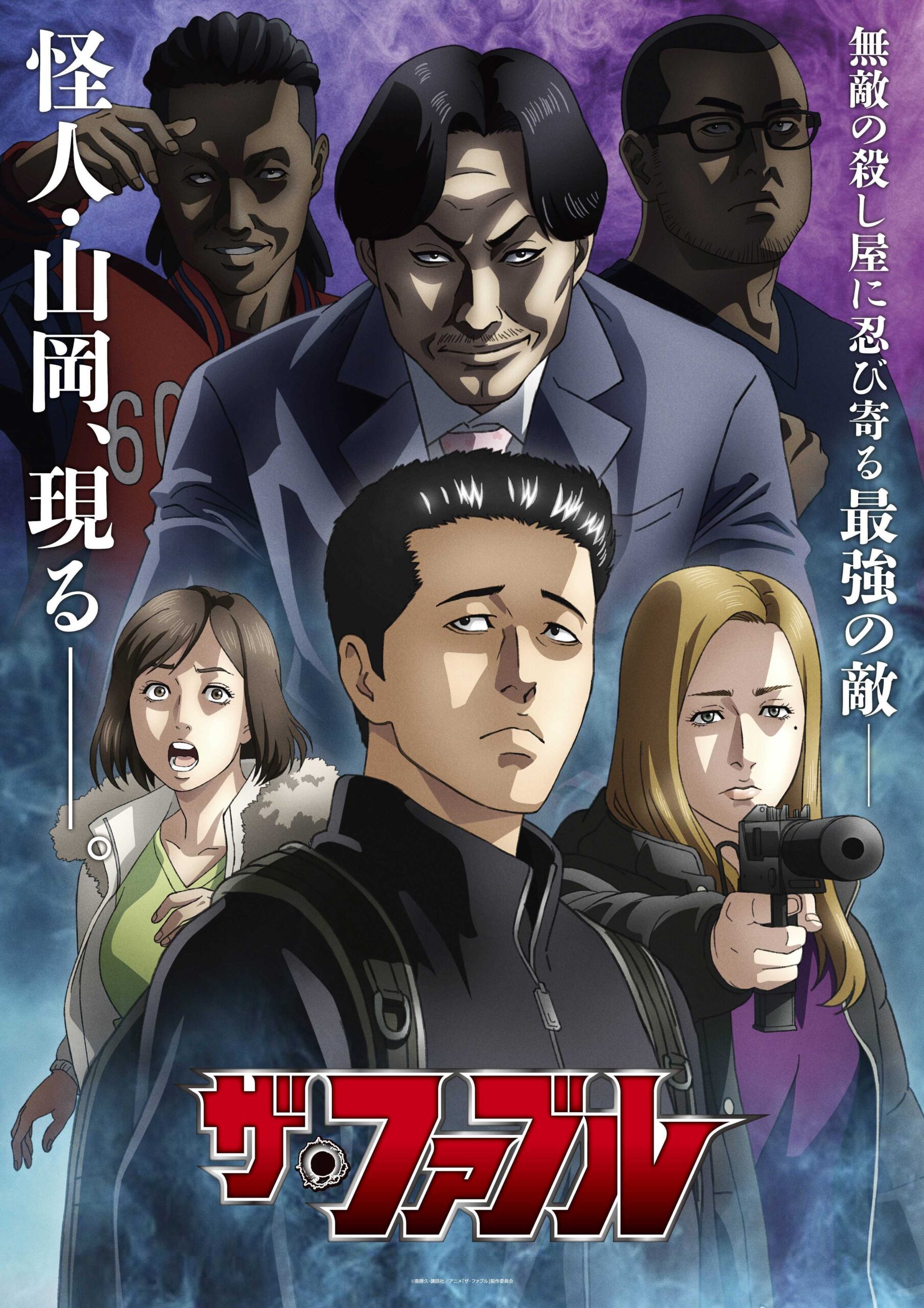
 The official website for the The Fable television anime revealed additional cast and the main visual (pictured) for its second season on Wednesday. The new season will adapt the Yamaoka-hen (Yamaoka Arc) from Katsuhisa Minami‘s crime comedy manga and is scheduled to premiere on the Nippon TV network on January 10, 2027, airing every Sunday at 12:55 a.m.
Cast
Yamaoka: Kouichi Yamadera (Yozakura-san Chi no Daisakusen)
Azami: Takanori Hoshino (Sentai Red Isekai de Boukensha ni Naru)
Eucalyptus: Hiroyuki Yoshino (Yomi no Tsugai)
Koji Mizuno: Satoshi Mikami (Kami no Shizuku)
Jiro: Taiten Kusunoki (Hidarikiki no Eren)
Suzumushi: Seiyuu Fujiwara (Liar Game)
Ryousuke Takahashi (Soukou Kihei Votoms) is returning to direct the second season at Tezuka Productions. Yuuya Takashima is handling the series composition. Mayumi Morita (Megami no Café Terrace) and Yuuya Takashima are writing the script. Saki Hasegawa (Darwin Jihen sub-character design) and Kyuuma Ooshita (My Home Hero chief animation director) are designing the characters. Yo Tsuji (Tasokare Hotel) is composing the music.
The first season aired in 25 episodes in Spring 2024. Disney+ and Hulu simulcasted the anime with subtitles and dub in multiple languages.
Minami serialized the manga in Weekly Young Magazine from November 2014 to November 2019. The sequel, The Fable: The Second Contact, serialized in the same magazine from July 2021 to July 2023.
A second sequel, The Fable: The Third Secret, began in March 2025. Kodansha shipped The Third Secret‘s fifth volume on July 6, with the sixth volume scheduled to go on sale on November 6.
Kodansha USA licensed the original manga in English in March 2022 and released the 22nd and final volume in January 2024. All three manga series are simulpublished on the K Manga platform.
The Fable won at the 41st Kodansha Manga Awards in the General category in 2017. The manga is also placed among the top 20 titles in the Kono Manga ga Sugoi! rankings’ Male Readers division in 2019 and 2020.
Source: Comic Natalie
>

Independent regulator waiting for Man City appeal

X-Files: The Official Archives Volume II: Get a First Look

Critics Choice Documentary Awards 2026 Nominations: ’14th Leads’
-

 movies5 months ago
Search For Canadian TV Actor Stewart McLean Now Homicide Investigation
-

 Fashion9 years ago
These ’90s fashion trends are making a comeback in 2017
-
Fashion9 years ago
According to Dior Couture, this taboo fashion accessory is back
-
Fashion9 years ago
Model Jocelyn Chew’s Instagram is the best vacation you’ve ever had
-
Fashion9 years ago
Emily Ratajkowski channels back-to-school style
-
Fashion9 years ago
9 Celebrities who have spoken out about being photoshopped
-

 Anime4 months ago
Rurouni Kenshin: Hokkaido Arc Manga Takes 1-Issue Break – News
-

 Anime3 months ago
HIDIVE to Stream English Dubs for The World Is Dancing, The Forsaken Saintess and Her Foodie Roadtrip in Another World, The Dangers in My Heart: The Movie Anime – News