
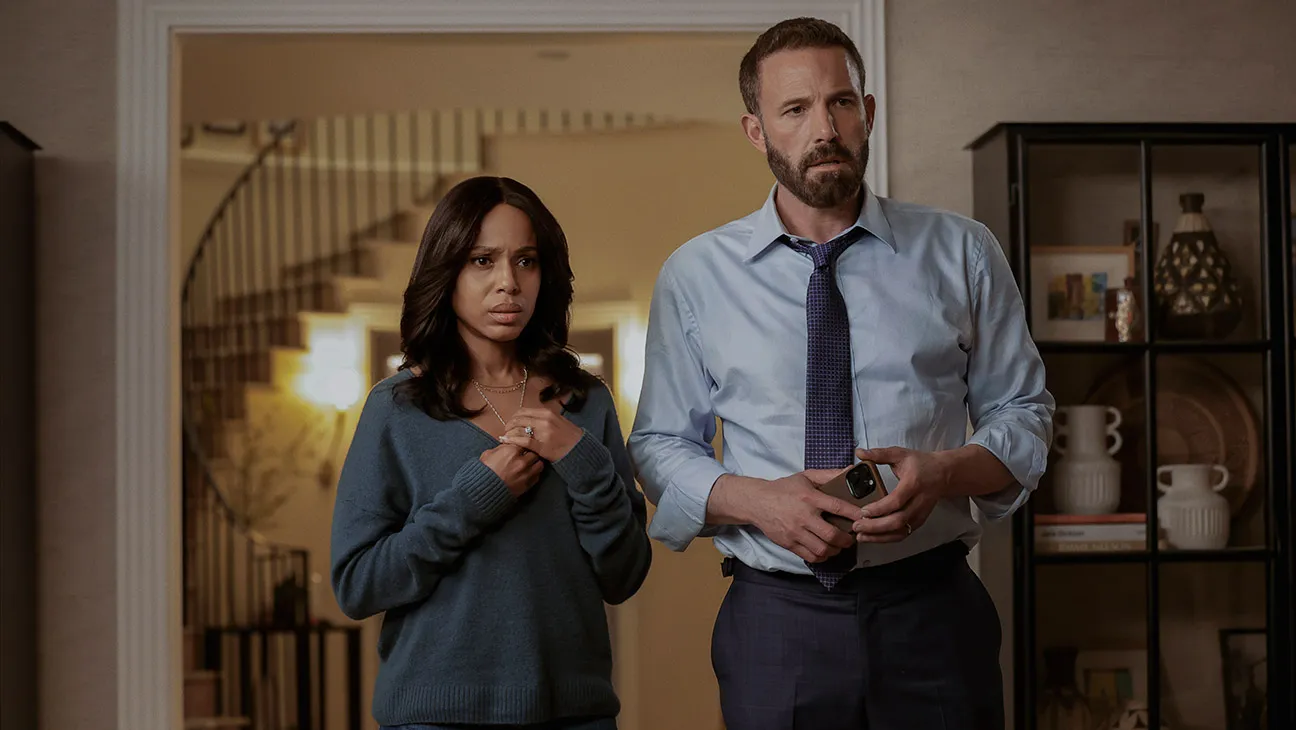
(L to R) Kerry Washington as Abigail and Ben Affleck as Mark in Animals.
Warrick Page/Netflix


[This story contains spoilers for Netflix‘s Animals.]
In the eight years since wrapping up her run as political fixer Olivia Pope on ABC’s Scandal, which made her the first Black woman to lead a primetime network drama in nearly 40 years, Kerry Washington has focused largely on producing, stepping into acting roles only when they push her range. But lately, she has been actively searching for strong directors to collaborate with. That made an unexpected offer to star opposite Ben Affleck in his latest feature, Animals, a welcome surprise.
She was driving around Santa Barbara, where she and her family rellocated due to the 2025 fires, when she got a text from Affleck out of the blue. “He wanted to talk to me about a project,” Washington tells The Hollywood Reporter. She had long been a fan of Affleck’s work behind the camera, counting Argo, The Town and Gone Baby Gone among her favorite films. “I remember hoping that I would like the script as much as I liked the idea of working with him… and I actually couldn’t put it down.”
Directed by Affleck from a script he co-wrote with Billy Ray and Connor O. McIntyre, the new Netflix crime thriller stars Affleck as Mark Kimball, an independent Los Angeles mayoral candidate whose campaign has secretly bankrupted his family. When his young son is ostensibly abducted for ransom on Halloween night, Mark must confess his financial ruin to his therapist wife, Abigail (Washington), who has actually been having an ongoing affair with a coworker.
As they scramble to pull together the ransom overnight, the fractured couple are forced to confront their mutual betrayals. But in a tragic case of mistaken identity, Mark and Abigail discover that the kidnappers actually took Hector — the son of their nanny Cecilia’s (Adriana Paz) undocumented boyfriend Ramon (Luis Gerardo Méndez) — after confusing the two boys in their matching Halloween costumes. This revelation transforms a classic abduction thriller into a provocative test of privilege and empathy, forcing Mark and Abigail — and, by extension, the audience — to confront just how far they will go to save another family’s child.
Much like her appearance in the most recent Knives Out sequel, Animals stands as a rare entry in Washington’s filmography where she serves strictly as a performer rather than a producer. Through her production banner, Simpson Street, Washington continues to oversee a busy slate that includes the fourth season of Hulu’s legal drama Reasonable Doubt, the recently renewed Imperfect Women, the upcoming crime thriller What Remains in development at Hulu, and an upcoming Desperate Housewives spinoff titled Wisteria Lane.
Expanding beyond traditional TV, Simpson Street — named after the Bronx street where Washington’s mother grew up — recently launched a weekly podcast version of her interview series, Street You Grew Up On. (Affleck was the first guest of the new season, which Washington tells THR will consist of at least 20 episodes.)
Speaking on a video call from her production company’s offices in Los Angeles, Washington opens up about working with Affleck to craft a portrait of a messy interracial marriage, why she agreed to expand Imperfect Women from a limited to an ongoing drama series — and what her career-defining role on Scandal taught her about power.
***
Ben Affleck has openly talked about how he initially wrote this script with his best friend Matt Damon and ex-wife Jennifer Garner in mind. But after Matt committed to The Odyssey, Ben decided to play Mark himself. Jen, however, reportedly felt that starring opposite Ben as an estranged couple would bring too much real-life baggage to the screen. So, when she stepped away, Ben immediately thought of you to play Abigail. What do you remember from your earliest conversations with him about this project?
I remember getting really excited because before I read it, he told me that, for him, the film was a thriller with a lot of other themes — and one of the themes that was most important to him was marriage. I remember thinking, “They always say that when they want the girl to say yes.” When you’re playing “the wife” and they want you to do it, they say, “Oh, the marriage is so important,” because they want you to think your part is important. So, in my mind, I was like, “We’ll see when I read this thing.”
When he said, “Oh, I want you to consider playing my wife in something,” I don’t know why, but I didn’t think it was going to be such a tumultuous, difficult marriage. So then when I read it and we jumped on the phone, he was like, “I really need somebody who’s going to help me flesh this out more and dig into the material with me. We’re going to have a rehearsal process.” That also got me really excited because I love rehearsal so much.
One of the things I like to say that happens in this film is that you, as an audience member, are allowed to view into rooms that in real life you would never be able to be in and hear conversations that in real life you just wouldn’t be privy to — because there’s a certain way that a husband and wife talk to each other when nobody else is in the room. There’s a certain way that Sam [Mark’s campaign manager, played by Steven Yeun] and Abby speak to each other when Mark’s not in the room. There are all these different masks that we wear in different relationships. It was really fun for us to get to discover what the masks were and who we were when the mask came off, especially in the framework of this heightened nightmare of a night in the life of this family.
Abigail was not initially written as Black, but having you step into that role transformed that central marriage into an interracial one. You and Ben have talked about how you worked together to establish the long-term history but also underlying friction between your characters. Given that we only spend one tumultuous day in the lives of the Kimball family and their closest associates, did you establish any kind of backstory for Abigail?
We spent so much time talking about backstory — how they fell in love, why they fell in love. We built out the love story. I asked him to pick out my ring so that he chose the ring in the way that Mark would’ve chosen Abby’s. He was like, “What if you don’t like it?” And I was like, “Abby may not like it either. That happens.” At one point, I remember we were getting along so well in rehearsal, and we were outlining this beautiful initial relationship that they had that we were both feeling a little bit like, “Oh boy, are we going to be able to move into this frustrated, less amicable version of a marriage?” And then, we had our first read through of one of the fight scenes, and we were like, “We’re going to be just fine.” (Laughs.)
[During filming] we would do the scene, and then we would riff and improv different moments of the scene. That question he asks me in the big fight scene in our bedroom around race — that was not a scripted line. [Washington is referring to the moment in the film when Mark, upon learning that Abigail has been having an affair with another man, asks his wife, “Is he Black?”] People want to talk about that line all the time. It’s amazing that that moment really stays with people. That was an improvised question that came out of Ben when filming one of the scenes, which is partly why I didn’t respond because I was so shocked. Also, I knew his character didn’t want the answer to that question, so my non-answer was the answer.
But that came out of the rich improv process we had around: “What was his relationship to my family? Do they approve of him? Did I date other people of color before him? Had I always dated white guys? Did he have insecurities around not being Black and being with my family?” We had built that relationship so that when we were in the heat of the argument looking for new ways to engage, that line came from him really organically and beautifully. It’s one of my favorite moments in the film.
(L to R) Kerry Washington as Abigail and Ben Affleck as Mark in Animals.
Warrick Page/Netflix
You raised all of those questions before and during the filming process amongst yourselves, but do you actually want to reveal any of that backstory to the public?
I kind of don’t because I feel like that’s part of the point of the film. We have to be really clear about that because as Abby, when I look at Mark, I want to be really clear about our history. We came up with some of that based on our own lived experience. Obviously, in the film, it’s nobody’s marriage. It’s not my real marriage; it’s not his real marriage. But you bring your lived experience to the writing process, the acting process.
As an audience, I think Ben does a really beautiful job inviting you to ask questions. I think that’s even part of why we don’t spend as much time with the kidnapper, because you don’t get to point a finger and be like, “Oh, that’s the bad guy.” Without more information and personification, you have to consider the bad guy in everybody. You have to be willing to ask more questions about who else is culpable, who else is contributing to this terrible dynamic.
Even for Adriana and I, we discussed: How long has [Cecilia] worked in the house? We had this feeling that if she wasn’t on our payroll, we would probably be friends. Because when I say, “You’re like family to me,” in my very privileged Brentwood, slightly tone-deaf, slightly ignorant way, I also mean it. I feel a great deal of love and affection and gratitude for her in my life. I also have fear and resentment around the relationship that she has with my son because my son loves her so much. We were talking through all of those dynamics so that we could bring those emotional truths to the screen. Even if they’re not articulated, you feel it in the texture of how these characters deal with each other.
Shortly before Mark departs for the handoff, Abigail seemingly whispers that he must kill whoever shows up for the money. In the end, Hector’s father, Ramon, follows Mark to the exchange and shoots the final gunman to save both of them. Knowing an undocumented immigrant faces far harsher legal consequences than a wealthy politician, Mark covers up Ramon’s role, sends the family to Mexico with the ransom money, and claims credit for the rescue — using the fabricated hero story to win the mayoral race with Abigail at his side. What is your interpretation of the ending?
There’s so much that’s being said at the end of the film, but, again, I think there’s more that’s being asked of the audience to consider. I don’t think there’s a heavy-handed message to the film because everybody who watches the ending is like, “Wait, what?” From my perspective, I feel Mark and Abby become a team. They go from having this not-great marriage to literally being partners in crime and each other’s closest confidant and most intimate partner in all things — in love, in crime, in life, in ambition. At the end of the film, they’re running for office together, they’re leading the city together, they’re having sex in bed together. They’re really operating as very intimate partners, which is super interesting given where they’re coming from in the beginning.
I love the surprising twists at the end of the film that make you question what safety looks like and means to different people. [I was struck] that a Latin family would say that Los Angeles is too dangerous, that they can’t be here and they’d rather be in Mexico. The ending makes you question why it would be easier for a white man of privilege to assume guilt for a crime, rather than allow an undocumented immigrant admit guilt for a similar crime. Why are there different consequences, ramifications, ripple effects?
The ending, for what it’s worth, feels uncomfortably real and true to life. You could argue whether Mark’s motives for taking the blame were altruistic or self-serving.
It does feel real, because it’s not a happy ending and it’s not a sad ending. It’s a really complicated ending, because you’re also like, “Are they in love? I know that they’re fucking, and they said that they both wanted to fuck, so does that mean that they love each other?” I don’t know. It’s super interesting.
I am actually speaking to you the day after Imperfect Women was officially renewed for a second season at Apple TV. Given that the show was initially billed as a limited series, how soon after making the first season did you and your fellow executive producers — including Elisabeth Moss and creator Annie Weisman — begin discussing a continuation?
We didn’t initiate this conversation. This was a limited series, end stop. This conversation was initiated by Apple, and we were delighted to have it.
What did you find most appealing about playing Eleanor in the first batch of episodes, and what are you looking to explore with her going forward?
I really love people who are trying to do their best and not always doing it in a way that other people agree with, because that’s very human. Similar to Animals, I love work that invites questions and reflection. I love work that in some way holds up a mirror where we get to learn more about ourselves, either because we see who we want to be or who we don’t want to be.
We used to sit around the monitors and argue about storylines. It was so funny. Kate Mara, who’s literally playing the dead girl [whose husband Robert, played by Joel Kinnaman, sleeps with Eleanor], was like, “Who cares? She’s dead.” I was like, “Is that really how you feel?” She was like, “Yeah, she’s dead!” Other people would be like, “It’s not okay!” I’m looking forward to more of that. For me, getting to explore the interior lives of women with a rejection towards society’s pressure to have to uphold some false perfection — that’s really thrilling for me as an artist.
According to the logline, in season two, Eleanor will return to her hometown roots in the affluent Black enclave of Martha’s Vineyard. Does this mean that we will delve deeper into Eleanor’s relationships with her brother Donovan (Leslie Odom Jr.) and mother Constance (Sheryl Lee Ralph)?
Yes. Leslie’s a really dear friend of mine, and I love working with him. Those scenes between Donovan and Eleanor were some of my favorite scenes of the whole season to shoot. I love that character and how he speaks what everybody else is thinking about Eleanor, so I’m really excited about diving deep into that.
And Sheryl — I get emotional even thinking about it. I was so nervous to call Sheryl to play my mom. I was sitting at dinner with my kids, and I was like, “You guys, I have to call one of my most favorite actresses of my life, a hero of mine, and ask her if she wants to be my mom.” They were like, “Whoa. Who is it?” I was like, “You know the lady on Abbott?” They were like, “Oh, she’s amazing.” Of course, they don’t know her as Dreamgirls; they know her [as Barbara Howard] on Abbott. I called her from my living room, and they were sitting in another room; I think they were still eating in the kitchen. When she said yes, I was like, “Oh, I’m so happy.” My kids started cheering in the background because they could tell the call had gone well.
It was so meaningful and so transformative to get to do that work with her, even though it was just two scenes [in the finale], so I’m really excited to get to work with her again and to build out more of that very complicated relationship. There’s a lot of complicated relationships in that family, in that community, so we’re going to dig in.
Speaking of messy women in complicated relationships, next April marks 15 years since the series premiere of Scandal.
Is that true? That’s nuts.
Next December also marks 15 years since Quentin Tarantino’s Django Unchained, which you somehow filmed in between the first and second seasons of Scandal. You have spoken a lot about the pressure and responsibility of being the first Black woman to lead a broadcast drama in almost 40 years, but how has your understanding of Olivia Pope deepened as you have gotten older and more time and distance away from the character?
We talk all the time about Blackness not being a monolith, or female identity not being a monolith, and being like, “What is that?” There’s so much rich storytelling within different pockets of identity. I feel very lucky that I got to play both Broomhilda von Shaft and Olivia Pope right next to each other because I felt, at the time, Olivia Pope was like Broomhilda von Shaft’s wildest prayer dream come true. To go from being a woman who has no power, no agency — she’s not even legally allowed to marry another human being, because she’s dictated as being three-fifths of a person in the Constitution of the United States — to being the most powerful woman in the White House. That was an extraordinary privilege, to get to hold space for both of those women.
With some distance, I’m really grateful for what Olivia Pope taught me about power, because I think she came into my life at a time when I kind of knew what power looked like and sounded like so I could get the part. But I didn’t really know what it was like to embody power in my life. I didn’t have an office. Today, I’m sitting in an office with my name on the door — not really, it’s the name of my production company, but I used to say, “It’s my name on that door,” all the time as Olivia. She really taught me what it meant to be number one on the call sheet and number one in my life, to have the buck stop with me, and to be a leader. She allowed me to discover what those things could mean in my life as I was embodying what those things meant in her life.
Do you and Shonda Rhimes ever muse about some kind of continuation of Scandal? Surely, given that the show continues to live on through social media, there must be room for a movie or a limited series at some point.
It’s such a Shonda question. I haven’t talked to her about it specifically, which is interesting because I’ve talked about it with other cast members, so I don’t know how she feels about it. My heart would explode to see Darby Stanchfield, Katie Lowes and Bellamy Young sitting in the hair and makeup trailer again. We’re all so much in each other’s lives, and we have these very, very deep bonds. This summer I was doing a play at Lincoln Center, and Scott Foley’s wife was making fun of Scott and I, because we were crying. I was like, “Why are we crying?!” (Laughs.)
I hadn’t seen Josh Malina in a long time. We were in touch and we’re constantly texting on the group chat, but Josh and I hadn’t seen each other’s kids in a long time. I went to see his play on Broadway, and he brought his daughter to my play. My daughter was hanging out backstage and I introduced him to my daughter, and he was like, “What?” He couldn’t believe that this little human that we were hiding behind Prada bags and boxes [during season three of Scandal] was this little young lady. That kind of stuff makes me weepy. We really still are family to each other, so it would be a delight to do anything at all the time with any of these folks.
***
Animals is now streaming on Netflix.
>
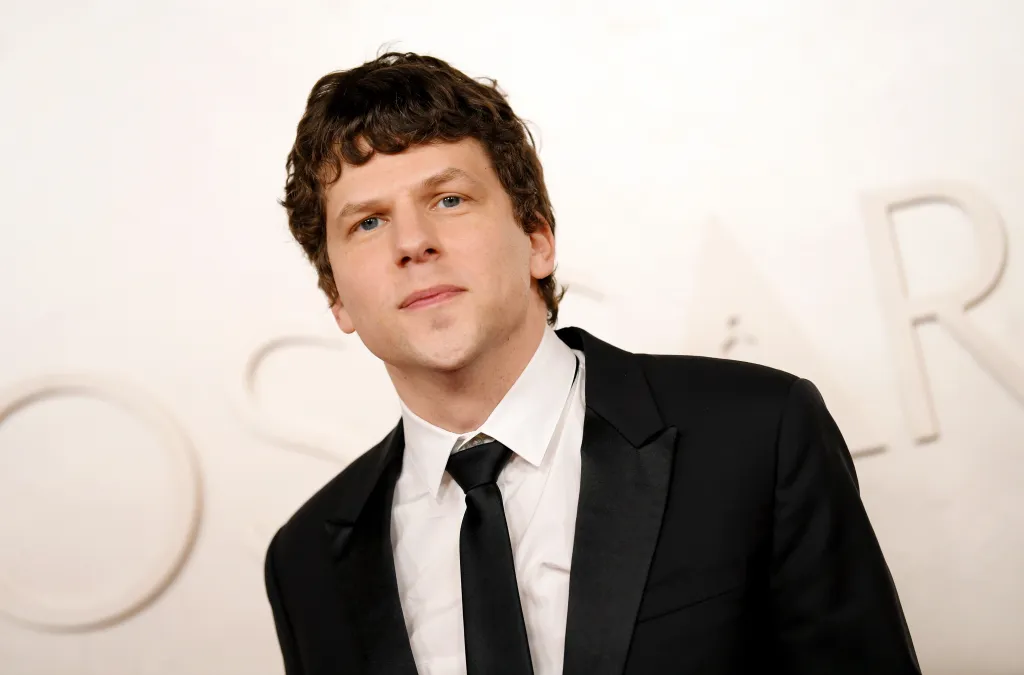
Jesse Eisenberg has not yet seen The Social Reckoning, but he has some thoughts on the subject, he told Deadline on Tuesday.
In an interview about his new film The Debut, which he wrote and directed, and in which he also stars, Eisenberg addressed his feelings on Aaron Sorkin‘s follow-up to The Social Network, in which Eisenberg had originally starred as Facebook founder Mark Zuckerberg back in 2010 — a role he passed on reprising for The Social Reckoning and which is played this time by Jeremy Strong.
“I haven’t seen the movie yet. It just came out… I have a thousand million thoughts about the movie,” Eisenberg told Deadline.
“I love the script and I love Aaron Sorkin so much, and it was such an honor to be in the first movie, if you can call it the first movie, and, I just didn’t want to be associated with that guy again and go around and do a year of press, where I’m talking about something which I know nothing about, because I’m not on that platform as a user, and I’m not interested in that kind of technology as a person. I just don’t want to be a representative of it. But, no, I’m sure the movie is wonderful.”

Jeremy Strong as Mark Zuckerberg in ‘The Social Reckoning’
Leah Gallo/Columbia Pictures/Everett Collection
Asked how it feels now to have left that role and the tech world behind, Eisenberg said, “Well, I was never in the tech world, again, despite what you think, by looking at me from the side, I’m not in the tech world… I think I look like somebody who probably spends the day sitting in front of a computer or a television, but I really don’t.”
Earlier this month, Sorkin told Entertainment Weekly that he’d assumed Eisenberg would return for the sequel. Sorkin said he was “just a couple of pages from being done” with the script for The Social Reckoning when he ran into the actor “and said, ‘I’m gonna be sending you something in a couple of weeks.’ And he smiled and nodded, and I sent it to him. It never occurred to me that he wouldn’t want to do it.”
Eisenberg turned down the role, despite, as Sorkin told Vanity Fair back in June, his having spent a three-day weekend trying to persuade Eisenberg into it.
Paul Giamatti and Julianne Moore in ‘The Debut’
A24
“I knew what the studio was offering him to do it,” Sorkin told EW, “but money does not motivate Jesse. It’s infuriating. If anything, money is a disincentive for him. It’s admirable. He’s very concerned about raising his kids with too much money.”
The Social Reckoning stars Strong alongside Mikey Madison as whistleblower Frances Haugen, a former Facebook engineer who leaked thousands of internal documents to Wall Street Journal reporter Jeff Horwitz, played by Jeremy Allen White. The film was released by Sony Pictures Entertainment on October 9th.
Eisenberg’s The Debut follows his 2024 film A Real Pain, for which he received a Best Screenplay Oscar nomination with co-star Keiran Culkin winning Best Supporting Actor for his role in the film.
The Debut stars Julianne Moore as a shy family woman who finds a powerful voice through community theater, with Paul Giamatti as the theater’s take-no-prisoners director. It premiered at Telluride on September 9 and is set for theatrical release by A24 on December 11th.
>

The Hollywood Reporter is a part of PMX Global, LLC, a subsidiary of Penske Media Corporation. © 2026 The Hollywood Reporter, LLC. All rights reserved.
THE HOLLYWOOD REPORTER is a registered trademark of The Hollywood Reporter, LLC.
>
In keeping with what will be their largest theatrical release in history, Netflix debuted the first trailer for Greta Gerwig‘s Narnia: The Magician’s Nephew in the IMAX theater atop the AMC Lincoln Square on New York’s Upper West Side.
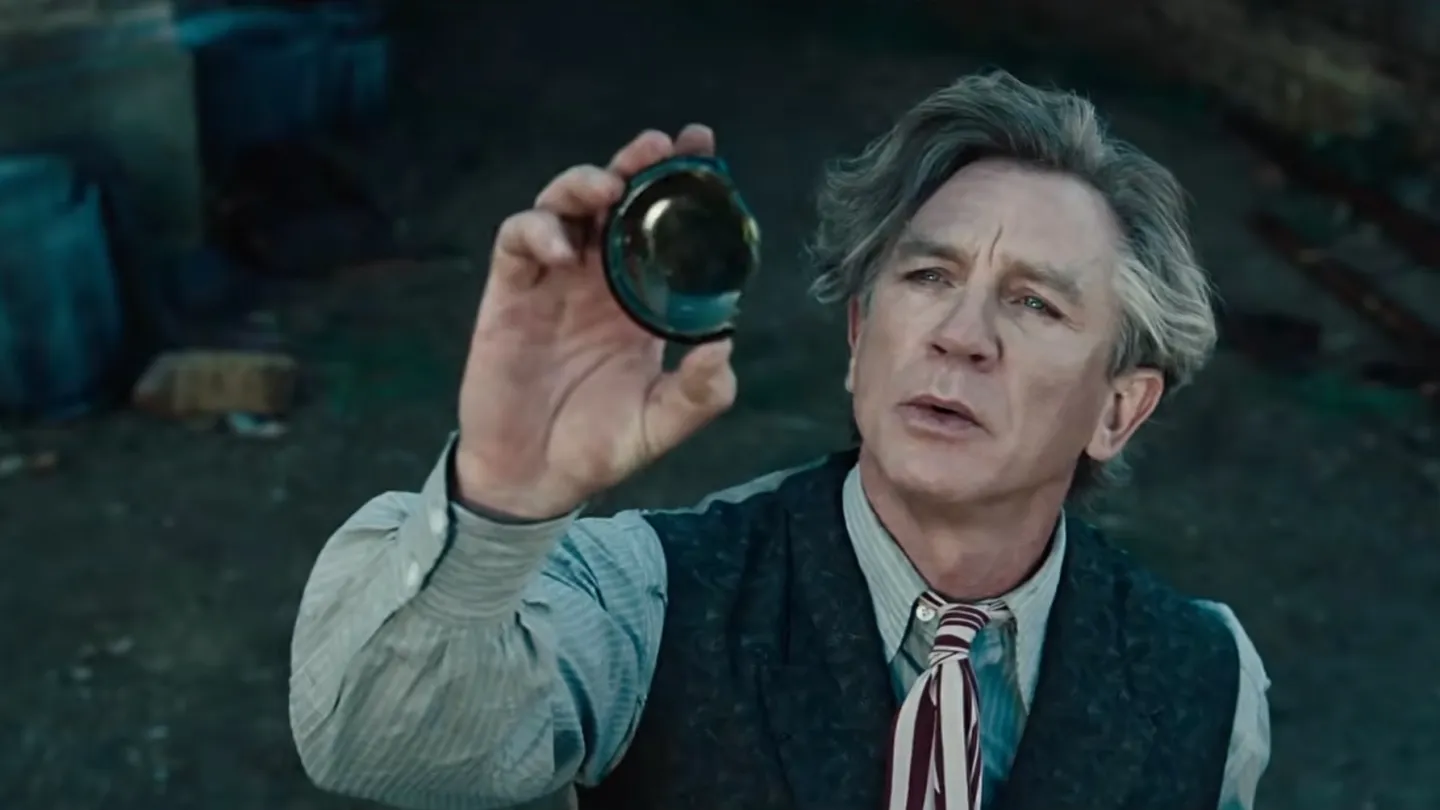
The preview begins with David McKenna’s Digorey Kirke wondering about his “mad” uncle Andrew, played by Daniel Craig, whom his mother says is a “magician.”
Soon, Digorey and the other children learn from Andrew that magic is real and, with the help of a magical ring, they are transported to the surreal, magical land of Narnia, complete with talking animals and a flying horse, which the children ride in a scene that Gerwig said was her favorite to film.
The trailer is soundtracked to Led Zeppelin’s “Stairway to Heaven,” an impressive sync considering that the band has historically been reluctant to license their music for movies and TV shows.
Gerwig explained that she showed the film to singer Robert Plant and guitarist Jimmy Page and they were so moved that they allowed her to use their iconic song.
“They saw the heart of the film,” Gerwig shared, adding that the musicians understood her love for C.S. Lewis.
Seeing the trailer with an audience, all wearing light-up rings that synced up with big moments in the preview, was an emotional experience for Gerwig, who said she was “tearing up” after the trailer debuted, as she put her hand over her mouth.
The event featured tables with water bottles, popcorn (in Narnia-branded cartons) and movie candy as well as coffee (befitting the early morning timing) and passed mini pancakes. It was attended by select members of the press and influencers, who watched as Gerwig spoke with moderator Stephen Colbert about making the movie, a process that involved a lot of faith and began with a focus on the big screen.
Gerwig said she only knows how to make movies for theaters, explaining how she begins by imagining watching the film in the theater, recalling how she told Netflix co-CEO Ted Sarandos that that was part of her process.
“Make the movie for the biggest screen you can imagine,” Gerwig said Sarandos told her.
An earlier conversation between Gerwig and Sarandos was key to her landing the gig writing and directing the film.
Gerwig recalled how she was introduced to Netflix when now-husband Noah Baumbach made Marriage Story for the streamer. After learned that Netflix had acquired the rights to the Narnia books — some of her favorites from childhood and which shaped who she became — she “made a beeline” for Sarandos at a cocktail party.
She shared her excitement about Netflix making movies based on the Narnia books and began talking about her vision for the project, that The Magician’s Nephew should be the first film. Roughly 20 minutes later, Gerwig recalled, Sarandos asked if she wanted to write the film.
Gerwig landed the gig before she’d made her box-office smash Barbie, so she praised the streamer for taking a chance on her after she’d only made Lady Bird and Little Women.
Beyond imagining the theatrical experience, Gerwig talked about the challenges of telling an intimate story involving, as Colbert put it, “lonely children.”
“If it’s in the heart, it can be huge and small and both can be true,” she said.
More to come.
>


Search For Canadian TV Actor Stewart McLean Now Homicide Investigation


These ’90s fashion trends are making a comeback in 2017
According to Dior Couture, this taboo fashion accessory is back
Model Jocelyn Chew’s Instagram is the best vacation you’ve ever had
Emily Ratajkowski channels back-to-school style
9 Celebrities who have spoken out about being photoshopped


Rurouni Kenshin: Hokkaido Arc Manga Takes 1-Issue Break – News


HIDIVE to Stream English Dubs for The World Is Dancing, The Forsaken Saintess and Her Foodie Roadtrip in Another World, The Dangers in My Heart: The Movie Anime – News