
Tech
Just 5 years in, interactive chatbot platform Character.AI files for bankruptcy


Only five years into its journey, Character.AI, which lets users create AI characters and have conversations with them, has filed for Chapter 11 bankruptcy, following a slew of lawsuits and struggles to scale its popular platform. In a court document, the company said it had assets and liabilities between $50 million and $100 million.
“Over the past year, Character.ai has taken meaningful steps to sustain and improve its business in the face of significant legal, regulatory, and operational headwinds. After a comprehensive review of the available alternatives, the board determined that this court-supervised sale process provides the Company with the best opportunity to maximize value for all stakeholders,” Character.AI CEO Colin Adams said in a statement.
The startup has also agreed to sell some of its assets to Disney for $20 million, as well as a non-exclusive perpetual license for its technology.
The company said Disney will provide transition services via former Character.AI employees who joined the entertainment giant last month alongside its former CEO Karandeep Singh Anand.
Adams said that company would continue operating during the sale process, which is expected to close in late November or early December. However, he did note that there isn’t yet a bid for the company’s assets or a buyer.
“We hope that the sale process will yield an actionable proposal that will allow continued operations of the Character.ai platform. If such a bid is unavailable, however, the platform will be wound down,” Adams wrote.
Character.AI has had a tumultuous five years. Founded by former Google engineers Noam Shazeer, a co-author of the landmark Transformer paper, and Daniel De Freitas in late 2021, the startup initially focused on training foundation models and developing an AI chatbot platform that lets people create custom characters they could chat with.
By September 2022, the startup reached unicorn valuation with a $150 million fundraise on the back of high demand for its platform, with the company saying at the time that its users had exchanged more than 2 billion messages with its bots in 5 months, and active users were averaging more than 2 hours on the platform daily.
In May 2023, the Character.AI’s apps attracted more than 1.7 million installs in their first week after launch. But about a year later, in August 2024, Google struck a $2.7 billion deal to license the startup’s models, and both Shazeer and De Freitas returned to the search giant. At that time, the startup’s general counsel, Dominic Perella, stepped in as interim CEO, and the company moved away from training foundation models to focus on growth.
Character.AI’s traction didn’t slow, however, with its platform recording 20 million monthly active users by October of that year.
But things got difficult after the startup was sued following the suicide of a 14-year-old Florida boy whose mother says he became obsessed with a chatbot on its platform. Soon after Texas launched an investigation to assess if the platform conformed to child privacy and safety laws. The company subsequently settled some of these lawsuits, added more safety features, and banned minors from its platform.
In June of last year, the company appointed Anand, a former Brex and Meta executive, as CEO, and expanded its products to add AI video generation, and social feeds. The company has since tried to introduce new ways to spur user engagement via interactive storytelling formats as well as microdramas.
But the fact that the company had to file for bankruptcy shows that such changes couldn’t move the needle on sustainability for the startup.
It also shows that consumer-facing AI products are really hard to scale and monetize. Character.AI was one of the top apps in terms of time spent, according to analytics firm Sensor Tower. But high engagement can be a double-edged sword, AI costs rise the more people use the app, which consequently also increases the pressure to monetize users.

Character.AI has raised over $193 million in funding across multiple rounds from investors including Lightspeed, SV angels, Greycroft, and a16z, according to PitchBook.
When you purchase through links in our articles, we may earn a small commission. This doesn’t affect our editorial independence.
>
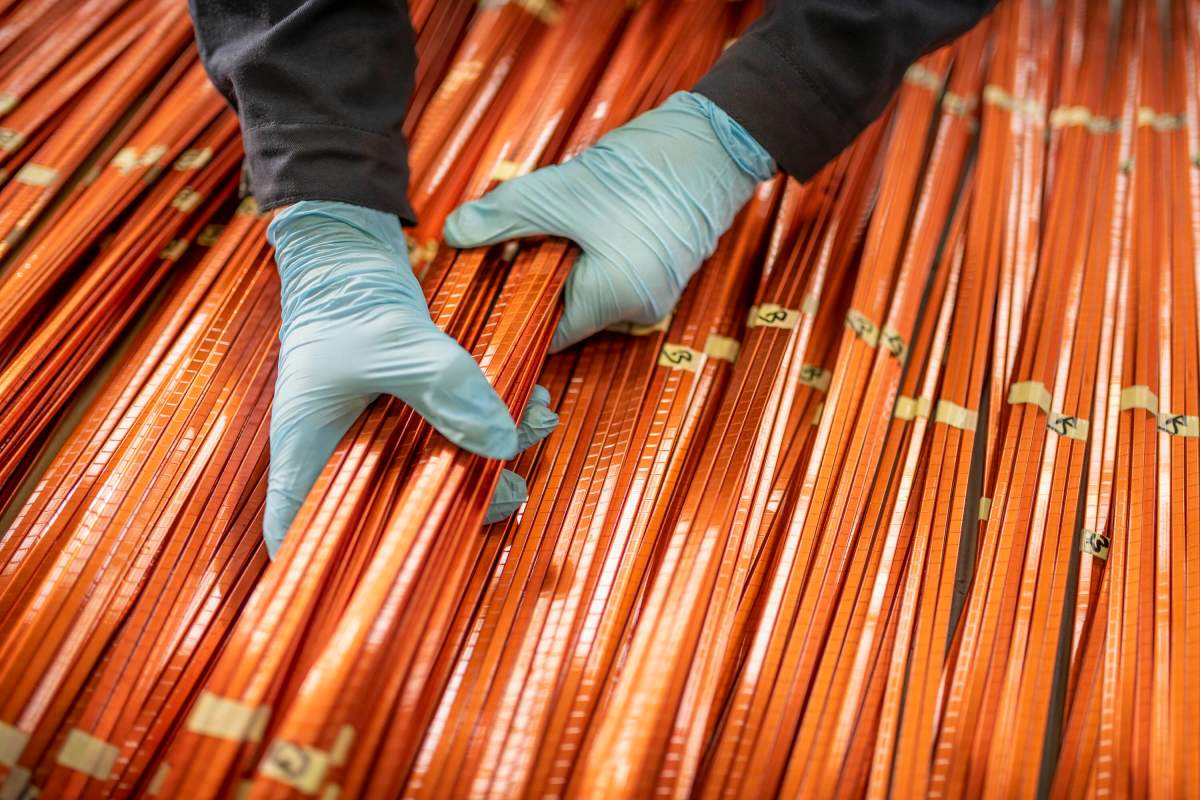
Between the AI data center boom and economy-wide electrification, the world will need a lot more copper. By 2040, copper supplies could fall 25% short of demand.
That’ll be a tall order for the mining industry, which boosts production mostly by opening new mines, which is a costly, luck-driven endeavor. Typically, just 0.3% of prospective mines pan out.
A new wave of critical minerals startups have been working on new ways to squeeze more copper out of existing mines using biotechnology, mostly by focusing on heap leaches, where microbes help separate minerals from waste. Endolith has created “Olympic caliber” microbes, Ceibo is working on its own strains, and Transition Metal Solutions has developed prebiotics to boost microbial activity.
Giraffe Bio is taking an alternative approach. The startup develops mineral-specific chemicals to help mines recover up to 5% more copper. In mining, that amount “is really very material,” Alejandro Buffo Sempé, co-founder and CEO of Giraffe Bio, told TechCrunch. Most would be happy with an additional 1% to 2%.
The startup says it can extract more copper because it’s able to engineer compounds specific to each mine’s mineral content.
To bring the technology out of the lab, Giraffe Bio recently raised a $6.4 million seed round led by Orion Industrial Ventures, with participation from BHP Ventures, Twynam, Air Capital, and Baruch Future Ventures, TechCrunch has exclusively learned.
Rather than douse ores with bacteria thought to facilitate copper extraction, the company grows engineered microbes in a bioreactor to produce the bespoke compounds. Those chemicals are then inserted into a mine’s existing process.
“We can leverage all of the biological machinery without having to deal with keeping alive a microbe, which is very complicated in [mining] environments,” Buffo Sempé said.
The startup is beginning with copper, but it says its platform can be tailored to other minerals, too. “The beauty of this is that we can target copper or we can target gold or silver,” he said.
The startup’s compounds are used in a mine’s flotation process. In flotation, chemicals help minerals either float or sink in a bath of water, allowing the operators to skim the desirable minerals off the top. The tighter the chemicals bind to the minerals of interest, the more that can be recovered. “We are extremely good at only picking up the copper,” Buffo Sempé said.
Mines also use chemicals called depressors, which bind to unwanted compounds like arsenic and sink them out of the mix, leaving more desirable products at the top. Giraffe Bio is using the same biotech platform to develop depressors as well, the CEO said.
In addition to improving mine production, Giraffe Bio can supplant toxic chemicals in the flotation process, too.
“Instead of pouring chemicals that are usually very harmful for the environment and so forth, we’re replacing the function that they are providing to the flotation process with a biomolecule,” Buffo Sempé said. “We’re minimizing the friction towards maximizing the output.”
When you purchase through links in our articles, we may earn a small commission. This doesn’t affect our editorial independence.
>
Compare OnePlus 16 and Galaxy S26 Ultra battery, cameras, gaming, pricing, support and US availability to see which flagship is the smarter buy.
The post OnePlus 16 vs Galaxy S26 Ultra: Battery, Cameras, Price Compared appeared first on TechRepublic.
>
UK researchers regain access to advanced AI models for safety testing as ministers consider stronger incident reporting and expand government cyber defenses.
The post UK Regains Early Access to AI Models After Reported White House Reversal appeared first on TechRepublic.
>
Rams' Alaric Jackson throws postgame punch at Bills' Bradley Chubb

Politics Home Article | Why Rent Controls Remain Controversial
Dare to drop? The case for cutting Jalen Hurts and Colston Loveland
-

 movies5 months ago
Search For Canadian TV Actor Stewart McLean Now Homicide Investigation
-

 Fashion9 years ago
These ’90s fashion trends are making a comeback in 2017
-
Fashion9 years ago
According to Dior Couture, this taboo fashion accessory is back
-
Fashion9 years ago
Model Jocelyn Chew’s Instagram is the best vacation you’ve ever had
-
Fashion9 years ago
Emily Ratajkowski channels back-to-school style
-
Fashion9 years ago
9 Celebrities who have spoken out about being photoshopped
-

 Anime4 months ago
Rurouni Kenshin: Hokkaido Arc Manga Takes 1-Issue Break – News
-

 Anime3 months ago
HIDIVE to Stream English Dubs for The World Is Dancing, The Forsaken Saintess and Her Foodie Roadtrip in Another World, The Dangers in My Heart: The Movie Anime – News