
Tech
MIT startup says it can turn diesel trucks into cheaper hydrogen haulers; see it at Disrupt


Diesel fuel powers everything from shipping to agriculture, and with prices hitting record highs in recent weeks, governments around the world are scrambling to contain the fallout.
For now, that’s meant releasing fuel from stockpiles, but in the coming years, the answer might be a new technology from an MIT startup called LNK Energies.
LNK has created a way to convert existing heavy-duty trucks from diesel to hydrogen, slashing pollution and costs while shielding operators from the price spikes that result from geopolitical instability like the war in Iran. “If you look at total cost of ownership of a Class 8 truck, it’s 13% cheaper than diesel,” Alexis Huynh, chief technology officer at LNK Energies, told TechCrunch. (Class 8 is the heaviest category of trucks, including big rigs.)
Automotive companies have been exploring the use of hydrogen in long-haul trucking in part because refilling a hydrogen tank is faster than recharging the massive batteries those trucks require. But hydrogen is challenging to move to refilling stations, and the pressure tanks required to store it on the truck are large and costly.
LNK’s approach is to carry hydrogen chemically attached to another compound. Liquid organic hydrogen carriers, or LOHCs, are liquids that can absorb and later release hydrogen, and they have been widely studied, but mostly for moving large quantities of hydrogen from refineries to fueling stations. The equipment needed to separate hydrogen from the LOHC, known as a reactor, has been too big to fit onto a truck.
“A lot of the reactors that LOHC companies have today are really large. They’re about the size of a shipping container,” Huynh said. “We have shrunk that basically to the size of a mini fridge.”
Moving the reactor onto the truck saves a surprising amount of energy. When hydrogen is stored on a truck, it must be pressurized to more than 11,000 psi (800 bar), roughly 800 times normal air pressure, and squeezing it that hard takes a lot of power. Because LNK’s fuel carries the hydrogen in liquid form and releases it on board as needed, that step goes away. “We’re eliminating the expensive compression step,” Sayandeep Biswas, co-founder and CEO of LNK Energies, told TechCrunch.
In LNK’s system, once the hydrogen is released on the truck, it can be burned in a conventional internal combustion engine, the kind in today’s diesel trucks, with just a few modifications. The company uses waste heat from the engine to help power the on-board reactor. Or, if the trucking company wants to fully eliminate combustion emissions, it can use fuel cells instead, which convert hydrogen into electricity to power electric motors.
The LOHC can be stored in a traditional fuel tank and dispensed using pumps, just like diesel. “The entire hydrogen infrastructure doesn’t need to exist,” Biswas said. “It’s just a standard diesel station.”
Biswas and Huynh have a demonstration reactor working in the lab that can power an engine from a lawnmower. In 18 months, they plan to install a larger version in a commercial truck.
The trucks will cost more up front, but promise to be cheaper to operate. The duo are confident that they can undercut diesel at a price of $6.50 per gallon after they’ve made just 50 to 100 trucks. None of their projections include government subsidies. “The idea isn’t to have a technology that is cheaper at scale, but one that is cheaper even during that adoption period,” Biswas said.
LNK will present live on stage at TechCrunch Disrupt on Wednesday Oct 13-15 as part of our Startup Battlefield pitch competition. Come join us in San Francisco and take part in the action.
When you purchase through links in our articles, we may earn a small commission. This doesn’t affect our editorial independence.
>
Apple’s Oct. 13 smart home event introduced HomeView, HomePod mini 2, Apple TV 4K, and new connected-home accessories. Here’s what each product costs and when it arrives.
The post Apple October 13 Smart Home Event: HomeView, HomePod Mini 2, Apple TV 4K, and More appeared first on TechRepublic.
>
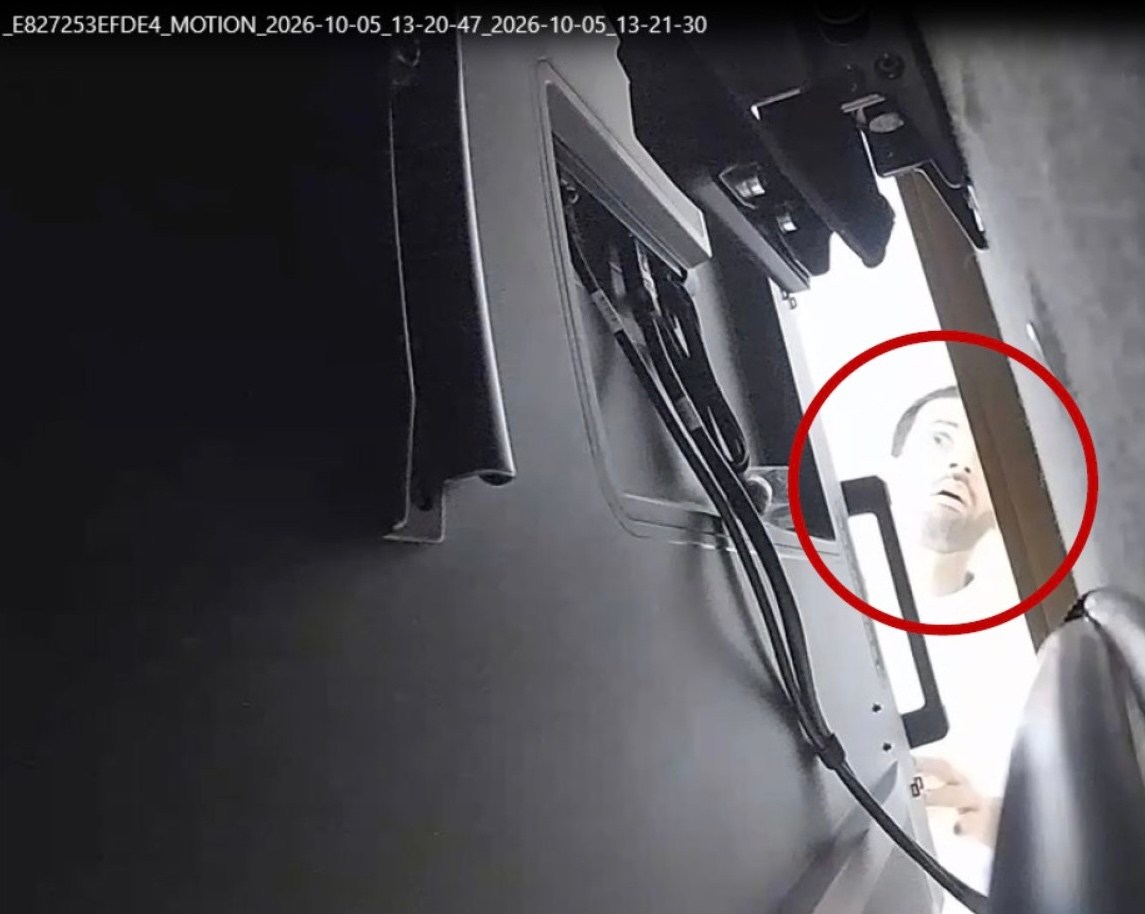
OpenAI said it has alerted the FBI after discovering that an employee allegedly planted a hidden recording device in one of the AI maker’s office executive conference rooms.
The employee, named by federal prosecutors as Saudi national Abdulrahman Alfozan, was fired and arrested on October 9, about a week after OpenAI discovered the surveillance device.
The company said in a post on X that it used its internal AI models to understand the “sophisticated” device. OpenAI told TechCrunch that the device contained “advanced encryption, audio monitoring capabilities, and a mechanism for transferring data designed to evade monitoring,” though it is unclear to what degree this device is technically distinct from other recording devices.
“At this time, we have no indications of this individual inappropriately accessing or exfiltrating model weights, source code, or customer data,” said OpenAI in its post on X.
OpenAI’s spokesperson Nate Evans confirmed that the employee started with the AI model maker in July 2025 and worked on the product team.
Prosecutors with the U.S. Attorney’s Office for the Northern District of California said Alfozan was charged with using an electronic device to intercept oral communications — effectively accusing him of covertly recording people’s voice audio without their permission. Prosecutors said OpenAI caught the device after it was inserted into a USB port on the back of a television in OpenAI’s San Francisco office.
Per the prosecutors, Alfozan was caught looking behind the television where the recording device was placed, and where OpenAI had placed a camera that allegedly caught the employee.
It’s not clear exactly for what purpose the recording device was used, but FBI Director Kash Patel said the scheme was to “capture sensitive communications about the company’s super intelligence technology.”
Neither Alfozan nor his attorney could be immediately reached for comment. He faces five years in prison if convicted.
When reached, a spokesperson for the FBI reiterated a statement made by bureau director Kash Patel.
“Protecting American SI innovation is essential to safeguarding our nation’s economic strength and national security, and the FBI views that mission as one of our highest counterintelligence priorities,” Patel said.

When you purchase through links in our articles, we may earn a small commission. This doesn’t affect our editorial independence.
>
Samsung’s One UI 9 introduces AI-powered Privacy Alerts that flag potentially unnecessary app access. Find out which Galaxy devices are eligible and how the feature works.
The post Samsung One UI 9 Can Flag Suspicious App Activity: Which Galaxy Phones Get Privacy Alerts? appeared first on TechRepublic.
>

Tsūkaku Tantei Tsūtenji Natsume, Isekai Yurutto Survival Seikatsu Manga Both End – News
Richarlison scores for Tottenham Under-21s after exile from first-team squad
Apple October 13 Smart Home Event: HomeView, HomePod Mini 2, Apple TV 4K, and More
-

 movies5 months ago
Search For Canadian TV Actor Stewart McLean Now Homicide Investigation
-

 Fashion9 years ago
These ’90s fashion trends are making a comeback in 2017
-
Fashion9 years ago
According to Dior Couture, this taboo fashion accessory is back
-
Fashion9 years ago
Model Jocelyn Chew’s Instagram is the best vacation you’ve ever had
-
Fashion9 years ago
Emily Ratajkowski channels back-to-school style
-
Fashion9 years ago
9 Celebrities who have spoken out about being photoshopped
-

 Anime4 months ago
Rurouni Kenshin: Hokkaido Arc Manga Takes 1-Issue Break – News
-

 Anime3 months ago
HIDIVE to Stream English Dubs for The World Is Dancing, The Forsaken Saintess and Her Foodie Roadtrip in Another World, The Dangers in My Heart: The Movie Anime – News