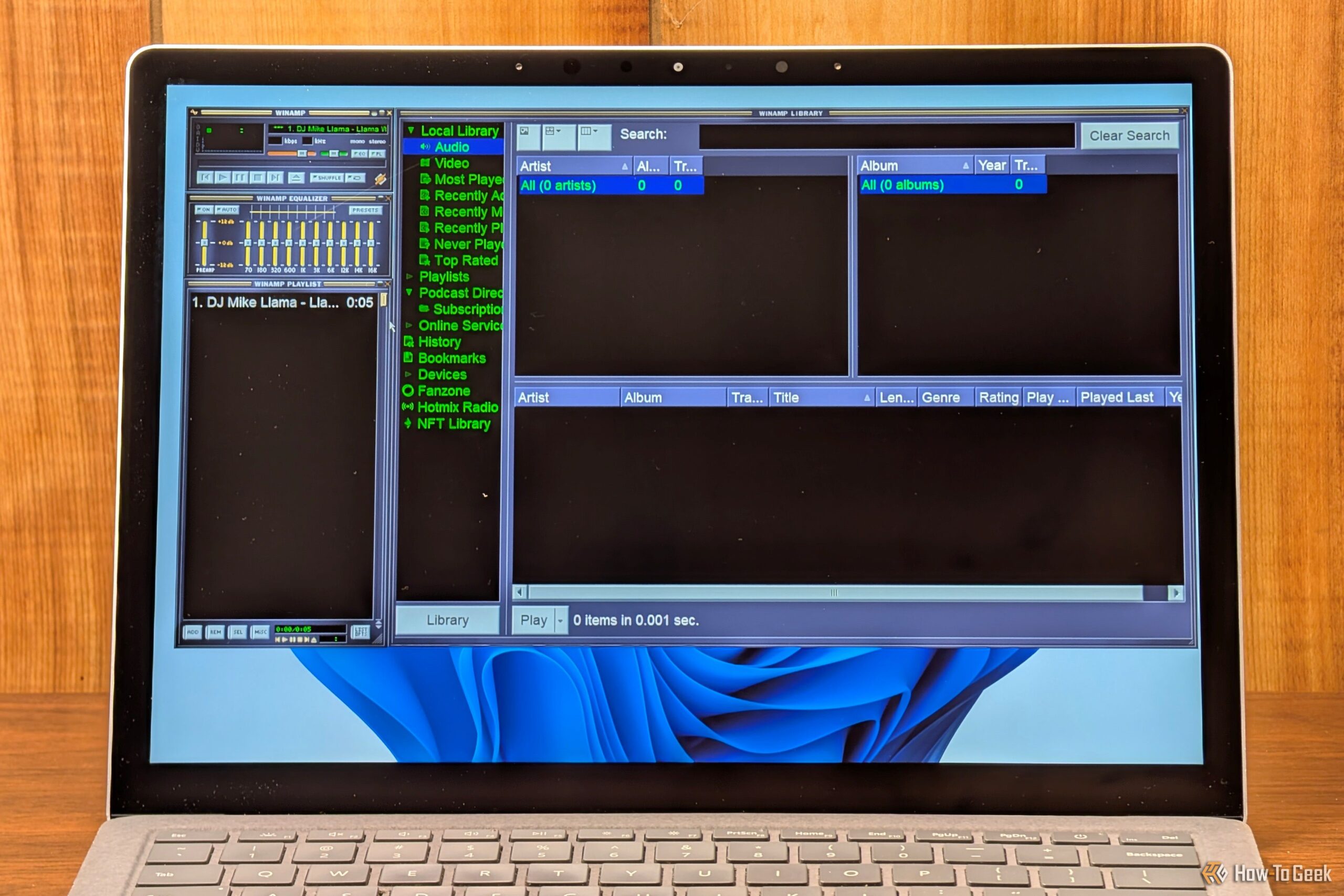
Winamp on a modern laptop (Credits: How-To Geek)
If you grew up with a Windows PC in the 2000s, your desktop probably looked nothing like it does today — and five apps in particular defined that era. Winamp, MSN Messenger, Windows Movie Maker, Nero Burning ROM and RealPlayer were daily essentials back then. Here is the problem they each solved, and why you stopped needing them.
1. Winamp — the Music Player That Actually Respected Your PC
In the late 1990s and early 2000s, Windows Media Player was slow and heavy, often grinding weaker machines to a halt just to play an MP3. Winamp, released in 1997 as lightweight freeware, used a fraction of the resources, so your music could play while you did everything else. Its 10-band equalizer, the green-on-black playlist and endless custom skins — from alien control panels to sci-fi heads — made it feel personal. Streaming killed the MP3 collection, and modern Media Player is perfectly serviceable, which is why Winamp faded. It still exists if nostalgia calls.
2. MSN Messenger — Where a Generation Learned to Chat
Long before WhatsApp and Instagram DMs, MSN Messenger was the after-school ritual: log on, see who was online, and chat until bedtime. It was far more than a basic chat box — custom statuses, showing the song you were listening to, nudges that shook your friend’s window, winks and webcam calls. Microsoft bought Skype in 2011 and migrated Messenger users over in 2013 before retiring it, as smartphones and social apps took over messaging.
3 and 4. Movie Maker and Nero — Making Things, the 2000s Way
Windows Movie Maker gave millions of people their first taste of video editing. Its drag-and-drop timeline was simple enough to use without a tutorial — schools taught it, and early YouTubers cut their first videos in it. Microsoft stopped developing the Windows Essentials suite after its 2012 release and removed it from official downloads in 2017.
Nero Burning ROM ruled the disc era. Early USB sticks were expensive and tiny, so sharing music, photos and films meant burning a CD or DVD — and Nero was the tool, often bundled free with optical drives. Cloud storage and cheap flash drives ended its reign, though a loyal base of physical-media fans still uses it.
5. RealPlayer — Streaming Before Streaming Was a Thing
RealPlayer let you watch or listen while content was still downloading — revolutionary on slow late-90s connections, even if its constant buffering became a running joke. Browser plugins such as QuickTime and Flash chipped away at it, and YouTube was the final blow. Remarkably, it is still around today, downloading online videos, converting media and playing legacy RealAudio and RealVideo files.
The pattern is the same for all five: each was replaced by something built into your phone, your browser or the cloud. They are past their prime — but if you used a PC in the 2000s, you used at least three of them.
Also Read: A Landline Phone Icon Appeared in Your Android Status Bar — Here’s What It’s Trying to Tell You
Source: How-To Geek — read the full story there.