If your 3D prints keep coming out stringy, rough or weaker than they should be, the culprit might not be your settings — it might be the air. Wet filament is one of the most common and most invisible causes of bad prints, and a $2 humidity sensor is the cheapest, smartest fix you can make.
The logic is simple: a single spool of filament costs around $12. One ruined spool already costs six times more than a cheap hygrometer that tells you whether your filament needs drying before you hit print.
(Credits: How-To Geek)
Why a Humidity Sensor Is the Best 3D Printing Upgrade
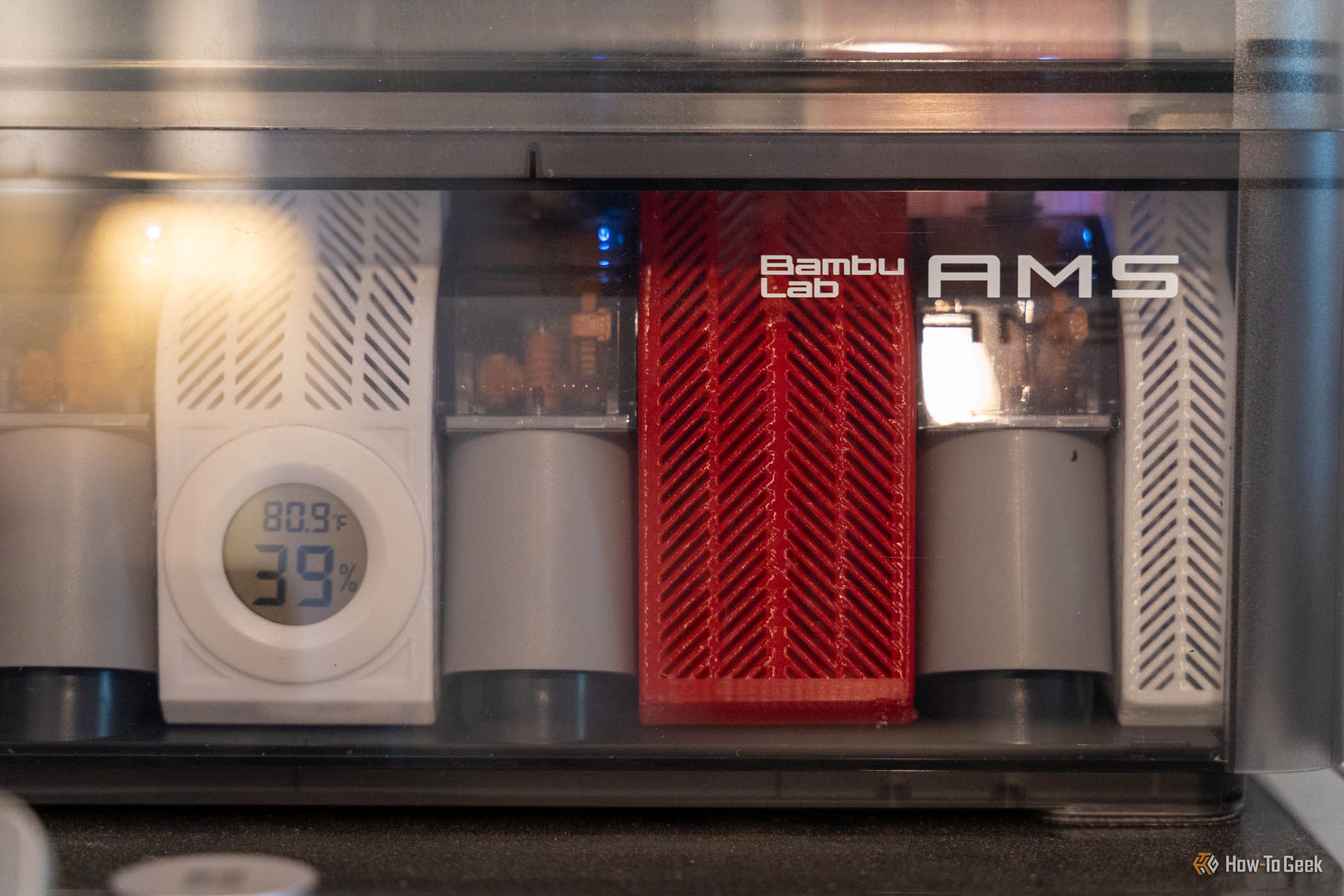
Printing with wet filament causes increased stringing, rough surfaces and weak parts — sometimes with air pockets from moisture that make a part look fine but fail under stress. A hygrometer sitting in your filament enclosure lets you see at a glance whether the relative humidity is too high, so you can dry the spool first.
The catch? If you own the original Bambu Lab AMS, its built-in readout isn’t a real number — it shows a vague A-through-E letter grade that blends humidity, temperature and water content into an undefined “score.” The $2 sensor gives you an actual relative humidity percentage, which is far more useful.
How to Use It: AMS, Dry Storage, Anywhere
The beauty of a cheap standalone sensor is versatility. Drop it in your AMS unit, stash one in your dry storage box, or move it around your workshop to check any area. One user pairs it with a SUNLU AMS heater, drying the filament whenever the hygrometer reports high humidity — and hasn’t had a wet-filament failure since.
Note that Bambu’s newer AMS 2 Pro fixed the old letter-grade system and now shows a proper humidity percentage, so this trick matters most for first-generation AMS owners. But at $2, it’s still the cheapest peace of mind in 3D printing.
Also Read: Build Your Own E-Ink Display From a Cheap Used Kindle This Weekend
Source: How-To Geek — read the full story there.