
Tech
SpaceX’s Starship rocket reaches orbit for the first time


SpaceX’s Starship rocket reached Earth orbit for the first time, though not without some drama along the way.
The company’s mega-rocket launched into space from South Texas early Monday morning and ticked all the early checkboxes for a successful takeoff. But shortly after the upper stage of the Ship separated, it lost one of its six Raptor engines.
While Starship could still reach orbit if it loses an engine, the company initially called off the attempt, only to decide to keep pushing just a few minutes later.
Reaching orbit is a critical milestone that could let SpaceX start using Starship for regular commercial missions, and, importantly, inch closer to its goal of making the mega-rocket fully reusable. SpaceX CEO Elon Musk is orienting the entire company around Starship, which has become central to the company’s plans to perform moon missions for NASA, and far-out ideas like putting AI data center satellites in space.
SpaceX planned to have the Starship upper stage orbit the Earth six times over the next nine hours while deploying 26 third-generation Starlinks into its constellation of internet satellites. It’s not immediately clear if any of that plan changed with the delayed entry into Earth orbit.
The company was also able to make progress on returning the Super Heavy booster stage of the rocket back to the launchpad. After separating from the upper stage of Starship a few minutes into the flight, the booster returned to the Gulf coast and performed a simulated landing over the water. It was the cleanest simulated landing SpaceX has performed with the V3 version of Starship, which it started testing in May.
This story is developing…
When you purchase through links in our articles, we may earn a small commission. This doesn’t affect our editorial independence.
>
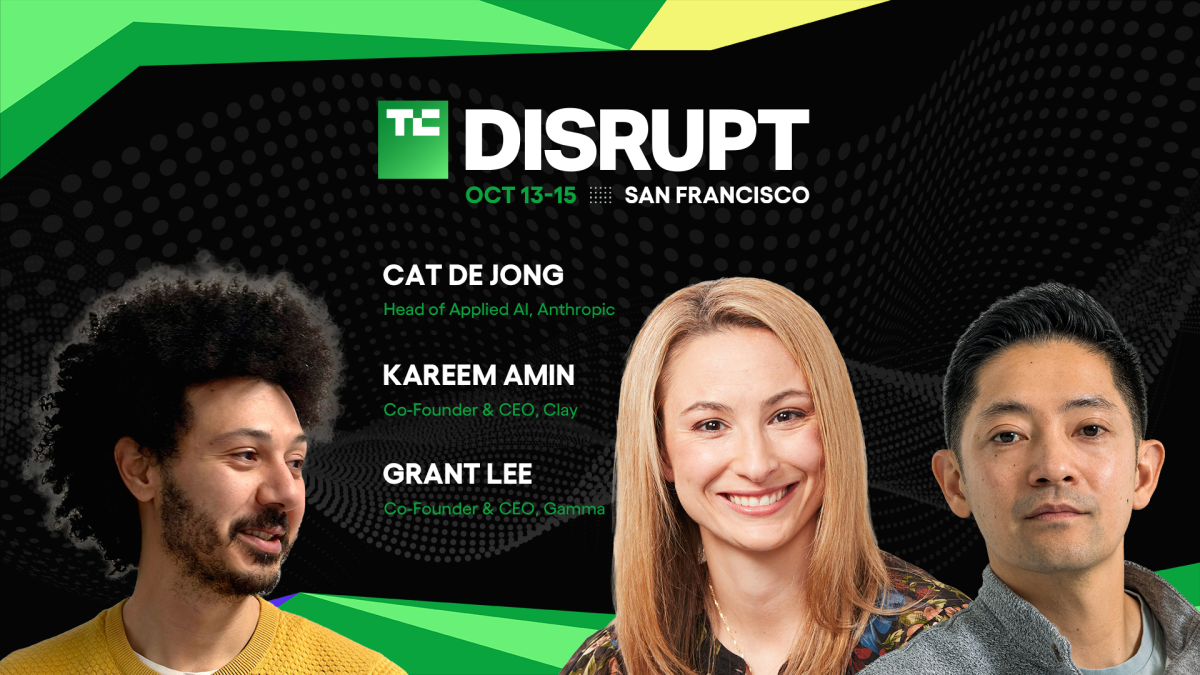
An AI demo can look brilliant in five minutes. Then customers start using the product. They push it into workflows you didn’t anticipate. They expect it to work reliably. And they quickly find out whether it solves a big enough problem to become part of how they work — or becomes another AI experiment they tried and abandoned.
At TechCrunch Disrupt 2026, leaders from Anthropic, Gamma, and Clay will come together on the AI Stage for “What Anthropic Sees When Enterprises Actually Deploy Claude.” The conversation will bring two sides of AI deployment: the patterns Anthropic sees across enterprise implementations and the firsthand experience of founders building AI products people actually use.

Secure your pass to Disrupt and save 50% on a second pass. Hear what AI leaders and founders are learning when their products meet real customers. Insightful sessions like this are meant to be experienced with a colleague, partner, or peer.
What happens after the AI launch?
Most conversations about enterprise AI focus on what companies could do with it. Anthropic Head of Applied AI Cat de Jong starts somewhere more interesting: what happens after deployment.
De Jong works directly with enterprises putting Claude into critical workflows. At Disrupt, she’ll explore where deployments succeed, where they stall, and what separates organizations extracting real value from those still running pilots 18 months later.
If you’re selling AI into the enterprise, those patterns matter. De Jong’s experience offers a firsthand look at what changes when AI moves from experimentation into critical workflows and why some organizations get to production while others don’t.
Want to know what separates AI pilots from deployments that make it into production? Register for Disrupt and get a second pass for 50% off.
How do you get people to use what you’ve built?
Anthropic can see patterns across enterprise deployments. Gamma Co-Founder and CEO Grant Lee brings another perspective to the conversation: what it looks like from inside a company building an AI product and getting people to actually use it.
Gamma has grown its AI-powered platform from an alternative to traditional presentation software into a broader visual communication tool. TechCrunch reported in March that the company was approaching 100 million users as it expanded its AI tools into marketing assets and other forms of visual content.
That kind of adoption gives Lee a useful vantage point on the questions at the center of this session: What makes an AI product useful enough for customers to keep coming back? What changes once people start using it in ways you didn’t anticipate? And how do you turn powerful AI capabilities into a product that solves a problem people actually have?
Building an AI product is one thing. Getting people to make it part of how they work is another. Secure your pass to Disrupt and hear what Gamma has learned along the way.
What happens when AI becomes part of the workflow?
Clay Co-Founder and CEO Kareem Amin brings the perspective of a founder building AI into the way companies find and reach customers. Clay provides infrastructure to pull in data, run agentic workflows, and launch GTM plays.
In January, TechCrunch reported that Clay was one of the launch apps integrated into Claude when Anthropic introduced interactive workplace tools inside the Claude interface, so his perspective is particularly relevant to the conversation.
That puts Amin close to the questions this session will explore: where AI is genuinely useful, how it fits into existing workflows, and what happens once customers start depending on it.
Together, de Jong, Lee, and Amin bring different views of that transition. Anthropic can identify patterns across enterprise deployments, while Gamma and Clay can pressure-test those patterns against what they’re seeing as customers put AI products to work.
Want to learn what AI adoption looks like from both sides? Explore your Disrupt ticket options and save 50% on a second pass of the same type to hear crucial AI perspectives from Anthropic, Gamma, and Clay on the AI Stage.
Hear what it takes for an AI product to go beyond the demo at Disrupt 2026
An impressive demo can show what AI makes possible. The harder test comes when customers start depending on it. At Disrupt, Anthropic brings a view across enterprise deployments, while Gamma and Clay bring the founder perspective on building AI products people actually use.
Join them at Disrupt, October 13–15 at San Francisco’s Moscone West, where 10,000+ founders, investors, operators, and tech leaders gather for 200+ sessions across six industry stages, roundtables, and breakouts featuring 250+ speakers, plus 300+ exhibiting startups, matchmaking, and networking.
Register for your pass and get a second pass for 50% off. Hear what Anthropic, Gamma, and Clay are learning about turning AI capabilities into products people actually use.

When you purchase through links in our articles, we may earn a small commission. This doesn’t affect our editorial independence.
>

Molly Liu and Aman Puri are tackling the U.S. accounting shortage from another angle — a global one, that is. On Monday, they announced that their AI-powered talent marketplace Mavi, founded in 2023, has officially emerged from stealth. The service helps connect and onboard U.S. companies with top AI-proficient global financial and accounting talent within days.
Speaking to TechCrunch, Liu, the company’s co-CEO, pointed out the problems facing the U.S. accounting industry today — mainly that the profession is shrinking and even those left aren’t necessarily fluent in the AI skills needed to help their enterprises grow. At the same time, she said, many U.S. companies don’t like the idea of working with global talent, either because it’s complex to hire and manage them or because they simply don’t think the talent is good enough.
“There’s been a new wave of tremendous talent, a really high bar that is equal or even better than the U.S.,” she said of the global workforce. And that’s where Mavi comes in, which, Liu said, also helps companies handle the unglamorous work that comes with hiring global talent, like managing cross-border contracts, legal and compliance, and even payroll. She said the company focuses on quickly finding full-time, long-term placements that augment in-house finance teams, with a focus on mid-level and senior-level positions.
Liu has worked at Ramp, Lyft, and Dropbox. She said working at these companies made her realize that more automation tools can’t fix all the problems in accounting.
“AI will automate away many entry-level roles in finance and accounting, which will further exacerbate the talent shortage at the mid-level experience level, given there will be less entry-level talent growing into the mid-level over time,” Liu said.
So no matter how many AI tools are released to automate grunt work, companies still need experienced humans to make judgment calls on critical work. In fact, she said, she’s noticed that the more AI tools a company adopts, the more pressure that adds to those in senior roles.
“They are increasingly expected to add more of their reasoning skills,” she continued. “Finance teams are now being pushed to do more with less.”
But there’s another snag — the fact that what it means to be an accountant today is slowly shifting. An AI-proficient accountant, for example, is someone with strong finance and accounting fundamentals, she said, but who can also direct AI tools to do work, apply judgment to catch what AI gets wrong; someone who can integrate LLMs into finance and accounting workflows and is familiar with the latest AI-native ERPs and tools. “A traditional accountant has the accounting fundamentals but only has a basic understanding of how to incorporate AI into finance and workflows or how to review [and] manage AI tools within finance,” she continued.
Last year, the company raised a $4 million seed round led by Harlem Capital, which it had not announced until Monday. Liu says the company now has more than 3,000 accounting professionals on the platform and enterprise clients that include the personal care company Athena Club.
“We have a very strong point of view as to what the future of the finance team looks like,” she said. “The work for us is focusing on that high-skill talent and that new layer of judgment that is paramount to all finance teams and all business functions as a whole, to be able to operate at the next level and beyond.”
When you purchase through links in our articles, we may earn a small commission. This doesn’t affect our editorial independence.
>
Compare six AI meeting note takers for 2026, including Fathom, Fireflies, Otter, Granola, Fellow, and Notta on pricing, free plans, and features.
The post 6 Best AI Meeting Note Takers for 2026: Fathom, Otter, Fireflies and More appeared first on TechRepublic.
>

Episode 12 – Draw This, Then Die!
Blues defenseman Logan Mailloux out at least 8 weeks after fight with Blackhawks' Cole Smith

Anthropic, Gamma, and Clay talk AI at Disrupt 2026
-

 movies4 months ago
Search For Canadian TV Actor Stewart McLean Now Homicide Investigation
-

 Fashion9 years ago
These ’90s fashion trends are making a comeback in 2017
-
Fashion9 years ago
According to Dior Couture, this taboo fashion accessory is back
-
Fashion9 years ago
Model Jocelyn Chew’s Instagram is the best vacation you’ve ever had
-
Fashion9 years ago
Emily Ratajkowski channels back-to-school style
-
Fashion9 years ago
9 Celebrities who have spoken out about being photoshopped
-

 Anime4 months ago
Rurouni Kenshin: Hokkaido Arc Manga Takes 1-Issue Break – News
-

 Anime3 months ago
HIDIVE to Stream English Dubs for The World Is Dancing, The Forsaken Saintess and Her Foodie Roadtrip in Another World, The Dangers in My Heart: The Movie Anime – News