
Merritt Wever and Robert Pattinson in ‘Primetime’
A24


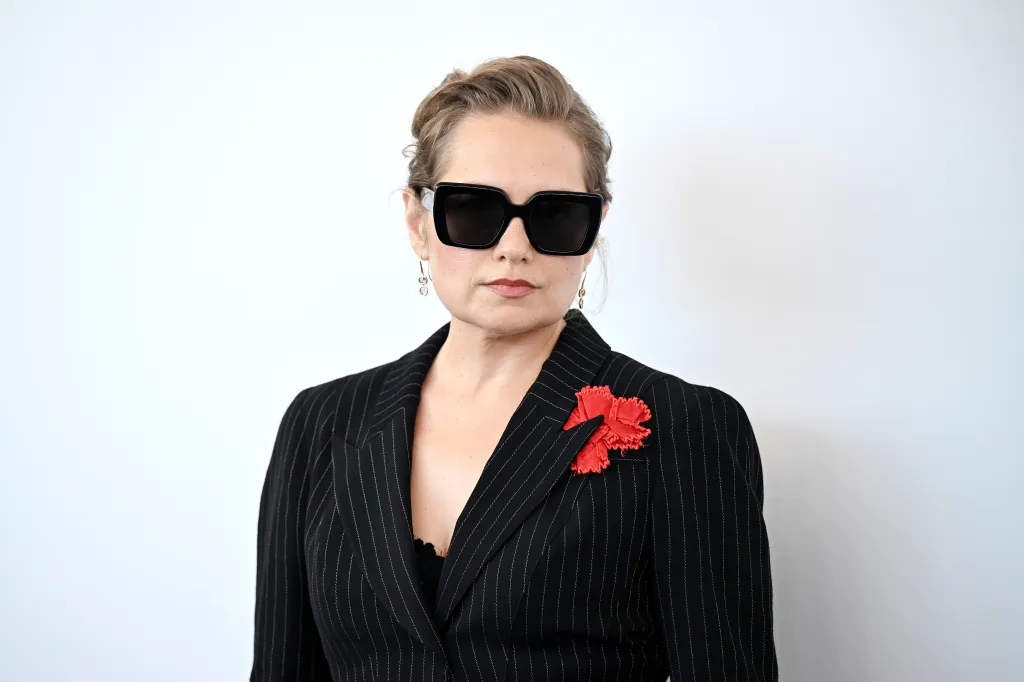
From Alex Gibney’s mammoth study of the rise of X proprietor Elon Musk to Danny Boyle’s dramatization of the birth of British tabloid newspaper The Sun, this year’s Venice Film festival featured a lot of movies speculating on the past, present and future of the media. None did it quite as disturbingly, however, as Lance Oppenheim’s Primetime, starring Robert Pattinson as Chris Hansen, one of the earliest stars of the early-21st-century reality-TV revolution.
Called To Catch a Predator, Hansen’s show was intended to show the vulnerability of young boys and girls online; instead, it proved the gullibility of perverted adult men, who showed up in surprisingly large numbers at Hansen’s “bait house” fully expecting to have sex with a minor. Despite the dubious legality of each sting operation, and the full-on prurience of seeing these men humiliated on national television, To Catch a Predator lasted several years before this powder keg of controversy finally, and perhaps inevitably, exploded.
If Oppenheim’s film were simply about Hansen’s hubris, that alone would be enough for a movie. But Primetime also features a superb supporting performance from Merritt Wever as Hansen’s producer, Andie Bender. Though Wever stresses that her character is fictional — and modestly posits that her co-star Skyler Gisondo, who plays the show’s underage-looking catfish “Decoy Dan”, is the film’s real human heart — Andie represents the many layers of enablers that allowed Hansen’s dangerous ambitions to flourish unchecked.
Here, Wever reflects on the themes of the theme, which released in the US on Friday, with possible spoilers…
DEADLINE: Did you know about To Catch a Predator before you got this role?
MERRITT WEVER: I did. I mean, I’m old enough that I remember it being on television. I remember, I did actually watch it myself, but I’ve often wondered [how others will react to it]… The film played in Venice, for instance, and I wondered about the differences that would arise between audiences that already knew about the show, because it’s part of our cultural backdrop, and ones that did not. Although I think there’s probably plenty of younger people from the U.S. who didn’t know that it existed or didn’t watch it when it was originally on. So, I’ve been curious what they’ll think of not just the movie, but of the show itself.
DEADLINE: Why did you want to do it?
WEVER: I wanted to do it because I liked the original whiff, or hit, that I got off of the character. The script went through a lot of iterations. I think it was constantly in flux and they were constantly working with it and on it and figuring out how this kind of carousel of characters were going to interact and what shape they were going to take. But Andie always had this kind of rottenness to her that I think she is wrestling with, coming to terms with, and having to make choices around whether she’s going to commit to the rottenness or try to move in another direction. I think Lance and I talked a lot, and [screenwriter] Ajon [Singh] talked a lot about that fable of the two wolves. Do you know it? An elder tells a child that inside everyone are two wolves, a light one and a dark one. And the youngster says, “Which one wins?” And the elder says, “Whichever one you feed.” So, I think Lance and I talked about trying to find a structure for a character who is trying to choose between two wolves inside her.
DEADLINE: It’s interesting, because at the beginning of the film, we want to believe that you’re going to be the conscience of the movie.
WEVER: That’s what I hoped would come through, and I didn’t know if it would or not — that she’s the character that you think is going to make a different choice. And she’s the one that does not.
DEADLINE: Is she based on a real character? Is there any one person, or is she a composite of people?
WEVER: I wouldn’t even call her a composite. She really is a from-scratch character. Chris’s character is a dramatization, and I would call Skyler’s character an amalgamation, but Andie always kind of was drawn from thin air. There were producers on his show, but I think she’s in some ways the most from-scratch character. And I think that’s probably also why there was so much room.
Merritt Wever and Robert Pattinson in ‘Primetime’
A24
DEADLINE: It seems you’ve been around television a lot in your life — not the same kind of television, obviously — but how did you prepare for the role, and what kind of research can you do for a piece like this?
WEVER: I researched a lot about her job. I read a lot of memoirs. I watched a lot of documentaries. I like to do a lot of research, although I’ve learned that I have to be careful with research because sometimes it can send me into a direction that gets me interested or excited, but that doesn’t actually belong in the world of the film I’m doing. I’ve actually found that sometimes when I’m playing people who are based on real-life figures, I start to get attached to the figures in their honest iterations and then use that as my lighthouse instead of the script. And at the end of the day, it’s what’s on the page that you’re actually doing. But the thing I found most helpful when it came to pure research was talking to two long-time television producers about what their job entailed 20 years ago too, before we had phones and the internet in our pocket, and, specifically, what it’s like to work with a host when you are a producer on a show and how you are responsible for not just finagling a production, but finagling a human being.
DEADLINE: That certainly comes across.
WEVER: Yeah. I think that’s the hardest part of her job. And also, I think for the purposes of the film, the most interesting part of her job.
DEADLINE: How closely did you work with Robert Pattinson? Did you know him prior to filming?
WEVER: No, I didn’t know him. I think first I Zoomed with Lance, and then the next step was to Zoom with Lance and Rob, but we didn’t know each other. I think he was coming off of a busy shooting schedule, and I think we just kind of hit the ground running.
DEADLINE: Did you have any time to rehearse with him? You obviously have a close relationship in the film.
WEVER: No. And also, rehearsal is not really where Lance’s interest lies. Perhaps because he comes from a documentary background, he wants to shoot everything as is. But I think because Lance and I had spent so much time talking, it didn’t feel necessary to talk more once we got to set with Rob. And I also don’t really like talking too much about the work, the acting, if it’s divorced from the actual doing of it, like when you’re doing a play and you’re in a rehearsal process. I don’t like to decide ahead of time what something’s going to be, but different people work differently?
DEADLINE: It’s interesting that you mentioned his documentary background. Because it does start off quite naturalistic, and then it ends up very differently. It becomes kind of a tabloid movie, and I mean that as a compliment.
WEVER: Yeah, that’s the style. I mean, Lance is someone who was a very specific and strong visual language, and he’s been working with his collaborators — his DP and his editor — for a long time. So, they have a language and they have a style that they live within. I remember when the job came my way, I read the script, which was very specific and unique, and they told me that it would be directed by a documentarian. And I remember thinking, “Well, geez, how is that going to work?”
Before I had seen any of his films, I just remember thinking — assuming — that there would be a lot of fly-on-the-wall shots, where it’s just two people sitting and talking to the camera in a very static image. And then, I think, within the first few minutes of his first documentary that I started to watch, I was like, “Oh, he knows how to film this story. He knows how to shoot this story, and this is actually quite a good match between material and filmmaker.” I don’t know if you saw Ren Faire, the limited series he did. It centers around a mad king, and that’s always how I saw Chris in this, someone calling the shots, creating chaos while his subject scurried around in his wake.
DEADLINE: What are your thoughts on Chris Hansen as a host?
WEVER: Again, because of his background, Lance interested in the meta. He’s interested in where fact and fiction intertwine, feed each other, talk to each other. But there were so many shifts and changes in the material that I had to focus on my own paper at the end of the day. That was the only thing. I wouldn’t say I was in control of it, but that became my job. I wasn’t going to be able to wrangle any part other than that one.
Merritt Wever as Andie in ‘Primetime’
A24
DEADLINE: It’s definitely a film that asks the audience to go with it, and it’s almost over by the time you’ve had the chance to wrestle with the…
WEVER: Yes, it’s a ride. And it goes quickly. And I’ve seen it twice with audiences, different audiences. [Laughs.] Yeah, maybe I should have let you finish asking your question! Sometimes I interrupt people because I’m trying to run out the clock with things I can’t think about, and then I don’t give them an opportunity to ask me the things that I worry I don’t have an answer for.
DEADLINE: No, you were starting to. It was an observation really rather than a question. It’s about how, a bit like your character, one finds oneself, as a viewer, swept along with it, even though you know where it’s heading. How else could that show have ended, the way people were being entrapped, and, certainly, with the dubious legality of it all? I think that your performance particularly shows the way people were seduced by the ratings.
WEVER: The only response I have is yes, correct. I feel like it’s a film that exists within a tradition of films that come along every five to ten years to tell a similar story against a dubious — to use your word — media landscape. And the container of the story is always different, but the moral remains the same and it’s always an ugly one, but it doesn’t really matter. We don’t seem to learn.
DEADLINE: I did notice that early on in your career you did Series 7: The Contenders (2001), about a reality show in which regular people are forced by a national lottery to kill each other…
WEVER: It’s not my way to be self-referential, but I also think that’s the one movie that Lance hasn’t seen. He seems to have a secret link to everything, anything you ask for. I may text him soon actually to see if he has some links for me. But I know what you mean. I really did think of that movie too once it was all done. It’s also very heightened and elevated, except that one is a show that didn’t exist, and this one is a show that did, but both of them are shocking and surprising.
DEADLINE: I’m not suggesting that you knew 25 years ago that this would happen, but it is interesting that something you did as sci-fi, or speculative fiction, soon became something that was actually quite real.
WEVER: I know, I know. I remember when we were making that film, I remember us talking about this new show called Survivor. I think we shot it in maybe ’99 or 2000. Yeah, those two films are certainly in conversation with each other.
DEADLINE: You mentioned the screenplay. The film does kind of change. I wouldn’t say it radically changes, but it certainly changes from a lighter tone to a much darker tone, and it almost becomes Zero Dark Thirty at the end. Was that on the page?
WEVER: I wouldn’t say that the visuals were on the page, but it’s true that it lives tonally in more than one place. And I think the challenge, or one of the tasks I had, was how do I make sure that two characters who almost feel like they live in different worlds but are in the same scene together, how do I make sure that you buy that they’re actually talking to each other? But, in some ways, I think that was a task for Lance and his editor. I think that there were many cuts of this film, and I remember when I walked away, I thought, “I’m not really sure which film we just made. And I’m not sure which film they’ll choose at the end of the day to have made. And I also don’t know which version of Andie they’ll choose.”
I think we tried having her live in a lot of different places, and, again, maybe that speaks to Lance’s background as a documentarian. I found it almost disorienting to work that way, but sometimes the container and the content feed each other, and the story, as you pointed out, becomes increasingly madcap and disorienting, so maybe it makes sense that, by the time I walked away, I wasn’t sure exactly who I was or what I had done and what I was going to be a part of — I was going to have to wait until the edit was done and see this film, and in a weird way, meet the film, and meet Andie, for the first time. So, in doing press, people keep asking me for the answers, and in an odd way, I’ve never felt like I had less answers for people. I’m still learning who Andie is and what we made, and I’m needing to hear from the audience what it is that we made and what they saw in her.
DEADLINE: She seems almost like an accidental Lady Macbeth.
WEVER: She makes her choice. She chooses her fighter. Yeah. And to bring Skyler into this, I think that you see his character as the final victim of the show. He’s Decoy Dan. I think he does an exceptional job, and I think that without his performance and his character, the film wouldn’t mean anything. We did work together, but I think that Andie — weirdly — exists a bit off to the side, even in the film. Dan and Chris interact with each other and spend time with each other in a way that Andie doesn’t. So, we worked together briefly, and he was wonderful. But when I think of Andie, I think about her over to the side, alone.
DEADLINE: How did you feel doing those scenes? Were you there when they filmed the scenes with the pedophiles, basically, as they come into the kitchen? Was that just the magic of cinema or were you actually there, watching those setups on the monitors?
WEVER: I was there, but we didn’t always have the footage that was taking place. We were pretending to be watching, but I was there, and I was there enough that I could see some of the stuff as it played out. I understood what she was going to be watching.
DEADLINE: I just wonder how it affected you emotionally in terms of watching. I mean, we can’t feel too much sympathy for these people, but yet there is an element of…
WEVER: Compassion? I think if there wasn’t compassion in the film, we would certainly be missing a piece of the story. I think that’s part of the tragedy of it. I mean, Rob’s character repeats the line, “What would’ve happened if I hadn’t been here?” But I will say, this was the second in a string of parts I played where the core of the character was kind of nasty, and there was not a scene of real catharsis or change. And I did, by the end of this shoot, feel pretty rotten myself, and for the first time was like, “All right, how do you get something out of your body? Do you need to intentionally do that?” It wasn’t a pleasant space to find yourself living in, day in and day out. And I remember we did three weeks of night shoots at the end of the film, literally the final days, and I was ready for it to be over, and I was ready to not be her anymore.
DEADLINE: How did you get rid of her? What did you do?
WEVER: I was very quickly on a plane to another part. Sometimes that’s good, sometimes that’s helpful, but, in retrospect, I wonder if, moving forward, I’ll be a little more intentional when I play certain parts that I’d like to say goodbye to as fast as possible. It was also like coming off of a year, or a year-and-a-half, of a lot of work after the strike trying to kind of make up for lost time, make up for lost income. So, I was working at a pace that I think caught up with me — particularly physically, as you get older. But that’s just another thing that you only learn the hard way, that, as you age, you need to kind of take care of yourself a little more. These are long days.
DEADLINE: It’s funny, there’s a lot of films at the moment — like Danny Boyle’s new film, Ink — where it seems to me that we’re trying to look back and figure out where everything went so wrong in the world, this now post-truth world. Did the script speak to you in terms of what’s happening today?
WEVER: It’s based on an article, and I remember I liked that, it was how I could trust that the moral center of the film would be in the right place. It’s based on that, and the fact that Lance said early on, “Just so you know, this is not a hit piece in any direction. That’s not the gaze I’m taking.” But in the original article, there’s a lot of compassion, and it does seem to be like a tale of what happens when media, news, and law enforcement come together and get very mixed up, and the wrong entity starts to call the shots. I mean, listen, our current president was on a reality show for years and years and seasons and seasons, so I think looking back is likely fruitful, a worthwhile endeavor.
DEADLINE: So, what’s next for you?
WEVER: I’m thinking of the things I can’t say. What’s next for me is… Yeah, I’m thinking of the things I can’t say, which sounds like I’m thoroughly more employed than I am, I promise. [Laughs.] This girl is highly tech avail, highly tech avail.
>
EXCLUSIVE: Diablo Cody has lined up familiar faces as partners for her next film project, Always, Roxanne: The film will be produced by Nathan Kahane via his True North banner, as well as Mason Novick, Deadline has learned.
Cody’s script follows Roxanne, an obsessive high school senior who goes to her ex-boyfriend’s college campus to win him back, only to wage war on his new girlfriend and accidentally find the first person who truly understands her.
The film, which does not yet have a director, extends a longstanding creative partnership between Cody and Novick, who have now worked together on over 10 projects: Novick was Oscar-nominated for producing Cody’s Best Picture nominee Juno and is currently working with her on a sequel to her cult classic Jennifer’s Body.
Kahane worked with Cody & Novick on the films Juno and Young Adult during his time at Mandate Pictures. He told us, “I couldn’t imagine a better time to reunite with my former collaborators Diabo Cody and Mason Novick than a moment when younger audiences are rediscovering the joy of the theatrical experience.”
Best known for breakout with Juno, the coming-of-age romance that brought her the Academy Award for Best Original Screenplay, Cody’s filmography also includes titles like Tully, Ricki and the Flash, Lisa Frankenstein and more, in addition to those previously mentioned. She is represented by WME and MXN Entertainment.
While at his previous companies Mandate and Good Universe, Kahane shepherded the Neighbors and Harold and Kumar comedy franchises, as well as films sfuch as This Is the End, Don’t Breathe, Good Boys and Stranger Than Fiction. Prior to launching True North, he was President of the Motion Picture Group at Lionsgate.
Other credits for Novick include (500) Days of Summer and the recent Forbidden Fruits.
>
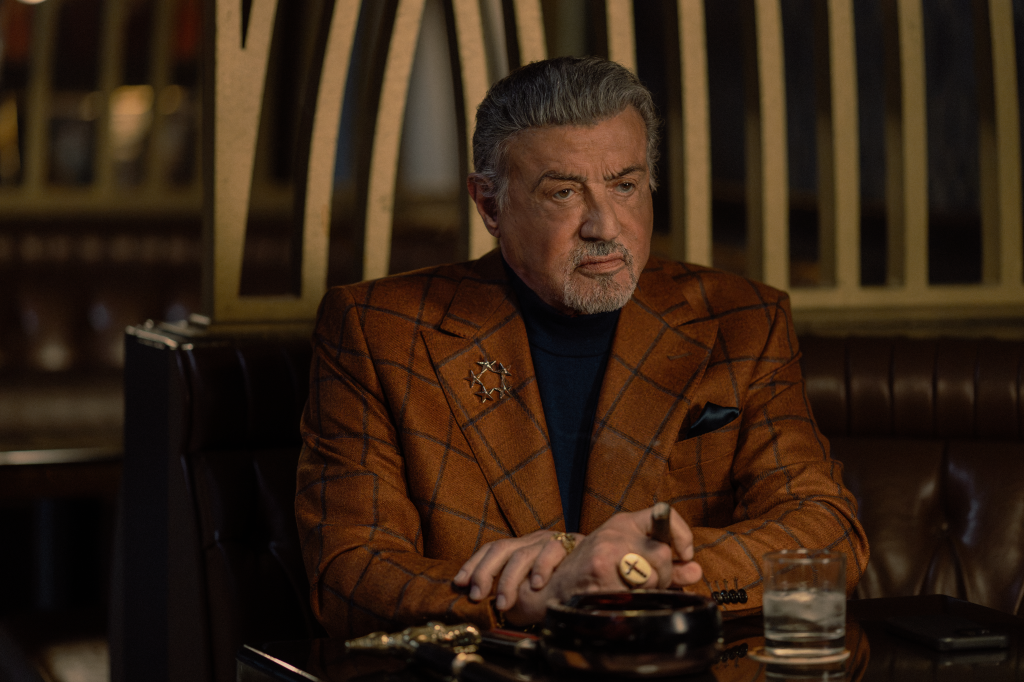
“Thing happen, they change the course of a man’s life,” says Sylvester Stallone‘s Dwight at the opening of the Season 4 trailer for Tulsa King. “If I find out whose fault this is, bad things are gonna happen to bad people,” warns the beaten-down Dwight.
Per the Season 4 logline, Dwight (Stallone) fights to legitimize his empire and protect his crew as corrupt politicians, dangerous new enemies, and a crushing personal loss hit from every direction. However, every hard-won gain comes with even harder truths: about loyalty, leadership and the cost of ambition. Each move drags Dwight deeper into the street instincts he left behind in New York – turning Tulsa into a battleground and Dwight into the one threat no one can afford to underestimate.
“Everything I own is gone,” Dwight laments a bit later in the trailer. “I’m not ready to fold.” he confidently asserts. “I’m gonna get it all back.”
We also see a bit more of new cast member Gretchen Mol in the trailer. Mol plays Amanda Clark, a Tulsa politician. When asked by a reporter, “Has the mob come to Oklahoma?” she replies sternly, “It may have come, but it sure as hell ain’t staying’.”
Terence Winter is head writer and executive producer. Sheridan and Stallone executive produce, along with David C. Glasser, Ron Burkle, David Hutkin, Bob Yari, Thomas Kelly, and Keith Cox.
The series, which premieres Friday, October 16 on Paramount+, is produced by Paramount Television Studios and 101 Studios and distributed by Paramount Global Content Distribution.
Check out the trailer above and see first-look photos here.
>
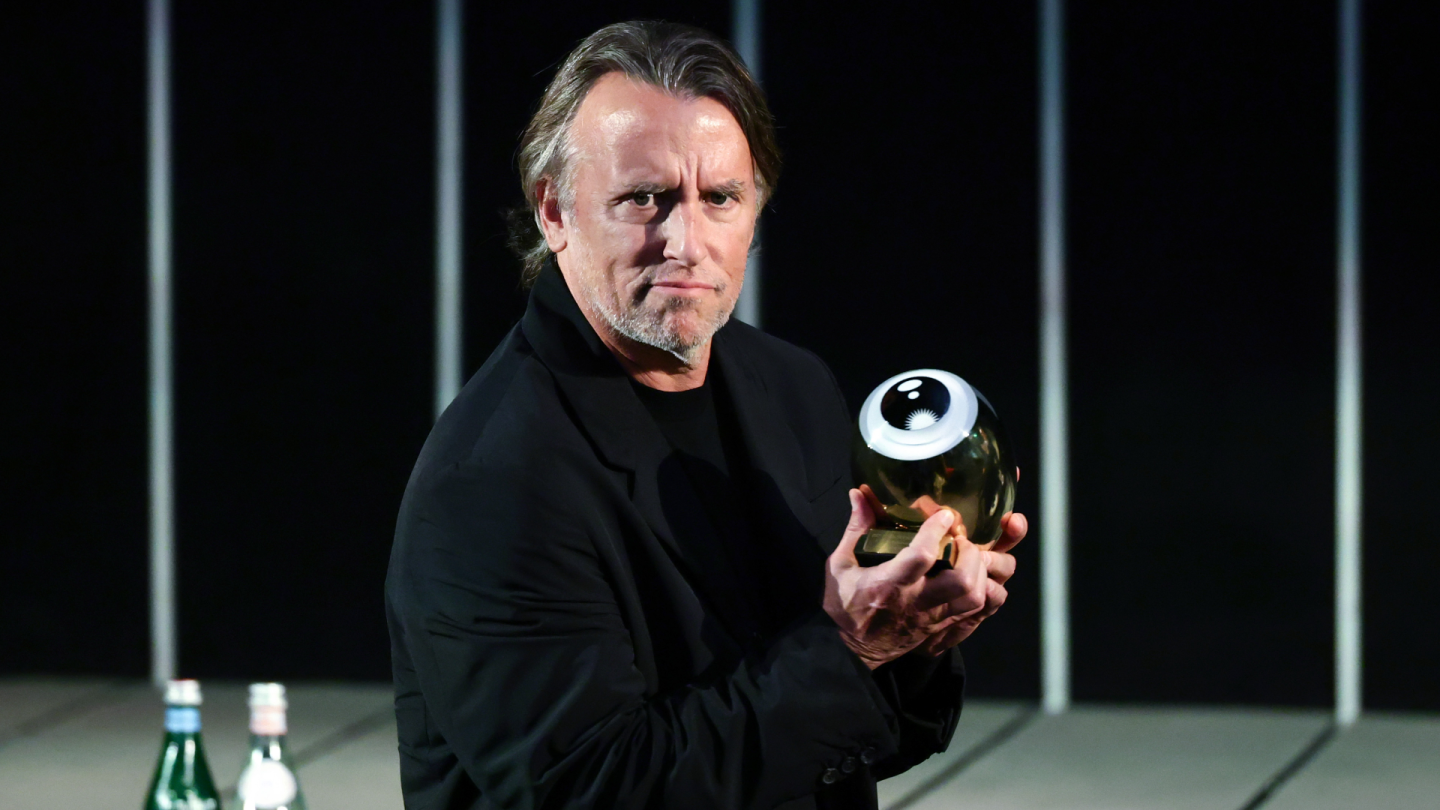
Upon accepting his career achievement award at an intimate Zurich Film Festival ceremony, beloved U.S. auteur Richard Linklater was swiftly asked for an update on his musical film, Merrily We Roll Along.
Based on Stephen Sondheim’s 1981 show, Linklater’s movie is set to shoot over a 20-year period, similar to his Oscar-nominated Boyhood, with stars Paul Mescal, Ben Platt and Beanie Feldstein aging in real time.
Before a screening of his iconic Before Sunrise, Linklater sat for a 45-minute discussion with Zurich Film Festival CEO Christian Jungen to reflect on his entire career, from his early interest in cinema to making Dazed and Confused with Matthew McConaughey and later, School of Rock with Jack Black.
Toward the end of the conversation, an audience member asked for a status update on Merrily We Roll Along, to which the American filmmaker responded that it’s proving a little trickier to be discreet compared to 2014’s Boyhood (shot over 12 years). “When I was doing Boyhood, we worked in complete anonymity. No one knew about the film. This one, on the other hand, because it’s a Stephen Sondheim musical and it’s very public, I have to answer this question for 20 years while we’re making it,” he laughed.
“But my progress report,” continued Linklater, “is it’s [shooting] nine sections in 20 years. And in a few months, we’re filming the fourth section. So see you in 2040,” he added, the room applauding.
Linklater also dismissed concerns about “tempting fate” with such a long shoot. “It worked on Boyhood, […] and that’s just the way the film should be made and that’s the only way to tell the story. And people were like, ‘Well, what if someone died?’ There’s always an extreme thing that would prevent it from being made. But I was like, ‘Well, that usually doesn’t happen,’ and you gotta believe in collaborating with the future of some kind. So definitely got lucky [with Boyhood] and hoping to get lucky this time. But it’s been so fun so far. It’s very different. I have music already — it’s a great score. We’re adapting it step-by-step. I’ve always made music films. … But it’s fun to be making a full-on musical. But it’s about friendship, long-term.”
Merrily We Roll Along is based on the 1934 play of the same name by George S. Kaufman and Moss Hart, follows Franklin Shepard, a talented composer of Broadway musicals that abandons his friends and career to become a producer of Hollywood movies. The story begins at the height of his Hollywood fame and moves backwards in time, showing important moments in Frank’s life.
Naturally, Linklater was probed on how he came to cast Ethan Hawke and Julie Delpy in the cult Before trilogy, and regaled the audience with anecdotes about making the Vienna-set romance. When Jungen cited an interview with Delpy where she said she’d been “only made a third” of what Hawke was paid, Linklater responded: “That’s not true. I actually remember fighting for it because I knew how hard the actors were going to have to work. And I did have some producers saying, ‘Oh, Julie has no American credits. We don’t have to pay her that much. We can get her for scale. ‘ And I was like, ‘Let’s get them closer.’ It was definitely the most she’s ever made, but it was a little less than he did. But not [by] much.”
Upon receiving his career achievement award, Linklater, director of Hit Man, Nouvelle Vague and, more recently, Blue Moon, told the crowd: “I feel so lucky to be in this world, to work with people in the film culture — not just filmmakers, but the film culture that we all live in too. Film festivals, curators, teachers of film, just film lovers everywhere, film societies,” he said, alluding to his launching of the Austin Film Society in 1985.
He continued: “I’ve been so lucky all these years now to awaken every day in that world where it’s optimistic, because film is optimistic. It’s people who want the best, who want to see something great, who want to make something great, and we try to help each other in that. And it’s the best people, too.”
The evening was celebratory from the moment Linklater walked in to his picking up Zurich’s Golden Eye Award. He joins 2026 honorees Julianne Moore, John Turturro and Naomi Watts. The 22nd edition runs Sept. 24-Oct. 4.
>


Search For Canadian TV Actor Stewart McLean Now Homicide Investigation


These ’90s fashion trends are making a comeback in 2017
According to Dior Couture, this taboo fashion accessory is back
Model Jocelyn Chew’s Instagram is the best vacation you’ve ever had
Emily Ratajkowski channels back-to-school style
9 Celebrities who have spoken out about being photoshopped


Rurouni Kenshin: Hokkaido Arc Manga Takes 1-Issue Break – News


HIDIVE to Stream English Dubs for The World Is Dancing, The Forsaken Saintess and Her Foodie Roadtrip in Another World, The Dangers in My Heart: The Movie Anime – News