

movies
Michael Douglas Book Excerpt: How 3rd Choice For Gordon Gekko Rode Role To Oscar

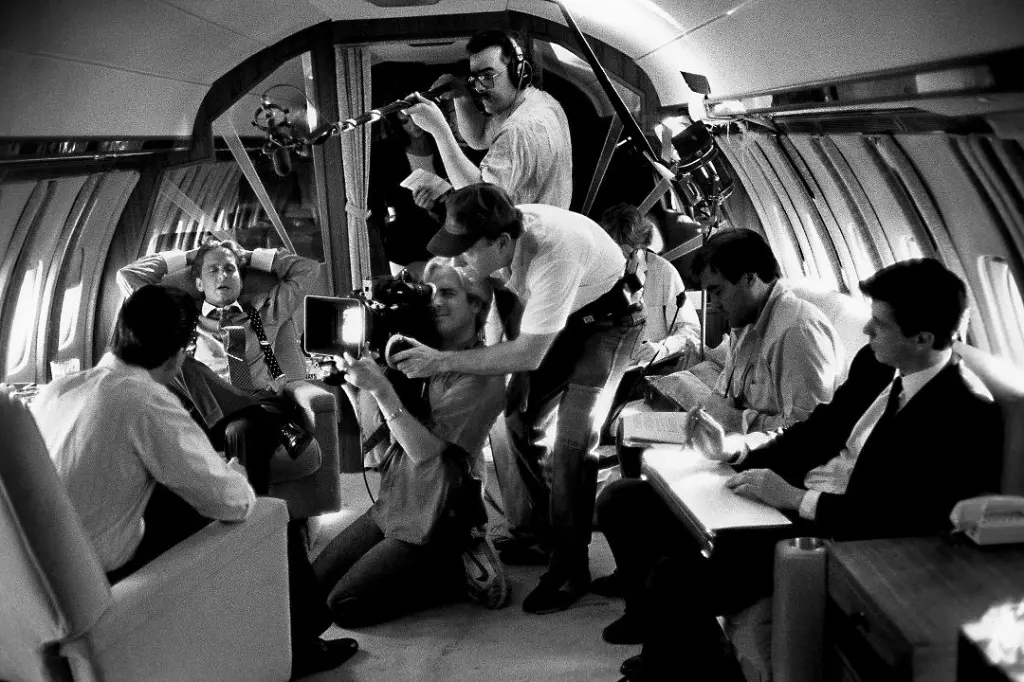
Editor’s Note: Mike Fleming Jr. here. For the better part of last year, my day began with a 6 AM call and an hour with Michael Douglas for his memoir One Helluva Ride. It was early for me, but always worth catching MD someplace in Europe, where he enjoys the fruits of his long run as Hollywood superstar with his wife Catherine Zeta-Jones and their family. Written by Douglas, Shane Salerno and me, the memoir One Helluva Ride was released Tuesday by Grand Central Publishing. Details revealed by Douglas about his colorful personal life have dominated headlines this week; we thought Deadline readers would be most interested in the dissection of the seminal film that helped forge a great career.
Douglas started with a difficult task, trying to forge an identity out of the long shadow cast by his father, Kirk Douglas. Douglas got his first movie boost as a producer, sharing the Best Picture Oscar for One Flew Over the Cuckoo’s Nest, and capturing the Zeitgeist with The China Syndrome. His onscreen rise took longer. The producer in Douglas helped the actor in him by prizing good scripts above all else. The best of those meant playing flawed characters, and Douglas came to relish seeing how far he could push that envelope and still have audiences on his side.
The book tells Douglas’ story through a dozen of his most memorable films – Romancing The Stone, Fatal Attraction, Basic Instinct, Traffic, Falling Down and The War of the Roses among them — and The Streets of San Francisco, the TV series with Karl Malden that helped forge Douglas’ work ethic and prepared him to produce Cuckoo’s Nest with the late Saul Zaentz. The following excerpt focuses on Wall Street, the film that emboldened Douglas to take the kind of risks many of his actor peers didn’t dare. Pushed relentlessly by Oliver Stone, Douglas turned the corporate raider Gordon Gekko into a defining villain of ‘‘80s films. That turn paved the way for everything that followed.
As Michael writes in the book’s intro, “I can’t think about my life without thinking of my movies. Six of the eight decades I’ve lived on this planet have been spent making films—they have always been my landmarks, the way I mark time.” Here, he takes us back to Wall Street, the film that allowed him to play any role and have audiences show up on the weekend, just to see what he got himself into next, and how he was going to get out of it.
‘I had never played the bad guy’
I’d never played the bad guy. In Fatal Attraction I had played a guy who made a bad decision and spent the rest of the movie trying to make up for it. But he wasn’t a real villain.
Dad always thought I should play a part as cunning and manipulative as his famous character in The Bad and the Beautiful, the ruthless Hollywood producer Jonathan Shields. He told me, “You’re so likable, Michael, but when you finally play a bad guy, you’re going to surprise a lot of people who think you can only do the nice-guy stuff. I know the darkness under there.”
Oliver Stone had just won best director and best picture for Platoon. Premiere magazine said, “In one short year, he has emerged as the most interesting and important director in Hollywood.”
In the early 1980s, while researching his screenplay of Scarface in Miami, Oliver noticed not only the rise of cocaine, but of a young, emerging millionaire class. Millionaires were once men in their sixties, but thanks to Wall Street, you suddenly had all these guys—kids, really—in their twenties and early thirties with tons of disposable income. They were using it to fund a decadent lifestyle of drugs and parties and flashy materialism.
Oliver saw parallels between the get-rich-quick Miami drug trade and what was taking place in the New York financial world. Oliver called Wall Street “Scarface North.” He wanted to use the backdrop of the finance world to hold a mirror up to America. Oliver was eager to prove that he could transfer his intensity from the Vietnam jungle to the concrete jungle of Manhattan’s Financial District. The title of his new project was going to be either Greed or Gekko the Great.
Wall Street follows Bud Fox, a young, ambitious stockbroker who is seduced into the ruthless, illegal world of insider trading under the dark mentorship of wealthy corporate raider Gordon Gekko. In the course of the story, Bud faces a complex moral struggle between his blue-collar roots and the seductive, corrupt power of money.
To counterbalance his protagonist, Stone needed a villain. Someone slick, charismatic, and seductive. A ruthless corporate raider.
For the part of Gekko, the studio really wanted Warren Beatty but he would not commit. Next the role was offered to Richard Gere, who turned it down.
Then Oliver sent me the screenplay. It was long, with intense industry-jargon-heavy monologues running two or three straight pages of single-spaced type. I was captivated by Gekko’s words:
Greed, for lack of a better word, is good.
Greed is right.
Greed works.
Greed clarifies, cuts through, and captures the essence of the evolutionary spirit.
Greed, in all of its forms—greed for life, for money, for love, knowledge—has marked the upward surge of mankind.
And greed, you mark my words, will not only save Teldar Paper, but that other malfunctioning corporation called the USA.
This Gordon Gekko part was fantastic and it was exactly what I was looking for. But that didn’t mean the studio wanted me.
Scott Rudin and other Fox executives said I was too young for the part, but the truth was they just didn’t believe I could pull it off. In fact, they warned Oliver that I was more of a producer than an actor and told him I’d probably be in my trailer all the time reading scripts or on the phone to LA trying to set up my own projects. Why couldn’t they accept that I was capable of both jobs, separately or at once?
There was really nothing onscreen that showed Oliver I could play Gordon Gekko. Gekko was all power, all the time. He was the puppet master. He was nasty. He was Machiavellian. He was the ultimate villain.
Rather than being turned off by the studio’s feedback, Oliver was intrigued. In fact, the more the studio executives warned Oliver about me, the more interested he was. He believed in me, not only because of my acting résumé, but because of my life. He was hiring me because I was an Oscar-winning producer who, like Gekko, knew how to make money. Four back-to-back blockbusters—One Flew Over the Cuckoo’s Nest, The China Syndrome, Romancing the Stone, Jewel of the Nile—had proven that. I was the actor who walked off a hit TV show to make an independent movie that didn’t even have a distributor. I was the Hollywood disrupter who made an indie film that beat every big studio movie, both at the box office and at the Academy Awards, as he himself had just done with Platoon. I was a maverick, an outsider, like Oliver, and, more importantly, like Gordon Gekko.
Oliver told me when we met he found “an edge” to me that he liked and felt I had the right mix of charisma and business savvy to play Gekko. He trusted that the DNA I possessed as the son of Kirk Douglas, along with the skills I had acquired as an actor over twenty years, would be enough for me to bring out the Gordon Gekko inside me. He believed there was a chord I hadn’t played because I didn’t want to be compared to my father. He gave me the role.
Now we had to build Gordon Gekko from the ground up. Building a character starts with external elements. Establishing these details always helps me figure out how my character thinks, moves, and expresses himself.
1. The name: There was nothing accidental about the name. “Gekko” was chosen to highlight Gordon’s predatory nature. He was a stealthy, cold-blooded hunter intent on killing his prey. And geckos are survivors. The more I researched and delved into the character, the harder I worked to embody these traits.
2. The clothes: Essential to the image, the persona of this man, was Gekko’s wardrobe. The suits, the suspenders, the cuff links, the shoes, all of it. Costume designer Ellen Mirojnick brought in Manhattan tailor Alan Flusser to help with the outfits. They studied the power suits of other Masters of the Universe figures like Carl Icahn, T. Boone Pickens, and even a young Manhattan real estate tycoon named Donald Trump.
3. The hair: I had a long, flowing mane, still a Santa Barbara hippie at heart. But that wouldn’t work for a shark like Gekko. I needed something slick and edgy, a look different from anything audiences had seen before. And then I thought about Pat Riley. Pat was not only one of the best coaches in NBA history, but he looked damn good doing it. This was partly because he knew he was representing the Buss family and the Lakers organization, but also Pat’s father had played and managed in the minor leagues for twenty-two years and always believed in the discipline of good grooming. When his parents went to dinner, his dad wore a sport coat, gabardine shirt, and tie. Pat took this to heart and basically put Armani on the map in Los Angeles. But he was never fussy about it. In fact, he wore the same Lorenzo Banfi shoes every night and got dressed and slicked his hair back in under five minutes.
But yeah, he did look good, and I wanted Gordon Gekko to have some of that flair. I remembered a day Pat Riley and I were together in Miami, and Pat was driving his Mercury with the top down. I was in the back seat, absolutely fixated on how his hair stayed perfectly in place despite the breeze. This was exactly the commanding look I needed for Gekko. (For years afterward, Pat would tease me, saying I stole his look, and for years I would deny knowing what he was talking about. Eventually, in 2026, I confessed the truth when the Lakers unveiled a statue of Pat in Star Plaza outside Crypto.com Arena in LA.)
4. The smoking: By design, Gekko is seen smoking during key moments in the story, including his famous “Greed is good” speech. Winston cigarettes and Davidoff cigars serve to sell an image of supreme, untouchable confidence.
5. The speech: Gekko’s biggest weapon was his ability to command a room with his words. I would have to deliver long monologues while holding not only the other characters’ attention but the audience’s as well. I worked with a speech coach on breath control and vocal rhythms. Gekko’s words stabbed the person he was tearing down.
6. The language: Beyond just the way he speaks, there’s a distinctive vocabulary that signals Gordon Gekko’s philosophy and approach to everything in life. I focused on how I would deliver these lines in a way that would show his personality and background:
Lunch is for wimps.
Wake up, will ya, pal? If you’re not inside, you’re outside, okay. What’s worth doing is worth doing for money.
You need a friend, get a dog.
It’s all about bucks, kid. The rest is conversation.
7. The trappings: Everything around me, every object, every setting, had to convey wealth. The private jets, the limos, the high-end restaurants, the big house on the beach. It was essential to Gekko’s image and character. Whenever you saw Gordon Gekko, you saw money. This included, of course, his signature Motorola DynaTAC 8000X cell phone. Wall Street was the first major studio movie to use one in a picture.
Oliver and I talked a lot about Gekko’s Long Island background. He wasn’t an Ivy Leaguer who had things handed to him by patronage and social circles. He clawed his way up to the top mercilessly. He had a street toughness you wouldn’t find in someone coming out of Harvard or Yale, and I worked on tapping into that blue-collar warrior masquerading as a white-collar titan.
I did a tremendous amount of research. I talked with a bunch of Wall Street traders, and Oliver and I met with Michael Milken at the Drexel Burnham Lambert offices in LA. While they were giving us a tour, Milken seemed a bit nervous. When Oliver said, “Can you show us the shredding machines?” Milken didn’t find it funny. He excused himself and that was the last we saw of him.
We spent time interviewing Asher Edelman. Edelman was a Wall Street wizard who taught a course at Columbia Business School called Corporate Raiding—The Art of War. He threw out the standard textbooks and assigned Sun Tzu’s The Art of War instead.
I ultimately drew from a composite of several real Wall Street titans, including Ivan Boesky, Carl Icahn, Dennis Levine, and Oliver’s friend Owen Morrissey, who had been involved in a real-life $20 million financial scandal just a couple years before. I also had my own connections on Wall Street: investment bankers I had dealt with to finance past films. I took bits and pieces from all of them. One guy’s seduction and charm. Another one’s intellect. Someone else’s killer instinct. There was a little bit of Asher Edelman, Hollywood talent agent Mike Ovitz, and Oliver himself thrown in for good measure.
I prepared for this role harder than I had for any that came before. I felt immense pressure to deliver for Oliver because he had fought hard to cast me in the film against 20th Century Fox’s objections.
We did a week of rehearsals in New York and went through the script many times. It became clear early in the process that Sean Young (who was playing my wife) and Daryl Hannah (Gekko’s former mistress turned Bud’s girlfriend) were uncomfortable and struggling with their roles. Oliver did his best to convey what the characters’ wants and needs were, but there was something they just weren’t connecting with. Especially Daryl.
On April 15, 1987, we began filming Wall Street. I got into a routine. I would show up on set, head to hair and makeup—Gordon Gekko had a year-round tan—and get dressed in expensive suits and accessories. It was my uniform, and from the moment I donned all of it, I felt different.
I went back to an old trick I had learned long before, on The Streets of San Francisco. I liked to review my lines when I was doing something else. Brushing my teeth, I’d be saying, “Now you’re not naive enough to think we’re living in a democracy, are you buddy?” While cooking, I proclaimed, “The new law of evolution in corporate America seems to be survival of the unfittest.” I’d sip my coffee and look up to declare, “Most of these Harvard MBA types, they don’t add up to dog shit. Give me guys that are poor, smart, and hungry. And no feelings.” This exercise helped me reach another level of understanding and memorization.
I need my lines to be rote, to be almost unconscious, like breathing. That helps me deliver them without sounding like I’m delivering a lecture. Once I know them at that level, I have the bandwidth to explore the other facets of the character and scene, like where I’m looking, what expressions I’m making, how I’m physically moving around the set. When the words come out naturally, without having to think about them, that is the real freedom and joy of acting. On Wall Street, I found that rhythm. But not right away. And not without a lot of pain.
I learned quickly that Oliver’s tough-guy reputation was well earned. At a time when so many of us were trying our damnedest to avoid the draft, Oliver was an idealistic dreamer whose desire for adventure led him to enlist in the army. He came back from Vietnam with scars, both physical and psychological. Wounded twice in battle, he won the Bronze Star with Valor, and the Purple Heart. He then studied film at NYU and his toughness and ferocity were evident in the scripts he wrote for Midnight Express and Scarface.
Oliver treated making movies like going to battle. One of the first scenes we filmed was with Gekko and Bud Fox in a limo, where Gekko asks Bud the difference between a well-dressed man on a street corner and a homeless man rooting through a garbage can right next to him.
It’s a crucial scene, where Bud Fox is seduced into making his Faustian bargain with Gekko. The writing was beautiful, but there was a lot of dialogue, and I was still learning Oliver’s guerrilla-style filmmaking. The cinematographer was Bobby Richardson, who is extraordinary. He had already done Salvador and Platoon and would go on to do JFK, The Doors, Born on the Fourth of July, and Quentin Tarantino’s last six movies. We shot the scene in a real limo with Bobby and his camera in the jump seat. They used a flat lens, and the camera was right in our faces. Oliver moved the camera a lot within scenes. He wanted to create the sensation of sharks during a feeding frenzy. The camera, like Gekko, was a predator. As an actor, it required a tremendous amount of concentration.
I fumbled a few lines and immediately recalled the experience with Michael Crichton on Coma, where I was unprepared, didn’t know my lines, and had to do the scene in front of an entire crew sixty-four times before I got it right. But here, as we went along, I felt that I was getting better and dialing in.
We went through the scene a few more times, then broke for lunch. Oliver knocked on my trailer door and popped his head in. “Are you okay?”
“Yeah, I’m good,” I replied.
“Are you on drugs?”
“No, I’m not on drugs. Why would you ask me that?”
“Because you look like you’ve never acted before in your life.”
Fuck.
Me.
In that moment, I heard every single person in my life who had told me I couldn’t do something. That I was just a TV actor. That I was crazy to do Cuckoo’s Nest. That I would never be a leading man. That I would never escape my father’s shadow. All the rejection, all the self-doubt, it was all there, right in front of me. And now I had to prove them wrong. Dad told me I wasn’t as sweet and charming as everyone thought I was, that I had a piece of steel inside me. I would have to summon it if I had any hope of pulling off this role.
I wasn’t a producer on Wall Street, so there was no reason for me to see the dailies. I didn’t normally watch dailies anyway because I would always beat myself up, cringing at my performance. But now I insisted. I needed to see what I was doing wrong.
I watched a rough cut of the scene. “Hey, Oliver,” I said to him. “I actually think it’s pretty good.”
“It is, isn’t it?”
What? Now he agreed? Was he just screwing with me? Well fuck you, too, Oliver. I wasn’t going to wilt. I wasn’t going to back down. I was going to show him that I was Gordon Gekko.
I realized what Oliver was doing. Some directors take a patriarchal view, putting a fatherly arm on your shoulder when you need one. But not Oliver. He challenges you. He twists your melon. He uses every trick he can to get just one percent more out of you. By summoning all the rejections and dismissals I had suffered in my career, he was making me respond to them. Right here, right now, in this role. He was tapping into corners of my personality that I didn’t even know existed.
I’ll show him. I turned his doubt into fuel. I started rehearsing even harder on my own, using that anger as a source of energy. I thought that day and every day for the rest of the shoot: I’ll goddamn show Oliver.
Oliver treated his actors like fellow soldiers in the foxhole. There was no coddling. There was no “You did your best.” Oliver hated that style and he was not going to, as he called it, “seal clap after every scene.” You were either in the trench with him or you weren’t. And if you were, he had to know that his back was protected. Just like you had to know. So he would test you. He would find any insecurities and vulnerabilities and poke, prod, and manipulate them into peak performances.
The most famous line from Wall Street is “Greed, for lack of a better word, is good.” It encapsulates not only the thesis of the film, but the excessive materialism of the 1980s. The line is pulled from a commencement speech Ivan Boesky gave at the UC Berkeley Haas School of Business, when he said, “I think greed is healthy. You can be greedy and still feel good about yourself.” Just six months after Boesky’s arrest for insider trading, we were shooting the most iconic scene of Wall Street in the ballroom of the Roosevelt Hotel on East 45th Street. Using Oliver’s indictment of my earlier performance as fuel, I studied my ass off in preparation.
The scene takes place at the stockholders’ meeting. A giant room, with over a hundred cast members and extras, and me pacing like a lion.
It’s a three-and-a-half-minute monologue. That’s an eternity on film. Oliver’s direction, his and Stanley’s words, and my preparation almost had me believing that I was really taking over a company.
After the first take—in which I did the entire monologue in one fluid go—Oliver yelled, “Cut,” and the entire room of five-hundred-plus people stood and applauded. Cast, extras, crewmembers, everyone. I thought back to Cuckoo’s Nest, and how the cast and crew had applauded Jack’s performance on more than one occasion. A decade had passed, and it was happening to me now. It meant the world to me.
We kept going. To get the needed coverage, we shot the scene from all angles. Charlie and Sean’s close-ups. The company shareholders on the dais. The featured extras. The wide shot of the entire room. Then it was time for my close-up.
As I was doing the scene, I could see Oliver next to the camera, head down, reading the script to make sure I was following the speech as written.
He wasn’t looking at me. He wasn’t watching my performance. Take after take, he was not seeing anything I was doing. He was just reading along to make sure I got every word, every comma, right. I was getting increasingly pissed off until finally, after take five, I said into the mic, “Oliver, I’m over here.” Only then did he look up.
After one or two more takes, he said, “Print. Let’s move on.” That was it? No notes on my performance? No guidance at all? Angry, I grabbed Oliver, pulled him to a corner, and went ballistic. I was killing myself for him, and he didn’t even have the courtesy to pretend to be paying attention to my performance?
Oliver explained that he prefers to be in what’s called “video village,” the tent where producers watch the video feed of a scene. Oliver keeps away from the actors because he doesn’t want to end up in their eyeline. He wants an actor to be free to take in the whole room without being distracted by his presence or feeling like he’s judging them. He believes a script is the bible, trusts the writing, and could tell through hearing the script if it was working right tonally. He also mentioned that he was looking up, but only when he knew I wasn’t aware. He was concentrating on my performance without making me hyperaware that he was doing it.
My rising stock had helped him find financing at Fox. But the pressure for Oliver to prove himself on his first studio film, at three times the cost of Platoon, was immense.
Prior to shooting, Oliver did something truly extraordinary, and unprecedented, with Charlie. He let him choose who would play his father in the film. It came down to my old costar Jack Lemmon or Charlie’s real father, the incredible Martin Sheen.
Charlie chose his real dad.
As good as Oliver Stone is at pulling out incredible performances from his male stars, the same isn’t always true for his leading ladies.
Sean Young, who played my wife, had a terrible relationship with Charlie and pretty much everyone else besides me. She caused a lot of problems on set, and many on the crew had an issue with her. It got so bad that at one point Charlie taped a sign on her back that read “Biggest cunt in the world.” Sean did not notice the sign for some time. When I saw it, I pulled it off.
“What was that?” she asked.
“Forget it.”
It would have ended there, except the guy who furnished all the art for the film had seen it and told her. She had every right to be furious.
Daryl Hannah also continued to have a tough time. Several of Oliver’s longtime crewmembers, including cinematographer Bobby Richardson, had urged him to recast Sean and Daryl, but he stood by them until he fired Sean. Oliver would later say he wished he had fired both. He thought they were miscast.
Oliver was the first director to really test me as an actor. I’ll admit, I hated his guts while we filmed it. He continued to ride me and piss me off, risking any future relationship we might have, just to get that extra bit of anger out of me. But somehow Oliver knew that what I needed to really elevate my performance was an extra level of nastiness that I wasn’t used to. Looking back, I can never repay him for that gift.
After I finished my final scene in the film, I called Dad and said, “Boy, are you going to love me in this role. I am mean.”
Two months before our release, Black Monday happened. The Dow Jones Industrial Average dropped an astonishing 22.6 percent. It was the worst financial crisis since the crash of 1929, which had ignited the Great Depression.
Wall Street premiered on December 11, 1987. It instantly became part of the cultural conversation, like Fatal Attraction and The China Syndrome.
It always shocks me, even now, when people walk up to me and say, “Gordon Gekko is the reason I became a stockbroker.” What the hell?! He isn’t a hero, he’s the villain, and he ends up paying for it with a prison sentence. But they don’t care. They love the take-no-prisoners mentality. So many people took the wrong message away from the film. It’s sad, really.
As a cultural phenomenon Wall Street lasted long after it left the theaters. It became iconic among “finance bros.” In fact, there’s a scene in the 2000 film Boiler Room where eight young traders are all sitting around a TV watching Wall Street. Ben Affleck’s character starts quoting the dialogue in perfect sync with the film.
My portrayal of Gordon Gekko is the face of corporate predation to this day. But it was just a character, not something to aspire to. It is so pervasive, that in 2012, twenty-five years after the first film, the FBI recruited me to do a PSA talking directly to investment brokers about the dangers of financial fraud. I was as surprised as anyone to be working with the FBI. But the statute of limitations on my cross-country drug runs had finally expired.
Wall Street also struck a chord during award season. I was nominated by the Hollywood Foreign Press Association for a Golden Globe for Best Actor. I was staying in the Hotel Bel-Air, and as my mother and I left to go to the ceremony, we passed George Harrison. I acknowledged the lead guitarist of the Beatles with a nod and wave and went to the show.
I won that evening, gave my speech, then went through the whole press flurry afterward. When I came out, everyone had gone home. I had no one to celebrate with. I said screw it and went to Trader Vic’s for a drink, then back to the hotel, kind of excited, but feeling a little sorry for myself. I was in my room around 12:30 a.m. when the phone rang. It was George Harrison!
“Hello, Michael. I just got back to the hotel, and my mate and I thought we’d come by and say hi.”
Uh, hell yeah, George Harrison and his mate can come by.
A couple of minutes later, there was a knock on my door and in he walked, accompanied by the biggest dog I’d ever seen, and then his “mate”:
Bob Dylan.
Man, that was one of the most amazing nights of my life. We sat around and shot the shit, but the thing I remember most is the dog. There was caviar on the table and this behemoth started licking it. And no one was stopping him.
Bob said, “Far out, dog loves caviar!” but all I was thinking is, That’s gotta be like a hundred dollars per lick!
Then it was time for the Oscars. Fatal Attraction was nominated for Best Picture, along with nominations for Adrian Lyne, Glenn Close, Anne Archer, and James Dearden. Everyone but me. But I was nominated for Wall Street. And in another confusing fact, somehow, Wall Street wasn’t nominated for Best Picture, nor was Oliver Stone for directing. Fox studios had decided Broadcast News was going to be their big Oscar film that year. I was singly excluded from Fatal Attraction and singly included for Wall Street.
In the Best Actor category, I was nominated alongside my pal Jack Nicholson for Ironweed, Marcello Mastroianni for Dark Eyes, Robin Williams for Good Morning, Vietnam, and William Hurt for Broadcast News. My father has been nominated for three Oscars and lost every time.
Marlee Matlin, who’d won Best Actress the previous year for Children of a Lesser God, presented the award. As she worked her way through the category, using sign language as a translator conveyed her words, it reminded me of the night we won for Cuckoo’s Nest, when Louise gave her acceptance speech in sign language. Maybe the gods were giving me a sign.
“And the winner is, let’s see . . . Michael Douglas for Wall Street!”
After I won the Oscar, my entire group made the rounds of after-parties and the later it got, the more people peeled off, even Diandra. At five in the morning, Jann Wenner and I went to see Jack Nicholson at his place up on Mulholland. We knew he’d be up. Jack opened the door with a grin. He told me he had been rooting for me to win that night, even over himself. He said, “I wanted you to win more than anything. I even wore my lucky suspenders to help make it happen.” He already had two Oscars. Warren Beatty had one for Reds. Robert Redford had one for Ordinary People. It was official. I was one of them. We hung out with Jack until around 7:00 a.m., after the sun had risen, and the next morning, after a nap, that Oscar was still tucked under my arm when I went to my dad’s house to show him how far I had carried his legacy.
The one-two punch of Fatal Attraction and Wall Street during the same year transformed me from leading man to superstar. I was a forty-three-year-old late bloomer, and now one of maybe five or six actors who could get a movie greenlit just by agreeing to be in it.
After two decades of grinding nonstop, I finally decided to take some time off. I’d lounge around, watch my buddy Pat Riley and the Lakers, and go on vacations with Diandra and Cameron . . .
At least that was the plan.
One Helluva Ride, By Michael Douglas With Shane Salerno and Michael Fleming Jr.
>
Continue Reading
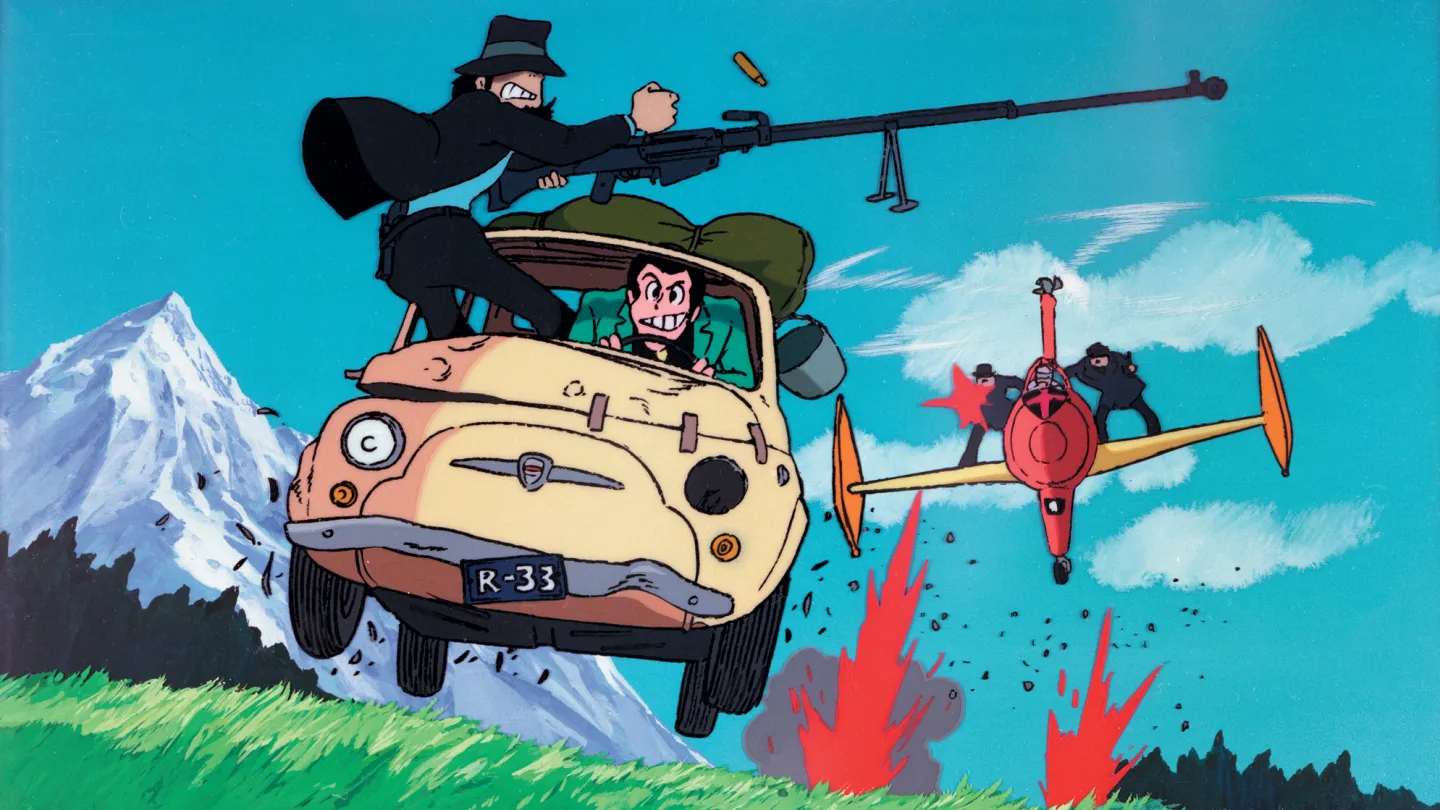
The Toronto Film Festival is set to showcase classic films selected by Japanese anime director Masaaki Yuasa that influenced his celebrated animation.
Yuasa is known for surreal storytelling and a distinct anime visual style for films like Night is Short, Walk on Girl, Ride Your Wave, his directorial debut Mind Game and Lu Over the Wall, an Annecy award winner. He also directed an episode of Adventure Time and worked on Netflix’s DEVILMAN Crybaby.
In all, 17 features and four shorts selected by Yuasa, including movies by Katsuhiro Otomo, Hayao Miyazaki, Sylvain Chomet and Rene Laloux, will feature as part of the Drawn Universes: Visions in Animation program. The series, to run Nov. 19 to Dec. 29 at TIFF Lightbox, will include conversations with Yuasa and the Japanese director introducing screenings of Richard Williams’ The Thief and the Cobbler: A Moment in Time and Isao Takahata’s Anne of Green Gables: Road to Green Gables.
Drawn Universes: Visions in Animation will launch with Paul Grimault’s The King and the Mockingbird on Nov. 19.

Akira
Toronto Film Festival
Yuasa said in a director’s statement released by TIFF: “In curating this series, I wanted to look back at films that sparked my own imagination and influenced both my predecessors and the generations that followed. The diverse lineup includes foundational achievements like Pinocchio and Lupin III: Castle of Cagliostro; visionary masterpieces such as AKIRA, Fantastic Planet and Toy Story 3; and contemporary classics including The Girl Who Leapt Through Time and Liz and the Blue Bird. Taken together, these films demonstrate boundless imagination, extraordinary technical skill, and world-building at the highest level, revealing the limitless potential of animated storytelling.”
Yuasa in 2013 co-founded Science SARU with Eunyoung Choi, left in 2020 and in 2025 he established ame pippin Inc.
The King and the Mockingbird
Toronto Film Festival
>
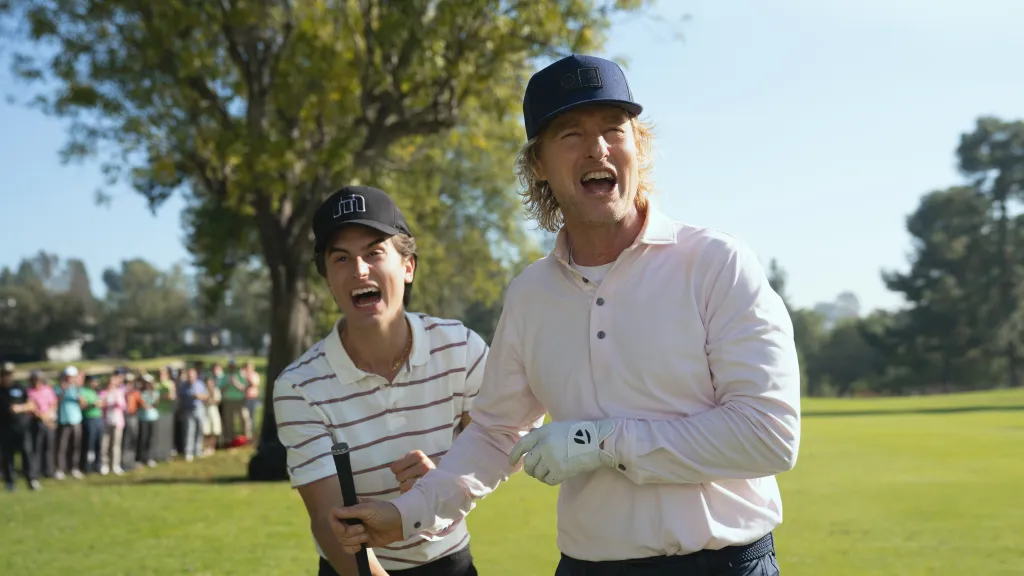
Those mourning the end of Ted Lasso Season 4 have some reprieve coming in the approach of Apple TV’s Stick Season 2.
The golf comedy series returns Wednesday, November 4 with two episodes, followed by one every week until December 30, 2026. The cast led by Owen Wilson, Peter Dager, Marc Maron, Mariana Treviño, Lilli Kay, Judy Greer and Timothy Olyphant will reunite, and Emmy and Golden Globe winner Rhea Seehorn (Pluribus) joins Season 2 in a supporting role.
SNL alum John Higgins, Billy Zane, Rex Linn, Sasha Alexander and Missi Pyle are also new to the ensemble for the sophomore season. The show also features return guest appearances from legendary broadcasters Jim Nantz and Trevor Immelman, and golf enthusiasts Matt Scharff and Dan Rapaport.
In Stick Season 2, Pryce’s golf prodigy Santi (Dager) takes the next step in his pursuit of professional golf, but his talent thus far becomes baseline expectation, which changes the game for him. As Santi chases his dream, Pryce Cahill finds himself wondering what might still be possible for him.
Urged on by his former rival Clark Ross (Timothy Olyphant), Pryce decides to bet on himself, launching an improbable comeback in hopes of becoming the oldest golfer ever to win the U.S. Open. After the tempting offer, Pryce knocks on Clark’s door to see the ambitious former player wearing under-eye masks, agreeing to his proposition.
Seehorn will portray Coach Amanda, aka “the swing doctor” according to Clark, recruited to help Pryce get back on track to success. With trusted caddie Mitts (Marc Maron) in his corner, Pryce sets out to prove — to the golf world and, more importantly, to himself — that maybe he really was as good as everyone always said he was. Amanda snort laughs at first, thinking they are kidding when they visit her for her wisdom and expertise.
“We have to play to our strengths,” Amanda says as she whips Pryce into shape. “However few they are.”
L-R: Rhea Seehorn and Owen Wilson in ‘Stick’ Season 2
Apple TV
He tells her to relax as he pulls on some white golf gloves. Noah Kahan’s “Northern Attitude” plays towards the end of the clip.
The heartfelt, feel-good comedy about a found family and their relationships set within the world of golf debuted in June 2025. Wilson stars as Pryce Cahill, an over-the-hill, ex-pro golfer whose career was derailed prematurely 20 years ago. Now he wants to see if he really was as good as everyone said and thought he was before his flame out. After the collapse of his marriage to Amber Lynn (Greer) and getting fired from his job at an Indiana sporting goods store, Pryce hedges his bets, and future, entirely on a troubled 17-year-old golf phenom named Santi.
Hailing from Apple Studios, Stick is showrun by Jason Keller, who also serves as executive producer alongside Wilson, Ben Silverman for Propagate Content and Entertainment 360’s Guymon Casady. The series is also executive produced by Christopher Moynihan, Rodney Ferrell, Howard T. Owens, Drew Buckley, Lee Eisenberg, and Bill Callahan.
>
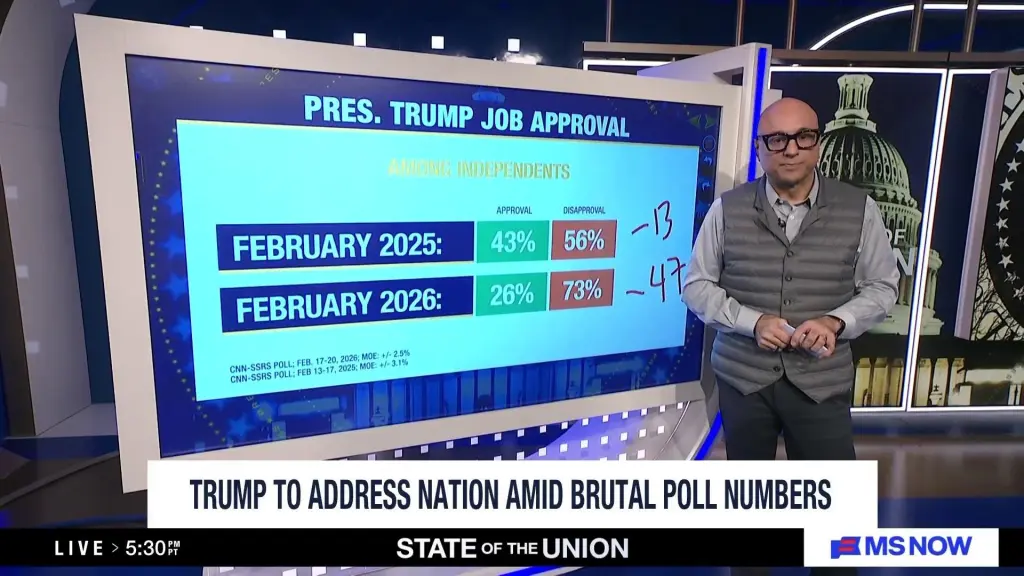
MS NOW has partnered with FiftyPlusOne for polling data, approval ratings, election modeling and analysis in advance of the midterms.
The deal starts on Thursday, and MS NOW will be FiftyPlusOne’s exclusive national partner.
G. Elliott Morris, head of analytics at FiftyPlusOne, previously was editorial director of data analytics at ABC News, including oversight of FiveThirtyEight. FiftyPlusOne’s data will be used across MS NOW’s platforms and Morris will write a regular column for ms.now. The MS NOW Membership will feature FiftyPlusOne data in its Live Q&A feature. MS NOW earlier announced a partnership with the Associated Press for election results.
FiftyPlusOne features daily polling averages on upcoming elections and issues and forecasts on various contests.
Kabir Khanna, director of elections and analytics at MS NOW, said in a statement that FiftyPlusOne’s “expertise will give out journalists and audiences a deeper understanding of the polling landscape before and after Election Day.” Morris said that FiftyPlusOne provides “rigorous, transparent aggregation of public opinion polls and other electoral data that’s honest about what the numbers can and can’t tell us.”
>

Anime12 seconds ago
Magilumiere Magical Girls Inc. Season 2 Anime Series Review – Review
Sports1 minute ago
NFL Week 5 fantasy football injury report, weather forecast and streaming opportunities

Tech4 minutes ago
Natura’s $99 smart ring puts AI agents on your finger
-

 movies5 months ago
Search For Canadian TV Actor Stewart McLean Now Homicide Investigation
-

 Fashion9 years ago
These ’90s fashion trends are making a comeback in 2017
-
Fashion9 years ago
According to Dior Couture, this taboo fashion accessory is back
-
Fashion9 years ago
Model Jocelyn Chew’s Instagram is the best vacation you’ve ever had
-
Fashion9 years ago
Emily Ratajkowski channels back-to-school style
-
Fashion9 years ago
9 Celebrities who have spoken out about being photoshopped
-

 Anime4 months ago
Rurouni Kenshin: Hokkaido Arc Manga Takes 1-Issue Break – News
-

 Anime3 months ago
HIDIVE to Stream English Dubs for The World Is Dancing, The Forsaken Saintess and Her Foodie Roadtrip in Another World, The Dangers in My Heart: The Movie Anime – News