
Tech
Elon Musk questions Ambani’s influence as Starlink India launch stalls


Elon Musk has questioned billionaire Mukesh Ambani’s influence in India as SpaceX struggles to launch its Starlink satellite internet service in the country. Musk’s comments, which were posted on X, escalate a dispute over regulatory delays after the Indian government rejected his claims that powerful business interests were blocking its entry.
Musk accused on Wednesday unnamed “oligarchs” of blocking Starlink’s launch in India to maintain what he called their “monopolistic chokehold” on the country, without identifying them or providing evidence for his claim. He called the alleged blocking a “crime against the people of India” and argued that Starlink could bring affordable, high-speed internet to people who lack internet access.
Hours later, India’s Ministry of Communications pushed back, saying its regulatory framework for satellite communications is “fair and non-discriminatory.” The ministry said in a statement that Starlink and two other licensed satellite operators are all at “broadly the same regulatory stage.” It added that all three companies are undergoing security assessments that must be completed before they can seek spectrum, the radio frequencies that satellites use to send signals.
Musk went further on Thursday, questioning the influence of Reliance Industries chairperson Mukesh Ambani.
”Is Ambani the real boss of India?” he wrote on X, after claiming that Starlink had spent years complying with Indian regulations and questioning why it still lacked a license.
Starlink has spent more than five years trying to enter India, a market with more than a billion internet subscribers. But it has yet to begin commercial services despite securing key regulatory approvals and partnering with telecom giants Reliance Jio and Bharti Airtel last year. SpaceX has also set up a local team as it prepares for a launch, appointing former Payoneer executive Prabhakar Jayakumar to lead its India operations in December.
Musk’s comments came hours after Lauren Dreyer, Starlink’s vice president of business operations, appeared at India Mobile Congress, a telecom industry conference in New Delhi and reiterated the company’s commitment to the market.
“We stand ready to serve India,” Dreyer said, adding that Starlink wants to help realize Prime Minister Narendra Modi’s goal of achieving universal connectivity across the country.
Starlink said it already has more than 20 gateway sites (the ground stations that link its satellites to the internet) and hundreds of antennas on the ground in India, and has adapted its operations to meet the country’s regulatory, security, and data-sovereignty requirements. Moreover, SpaceX has positioned its satellite network as a complement to — rather than a replacement for — India’s terrestrial telecom networks.
SpaceX first attempted to launch Starlink in India in 2021. The company, however, had to refund preorders for its equipment in early 2022 after the Indian government called it out for “booking/rendering the satellite internet service” before getting the necessary licenses.
Starlink has also previously clashed with India’s largest telecom operators over how satellite spectrum should be allocated. Starlink pushed for spectrum to be assigned administratively, while Reliance Jio argued that it should be auctioned — a position that could have made Starlink’s entry more expensive. India ultimately sided with Starlink’s preferred approach, deciding to allocate satellite spectrum administratively rather than through an auction.
Jio and Airtel, India’s two biggest telcom operators, are also pursuing their own satellite internet services, even as they have agreed to distribute Starlink in India. Jio is working with satellite operator SES on satellite broadband, while Airtel is a major backer of Eutelsat OneWeb, another licensed satellite operator in India.
While the timing of Starlink’s India launch remains unclear, the company this week launched Starlink Mobile, which connects ordinary phones to satellites, in neighboring Bangladesh.
Starlink, India’s Ministry of Communications, Reliance Jio, and Bharti Airtel did not immediately respond to requests for comment.
Update: This article was originally published at 11:14 p.m. PDT and has since been updated to include Musk’s comments questioning Reliance Industries chairperson Mukesh Ambani’s influence in India.
When you purchase through links in our articles, we may earn a small commission. This doesn’t affect our editorial independence.
>
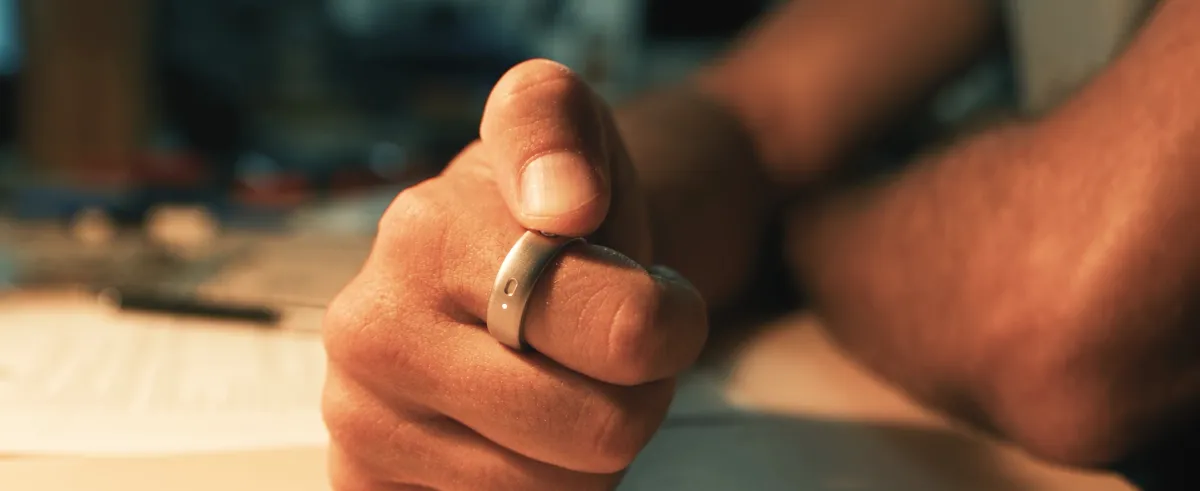
Meet Interface, a new $99 smart ring from AI and hardware startup Natura that’s designed for the era of AI agents. With a press of your finger, you can ask an AI agent to complete a task, capture thoughts, and get things done without reaching for your phone. And while AI is at the heart of Interface, the ring also doubles as a health tracker, as it monitors metrics like heart rate, HRV, sleep, and activity.
The startup was founded by Carlo Edoardo Ferraris, who previously founded tech accessories company Rolling Square. After years of building consumer hardware, he became convinced that rapidly advancing AI needed a new kind of interface that lets people ask for what they want the way they’d ask a person.
The idea behind Interface is to help people look up from their phones while getting everyday tasks done more quickly and naturally. At launch, the ring will connect with a range of AI agents and apps, including Meta’s Muse, Instinct, Grokbot, Claude, ChatGPT, and more.
Pre-orders are expected to open next month, with shipping slated for December or January.

The smart ring was not the company’s first product. Those were HumanPods, a pair of AI-enabled earbuds designed to let users interact with AI agents. But Natura believed it needed a new form factor built for the latest advances in voice technology.
“Over time, we evolved to an understanding where you really want to have access to your agents 24/7,” Ferraris told TechCrunch in an interview. “You don’t want to have even one hour of your day where you cannot access them. And the form factor of the ring is perfect for this because it’s basically an extension of you. You can go shower with it; you can sleep with it. You never take it off.”
The company says the use cases are endless. If you’re out for a run, you could ask the ring to start tracking your workout. When you wake up, you could ask what’s on your schedule for the day. If you’re in the shower and realize you’re out of shampoo, you could ask the ring to reorder it. If you’re falling asleep while watching TV, you could tell it to turn off the TV and set an alarm for the morning. After using it to record a meeting, you could ask it to send your notes from the discussion to a coworker.
Responses from agents can be delivered through connected headphones, an iPhone Live Activity, or the NatureOS app.
Plus, users who rely on multiple AI agents and apps can specify which one they want to handle a particular task. For example, they could ask Claude to write code, Instinct to book a reservation, and Grokbot to take care of something else.

In addition to controlling AI agents, users can control their devices, including their computers. Ferraris says he believes that, ultimately, most of the things people do on their computers will be handled through AI agents. He sees the ring eventually replacing many tasks that currently require screens, from filling out forms and messaging in apps to finding files and drafting presentations, with simple voice requests to an AI agent.
“Ultimately, the main interface between users and technology is going to be the ring,” Ferraris said. “So it’s not going to be immediate because even today, not everybody has a personal agent, but I think everybody is bound to have one. So in this first phase, we expect it’s going to be for the people that already have a personal agent, which is mostly people in tech. But eventually, I think within a year, more or less, most people will have a personal agent.”
Although the ring will launch at $99, Natura plans to eventually raise the price. For now, the company wants to get the device into people’s hands, build usage, and create demand before doing so. After an initial three- to six-month free period, Natura plans to charge a $9 monthly subscription fee.
The company says the ring’s manufacturing costs are comparable to those of products like the Oura Ring and Samsung Galaxy Ring because they use many of the same components. However, Natura plans to price its ring lower initially to reduce the barrier to entry and drive adoption.

As for health tracking, the ring tracks heart rate, resting heart rate, heart rate variability, different sleep stages, daily movement and step count, and skin temperature over time.
The company says the ring can last 6 to 12 days on a full charge, depending on usage, and takes 100 minutes to fully recharge.
While the smart ring market is filled with health-focused offerings from companies like Oura, Ultrahuman, and RingConn, as well as AI-focused ones from companies like Pebble and Vocci, Ferraris believes Interface stands out by combining both worlds.
“This ring that we’re about to launch is significantly different compared to any other ring out there today because we were able to combine not only the highest quality health tracking with the rest of the components that allow for agent communication and meeting recordings and external memory, but we were also able to do that with an incredibly long battery life, which is vital for a product like this, and in a size that is very, very small. The product itself is, from a hardware perspective, very different from anything else that’s out there.”
When you purchase through links in our articles, we may earn a small commission. This doesn’t affect our editorial independence.
>
Tech
US bars Microsoft, Adobe, and major IT firms from green card program for skilled foreign workers
The Trump administration is suspending Microsoft, Adobe, and several other technology companies from a program that helps skilled foreign workers obtain permanent residency in the United States, accusing the companies of fraud.
“Our message to Microsoft is: You’re a great American company, but you’ve got to hire great American workers,” U.S. Vice President JD Vance said in a news conference on Thursday, Reuters reported.
The other firms being suspended from the program include Capgemini, Cognizant, HCL, Infosys, Tata, and Wipro. Secretary of Labor Keith Sonderling said the government would not accept any new or pending permanent labor certification applications involving these companies.
H-1B visas are designed for highly skilled positions that employers may struggle to fill with qualified U.S. workers. Tech companies are among the largest users of the program, with nearly three-quarters of approved visas going to workers from India, according to The Associated Press.
Vance also said the administration would investigate nine universities, including Harvard, Yale, and Stanford, over allegations they’re abusing a program that allows international students to come to the U.S. and were using the program to undermine wages for American workers.
Microsoft and Adobe did not immediately respond to a request for comment.
>

TikTok gave teens and children access to a placebo safety feature instead of a real one that would have let them refresh their recommendations in an experiment, according to allegations in New York’s lawsuit against the social media platform.
Reuters reports that TikTok’s experiments involved thousands of users, including teens and children, who had opted to use safety features like “Algo Refresh,” a tool that allows users to reset their recommendations and stop seeing unwanted or potentially harmful content.
Although the users believed that they had activated the feature, their feeds didn’t change, unlike those of users who weren’t part of the experiment and had access to a fully functioning version of the tool.
New York’s lawsuit against the company is one of more than two dozen cases brought by states that accuse the social media giant of designing its platform to encourage addictive use among children and misleading users about its safety.
“We continuously make improvements to our platform which means that, like most companies, we regularly test new products and features to validate the experience and understand how they work in the real world,” TikTok told told Reuters.
TikTok did not immediately return a request for comment.
The lawsuit also claims that TikTok conducted other experiments. Bloomberg reported in June that one such experiment withheld a safety feature from 15 million U.S. users, including a teenager who later died by suicide.
>

Magilumiere Magical Girls Inc. Season 2 Anime Series Review – Review
NFL Week 5 fantasy football injury report, weather forecast and streaming opportunities

Natura’s $99 smart ring puts AI agents on your finger
-

 movies5 months ago
Search For Canadian TV Actor Stewart McLean Now Homicide Investigation
-

 Fashion9 years ago
These ’90s fashion trends are making a comeback in 2017
-
Fashion9 years ago
According to Dior Couture, this taboo fashion accessory is back
-
Fashion9 years ago
Model Jocelyn Chew’s Instagram is the best vacation you’ve ever had
-
Fashion9 years ago
Emily Ratajkowski channels back-to-school style
-
Fashion9 years ago
9 Celebrities who have spoken out about being photoshopped
-

 Anime4 months ago
Rurouni Kenshin: Hokkaido Arc Manga Takes 1-Issue Break – News
-

 Anime3 months ago
HIDIVE to Stream English Dubs for The World Is Dancing, The Forsaken Saintess and Her Foodie Roadtrip in Another World, The Dangers in My Heart: The Movie Anime – News