
Production


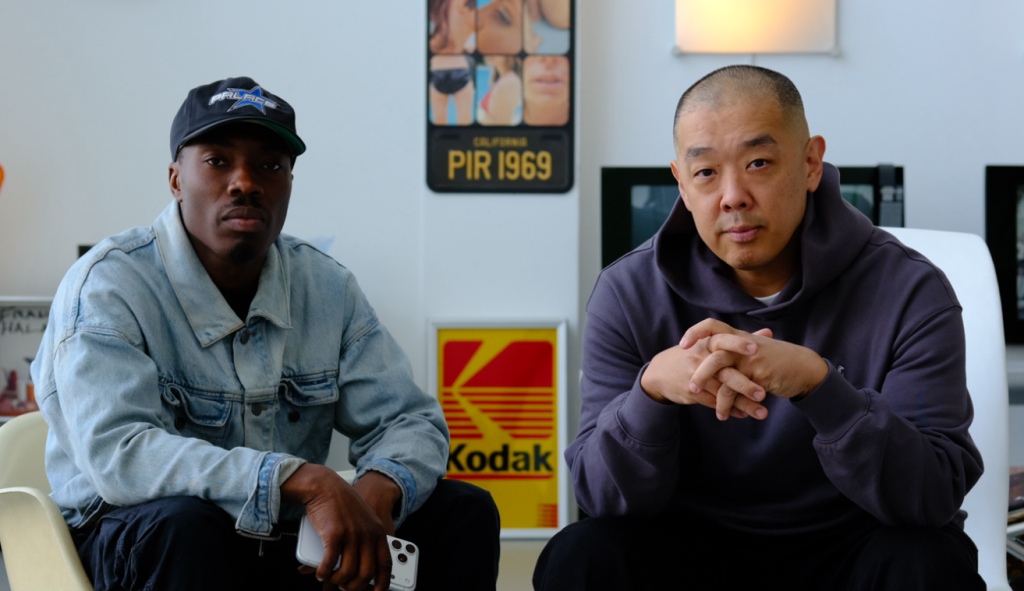
EXCLUSIVE: FREEAgent, the podcast series hosted by creative entrepreneur Kenny Annan-Jonathan, returns today for its second season.
In its first run, the pod became known for its high-profile guests, with names across fashion, business, and sports joining Annan-Jonathan to discuss their careers. Guests included Naomi Osaka’s longtime agent Stuart Duguid and veteran executive Rich Kleiman.
FREEAgent season two launches today with an episode featuring streetwear pioneer Jeff Staple.
“Everyone knows Jeff as ‘the Pigeon Dunk guy,’ but his story is much deeper than that,” Annan-Jonathan said of Staple. “He’s a trailblazer and one of the forefathers of global streetwear. He’s celebrating 30 years of STAPLE.”
Staple is one of the most influential designers and creative execs of his generation. He launched STAPLE, an independent streetwear brand, in 1997. Over its decades-long run, STAPLE has collaborated with companies like Nike, Google, New Balance, Timberland, Puma, and LVMH. Staple is perhaps best known for creating the iconic Nike SB “Pigeon” Dunk — one of the most influential sneakers of all time. Staple is also the founder of Reed Art Department, an influential creative and marketing agency.
Annan-Jonathan continued: “The real substance of our conversation centres on his redesigned agency and what it means to bridge the gap between the corporate and creative worlds. He’s a cultural translator who understands both sides. Most creators are raw. They don’t always know how to convert their creativity into revenue or communicate their message commercially. Jeff’s story gives you details about the projects he pursued, the times he was turned down, and what he had to do to make things work.”
FREEAgent episodes will once again drop weekly. The guests are predominantly high-profile figures working between sports and creative arts who rarely speak publicly, yet still wield widespread influence in their industry.
“Season one was really good. I think it was a powerful introduction,” Annan-Jonathan said, adding that he is simply aiming to “widen the knowledge pool” and “build on the conversations that came before” in his second season.
“You might listen to Rich Kleiman and learn one part of the story. Then, when you hear one of his counterparts within the same space, you get a clearer picture of the wider ecosystem,” Annan-Jonathan explained.
“Then you can hear from someone in an adjacent business or on the brand side, and you gain more insight into how brands work with law and legal teams. From there, you understand how talent managers and the people behind the businesses work.”
He added: “My goal is to cover the ecosystem of sports, entertainment, and media—from the point of inception, whatever that may be, all the way to the end.”
Annan-Jonathan added that the FREEAgent podcast also gives him the opportunity to celebrate important cultural figures who are rarely championed publicly for their work.
“Season two is about continuing to stand on the shoulders of giants while celebrating people doing amazing things,” he said. “I think people should be given their flowers.”
Annan-Jonathan is the founder of the marketing and talent management agency The Mailroom and media house Trnsmission. In 2023, he was appointed Creative Director of English Premier League side Crystal Palace, the first such role established at a professional English club. He is also Sports Director at the Cannes Lions International Festival of Creativity.
FREEAgent podcast episodes drop weekly. The Jeff Staple episode is live now.
>
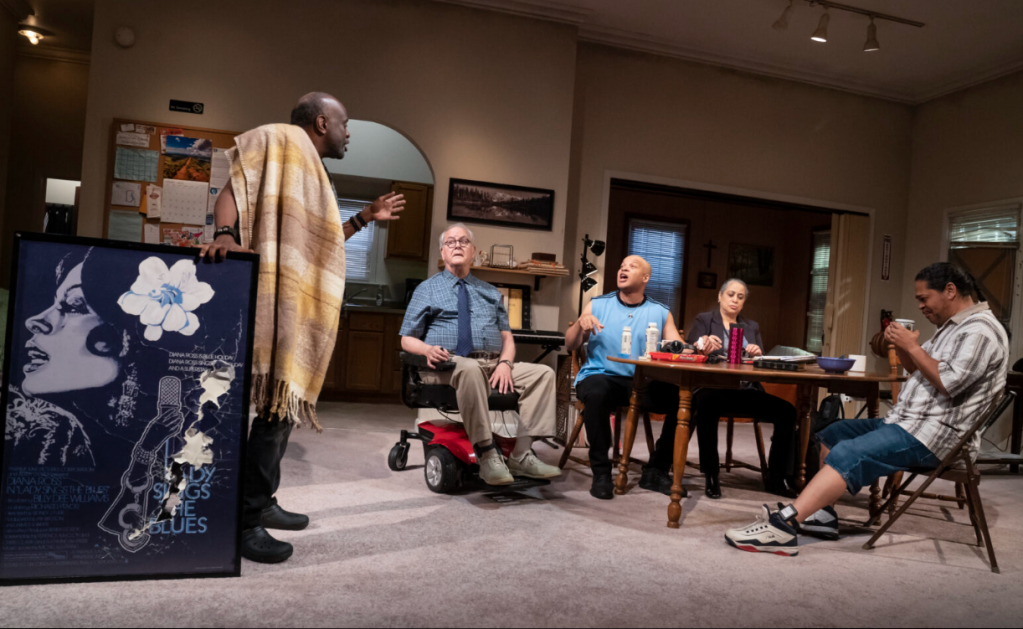
Bruce Norris’ play Downstate will delay its first Broadway preview by two days due to illness within the company, the show announced today.
The new first preview date is Monday, October 19, at Broadway Booth Theatre. Opening night of Sunday, November 15 remains unchanged.
Show reps did not specify who was ill or the nature of the illness. Ticketholders of the canceled Saturday, October 17, show will be refunded or given the opportunity to rebook by contacting point of purchase with questions.
Norris’ controversial play about a group home housing convicted sex offenders is directed by Joe Mantello and produced by Scott Rudin and Barry Diller. Downstate has been widely praised by critics in pre-Broadway stagings, occasionally drawing the ire of right-wingers like Texas Sen. Ted Cruz, who tweeted about the show, “So now the corporate media is praising pedophilia,” a misguided simplification that the production now uses in its marketing campaign.
Production
The official synopsis: “In downstate Illinois, four men convicted of sex crimes against minors live together in a group home, their every movement governed by restrictions that continue to close in around them. The house’s fragile order begins to fracture as an accuser arrives to confront his abuser, bringing with him a storm of unspoken memories. Shockingly funny, savage and furiously political, Bruce Norris’s play pulls audiences into a world where punishment is unending, compassion itself can feel like a transgression, and forgiveness is always out of reach.”
The Broadway staging of Downstate will feature Cassie Beck, K. Todd Freeman, Francis Guinan, Adrian Martinez, Al’Jaleel McGhee, Thomas Sadoski, Ivy Wolk and Liza Colón-Zayas.
>

After hiring Character.AI‘s former CEO as its chief technology officer, Disney is looking to acquire assets from the 5-year-old startup as it files for Chapter 11 bankruptcy protection.
The company, which allows users to create and interact with AI-generated avatars, said it made the filing in U.S. Bankruptcy Court for the District of Delaware. It said it hopes the process will allow it to “facilitate a value-maximizing sale of all or substantially all” of its assets. The Character.AI platform will continue to operate during the bankruptcy.
The Disney agreement, reached prior to the filing, would give the media giant a non-exclusive perpetual license of select intellectual property and company claims from Character.AI. Disney would pay $20 million and provide resources during a transition period as the company explores a sale. Disney is classified under bankruptcy law as the “stalking-horse bidder” for the IP, but its bid is subject to “higher or better offers,” CharacterAI noted in a statement.
Disney appointed former Character.AI chief Karandeep Anand as its first CTO last month. He reports directly to CEO Josh D’Amaro, who succeeded Bob Iger in the top job earlier this year with a stated goal of improving the company’s technology and AI efforts. D’Amaro became familiar with interactive technology prior to becoming CEO during his tenure as the head of Disney’s experiences division, which includes its theme parks.
While its lawyers have not hesitated to send cease-and-desist letters to AI companies, Disney is among the big media companies looking for ways to get in the AI game and profit from its boom. During the latter part of Iger’s tenure, Disney made a splashy deal with OpenAI soon after the company launched its controversial Sora 2 video model. Under the deal, Disney was to have licensed a number of its characters for use on Sora and also invest $1 billion in OpenAI, which is looking to go public soon at a valuation possibly exceeding $1 trillion. The transaction was scuttled two months later after OpenAI shut down Sora, which had drawn a host of legal complaints alleging copyright violation.
Character.AI said it is aiming to conclude the sale process by late November or early December.
“Over the past year, Character.ai has taken meaningful steps to sustain and improve its business in the face of significant legal, regulatory, and operational headwinds,” CEO Colin Adams said in a statement. “After a comprehensive review of the available alternatives, the board determined that this court supervised sale process provides the Company with the best opportunity to maximize value for all stakeholders. As we navigate this process, maintaining a safe and engaging user experience for our Character.ai community remains a top priority.”
>
Nigerian entrepreneur Mo Abudu made headlines this week after officially opening EbonyLife Place London — a new cultural hub dedicated to Black arts and culture in Nine Elms, South West London.
The multi-story venue features a 160-seat cinema that organizers said will exclusively programme Black films from across the African diaspora. Abudu has described the venue as the UK’s first “Black cinema.” It is not. Electric Cinema in Notting Hill was owned and operated, from 1993 to 2000, by Kwesi Owusu, Paul Bucknor and Mark Mantock, three Black filmmakers of African and West Indian heritage. The space was a popular hub for global independent Black cinema.
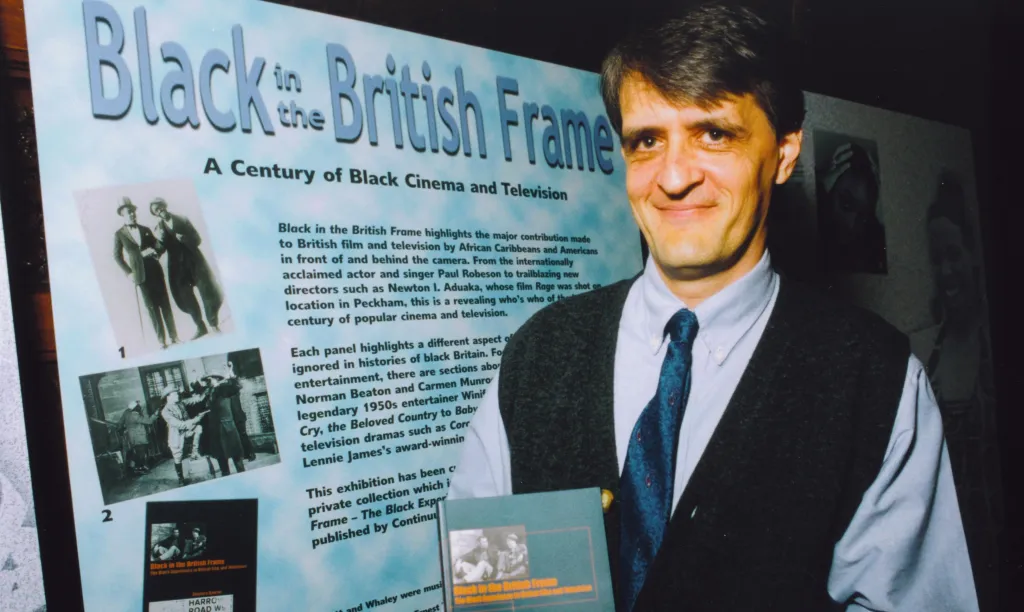
Nonetheless, EbonyLife Place London is a welcome addition to the UK cinema space, which is impossible to imagine without decades of important work on Black filmmaking in the UK, like Stephen Bourne’s essential book Black in the British Frame.
First published in 1998 and updated in 2001, Black in the British Frame was one of the first mainstream books to document the historical experiences, representations, and contributions of people of African and Caribbean descent in British cinema and television. The book covers an enormous chunk of British screen history (1896 to 2001), with each chapter uncovering and illuminating the careers of early Black screen pioneers. Figures profiled in Bourne’s book include Ernest Trimingham, a previously “lost” Black pioneer of the British silent film era; African American actor Paul Robeson, who spent much of the 1930s working in the UK, where he enjoyed top billing; and the Guyanese-born screen and stage legend Carmen Munroe.
Black in the British Frame has been one of the foundations of British screen scholarship since its publication. You can find the book on most school reading lists. But it is now almost impossible to find new or old copies.
Bourne tells Deadline in a lengthy interview from his South London home that the book is out of print. Bloomsbury Publishing, which assumed control of the book after merging with Bourne’s previous publisher, returned the rights to the author.
“I resisted because I wanted them to reissue the book, but they refused,” Bourne said. “It was a horrible experience. The book now sits with me.”
Bloomsbury confirmed the book’s rights were reverted to Bourne in a short statement. He is now looking for a new publisher.
Bourne has been writing Black British history books for more than 30 years. Alongside Black in the British Frame, he is best known for Black Poppies: Britain’s Black Community and the Great War (2014), Playing Gay in the Golden Age of British Television (2019), and Deep Are the Roots – Trailblazers Who Changed Black British Theatre (2021).
In 2017, Bourne received an honorary Screen Nation Award (often referred to as the “Black BAFTAs”) for his decades-long work documenting Black British film, television, and social history. Earlier this year, he published a memoir, Thursday’s Child: A Life Between the Lines, via Jacaranda.
Below, Bourne explains how and why Black in the British Frame fell out of print. The author also makes the case for why it is important that the book finds a new home.
“The book isn’t about me. It’s about the people in it. If people can’t access it, we’re living in a very sad world,” Bourne said.
DEADLINE: Stephen, what is the story? How did we get here with Black in the British Frame out of print?
STEPHEN BOURNE: Black in the British Frame was published in 1998 by Cassell, and it made quite an impact. That was a watershed year for Black British history books. Trevor Phillips and Mike Phillips published their Windrush book; Sam King published his autobiography, Climbing Up the Rough Side of the Mountain; and Jeffrey Green published Black Edwardians. It was also the fiftieth anniversary of Windrush, so Black British history and culture received a great deal of media attention.
The book did well, and universities picked it up for reading lists. I received excellent feedback from students and the general public. It didn’t receive as much mainstream recognition as I had hoped, but it found its readers and sold quickly. One reason it sold so well was a young Black woman in Cassell’s press office. We got on well, and she told me everyone else in the office was white, middle-class, and didn’t know how to market the book. She printed hundreds of small flyers, which I distributed to bookshops, on trains, and on buses. That’s how you sell a Black British history book—and it worked.
Cassell was then taken over by the publisher Continuum. A new editor asked me, only three years later, to revise and update the book to 2001. I did so, and the new edition came out with a slightly amended subtitle. Once again, it was picked up by the general public and university reading lists. Students responded positively and used it in their work. Eventually, Bloomsbury took over the Continuum catalogue. I approached them because I wanted the book kept in print. They said they would only do that if I updated it. This was about four or five years ago. I thought about it carefully, but after 2001 the filmmaking landscape had changed dramatically through video and digital media. Updating the book would have required an enormous amount of research, and I felt it would dilute the original book, which covered the period from the 1890s to the 1990s.
Bloomsbury would not accept that. They said they would revert the rights to me. I resisted because I wanted them to reissue the book, but they refused. It was a horrible experience. The book now sits with me. I’ve approached a couple of academic presses. They either turned it down or said, “Update it.” I don’t want to update it.
DEADLINE: I’m surprised. This is one of the most important books in the history of British cinema. Is this common?
BOURNE: I don’t know whether it’s common. I’ve never been able to get an agent. Agents have always turned me down. They’re very white and middle class, and they’re not interested in Black history. Some have practically told me that. Early on, I was told, “There’s no market for Black British books in this country.”
I practically begged Bloomsbury to let me come in and meet them, but publishing houses don’t work that way anymore. I know what you’re saying is true because so many Black people have told me how much the book meant to them. There are very few second-hand copies available online. It has been allowed to slip away. It shows how uninterested the film world, Bloomsbury’s film list, and the wider industry are. Bloomsbury did this to five of my books, four of them about Black cinema.
DEADLINE: Do you think this is a distinctly British problem? I struggle to imagine this happening in the United States with an important book about African American cinema.
BOURNE: My impression is that African Americans are more united. If something happened to a classic African American film history book by someone like Donald Bogle, there would be an uproar. We don’t think like that in this country. The BBC, the BFI, the London Film Festival, and the publishing world have always been dominated by the white middle class. They make occasional moves towards including a token Black person, but that’s not the same as genuine change.
DEADLINE: I’ve always thought Black In The British Frame was so popular because it was so accessible. I first read it when I was pretty young and trying to understand my own relationship to cinema as a Black person in Britain.
BOURNE: That was my intention. I’m not an academic or theoretical writer, so the book is free of academic jargon and theory. I also didn’t want to write only about racism. There is colonialism and racism in some of the early British films featuring Black actors, and I didn’t shy away from that, but I wanted the book to be celebratory too. I wanted to convey the work of the older generation of Black actors I was fortunate enough to interview and how proud they were. When I began interviewing actors such as Carmen Munroe and Norman Beaton in the 1980s, I realized that they had not simply played prostitutes or pimps. They had also done quality work, and that work was never recognized.
Books like mine try to give a balanced account and respect the older generation that did important work. Paul Robeson’s films from the 1930s are sometimes problematic and can pander to colonial ideas about Black people. Sanders of the River is an obvious example. But Robeson consciously moved away from that, and by his sixth and final British film, The Proud Valley, he had largely achieved what he set out to do. The Proud Valley is a wonderful film about working-class people in a Welsh mining village. Robeson integrates into that community, which was astounding for a British film in 1940. Hollywood would never have given Robeson that respect, but British cinema did. He was enormously popular with British audiences and appeared among the top ten box-office stars alongside Will Hay, George Formby, Gracie Fields, and Jessie Matthews.
That’s why Robeson’s photograph appears on the covers of both the first and second editions of Black in the British Frame. He remains almost a one-off in British film, despite the shortcomings of some of his films. All of that is in the book, along with interviews with Earl Cameron and Carmen Munroe. The book isn’t about me. It’s about the people in it. If people can’t access it, we’re living in a very sad world. I have to put the responsibility for that on Bloomsbury. And with the Black consciousness that exists now, particularly among young people, I think the book would be snapped up if it were reprinted and repackaged with a new cover.
DEADLINE: You have the rights now, and you’d be open to a reprint. If people see this and are interested, should they contact you?
BOURNE: Yes, but I don’t want to hand it over to just anyone. I’d want a bona fide publisher. I’m open to offers and suggestions.
DEADLINE: Where should people contact you?
BOURNE: Through my website’s contact page. I don’t have an agent. Some people try contacting my publishers, who sometimes forward messages, but I’d rather people go through my website.
>


Search For Canadian TV Actor Stewart McLean Now Homicide Investigation


These ’90s fashion trends are making a comeback in 2017
According to Dior Couture, this taboo fashion accessory is back
Model Jocelyn Chew’s Instagram is the best vacation you’ve ever had
Emily Ratajkowski channels back-to-school style
9 Celebrities who have spoken out about being photoshopped


Rurouni Kenshin: Hokkaido Arc Manga Takes 1-Issue Break – News


HIDIVE to Stream English Dubs for The World Is Dancing, The Forsaken Saintess and Her Foodie Roadtrip in Another World, The Dangers in My Heart: The Movie Anime – News