

movies
‘Industry’ Star Myha’la Claims “Racial Bias” Baked Into ‘The Traitors’

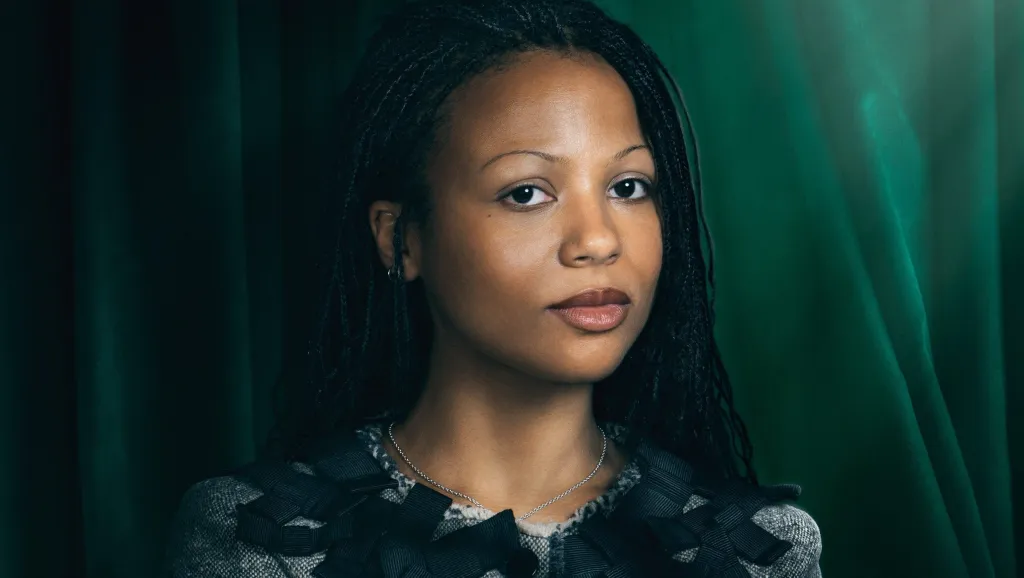
Myha’la Herrold has claimed that “unconscious racial and cultural bias exists” in The Traitors format, but that she sealed her own fate after exiting the celebrity version on the BBC.
The Industry actress was banished from Season 2 of The Celebrity Traitors last week and has reflected on her experience on the Studio Lambert series in an Instagram post.
In a comment under the post, entrepreneur Chantel Sachanna claimed: “Unfortunately you were banished because you are BLACK. This is a consistent thread in this racist show.”
In response, Myha’la said she would have fully agreed with Sachanna had she not played a significant role in her own downfall, including winking at Richard E. Grant before he was banished as a traitor.
“I sealed my own fate! And that early in the game there is VERY little to grasp on to, and I gave them…a lot,” Myha’la she said.
“However, I do agree that unconscious racial and cultural bias exists in this game where my authenticity or honesty or the ways in which I choose to express myself look suspicious to people who are unfamiliar with people like me.”
She continued: “I had this fear coming into the game, as I am a BIG fan and also clocked right away how prevalent this is in this game. And I came in knowing I’d be the only American (apart from Honorary British National Treasure Jerry Hall).
“I’m not saying it’s right, I’m not saying racism doesn’t exist, but I do have to defend my dear friends on this show who in no way consciously put bias on me because of my race.”
Myha’la added: “That’s not a fair or complete assessment of what really happened in my case. And! I do think games like this should allow more conversation around unconscious bias and how, when under pressure, people (society) gravitate towards things they know and understand or subsequently push away from things they don’t. It’s all love, and I REALLY genuinely appreciate your support.”
The BBC has been approached for comment.
>
Continue Reading
Nigerian entrepreneur Mo Abudu made headlines this week after officially opening EbonyLife Place London — a new cultural hub dedicated to Black arts and culture in Nine Elms, South West London.
The multi-story venue features a 160-seat cinema that organizers said will exclusively programme Black films from across the African diaspora. Abudu has described the venue as the UK’s first “Black cinema.” It is not. Electric Cinema in Notting Hill was owned and operated, from 1993 to 2000, by Kwesi Owusu, Paul Bucknor and Mark Mantock, three Black filmmakers of African and West Indian heritage. The space was a popular hub for global independent Black cinema.
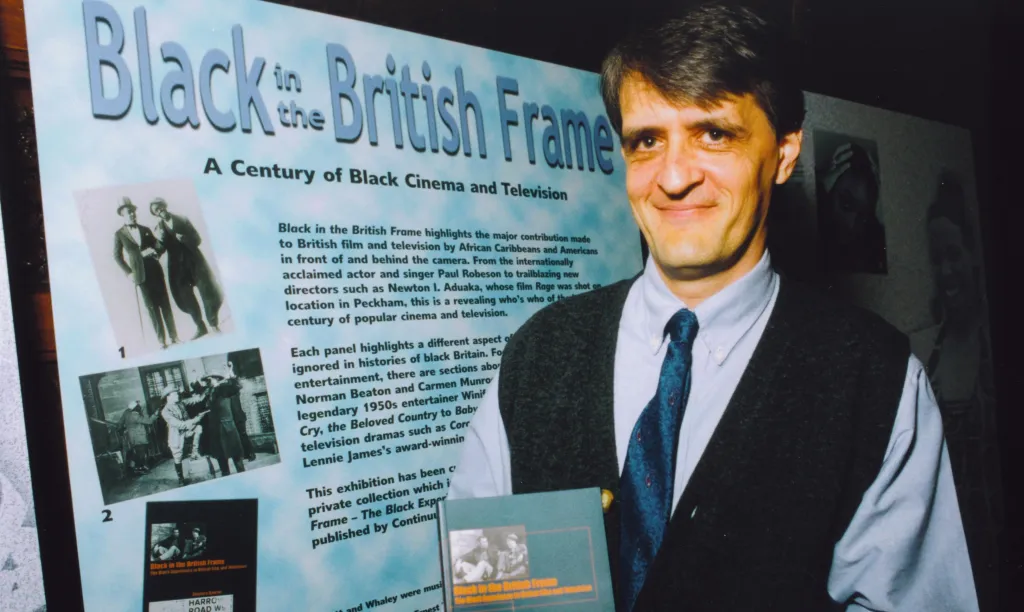
Nonetheless, EbonyLife Place London is a welcome addition to the UK cinema space, which is impossible to imagine without decades of important work on Black filmmaking in the UK, like Stephen Bourne’s essential book Black in the British Frame.
First published in 1998 and updated in 2001, Black in the British Frame was one of the first mainstream books to document the historical experiences, representations, and contributions of people of African and Caribbean descent in British cinema and television. The book covers an enormous chunk of British screen history (1896 to 2001), with each chapter uncovering and illuminating the careers of early Black screen pioneers. Figures profiled in Bourne’s book include Ernest Trimingham, a previously “lost” Black pioneer of the British silent film era; African American actor Paul Robeson, who spent much of the 1930s working in the UK, where he enjoyed top billing; and the Guyanese-born screen and stage legend Carmen Munroe.
Black in the British Frame has been one of the foundations of British screen scholarship since its publication. You can find the book on most school reading lists. But it is now almost impossible to find new or old copies.
Bourne tells Deadline in a lengthy interview from his South London home that the book is out of print. Bloomsbury Publishing, which assumed control of the book after merging with Bourne’s previous publisher, returned the rights to the author.
“I resisted because I wanted them to reissue the book, but they refused,” Bourne said. “It was a horrible experience. The book now sits with me.”
Bloomsbury confirmed the book’s rights were reverted to Bourne in a short statement. He is now looking for a new publisher.
Bourne has been writing Black British history books for more than 30 years. Alongside Black in the British Frame, he is best known for Black Poppies: Britain’s Black Community and the Great War (2014), Playing Gay in the Golden Age of British Television (2019), and Deep Are the Roots – Trailblazers Who Changed Black British Theatre (2021).
In 2017, Bourne received an honorary Screen Nation Award (often referred to as the “Black BAFTAs”) for his decades-long work documenting Black British film, television, and social history. Earlier this year, he published a memoir, Thursday’s Child: A Life Between the Lines, via Jacaranda.
Below, Bourne explains how and why Black in the British Frame fell out of print. The author also makes the case for why it is important that the book finds a new home.
“The book isn’t about me. It’s about the people in it. If people can’t access it, we’re living in a very sad world,” Bourne said.
DEADLINE: Stephen, what is the story? How did we get here with Black in the British Frame out of print?
STEPHEN BOURNE: Black in the British Frame was published in 1998 by Cassell, and it made quite an impact. That was a watershed year for Black British history books. Trevor Phillips and Mike Phillips published their Windrush book; Sam King published his autobiography, Climbing Up the Rough Side of the Mountain; and Jeffrey Green published Black Edwardians. It was also the fiftieth anniversary of Windrush, so Black British history and culture received a great deal of media attention.
The book did well, and universities picked it up for reading lists. I received excellent feedback from students and the general public. It didn’t receive as much mainstream recognition as I had hoped, but it found its readers and sold quickly. One reason it sold so well was a young Black woman in Cassell’s press office. We got on well, and she told me everyone else in the office was white, middle-class, and didn’t know how to market the book. She printed hundreds of small flyers, which I distributed to bookshops, on trains, and on buses. That’s how you sell a Black British history book—and it worked.
Cassell was then taken over by the publisher Continuum. A new editor asked me, only three years later, to revise and update the book to 2001. I did so, and the new edition came out with a slightly amended subtitle. Once again, it was picked up by the general public and university reading lists. Students responded positively and used it in their work. Eventually, Bloomsbury took over the Continuum catalogue. I approached them because I wanted the book kept in print. They said they would only do that if I updated it. This was about four or five years ago. I thought about it carefully, but after 2001 the filmmaking landscape had changed dramatically through video and digital media. Updating the book would have required an enormous amount of research, and I felt it would dilute the original book, which covered the period from the 1890s to the 1990s.
Bloomsbury would not accept that. They said they would revert the rights to me. I resisted because I wanted them to reissue the book, but they refused. It was a horrible experience. The book now sits with me. I’ve approached a couple of academic presses. They either turned it down or said, “Update it.” I don’t want to update it.
DEADLINE: I’m surprised. This is one of the most important books in the history of British cinema. Is this common?
BOURNE: I don’t know whether it’s common. I’ve never been able to get an agent. Agents have always turned me down. They’re very white and middle class, and they’re not interested in Black history. Some have practically told me that. Early on, I was told, “There’s no market for Black British books in this country.”
I practically begged Bloomsbury to let me come in and meet them, but publishing houses don’t work that way anymore. I know what you’re saying is true because so many Black people have told me how much the book meant to them. There are very few second-hand copies available online. It has been allowed to slip away. It shows how uninterested the film world, Bloomsbury’s film list, and the wider industry are. Bloomsbury did this to five of my books, four of them about Black cinema.
DEADLINE: Do you think this is a distinctly British problem? I struggle to imagine this happening in the United States with an important book about African American cinema.
BOURNE: My impression is that African Americans are more united. If something happened to a classic African American film history book by someone like Donald Bogle, there would be an uproar. We don’t think like that in this country. The BBC, the BFI, the London Film Festival, and the publishing world have always been dominated by the white middle class. They make occasional moves towards including a token Black person, but that’s not the same as genuine change.
DEADLINE: I’ve always thought Black In The British Frame was so popular because it was so accessible. I first read it when I was pretty young and trying to understand my own relationship to cinema as a Black person in Britain.
BOURNE: That was my intention. I’m not an academic or theoretical writer, so the book is free of academic jargon and theory. I also didn’t want to write only about racism. There is colonialism and racism in some of the early British films featuring Black actors, and I didn’t shy away from that, but I wanted the book to be celebratory too. I wanted to convey the work of the older generation of Black actors I was fortunate enough to interview and how proud they were. When I began interviewing actors such as Carmen Munroe and Norman Beaton in the 1980s, I realized that they had not simply played prostitutes or pimps. They had also done quality work, and that work was never recognized.
Books like mine try to give a balanced account and respect the older generation that did important work. Paul Robeson’s films from the 1930s are sometimes problematic and can pander to colonial ideas about Black people. Sanders of the River is an obvious example. But Robeson consciously moved away from that, and by his sixth and final British film, The Proud Valley, he had largely achieved what he set out to do. The Proud Valley is a wonderful film about working-class people in a Welsh mining village. Robeson integrates into that community, which was astounding for a British film in 1940. Hollywood would never have given Robeson that respect, but British cinema did. He was enormously popular with British audiences and appeared among the top ten box-office stars alongside Will Hay, George Formby, Gracie Fields, and Jessie Matthews.
That’s why Robeson’s photograph appears on the covers of both the first and second editions of Black in the British Frame. He remains almost a one-off in British film, despite the shortcomings of some of his films. All of that is in the book, along with interviews with Earl Cameron and Carmen Munroe. The book isn’t about me. It’s about the people in it. If people can’t access it, we’re living in a very sad world. I have to put the responsibility for that on Bloomsbury. And with the Black consciousness that exists now, particularly among young people, I think the book would be snapped up if it were reprinted and repackaged with a new cover.
DEADLINE: You have the rights now, and you’d be open to a reprint. If people see this and are interested, should they contact you?
BOURNE: Yes, but I don’t want to hand it over to just anyone. I’d want a bona fide publisher. I’m open to offers and suggestions.
DEADLINE: Where should people contact you?
BOURNE: Through my website’s contact page. I don’t have an agent. Some people try contacting my publishers, who sometimes forward messages, but I’d rather people go through my website.
>
Welcome to Global Breakouts, Deadline’s strand in which, each fortnight, we shine a spotlight on the TV shows and films killing it in their local territories. The industry is as globalized as it’s ever been, but breakout hits are appearing in pockets of the world all the time and it can be hard to keep track… So, we’re going to do the hard work for you.
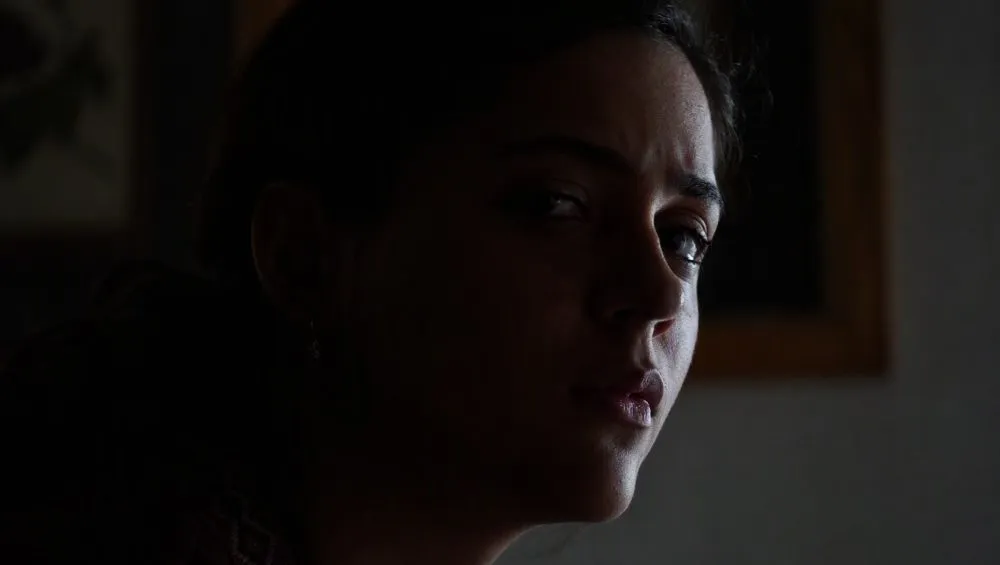
This week, we’re back in India, where streaming audiences have been digesting the meaning of Hunkkaar (known locally as Hunkkaar: The Roar), a miniseries about teenage girl who accuses a powerful spiritual leader of sexual assault, triggering a chain of reaction that becomes a national story. Executive produced by Priyanka Chopra, it explores the balance between power, faith, truth and justice in modern day India.
Name: Hunkkaar
Country: India
Streamer: JioHotstar
Producers: Applause Entertainment, Birla Studios, Purple Pebble Pictures, Mangata Films
Distributor: Applause Entertainment (rights holder)
For fans of: Mindhunter, Spotlight, David Fincher films
Hunkkaar is a very modern Indian miniseries. While the country’s Bollywood machine continues apace, favoring melodramatic stories, this JioHotstar program has challenged its audience – and wider society, by extension – to really think about the nature of life in the country.
“We were very intentional about taking a non-melodramatic approach to trauma,” says co-creator Karan D. Kapadia. “I love Bollywood’s melodrama genre, but we wanted to look at trauma in a grounded way.”
The trauma he refers to underpins the story. It follows a 17-year-old girl, Meenu Rawat (Aneet Padda), who accuses Baapji (Sunil Chakosi), a powerful ‘godman’ (cult-like Indian spiritual leaders whose supporters can revere them as demi-gods) of sexual assault. The case becomes national news, with Meenu supported by a small group of police officers, advocates and TV journalists as she is publicly slut-shamed and put on trial by the media.
The idea for the show began years earlier. “We came across a powerful article about a godman who had created an industrial-scale system of sexual abuse,” says Kapadia. “He had constructed a world in which his devotees believed that what he was doing to them was not wrong.
“That was the starting point. It led us into deeper questions about how we perceive women, and the fact that rape remains a major social issue in India that needs to be addressed. From there, we developed the David-and-Goliath theme: A 17-year-old from Gen Z taking on a system. The man at the centre of the story eventually represents a level of power comparable to that of the state. We also wanted to explore the arduous road to justice.”
As Kapadia and co-creator Nitya Mehra‘s resulting six-part series developed, Mehra says it became clear Chakosi’s godman character would not just represent a religious leader, but of corrupted power itself, with the cult created as a mirror to power structures in wider society.
“Although the story deals with rape, which is one of the biggest social issues to have plagued India for decades, the godman became something larger than the spiritual leader we initially imagined,” she adds.
Priyanka Chopra’s support
The project had initially gone into development through Kapadia’s Mangata Films label, but received a big shot in the arm when Scam and Black Warrant producer Applause Entertainment boarded to produce and distribute the finished show.
Aditya Birla Group-backed Applause is noted for always producing scripted TV before selling the finished product to a streamer – in effect guaranteeing production will go ahead. Another company in Applause’s extended circle, Ananya Birla’s new firm Birla Studios, also boarded, as did White Tiger and Bajirao Mastani actress and storied producer Priyanka Chopra, who had known Mehra since they worked together on 2006 Hindi pic Don.
Mehra simply calls Chopra “a powerhouse,” recalling how she and her team had immediately boarded the project after seeing a tape.
“I’m always drawn to stories that have depth and meaning, and Hunkkaar: The Roar is one such story,” says Chopra. “It takes on a deeply sensitive subject and tells the story with honesty and conviction. I have immense respect for Nitya and Karan, Applause and the entire team for the thought and care they’ve brought to this project.”
Kapadia and Mehra praise Applause’s Nair, who stepped down in April after nearly a decade as CEO, as “the key person behind the process” of producing without an anchor commissioner. As such, Kapadia says the resulting program has “the potential to travel internationally,” adding: “Without Sameer, we wouldn’t be here. He was a rock for us. He championed the show, enhanced our vision and gave us the space to grow into the filmmakers we are today.”
Deepak Segal, producer at Applause, says: “The success of Hunkkaar: The Roar is a testament to the power of stories that are deeply rooted yet universally felt. We believe the future of Indian storytelling lies in stories that emerge from our local realities, from the ambition of our young nation and travel far beyond them. The brilliant response to Hunkkaar shows us that when a story speaks to something deeply human and can appeal to the hearts of the audience, its horizon can be limitless.”
Shooting was finished by the end of 2024, with local reports then suggesting the series had been delayed when it didn’t immediately launch. That was partly down to Kapadia being a “perfectionist” in the edit, Mehra laughs, but also down to a misunderstanding of Applause’s produce-then-sell model.
“We wanted to take our time, find the right home and make sure it was mounted on the right platform in the way we wanted,” says Kapadia. “It wasn’t really a delay in the traditional sense. We had the show in the bag. The question was how to release it with the kind of marketing and positioning we felt it deserved. It is a luxury to have the time to mount something properly, and the response suggests that the approach worked.”
Ultimately, JioHotstar boarded the series and with the service launching in territories such as Canada and the UK as the show debuted on September 25, Mehra says the timing was serendipitous.
Structurally, what’s notable about Hunkkaar is that it manages to be both a legal procedural following a high-profile case, and a human story about shame, justice and power. Mehra and Kapadia both note during the interview for this article how unexpected the number of people JioHotstar has recorded bingeing through the series was, given the themes. However, it wasn’t all just a happy accident.
“We made a conscious decision in the writers’ room to be aware of the subject matter and the fact that it could become a procedural,” says Mehra. “Structurally, we wanted to bind it together in a way that felt immersive.”
Kapadia – known for producing the likes of Jolly LLB 3, Blank and Durgamati: The Myth – says the approach worked. “Indian audiences are desperate for content that challenges them, moves them and inspires them,” he argues. “When there is a good story, it works.
“The emotional intelligence of the audience is expanding, partly because technology is moving so quickly and hundreds of millions of people have smartphones. The volume of data and content people encounter is exponential. Many viewers have told us, ‘Thank you for trusting us to read between the lines and for not hammering everything over our heads. Thank you for taking the time to articulate the pain.’”
Kapadia and Mehra point to David Fincher’s meticulous approach to filmmaking as a reference point for telling the complex story, while Joe Penhall’s Netflix serial killer series Mindhunter gave them confidence “that it was possible to keep audiences immersed and allow them to sit uncomfortably in a moment,” as Mehra puts it.
Mehra – director of 2016 pic Baar Baar Dekho and creator of Prime Video series Big Girls Don’t Cry – says that while Indian audiences are besieged by films and TV content right now, where Hunkkaar has cut through is in its subject matter.
“One of the victories for Karan and me is receiving messages from people saying they feel seen and represented on screen. We made our previous show about an all-girls boarding school, and girls from small-town India told us they had never seen themselves represented before.
“With Hunkar, young Indians are finding their voice. The world is burning, and people are speaking up. I think this show represents that voice.”
For market-leading Indian streamer JioHotstar, the show represents where domestic TV production in the streaming era is headed. “At JioHotstar, we want to back fresh, distinct voices telling authentic Indian stories, which drive conversations and help shape society,” says Alok Jain, Head of Hindi and English Entertainment for Streaming, TV and Studios at the Reliance- and Disney-backed JioHotstar. “Hunkkaar is exactly that.
“What drew us most was its heart – an ordinary girl who finds extraordinary courage. Meenu is 17 when she walks into a police station and accuses a man her whole town worships. She’s not a conventional hero, and that’s what makes her stand so powerful. It’s also why others find the courage to stand with her.”
Jain praises Mehra and Kapadia for “handled a difficult subject with care and without sensationalism,” and notes Padda “brings a fearless presence to Meenu,” while “Priyanka Chopra Jonas, Birla Studios and Applause backed that vision completely.”
He points to the audience response as evidence – though as ever streamers don’t provide specific ratings details.
“Hunkkaar is one of our most engaging Hindi specials this year, with viewers moving straight from one episode to the next. As JioHotstar expands into new markets, it’s encouraging to see the show trending not just in India, but also in Singapore, the UK and Canada. That’s the kind of storytelling we want to keep investing in – made in India, for the world.”
There are indications of U.S. distribution, so the noise around Hunkkaar could become a roar in the not-too-distant future.
>

Three Days of Rain, the upcoming Broadway revival of Richard Greenberg’s Pulitizer-finalist play starring François Arnaud, David Corenswet and Yvonne Strahovski, will begin performances Saturday, January 30, 2027, at the Longacre Theatre.
Official opening night for the 16-week engagement is set for Monday, March 1, 2027. Producer David Binder announced the dates and venue today.
The production promises to be one of the starrier spring Broadway arrivals, with Arnaud hot from TV’s Heated Rivalry, Corenswet from the Superman franchise and Strahovski a two-time Emmy nominee for Hulu’s The Handmaid’s Tale.
Directed by Anna D. Shapiro (Eureka Day), the new production will be the first Broadway revival of the play that was originally staged on Broadway in 2006 with a cast of Bradley Cooper, Julia Roberts and Paul Rudd.
The play, per the synopsis, is “a sharply funny drama that unfolds as a mystery about inheritance: what parents leave behind, and what children discover years later. Siblings Walker (Corenswet) and Nan (Strahovski) reunite with childhood friend Pip (Arnaud) in the downtown loft where their architect fathers designed the house that made them famous. A cryptic journal and a startling will leave them asking: who were their parents before they became parents?”
The production will feature scenic design by Todd Rosenthal, costume design by Arianne Phillips, lighting design by Donald Holder, sound design by Justin Ellington and wig & hair design by Luc Verschueren for Campbell Young Associates.
Binder produces with Jayne Baron Sherman co-producing.
>

Tech55 seconds ago
Apple’s new smart home line-up includes a smart lock, thermostat and video doorbells

movies3 minutes ago
Stephen Bourne On His Seminal Book ‘Black In The British Frame’

Anime4 minutes ago
SSS-Class Revival Hunter Was The Worst Premiere I Saw at NYCC 2026 – All the News and Reviews from New York Comic Con 2026
-

 movies5 months ago
Search For Canadian TV Actor Stewart McLean Now Homicide Investigation
-

 Fashion9 years ago
These ’90s fashion trends are making a comeback in 2017
-
Fashion9 years ago
According to Dior Couture, this taboo fashion accessory is back
-
Fashion9 years ago
Model Jocelyn Chew’s Instagram is the best vacation you’ve ever had
-
Fashion9 years ago
Emily Ratajkowski channels back-to-school style
-
Fashion9 years ago
9 Celebrities who have spoken out about being photoshopped
-

 Anime4 months ago
Rurouni Kenshin: Hokkaido Arc Manga Takes 1-Issue Break – News
-

 Anime3 months ago
HIDIVE to Stream English Dubs for The World Is Dancing, The Forsaken Saintess and Her Foodie Roadtrip in Another World, The Dangers in My Heart: The Movie Anime – News