
Tech
5 days left: Save up to $410 on Disrupt 2026 passes


Five days. That’s all that’s left to lock in one of the smartest advantages you can give yourself as a founder, investor, or operator right now.
Early Bird savings for TechCrunch Disrupt 2026 end May 29 at 11:59 p.m. PT. Register now to save up to $410 before prices increase and secure your spot at the center of the startup ecosystem.

Winning as a startup isn’t just about pitching
Advancing from idea to IPO takes time and how you spend that time can make the difference in whether you stall or scale. Many think it’s the pitch that slows things down. But in reality, it’s access.
Fundraising is a long game of chasing proximity. Cold outreach. Missed intros. Weeks waiting for replies that never come. You spend as much time trying to get in front of the right investors as you do refining your story. Without access, capital is moving. Deals are getting done. Just not with you.
When Disrupt comes to Moscone West in San Francisco, October 13–15, 2026, access isn’t accidental because it’s built into the experience. Those who attend can access:
- Deal Flow Café: A dedicated space for real investor-founder conversations.
- Curated matchmaking: Targeted 1:1 and small-group meetings with aligned investors.
- Expo Hall proximity: Turn cold outreach into live demos and real conversations.
You shift from chasing attention to securing influence
Your Disrupt ticket gives you access to candid, tactical, and unfiltered insights from active founders, top-tier investors, and operators scaling real companies like:

Explore the sessions these tech leaders will lead on the agenda page.
And register before May 29 at 11:59 p.m. PT to save up to $410 and show up with more opportunities to connect, fundraise, and scale.
This is where fundraising cycles compress
When Disrupt hits San Francisco, more than 10,000 founders, investors, and operators, along with 300+ startups, will gather with one goal: advance deals.
That changes the pace of doing business immediately. Instead of months of back-and-forth, conversations start — and move faster. You’re engaging across:
- Industry stages and keynotes
- Roundtables and breakouts
- Curated 1:1 and small group networking
- Investor-founder networking sessions
- StrictlyVC sessions and investor receptions
You’re not burning through resources trying to get into a meeting — you’re already in one. Disrupt is a premier global startup event where the ecosystem converges to move ideas, deals, and companies forward.
And when you register before May 29, you can save up to $410 before rates increase. Secure your pass before this limited-time pricing ends.
From inbox to in-person: proximity changes everything
At Disrupt, you’re face-to-face with investors who can ask questions on the spot, understand how you think beyond your deck, and evaluate your vision directly. You can read signals immediately to determine what resonates, what doesn’t, and where to adjust.
That kind of feedback loop compresses timelines. What normally takes weeks begins to take shape in a single day — especially as you move between sessions, meetings, and conversations across the venue.
80+ Side Events across the Bay Area for networking, workshops, and social connections extend the value of your Disrupt ticket.
Register now while Early Bird pricing is still available and maximize every opportunity to build momentum before prices go up.

Built for deal flow, not just discussion
Don’t settle for collecting contacts when you can come to Disrupt to connect capital to opportunity. Find your ticket match and plan how you’ll spend your time here.
With more than 20,000 curated meetings and dedicated environments like investor receptions and structured networking, Disrupt lets you hear directly from founders and investors actively deploying capital and scaling companies.
The value is in starting conversations that go somewhere, and bringing someone with you helps turn more of those conversations into real opportunities.
Register now to save up to $410 before Early Bird pricing ends May 29 at 11:59 p.m. PT. After that, ticket prices increase — and so does the cost of waiting.
If fundraising is already on your roadmap, waiting doesn’t make it easier. It just delays access.
Lock in $410 in ticket savings now
Secure your TechCrunch Disrupt 2026 pass today and save up to $410 before prices go up. Put yourself in the room where deals actually start — and where the next stage of your company can take shape.
Register now before Early Bird pricing ends May 29 at 11:59 p.m. PT.

When you purchase through links in our articles, we may earn a small commission. This doesn’t affect our editorial independence.
>

India has rejected Elon Musk’s claim that Starlink, SpaceX’s satellite internet service, is being unfairly blocked from launching in the country. The pushback comes as SpaceX struggles to turn years of regulatory work and partnerships with India’s biggest telecom operators into a commercial launch in one of the world’s largest internet markets.
On Wednesday, Musk accused unnamed “oligarchs” of blocking Starlink’s launch in India to maintain what he called their “monopolistic chokehold” on the country, without identifying them or providing evidence for his claim. He called the alleged blocking a “crime against the people of India” and argued that Starlink could bring affordable, high-speed internet to people who lack internet access.
Hours later, India’s Ministry of Communications pushed back, saying its regulatory framework for satellite communications is “fair and non-discriminatory.” The ministry said in a statement that Starlink and two other licensed satellite operators are all at “broadly the same regulatory stage.” It added that all three companies are undergoing security assessments that must be completed before they can seek spectrum, the radio frequencies that satellites use to send signal.
Starlink has spent over five years trying to enter India, a market with more than a billion internet subscribers. But it has yet to begin commercial services despite securing key regulatory approvals and partnering with telecom giants Reliance Jio and Bharti Airtel last year. SpaceX has also set up a local team as it prepares for a launch, appointing former Payoneer executive Prabhakar Jayakumar to lead its India operations in December.
Musk’s comments came hours after Lauren Dreyer, Starlink’s vice president of business operations, appeared at a telecom industry conference, India Mobile Congress, in New Delhi and reiterated the company’s commitment to the market. “We stand ready to serve India,” Dreyer said, adding that Starlink wants to help realize Prime Minister Narendra Modi’s goal of achieving universal connectivity across the country.
Starlink said it already has more than 20 gateway sites (the ground stations that link its satellites to the internet) and hundreds of antennas on the ground in India, and has adapted its operations to meet the country’s regulatory, security, and data-sovereignty requirements. Moreover, SpaceX has positioned its satellite network as a complement to — rather than a replacement for — India’s terrestrial telecom networks.
SpaceX first attempted to launch Starlink in India in 2021. The company, however, had to refund preorders for its equipment in early 2022 after the Indian government called it out for “booking/rendering the satellite internet service” before getting the necessary licenses.
Starlink has also previously clashed with India’s largest telecom operators over how satellite spectrum should be allocated. Starlink pushed for spectrum to be assigned administratively, while Reliance Jio argued that it should be auctioned — a position that could have made Starlink’s entry more expensive. India ultimately sided with Starlink’s preferred approach, deciding to allocate satellite spectrum administratively rather than through an auction.
Jio and Airtel, the two biggest Indian telcos, are also pursuing their own satellite internet services, even as they have agreed to distribute Starlink in India. Jio is working with satellite operator SES on satellite broadband, while Airtel is a major backer of Eutelsat OneWeb, another licensed satellite operator in India.
While the timing of Starlink’s India launch remains unclear, the company this week launched Starlink Mobile, which connects ordinary phones to satellites, in neighboring Bangladesh this week.
Starlink, India’s Ministry of Communications, Reliance Jio, and Bharti Airtel did not immediately respond to requests for comment.
When you purchase through links in our articles, we may earn a small commission. This doesn’t affect our editorial independence.
>

Mecka AI, a startup that collects and analyzes human motion data to train humanoid robots and other kinds of robots, announced it has raised a $60 million Series B round led by Sequoia, with participation from Nvidia, Microsoft’s venture fund M12, and others. TechCrunch had previously reported that the startup was nearing a new funding round at a $500 million valuation.
Founded in 2024, the startup intends to do for robotics what Scale AI, Mercor, Surge, and other data-labeling companies have done for LLMs. Those companies supply the human-generated data these systems learn from. Mecka pays people to record themselves doing everyday tasks, like making coffee or fixing cars, while wearing body sensors and using smartphones.
Other startups that collect real-world data for robot training include XDOF, which was in talks to raise a Series B round at a $1.2 billion valuation according to TechCrunch’s previous reporting. Human-data platforms that began with LLMs are also expanding into robotics, such as Scale AI and Micro1.
>
Endeavor Catalyst has closed its fifth fund with $320 million in capital commitments, bringing the firm’s total assets under management to more than $850 million. The raise is good news for founders outside the Bay Area who risk getting overlooked as more funds focus squarely on AI companies in Silicon Valley.
Catalyst is the venture arm of Endeavor, a New York-based global nonprofit that has spent 30 years supporting founders outside major tech hubs. (It calls all those other places “elsewhere” throughout its marketing materials.)
The fund is run by managing partner Allen Taylor, a 20-year veteran of the organization, and managing director Jackie Carmel, who joined Endeavor 12 years ago, along with a 16-person team. The official general partner, though, is Endeavor itself. What that means, says Linda Rottenberg, who co-founded Endeavor and helped start Endeavor Catalyst in 2012, is that “half of the fund’s profits go back to Endeavor, so every investment helps the next generation of founders who are building elsewhere.”
The bar for those founders is pretty high. A person first has to get into Endeavor’s network, where he or she can access Endeavor’s mentoring and extensive network, and that’s hard. Last year, the group says it screened more than 10,000 candidates and picked 88. The network now has more than 3,100 entrepreneurs in over 50 countries.
When one of those founders’ companies raises at least $5 million in a round led by another institutional investor, Catalyst can join in on the same terms as that lead. The team tells TechCrunch that checks usually run $1 million to $3 million but can’t exceed 10% of the round.
Over the next few years, they plan to make 40 to 50 investments annually, investing in up to 150 companies altogether with this new fund, they say.
Taylor wouldn’t share numbers on cash-on-cash returns tied to its earlier funds, but he did point to some impressive-sounding numbers. Across all five funds, he says, Endeavor Catalyst has backed 437 companies in 44 markets. Eighty-three of those startups are currently valued at $1 billion or more, he says, and the unit has seen 39 exits and 11 IPOs.
Some of the venture arm’s most valuable holdings right now include four-year-old ElevenLabs, the maker of AI voice tools that was recently valued at $22 billion in a secondary sale (it was founded in Poland originally), and Bending Spoons, the 13-year-old Italy-based conglomerate that went public in July and which currently boasts a $26 billion market cap.
Other holdings include New York-based Reflection AI (founded by two former Google DeepMind researchers — one of whom was born in Greece) that is now valued at $25 billion; Checkout.com, whose founder is Swiss and that was valued last year at $12 billion; the African payments infrastructure company Flutterwave, valued this summer at $3.2 billion; and Replit, co-founded by Amjad Masad, who is Palestinian-Jordanian. Replit snagged a $9 billion valuation earlier this year.
Endeavor, the nonprofit, has especially well-connected people associated with it, including board members Reid Hoffman; Nick Beim, a career VC who has spent the last 25 years at Matrix Partners, then Venrock; and Edgar Bronfman Jr., the former head of Warner Music and Seagram, who chairs Endeavor Global’s board.
Greek Prime Minister Kyriakos Mitsotakis is a longtime friend of Endeavor, too, including appearing routinely at Endeavor events. (Late last month in San Francisco, I sat down with him during a rare visit to the Bay Area meet with tech founders and Greek expatriates.)
Altogether, Endeavor Catalyst’s newest fund includes 400 limited partners, including Hoffman, famed hedge manager Bill Ackman, and the Dutch investment group Prosus. According to Taylor, roughly 30% of those backers are Endeavor founders themselves, including founders of Nubank, Revolut and Checkout.com.
While so much attention is paid to what’s happening in San Francisco and its immediate environs right now, the bets of Endeavor Catalyst suggest what other investors may be missing, and Endeavor, with local teams and mentors in dozens of countries, seems particularly well positioned to see it.
Indeed, about 90% of the venture arm’s investments are outside the U.S., it says. Europe is its fastest-growing region, with 12 new investments in the first half of 2026 compared with 14 in all of last year, though Latin America is still the largest.
Repeat founders are also becoming a bigger part of the mix. Taylor tells TechCrunch that roughly 14% of Endeavor Catalyst’s fourth fund went to second companies started by Endeavor founders at the seed or Series A stage. With this new fund, the team expects that number will reach 20%
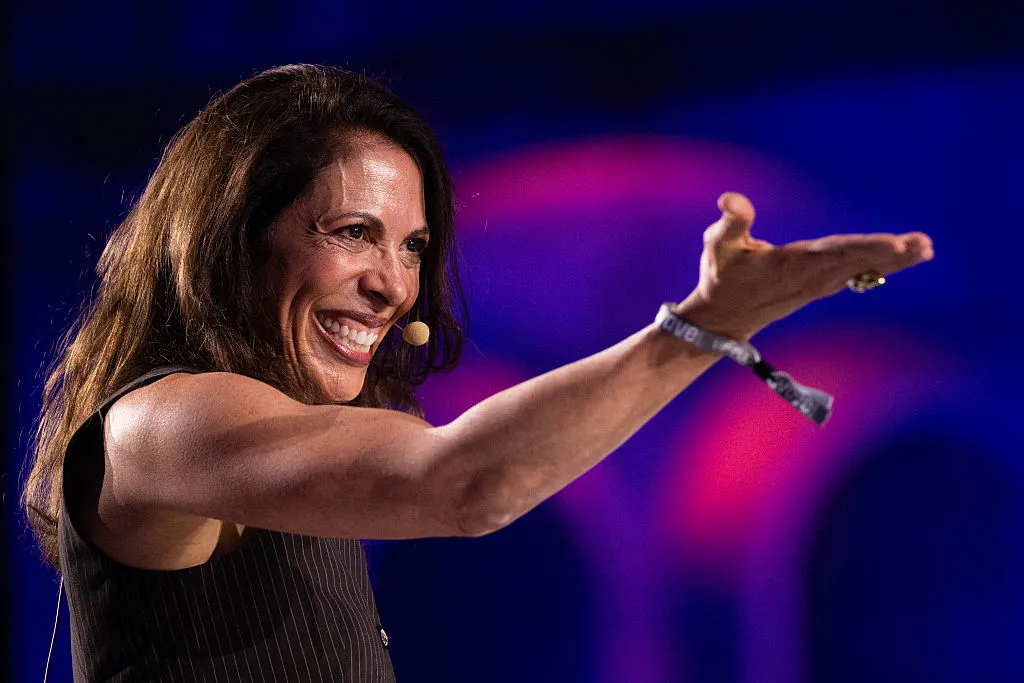
Pictured above: Endeavor co-founder Linda Rottenberg on stage in Turin, Italy, earlier this month.
When you purchase through links in our articles, we may earn a small commission. This doesn’t affect our editorial independence.
>

How ‘Heated Rivalry’ Made Canadian TV Red Hot

Harmanpreet Kaur: India’s trailblazing women’s cricket captain steps down

Women’s World Cup 2027: How can England, Wales, Scotland and Northern Ireland qualify?
-

 movies5 months ago
Search For Canadian TV Actor Stewart McLean Now Homicide Investigation
-

 Fashion9 years ago
These ’90s fashion trends are making a comeback in 2017
-
Fashion9 years ago
According to Dior Couture, this taboo fashion accessory is back
-
Fashion9 years ago
Model Jocelyn Chew’s Instagram is the best vacation you’ve ever had
-
Fashion9 years ago
Emily Ratajkowski channels back-to-school style
-
Fashion9 years ago
9 Celebrities who have spoken out about being photoshopped
-

 Anime4 months ago
Rurouni Kenshin: Hokkaido Arc Manga Takes 1-Issue Break – News
-

 Anime3 months ago
HIDIVE to Stream English Dubs for The World Is Dancing, The Forsaken Saintess and Her Foodie Roadtrip in Another World, The Dangers in My Heart: The Movie Anime – News