
Tech
Lovable launches its vibe-coding app on iOS and Android

Apple’s recent crackdown on vibe-coding apps hasn’t held up Lovable’s launch of its no-code AI app builder, which is now available as a mobile app on Apple’s and Google’s app stores.
The vibe-coding startup’s new mobile app is being pitched to would-be app builders as a way to code on the go via voice or text AI prompts that let you capture your ideas as they pop into your head. That means you can kick off Lovable to work on your random app idea from anywhere, letting its agent run autonomously after receiving your input.
The new app will also allow you to switch back and forth between your computer and phone to pick up where you left off on a given project and receive notifications when a build is ready for review.
The app’s arrival comes shortly after Apple addressed what vibe-coding apps can and can’t do on its App Store. The tech giant recently blocked updates to popular vibe-coding tools, including Replit and Vibecode, for violations of its developer guidelines.
Simply put, Apple wasn’t banning vibe-coding apps themselves, but it won’t allow apps that download new code or change their functionality, as that presents a security risk to end users. (It also means that Apple’s App Review team can’t properly vet the app during the approval process.)
Apple also temporarily removed the vibe-coding app Anything from the App Store for similar reasons, but the app returned after making changes earlier this month.
To comply with Apple’s rules, the vibe-coding apps are no longer able to run their generated apps inside the host app. Instead, those app previews were moved to web browsers.
Lovable has also seemingly complied with these rules as its new app touts the ability to turn ideas into “working websites or web apps.”
When you purchase through links in our articles, we may earn a small commission. This doesn’t affect our editorial independence.
>
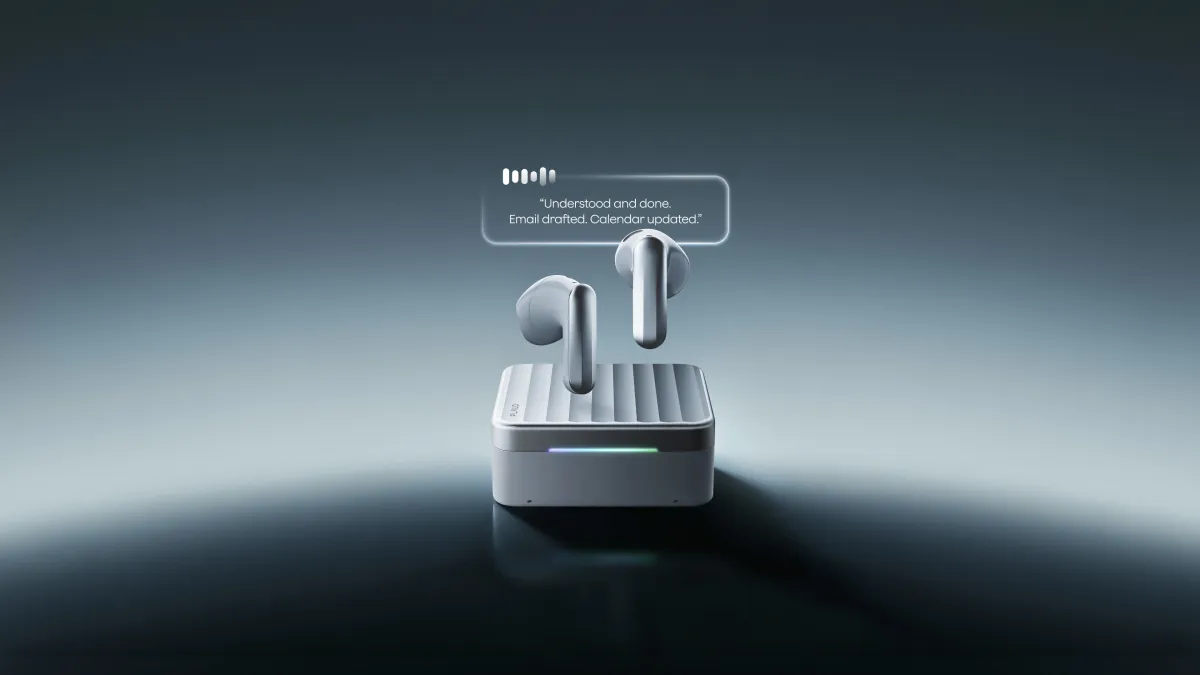
Hardware companies have realized that note-taking is one of the easiest AI use cases to build for, and consequently have been busy shoving mics into everything from pendants and rings to credit-card-sized pucks and wristbands. Still, despite the variety of devices, only a few companies have been able to stand out.
One of these companies is Plaud, which has over 2.5 million people using its hardware or software. It is now launching a note-taker in a new form factor: earphones. Called Plaud One, these adopt the simple bare-bones style of Apple’s Airpods, and can record calls, while their case can be used to record in-person conversations or take notes.
Plaud isn’t the first to this form factor. Its rivals Viaim and Anker already have similar note-taking earbuds in the market.
But the company is betting on its software and AI chops to set these apart. Plaud said that once the earbuds transcribe your conversation, its AI agent — which can connect to tools like Gmail, Google Calendar, Notion and Slack — can do things like writing follow-up emails and creating documents or presentations based on the contents of the conversation.
By itself, that isn’t a unique pitch. Software note-takers like Granola, Fathom and Read AI have been offering similar workflow automation for a while now, transcribing calls and conversations, and allowing you to subsequently get an AI agent to do various tasks.
The Plaud One takes that a step further, though, with its case, which supports an eSIM card. That feature, the company says, allows users to instruct Plaud’s AI agents remotely without using their phone or computer.

The Plaud One has 12mm drivers and features active noise cancellation. The company says the case can capture voices clearly within a range of five meters, and the earphones can record six hours of in-person meetings and three hours of calls on a single charge. Combined with the case, users can record up to 25 hours of conversations on a single charge.
Buyers get 300 minutes of free transcription per month, after which they will need to buy additional plans, which start from $8.33 per month (paid annually).
That said, this launch seems to be more of a trial run. The Plaud One will be limited in quantity, as the startup likely wants to gauge demand for such AI-focused earphones before it commits to the format.
Plaud is also working on building agentic capabilities, which is expected to arrive as part of an update in the coming months. The company says it will introduce a credit-based system for different tasks, and buyers of the Plaud One will get $200 in credits for these tasks.
The company has had a good run so far, claiming in June that it had reached annual run-rate revenue of $100 million. However, competition in the market is intense, with new hardware note-takers releasing every week. Its rival, YC-backed Pocket, has also reached that milestone, and tons of other companies like Anker, Comu, Viaim, and software startup Genspark are building in the space.
Plaud’s CEO Nathan Xu holds that there should be an interface to talk to AI to invoke it from anywhere, and earbuds meet that need.
“[For AI] we need to have a wearable and an always-ready interface, one that people love to wear, is socially acceptable and private by design,” he said in a briefing.
Still, the company may find it challenging to draw people away from using their AirPods, Google Pixel Buds, Samsung Galaxy Buds, or wireless earbuds from any number of audio companies, which can pretty much do the same job when paired with any note-taking app.
But Xu says Plaud is not necessarily competing against these companies, but positioning its meeting-recording tech to adopt a popular wearable format.
Users can pre-order the device now for $249, and it will ship in the fourth quarter of 2026.
When you purchase through links in our articles, we may earn a small commission. This doesn’t affect our editorial independence.
>
It seems there is no escaping the ad industry.
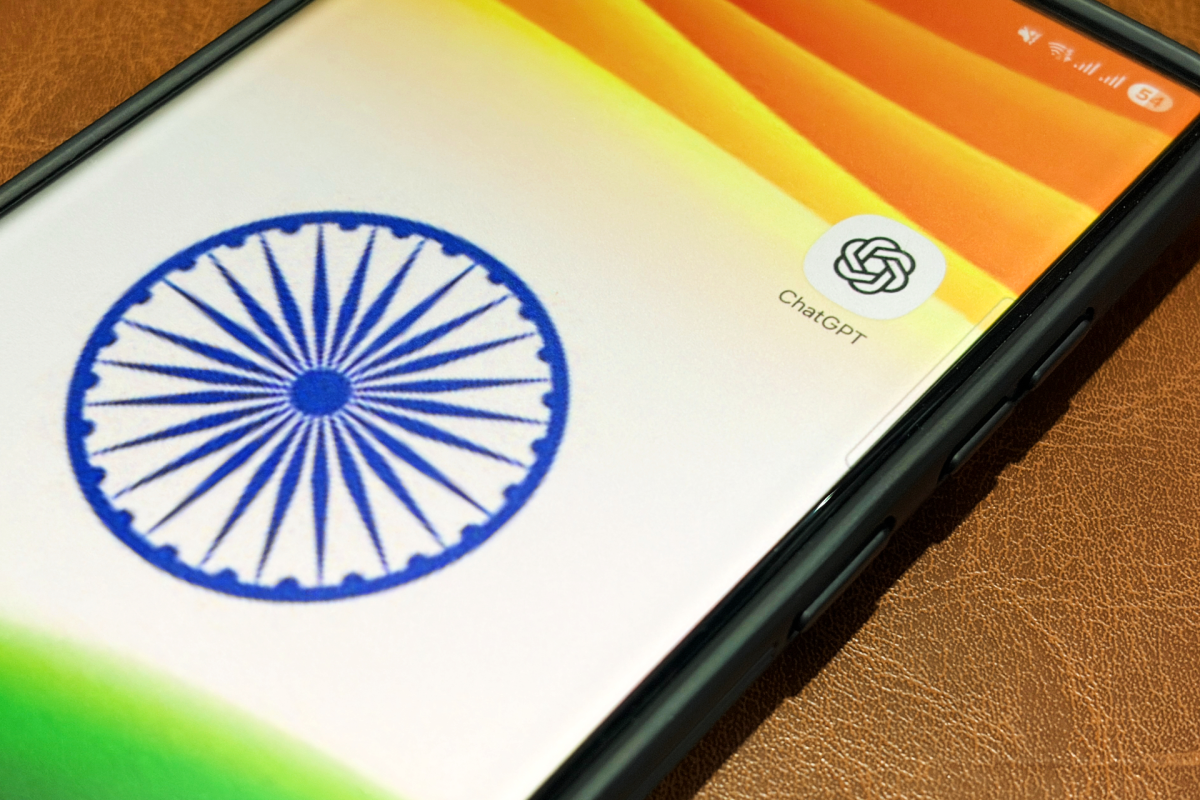
OpenAI said on Thursday that it will start showing ads on its ChatGPT Free and Go subscription tiers in India. The move comes after the company changed its terms of service earlier this month to indicate that it will show ads to users while they use the AI assistant.
OpenAI said in February that it has more than 100 million weekly active ChatGPT users in India, a huge chunk of whom are on the free or the lower-priced Go tiers.
The company said on Wednesday it will start by showing ads for 50 brands, and that it has partnered with agencies WPP and Omnicom for this. OpenAI will also launch an ad manager next month that will let marketers create campaigns for their companies, provided their campaigns have a daily minimum budget of ₹725 ($7.60).
“With ChatGPT Ads, businesses of every size can introduce themselves at relevant, high-context moments when decisions are beginning to take shape,” Dave Dugan, head of global ads solutions at OpenAI, said in a statement.
OpenAI has worked hard to cultivate its user base in India, launching a sub-$5 plan for ChatGPT Go in August 2025, and even running a limited promo that made that tier free for a full year. It also heavily advertised its products during sports tournaments, like the Women’s Premier League (WPL) and the Indian Premier League (IPL) cricket leagues. More recently, it hired Uber’s India head to lead its expansion efforts in the country.
The AI lab started showing ads to U.S. users in February, and expanded the program to serve ads in Europe earlier this month.
Ahead of a potential IPO, expected this year or next, OpenAI has been trying to ramp up and cement its revenue sources. According to The Wall Street Journal, the AI lab recorded revenue of $6.7 billion in the second quarter ended June 2026, up from $5.7 billion the previous quarter.
Last November, The Information reported that OpenAI was aiming to reach 220 million paying subscribers by 2030. The report said that at that time, 35 million users paid for its Plus and Pro plans.
When you purchase through links in our articles, we may earn a small commission. This doesn’t affect our editorial independence.
>
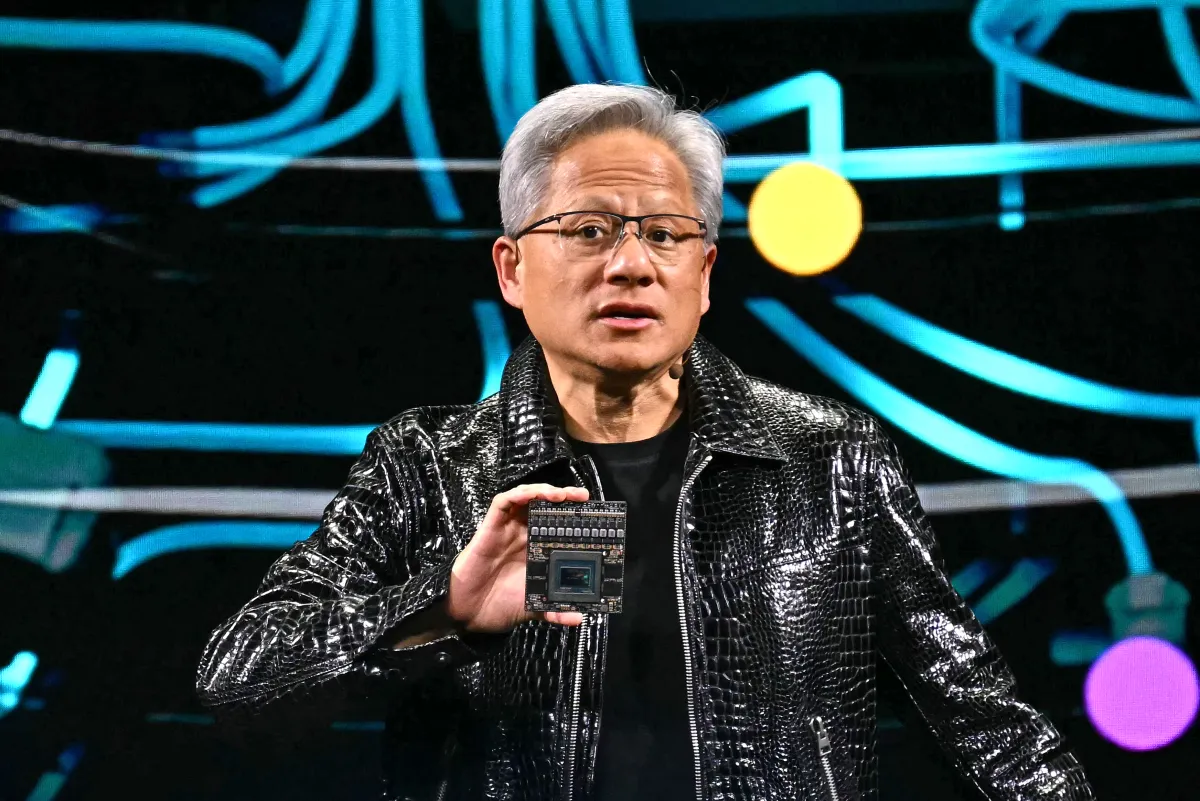
Nvidia has agreed to buy Hugging Face for $12.9 billion, The Information reported Wednesday night, citing a source familiar with the matter. Business Insider, which first reported over the weekend that Hugging Face was fielding takeover interest, reported Wednesday night that the talks — which would value the company at more than $13 billion — had not yet produced a signed agreement and could still atomize.
TechCrunch reached out earlier to both Nvidia and Hugging Face for comment, and neither has yet responded. (Nvidia’s silence is particularly noteworthy here as the company has moved quickly in the past to address reports it considers inaccurate.)
Maybe it was destined from the start. Hugging Face, founded in 2016, is one of the most popular hubs where developers share and download open-source AI models. Buying it would give Nvidia a strong foothold in the world of open-source AI, right as open-source developers are doing their level best to catch up to closed AI systems from companies like Anthropic and OpenAI.
Why would Nvidia want that? Most obviously, it comes down to protecting its dominance in AI chips, which, from the outside at least, appears increasingly at risk, even with Nvidia’s aggressive chip-release schedule. Pretty much all of the biggest closed-source AI labs (OpenAI, Google, Amazon, and Anthropic) are now in the process of building their own AI chips to lessen their reliance on Nvidia. A thriving ecosystem of open-source AI models gives customers more alternatives to those closed labs, which in turn keeps more of the market dependent on Nvidia’s hardware. That’s also why Nvidia has already poured tens of billions of dollars into building its own open-source AI models.
Should we be surprised that Hugging Face’s days as an independent outfit appear numbered? Not really. Hugging Face CEO Clem Delangue has spent much of this year publicly aligned with Nvidia’s open-source push, amid a debate that has been building for months, as Washington officials reportedly weighed restrictions on open-weight models. (After Chinese labs like Moonshot AI released systems like its Kimi K3 model that matched leading U.S. models on benchmarks while costing a lot less to run, talk of competitive and national-security concerns appeared to grow in Washington, with some critics of closed labs — like White House advisor David Sacks — suggesting the fears were being fanned by the “duopoly” of Anthropic and OpenAI.)
In an appearance on CBS’s “Face the Nation” earlier this month, for example, Delangue said Hugging Face used an Nvidia-modified version of a Chinese open-source model to defend itself after a cyberattack and pointed to a recent letter — signed by Nvidia CEO Jensen Huang and 24 other companies, including Hugging Face — urging the U.S. government to support open models rather than restrict them. In a separate CNBC interview in late July, Delangue made similar points, citing that same letter while warning that China is “clearly dominating” open-source AI.
The deal would also mark something of a comeback for Nvidia in cloud computing. Nvidia reportedly scaled back its own cloud business, called DGX Cloud, about a year ago. But according to The Information, owning Hugging Face — which already helps developers run their AI models using rented computing power — could give Nvidia a way back into that market without starting from scratch.
There’s also a financial safety net at play. Nvidia has promised to help cover the cost of tens of billions of dollars in cloud computing deals for its customers. If those customers end up not using all the computing power they signed up for, Nvidia could get stuck with it. Owning Hugging Face would give Nvidia the ability to sell that unused capacity to Hugging Face’s customers.
The price marks a huge jump from Hugging Face’s last known value. The company raised $235 million in 2023 in a funding round that valued it at $4.5 billion. That round was led by Salesforce Ventures, with money also coming from Alphabet’s GV, IBM Ventures, and Nvidia itself, among others.
This wouldn’t be Hugging Face’s first brush with an Nvidia offer, either. Hugging Face turned down a $500 million investment offer from Nvidia late last year that would have valued it at $7 billion, the Financial Times previously reported. Hugging Face said at the time it didn’t want a dominant investor that could sway its decisions.
As for why it would say yes now, one could argue that a buyout is different from taking on one giant backer — a scenario that often means ceding control while being pressured to continue growing.
Hugging Face is also still a comparatively small business by revenue in the world of AI. The Information reported it was recently generating about $150 million a year in revenue, up from roughly $100 million just two months earlier.
That growth has enabled the company to get “close to profitability,” as Delangue told TechCrunch last month. Still, a price near $13 billion would be a massive multiple for a company this size and hard to resist.
Not last, the deal would give Hugging Face access to Nvidia’s much deeper pockets just as other, AI infrastructure competitors start to get pulled into other outfits, as suggested by Stripe’s recent deal to acquire OpenRouter, a startup founded in early 2023 that helps customers select different AI models to perform different tasks depending on their needs and budget.
OpenRouter was valued at just $1.3 billion back in May during its Series B round. Stripe reportedly paid more than $7 billion to make it its own earlier this month.
When you purchase through links in our articles, we may earn a small commission. This doesn’t affect our editorial independence.
>

Itauma vs Hrgovic: Croat says he will send British heavyweight “back to high school”

Channel 4 Plays Down Rift ‘Bake Off’ Rift

Mountain Bike World Championships: Pidcock, Aldridge & Richards in action for GB
-

 movies3 months ago
Search For Canadian TV Actor Stewart McLean Now Homicide Investigation
-

 Fashion9 years ago
These ’90s fashion trends are making a comeback in 2017
-
Fashion9 years ago
According to Dior Couture, this taboo fashion accessory is back
-
Fashion9 years ago
Model Jocelyn Chew’s Instagram is the best vacation you’ve ever had
-
Fashion9 years ago
Emily Ratajkowski channels back-to-school style
-
Fashion9 years ago
9 Celebrities who have spoken out about being photoshopped
-
Fashion9 years ago
Your comprehensive guide to this fall’s biggest trends
-

 Anime3 months ago
Rurouni Kenshin: Hokkaido Arc Manga Takes 1-Issue Break – News