
Kristof Bilsen, courtesy of Anna Perger


Saying sorry, and doing so authentically, is not easy. But apologies can change relationships, and in the case of political apologies, can redefine history. Belgian filmmaker Kristof Bilsen’s documentary The Apologist, which he wrote, directed and produced, now explores what the act of atonement can do to victims, wrongdoers and witnesses alike – how it can reshape lives.
World premiering in the international competition at Sheffield DocFest, which runs June 10-15, on Thursday, June 11, the film feels timely in an age when not a day goes by without a well-known politician or figure issuing a public apology, being called on to provide an apology, or failing to apologize.
The hybrid doc, featuring actress Musia Mwankumi and actor Valentijn Dhaenens as they develop a play and explore the art and pitfalls of apologies, features cinematography by Joachim Philippe, Bilsen and Diren Agbaba, with editing by Luca Mattei and co-edited by Aaron Minnebo. It was co-written by Xan Márquez Caneda.
The result is an emotional cinematic journey across continents, events, personal and collective trauma and accountability that moves between personal reflection, performance and ritual. Bilsen worked on set with systemic trainer and supervisor Ria Verlinden to unearth how many things are connected and can not be seen in isolation. The doc also features such scientists as Professor Juliette Schaafsma of Tilburg University, who has catalogued political apologies since the Walk to Canossa in 1077, widely regarded as the first-ever public apology, and Professor Roland Zahn of King’s College London, whose research explores guilt and self-blame and their relationship with empathy and apology.
The Apologist is a production by Bilsen’s Limerick Films in co-production with Tangerine Tree, Warboys Films and Wrong Men. Limerick is handling sales.
Kristof Bilsen, courtesy of Anna Perger
“As a child, I was bullied, and the lack of resolution or apology still affects me. I never felt that things were truly resolved, let alone an apology was given and this continues to have an impact later in life,” Bilsen shares in a director’s statement. “This personal experience mirrors a broader societal trend, where many peoples and communities today are waiting for apologies, sometimes for events decades or centuries old.”
He adds: “In the context of current social movements like Black Lives Matter, #MeToo, and the colonial past’s reckoning, The Apologist addresses the timely question: Can public apologies lead to forgiveness, understanding, or change? … We challenge you to reconsider the meaning of apologies and set the stage for a deeper understanding of true reconciliation and acknowledgment.”
Check out a trailer for The Apologist here.
Ahead of Sheffield DocFest, Bilsen talked to The Hollywood Reporter about the six-year journey to make The Apologist, the weight of trauma and why saying sorry is much harder than it sounds.
What was the original idea for the film? You mention in the doc that you had to adjust its direction as your cinematic journey unfolded.
The initial idea was to make this very smart archive film based on public political apologies. But then it evolved from there.
What can you share about why you picked the title The Apologist for your doc?
I think halfway through the process, I realized the concept of apologies had this Christian religious connotation to it. And then, of course, there is also Plato’s Apology [or: The Apology of Socrates]. The whole notion of an apology is something beautiful, but at the same time, there is this whole irony of the title The Apologist, this kind of friction between self-awareness and defense.
How does The Apologist fit in with your past filmmaking?
My training is in deeply looking, observing and listening and being humble as a filmmaker, and I made my first two films that way.
My first one was Elephant’s Dream, which premiered in 2014 at IDFA in Amsterdam and was about public sector workers in the Democratic Republic of the Congo, a former Belgian colony. That was already very uncomfortable. Going to a former colony as a white male Belgian filmmaker, going there as the former oppressor in a way, or having that heritage of the oppressor.
My second film also premiered in Sheffield in 2019, and it is called Mother. It is about a Thai single mother giving care to Europeans with Alzheimer’s. That was a deep observation of the dilemma of love and care globally. What do we do with our elderly people here in Europe and how? We try to find them a better life, and one of the most absurd is to bring them to Thailand for their final years. How selfish! Again, that was an observation of friction and something very problematic in many ways, but also deeply human.
‘The Apologist’
Courtesy of Limerick Films
In the middle of COVID, I couldn’t observe [directly], so I thought I would observe archive material. It was the time of George Floyd, who died at the hands of police violence in the U.S., and the whole Black Lives Matter movement, which, sadly, some of us have already forgotten. And then I suddenly heard that our Belgian government said they should start a commission for the colonial past of Belgium with the ultimate goal of issuing apologies.
For me, performativity, insecurity, uncertainty, and all of that seemed to be coming together in one single image. And then I had to trust the process, which is pretty challenging with such a vast topic. So it took six years to make the film.
Was there any key lesson you had to learn in the process of production?
The big step for me was to let go of control of the project and the process. We live in a world that’s so binary about control – the good and the bad, the positioning. But what about the power of uncertainty and the dark and shadowy sides of all of us? So, a big moment was when I realized that a film about public apologies is also about something more, something else.
What is this “something else”?
We basically started delving into systemic and constellation work – starting from the whole idea that we are all part of family and [other] systems. Even if we are orphans, we still biologically come from a father and a mother. Behind them, there are their parents, behind them, their grandparents and great-grandparents. They’ve all won or lost, all had their doubts and successes, they’ve all been perpetrating things and they’ve all perpetrated. So, we stand on the shoulders of our ancestors, and that helped me see the world and the film systemically.
‘The Apologist’
Courtesy of Limerick Films
Yes, we yearn for control, and more and more we live in a time where we get an illusion of control, including politically. Through media and [technology], you feel you can check and control who has done something right or wrong. It’s an age where we can watch live streams of every war and every conflict in the world.
But responsibility is not only about an individual. You have to approach it collectively. You have to support each other as a community, which easily sounds wishy-washy and tree-huggy. But in exploring good and bad apologies, we also had to delve into our own contradictions, our own uncertainties and doubts and anxieties and ghosts of the past. Frailty, vulnerability and uncertainty is exactly what we need to face right here, right now. Things are uncertain and very shaky.
I picked up on this theme of how things are complex, even when they may sound simple, and how we may all have to get out of our comfort zones. Any key takeaways you think viewers may leave the doc with?
For me, the big, big lesson of the film is to stay in discomfort. Relationships are difficult. I’m a father of a six-year-old girl, and the film is dedicated to her. First, we have to acknowledge what is behind us and think about our ancestors. It’s humbling to accept that you’re just on a timeline, and your forefathers are present there with you.
Is that why you, Musia and Valentijn address your own views on key issues and how personal backgrounds and biases make an impact?
Yes. All [I just said] also applies to the idea of the documentary filmmaker. You can’t tell stories without yourself, without your own gaze, without questioning your own gaze, and without being humble to the process of investigating and being inquired.
‘The Apologist’
Courtesy of Limerick Films
There is clearly an opportunity for debates or other activities tied to screenings of The Apologist. Is there anything unusual that you are planning for Sheffield?
Of course, a classic Q&A and debate is one approach, and we will have those at the festival. But the danger there is that words take over and silences and bodily awareness disappear. The world premiere will be preceded by meditation in the cinema.
People shouldn’t feel scared away. If you just want to be present in the room and wait a couple of minutes, you’ll get to see the film that you bought a ticket for. Don’t worry! But we like to offer a space in which you are welcomed even when it’s hard. It is the first of several special screenings.
We are exploring building an impact campaign around it, exactly on the principles of awareness and systemic work. It’s nothing magical, but just an invitation to remember and to (re)connect with our awareness as ways into processing grief, acknowledgement and finding ways to explore together.
I heard that some TV networks are partners on The Apologist?
Yes, I think it’s very, very hopeful that this kind of film has been co-produced with four broadcasters – NDR [in Germany] in association with [European culture channel] ARTE, VPRO [in the Netherlands] and
VRT and RTBF [in Belgium]. It’s amazing, especially because there is uncertainty painted all over the film. It’s not your classic character-driven film that’s very safe.
‘The Apologist’
Courtesy of Limerick Films
If you had to simplify things majorly, what would your headline takeaway from The Apologist and your own work on it be for people who are considering watching the film?
It didn’t start with you. And: It’s not just about you. It’s about the humility of standing on your ancestors’ shoulders, which has really big implications and is not that romantic. You have to look at the pressure of the system that people are part of and what is expected of them.
Anything else you’d like to share?
There’s a very good line from [Swiss psychologist] Carl Gustav Jung. He said, “I would rather be a whole person than a good person.”
>
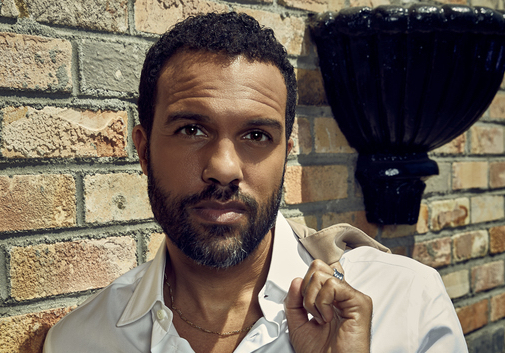
EXCLUSIVE: Artists First has signed O-T Fagbenle for management.
An actor, director, writer and creator, Fagbenle is best known for his role of Luke Bankole, husband of Elisabeth Moss’s June Osborne, in Hulu’s The Handmaid’s Tale, which ran for six seasons. More recently, he’s appeared alongside Elizabeth Banks and Matthew MacFadyen in the Peacock series The Miniature Wife, as well as in Wonder Project/Prime Video’s The Old Stories: Moses as the domineering Pharaoh, and Hulu’s All’s Fair alongside Naomi Watts.
Other recent notable credits include the hit Apple TV series Presumed Innocent, the Neon comedy Splitsville, the Netflix series No Good Deed with Lisa Kudrow and Ray Romano, and Showtime’s The First Lady, where he portrayed Barack Obama opposite Viola Davis’s Michelle.
Previously, Fagbenle has also been seen in Marvel’s Black Widow with Scarlett Johansson and the animated Netflix series Tomb Raider with Hayley Atwell. Additionally, he wrote, produced and starred in the Hulu/Ch4 series Maxxx, a comedy revolving around a disgraced former boy band star.
Fagbenle continues to be represented by Buchwald Talent Agency and attorney Barry Littman of Hansen, Jacobson, Teller.
>
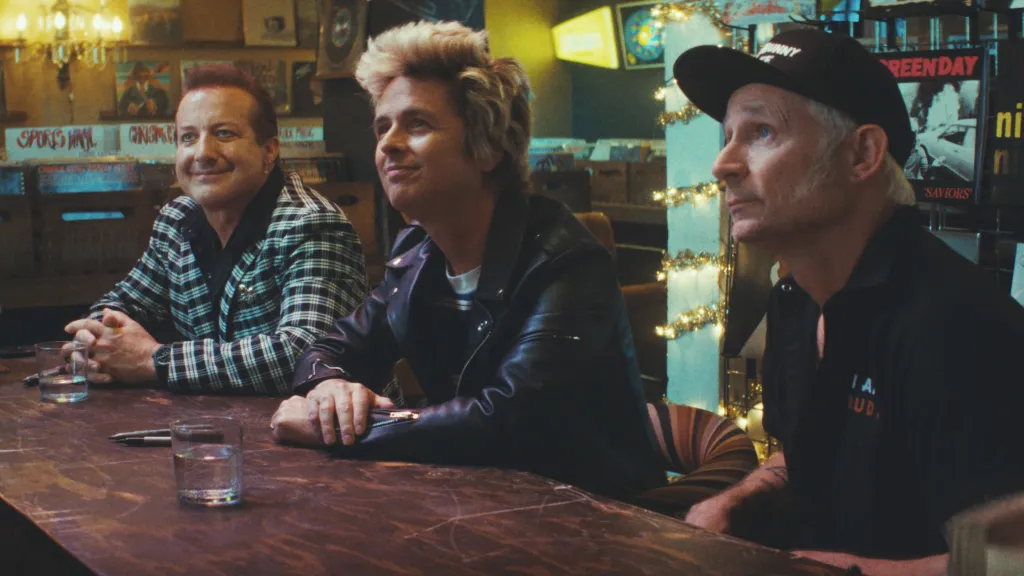
Nearly 30 years after the album after which the movie is named, Green Day is using their own coming-of-age story to reach a new generation in Nimrods.
Frontman Billie Joe Armstrong, who teamed up with co-writer/director Lee Kirk on the movie premiering Aug. 14, told Deadline that it was “fun to have a project” on the film with his son Jakob, who wrote songs for the movie’s fictional band Analog Dogs.
“It was really cool,” said Armstrong, who appears in the movie with his Green Day bandmates Mike Dirnt and Tré Cool. “I think the whole thing with having that generation gap, and how we can get the cast to sort of own it and do their thing and put their spin on it, it really sort of made it current.”
As Armstrong noted they didn’t want to sound like “a couple of uncs” making a movie for Gen Z inspired by the band’s Gen X adolescence, Kirk explained that they told the young cast to “take any dialogue and make it your own,” adding, “And that was so important to the story that it just didn’t feel like it was written by a guy in his 50s.”
In Nimrods, Tommy (Mason Thames) receives a call inviting him and his band Analog Dogs to open for Green Day on New Year’s Eve in Los Angeles. Not realizing it’s his older brother Wayne (Keen Ruffalo) pulling an elaborate prank, Tommy steals Wayne’s car and sets off on a cross-country roadtrip from Kansas City with his bandmates Fred (Kylr Coffman) and Chad (Ryan Foust).
Kirk recalled, “When Billie Joe reached out, he said, ‘I don’t have a story, but I just thought it’d be fun to make a movie, and somehow, it ends with a Green Day concert on New Year’s Eve. So, it’s about the people going to the concert.’ So, we started talking like, who are those people, what could the story be, and eventually, we came up with this idea of these three kids who are traveling across the country to see Green Day on New Year’s Eve. And that’s when it got more interesting, that’s when we came up with the idea of the older brother pranking them.
“And then I realized, I needed story. It’s a road movie where you can just have one-off incidents happen,” he continued. “And I thought it’d be fun if I quiz these guys about their days of driving around in a van, and the crazy stuff that happened to them and sort of start to thread those into the story and sort of turn them into my own sort of idea, or let them evolve and change into how the plot needs it to, and it was fun.”
Featuring a soundtrack of some of Green Day’s most iconic hits, as well as songs by the fictional band Analog Dogs and star McKenna Grace, the movie is filled with cameos from the likes of Fred Armisen, Bobby Lee, Angela Kinsey, Sean Gunn and Kirk’s wife Jenna Fischer.

Read on about Billie Joe Armstrong and Lee Kirk’s experience teaming up to make the Green Day-inspired movie Nimrods, as well as the potential for an American Idiot movie musical adaptation.
DEADLINE: What was it like for you guys, 10 years since you worked together on Ordinary World, reuniting and making another movie together?
BILLIE JOE ARMSTRONG: I thought it was great. I mean, when I thought about doing a Green Day movie, Lee was the first person I called to see if he wanted to dive into a script, and make it about New Year’s Eve. So, we’re old working buds.
LEE KIRK: Yeah, it was cool. We’ve worked together before, obviously, and in the time since, I’ve gotten to know him and his family quite well, he knows my family, I know the sort of extended Green Day family. So, it felt like a good fit, to be working on this movie together, and I feel like we picked up where we left off, pretty much.
DEADLINE: Tell me about how the idea to include the band’s story in the script, with the throwback to touring in a van and all that.
KIRK: When Billie Joe reached out, he said, “I don’t have a story, but I just thought it’d be fun to make a movie, and somehow, it ends with a Green Day concert on New Year’s Eve. So, it’s about the people going to the concert.” So, we started talking like, who are those people, what could the story be, and eventually, we came up with this idea of these three kids who are traveling across the country to see Green Day on New Year’s Eve. And that’s when it got more interesting, that’s when we came up with the idea of the older brother pranking them. And then I realized, I needed story. It’s a road movie where you can just have one-off incidents happen. And I thought it’d be fun if I quiz these guys about their days of driving around in a van, and the crazy stuff that happened to them and sort of start to thread those into the story and sort of turn them into my own sort of idea, or let them evolve and change into how the plot needs it to, and it was fun. And then, that extended to little details of these guys’ lives that I took, little Easter eggs of them, and put them into the movie and let them kind of change. For example, you brought up the ice cream truck. They famously drove around in a bookmobile, and so that was how the ice cream truck idea came in, and there’s all kinds of fun stuff like that in there.

DEADLINE: Yeah, I caught a few of those kind of Easter eggs. Tell me what was it like working with Mason Thames and McKenna Grace. They’re both great actors, but I didn’t realize they were such talented musicians as well.
KIRK: I mean, those kids are fantastic. They can do anything, and they’re the nicest kids, creative kids, very eager. They were up for whatever we wanted to do. I was so lucky that McKenna wanted to do it and she wanted to put her song in the movie. I just felt like it gave it some authenticity to it, and Mason with his singing, he rehearsed, he worked on those songs, which were written by Billie Joe’s son, by the way. Yeah, Jakob wrote those songs for the Analog Dogs.
ARMSTRONG: Yeah, it was fun to have a project with Jakob, so it was really cool.
DEADLINE: I love that. I was curious about what it was like trying to write a story for Gen Z, but it’s awesome to know that you actually had someone Gen Z part of it as well.
ARMSTRONG: Yeah, I think the whole thing with having that generation gap, and how we can get the cast to sort of own it and do their thing and put their spin on it, it really sort of made it current.
KIRK: Yeah, one of the first things I said, working with the kids, one of the first things I said to them is, “Please take any dialogue and make it your own. Please, just turn it as youthful. If it doesn’t feel authentic, make it your own, make it authentic.” And that was so important to the story that it just didn’t feel like it was written by a guy in his 50s.
ARMSTRONG: A couple of uncs.
DEADLINE: No, it felt very timeless, just as a coming-of-age story in general. I loved it. Tell me about assembling this awesome ensemble with Jenna [Fischer] and Fred Armisen and Bobby Lee.
KIRK: So, when Billie Joe and I talked about the movie, we talked about a lot of the 80s movies that we grew up on, Goonies and Vacation and films like that. And something I love about those films is they just have these characters that pop up that are real fun and funny. And I wanted to have that in the story, on this road trip that these funny guys—so that’s where, Fred and Bobby Lee, thank God they wanted to do the movie, because they just add so much to it. They bring so much comedy to it. And then to have my wife Jenna in the movie, it was a thrill to have her in. I’ve worked with her before, but I felt like her performance, she just delivered this nice big heart at the center of the movie, and she did a great job.

DEADLINE: Yeah, I loved it at the end when she joined them at the punk junkyard festival and was like rocking out with them, that was cute. Billie Joe, I heard that you guys were trying to adapt the Broadway musical of American Idiot into a movie and I’m wondering if that’s still on the horizon.
ARMSTRONG: We talk about it sometimes here and there, I think it would be great to do it. It’s just a matter of—working with [co-writer] Michael Mayer was amazing, so hopefully someday. But right now, it’s just been all about Nimrods.
DEADLINE: I also am so appreciative of the way you guys have been calling out MAGA and ICE in your performances. What was the reaction like for you guys behind the scenes?
ARMSTRONG: I mean, I just sort of say what comes natural with my own values, really, and I think the current administration is completely opposite of the way I feel like everyday Americans are hurting, with corruption, with ICE, Gestapo in the streets, it’s just been America that I don’t recognize from 10, even six years ago. Not to get too political into it, but it’s heartbreaking to watch. It’s sad.
>
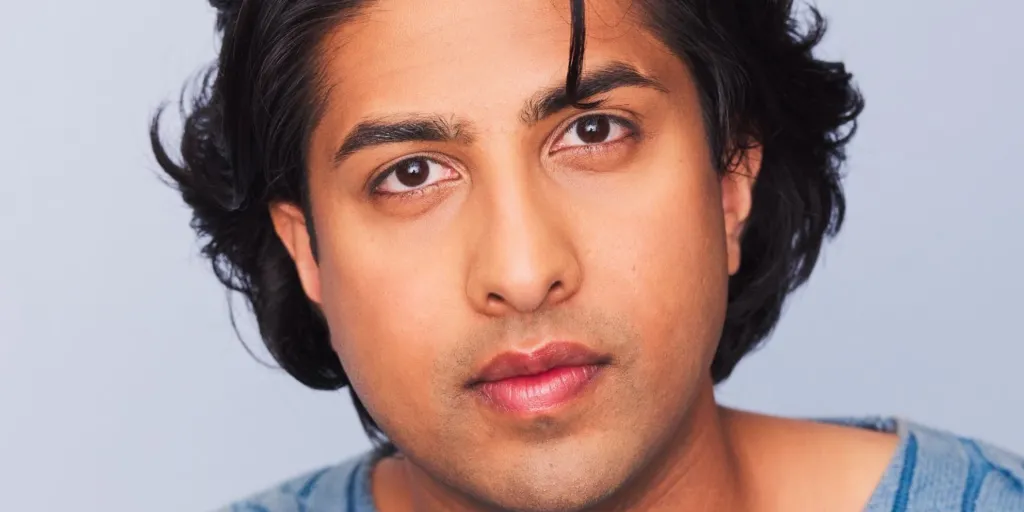
EXCLUSIVE: L.A.-based creator Sachin Kumar – known as SCKACHI – has launched his own company with a vertical comedy series about the life of a working actor.
Kumar’s Prema Creative Co. is producing 14-part series Typecast, which rolls out with two episodes weekly from September 7.
Grayson Shapiro is making his directorial debut with the vertical comedy. He served as first assistant director on Obsession, the indie darling horror that made more than $225M and nearly $500M globally after Focus Features acquired at the Toronto International Film Festival.
Typecast will follow a fictionalized version of Kumar, an Indian-American actor “navigating Hollywood as he confronts typecasting, ambition and identity.” It will show Indian characters as “fully realized people, without accents played for laughs and without the industry’s familiar shorthand of taxi drivers, tech support, and convenience store clerks.”
Also starring are Venk Potula (Four Samosas), who plays Rafi, the protagonist’s manager and lifelong hype man, while Tara Joshi (Schitt’s Creek) plays Tiff, a PR friend who can fix brands but not her own life. The ensemble also features creators Chelsie Sik, Michelle Park, Karan Menon and Jonathan Gaurano.
“I wanted to make Indian characters who are just people. No accents, no stereotypes, no punchlines,” said Kumar. “Beyond that, Typecast is about bridging two worlds that rarely meet: The slow, traditional system of Hollywood and the fast, modern world of the creator economy. We wanted to prove there is a space where creators can act, actors can create, and both can tell real stories without waiting for permission.”
Kumar said the pic’s success was “a proof point for the same creator to Hollywood pipeline Typecast is built on,” as he added that traditional TV and film companies “increasingly treat vertical video as a primary storytelling format rather than an afterthought.”
His new company, Prema Creative Co. is being positioned as a studios “built to tell and distribute BIPOC stories.”
Prema is the latest example of actors and creatives in Hollywood who are choosing the produce and distribute their own series as a way of owning and controlling rights. Microdramas and YouTube content have, at the same time, become a bigger priority for distributors, with the likes of Kane Parsons’ Backrooms dominating headlines and scoring big at the box office in recent months.
>


Search For Canadian TV Actor Stewart McLean Now Homicide Investigation


These ’90s fashion trends are making a comeback in 2017
According to Dior Couture, this taboo fashion accessory is back
Model Jocelyn Chew’s Instagram is the best vacation you’ve ever had
Your comprehensive guide to this fall’s biggest trends
9 Celebrities who have spoken out about being photoshopped
Emily Ratajkowski channels back-to-school style
A photo diary of the nightlife scene from LA To Ibiza