
Sports
Saibari's 'clinical' finish gives Morocco the lead over Brazil


Sports
Demi Vollering interview: Turning a ‘crushed dream’ on Mont Ventoux into a beautiful Tour de France victory
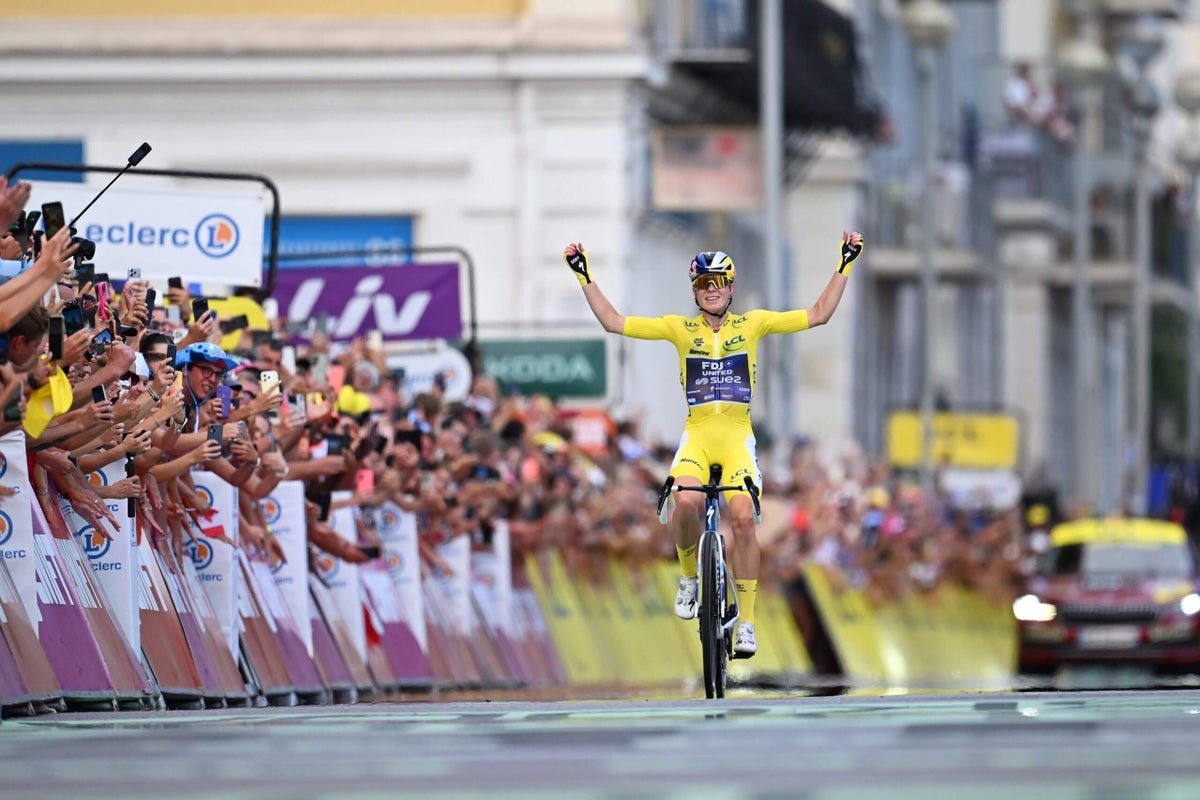
“That’s the most beautiful thing, when actually everything works out perfectly. It’s incredible.”
Last weekend, Demi Vollering confirmed a historic second Tour de France Femmes title in Nice.
Through illness, injury and a “crushed dream” on Mont Ventoux in the seventh of the nine stages, the FDJ United Suez team rose to the occasion to win a first title, and the Dutch rider her fifth grand tour victory.
The 29-year-old Vollering’s season has been spectacular — also winning the Giro d’Italia, Liege-Bastogne-Liege and Tour of Flanders — but it nearly didn’t happen at all. After finishing second in the Tour de France in 2024 and 2025, Vollering was so “done” with the sport that she considered taking a year off.
It was only after a reflective trip into the mountains, something she has done since she was a child, that she rediscovered her passion for cycling.
After the bright lights of the Tour, Vollering returned to the countryside this week. Speaking from her camper van, she talked to The Athletic about:
- Riding through the pain barrier to Tour de France victory
- A burnout that nearly derailed her entire season
- What makes her tick, and where she wants to take the sport next.
This is the inside story of the 2026 Tour de France Femmes champion, and the woman behind that win.
“Since I was a young kid, I was very attached to the bike,” Vollering says. “I was always playing on the bike in the back garden. It was always, always there in my life.
“When we went camping, the bikes came with us, and so often in the day we did a small bike ride; my grandmas would bring sandwiches and we had a small picnic on the way somewhere — the bike was always a part of our family.”
Though the eldest sibling in her immediate family, Vollering had older cousins who already cycled competitively in the Netherlands.
“They were like my big brother and sister, who I was looking up to,” she says. “Because they did cycling, I felt like I also really wanted to do that. I had this very special connection somehow to the bike. I really enjoyed the feeling of the speed and the freedom, searching your limits.”

Vollering (centre) pictured in 2019 after winning the second race of her pro career, at the Giro dell’Emilia in Italy (Yuzuru Sunada/Belga Mag/AFP via Getty Images)
In many ways little has changed, as the FDJ Suez rider was forced once more to reckon with the upper limits of her capabilities at this year’s Tour.
With wins in two of the nine stages — one in the yellow jersey — and a second title, it went “better than expected”, but the road to get there was a “rollercoaster”.
“The only expectation I had was to win on Mont Ventoux, (and) that was the only thing I couldn’t do,” she says. “I was very disappointed, of course, also because I think we all almost expected that we would be in yellow after that stage. For me, it’s where it all started and it would feel like a complete story, but that just didn’t work out.
“It was like a crushed dream.”
Buoyed by her team’s encouragement, Vollering put the blinkers on to figure out how to rectify what she referred to as one of the biggest setbacks of her overall race.
“On the way back to the bus, I was already checking VeloViewer for the day after,” she says. “I did the record in January there as well, so I knew that this is a very hard-level climb. I was immediately in my head planning the perfect attack there.”
The next day proved one of FDJ Suez’s most impressive victories, with a calculated team leadout launching Vollering’s attack on an uncategorised climb to completely overturn the GC.

Vollering’s performance on Ventoux was a disappointment but she made up for it in the remaining two stages (Nicolas Tucat/AFP via Getty Images)
“Directly after the finish line (on stage eight), we were so incredibly happy, but at the same time there was also a kind of disbelief at what we had done,” she says.
“That made us all think, ‘Wow, this was crazy. We have done it, just how we planned it’. That’s the most beautiful thing, you know; like, when actually everything works out perfectly. It’s incredible.”
Vollering was quickly and aggressively announcing herself again as the peloton’s most complete rider — but she wasn’t even at full fitness.
After a fall on stage three, the Dutchwoman said she had “pain throughout the whole Tour”.
“My (left) knee, it was pretty painful from the crash,” she confirms. “It was getting really swollen and super-painful. Luckily, only the two or three stages after it happened I had pain in the stages. And then the last two stages, I didn’t have it during anymore, (but) I definitely had a reaction after the stages.”
Fortunately, it had minimal effect on her race, as Vollering recalls knowing she would win her second Tour de France Femmes even before she had gone solo in the final stage.
She was wearing the yellow jersey that day ahead of second-place Kasia Niewiadoma-Phinney, who needed to make up an eight-second deficit if she was to take it back. The Pole accelerated on the stage’s fourth ascent of the Col d’Eze, but couldn’t open a gap.
“I think I felt the moment Kasia attacked and I could follow, I knew already I would do everything to keep this yellow,” Vollering says. “I knew my legs would be there, because just mentally I would dig so deep, I was prepared to suffer so incredibly hard.”
Rolling through the seaside crowds in Nice, Vollering had secured her 14th win of the season — including her second grand tour victory.
In the end, the margin was emphatic and her dominance undeniable, with a final overall lead of 1:18.
Vollering won that final stage on the mountain roads above Nice, but it was a different trip to such terrain that saved her 2026 Tour before it even started.
“Last year, I just overdid everything,” she says. “At one point I was just so done, I had pushed my body way too far, and also mentally, maybe a bit too far over my limits. After the Tour de France last year, I was even considering a year off because I didn’t enjoy it at all anymore.”
It was not the first time cycling had forced her to wrestle with the upper fringes of her mental limits, having suffered a panic attack during the final stage of the 2024 Tour.
Vollering had been in the lead before crashing earlier in the race, and had one last shot to regain the yellow jersey from eventual winner Niewiadoma-Phinney. Unknown to her, the accident had fractured vertebrae in her back — something only discovered in scans taken after the Tour.
“The thing I was most scared of was to disappoint people,” Vollering recalls. “After I lost that tour, I realized that the people who truly love you, they will not be disappointed, because they will love you anyway.
“The day after, my period came, and of course that also has to relate a lot to it too because the moment before your period is coming, your heart rate is already high, your breathing temperature is already higher,” she added.
Vollering won the stage regardless, but missed out on the title by just four seconds.
“Actually, it was a good thing to go through because I learned so much,” she says. “I learned that you can take back control. I was also not scared of collapsing in the race, because I knew that if it ever would have come again, I would find a way to handle that.”

Vollering (sitting) reacts after learning she has failed to overtake Niewiadoma-Phinney in the GC on the final stage of the 2024 Tour de France (Julien De Rosa/AFP via Getty Images)
A year on, Vollering entered the 2025 Tour after five stage races — including a victorious Vuelta a España Feminina — and eight one-day races. She came second again, to Pauline Ferrand-Prevot, and this time the mental toll nearly took her away from the sport completely.
How did Vollering fall back in love with cycling?
The answer lay back in the happiness of her childhood.
“First, after that Tour, I took a week off, then I felt I was still not recovered. So we made the decision as a team to skip the Tour de Romandie and take more rest. Instead of racing, I went with the camper van to the mountains,” she says.
“I really like to be in the mountains. I always really love camping, because you spend so much time being outside — the moment you wake up, you’re with your feet in the grass, and you are just spending the whole day outside, exploring the area where you are. This is what I really love to do.
“It was my favorite thing to do as a kid as well — I think it’s also just a little bit a reminder of when I was young. We used to go camping every summer with my whole family, and it was often in the Netherlands because all my cousins are around the same age.”
That time after the 2025 Tour, Vollering only took a gravel bike.
“I told myself only to ride it when I felt like I wanted it,” she says. “After the camper trip, there was some hiking and, really being offline, I felt like I wanted to step on the bike again.
“I was just riding the bike without any goals or expectations. I was just free.”
After an “amazing” altitude training camp, Vollering returned to the roads for the European Championship in October. “I became a European champion, and then I went into off-season on a high. So I think that saved me, and then it was never a question anymore if I would take a year off,” she says.
“What really fuels me as a person is challenging yourself,” Vollering says. “If you dream about something, you really have to go after it and try everything in your power to get it.
“The whole process is what’s giving us a purpose in life. I think that’s why we are living, that’s what’s fuelling (us), is figuring things out. I love the challenge.
“If I have more time to think, then ideas come up strongly — I want to write a book, then I want to build ‘Move to Dream’ (her personal brand) further and all these things. My brain is never off-off. Also trying to help the people around you in bringing people closer to each other, I think that’s something beautiful.”
This extended to her closest competitors in the Tour, after Niewiadoma-Phinney accused Vollering’s teammate Célia Gery of boxing her in during the crucial penultimate stage. Niewiadoma-Phinney confronted the 20-year-old, who was subsequently said to have received death threats online.
“When I saw her interview, I was very angry,” Vollering says. “But then my second thought was she’s full of emotions, she doesn’t mean anything like this. You can blame the (rider) with the helmet, but when the helmet is off, you (have to) see them as a person.
“I had a conversation with her, and after that everything was good between us. She was very respectful and we listened to each other, so I think this was important for the both of us.
“Kasia has always been there; she’s a very great rider. She’s a rider who isn’t scared of trying — it’s always nice to have riders in a bunch who are eager to race, because in the end that’s what makes our sport better to watch.”

Vollering leads Niewiadoma-Phinney in the final stage of this year’s Tour (Nicolas Tucat/AFP via Getty Images)
As one of the greatest cyclists to ever step on a bike, Vollering’s fame almost transcends the sport — and she is determined to bring the rest of the peloton with her.
“I would love to see the sport as a whole growing, I think we can do so much more,” she says. “Cycling has such a big fanbase. But I believe also that often things are a bit, like, done still in an old-school way. I still believe there is room to bring the sport a lot more forward.
“It would be nice, yes, to have some very long races. But I think also what we have seen in women’s racing is that if the races are a bit shorter, they get even more exciting to watch.”
Lots of the issues surrounding the women’s peloton come down to funding.
“It’s such an insecure environment. The way cycling is earning money could be a bit different — I think that’s where the sport can grow,” she adds. “(I wish) that teams would have a more fixed name rather than sponsor names, because they change. If you have, for example, a name of a city, like with football clubs, people can also be easily stemmed from a team or support a team. But now it’s not possible, because we need the money from the sponsors.
“At the same time, cycling is not really making money because it’s such an open sport. It’s beautiful for us because everybody can come and watch on the side of the road, but I think there is an opportunity there so that you can let the sport grow also.
“I think there are still a lot of things we can change.”
Vollering has won every grand tour, and is prolific in the spring classics too, but still feels she has much more to give.
“I still have a lot of dreams on and off the bike,” she says.
On the bike, these are, of course, world championships, the Olympics, multiple Tours de France.
“But off the bike, it’s to bring people together and to let my movement grow. I would love to leave a legacy behind and to have helped to bring cycling to another level and gain a new fanbase. Just to bring women’s sports in general to a higher level, that really gives me energy.”
>
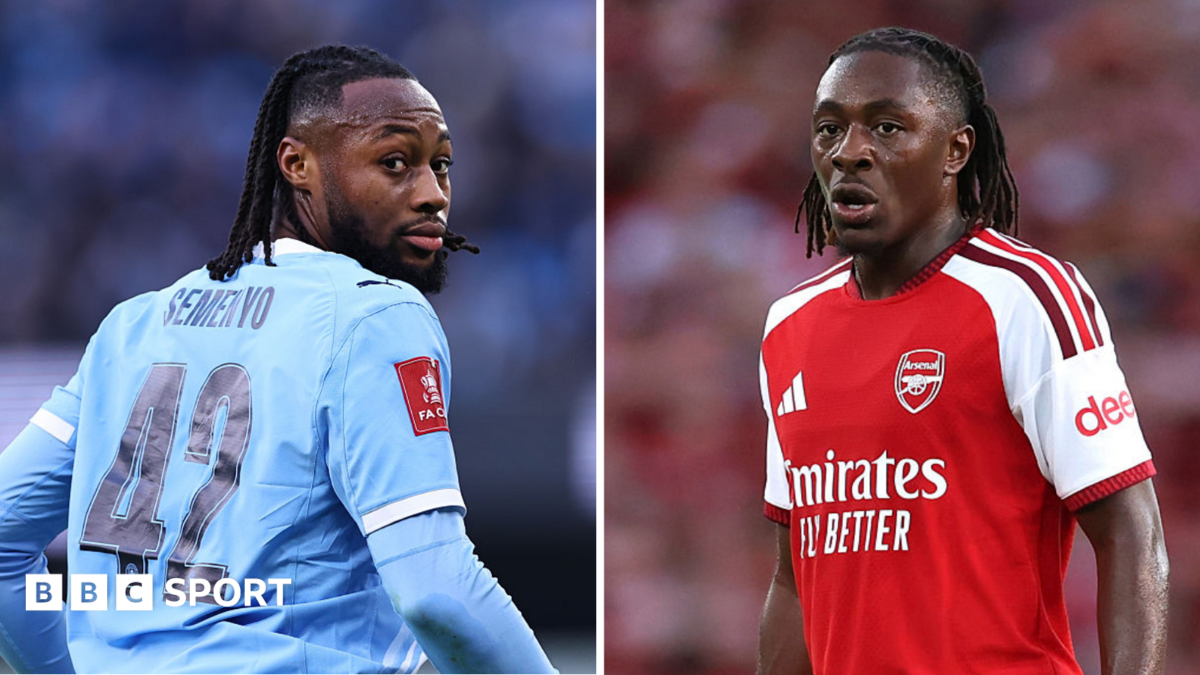
There is no uniform approach to youth development among Premier League clubs.
International Centre for Sports Studies (CIES) figures for 2025-26 show club-trained players accounted for 16.2% of Manchester City‘s Premier League minutes, followed by Chelsea on 15.5% and Brighton on 12.5%.
CIES defines a club-trained player as someone registered with their current club for at least three full seasons, or 36 months, between the ages of 15 and 21. That means an 18-year-old recruited from an EFL academy can still go on to qualify as club-trained if he spends the next three seasons with his new Premier League club.
At the other end of the scale, Tottenham‘s club-trained players accounted for just 0.1% of league minutes, while Bournemouth, Brentford and Burnley were all at zero.
Recruiting from EFL and Scottish academies therefore offers another way of building that development pipeline.
Rather than relying solely on players who have been with a club since childhood, a Premier League side can identify somebody developed elsewhere, bring them into their under-21 structure at 17, 18 or 19 and take responsibility for the final stages of their development.
The numbers do not yet show a relentless increase. There were 18 such moves in 2023-24, meaning this summer’s 14 cannot be described as unprecedented.
But the concentration of 18-year-olds and League One players suggests clubs are becoming increasingly precise about the market they are targeting.
For EFL clubs, that raises questions over how long their best youngsters can realistically be retained.
For Premier League clubs, the calculation is different. The next Watkins, Eze, Wharton or Semenyo may already be somewhere further down the pyramid. The challenge is finding them before everybody else does.
>
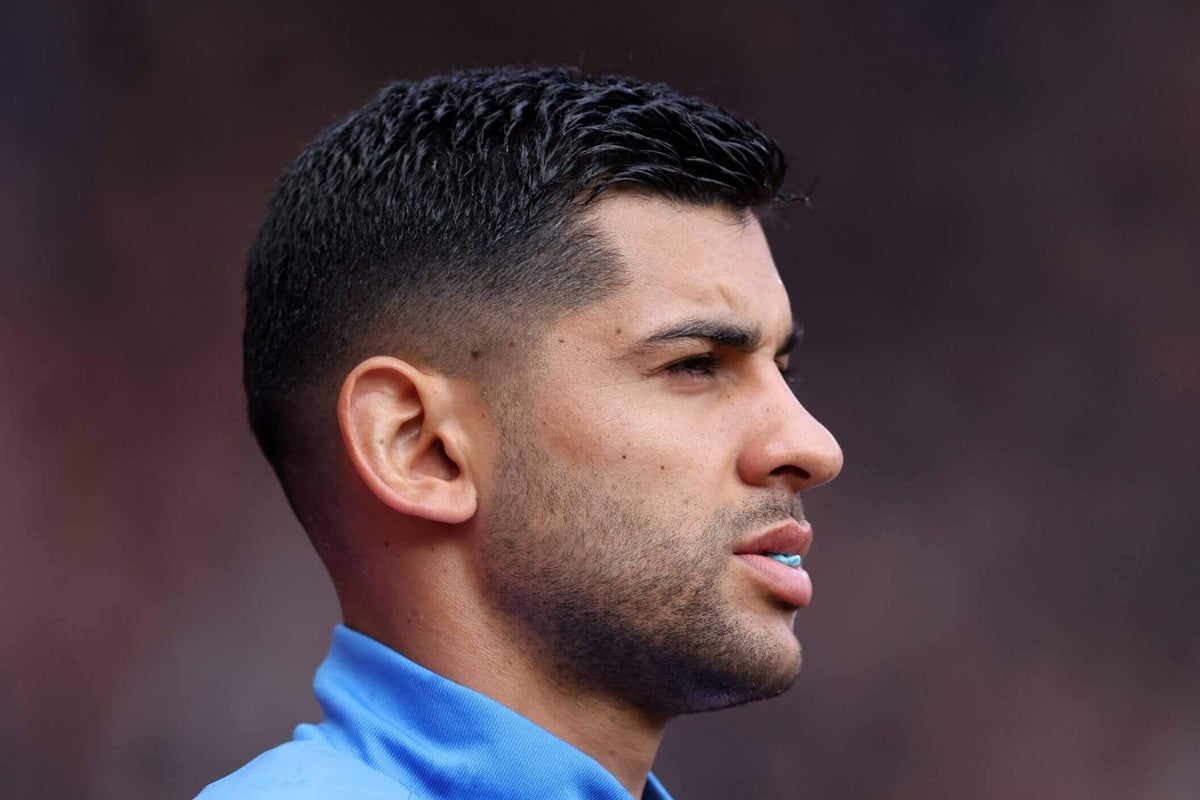
Atletico Madrid have completed the signing of Cristian Romero from Tottenham Hotspur.
The Argentina international, 28, moves to the Spanish capital in a deal worth in the region of €40million (£34.1m; $46m).
He has signed a long-term contract with Atletico while Spurs hold a 15 per cent sell-on fee.
Romero was a key figure in helping the club end their 17-year trophy drought with the Europa League win in 2025, with his central defensive partnership with Micky van de Ven crucial, especially in the knockout stages.
He was also frequently a target for criticism for supporters, however, with his perceived proneness to injury and poor disciplinary record — six red cards in five years — particular issues.
Today, I say goodbye to a place that, for five seasons, was much more than a club. It was my home, my challenge and the place where my family and I built such an important part of our lives.
I leave with a heart full of memories and enormous pride for everything we lived and… pic.twitter.com/Bc340TKNtq
— Cuti Romero (@CutiRomero2) August 14, 2026
Despite being club captain he was nearly not present for the final league match of the season in May, a game which decided the club’s Premier League status, before he ultimately returned from his native Argentina in time to attend.
Romero joined Spurs from Atalanta in the summer of 2021, initially on loan before making the move permanent a year later for €53m. He made 123 Premier League appearances in total for the club.
Spurs have already moved to bolster the middle of their backline this summer with Marco Senesi joining on a free transfer from Bournemouth and Jan Paul van Hecke arriving from Brighton & Hove Albion in a £52m deal.
What legacy does he leave at Tottenham?
This is probably the best possible outcome for Spurs.
It has been apparent for a long time that they needed to move on from Romero and, crucially, they have agreed to sell him to Atletico before the new season starts.
If the defender had returned to first-team training following an extended break after his involvement with Argentina at the World Cup, the uncertainty around his future would have been an unwelcome distraction. Atletico have been courting Romero for over a year and are a far better option than the prospect of selling him to rivals Arsenal.
Some people will be wondering why Spurs could not command a bigger fee for their captain who only signed a new long-term contract last year and has won multiple trophies at international level. The 28-year-old’s injury history and poor disciplinary record would have worked against Spurs during negotiations.

Romero made 123 Premier League appearances for the club. (Michael Steele via Getty Images)
Romero leaves a complicated legacy behind in north London. Romero’s centre-back partnership with Micky van de Ven was crucial to Spurs winning the Europa League in the 2024-25 season, which was their first piece of silverware in 17 years.
Romero was nearly faultless in the knockout stages of the competition and rallied his team-mates at half-time in the final against Manchester United. Over the last 12 months, he has popped up with some crucial goals, including an overhead kick in stoppage time to rescue a point against Newcastle United.
However, there have been six red cards since he initially joined them on loan from Atalanta in August 2021 which is more than any other Premier League player in that period, while he criticised the club’s senior figures on multiple occasions via social media.
Spurs have already moved on by buying Jan Paul van Hecke from Brighton earlier this summer. Romero’s dramatic five-year spell with Spurs is over.
>

Demi Vollering interview: Turning a ‘crushed dream’ on Mont Ventoux into a beautiful Tour de France victory

Premier League: Why clubs are targeting EFL academy players

‘I Live in V.I.,’ Nigeria Class Satire Film at Locarno Open Doors
-

 movies3 months ago
Search For Canadian TV Actor Stewart McLean Now Homicide Investigation
-

 Fashion9 years ago
These ’90s fashion trends are making a comeback in 2017
-
Fashion9 years ago
According to Dior Couture, this taboo fashion accessory is back
-
Fashion9 years ago
Model Jocelyn Chew’s Instagram is the best vacation you’ve ever had
-
Fashion9 years ago
Your comprehensive guide to this fall’s biggest trends
-
Fashion9 years ago
Emily Ratajkowski channels back-to-school style
-
Fashion9 years ago
9 Celebrities who have spoken out about being photoshopped
-
Fashion9 years ago
A photo diary of the nightlife scene from LA To Ibiza