
movies
Indie Films Opening May 1: Barbara Kopple’s ‘American Dream’, ‘Our Land’


Lucrecia Martel’s award-winning documentary Our Land, American Agitators and the remastered rerelease of Barbara Kopple’s American Dream bow in limited release starting May 1, celebrated as Labor Day in much of the world. They’re flanked by a mix of wider indies from Damian McCarthy’s Hokum to Andy Serkis’ animated Animal Farm, Renny Harlin’s Deep Water and RZA’s One Spoon Of Chocolate.
Neon’s newest high-end scarefest Hokum launches on 1,850 screens. Adam Scott stars as a horror writer who visits an Irish inn to scatter his parents’ ashes, unaware the property is said to be haunted by a witch. Premiered at SXSW earlier this year to excellent critical response. McCarthy’s Oddity launched at SXSW 2024 and won the Audience Award in the Midnighter Section, going on to gross $1.2 million domestic for IFC Films.
Hokum is Neon’s first release under a partnership with Spooky Pictures, which has a co-production partnership with global studio Image Nation. Additional titles under the deal include Alex Ullom’s 4×4: The Event and Mora, the feature adaptation of Sam Evenson’s viral short film the Neon is developing. The Irish folk tale also marks the latest release under Neon’s ongoing partnership slate with Waypoint’s Cweature Features after Chris Stuckmann’s Shelby Oaks and Osgood Perkins’ Longlegs (the highest grossing indie of 2024 with $75 million domestically) and Keeper. Cweature Features is also attached to Mora.
Scott was at Neon’s CinemaCon presentation in Las Vegas in April talking up the film.
Animal Farm from Angel Studios, Andy Serkis’ animated adaptation of the iconic George Orwell novel, opens wide on 2,600 screens. The starry voice cast includes Seth Rogen, Glenn Close, Kieran Culkin and Woody Harrelson. Screenplay by Nicholas Stoller. A political allegory of farm animals led by Napoleon the pig overthrowing their human overlord to create a society of equality that is ultimately corrupted as the pigs become as tyrannical as the humans they replaced.
Deep Water, Renny Harlin’s shark thriller from Bob Yari’s Magenta Light Studios, debuts on 1,675 screens. Starring Aaron Eckhart and Ben Kingsley and written by Pete Bridges and John Kim, it follows an eclectic group of international passengers whose plane is forced to make an emergency landing in shark-infested waters en route from LA to Shanghai.
Revenge thriller One Spoon Of Chocolate debuts as the first film under RZA’s 36 Cinema Distribution label, powered by Variance Films on 636 screens with a full theatrical window. The Wu-Tang Clan founder’s Kill Bill collaborator and mentor Quentin Tarantino is aboard to present the film, which follows an ex-military convict seeking redemption in a small town. RZA directed, wrote and produced. It will be presented in 35mm for select engagements, including a two-week run at LA’s Vista Theatre. Stars Shameik Moore, Blair Underwood, RJ Cyler, Paris Jackson, Emyri Crutchfield, Michael Harney and Harry Goodwins. Premiered at the 2025 Tribeca Festival.
Casa Grande from Seismic Releasing, ESX Entertainment’s feature version of its Freevee series, opens on 225 screens. Directed by Juan Pablo Arias Munoz, a prodigal daughter rejoins her family at their farm during a difficult time, as her ailing father faces both a terminal diagnosis and mounting pressure from rivals. Stars Lou Diamond Phillips, John Pyper-Ferguson, Madison Lawlor, Christina Moore, Javier Bolaños, Kate Mansi, Daniel Edward Mora, Loren Escandon, Bruce Davison, Shalim Ortiz and Charley Debenedetti. Amazon Freevee’s bilingual series followed the intertwining lives of various families in the farmlands of Northern California.
Lucrecia Martel’s documentary Our Land (Nuestra Tierra) from Strand Releasing launches at the Film Forum in NYC. Premiered at the 2025 Venice Film Festival, going on to win the top award at the BFI London Film Festival, an award in international competition at Locarno, and a special award from the National Society of Film Critics. The story of Javier Chocobar, a member of the indigenous Chuchagasta community in northwest Argentina’s Tucumán Province, who in 2009 tried to defend himself and his people from being forcibly evicted from their land by a local landowner and two former police officers. The 68-year-old Chocobar was shot and killed. After years of protests, a court case opened in 2018. Features community voices and trial footage. Produced by Rei Pictures, Louverture Films and Piano, in co-production with Pio & Co., Lemming Film, and Snowglobe.
American Agitators, directed and produced by Raymond Telles (The Fight in the Fields) with executive producers John Heffernan and Margo Feinberg, opens at NYC’s Quad Cinema. The Abramorama documentary highlights historic movements led or inspired by labor organizer Fred Ross Sr., exploring how collective action can combat racism, bigotry and injustice. Narrated by playwright and filmmaker Luis Valdez (La Bamba), it features Fred Ross Jr., who carried on his father’s legacy of grassroots activism, civil rights leaders, organizers and advocates.
Janus Films is releasing a new 4K restoration of Barbara Kopple’s Oscar-winning documentary American Dream, timed to May Day and the film’s 35th anniversary, at New York’s IFC Center and another dozen screens nationwide. The 1990 doc follows the explosive 1985–86 labor strike against Hormel Foods in Austin, Minnesota. Fed up with dangerous plant conditions and drastic wage cuts, Austin’s Local P-9 went against the advice of the United Food and Commercial Workers International Union and, with the help of labor activist Ray Rogers, held a nearly yearlong walkout. But as the strike dragged on some workers were desperate to make ends meet and ready to cross the picket line, dividing a community already betrayed by a once progressive company and roiled by blockades, riots, and the intervention of the National Guard.
Janus is also out with 50th anniversary screenings of Kopple’s Harlan County, USA at many of the same venues, also in a new 4K restoration. Both films won Kopple the Best Documentary Feature Oscar and she will be in-person at IFC Center Friday and Saturday presenting both films.
Francesco Sossai’s The Last One For The Road from Music Box Films debuts at Film At Lincoln Center in New York, adding the Laemmle Roya in LA next week. Two middle-aged friends and small time crooks (Sergio Romano and Pierpaolo Capovilla), who swear each drink is their last, cross paths with a shy architecture student (Filippo Scotti) and take him under their wing on a free-flowing bender through the Venetian countryside in a scruffy intergenerational odyssey. Premiered at Cannes.
Kino Lorber opens drama Two Pianos by Arnaud Desplechin at the Angelika in NYC and the Laemmle Royal in LA. After years of self-imposed exile, pianist Mathias (François Civil) returns to France, where his former mentor, Eléna (Charlotte Rampling), has invited him to perform a series of concerts with her in his hometown of Lyon. Once a rising star of the French musical scene and Eléna’s prized pupil. A chance encounter throws Mathias into turmoil and leads him back to his first love, Claude (Nadia Tereszkiewicz). Screened in March at Film At Lincoln Center’s Rendez-Vous with French Cinema.
>
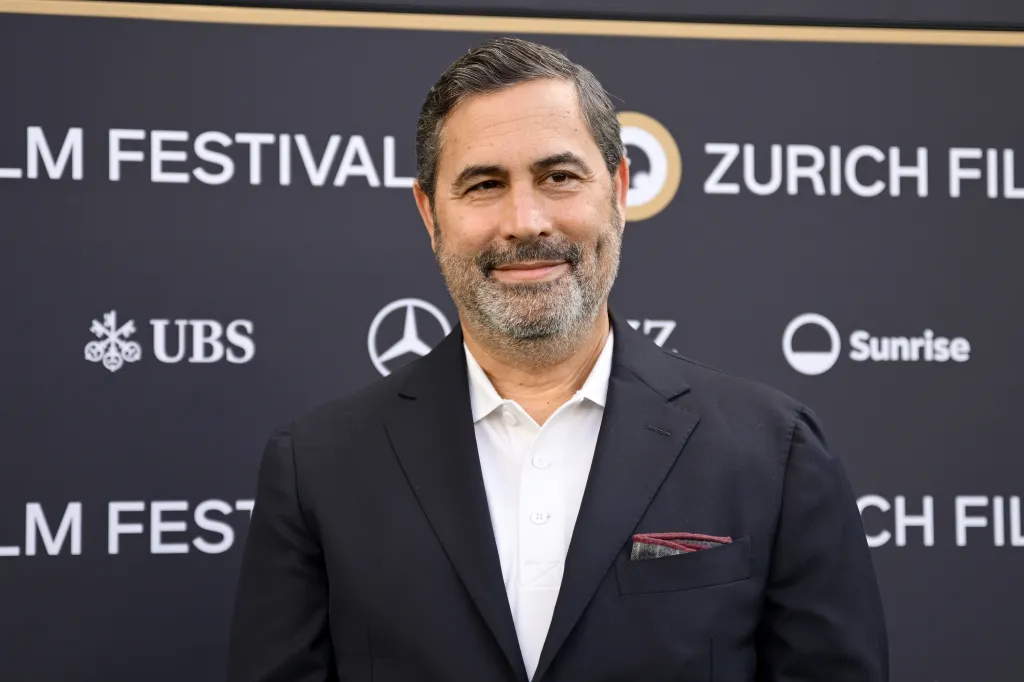
FilmNation Entertainment Founder and CEO Glen Basner will receive the Game Changer Award this evening at the Zurich Summit, the annual industry event aimed at fostering transatlantic connections taking place within the Zurich Film Festival.
As part of the honor, Basner participated in an onstage conversation on Saturday moderated by German Oscar-winning director Edward Berger.
Over the course of an hour, the pair dug into Basner’s trajectory from sales rep at his father’s garment business, to heading up one of the world’s top international indie sales, financing and production companies.
Basner and Berger go back a long way, having first met at the beginning of their film careers in the early 1990s at famed New York production company Good Machine.
Basner arrived there from a five-year stint selling ladies knitted sweaters. He had been bitten by the movie bug while helping childhood friend Edward Burns in his spare time on his first film The Brothers McMullen. Burns then invited Basner onto his second feature She’s The One, which was produced by Good Machine. The rest is history.
Berger spent a year and a half at the company from 1994, where his paths crossed with Basner. They have stayed connected ever since, with the pair joining forces professionally again on Berger’s 2024 $100M global box office and streaming hit Conclave.
“32 years later, it’s such a full circle moment,” said Berger as they kicked off the conversation.
Looking back at his time working with Ted Hope, James Schamus and David Linde at Good Machine, Basner said the lessons he learned there had carried him through his career.
“I was taught that you could sell movies around the world and not lie to people… that you can value and appreciate the relationships that you develop around the world and treat people not just as if you’re selling them a product, but that you are really delivering them a work of art, and that you’re there to help support them as they go and release the films country by country.”
Berger suggested working there had also taught them reliance, recalling how just prior to their arrival, the company had nearly gone bankrupt after it wrapped Ang Lee’s romantic comedy The Wedding Banquet.
“It taught us to go through hard times and get stronger… around the time of The Wedding Banquet, the company was basically bankrupt… they decided let’s cancel the photocopier and scrape every last bit together and go to Berlin,” said the director.
The film went on to win the Berlinale’s Golden Bear and then took off at the box office to gross some $23M, against the $1M budget, making it the most profitable U.S. film of 1993.
After subsequent stints heading up sales at Focus and then The Weinstein Company, Basner created FilmNation in 2008, initially uniquely as a sales company.
He said creating his own company had been a natural move for him given his family background.
“My father had his own business, and I wanted to be like my father, so I always had this entrepreneurial bug that I wanted to go out and sort of really test my mettle by being on my own and developing something and seeing if it could succeed,” he said. “So that was something I thought about since the first day that I started working in film.”
Eighteen years later, the company has expanded organically into finance, production and TV, with bases in New York and L.A., and string of award-winning features in its filmography including The Big Sick, Promising Young Woman, Anora, Conclave, Maria and upcoming pictures Bunker, Talent for Murder and I Play Rocky to name but a few.
“The opportunity was clear in 2008. In those days, there were only two strong and dominant, excellent American international sales companies that were unaffiliated with U.S. distribution,” said Basner.
“Pretty much at the same time, they both became U.S. distributors. Summit, which was run by Patrick Wachberger, became a U.S. distributor, and Mandate, Joe Drake’s company, was bought by Lionsgate… so there was this big hole for an American, unaffiliated-with-distribution sales company.”
Sales craft
Talking about FilmNation’s recent slate, Basner said he had wooed Florian Zeller ahead of getting involved in Bunker.
“I told him to his face he was my filmmaker crush of the moment,” he joked.
“You said that to me too,” replied Berger in mock disbelief.
“I know. It was a different moment,” fired back Basner jovially.
He recalled how Zeller had been on the cusp of approaching Javier Bardem and Penelope Cruz as FilmNation quietly putting out international sales feelers.
“He had said, ‘If they say yes, we’ll move forward. If they don’t do the movie, I don’t think I’m going to do the movie.’ Fortunately, they said yes, and then we just really started the work,” said Basner.
The film took a traditional pre-sales route thanks to Zeller’s track-record with Oscar-winner The Father, followed by The Son, it’s A-list cast and a “exquisite” script, with the bulk of the international sales tied up at Cannes in 2025. The U.S. deal to Sony Pictures Classics was sealed in collaboration with CAA Media Finance later on, on the basis of the completed film.
“There were distributors that were willing to take the risk. It’s not the easiest thing to say: ‘Here’s the script, here’s the director, here are the actors, and here’s your price’. They don’t really get to sit and have hour-long conversations with the filmmaker to fully understand the movie,” said Basner .
“They have to trust us to be able to articulate exactly what the movie is and what the intention is of that filmmaker, so that they can then decide to take the significant risk on a movie like this of pre-buying the film.”
Talking about their collaboration on Vatican-set thriller Conclave, revolving around the secretive Vatican process of electing a new Pope, Basner said part of the challenge had been conveying Berger’s vision for the film to buyers.
He suggested that on the basis of the screenplay alone – it felt like a story about “a bunch of old men talking in rooms” with a potential $12M to $15M price tag.
“But that really wasn’t the movie that you were looking to make… You talked about The Parallax View being a point of reference for you,” said Basner, referring to Alan J. Pakula’s 1974 political thriller.
“You talked not just about the architecture of the locations, but the architecture of how you wanted the camera to move and the film to feel… all of a sudden this became a political thriller,” continued Basner.
The sales veteran said estimating a value of a film, country by country, came down to a mixture of experience and expertise.
“You’re responsible to hit these estimates. And human nature takes over, and sometimes you can get a little bit conservative to make sure that you deliver,’ he said.
“What we’ve learned over the years is to trust the business acumen and the marketplace experience that we have, and not be too conservative, but actually just deliver the valuation that we think, and be prepared to stand by it in a real way because it’s our money that we’re investing.”
“Part of that is, instead of talking all the time about what the market says and what the market will bear, it’s really about just sitting and listening to the filmmaking team so that you really understand, not what I, Glen Basner, thinks the movie is going to be or should be, but the movie that the filmmaker wants to make.”
Basner revealed he was wary of going down the packaging route of attaching known talent when helping get big projects of the ground, suggesting attempts to mitigate risks on films, whether via the cast or other factors, can sometimes lead to less exciting films.
“Sometimes we have to take more risk on an unknown actor because they are the best person for that role to make the best version of the movie, and we have to trust that filmmaker to deliver on that, not in a naive way, in a thoughtful way, but really trust that that’s really what’s going to drive the value for that movie,” said Basner.
“I really am encouraging everybody to look around, look at what’s working in the marketplace. There are a lot of films that, on paper, did not make sense. The history of our company is predominantly on films that did not make sense to the marketplace at the beginning.”
Conclave clash
Berger revealed they had not always seen eye-to-eye in the final stages of bringing Conclave to fruition.
“After quite a long edit… I was basically done with the film. I’d run out of ideas… I really wanted to go to Venice or at least show them the movie and see if they’d show it,” recalled Berger.
“This was in in May. Glenn got on the phone and made me furious. I hated him. He just kind of said, ‘I’m not sure the movie’s ready, don’t rush it…Venice is going to be expensive, and we don’t have American distribution in place’,” he recalled.
Lead producer Tessa Ross also felt the movie was “missing something” and after test screenings with friends and family sparked an “ok” response, Berger went back to the edit suite and even reshot one or two scenes.
Berger credited Berger and Ross for pushing the extra mile on the film, while his energy levels were low after an arduous months-long edit process.
“We just edited and edited and edited and made the music again and revised it, and finally something cracked… little things, just shifted and gave us the confidence that the movie was ready. But it was really half a year later.”
It was another full circle moment for Berger
“This is going back to Good Machine, and what I took from Good Machine… which was you can always do better… whether its budget, contract or the cut of the movie.”
Organic expansion
Taking stock of FilmNation’s trajectory since 2008, Basner said the expansion into production and TV had been organic.
“We never really anticipated becoming the company that we have over time, but things changed. One, as we continued to do our jobs and have success, we gained confidence through experience, and we were ready to do things like fund our own films,” he said.
A second development was the convergence of film and TV and other entertainment formats, which has seen the company also embrace TV, podcasts and theater, while retaining its original mission of being a place that enables filmmakers to not just make their film, but to make the very best iteration of their film.
“When we’re at our best, that’s exactly what we’re doing. It’s no more complicated than that. And when we are doing it, nothing feels more rewarding than doing that job well,” he said.
Looking to near-term goals, Basner said the company was ramping up its productions in the arrival of former 20th Century Fox, DreamWorks and Universal Pictures exec Stacey Snider in the new role of Chief Creative Officer in January.
“We are being more ambitious by investing more and making more films. This year we will make four films and a television series, and next year we already have four films in pre-production and hope to make another three,” said Basner.
“The arrival of Snider as the Chief Creative Officer was an articulation of our desire to take more risk and to be more productive,” he continued.
“Working with her these last nine months, you see this incredible creative talent, you see a skill set and a maturity that we don’t have ourselves, or that I don’t have myself, and it is definitely building confidence to invest further. But it’s really also, as she would say, it’s about making it better. The conversation that you had before: let’s take another look at this. Let’s do it a little bit better. That’s something she reminds me pretty much every day.”
>
At this weekend’s Zurich Summit a group of film financiers were asked by Deadline for their thoughts on the prospects of a U.S. federal film incentive.
Last week, a bipartisan group of lawmakers unveiled the bill for a 20% incentive, which with bonuses could bring the total rebate to 30%. The move has long been called-for by the U.S. industry concerned by the exodus of production overseas.
Alex Walton, former Co-Lead & Partner at WME Independent, told the Summit the move was “hugely positive”: “It’s wild to think there hasn’t been an efficient tax credit in America. It has helped many other countries. Spain is booming because of it now; and all over Europe. It’s going to take some time to be realized and for financial institutions to be able to cash flow it. But you’ve got to believe it will happen within the next three-four years, and then that will see all the foreign tax credits compete harder to maintain their positions.”
A start date is not yet set. The proposed text from last week stated that the credit would apply to qualifying film and TV productions beginning in taxable years after December 31, 2026 (effectively targeting projects starting in 2027). But bills can take years to pass.
Andrea Scarso, Managing Partner at prolific financier IPR.VC, whose credits include Marty Supreme and Materialists, agreed that a U.S. incentive would be “positive” but also cautioned against rising production costs: “It remains to be seen whether the prices and budgets are also going up by the same amount, which is something that happens in some foreign territories when they increase the amount of tax credit or soft money. It’s always a balance. But overall, I think it’s good news.”
Sarah Schweitzman, Co-Head CAA Media Finance, noted: “What’s important is that when you look at some of the international markets, you realize that we’re making movies there because of a tax incentive situation and I think if we’re able to federalize a tax incentive program in the U.S. it’s going to create many more jobs and invigorate crews, which is something we absolutely need in the U.S.”
A recent Motion Picture Association study claimed that a federal film tax credit could increase U.S. production spending by $125BN and add more than 143,000 jobs by 2035.
You can read more about the bill here.
>
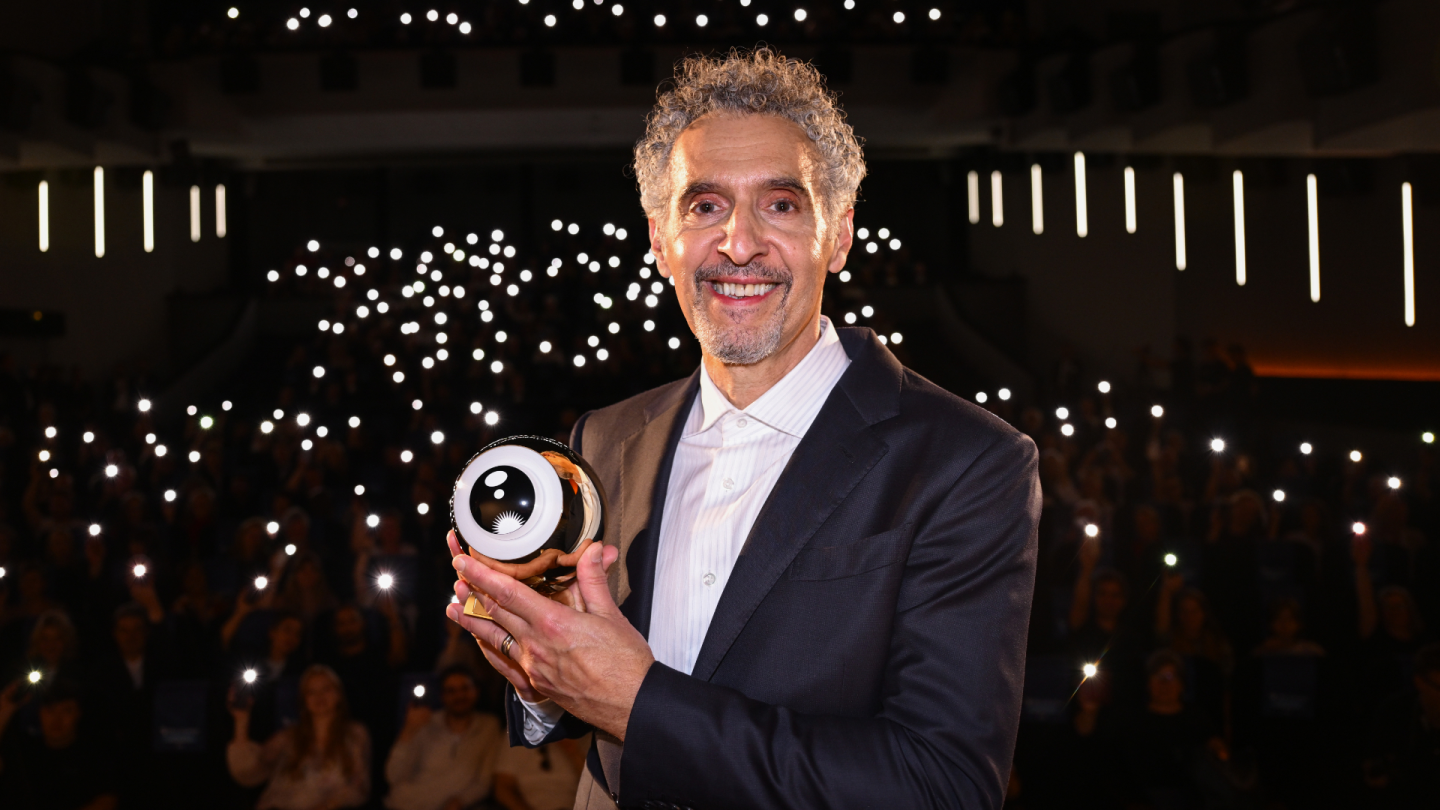
Hot on the heels of his Golden Eye award ceremony on Saturday night, John Turturro entertained another crowd at a Zurich Film Festival masterclass on Sunday.
The Emmy-winning U.S. star has been recognized for his performance in Noah Segan’s The Only Living Pickpocket in New York, a project that is already garnering awards buzz. In the film, Turturro plays Harry, a seasoned pickpocket whose carefully controlled life is thrown into turmoil when a job goes wrong, setting off a tense chain of events that unfolds over the course of 36 hours.
In a career-spanning conversation with Deadline‘s Melanie Goodfellow — the actor’s shining Golden Eye trophy neatly nestled between them — Turturro discussed growing up in an immigrant household, his decades-long friendship with Spike Lee, and the transition from acting to filmmaking.
Turturro, who has steadily become one of the industry’s most formidable actors yet to put “Oscar nominee” on his resume, was asked about joining the best actor race this year with the Sundance success The Only Living Pickpocket in New York. “I never really have gone the whole hog with it,” he responded about the upcoming awards campaign. “But now I’m the lead in the film, so I’m going to support the film because I love the film.”
He explained that being pulled into awards conversations is “helpful to help you do the next thing.” Turturro continued: “Is it nice to be acknowledged? Great, but that’s not why you do it. […] Just because a film is really popular doesn’t mean it will have staying power, but it’s nice to be in the conversation. I don’t look upon myself as being a competitive person. I’m competitive with myself,” he added. “I want to get the most out of what I can do, but it’s not sports!”
However, he admitted to feeling surprised by the positive critic reaction out of Sundance. “Finally,” he thought, “I’m in something that people will see… My job is I like to try to improve, and I feel like being an actor is one of the few things you can improve in. You may not be able to run as fast as you did when you were younger, but I have a lot of life experience, and as you get older, you accumulate that, and you can distill things in a way that you couldn’t do when you were young, because you didn’t really experience all those things. And now I’ve experienced life, death, loss, being a parent, being married — what it is to really love someone versus falling in love. That’s a huge difference,” he giggled.
Turturro regaled attendees with stories about his impressive stage career. He naturally came on to two major TV performances of his in the last decade: HBO’s The Night Of and Apple’s Severance.
He coyly confirmed a return for his character, Irving Bailiff, in season three of the Emmy-winning Severance with Adam Scott. “Yeah,” he (eventually) told the room. “As long as they give me interesting things to do, then I’m interested.” He swiftly took the opportunity to gush over friend and colleague Christopher Walken, whose character, Burt Goodman, began a romance with Turturro’s Irving in season one. “‘Who’s going to be my love interest?’” Turturro asked before joining the show. “And they were like, ‘All these younger guys.’ I said, ‘Well no, I’ve worked with Chris Walken,’ and I said, ‘I want Chris, because I love Chris.’ And I don’t have to act that I love him because I love him.”
Though Walken “didn’t understand a lot of the show,” Turturro was able to guide him through their authentic, real-life friendship. “I said, ‘Don’t worry about it. You just look at me.’ We have so much fun because I directed him like three times, and we’ve acted, and we’ve worked together a lot. And he’s a wonderful theater actor, and people obviously think he plays only strange [characters] but he can do a lot of different things. He’s also very sensitive, but he has a childlike joy in his work, and when that happens, anything is possible.”
Turturro received a round of applause when discussing the HBO crime drama The Night Of, which ran for one season in 2016 and co-starred Riz Ahmed. It would later win five Emmys, and Turturro was nominated for his role as the eczema-stricken defense lawyer John Stone. “The Night Of is something I’m very proud of,” said Turturro on Sunday. “It was originally a BBC thing, which I actually never watched because I didn’t want to be influenced.”
He even confirmed that he actually wanted to do another season of it. “But they couldn’t agree on what the story would be,” revealed the actor. “But I loved doing it. It was one of those great experiences in my life.”
Turturro’s career spans four decades, having worked with acclaimed directors such as Spike Lee, the Coen brothers, Martin Scorsese, Robert Redford, Robert De Niro, Nanni Moretti and Pedro Almodóvar.
He first gained international recognition through his collaborations with Lee, appearing in Do the Right Thing and Jungle Fever. With Joel and Ethan Coen, he acted in Miller’s Crossing, Barton Fink, O Brother, Where Art Thou? and The Big Lebowksi, in which Turturro created the iconic Jesus Quintana. For his lead performance in Barton Fink, he won best actor at the 1991 Cannes Film Festival, an experience that Turturro reflected on at his Zurich masterclass. He even confessed to feeling like he lands “more normal” roles in Europe than across the Atlantic, and said he has turned down scripts “again and again” that involve his character being violent towards women.
At his Zurich Golden Eye ceremony Saturday night, Turturro collected the award and quoted Italian novelist Cesare Pavese. “[He] once said that the only great thing in life is to begin. I still consider myself a beginner in many ways,” said the star. “I’m very fortunate. I wanted to make a living doing something that interested me and to do interesting work — to share that with an audience, [and that] wouldn’t diminish their intelligence at the same time,” he laughed. “I consider this an encouragement to continue.”
Turturro joins 2026 Zurich honorees Julianne Moore and Tom Hiddleston. The 22nd edition runs Sept. 24-Oct. 4.
>
How to watch Braves vs. Marlins: TV channel and streaming options for September 27
MLB playoff bracket scenarios live updates: Phillies, D'backs, Rangers and Astros fight for spots

With ‘Primetime,’ Robert Pattinson is 2026’s Biggest Box Office Star
-

 movies4 months ago
Search For Canadian TV Actor Stewart McLean Now Homicide Investigation
-

 Fashion9 years ago
These ’90s fashion trends are making a comeback in 2017
-
Fashion9 years ago
According to Dior Couture, this taboo fashion accessory is back
-
Fashion9 years ago
Model Jocelyn Chew’s Instagram is the best vacation you’ve ever had
-
Fashion9 years ago
Emily Ratajkowski channels back-to-school style
-
Fashion9 years ago
9 Celebrities who have spoken out about being photoshopped
-

 Anime4 months ago
Rurouni Kenshin: Hokkaido Arc Manga Takes 1-Issue Break – News
-

 Anime3 months ago
HIDIVE to Stream English Dubs for The World Is Dancing, The Forsaken Saintess and Her Foodie Roadtrip in Another World, The Dangers in My Heart: The Movie Anime – News