Connect with us

Sports

The openness of Manchester United and Liverpool’s midfields show how they must improve

Published

on

Who remembers the holding midfielder? The no-nonsense anchorman who sat in front of the defence, protected that space, and contributed little in attack?

The current trend in the Premier League is for players in that mould to push up, to press, to make runs into attack, and to provide goalscoring qualities too.

The flip side, of course, is that the defence goes unprotected. And in Manchester United’s 3-2 win over Liverpool, the story of the game was all about both sides being exposed between the lines.

The opening goal came from a Manchester United corner, and was scored by Matheus Cunha at the second time of asking. Dead-ball situations are somewhat different from open play, but this is also a theme of the Premier League this season: teams are so scared of inswinging corners that they pack the six-yard box and leave space on the edge of the box.

Cunha’s first strike was blocked, and his second was essentially a shot from ‘between the lines’, if such a thing exists at a set piece. 1-0.

Liverpool have used a very fluid midfield since Arne Slot took over nearly two years ago, particularly because Ryan Gravenberch was converted from a No 8 to the deepest midfielder, and his game is about receiving the ball on the turn and dribbling into attack.

Below is a good example of him being found by Alexis Mac Allister, who is tasked with sitting in when Gravenberch goes forward. The Dutchman ends up playing passes from between the lines, while Mac Allister tries to make a run into a goalscoring position.

That system worked very well last season, so it would be unreasonable to criticise the theory behind it. But, like many Premier League midfielders this season, Mac Allister and Gravenberch looked tired, and they’re making mistakes.

Here’s an example of Mac Allister misplacing a fairly simple pass, and while he probably does the right thing in trying to close down Bruno Fernandes, United play a quick passing combination around him and are off on the break. The second wave of this counter-attack eventually resulted in Benjamin Sesko bundling the ball over the line to make it 2-0.

At half-time, Manchester United seemed in control. But they blew a comfortable lead because, yes, they were too open in front of the defence. When substitute Amad — just introduced as a substitute down the right flank — received a pass from Kobbie Mainoo, he retreated with the ball and found both Mainoo and Casemiro flying forward in advance of him.

Now, that doesn’t excuse Amad’s extremely sloppy pass, straight to Dominik Szoboszlai, who ran through unchecked to score. But really, there should have been a United midfielder positioned in front of the defence. That would have given Amad a simple passing option, or at least they might have been able to halt Szoboszlai’s dribble. 2-1.

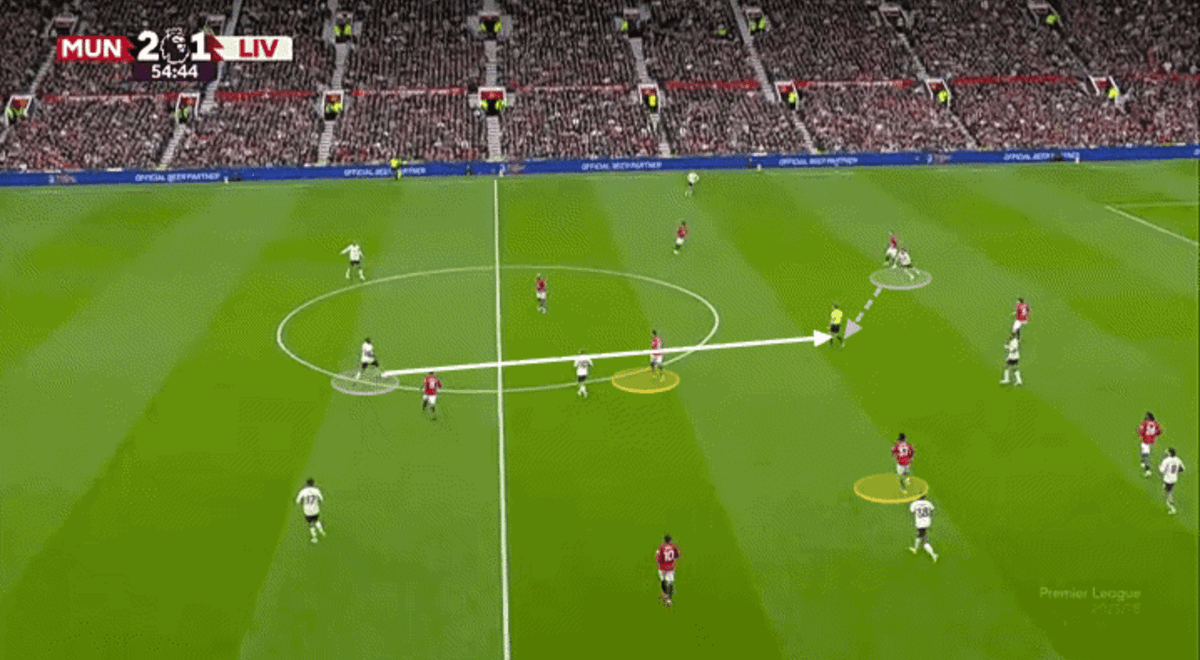
And United — in terms of their midfielders getting bypassed easily — were even worse in the second half than Liverpool were in the first. For all Florian Wirtz’s struggles this season, he’s very much capable of finding space between the lines against a side as open as United.

Here, Ibrahima Konate has the simple task of poking the ball through United’s midfield, Wirtz swaps passes with Szoboszlai, and then has a decent attempt at goal. Incidentally, from the resulting goal kick, Liverpool equalised. Mac Allister pressed high up, won the ball, and Cody Gakpo put it into the net. 2-2.

United got the winner in a manner that was typical of the contest.

We can’t be entirely negative about all the midfielders wanting to attack, because when Luke Shaw hung up a deep cross for Amad at the far post, Casemiro was waiting for the knockdown. Mac Allister got there first, but his scuffed clearance only fell to Mainoo, who calmly passed the ball into the net. 3-2.

But at no point did United focus on simply protecting their lead, and the game continued to feel incredibly open.

Here’s a perfect encapsulation of how defensive midfielders now play. Casemiro has many qualities, but mobility is not among them. Yet here we are, 10 minutes from time, and Casemiro is sprinting forward 40 yards in an attempt to close down Mac Allister as he receives a pass on the edge of his own box. Casemiro inevitably can’t get there in time, the ball is played past him, and Wirtz is again in space on the ball.

And even in stoppage time, when Casemiro and Mainoo are initially in a good position, they both get dragged over towards the ball, with Casemiro pointing for Mainoo to track a run into the channel. This leaves the edge of the box completely free, with two Liverpool players waiting to score.

Rio Ngumoha’s cutback doesn’t quite get past Amad, and the last chance of the game is gone.

Overall, the attack-minded nature of the two midfields created an exciting, eventful match with five goals. In a season where entertainment value has been sorely lacking from many big Premier League games, maybe it seems churlish to be overly critical.

But this was a good demonstration of how these sides need to improve next season, whether in terms of personnel or structure; you cannot be this open in midfield and challenge for the title.

>

Continue Reading

Sports

Inter Miami appoint Kily González, former Argentina teammate of Lionel Messi, as new head coach

Published

on

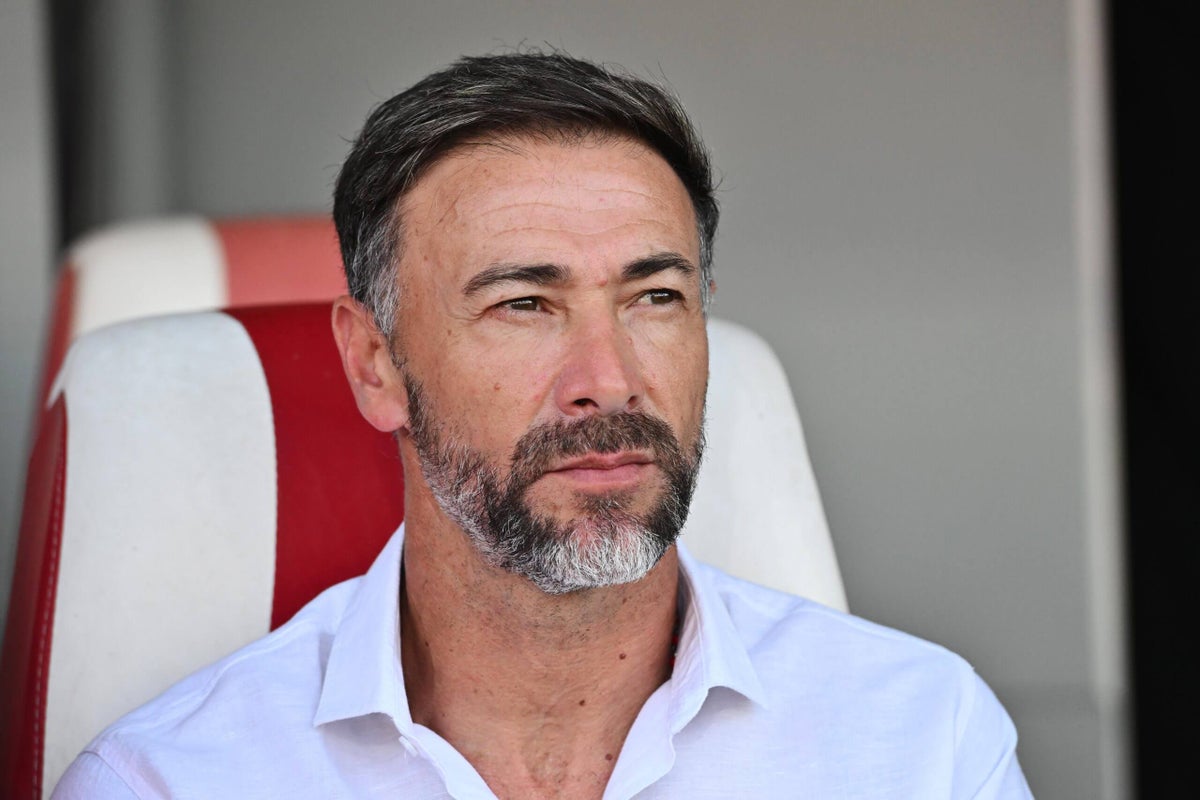
González during a game in the Argentinian top flight in January 2025

González played two World Cup qualifying matches alongside Messi for Argentina in October 2005. Luciano Bisbal via Getty Images

Inter Miami have appointed Cristian “Kily” González as their new first-team head coach.

González, 52, will replace Guillermo Hoyos, a decades-long ally and close family friend of club captain Lionel Messi. A statement from Inter Miami issued on Thursday confirmed that Hoyos will “provisionally continue in charge of the team until the arrival of the new head coach and his coaching staff”, once González receives a work permit.

Hoyos, 63, has been in caretaker charge of Miami since April, when he replaced Javier Mascherano.

González becomes the latest Inter Miami head coach to have previously worked with or played alongside Messi, joining the likes of Gerardo “Tata” Martino and Mascherano. Messi and González played two World Cup qualifying matches together for Argentina in October 2005 — the year Messi made his senior Argentina debut and González played his final game for the national team.

Earlier on Thursday, before Miami confirmed the appointment of González, Major League Soccer suspended Hoyos for one game and fined him an undisclosed amount for repeatedly violating the league’s late kickoff policy. Hoyos will serve that ban during Miami’s home game against CF Montréal on Saturday, August 29.

Hoyos became Inter Miami’s Director of Development in August 2023 before becoming sporting director in January 2025. The Argentine then replaced Javier Mascherano as head coach in April 2026, going on to take charge of 17 games.

During his 18-year playing career, González represented the likes of Rosario Central, Boca Juniors, Valencia and Inter Milan.  The former left midfielder was an Argentina international who scored ten goals in 56 appearances for the national team, where he played with Messi.

His coaching career has seen him take charge of three sides in his native Argentina: Rosario Central, Club Atletico Union and Club Atletico Platense.

Inter Miami are second in Major League Soccer’s Eastern Conference and ten points behind first-place Nashville SC, a team they were beaten by 4-1 on Aug. 15.

Connections: Sports Edition Logo

Connections: Sports Edition Logo

Connections: Sports Edition

Spot the pattern. Connect the terms

Find the hidden link between sports terms

>

Continue Reading

Sports

UEFA, Infantino and the FIFA presidency: The view from the Champions League draw

Published

on

As European football descended on Monaco for the Champions League draw, there was only one topic on the tip of their tongues: the future of Gianni Infantino.

On Thursday afternoon — just as a meeting between UEFA’s 55 member associations, as well as the European members of the FIFA council, got underway at the glitzy Le Meridien hotel — UEFA, the governing body for European football, raised the stakes.

In a significant escalation of its attempts to dethrone Infantino, UEFA made a request for the disclosure of documents before potentially launching “criminal proceedings” against the FIFA president in Switzerland.

This is in response to the abandoned FIFA Forward Enterprise (FFE) plan, which would have seen world soccer’s governing body make stakes in the World Cup available for private investment.

In a legal document filed in the United States District Court, seen by The Athletic, UEFA accused Infantino of “promoting” a “fraudulently off-market price for his own benefit” when seeking to sell a stake in FIFA’s commercial and event operations to Thrive Eternal — an American investment fund run by Joshua Kushner — for $4.2billion (£3.1bn).

Also in UEFA’s crosshairs, and subject to identical legal filings, were Thrive Eternal, JPMorgan, and Bann Ventures and its CEO, Greg Maffei. JPMorgan and Bann Ventures were due to work alongside FIFA on the FFE project and were named by the governing body in its July 28 release announcing the plans.

FIFA did not respond when approached by The Athletic after the legal filing was lodged, while Thrive Eternal declined to comment.

But on the French Riviera, Infantino — who used to take centre stage at these Champions League draws when he was UEFA secretary general — had very few, if any, supporters.

For the purposes of this article, The Athletic spoke to many people at the Champions League draw, who, unless otherwise noted, asked to remain anonymous to protect relationships. In those conversations, it was a struggle to find somebody who did not have an opinion on what is being perceived as the battle for the soul of football.

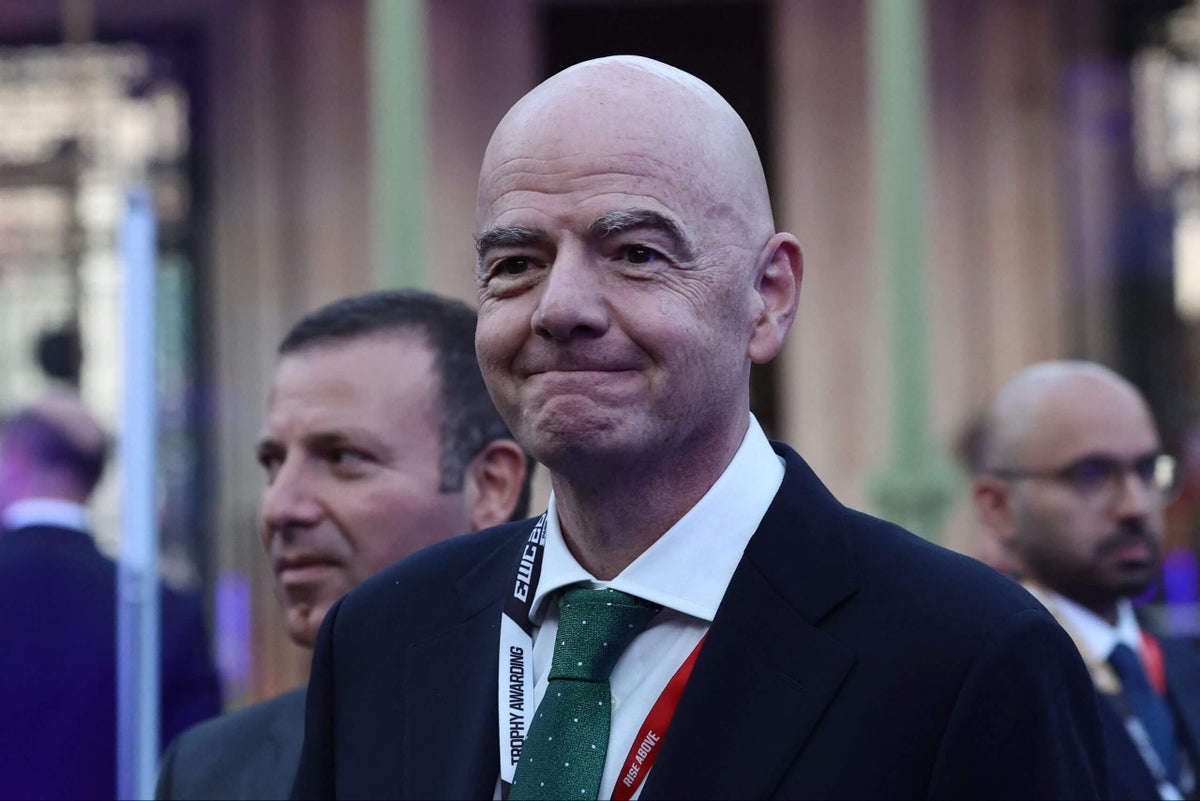
Football powerbrokers attended the Champions League draw on Thursday (Valery Hache/AFP via Getty Images)


The consensus among senior UEFA officials in Monaco is that Infantino, who many felt should be on a victory lap given the commercial success of the World Cup, foolishly self-imploded with the FFE plan.

But on Wednesday, as European football executives were flying into Monaco for the Champions League draw, UEFA appeared to be on the back foot, perhaps for the first time in the ongoing battle with Infantino.

UEFA backed down from its threat to boycott all FIFA competitions, saying it received a letter from FIFA that “confirmed in writing” the FFE plan has been “irrevocably and permanently withdrawn”.

The letter detailing the assurances was signed by Mattias Grafstrom, FIFA’s general secretary, three weeks before UEFA changed its position. A FIFA spokesperson told The Athletic: “The secretary general confirmed in a letter, dated August 6, that the FIFA Forward Enterprise project had been irrevocably and permanently withdrawn and will not reappear in any other shape, construction, name or form.”

The view from several football executives in Monaco was that, when making the threat, UEFA simply failed to countenance that the Under-20 Women’s World Cup, which is being hosted by Poland next month, was on the horizon.

One national association head made clear they would have been prepared to tell their women’s under-20s team that they could not play in the tournament had those assurances not been sent, irrespective of the perception that they would be denying those players a great opportunity.

But on Thursday, UEFA upped the stakes by raising the prospect of criminal action.

It could receive a result within days regarding its request to have access to the “communications and documents”. But the expectation is that FIFA and the other parties would fight back and not simply hand everything over.

Should that prove to be the case, UEFA may reasonably question why access would be blocked.

Why Premier League clubs still have betting sponsors on their shirts

Nnamdi Onyeagwara

Depending on who you spoke to, even on the back of the legal threat, European football executives and UEFA officials hold different views over whether it will prompt Infantino to stand down before the March election. Some believe he won’t make it to the spring, but others say it is not in his nature to go without a fight.

“I don’t think we ever thought one battle would win this war,” Laura McAllister, a UEFA vice president, told reporters, including The Athletic, on Friday. “I suspect this is going to be a series of battles, and we’ll know what the next ones are fairly shortly.

“We didn’t expect the FIFA president to go quietly because there was no real track record of that happening. But that doesn’t deter us from the strategy that we have to issue a regime change because this is a big moment in football.”

UEFA knows, according to a person with knowledge of the European governing body’s position, that pursuing legal action will be costly — but if it brings an end to Infantino’s tenure, the view is that it would have been worth the investment.

But if Infantino stands down in the face of potential criminal legal action, then that person says UEFA would reassess the situation and determine whether it is still worth pursuing.


Whether it is the threat of future boycotts or a potential criminal case, what became clear in Monaco is that the plan is to oust Infantino.

In unison with Concacaf — which governs North American, Central American and Caribbean soccer — and the Asian Football Confederation (AFC), UEFA has adopted a three-pronged strategy.

According to people with knowledge of UEFA’s outlook, the first task was to strike Infantino, which they feel it did with the boycott threat and subsequent legal pursuit. The next stage is to find a suitable candidate to stand against him and then push for governance reforms.

In stark contrast to last year, nobody from FIFA’s administration was at UEFA’s season kick-off event. Grafstrom and Kevin Lamour, FIFA’s former chief operating officer who left the organisation following the FFE proposal, attended in 2025.

Only occasionally, sources briefed on the matter said, is the kick-off event attended by representatives of FIFA and other confederations.

Along with Ceferin, Debbie Hewitt, president of the English Football Association (FA), and Sandor Csanyi, president of the Hungarian Football Federation, are also vice presidents at FIFA and were both in Monaco. Csayni has written to Infantino to withdraw his support.

Ceferin at the Champions League draw (Valery Hache/AFP via Getty Images)

In their roles as vice presidents of FIFA, Ceferin and Hewitt receive an annual salary of $300,000 (£220,000). UEFA and the FA have confirmed to The Athletic that they will continue to receive their salaries despite the ongoing battle.

“The UEFA president will continue to receive his compensation in accordance with applicable regulations and will continue to perform his duties on the FIFA council in the best interests of football,” a UEFA statement read.

As it is fundamentally a club event, where teams competing in UEFA’s competitions find out who they will play in the Champions League, Europa League and Conference League, senior executives from some of the biggest clubs were also in attendance.

The view from those senior figures is that they would likely fall in behind UEFA. At the same time, though, they praised the merits of the FIFA Club World Cup and the financial benefits it brought to those who competed in the tournament last summer.

This, if anything, is an example of the fine line the biggest clubs in Europe have to tread. They are well aware of the finances FIFA, which made $10bn from this summer’s World Cup, can put up.

Nasser Al-Khelaifi is a highly influential figure in football. He is the chairman of Qatar Sports Investments and Paris Saint-Germain, as well as the chairman of European Football Clubs (EFC) and a member of UEFA’s executive committee.

When asked by The Athletic in the mixed zone on Thursday whether Infantino retains his support to remain as FIFA president, he chose not to answer, instead responding to a different question about PSG and the Champions League.

The Qatar Football Association, however, has vehemently backed Infantino to continue in his role.


A key topic for the UEFA officials and national association heads in Monaco was the need for reform at FIFA.

And although Victor Montagliani, the Canadian president of Concacaf, is widely viewed as someone who could run against Infantino, with the deadline for nominations on November 18, McAllister says it would be wrong to focus purely on the potential runners and riders. Even with that in mind, however, there is a time consideration. The view from neutral observers in Monaco is that the longer it takes a candidate to come forward, the more it favours Infantino.

“You can obsess over a candidate at the expense of the bigger issue,” McAllister adds, “which is that there is no point having a candidate to stand against Gianni Infantino unless that candidate is part of a reform agenda that can change the governance and the culture of football at a global level, and that’s what we’re working on.”

McAllister did not say what UEFA would do if Infantino is re-elected via the democratic process in March. This remains a possibility due to splintering in Concacaf and the fact that neither CONMEBOL, the governing body for football in South America, nor CAF, its equivalent in Africa, has said he should resign.

“Not everybody is on the same side,” McAllister says. “We have divisions in global football, not surprisingly.”

UEFA’s threat to pursue a criminal case against Infantino raises the stakes in the ongoing feud dominating global football, and how Infantino chooses to respond will lead to consequences either way.

The view in Monaco was clearly that his only response should be to stand down, but even if they are hopeful, UEFA’s most ardent officials are not convinced it is in Infantino’s make-up to roll over and concede the throne.

This battle seems to be heading either to the FIFA congress in March or a courtroom in Switzerland.

>

Continue Reading

Sports

Tarik Skubal reflects on emotional return to Detroit: ‘It was special’

Published

on

DETROIT — The bullpen gates swung open and out came Tarik Skubal, stepping onto the field he called home for the first seven seasons of his career.

It’s a field he’s paced before a start countless times. It’s where he won his first major-league game, one day shy of six years to the date. It’s where he punched his 1,000th career strikeout last July in what would ultimately be his final start as a Detroit Tiger. All that’s transpired in between? Just two American League Cy Young awards, two ERA titles, one triple crown and one heck of a story.

AJ Hinch said it best, hours before Friday’s first pitch.

“The first sight of (Skubal) in a different uniform is completely foreign,” the Tigers manager said. “He’s been in the English D at every level of his life since he’s been a pro and now we look up and it’s Dodger blue. And so that I think was just weird and unique and different and emotional in its own right.”

Up until earlier this month, the Tigers were all Skubal had ever known. But nothing about Friday’s pregame routine felt familiar. Skubal arrived on the visiting team’s bus, stored his things in the visiting team’s clubhouse and finished his pregame routine in the visiting team’s bullpen. Skubal is a Los Angeles Dodger now, an instrumental force in their quest for a third straight World Series title. He’s embraced his new organization, but that hasn’t lessened the impact he feels from his old one.

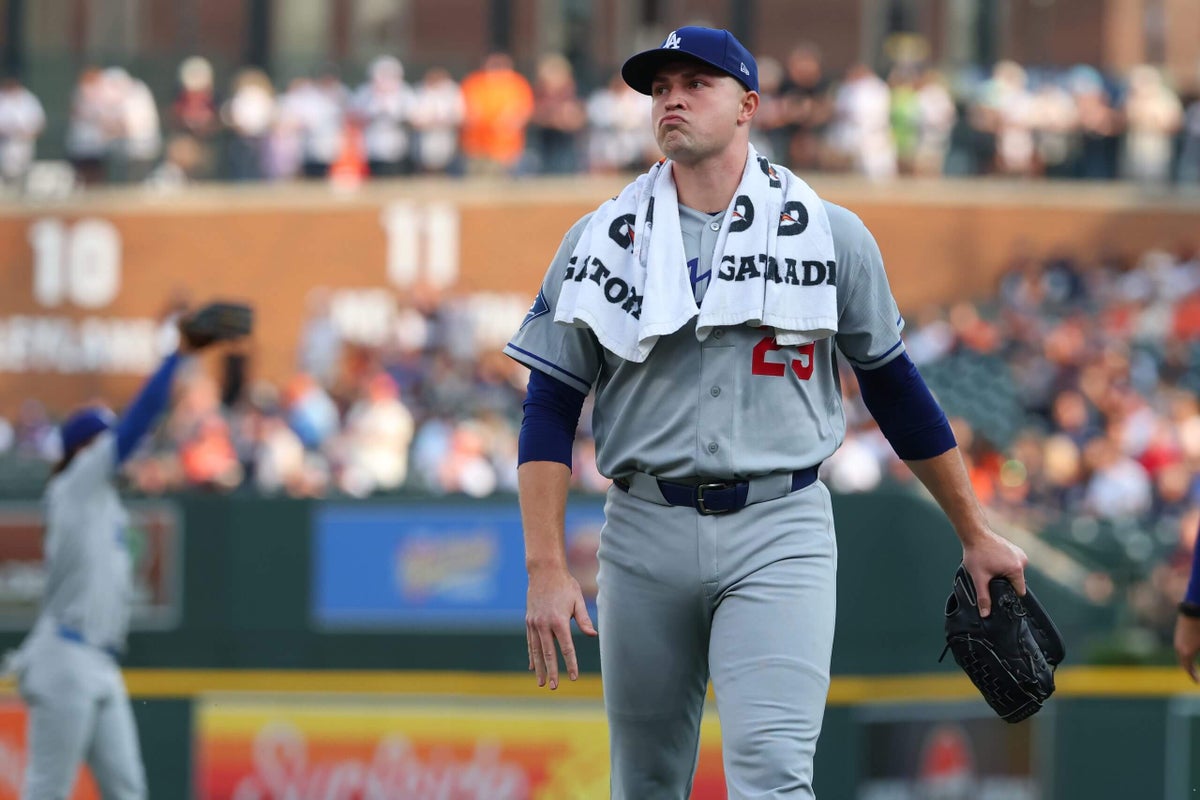
Roughly 20 minutes before Friday’s first pitch between the Dodgers and Tigers, Skubal fired off one last warm-up pitch and began his trek back to the dugout. Seemingly on cue, the scoreboard at Comerica Park turned to a tribute video. Fans stood up and delivered a standing ovation as Skubal walked across the field. He peered over his shoulder several times, watching the montage of highlights as the applause grew louder.

By the time he reached the infield, tears had welled in his eyes. Skubal pumped his chest and acknowledged a teammate across the field, then wiped his eyes with a towel draped over his shoulders. As he approached the dugout, he clapped his hands in gratitude, in unison with a stadium doing the same. He continued to blink back tears as he descended the dugout steps. Thankfully, he said, he made it out of sight and into the tunnel before more could fall.

“This is a place I’ve known my entire career since 2018,” Skubal said. “Yeah, it was special.”

Skubal threw six innings of one-run ball and struck out seven in his return to Comerica Park, but did not factor into the decision in the Dodgers’ 2-1 victory. His impact certainly factored into the emotions of the game. When he took the mound for the bottom of the first, he did so to some cheers and some jeers — but it was hard to decipher if most of the latter reactions were boos or “Skuuuub” — the chant that used to accompany his arrival on this field.

He acknowledged old friends as they dug into the box, grinning at Javier Báez, or nodding to Spencer Torkelson, someone he was especially close to. He said it was “weird” to face off against Dillon Dingler, his former batterymate. He tossed a ground ball to his former pitching coach Chris Fetter before the game started and laughed when Fetter fielded it cleanly.

None of that deterred Skubal from doing what he does best. After allowing a leadoff double to Gleyber Torres, Skubal retired 12 straight hitters. He breezed through six innings on 83 pitches and said he had more in the tank, but manager Dave Roberts had other plans. Noting Skubal’s heavy workload of late — the left-hander had amassed 100 pitches in each of his last two starts — plus the significance of the day and the emotions behind it, Roberts opted for an early hook.

“Today was one of those days; I could tell that there was some emotion,” Roberts said. “Walking onto the field, out of the ‘pen — you can see his emotion with that tribute, and obviously, first time back here, weighing heavily on him. But he did a great job of, once the game started, going out there and competing and helping us win a ballgame.”

That decision didn’t surprise Skubal’s old manager. AJ Hinch had predicted a shorter start might be on the docket Friday afternoon.

“I can’t speak for Dave or Tarik, but I would bet that (pitch count) is dialed back a little bit over the next handful of starts,” Hinch said. “When you get to October, all conversations sort of go inning by inning. And it doesn’t surprise me that they’re working their way through that initial courting session, so to speak, between player and manager.”


Skubal ultimately understood Roberts’ decision, but not before a conversation took place between the two in the dugout. From there, Skubal was simply an observer of one of the most impactful games of his life.

He wasn’t expecting the impact of his return to hit as hard as he did. He has poured his all into being a Dodger, from observing Yoshinobu Yamamoto’s bullpens to switching out pitch grips with Blake Snell. He had known since last weekend he’d be pitching in the series opener. He tried to stick to a routine and keep things as normal as possible.

“I said I wasn’t gonna be (emotional), but I’ve come to figure out I don’t really know myself that well,” Skubal laughed. “It did catch me by surprise.”

Overall, Skubal’s highly-anticipated return to the Motor City exemplified the respect and appreciation he has for the Tigers. When the game ended, he spent roughly 20 minutes on the field catching up with various former teammates, coaches and staff members. He has plans to catch up with Hinch over the weekend, someone he remains in regular contact with.

But as Skubal walked off the mound in the sixth, a flyout by Dingler the final out of his night, there was no confusion over where his loyalty now lies.

“I’m trying to throw myself into being an L.A. Dodger,” Skubal said. “Get to know this team and get to know this staff and get to know everything, get settled in with everybody here, and then go out and compete and try to win as many baseball games as I can here.”

— Cody Stavenhagen contributed to this story.

>

Continue Reading

Trending

Copyright © 2017 Zox News Theme. Theme by MVP Themes, powered by WordPress.