
Miller meeting director Destin Daniel Cretton at the premiere of Spider-Man: Brand New Day.
Yvonne Bennett


If Frank Miller seems everywhere this summer, it may be because he has been everywhere this summer. The comic book legend known for Dark Knight Returns and Sin City has been on a multi-hemisphere, multi-city book tour for his memoir/creative manifesto, Push the Wall: My Life, Writing, Drawing, and the Art of Storytelling, sitting down in front of audiences for talks with collaborators Zack Snyder and Robert Rodriguez and fellow authors Scott Snyder and Joe Hill.
The book, which received a starred review from Publishers Weekly, debuted in the top 15 on the New York Times best seller list and Miller has no plans on stopping his book tour just yet.
Miller was also at San Diego Comic-Con and then showed up to the premiere of Spider-Man: Brand New Day in Los Angeles. The movie features his ninja clan creation The Hand as one of Spidey’s antagonists.
“It was a hoot; they did a lot of clever stuff with it,” he tells The Hollywood Reporter of the movie. Regarding the Hand sequences in the movie, he adds, “they clearly had seen a lot of the Hong Kong movies that I’d seen over the years.”
Miller has also been catching up on his moviegoing, and had seen Christopher Nolan’s The Odyssey, which he calls “extravagant.” The creator behind Spartan story 300 knows his way around an ancient Greek myth or two (he can easily slip into expounding on Corinthian style helmets and their influence on Sparta) and says the movie “really did an awful lot right.”
Tuesday sees the wide digital release of Frank Miller: American Genius, the documentary made by his creative partner Silenn Thomas, which doesn’t just look at his career and work but, as he puts it, delves into “this wonderful subculture that we all share of comic book and how it celebrates itself all over the planet.”
But this is no farewell tour. The 69-year old Miller no plans on slowing down and is pushing ahead on a new Sin City book as well as a few others. “I feel like I’m just now freely exploring where I wanna take this medium. There’s no reason not to keep going,” he says.
Amid his movie watching and globe-trotting, Miller hopped on the phone with THR to talk about the influence of mentor Neal Adams and Jim Shooter, why he didn’t leave (but still left) Marvel in the 1980s, and why he’s returning to Dark Horse for his latest book, Invasive Species.
Your book is part memoir and part lessons in creativity. Why do it this way?
I got my career started by calling up Neal Adams’ office and getting a meeting with him. Neal Adams was the premier artist in comics at the time, and his art had a great effect on me as a child. And he was listed in the phone book. And I got to meet him that day, an hour after I called. And he looked over my drawings and told me they were terrible and sent me off. I redid them and I saw him again and again and again. And he was always a harsh critic, but every time he taught me more and more, sometimes doing drawings over them. And, and as the months went by, he got me my first job and he continued to be a sensei and an advisor to me on things professional and on how to deal with being an artist in the world and many other things. Years passed and I became successful. And one time, Neal and I were at a comic book convention and I just took him aside and I just said, “Neal, how do I thank you for what you’ve done for me? You’ve never asked me for anything.” And he said, “Oh, there’s only one thing you can do. Do the same thing for the next guy.” Well, this book really is my attempt to do the same thing for the next guy. And to commit to paper my experiences, my observations and, and the lessons learned in making comic books.
Speaking of mentors, Jim Shooter (the wonderkid who became Marvel’s polarizing editor-in-chief through the 1980s) was also one. Do you remember the first time you met him?
My first memorable encounter with Jim was at the Marvel offices. I basically came in and was sort of selling my services. I’d gotten some little job, doing some little three-pager of something like Doc Sampson and that had gotten his attention enough to want to keep me around. And, he gave me his lecture on storytelling. Everything was always storytelling with Jim because he felt comics had really lost track of their basic mission, which was to enchant and compel young readers with gripping stories.
He came in on a fairly loose pack of people who were all over the map creatively. And he worked to pull it all together into a more cohesive unit.
There were a lot of writer-editors and little fiefdoms at the time.
Right. He focused more than ever on the concept of a Marvel universe.
How did you guys work together?
He was eager to change things and I was eager to learn. And we both had strong opinions. I think one of the reasons we got along was we were both up for a good argument. Arguments can be a very creative thing and a very good thing.
You left Marvel in a pretty high profile fashion twice. And I say high profile because your profile was very high and you were creatively cresting, twice with Daredevil. What caused you to leave that first time?
Well, I didn’t leave anybody. I chose to take a project to another publisher who was more amenable to kind of freedom I wanted to do it with. The message underneath all this was that it was important to demonstrate that talent is portable. Let me say that. When a publisher is releasing your work, that does not mean you’re saying an oath of allegiance to a military operation. It’s not a marriage.
Well, you came back, proceeded to do Born Again, then left again.
No, no. I proceeded to do work that was not for Marvel Comics. (Laughs.) We can’t keep on referring to me coming and going. I didn’t come and go. I stayed exactly where I am. I didn’t move where I lived. Nothing like that.
In any case, it was teased at the time that after Born Again there would be a Daredevil story with Walter Simonson.
It’s taken us an awful long time to get that done, I’ll admit to you. (Laughs.)
Is that ever going to happen?
Why not?
Uh, speaking of stories that never happened, what happened with the Doctor Strange run you were supposed to have with writer Roger Stern?
On that one, I really had come to realize that I was just dying to write my own material. And, I couldn’t wait anymore. I had to start writing and drawing my own comics and, you know, start being a cartoonist rather than just an illustrator.
Miller meeting director Destin Daniel Cretton at the premiere of Spider-Man: Brand New Day.
Yvonne Bennett
In the ’80s, with Dark Knight and Batman: Year One, you were elevated to art icon. You weren’t just comic book famous, you were art world famous. How did you handle that kind of fame?
As well and as poorly as anybody. (Laughs.) I’m not go into the long and gory biography of my life, but it does create all kinds of wonderful highs and dismal lows to go through that sort of thing. It transforms you.
The time of Dark Knight Returns and Watchmen and Maus is looked at like a revolutionary era at this point where comics were reinvented. How healthy is the comic art form now? Is the wall still being pushed?
Sure it is. I mean, it’s easy to look back on that time and say, “Wow, what a sunburst. That changed everything.” But in fact, that was a pretty small amount of work that we’re talking about that caused a big splash and that’s what people remember at the time. Because people tend to remember the stuff that really made a splash when they think back on a given period. We certainly have a pretty wildly diverse amount of stuff coming out now.
What do you like to read or what artist are you following?
I tend to hunt down the people whose work I like so I can work with them. I’m really, really excited by Peach Momoko’s work.
This year, there was upheaval at Dark Horse Entertainment, the home of your Sin City books. But you announced a new book that you’re writing, Invasive Species, with them. How did you decide to stay at Dark Horse for the new book and not take it elsewhere?
Well, the relationship was a good and strong one, and it served us all very well. I met with the people there. The philosophies of the company seemed to be close enough to what I’d always known them to be, and they certainly had the infrastructure to do a good job at it.
Going back to Sin City, the only thing happening now is the Western that is being drawn by Milo Manara, right?
Right now, yeah, but I’ve got a dozen ideas for new ones. Sin City is my life’s work, more than anything. Milo is well along. I just gotta teach him who to draw girls. (Laughs.)
Courtesy of Subject
>
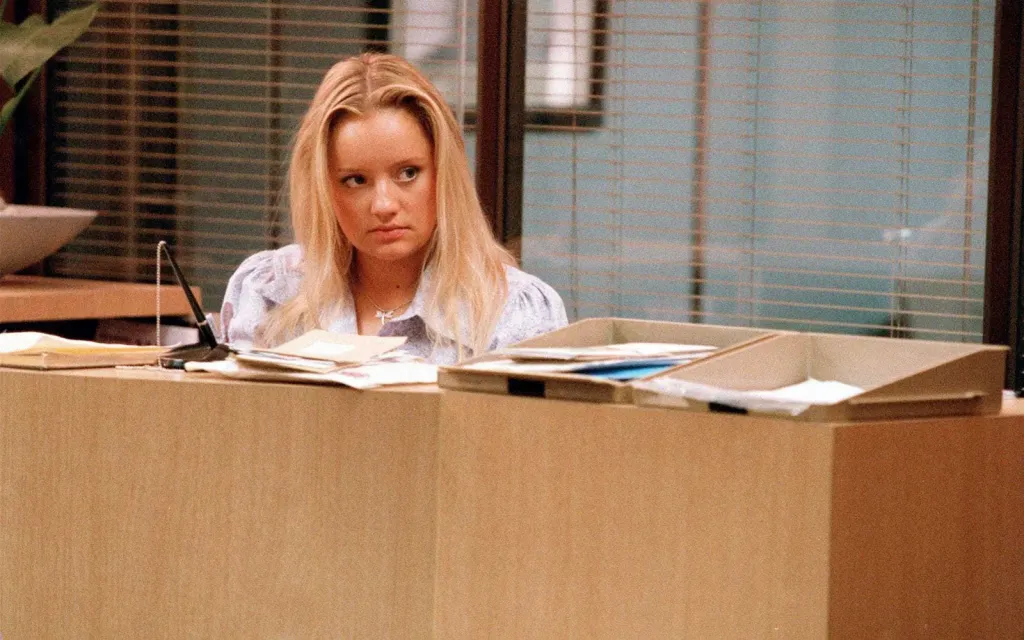
Lucy Davis, best known as Dawn Tinsley in the UK version of The Office, has revealed that she is terminally ill.
In an Instagram post on Tuesday, Davis, 53, told her 590,000 followers that she has incurable cancer after discovering a lump on her breast. She was diagnosed with stage 4 breast cancer, which metastasized to her bones.
“As of now, I’m trying to live out whatever might be left of my life in as fun a way as I possibly can. I always like to find the teachable moments in anything negative that happens. And cancer has not disappointed in that regard,” she wrote.
“The thing that has been most vital to me is humour. I asked my friends and family to make fun of me as much as possible (which they’re really good at), and most importantly of all to not treat me like a sick person.”
Davis said the pain from her condition can be acute at times, while standing and walking is not always easy. But she wants to continue acting and doing animal rights work.
“For those of you on a similar journey to mine, I do wish you well. Cancer asks a lot from us, physically and mentally. And we all get to do it however we choose,” she said.
Davis shot to fame in The Office, playing the receptionist at paper merchant Wernham Hogg. A nation cheered on her will-they-won’t-they relationship with Tim Canterbury (Martin Freeman), with Ricky Gervais and Stephen Merchant ultimately writing a happy ending for the duo. Tinsley was a character who ultimately gave rise to Jenna Fischer’s Pam Beesly in the U.S. series.
Mackenzie Crook and Martin Freeman recently eulogized about her performance in the BBC special Mackenzie Crook and Martin Freeman Remember… The Office. Crook described it as a “beautiful” and “subtle” performance that captured the hearts of British viewers. “The Tim and Dawn stuff with her… was f*****g joyful,” Freeman added.
Davis has also starred in Wonder Woman and Shaun of the Dead.
>

“Josephine, can you tell me what you saw?”
Those seven words solidify the premise for Josephine, sophomore writer-director Beth de Araújo’s drama that has major awards buzz after landing the Grand Jury Award and Audience Award at Sundance in January. Today we got our first trailer for the film — watch it above — along with its theatrical release date.
Thge official logline: After 8-year-old Josephine (Mason Reeves) accidentally witnesses a crime in Golden Gate Park, she begins to act out violently to protect herself. This emotional trauma leads to conflicts between her parents (Channing Tatum and Gemma Chan) as they search for justice and a way to feel safe again.
The trailer is short on dialogue but long on tension as the parents struggle with how their little girl is dealing with sudden emotional upheaval. But not everyone is on the little one’s side. To wit, one grownup asks the third-grader, “If what you say you saw was so bad, why did you just watch from behind a tree?”
The double Sundance win fired up awards-season watchers, who recall that Best Picture winner CODA and nominee Minari and turned the same trick in 2021 and 2020, respectively.
In a competitive environment, Ash Avildsen’s Sumerian Pictures paid mid-seven figures to acquire U.S. rights to Josephine in February. The self-described “artists-led independent creative studio” has set a limited theatrical release for the awards-season sweet spot of November 20. The rollout will expand nationwide on December 4.
>
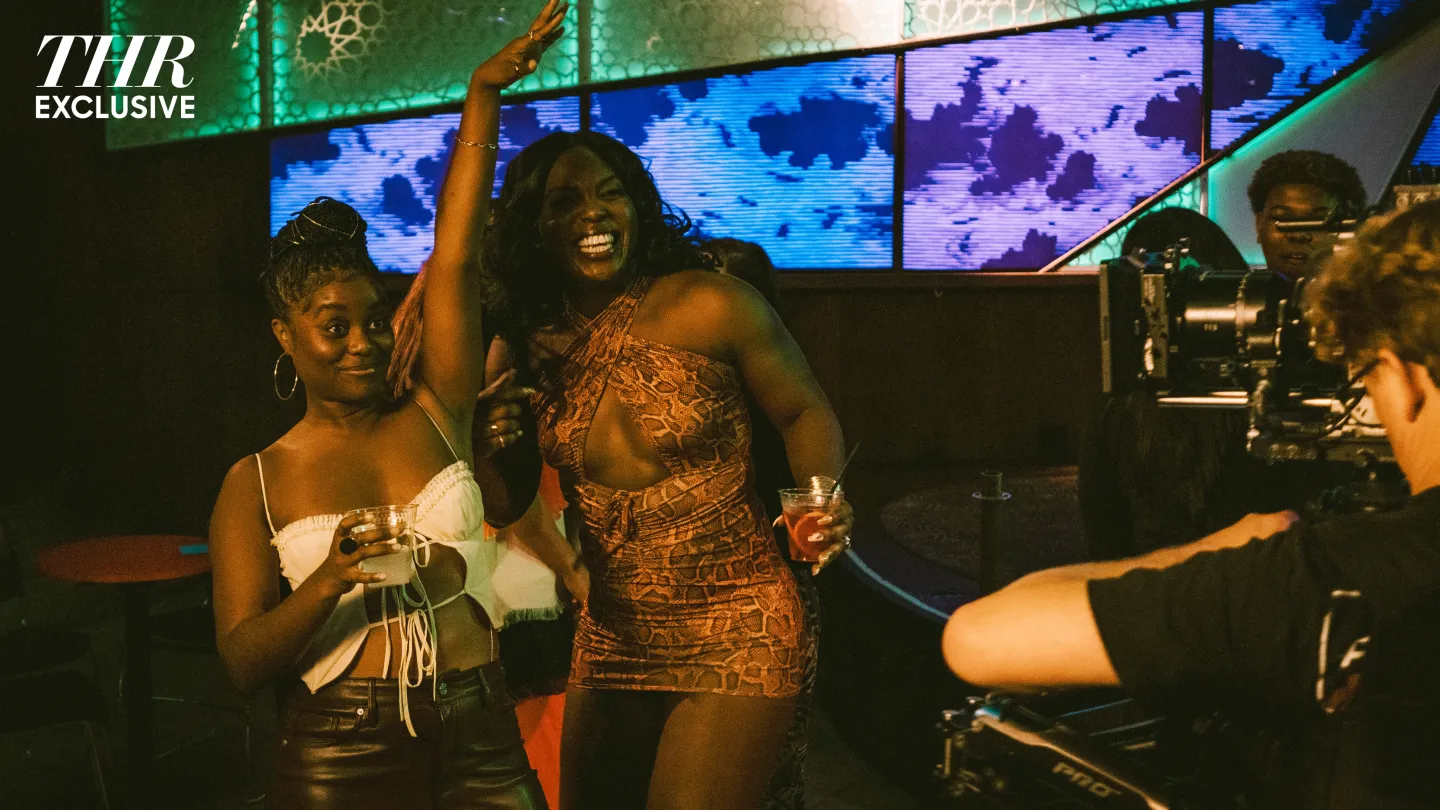
Shatara Michelle Ford’s Dreams in Nightmares made its world premiere nearly two years ago, at the BlackStar Film Festival in Philadelphia. Reviews coming out of the screening were strong; Ford had clearly built on the success of their celebrated debut, Test Pattern, which was nominated for the Gotham Award for Best Feature and three Indie Spirits. The cast featured such recognizable names as Denée Benton (The Gilded Age), Jasmine Savoy Brown (Yellowjackets) and Charlie Barnett (Russian Doll), to say nothing of its superb breakout performances. It felt like nothing else out there.
Yet getting Dreams in Nightmares into theaters two years later, via the nascent small distributor Lunette Films, was no easy task. “I had made my own kind of peace with, ‘Okay, this was one of those experiences where the art already fed me creatively, and maybe we won’t get to have the visibility return of what it means for it to be really seen in a widespread way,’” says Benton, who gives a bracing performance in the lead role. “I didn’t think we were going to get to have this moment.”
Denée Benton in Dreams in Nightmares.
The moment, fortunately, is here, with the release set for Aug. 21. Ford acknowledges it has been a difficult path. But the filmmaker sees it as somewhat inevitable for making the kinds of movies they make — singular, uncompromising and utterly independent. “Anytime you’re doing something slightly unconventional, anytime you’re engaging with stuff from a less established vantage point, the routes that you have to take to come back into the masses, if you will, are always going to be windy and arduous — and that’s okay,” they say. “Doing new things or unusual things is hard.”
In one sense, Dreams in Nightmares feels like a vibrant blast from the past. Its building blocks were rooted in longstanding, slightly forgotten traditions of American cinema. Whereas Test Pattern was focused on one couple and set in Austin, Texas, Ford’s follow-up takes on the expansive shape of a classic road movie, with a group of friends traversing the country — indeed, the continent — and seeing both themselves and each other anew in the process. Ford did not have much money to work with, but whether in Iowa City or Oaxaca, Kansas City or New York, they were physically on location. Ford mapped out the characters’ journey based on cities where they had friends and connections, and could figure out how to shoot within their means.
Each space in Dreams in Nightmares is then brought to vivid, specific life. “It was kind of the point of the exercise. Something that I love and miss is a mise-en-scène — and something that I need is movies that are about people in places that aren’t the place that I live in, and have that be vast and layered. Something happened in the early 2000s where we kind of started eliminating place — or place was just, New York City or Los Angeles,” Ford says. “It’s like location disappeared from how we understood characters and story…. I love going to a new place, understanding how people interact with the place, and I wanted to translate that into a type of film that did that very well, especially in the ‘90s — I wanted that again.”
Dezi Bing, Benton and Mars Rucker in Dreams in Nightmares.
It’s in who populates Dreams in Nightmares that the project starts feeling radical — the kind of movie that, as Ford puts it, “was going to require a much more strategic and considered approach” when it came to actually putting it out into the world.
Benton plays Z, the focal point of the film, who’s just been laid off from an adjunct-teaching position at a Los Angeles arts college. She informs her best friends Tasha (Sasha Compère) and Lauren (Dezi Bing) of the news; she also tries catching up with her other ride-or-die, Kel (Mars Rucker), who’s been unreachable for days. Scattered communication, we glean, is not especially unusual for Kel. But as the trio hit the road to manifest a reunion with Kel, the absence starts to feel more disconcerting, thereby accelerating their search. Along the way, the group confronts the state of their own lives, their relationships and their futures.
It’s a familiar formula, but enlivened and complicated by having Black queer characters at the center of virtually every frame. Ford, who is nonbinary, also delves into the surreal and mystical at the narrative’s edges. They cannily open the movie with archival footage that links these very modern characters to their ancestors — to the ways in which the world has and hasn’t changed at a particularly fraught political moment.
“Being an African American…there are questions of what free movement and passage looks and feels like to people who come from my history,” Ford says. “I wanted to think about and call into the history of my own people who’ve been here for a very long time and have managed to be joyful and thrive and find community and grow families. There are other ways to be resilient and joyful even when things are so utterly shitty.”
Shatara Michelle Ford, Bing, Benton, Sasha Compère and Jasmine Savoy Brown in Dreams in Nightmares.
**
“I feel like this project found me,” Benton says of Dreams in Nightmares. “I had just lived through all of the experiences that were the themes of this film, from realizing my queerness later in life to having to end a 10-year partnership with my favorite person because I was like, ‘Oh God, I’m a little too gay to stay married to a man who knew, and I didn’t.’ My last four years of chaotically crashing out led to really getting to alchemize it into art, which is kind of at its core, the best and rarest way we get to make art.”
A Carnegie Mellon graduate, Benton has made her name on Broadway, receiving a Tony nom for her breakout in Natasha, Pierre & The Great Comet of 1812, and in hit TV shows like Lifetime’s UnREAL and HBO’s The Gilded Age. Dreams in Nightmares showcases what she can do in a true lead role on screen. “To get to work with such high-quality cinematography, such high-quality directing and art direction, we just aren’t often given the same access to quality,” Benton says. “We are all talented enough to deserve that access. For myself as an actress, to just get to take up that kind of space was like, ‘Oh yeah, let me really get to play and show what I can do and carry a film in that way.’”
It’s certainly evident in Benton’s tender, nuanced turn. And this goes for the whole cast. Jasmine Savoy Brown, a scene-stealer in one section of the film as Kel’s estranged girlfriend, similarly came into Dreams in Nightmares known for working in relatively commercial projects — and felt changed by what Ford’s set offered.
Charlie Barnett, who plays Z’s boyfriend, and Benton in Dreams in Nightmares.
“I’ve been fortunate to work on some incredible projects and they all are quite white, and as a mixed-race person, I wanted to make more Black art, to put it quite simply,” Brown says. “I wanted to make more art with and by Black people and queer people. I was feeling uncomfortable in the industry, wondering if I’ve been pigeonholed into just playing in white spaces — and again, I’m honored to be a part of all those projects. I’m grateful for the checks, but it’s not all about the checks. So Shatara approached me at just the right moment — it felt like an answer to a prayer.”
A student of Mike Leigh’s films and methods, Ford adopted the great British filmmaker’s collaborative process of scripting through casting, as they did on Test Pattern. “I picked folks to have conversations with,” Ford says. “I was looking for people who genuinely had questions about what I was doing and wanted to talk about it from a more philosophical or experiential place.” It’s a system of co-creation, with the characters developed on the page out of the actors’ input, well before production begins.
One scene that took Ford by surprise, based on how their actors approached the material, found Z and friends visiting Kel’s parents (played by Robert Wisdom and Regina Taylor) while on their search. Generational tensions smack up against one another; there are awkward silences and impassioned outbursts. The actors found it all in the moment.
“It was me, Denée, Sasha and Dezi as millennial representatives who have this much more nuanced experience with gender and sexuality, and then we have people who are effectively stand-ins for our parents, our uncles, our aunts,” Ford says. “They’re challenging what’s actually happening in the scene because they can’t fully understand it for themselves. It was really beautiful to take a step back and just watch this conversation happen. There’s no right or wrong in my mind. It’s more about recognizing what was right for each character in that room and accepting their edges and messiness and nuances.”
Bing in ‘Dreams in Nightmares.’
**
Despite — perhaps because of — the anxious economic times for indie directors, Ford says it’s no unusual step that they’d put in their own money to push the project forward. “You sacrifice yourself a little bit to make that thing happen,” they say. Over our conversation, it’s something Ford clearly wrestles with, nearing the other side of the years-long effort to get Dreams in Nightmares in theaters in the right way. “I’m more stressed and more tired than maybe I would have been if it wasn’t coming out of my own pocket,” they say later. “I’m constantly trying to understand a path where filmmakers are directly more supported to be able to do the work and experiment.” Indeed, it’s a larger problem, reflective of a national landscape of financial instability.
And yet as they look ahead, Ford conveys optimism: “I remain hopeful that I’ll be able to make the types of movies that I like to make because of the really wonderful, supportive team of people that I’ve managed to make things with and put things out with in the past.”
Dreams in Nightmares asks many probing questions of its audience, but its grammar resides in the patient, empathic language of cinema — in generous close-ups, in lingering scenes of friends shooting the shit, in the ambiguity of simply being alive. There’s a reason Ford cites Leigh classics like Another Year and Happy-Go-Lucky as inspirations for their film. There’s a reason why they turned to the behind-the-scenes tinkering of everyone from Steven Soderbergh to John Cassavetes to Ava DuVernay when it came to reframing thinking about distribution. “This is not new,” they say. “None of this is new.”
Compère in ‘Dreams in Nightmares.’
Dreams in Nightmares can still feel very new, however. “It made me really uncomfortable when I first watched this movie — that’s a good piece of art,” Brown says. “It’ll get you to ask yourself some questions. I feel like this movie has shaken up some relationships a little bit; it shook up mine a little bit!” Benton adds, “You have to face yourself when you watch this movie and face the values you’re building your life around and what you feel limited by.”
This should all be music to Ford’s ears. “As an audience, we have a tolerance for something that we don’t fully understand immediately, and I think that Hollywood has veered away from allowing that as much as they used to. But it doesn’t mean that an audience can’t handle it,” the director says. “If I can do something that’s a little weird, that’s a little off, that’s a little obtuse, and you walk away asking why I did that? If you’re having a conversation about how it made you feel, or what was experientially going on for you? I’ve done my job.”
Benton, Ford and Rucker on the set of ‘Dreams in Nightmares.’
>


Search For Canadian TV Actor Stewart McLean Now Homicide Investigation


These ’90s fashion trends are making a comeback in 2017
According to Dior Couture, this taboo fashion accessory is back
Model Jocelyn Chew’s Instagram is the best vacation you’ve ever had
Your comprehensive guide to this fall’s biggest trends
9 Celebrities who have spoken out about being photoshopped
Emily Ratajkowski channels back-to-school style
A photo diary of the nightlife scene from LA To Ibiza
