
Tech
Cloudflare Reports Massive Spike in High-Volume DDoS Attacks


The upper end of DDoS attacks is getting much bigger — and attacks that once looked exceptional are showing up far more often.
Cloudflare says it mitigated 805 network-layer distributed denial-of-service attacks exceeding 1 Tbps in Q2 2026, up from 130 in the previous quarter. The company also reported 13.17 million network-layer DDoS attacks overall, compared with 10.04 million in Q1.
Most attacks remain much smaller, but the sharp rise in high-bandwidth events matters because organizations increasingly need defenses capable of filtering extreme traffic volumes before they overwhelm internet links or backend infrastructure.
What did Cloudflare uncover
In a blog, Cloudflare reported that it also mitigated 13.17 million network-layer DDoS attacks in Q2 2026, up from 10.04 million in Q1. That growth is especially striking when put alongside the scale of attacks Cloudflare has already observed.
The current surge is not limited to terabit-level attacks. Attacks between 500 Gbps and 1 Tbps increased 143%. Attacks between 100 Gbps and 500 Gbps more than doubled, with a 105% increase. Meanwhile, malicious HTTP traffic reached 16.89 trillion requests, up 32.4% from the previous quarter.
Despite the reported growth, the majority of attacks remained much smaller: 96.62% of network-layer attacks transmitted less than 50 Mbps, and 90.6% lasted no more than 10 minutes.
In December 2025, Cloudflare mitigated a record-breaking 31.4 Tbps DDoS attack, demonstrating that terabit-scale attacks can reach volumes far beyond the 1 Tbps threshold, which is now being crossed hundreds of times per quarter. That record-breaking attack is attributed to the Aisuru/Kimwolf botnet.
How botnets turn ordinary devices into attack infrastructure
It’s hard to discuss DDoS without bringing in another hacker’s favorite: device takeovers.
A compromised device can become a DDoS bot, quietly waiting for instructions from an attacker and then sending traffic toward a chosen target. One infected device may have limited impact on its own, but thousands or millions of compromised machines acting together can generate sufficient volume to disrupt a service.
And those machines don’t have to be traditional computers. DDoS botnets can be built from compromised routers, security cameras, servers, network appliances, and even Smart TVs, as seen in last year’s 31.4 Tbps attack.
That gives DDoS operators an unusual advantage: they don’t need to own the infrastructure generating the attack. They can borrow the combined computing and network capacity of devices belonging to unsuspecting users and organizations, turning ordinary hardware into attack infrastructure at scale.
What organizations should do about larger DDoS attacks
For organizations, simply having enough server capacity may not be enough. It needs upstream filtering, load balancing, traffic scrubbing, or other protective infrastructure.
Then there’s also the case of blocking malicious bots. This can help distinguish legitimate users and automated traffic from bots attempting to overwhelm a website with requests, making it especially useful for platforms whose websites can’t afford to fail or go offline.
The broader lesson is that DDoS protection must work before malicious traffic reaches the systems an organization seeks to protect. The faster traffic can be identified, filtered, and routed elsewhere, the less likely a large attack is to cause an outage for legitimate users.
Other News: U.S. and South Korean authorities are warning about the growing Gunra ransomware threat, underscoring the need for organizations to strengthen defenses against increasingly aggressive ransomware campaigns.
>
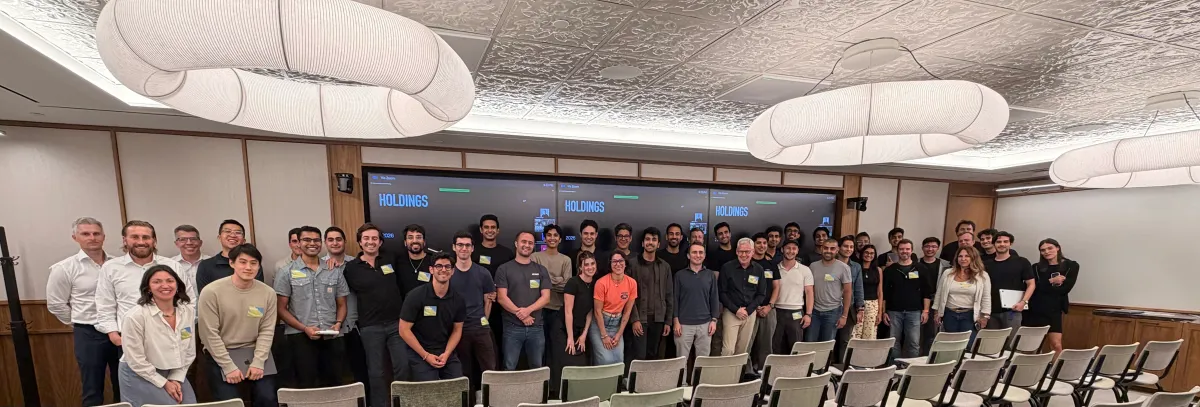
Thrive Holdings has raised $2 billion in new funding at a $12 billion valuation from investors like SoftBank, D1 Capital Partners, and Altimeter Capital.
Thrive Holdings is akin to a private equity firm for AI, buying traditional businesses like accounting firms and implementing AI into their workflows. So far, Thrive has focused on accounting and information technology, but part of Wednesday’s raise will go towards expanding a new vertical in physical assets. Key to that strategy is Thrive’s close relationship with OpenAI.
The New York Times was first to report the news.
The firm is a spinout of Thrive Capital, one of OpenAI’s major investors. In December 2025, OpenAI took an ownership stake in Thrive Holdings. Part of the deal involved OpenAI sending employees to work with Thrive’s companies to accelerate AI adoption.
That hands-on model of AI implementation has become a business in its own right, and may help explain investor enthusiasm behind Thrive’s latest fundraise. OpenAI and Anthropic have both partnered with large private equity firms to launch The Deployment Company and Ode with Anthropic, respectively — billion-dollar ventures that are building teams of elite engineers who embed themselves into enterprises and implement AI solutions into workflows.
The raise comes off the back of proven success for Thrive’s companies, which has surpassed 70 businesses on the Holdings platforms. The company has focused on two pillars to date: Current, its accounting arm with more than 50 firms and more than 2,000 professionals, and Shield, its information technology arm with around 20 companies on the platform.
Current’s self-improving tax agents, dubbed TaxAI, processed more than 7,000 tax returns at 98% accuracy, lowering tax prep times at participating firms by over 30%, according to Thrive. Meanwhile, Shield’s AI products have sped up help desk resolution times by 36x, and the platform has doubled the number of custom AI agents deployed in the last month.
Part of Wednesday’s fundraise will help Thrive launch a third platform focused on regulatory services for the built environment, described by a spokesperson as: “the work required to get physical assets approved, built, certified, and kept in operation.”
“The U.S. needs to build and modernize more critical infrastructure, but projects are often constrained by local, technical, and regulatory complexity,” Anuj Mehndiratta, a founding member of Thrive Holdings, told TechCrunch. “This applies across data centers, manufacturing, healthcare, power, water, transportation, and other physical infrastructure.”
That sort of complexity is where Thrive, well, thrives — large, fragmented, mission-critical, and operationally complex. While Mehndiratta says AI won’t replace field work, local judgement, or professional sign-off, it can help ease manual workflows like research, reporting, permit preparation, inspection documentation, and compliance tracking.
“We think AI partnered with a lot of the experts and practitioners at these businesses can really help compress [regulatory bottlenecks], keep the safety standards high, but also be able to do it with less of a burden to the actual building of that and help it do it more efficiently, lower cost and do it faster,” Kareem Zaki, a founding member of Thrive Holdings, said in a statement emailed to TechCrunch.
When you purchase through links in our articles, we may earn a small commission. This doesn’t affect our editorial independence.
>

AI could add to fossil fuel emissions in a less obvious way than power-hungry data centers: by making oil and gas production cheaper and more productive. New research suggests those gains could outweigh some of AI’s benefits for cleaner energy.
The peer-reviewed research in npj Climate Action modeled AI-driven productivity gains across fossil fuels and renewable energy. Across 64 scenarios, researchers estimated a net annual increase of 0.47 billion to 1.8 billion metric tons of carbon dioxide when AI improved both sectors. The results represent modeled economic effects, not measured emissions or forecasts for individual companies or countries.
The study examines what its authors call “enabled emissions”: additional emissions that can result when AI lowers costs or raises productivity in fossil fuel extraction, processing, and energy production. APAC energy companies are already expanding AI across upstream operations.
Malaysia’s PETRONAS Carigali said July 8 that it was expanding its TriCipta AI initiative with IBM and Tridiagonal.AI. The work targets surface-equipment optimization and production and maintenance decisions, while earlier tools have supported geoscience and exploration analysis.
AI efficiency could drive more fossil fuel production
Lower operating costs do not automatically mean lower emissions. AI that reduces exploration costs, improves recovery rates, or makes existing assets cheaper to operate could make additional fossil fuel production economically viable.
Australia’s Woodside provides another example of upstream AI adoption. Its Maint Intel system analyzes maintenance records and equipment performance to recommend maintenance intervals at the North West Shelf project. Woodside said testing on the offshore Angel platform cut model-processing time from five days to under two hours.
Neither deployment shows that AI has increased emissions at PETRONAS or Woodside. Both demonstrate the kinds of operational productivity gains examined by the global research. AI can also support methane detection, equipment reliability, and other emissions-reduction efforts.
AI’s electricity use creates a separate emissions footprint. The International Energy Agency expects global data-center electricity consumption to roughly double from 485 TWh in 2025 to 950 TWh in 2030. TechRepublic has separately covered grid pressure in Australia and changing power and cooling requirements for AI infrastructure. A planned 360 MW Nvidia-powered AI data center in Indonesia shows how quickly regional capacity is growing.
APAC methane cuts lag technical potential
The IEA estimates fossil fuel operations in South and Southeast Asia emitted about 13 million metric tons of methane in 2025. More than 60% came from coal, with the remainder from oil and gas. India and Indonesia were the region’s largest fossil fuel methane emitters.
Existing technology could cut methane emissions across South and Southeast Asia by more than 50%, with 60% of those reductions achievable at no net cost to producers. Under stated policies, emissions are projected to fall only 10% by 2030 and almost 20% by 2035.
China faces a similar gap. More than 90% of available methane reductions in its oil and gas sector could be achieved at no net cost, according to the IEA.
Greater operating efficiency does not necessarily reduce absolute emissions. Operators procuring AI tools should track production KPIs and emissions KPIs separately so efficiency gains are not treated as evidence of a climate benefit without a measured reduction in emissions.
Read more: Australia’s AI boom is also reshaping capital spending, with data centers accounting for a growing share of private investment as demand for compute infrastructure accelerates.
>

French publishers have escalated their dispute with Google over AI search, asking France’s competition watchdog to decide whether AI Overviews and AI Mode require separate licensing negotiations. The Alliance de la Presse d’Information Générale, or APIG, filed the complaint on Aug. 11.
Google launched both features in France on July 22. APIG argues the rollout conflicts with commitments requiring Google to negotiate separately over new services, putting the treatment of publisher content in generative search back before French regulators.
The complaint joins other legal and regulatory challenges surrounding AI Overviews, including disputes over publisher compensation and responsibility for generated answers. Google says AI Overviews and AI Mode help users explore complex questions while continuing to provide links to websites.
Google’s publisher commitments face an AI test
France adopted a related-rights law in 2019 that gave press publishers and news agencies protections over certain digital uses of their content. The Competition Authority ordered Google in 2020 to negotiate with publishers in good faith and fined it €500 million the following year for failing to comply with those interim measures.
In June 2022, the Authority made Google’s publisher commitments legally binding. They require good-faith negotiations based on transparent, objective and nondiscriminatory criteria, with a remuneration proposal due within three months of the start of negotiations.
The commitments also require separate negotiations over Google Showcase or any other new Google service, apart from existing uses of protected press content. APIG argues AI Overviews and AI Mode fall under that provision.
Generative AI has already figured into enforcement of the agreement. In March 2024, the Authority fined Google €250 million after finding, among other violations, that Bard, now Gemini, had used publisher and news-agency content to train its foundation model without adequately informing them. The regulator also said it had not determined whether AI uses of press publications fall within France’s related-rights protections.
Publisher controls remain disputed
APIG says Google introduced its AI search features without first opening a separate negotiation with publishers. The complaint follows concern that Google’s AI search expansion could reduce publisher visibility as generated answers occupy more of the search experience.
Google says a Search Console control available in France lets site owners exclude content from generative AI search features without using that decision as a ranking signal for conventional search results.
Pressure over AI content use extends beyond France. The European Commission opened a formal antitrust investigation in December 2025 into whether Google imposes unfair terms on publishers whose content is used for AI Overviews and AI Mode. Separately, publishers have sued Google over Gemini training, alleging existing agreements did not authorize the use of copyrighted works to train its AI models.
The French authority has not announced how it will respond to APIG’s complaint. Any eventual ruling could help determine whether generative search becomes a separate licensing channel or remains part of the long-standing exchange of publisher content for search visibility and traffic.
Read more: Similar tensions are emerging outside traditional news publishing as Reddit reportedly reconsiders parts of its Google AI partnership while AI search changes how users reach source websites.
>

Fire eliminated after shock late collapse to Spirit

OpenAI-backed Thrive Holdings raises $2B to bring AI to the enterprise

American Film Market Expands Campus Via Marché du Film Partnership
-

 movies3 months ago
Search For Canadian TV Actor Stewart McLean Now Homicide Investigation
-

 Fashion9 years ago
These ’90s fashion trends are making a comeback in 2017
-
Fashion9 years ago
According to Dior Couture, this taboo fashion accessory is back
-
Fashion9 years ago
Model Jocelyn Chew’s Instagram is the best vacation you’ve ever had
-
Fashion9 years ago
Your comprehensive guide to this fall’s biggest trends
-
Fashion9 years ago
9 Celebrities who have spoken out about being photoshopped
-
Fashion9 years ago
Emily Ratajkowski channels back-to-school style
-
Fashion9 years ago
A photo diary of the nightlife scene from LA To Ibiza