
Widow’s Bay town exterior
Apple TV


What do you want to watch on Netflix? That dreaded phrase. There’s so much to choose from, so much to thumb through and you really don’t want to waste your precious free time scrolling and scrolling until you’re out of time and you’ve done nothing but look at a bunch of different tiles. That’s where we come in – we’ll tell you what to watch.
Below we’ve put together a curated list of three great movies streaming on Netflix right now. You can’t go wrong with any of them. Each one hits a different sweet spot – whether you’re in the mood for action, mystery or indie flavor – but you can guarantee it’s sweet. So take a gander, find the tile and get to watching.


If “Spider-Man: Brand New Day” has you eager to revisit the back catalogue, now’s as good a time as any to remember how brilliant 2018’s “Spider-Man: Into the Spider-Verse” is. Arguably the best Spider-Man movie ever made, the film is somehow a story about the common themes that connect all the Spider-People and a deeply intimate Miles Morales tale at the same time. The character differentiation between Shameik Moore’s Miles, Hailee Steinfeld’s Gwen Stacy and Jake Johnson’s Peter B. Parker is impeccable, and it builds to a tremendously emotional and vibrant finale. “Spider-Verse” is also, without hyperbole, one of the most visually inventive films ever made.
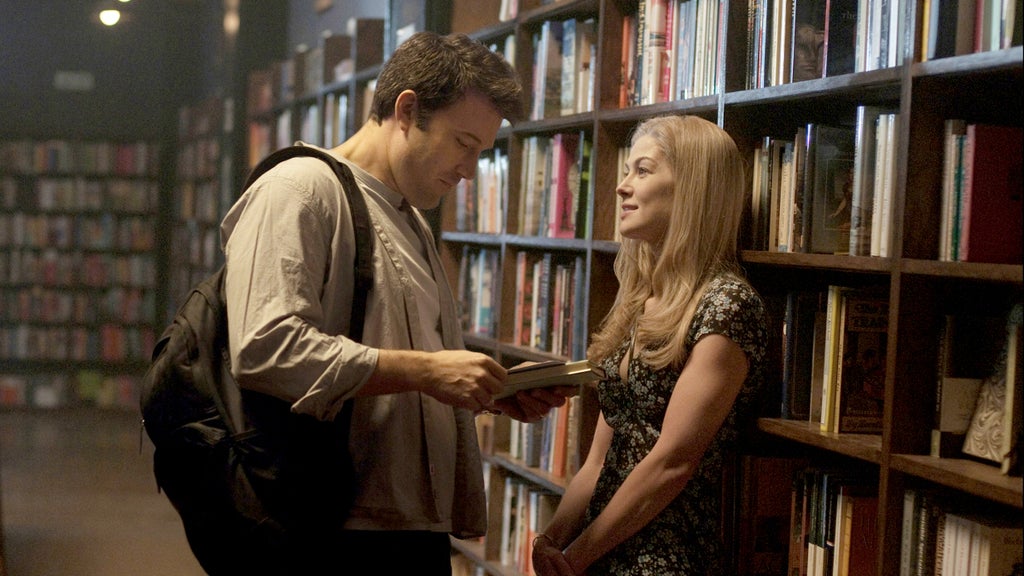
So-called “paperback thriller” movies are a dime a dozen on Netflix, but don’t sleep on David Fincher’s 2014 bestseller adaptation of “Gone Girl.” Ben Affleck stars as a man who becomes the prime suspect in his wife’s disappearance and suspected murder when she goes missing, with Rosamund Pike (in an Oscar-nominated performance) narrates a story of neglect and abuse. But then… well I won’t spoil the twist if you haven’t seen it, but let’s just say this is as much a story about the dark truths of romantic relationships as it is a mystery thriller. Affleck is perfectly cast, Tyler Perry is impeccable as his hot-shot lawyer and the film marks Carrie Coon’s screen debut. To call “Gone Girl” one of Fincher’s best is saying something – this is the guy who made “Seven” and “The Social Network” after all. But it really and truly is.
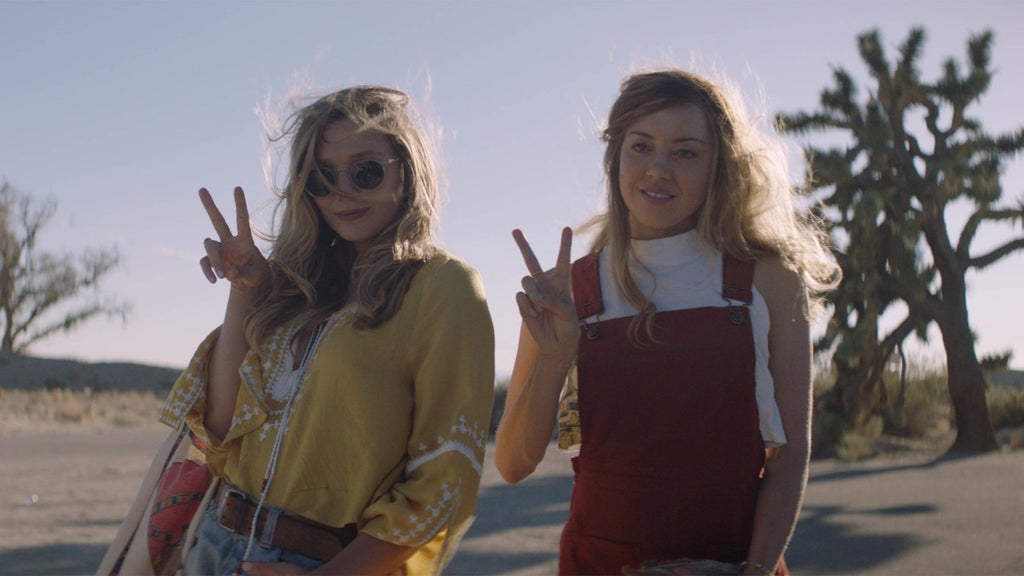
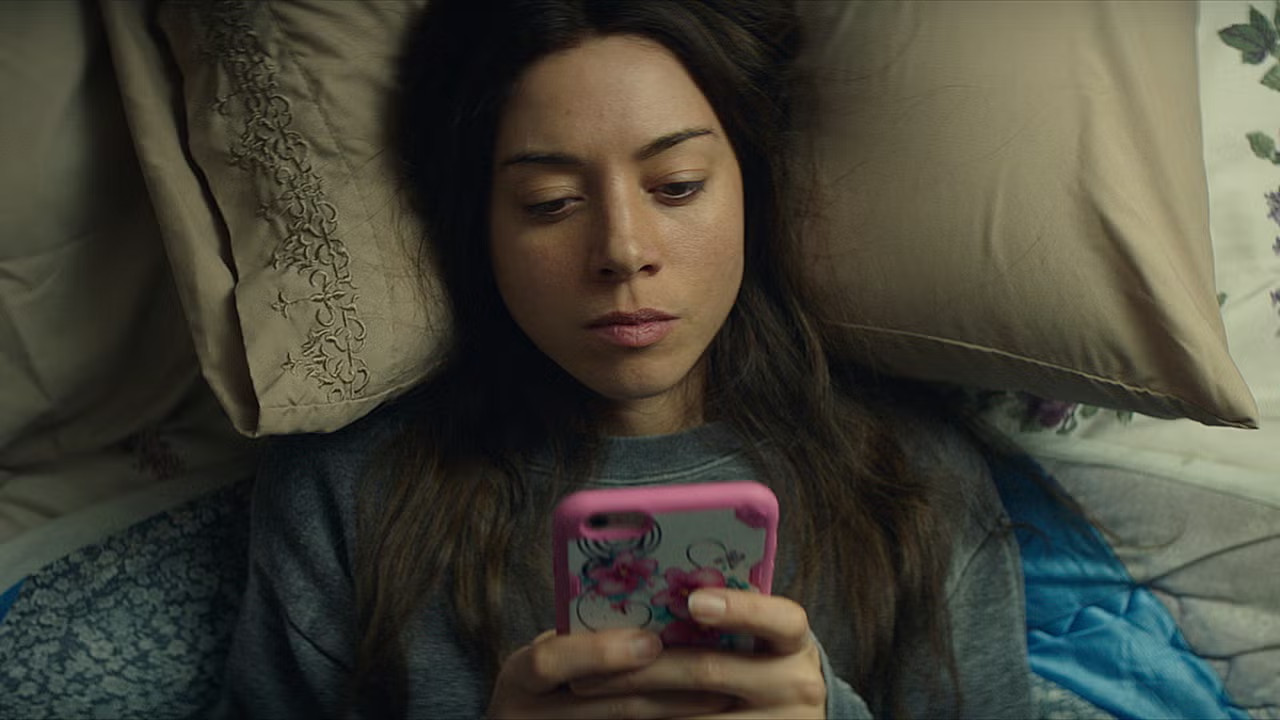
How different is someone’s social media persona to their real life? That’s one of the questions at the center of 2017’s wonderful dark comedy “Ingrid Goes West,” which stars Aubrey Plaza as a woman who moves to Los Angeles to befriend her Instagram idol (played by Elizabeth Olsen), only to find her cascading web of lies in danger of crumbling at any moment. The movie, which debuted at the Sundance Film Festival, was oddly prescient, offering an early look at influencer culture and the effect it has on how we view ourselves. Wyatt Russell, O’Shea Jackson Jr. and Pom Klementieff round out an impressive ensemble, but it’s Plaza who steals the show here.

>
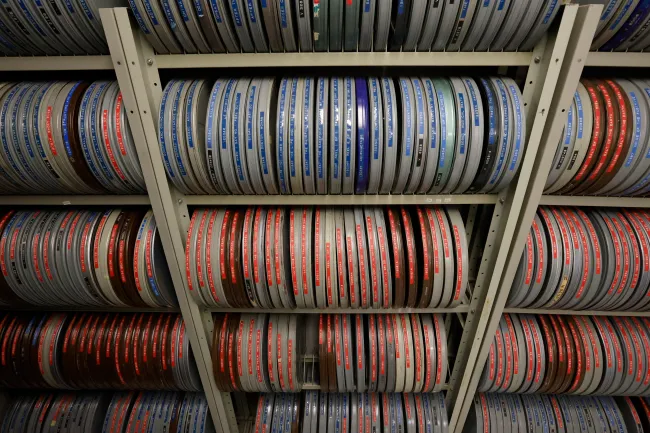
The documentary film community has faced its fair share of hardship over the last few years, as securing funding and distribution for social issue and/or political docs — see “No Other Land,” “The Bibi Files,” “Mr. Nobody Against Putin,” “Zurawsksi v Texas” — has become a grueling, formidable undertaking. Now, the impending Paramount–Warner Bros. Discovery merger has the doc community concerned about the future of another essential subgenre: archival docs.
If Paramount Skydance CEO’s David Ellison’s $111 billion bid for Warners is successful, Paramount would gain control of not only 85 years of CBS News footage, but also CNN’s vast archive of some 4 million assets. That library alone encompasses more than 45 years of broadcast coverage of global news, wars, elections, and major political events.


Given Ellison’s October 2025 appointment of Bari Weiss as editor-in-chief of CBS News, which critics have argued has coincided with a more conservative shift in the network’s coverage, documentary filmmakers are increasingly concerned that access to archival footage from CBS News and CNN could become more difficult. They believe that holds particularly true for projects that might be perceived as critical of President Donald Trump or his administration.
“Anytime an organization starts to put under their umbrella a bunch of organizations, it’s going to have an impact,” veteran doc editor/producer/director Sam Pollard (“MLK/FBI”) told IndieWire. “The fact that Paramount is going to have CNN and Warner Bros., which includes HBO, with whom I’ve done a lot of work, is going to have an impact both financially, socially, and politically, particularly with who David Ellison is.”
In addition to anticipated censorship and increased licensing fees, there is widespread concern over access to the CNN archives. In April, according to the Archival Producers Alliance, CNN Collection, the content licensing arm of CNN Worldwide, laid off seven of its eight licensing staff members.

In an email obtained by IndieWire from CNN to a concerned archival producer, network brass wrote, “Bottom line is that CNN is fully committed to its comprehensive and historic collection of content, which continues to grow with our award-winning journalism and video from around the world. And as the media landscape continues to evolve, we are aligning our workflows to better serve our clients with CNN’s world-class rights-cleared clips archive.”
Archival producer Christine Fall, who has worked on documentaries — including Michael Moore’s “Fahrenheit 9/11,” Susan Lacy’s “Jane Fonda in Five Acts,” and Jesse Short Bull and Laura Tomaselli’s “Lakota Nation vs. United States” — said that, when the merger was announced in December, she was just beginning a new project. “I was just like, ‘We are not using CNN,’” Fall said, who worries that the merger will cause a disruption to access. “I’m avoiding them as a source already, preemptively.”
While she is steering clear of CNN for the moment, Fall said that the network’s archival collection is “special and important.” “What people don’t realize is the CNN collection started in 1980, and it’s the first around-the-clock, 24-hour news channel,” Fall said. “so if you are trying to do a story that is set in the 1980s, CNN is going to be invaluable to you, because they are probably going to have something when nobody else does. All the other networks at the time were still only doing their half-hour evening news, which only covers so much.”
In a statement to IndieWire, a CNN spokesperson said, “The CNN archive continues to add assets, it continues to work with filmmakers, and it continues to license world-class rights-cleared clips. It continues to generate revenue, and it remains a strong part of our business. We have aligned our internal workflows in a different manner, and the operation of licensing clips remains the same for clients.”
The archives of CNN, CBS, ABC, and NBC News are not open repositories; they are controlled by commercial licensing systems. Access to footage requires a sizable payment, disclosure of the project’s editorial purpose, legal review, and approval before material can be released. That process gives rights holders — including Disney for ABC, Getty for NBC, and Warner Bros. Discovery for CNN — discretion over how their archival material is licensed and, in some cases, the context in which it may appear in a documentary.

In June, the APA, an organization that represents over 650 producers worldwide who specialize in finding and licensing archival footage, warned that bringing the archival holdings of CBS News and CNN under a single corporate umbrella could not only result in restricted access to some of the world’s most important news footage, but also raise questions about editorial control and who ultimately decides which images and clips documentary filmmakers are able to license.
“If Paramount and Warner merge, we believe there is potential of restrictions on use of historic materials,” said APA co-founder Stephanie Jenkins. “Whether that be by higher pricing, limits on usage due to where a film is being exhibited, or the as a result of a political bent of a film,”
Rachel Antell, also an APA co-founder, added, “The four networks who have documented our history over the last many decades — ABC, CBS, NBC, and CNN — are typically where one would go if you want to tell stories about the last 50 to 75 years. This merger would put two of those four under one decision-making tree potentially, and that’s scary. It’s a significant diminishment of possibilities.”
Antell has seen it before, as past corporate consolidation has reduced and politicized access to archival news footage. She pointed to 2019, when The Walt Disney Company, which owns ABC News, instituted a new policy restricting the licensing of its aired stories, as well as footage featuring its reporters and anchors, to only Disney-owned outlets.
“If an independent documentary about September 11 had wanted to use a clip of Peter Jennings on that day, this policy would have prevented them from doing so, unless the film were to air on a channel like Disney+, ABC, or Hulu,” said Antell. “Suddenly, in 2019, we couldn’t get screeners of branded material if the doc we were working on was not confirmed to be airing on a Disney-owned station. Somewhere around 2022, we started to notice that there was more wiggle room, and it opened back up from there. We’ve been puzzling the pieces together ourselves ever since. While the policy was ultimately reversed, dozens of documentaries were denied access to national stories in the meantime.”
Jenkins said that CBS, ABC, and NBC have always had the power to say no a licensing deal with an outside source. “It’s not like they historically wielded that power willy-nilly,” said Jenkins. But in the current climate, I think filmmakers are concerned about how that’s going to play out. If the networks are nervous and are experiencing new control over the editorial use of their content, it’s going to give filmmakers pause about what stories they can tell.”
Jenkins pointed to an Archival Producers Alliance member who, during a war the U.S. was involved in, was told by a news archive that they could not license historical footage of a previous war because it “showed American soldiers in a bad light,” despite having licensed the same exact footage for a previous project.
“Quietly, swaths of American broadcast history are becoming accessible only to those who already own them,” APA members stated in an op-ed for Poynter. “With these shifts, the future of stories being told — that powerful institutions would prefer remain untold — dims. The harms that this consolidation could cause would take decades to remedy. If audiovisual material is destroyed or lost under the new management, the damage is irreversible.”
Writer and producer P.G. Morgan, who worked on the CNN “Decades” series, said, “It’s not just potential censorship. It’s the loss of a certain way of seeing and understanding the world around us.”

In recent years, Fall said that archive houses have been “taking a closer look before they license certain things” and asking more questions about how the material will be used. “It has intensified because of all these lawsuits with the Trump administration,” said Fall. “So, if you are working on something that is going to be considered critical of Donald Trump and his administration or in any way controversial, that’s going to be an issue, and you are probably going to approach that with a really good fair use lawyer from the get-go.”
Fair use makes it clear that copyright cannot become a form of private censorship by promoting freedom of expression and permitting the unlicensed — i.e., the unauthorized, free use — of copyright-protected works in certain circumstances. Filmmakers, news gatherers, critics, or educators can use copyrighted works (news clips, audiobooks, movies, music, photographs, etc.) without permission if the asset adds context to a project. Creators can only invoke what is “reasonably appropriate” of the copyrighted material, in terms of length, to illustrate or sufficiently support the point being made. There are no stated time minimums or maximums.
To avoid the hassle of fair use, independent production teams often spend three, sometimes four times as much money on license fees for the same image or clip as high-budget projects commissioned by high-volume licensees like Netflix, HBO or Apple. As other archives have consolidated under fewer owners, higher prices are being demanded for the use of footage. The APA said that media conglomerates, such as Tegna, which operates 64 local television stations in 51 U.S. markets, are known to charge tens of thousands of dollars per minute for usage by outside companies, making certain stories financially unfeasible to independent filmmakers.
“The reality is, they [the networks] are not here to help you; they are here to make money,” Pollard said. His most recent films — “Tutu,” about the life and legacy of the Nobel Prize-winning anti-apartheid activist Desmond Tutu, and “The Lorraine,” about the motel that served as a safe haven for African Americans traveling during segregation and Jim Crow in the United States — were reliant on archival materials.
While licensing archives to outside sources is lucrative, Bell questions how important archive houses are to media conglomerates. “My guess is that it is profitable for them, but it’s not a huge moneymaker,” said Bell.
Juan Andrés Bello, a documentary researcher and producer who has worked on historical docs commissioned by A&E, The Biography Channel, and HBO Latin America, said that the consolidation of archival houses is a concern not just for U.S. documentary filmmakers. “These American news archives have an essential significance in terms of understanding global affairs,” Bello said. “Any limitations of access will have an impact in terms of research and dissemination of knowledge, not just for American citizens, journalists, scholars, creators, and producers based in the U.S., but also people around the world.”
The APA has endorsed the Future Film Coalition’s Block the Merger Campaign, which is working to make lawmakers and the public aware of the adverse impacts of the merger. In July, the organization urged UK Culture Secretary Lisa Nandy to issue a Public Interest Intervention Notice regarding the proposed Paramount-Skydance takeover of Warner Bros. Discovery. On August 6, Nandy decided not to block the merger.
Stateside, Paramount has agreed to delay closing the deal until as late as June 1, 2027, as a federal antitrust trial is scheduled to begin on March 2, 2027, following a lawsuit filed by 12 state attorneys general.
“I’ve been doing this for many years and the trend since I started is closing access, minimizing access, and adding gatekeepers for all archives,” said Fall. “It has become much more controlled, and they now have moved to ‘this is for our projects’ because now these news media companies are part of a big huge company. So, they want to keep that exclusive for themselves. It’s very concerning.”
>
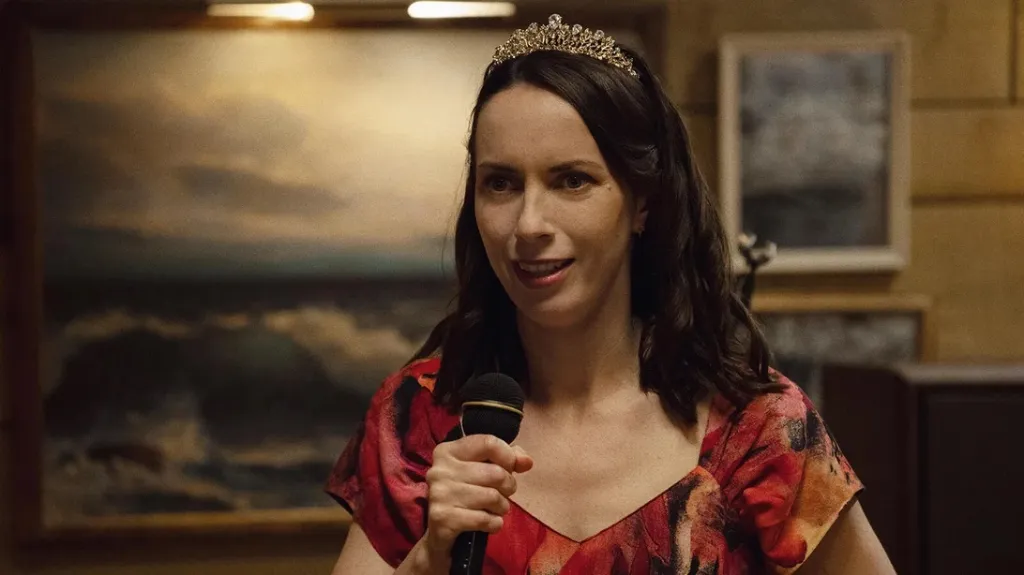
On Widow’s Bay, a show currently decorated with 19 Emmy nominations, the line between cozy New England charm and creeping dread is often found in the details.
Set against the remote, insular world of its titular island, production designer Steve Arnold and set decorator Jennifer Engel created a lived-in, slightly stuck in time and, when necessary, deeply unsettling environment. Arnold and Engel had to build a visual language that could accommodate the series’ peculiar blend of horror and comedy without tipping too far in either direction. That meant creating spaces that could feel warm and inviting one moment and ominous the next, from the inn’s welcoming parlor infused with haunted crawl spaces to the nautically-themed The Salty Whale restaurant and the period-accurate environments of the colonial-era town in Episode 6’s “Our History”.
Below, Arnold and Engel reveal the fun, creative challenges of filming on location in Massachusetts, hidden details and collaborating with creator-showrunner Katie Dippold and director/EP Hiro Murai to establish the show’s distinctive visual language.
Widow’s Bay town exterior
Apple TV
DEADLINE: You shot in Massachusetts to really capture the vibe of the island. What were some creative challenges that this introduced or satisfied?
STEVE ARNOLD: Both Jennifer and I had used the studios in Devens, which are proper studios. There are four stages and all of that. The producers may have thought, “We’ll find a whole bunch of locations that are going to work perfectly,” and that usually doesn’t work out the way they hope [laughs]. Trying to do something that looks like it’s on a remote island when you’re on the mainland is always a bit tricky. So we ended up building a lot more interior sets than we thought we were going to. And because we were shooting on stages but also had to be near the water for the swimming, the ferry boat, and a few other things, that meant driving a long way to get to the coast, and that eats up a lot of production time. So that was minimized as much as possible.
We did have some locations for the little town places that were nearby where the stages were, like the shot of the Driftwood Diner interior and the exterior of the church was an existing church. The interior of the Historical Society was in the small town of Shirley, which was farther away.
We were extremely lucky to find the exterior of Richard Warren’s house. That house exists, and it is proper from the period, 1600-something, and hadn’t been changed or messed with very much. People actually live in that house.
Steve Arnold, production designer.
DEADLINE: I want to talk to you both about three episodes specifically. First, Episode 2, “Lodging”. The inn feels charming and a little ominous. What were some visual rules you established to create that balance between comfy and spooky?
ARNOLD: We had trouble finding a proper exterior. So, we built the captain suite, the corridor and hallway, which was pretty straightforward. We had some elements that Jennifer had to come up with, like a working TV that was from the ’70s or ’80s or whatever, and that’s always a tricky situation. But Katie [Dippold] was very specific about a lot of things – for example – the fact that there were paintings on the wall that told part of the story. We had to go around quite a bit to get the right tone and feel.
I wanted the parlor area, where they play the games, to be slightly warmer and a little more inviting, so they’re spending a little more time there. But those rooms, the captain suite corridor and everything leading to that, are a little bit on the cooler side. And then, of course, we did the basement of the inn and the crawl space, which had to be pretty creepy and pretty scary. We ended up building all of that. The crawl space had to do certain things, and the actor had to move in a certain way, so it was engineered pretty carefully. It was built in forced perspective, so it seemed bigger than it was.
But I’m glad that we did get to see the games pretty clearly because she was specific about those games. It was a very fun element that harkens back to a time when people would pass the time doing things other than looking at their phone.
DEADLINE: What were some props or set dressing that were designed to hint at the town’s mythology before viewers understood their significance?
JENNIFER ENGEL: I think we were trying very carefully not to be the source of ominousness or the source of comedy. We were really trying to be the quiet infrastructure for the actors and the script to really shine. There were definitely pieces of furniture that we introduced that later on had to serve a very specific function. But for the most part, we kept things quiet, avoided distractions, and did not give anything away.
The Breakwater Inn’s parlor room
Apple TV
DEADLINE: Right. I’m sure trying to walk that tightrope of horror-comedy couldn’t be too outlandish because it might make the show a little too cartoony or silly. Can you talk a bit more about the parameters or difficulty of that? You do have to play the straight man while all of this stuff is happening, don’t you?
ENGEL: Exactly. There was also this nebulous, ill-defined sense of time because we were trying to show how this place is very remote and it’s not up-to-date. They don’t have great Wi-Fi; all their technology is “primitive”, like tube TVs and dial phones on the wall and clunky desktop computers. We were trying to tell the story that these New England thrifty people try to preserve and keep stuff going as long as they can because of their thrifty New England styling and the incredible inconvenience of the distance and remoteness of this island, and tried to tell that part of the story without being too, like you said, the straight man in the joke.
People really loved the key fobs at the inn; those were prized. And the stick figure sculptures at Patricia’s party. Those were amazing.
Jennifer Engel, set decorator.
DEADLINE: Now, over to Episode 4’s “Beach Reads”, which starts relatively fine and then becomes a descent into madness. Where was the ocean part of it filmed?
ARNOLD: We shot part of it in Rockport in Bearskin Neck. It’s a little area where we first see Patricia’s (Kate O’Flynn) bookmobile and the book is introduced and all of that. We ended up trying to do the ocean thing at night, which is a really tricky situation. The fire was a combination of a lighting effect that we did at the location, and then we did filming of the actual fire in the parking lot. And the post-production people married that together to make it seem realistic.
And then, of course, props had gotten very involved in the book when it morphs into this horrific, scary book. A lot of effort went into researching different mystical, strange calligraphy and all kinds of diagram stuff that are in that.
DEADLINE: How fun was it to add the little flourishes? Was there anything that wasn’t in this restaurant before that you guys threw in specifically for this episode that didn’t exist before or after in the restaurant?
ARNOLD: A buffet table, some flowers… There were a couple of things that were specified. We needed this mirror against the wall so we could actually see these [character] reaction shots. And there’s also in the kitchen area, where a towel dispenser or something has a reflective surface on it so that Patricia can see, when she turns, that she’s got this horrific headdress on her head. The director [Sam Donovan] specifically said to do something for that in the kitchen. So, we tried to make something that seemed like it should be there because the printing on it says, “Wash Your Hands” or “Smile As If Your Tips Depended On It.”
We did go through several different versions of something shiny that she could see a reflection of herself in in the kitchen that would always be there, but solely be used for just this moment. And specifically, I had put that window in the back for the smoking scene where Rosemary [Dale Dickey] is smoking, and you can get the sense that there’s a window that looks out to where the beach would be and all of that. That was all done on a stage.
Kate O’Flynn as Patricia on Widow’s Bay
Apple TV
DEADLINE: I was obsessed with the sixth episode, “Our History”. It takes us back to the colonial era, and we get to see the origins of the island. Massachusetts is chock-full of history from that time, I’m sure. How did you go about picking the right set for this?
ARNOLD: We were extremely lucky to find the exterior of Richard Warren (Hamish Linklater)’s house. That house exists, and it is proper from the period, 1600-something, and hadn’t been changed or messed with very much. People actually live in that house.
DEADLINE: Oh, wow.
ARNOLD: So when we found the inside, we did take a lot of notes from it because it has not been changed much since it was built. We took a lot of notes on the way the fireplaces were built, the way the walls were done, the way the floors and the ceilings and all that was right there in front of us.
So we didn’t have to go through the libraries or things like that to find actual examples of what the door hardware looked like and what the fireplace accouterments were or the potholders and the pots and pans and everything that they used to cook with. We had a good historical reference right there.
ENGEL: And Massachusetts is rich with places and items from that period specifically. So, there was a lot available for us to do research and look into. A lot of it has been saved and cherished and not knocked down for the latest new whatever is in vogue now. It’s been kept very, very historically accurate. So, very helpful.
Betty Gilpin and Hamish Linklater in Widow’s Bay
Apple TV
DEADLINE: Yeah, I always think about my trip to England, and I went to the Tower of London and noted that there was a Starbucks within like a 5-minute walking distance. That shouldn’t be.
ENGEL: It’s so disorienting [laughs].
ARNOLD: Well, we did end up having to build the town. We built the dock where the family in that episode escaped in the rowboat. We had to build the graveyard and all that, the top of the well, the tunnels and passages under the well she climbs the ladder to get out of. All that we built at the various spots where we found something that was right, and then we just augmented it.
DEADLINE: If someone was to pause any frame from any Widow’s Bay episode, what details would you hope they notice that might not register on a first viewing?
ARNOLD: When they’re playing the game, “Daddy’s Home”, in the inn, you’ll notice that the pieces that they move around the board are all things that are not nice. There’s a bat, there’s a belt, there’s a newspaper rolled up, and they’re things that when Daddy is mad, Daddy could slap you around with something. And that is a very subtle little thing that you might not notice, but if you look carefully, you’ll see them.
DEADLINE: That’s lowkey scary. Was there a prop on set that everyone on the crew became unexpectedly attached to?
ENGEL: People really loved the key fobs at the inn; those were prized. And the stick figure sculptures at Patricia’s party. Those were amazing.
DEADLINE: What was your favorite set design?
ARNOLD: I loved the way the town hall came out. We were able to find old glass that has the slight waveriness that old glass has. Little detailed stuff like that separates it from ordinary sets. The Salty Whale set came out very well too, and we based it on a place in Marblehead that I think Katie had been to. She really liked it. We never saw pictures of the place, but what we came up with, like Jennifer’s little sconces with the ship wheel and the shades of red on them… we also changed the lighting at the last minute because it just wasn’t working. I think it came out well for the feel that Katie was looking for.
ENGEL: I was really excited about Patricia’s house; Steve and the art directors presented me with the drawing for that set and I thought, “Wouldn’t it be fun if I got in your business?” [laughs]. We had some built-in bookshelves. Steve was very amenable. Thank you, Steve. And we got to have built-in bookshelves at Patricia’s in her living room, which I was really pleased with.
I thought it really warmed up that space and made it feel more real, or just helped with giving it a life texture. I loved how it worked out. And I really appreciate the trust that Steve gave me, and he lets me go crazy. I really appreciate the trust that Steve gives me to collaborate, and it makes my job so much more rewarding and fun that way.
>
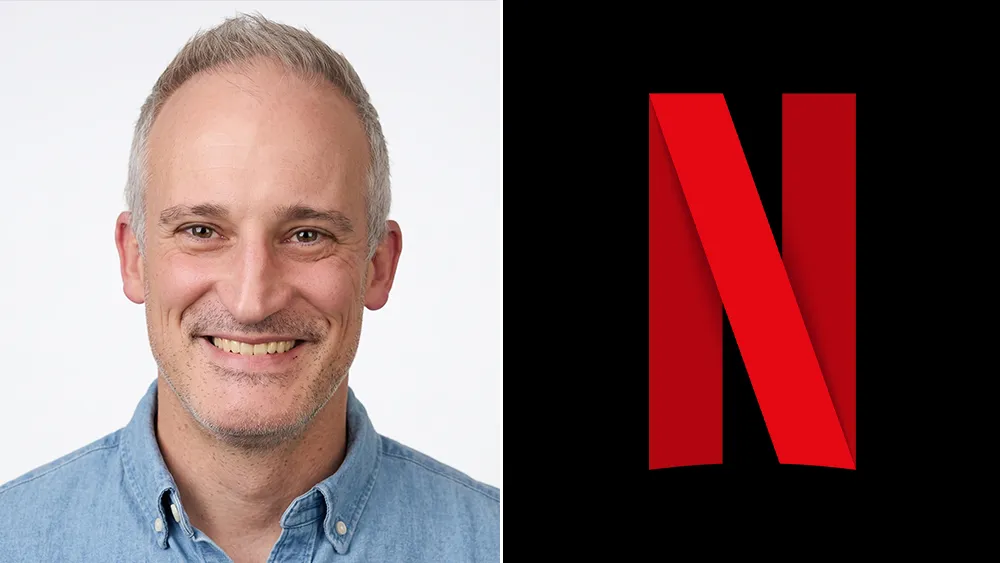
EXCLUSIVE: Sebastian Gibbs is joining Netflix as Director, Original Series. He will be covering IP and tentpole franchises, reporting to VP, Scripted Series Teddy Biaselli. His start date is Aug. 17.
Gibbs is moving to Netflix from Amazon MGM Studios where he was a Senior Television Development Executive for the past four years.
This is a rare second tour of duty at a streamer for an executive. Gibbs is returning to Netflix where he was Director, Original Series for two and a half years, overseeing original series across drama and 4-quadrant programming, before leaving for Amazon in July 2022.
The executive traffic between the two streamers has been largely in the opposite direction over the past year after Netflix’s Peter Friedlander became Head of Global TV for Amazon MGM Studios last September. He has recruited a few other Netflix alums for key posts since then.
Earlier in Gibbs’ 15-year career to date, he was VP, Television and then SVP, Current Programming for MRC and Director, Current Programming for CBS.
Series Gibbs has overseen development and/or current for across different jobs include Ozark, The Diplomat, The Outsider, The Great and Scarpetta.
>


Search For Canadian TV Actor Stewart McLean Now Homicide Investigation


These ’90s fashion trends are making a comeback in 2017
According to Dior Couture, this taboo fashion accessory is back
Model Jocelyn Chew’s Instagram is the best vacation you’ve ever had
Your comprehensive guide to this fall’s biggest trends
9 Celebrities who have spoken out about being photoshopped
Emily Ratajkowski channels back-to-school style
A photo diary of the nightlife scene from LA To Ibiza