
Entertainment
Hollywood Teamsters Remains Opposed to Paramount-Warner Merger

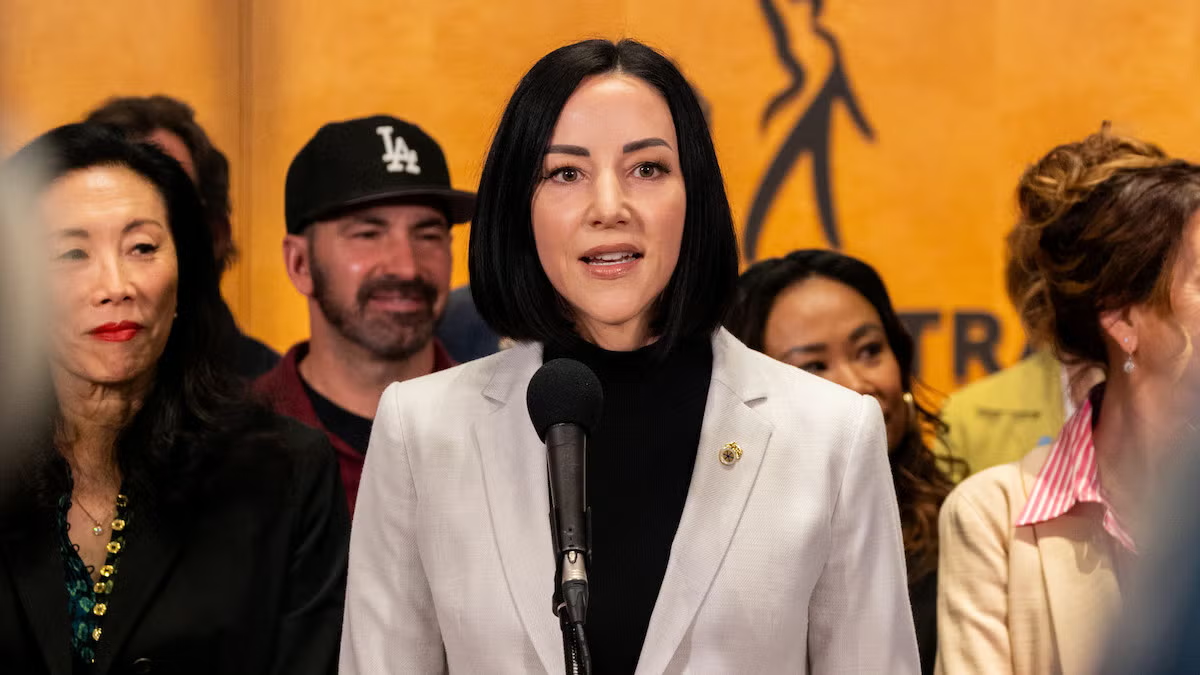
Hollywood Teamsters 399 is reasserting its opposition to Paramount Skydance’s proposed acquisition of Warner Bros. Discovery, joining a wave of executives, unions and others in the entertainment industry laying out their stances on the merger after the trial for California Attorney General Rob Bonta’s lawsuit to block it was set for a March 2027 start date.
“At every step of the way, Teamsters have asked for data to show how this merger would be good for our industry, our members and domestic production. Touting worker prosperity, without commitments, while simultaneously threatening their livelihood in the press as a bargaining chip begs the question — what is in this deal for American film and television workers?” Secretary-Treasurer Lindsay Dougherty said in a statement on Thursday.
“Fast-tracking corporate greed often lends to the creative and skilled workforce losing. Stop playing games and show us more of your commitment to the workforce,” she added.

Dougherty’s statement comes a day after Directors Guild executive director Russell Hollander and IATSE President Matthew D. Loeb sent out a joint letter to Bonta and Paramount leadership urging a settlement that would allow the merger to close, warning that allowing the lawsuit to go to trial would put both Warner and Paramount in a state of limbo in terms of greenlighting new projects, leading to fewer jobs for directors and crew workers.
“As our members struggle to find employment, the uncertainty surrounding the proposed merger is only making matters worse,” the letter states. “We are aware of productions that have been put on hold or canceled altogether, leading to further reductions in available work for our members and other industry workers.”
But the letter also contained a list of nine conditions that the unions sought to be included in the settlement, including keeping the studios wholly separate with their own production, marketing and distribution divisions.

The merging of such divisions is widely expected to be part of any merger process as Paramount would look to cut costs and redundancies. The unions also called on Paramount to keep its headquarters in Los Angeles as CEO David Ellison has threatened to move the company to another state if a settlement isn’t reached.
In response to the DGA/IATSE letter, Bonta said that his office remains committed to the lawsuit.
“The California Department of Justice always appreciates the opportunity to hear from workers and communities directly impacted by our work,” representatives for Bonta said in a statement to TheWrap. “As it stands today, the proposed Warner Bros./Paramount merger will mean higher costs, less competition, lower wages, job cuts and fewer movies and TV shows. This merger violates long-standing federal antitrust law. We remain committed to enforcing the law.”
Teamsters joins SAG-AFTRA and the Writers Guild among the unions that have firmly opposed the merger, with the WGA filing its own lawsuit looking to block the merger. Hollywood Teamsters and the WGA have been the most outspoken against media mergers, as Dougherty has released similar sharp statements against the merger between Nexstar and Tegna.

>
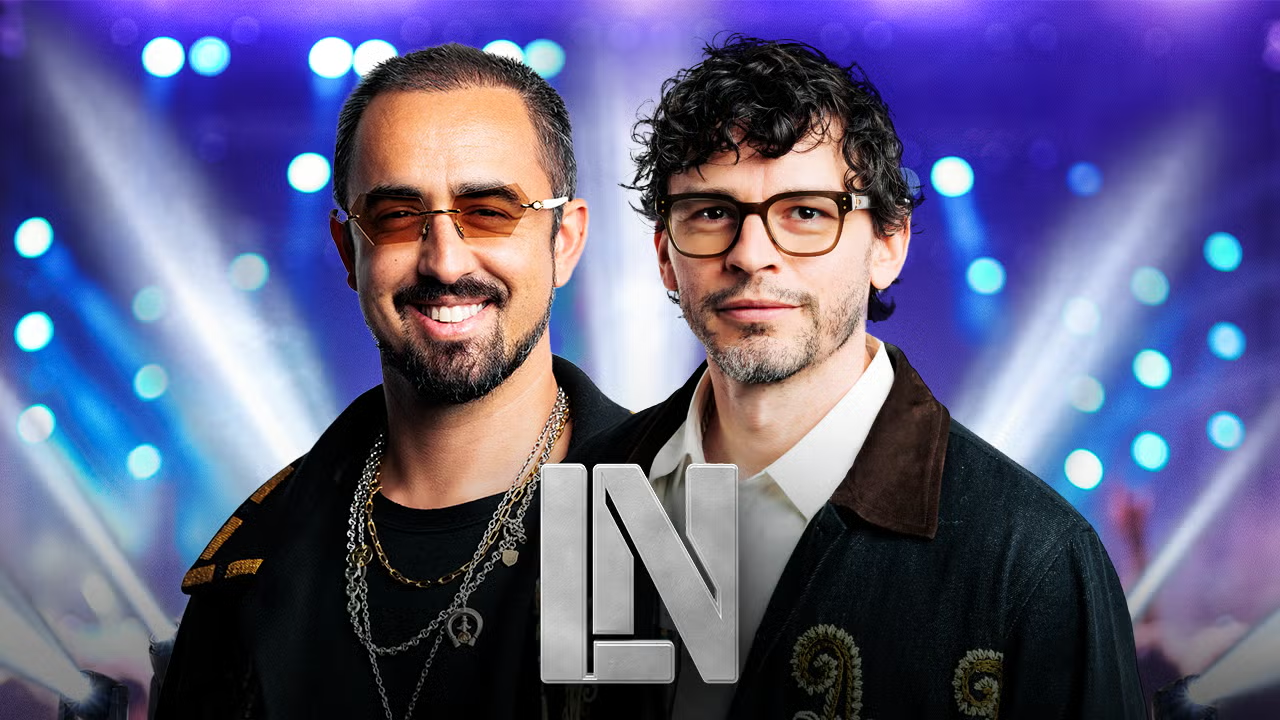
In 2019, Los Angeles media mogul Walter Ulloa approached his son with a proposal: Take over and fix their family-owned, millennial-leaning television station or shut it down. Bruno Seros Ulloa, a producer, on-camera host and clothing designer, said he had to sleep on it.
The older Ulloa founded Latino Alternative Television in 2001 to offer programming to the young and vastly underrepresented bilingual Latino viewers in Los Angeles that reflected their real lives, rather than the stereotypes still perpetuated in mainstream and legacy media. It started with about four hours worth of shows that were mostly in English. The early years featured live interactive shows like LA Live TV and gave a spotlight to Latino talent like Pitbull, Eugenio Derbez, Daddy Yankee and Julieta Venegas. In 2007, the network went national, shifting into a 24-hour linear cable and digital subchannel model that expanded its reach to millions of households through major TV station affiliates. But after a dozen years, the slowing linear television business brought LATV to an existential crisis, relying on cheap content made in Mexico to fill airspace.
Which brought things back to that ultimatum.
Seros Ulloa had been circling the network’s operation since he was nine years old, and grew up learning to make television in between other creative endeavors. He shared his father’s drive to celebrate the Latino community and relished the opportunity to make content on his own terms. He told his father he was up for the challenge of transforming the network into a profitable business, but he needed longtime colleague Andres Palencia by his side. Palencia joined the company as a writer for LATV Live in 2007 and stayed close to the West L.A.-based studio ever since.
Seven years and a major rebrand and expansion later, the duo transformed the TV station into LatiNation, a digital media company focused on entertainment, culture, comedy and sports content for Latinos from Latinos. Ulloa, who was also chairman and CEO of Entravision Communications Corp., a network of TV and radio stations appealing to Latino audiences, died in 2023 of heart failure.
“It’s been a roller coaster, but we’re on the right side of it now,” Seros Ulloa told TheWrap of running LatiNation Media as COO and president.
This year, LatiNation celebrates its 25th anniversary having grown into a multiplatform digital, streaming and linear ecosystem with an estimated annual revenue of $10–$15 million — a range the company expects to grow after its upfronts sales end in the third quarter of 2026. In doing so, it showed how catering to a highly specific, but underserved, segment could be sustainably profitable. Beyond its LATV linear, AVOD and FAST channels, the company boasts its own studio creating original and branded content — produced in its studio space in Los Angeles — along with a lucrative digital advertising and marketing business.
Third-party database projections value the private company at approximately $31 million. LatiNation content reaches 46 million households, nearly 70% of the total U.S. Hispanic population and 122 million in total market reach, about 43% of the U.S. population, per internal data. It has gathered 59,400 subscribers on YouTube, 182,000 followers on Facebook, 66,700 followers on Instagram and 33,000 on TikTok.
Across platforms, the company boasts 559 million impressions and 118 million video views annually. It also scores 5 million monthly viewers for its Connected TV and FAST channels, and 34 million unique visitors to the LatiNation website. And there’s plenty of room to grow, as Ulloa and Palencia put it.
“We have big goals,” CEO Palencia, said. “We understand how strong the brand is, how big its reach is. The potential of it is almost bigger than media.”
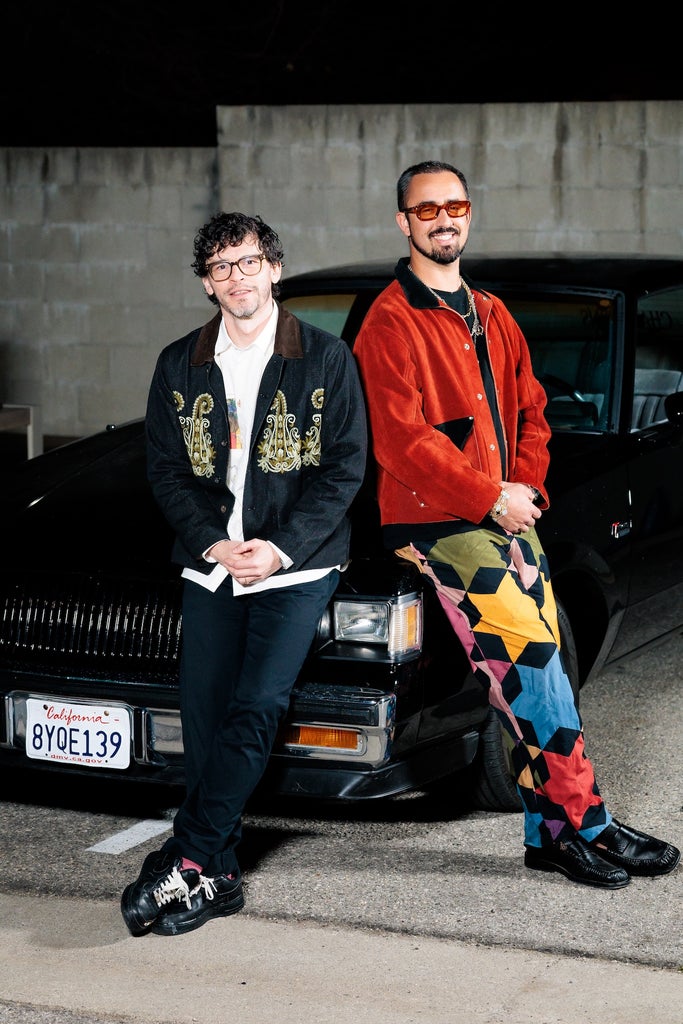
The staff has grown from about 12 full-time employees in the early years to almost 100 across production, sales, creative and social media teams based in Los Angeles, New York and Miami.
Unlike legacy Hispanic networks like Univision or the NBCUniversal-owned Telemundo, which cater strictly to Spanish-speaking audiences, LatiNation’s slate relies heavily on English-first and bilingual storytelling. It produces more than 300 hours of original programming annually across genres — including shows that cater to racially diverse and queer Latino audiences.
It helps that the company is targeting an audience demographic that is only getting bigger. Between 2000 and 2024, the U.S. Latino population nearly doubled, growing from 35.3 million to 68 million per census data, cementing it as the nation’s largest racial or ethnic minority group. Latinos are also significantly younger than the national average, with a median age of 31.4, and nearly 1 in 4 children under the age of 5 in the U.S. are of Latino descent. Most young Latinos in the U.S. also learned to speak English first but speak or at least understand Spanish from home.
So Ulloa’s guiding principle of catering to the growing bilingual Latino community set up LatiNation for success even amid massive shifts in the television and media landscape.
“Second-generation Latinos, those of us born here, didn’t feel represented in Spanish-language media because we knew that Univision and Telemundo focused on our parents. Those of who are us looking for English-language content about our own communities, you look at the English-language stations — NBC, CBS, ABC — and they aren’t providing it either … LatiNation has been able to be around for 25 years because it fills that void,” said Claudia Cruz, journalism professor at the University of Nevada, Reno, and managing editor of the student-operated bilingual news site Noticiero Móvil. “We need more of these hybrid, multicultural media outlets.”
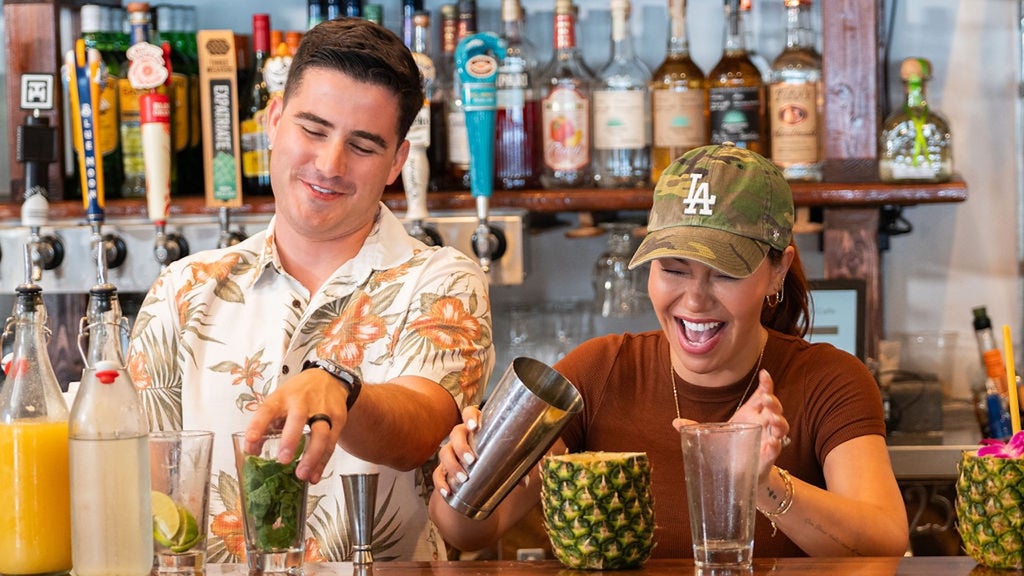
Passion-driven transformation
Despite being the founder’s son, Seros Ulloa recalled starting at LatiNation from the ground up, helping to transcribe interviews by hand or tracking down everyone involved in a particular production to manually type up the end credits.
As an independent and leaner operation than its broadcast competitors, Seros Ulloa and Palencia benefited from coming up in a space where bold ideas led to rapid growth opportunities. For example, a production assistant could rise through the ranks to produce segments and eventually their own show within one or two years, bypassing layers of corporate hierarchy.
That “rewarding the hustle with freedom” philosophy became a cornerstone for talent development at LatiNation, Seros Ulloa said, offering young creatives a path to learn while doing in an environment that encouraged experimentation.
“We would launch segments if they were funny. We would insert jokes. We would post things on our social media just for the love of the game,” Palencia said. “There was no end goal to it. We just thought this was creative and fun. And if people like it, they like it. If they don’t, at least we got something made.”
As millennial executives, Palencia and Seros Ulloa recognized the growing digital advertising market and distribution model and jumped at developing LatiNation’s digital footprint. They also fostered relationships with social media creators to raise its profile, including establishing a licensing partnership with comedian Jenny Lorenzo, who boasts nearly 230,000 subscribers on YouTube and more than 330,000 followers on Instagram.
“We felt the urgency on ourselves to ask ‘How do we actually consume content? How do other people consume content?’ And at the time, medium and short-form video content on YouTube and then Facebook was starting to pop off and the market was starting to understand it,” Palencia. “But we had no formats for a half-hour show producing machine … somehow, kicking and screaming we figured it out.”
A bright future
These days, LatiNation’s programming is packed with original series produced in-house — including “Foodies on the Go,” a digital cooking series headlined by actress Chiquis Rivera, the GLAAD award-winning queer talk show “The Q Agenda” and shows like “Blacktinidad,” focused on the Afrolatino experience. It also partnered with Red Bull to create the freestyle rap competition series “Batalla Nation,” with Season 2 set to premiere in 2027.
Just like big broadcast and streaming distributors like NBC and Netflix look to sports for surefire viewership gains, LatiNation sees sports as a big growth opportunity. It launched “LatiNation Fútbol Club,” an hourlong sports commentary program co-produced with betting news site SportsGrid.
“‘LatiNation Fútbol Club’ started with a simple idea: create a fútbol show that feels like the conversations Latino Gen Z and Millennial fans are actually having — passionate, funny, opinionated and connected to culture,” host and LatiNation Head of Sports Marcelino Ortiz said in a statement. “That idea has grown into a broader sports platform grounded in that same authenticity. The World Cup accelerated our growth, but it also confirmed that the opportunity is much bigger than one tournament. We’re building LatiNation Sports for a generation of Latino fans who deserve sports coverage that reflects their culture, their voices and the way they experience the games they love.”
The company also entered a partnership with Fox Deportes and the Mexican soccer league Liga MX to broadcast live soccer on its channels.
“We’re not SportsCenter, we’re not trying to be. We’re doing it our own way, with some cheeky humor,” Seros Ulloa said. “We never thought we’d have live sports. That’s been really cool.”
Also on its slate for the coming TV season is a collection of microdramas, made in partnership with LA-based production studio Fumero Films to launch in the first quarter of 2027. Fumero has already produced 50 microdramas of their own, achieving success with “Academy of Lies,” which went viral on TikTok with over 200 million views.
LatiNation also boasts key partnerships with brands like McDonald’s, Verizon, Gilead Sciences, Disney, Coca-Cola and the Ad Council for branded content and activations, including an in-person soccer experience and World Cup watch party earlier this summer. Event partnerships will continue as part of the company’s yearlong 25th anniversary celebrations, kicking off Friday.
“There’s a lot of different dates we could count as the official anniversary … My dad passed away three years ago, so to honor him, I’m doing the party on his birthday,” Seros Ulloa said.

>
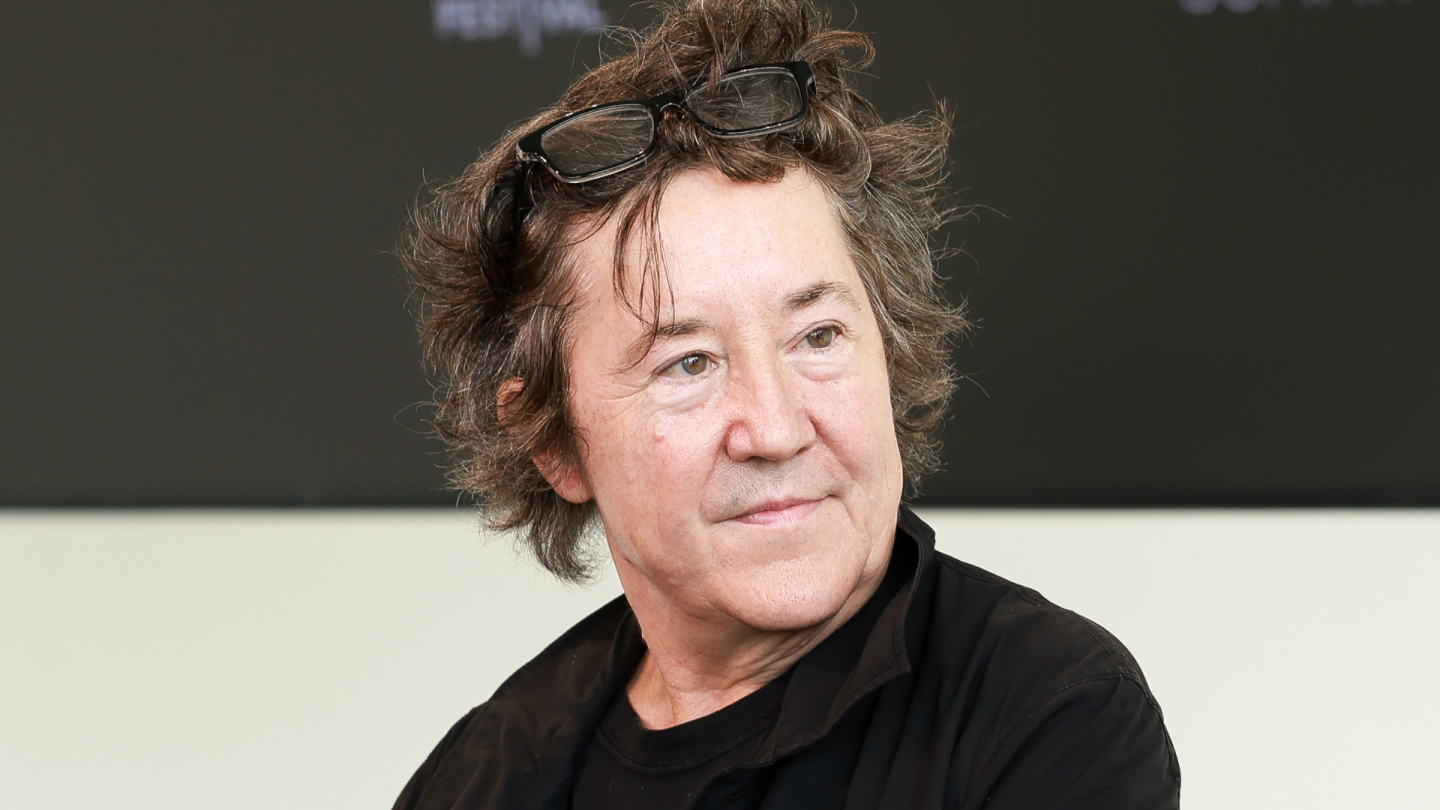
Christine Vachon, the prolific independent producer whose Killer Films has backed Happiness, Boys Don’t Cry, Carol and more recently Past Lives, May December and Materialists, said at the Edinburgh Film Festival on Friday that Pedro Pascal is “a revelation” in Todd Haynes’ re-worked gay romance movie.
De Noche, currently in post-production with no release date announced yet, was set to star Joaquin Phoenix before he abruptly pulled out before the shoot began. Vachon previously called the situation “a tragedy” and explained in an industry talk at Edinburgh how she and her long-time collaborator Haynes managed to rebuild the project after Phoenix’s exit.
Host Wendy Mitchell joked: “I actually like [Pascal] better than Joaquin Phoenix anyway,” to which Vachon responded: “I kind of do too!” The tightly-packed crowd at Edinburgh’s Central Hall laughed with them.
Vachon continued: “It wasn’t an easy situation. And as I also stated, it was devastating that Todd didn’t get to make a movie again that year. If you take the […] glass half-full version, and ‘everything happens for a reason’ [perspective], maybe the reason was that this was a role that Pedro was born to play. He is certainly extraordinary in the film, and by the way, so is Danny [Ramirez]. I mean, both of them are a revelation.”
Getting a “do-over” allowed them to find a better shoot location, said Vachon, which showed her everything worked out for the best. Pascal was brought on board via her work with him on Celine Song’s Materialists. “People always say to me, ‘Is he as nice as he seems?’ […] He is. People are so invested. They love him.”
As a titan of independent film production, Vachon — in Edinburgh with her latest film Pretty Babies, directed by Tyler-Marie Evans, who spoke to THR in depth about winning over Vachon just this week — was also probed on the box office success of Obsession and Backrooms this year, two movies that have challenged the status quo in Hollywood. “I do,” she said when asked if she likes the energy coming out of YouTube. “But when we were making movies like Poison [and] Go Fish, we also identified an audience… Back in those days, the LGBTQ audience could go to bars. There were parts of town [where you] could take your leaflets and just go specific places where people gathered and say, ‘Look! We made this! It’s for you.’ That’s just moved online.”
Vachon is extremely buoyed by the current theater-going demographic being made up, predominantly, of people aged under 30. She cannot deny, however, that “we’re at a time of great disruption,” and the queer film landscape is a little rocky with so much division in the U.S. at the moment. “It’s a conundrum right now. We have something like Heated Rivalry which couldn’t be a bigger hit, and we still have politicians campaigning on who gets to use what bathroom. And it’s happening [in the U.K.] too. It’s not like we have the monopoly on [marginalizing] LGBTQ people.”
“I remember when I would go see screenings of Poison or Swoon, which were boy queer [films] and [the theater] would be filled with lesbians because they were like, ‘I guess I’ll go see this.’ But now there is more choice,” she continued. “And the power of narrative to actually change people’s perspectives is stronger than it’s ever been.”
On the toss-up of a box office hit or flop, Vachon confessed she can’t predict the commercial outcome of her movies. She’s actually pleased streaming services can get movies to wider audiences nowadays. “When Todd Haynes’ Safe came out, it didn’t do anything at the box office. People weren’t interested in seeing it. The reviews were a little head-scratchy, like, ‘Not quite sure what he was going for here.’ But in the mid-late ’90s, I can’t remember exactly when, a newspaper [called] the Village Voice, which was incredibly influential at the time, did a survey of every single movie critic in America. What was the best movie in the ’90s? Safe was number one.”
“Sometimes the answer is that people just didn’t want to see it. They just didn’t, and you can’t really put your finger on why it didn’t hit the zeitgeist in that way. Who knows why? It was either too late or too soon. And now, the good thing in my mind [is] we have access to things and [movies] can find their way later. People can discover movies [from] another time.”
Mitchell asked Vachon at the end of the session: “Do you use AI?”
Vachon replied: “Yes,” explaining that she often uses it for synopses — to spare a busy intern from doing the job — or getting restaurant recommendations, such as when she was at the “very expensive” Venice Film Festival with last year’s Late Fame and needed a cheap, nearby spot.
The 2026 Edinburgh International Film Festival runs Aug. 13-19.
>

Editor’s note: This review was originally published during the 2025 SXSW Film and TV Festival. Black Bear releases the film theatrically starting Friday, August 14.
Though he’s in less than half of Andrew Patterson’s Oklahoma Western “The Rivals of Amziah King,” Matthew McConaughey looms over the film like a myth in human form. His role as the title character, a mandolin-playing beekeeper out of Oklahoma, is also the twangy Oscar winner’s first screen role in six years. And it’s a testament to how mythic McConaughey himself is, and how much we take the Texan’s presence as granted and a given, that his absence from our movies and television didn’t register at all. He, like Amziah, looms regardless.


Oklahoma writer/director Patterson pays homage to his roots — and the people who laid their foundation — in his high-spirited, energetic follow-up to the 2019 Slamdance winner “The Vast of Night.” Where that 1950s-set UFO chiller blended “The X-Files,” B movies, and classic radio dramas, “The Rivals of Amziah King” cross-pollinates a bluegrass musical, beekeeping drama, a Native American Western, and a winding Mark Twain journey up a river, and a narrative that lustily taps its feet on the knife’s edge of twee and earnest.
But there’s enough crowdpleasing spark to cut through the over-direction — at times, Amziah’s bluegrass band, led by Owen Teague in a wordless performance, is cut and assembled more like a music video than a movie, Patterson slowing down, freezing, and accelerating frames at a whiplashed frenzy. Yet vistas of the Oklahoma landscape, and Patterson’s tenderness for the Choctaw Nation in the former of a former foster child named Ketari (newcomer Angelina LookingGlass), indicate a filmmaker with a no-doubt strong vision, each take (and there are many) embodying a sense of having been precisely storyboarded and choreographed.
Patterson re-teams with cinematographer M.I. Littin-Menz who, on “The Vast of Night,” sent us hurtling through the night sky and the insides of a switchboard all the way onto the court of a high school basketball game, to again create sequences that feel show-off-y and bravura for bravura’s sake, but with several terrific set pieces that set the film apart.
The film begins somewhere in modern times at an American-as-apple-pie burger stand where Amziah and his band are putting on an anthemic bluegrass performance. Amziah is a feral creature of a man, hair unwashed, his sweat-beaded flesh and unwashed hair practically oozing Southern. He runs a beekeeping farm with the help of only a few associates, and it’s brought to his attention by local authorities that lost barrels to the tune of $1,500 a pop (and perhaps higher in street value) from a neighboring farm have shown up in the back of a truck, unidentified.
Amziah hatches a plan using propane heaters to melt the honey out of the barrels to look for an identifying mark that could trace them back to their owner. In one of the film’s many (and seemingly unnecessary) slapstick moments of bodily injury, one of the kids from the Armadillo propane company (Wes Anderson favorite Tony Revolori) gets scalped by the extractor, certainly a bloody scene to open any movie, and setting the unpredictable, careening tone ahead. Amziah and his cronies rush the boy to the hospital, his scalp in a plastic honey jar. It’s an ambitious and gasp-inducing start to a film that intentionally never settles on one particular tone.
As if by happenstance, Amziah reconnects with Kateri (LookingGlass), a young Native woman whom he and his late wife fostered on their farm when she was eight years old. The sweet-faced girl is now working in a diner, though beyond her plot function, Patterson never quite digs into who she is as a person on her own terms. Seemingly no time has passed as their bond resumes, and Amziah, a self-professed Born Again Christian, takes her back under his wing, perhaps priming her to become the heir to a honey empire he knows is on its last legs, and weighed down by a lot of debt because of Amziah’s overeager largesse toward the locals.
LookingGlass, who gives a fine-enough turn that occasionally feels under-directed by her filmmaker whose tendencies lean more toward visual flair than the nuances of performance, has a permanently tacit gaze that suggest she’s unafraid of whatever life bats at her. The bees, in fact, don’t sting her, making his estranged daughter something of a miracle who’s just turned up to save his life.
There’s a chaotically, even brilliantly orchestrated sequence in which Amziah and Kateri are summoned to a local elementary school, where a swarm of bees has left hordes of students stunned or in a panic, and a bus driver in shock after one stings his jugular. Again come the choreographed jolts of bodily injury, as a too-serious teacher walks into a glass door, and a bus goes bouncing over a pothole, sending the evacuated children in the air and their heads slamming into the ceiling. Much of the film’s penchant for unexpected violence leads to troubling plot twists that defy character logic.
In ways I won’t spoil, Amziah is largely absent from the movie’s second half, leading Kateri to take up running the farm herself and become a kind of avenging angel after his hives are stolen. The violent tricks she has up her sleeve in terms of how she gets back at Amziah’s competitors feel abrupt and unexpected, like when she traps someone in a boiling-hot room, leaving them to their death. The film, in moments meant to gin up audience whoops and cheers, seems to celebrate those acts of violence even when they feel totally antithetical to the character.
There’s an amusing ensemble here, with Rob Morgan as a pensive local cop, Cole Sprouse as an informant named Oat who works at a fish fry joint called Sad Abe’s, and Jake Horowitz as a reedy criminal on parole who aids Kateri on an upriver journey and back to retrieve the stolen hives. But there’s also a bit of distracting stunt casting in the form of Kurt Russell as a corrupt mogul named Dob McCoy, who has a special ability to turn locals against each other and ruin their crops, his castor farm an ominous foreshadowing of hell-bent poisonings to come.
Russell’s inclusion feels like he’s simply there to generate an audience reaction, while at the same time, you might imagine no one else could play this imperious, arrogant fellow whom Kateri stops short, at one point, of taking down when she realizes he has a sick wife at home. Her sudden flash of moral quandary feels at odds with the fact that she just killed a man a few scenes ago.
When not following in the footsteps of iconic revenge-plot Westerns or even “The Wages of Fear” in the cinematic smuggling of contraband barrels, “The Rivals of Amziah King” detours into energetically cut and staged musical sequences that feel like chopped-and-screwed John Carney, friends and family gathering in a living room to belt out bluegrass tunes that become earworms of their own. Even when, as during an onstage number during one of the film’s several potlucks (a Midwestern tradition Patterson relishes in here), the group sounds more like the indie band Beirut than traditional bluegrass.
Seeing McConaughey in a sorta-musical has its own obvious pleasures, the actor going all in on a character in ways he rarely has in years, even if his sweaty swagger and smarmy charisma feel like only familiar comforts. There’s too much movie here, but isn’t that better than none at all? Patterson’s big swings in filmmaking transcend the occasional shakier sum of their parts.
Grade: C+
“The Rivals of Amziah King” premiered at the 2025 SXSW Film & TV Festival.
Want to stay up to date on IndieWire’s film reviews and critical thoughts? Subscribe here to our newly launched newsletter, In Review by David Ehrlich, in which our Chief Film Critic and Head Reviews Editor rounds up the best new reviews and streaming picks along with some exclusive musings — all only available to subscribers.
>

Champions League: Shakhtar Donetsk keen to play matches at Stamford Bridge

Stop Losing Money on Forgotten Software With This $39.99 Tool

John Mozeliak was out of baseball. The challenge of trying to ‘solve’ the Angels brought him back
-

 movies3 months ago
Search For Canadian TV Actor Stewart McLean Now Homicide Investigation
-

 Fashion9 years ago
These ’90s fashion trends are making a comeback in 2017
-
Fashion9 years ago
According to Dior Couture, this taboo fashion accessory is back
-
Fashion9 years ago
Model Jocelyn Chew’s Instagram is the best vacation you’ve ever had
-
Fashion9 years ago
Your comprehensive guide to this fall’s biggest trends
-
Fashion9 years ago
9 Celebrities who have spoken out about being photoshopped
-
Fashion9 years ago
Emily Ratajkowski channels back-to-school style
-
Fashion9 years ago
A photo diary of the nightlife scene from LA To Ibiza