
‘Auber 89.’
Courtesy of Lightdox


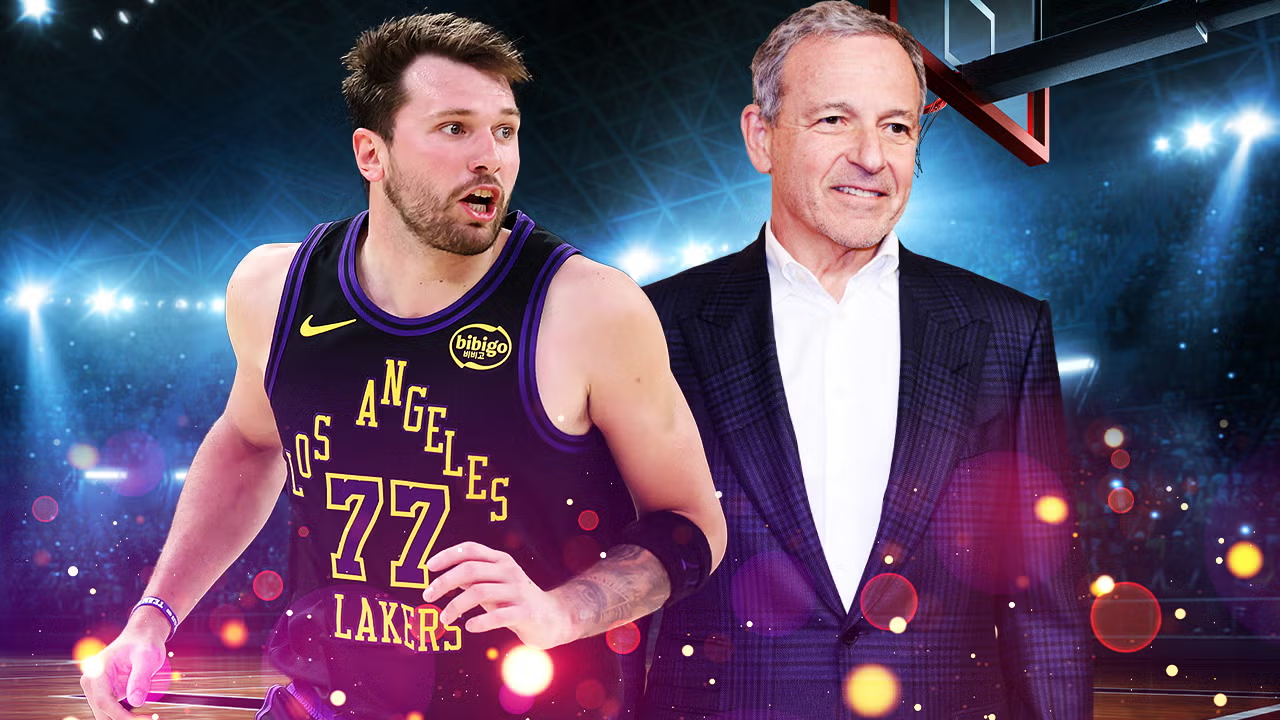
It was a quintessential, headline-making Bob Iger deal. Only this one wasn’t for the Walt Disney Co.
Iger stunned both the sports and entertainment worlds on Wednesday after securing a deal to acquire a majority stake in the Los Angeles Lakers, valuing the franchise at a record-breaking $12.5 billion. Iger and Thrive Capital’s Josh Kushner were already reportedly on the hunt for an NBA team, initially eyeing the planned expansion team in Las Vegas before making their surprise pivot.
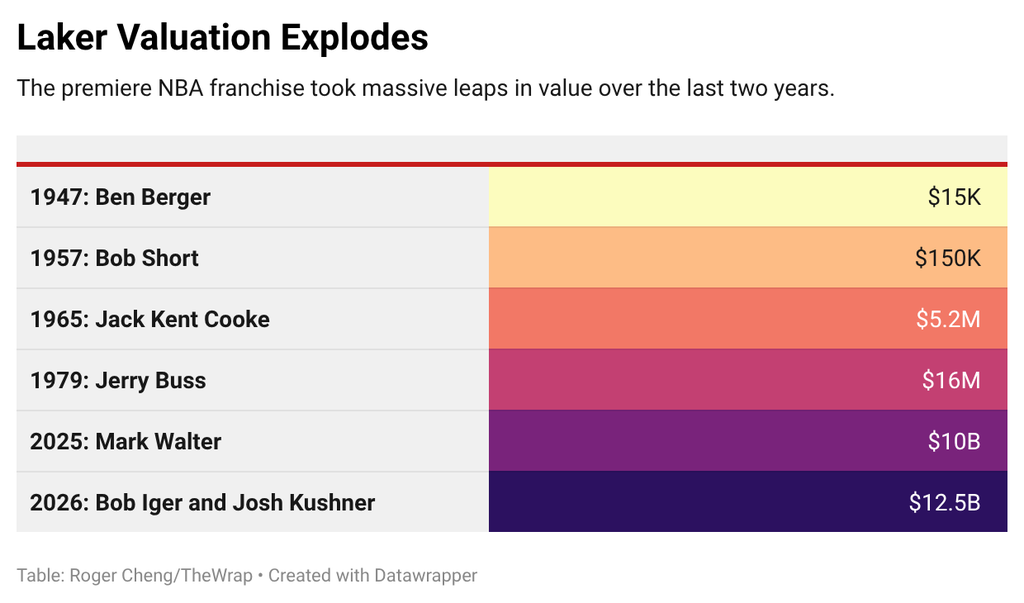
The deal marks the second time in a year that one of the most storied franchises in all of professional sports will be sold, injecting a topsy-turvy twist into what had been 46 years of relative stability under the ownership of the Buss family. The shake-up adds even more chaos to Hollywood’s favorite team, which under current owner Mark Walter was already going through an extensive overhaul around superstar point guard Luka Dončić.
For Iger, who is putting up between $50 million and $100 million of his own money to front the deal, according to a person familiar with similar deals, it’s a role that keeps him at the center of the Los Angeles scene just months after stepping down as CEO and chairman of Disney.
“As lifelong NBA fans, we are deeply honored for the opportunity to become stewards of the Los Angeles Lakers, one of the most iconic sports franchises in the world. We have immense respect for the leadership and vision of Jerry and Jeanie Buss,” Kushner and Iger said in a statement. “Our long-term commitment is to build on that foundation, compete at the highest level, and serve this extraordinary team, its fans, and the city of Los Angeles.”
But it’s a more complicated story than a simple asset sale, with an ongoing investigation into Walter’s business dealings, Kushner’s family ties with President Trump (he’s the younger brother of Jared) and Iger’s history with Disney making this a unique intersection of sports, politics, business and entertainment.
Here’s a timeline of how this all came together:

Walter is co-chairman and CEO of TWG Global, a holding company that includes the Lakers, Dodgers, Chelsea FC and the entire Professional Women’s Hockey League.
He is also CEO of Guggenheim Partners, which owns two insurance companies that are at the center of the investigation. Under scrutiny is how those two companies, Delaware Life and Clear Spring, book their revenue and whether the information is properly disclosed.
While those businesses don’t have anything to do with the Lakers, Walter’s role as CEO of both Guggenheim and TWG Global creates a messy situation.
Walter is reportedly facing mounting liquidity needs amid federal investigations and regulatory pressure involving his businesses, the Wall Street Journal reported Thursday. The Lakers sale freed up collateral associated with Walter’s original purchase as he sought to basically stabilize his insurance holdings.
Spokespeople for Guggenheim Partners and the Los Angeles Lakers did not respond to TheWrap’s requests for comment.
Walter said in a statement to ESPN that owning the Lakers had been “one of the great honors of my life,” adding that he has “every confidence the best is still ahead.”

The transaction requires approval from the NBA Board of Governors, with the next board meeting set for September in New York.
Kushner also holds a minority stake in the Miami Heat and Memphis Grizzlies and will need to divest those holdings.
That’s the multi-billion dollar question. While Kusher and Iger will put up their own money, neither have enough to cover the entire acquisition. Kushner’s Thrive could provide some funding, as it has more than $50 billion under management. But the two will likely need to find other institutional investors, private equity firms and even a handful of deep-pocketed celebrities to form an investment group to make the purchase a reality.
Just this week, Apollo Sports Capital gave the New York Yankees a $2.6 billion cash infusion, as sports and other live events have become more attractive investments.
They could also tap foreign investors or sovereign wealth funds, although those wealth funds are restricted to a minority ownership of up to 20% in a single franchise.
The Lakers changing hands (again) comes at a time when NBA franchise sales have become a regular occurrence, with valuations propped up by the league’s 11-year, $76 billion media rights deal signed in 2024 and two upcoming expansion teams that carry franchise fees between $7 billion and $10 billion paid out to the other owners.
Beyond the Lakers deal, the Portland Trailblazers sold for $4.25 billion this year, the Boston Celtics sold for $6.1 billion in 2025, and in 2023, Mark Cuban unloaded his majority stake in the Dallas Mavericks for $3.5 billion and the Phoenix Suns and Mercury sold for $4 billion.
But once again, the Lakers show why they’re the premier franchise in the NBA.
“The $12.5 billion valuation reflects the strength of the NBA, the scarcity of high-profile sports assets and the economics of buying the Lakers as opposed to just pursuing an expansion franchise in Las Vegas,” said Marc Ganis, president of sports consulting firm SportsCorp.
He noted that with the expansion fee and cost of building a new arena, buying a new team would’ve ultimately cost as much as buying the majority stake in the Lakers — without the certainty of being awarded a team, the Lakers’ lucrative local television deal or an established franchise and fan base.
The $12.5 billion price also represents a significant premium over the $10 billion valuation attached to Walter’s acquisition less than a year ago. Ganis said Iger and Kushner likely paid that premium to get Walter to agree to a deal directly rather than open one of professional sports’ most coveted assets to a broader bidding process.
Iger and Kushner “likely had to over bid in order to forestall an auction,” Ganis said.
The NBA’s growth could provide additional upside. Ganis pointed to the potential expansion fees that would flow to existing owners, as well as the league’s efforts to expand its footprint in Europe. But he noted that the NBA’s new national television deal was already factored into the Lakers’ $10 billion valuation, meaning the media rights agreements alone don’t explain the additional $2.5 billion.
Patrick Crakes, a former Fox Sports executive and principal at Crakes Media, said the Lakers occupy an even more exclusive category among top-tier sports franchises, pointing to the team’s championship history, global fan base, television ratings and position in the Los Angeles market.
“The Lakers are a special kinda special,” Crakes told TheWrap. “As such, they get a super special premium.”
But Crakes noted that the underlying economics alone don’t justify valuations at this level. “Cash flow doesn’t support the valuation,” he said, adding that investments in premier franchises are instead bets on long-term appreciation driven in part by the growing value of sports and other live experiences to the global media business.
“For the medium run, it looks like franchise values are headed higher,” Crakes said.
Following the announcement of the deal, many eyes were on Dončić, the lynchpin of the franchise. Within a few hours, he posted on X: “Being a Laker means everything to me, and I’m excited to get back on the court and bring a championship to LA. I’ve gotten used to big changes over these last few years, but I know that no matter what, there is no limit to the potential of this iconic franchise. I look forward to meeting Josh and Bob so we can get to work building something special in LA together.”
Dončić is no stranger to ownership change. He was the franchise player on the Dallas Mavericks when Cuban sold his majority stake to Miriam Adelson and her son-in-law, Patrick Dumont, of the Las Vegas Sands Corp.
The Lakers also just underwent an extensive retooling in the offseason, losing superstar Lebron James, re-signing offensive threat Austin Reaves and cutting ties with a vast majority of its roster in exchange for new players, led by defensive-minded center Walker Kessler. Notably, the Lakers have locked in several players with expensive long-term contracts, meaning new ownership won’t have much flexibility to make major immediate changes.
Lakers fans were also excited about Walter’s influence on the team’s back office, which would’ve brought upgraded analytics, staff and resources to match how he upgraded the Dodgers. The Boys in Blue have won two straight MLB World Series and are among the favorites to win a third consecutive championship.
But that overhaul was only beginning when Iger and Kushner came calling, leaving the incoming owners to inherit Walter’s vision for modernizing the Lakers rather than starting with a clean slate. One of the biggest questions now is whether they continue that blueprint — and how aggressively they’re willing to invest in the infrastructure around Dončić as the franchise chases its next championship.

Josh Kushner may share a last name with one of President Trump’s more influential advisers and family members, but he has largely kept his distance from the political spotlight occupied by his older brother Jared.
The 41-year-old founded Thrive Capital in 2009 and has since turned the venture capital firm into a major Silicon Valley force, with investments in companies including Instagram, OpenAI and Stripe. Iger joined Thrive as a venture partner after his first retirement from Disney and returned to the firm as a senior adviser after stepping down from the entertainment giant again this year.
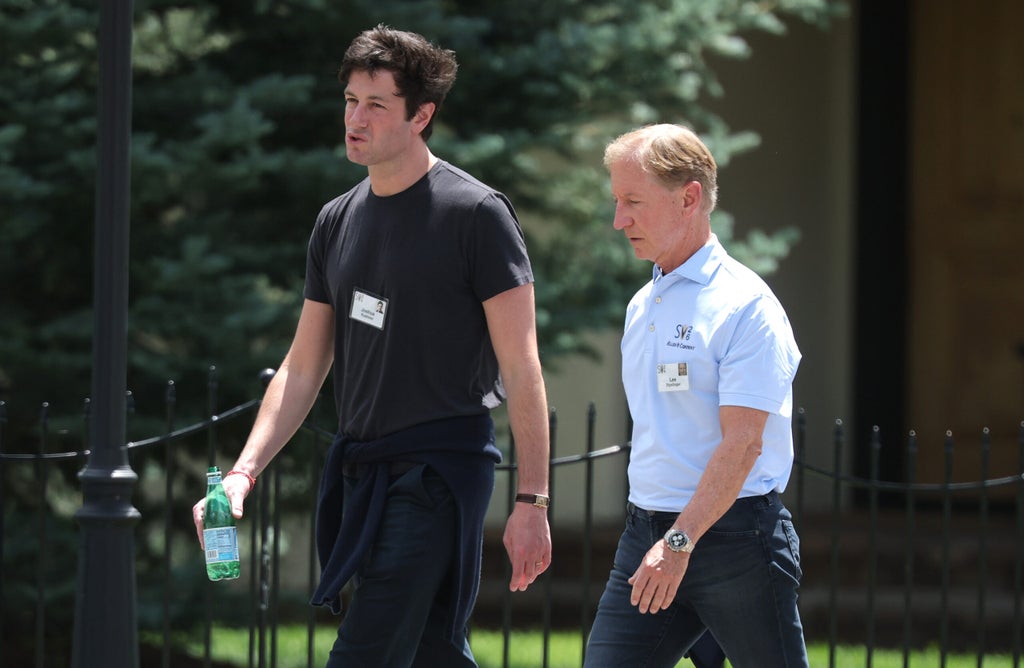
Kushner has also charted a different political course from his older brother. He said through a spokesman in 2016 that he was a lifelong Democrat and would not vote for Trump, and donated $250,000 to the Growth Democrats PAC in 2024. His wife, model and entrepreneur Karlie Kloss, has also publicly supported and donated to Democratic candidates.
The Lakers deal will put the typically low-profile Kushner in a considerably brighter spotlight. Buying one of professional sports’ marquee franchises alongside one of Hollywood’s most high-profile executives puts him at the intersection of tech, entertainment and sports — with a famous political family that’s never far from the picture.
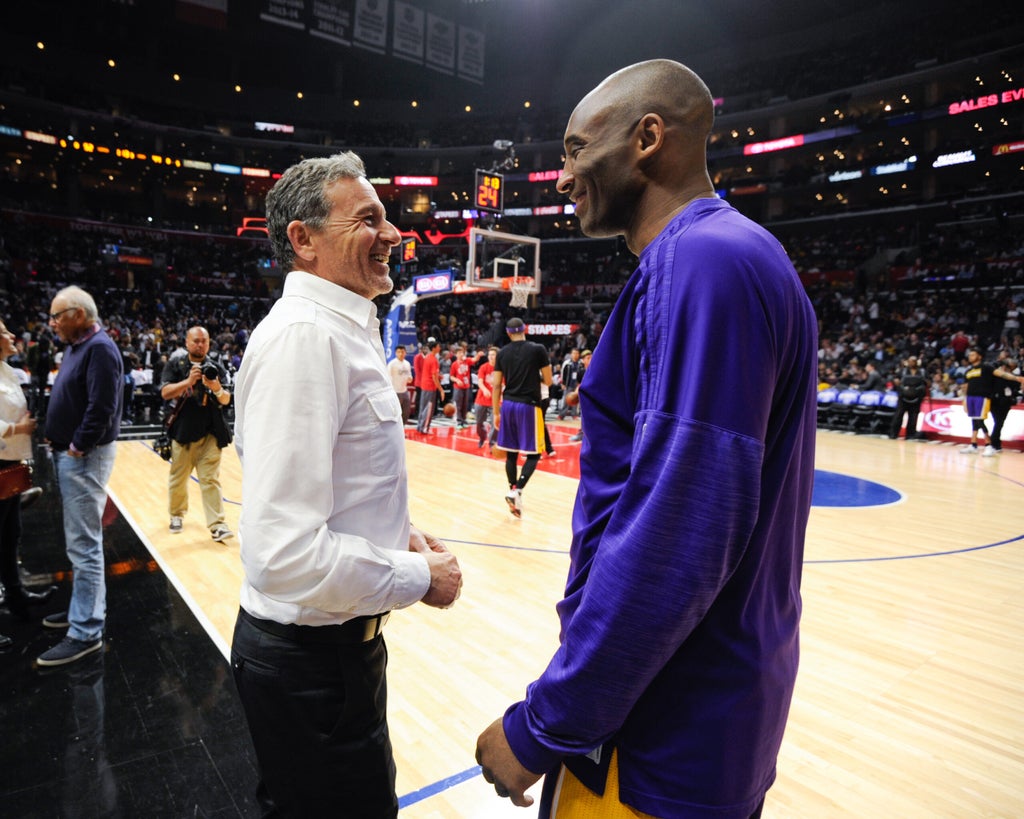
There’s obviously the prestige of owning a marquee franchise like the Lakers. Iger is no stranger to the sports scene, as he and wife Willow Bay own the National Women’s Soccer League team Angel FC. He’s also not the first Disney alum to try to buy the team — in the early 1990s, then-CEO Michael Eisner and then-President Mike Ovitz made overtures to have Disney buy the Lakers, but were rebuffed.
Iger also brings decades of experience at the intersection of sports, media and entertainment. During his tenure leading Disney, he oversaw ESPN and developed extensive relationships across the sports industry, including through the network’s longtime partnership with the NBA. That experience could be particularly valuable as media rights, streaming and direct-to-consumer distribution play an increasingly important role in the economics of professional sports.
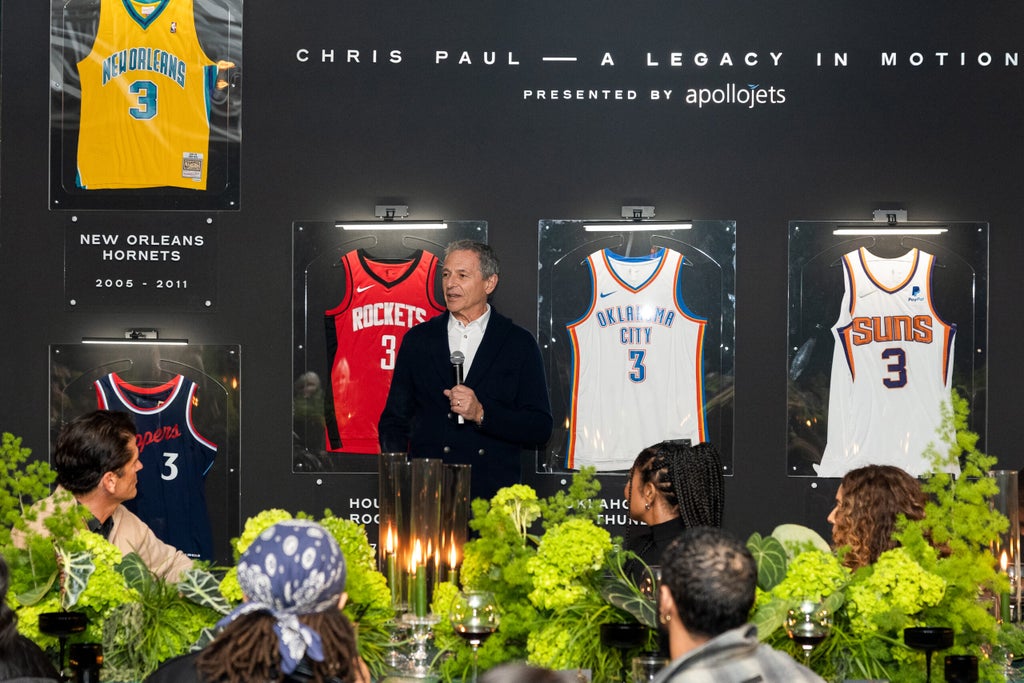
But there’s a financial benefit as well. As Joe Pompliano of the Huddle Up newsletter noted, billionaires like sports franchises because they can amortize the depreciation of assets over 15 years to lower their tax burden. It effectively shields other income from getting taxed.
Iger declined to comment for the story.
Jerry Buss enjoyed being at the center of attention during the Lakers Showtime run in the ‘80s, and is a revered figure in this town because of the team’s legacy of success. But basketball fans are fickle, and could quickly blame the new owners for any struggles or missteps (just look at how Dallas turned on Mavericks owners Adelson and Dumont after they traded away Dončić).
“Sports teams are generally asset plays,” Chris Marangi, president and co-CIO of GAMCO Investors told The Ledger’s Jon Lafayette. “Much like gold or fine art. They’re viewed as stores of value and not based on a PE or cash flow basis.”
For Iger, owning the Lakers could be a way to further burnish his legacy, but there remains a risk he could tarnish his reputation if things go poorly. It’ll depend on whether he can keep up with the franchise’s longstanding winning tradition.

>
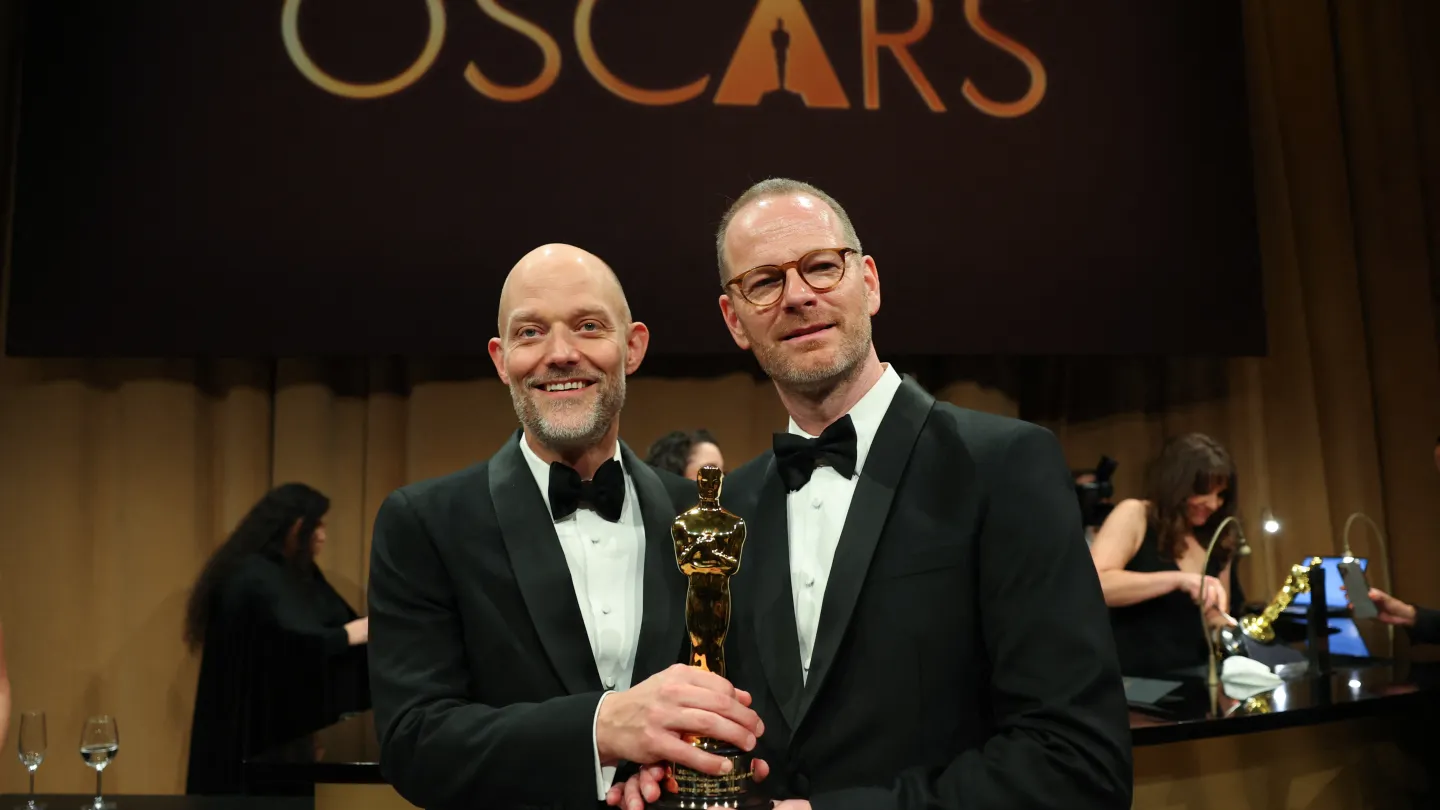
Dual Oscar nominee Eskil Vogt, a co-screenwriter on Joachim Trier‘s Sentimental Value and The Worst Person in the World has received backing for his next film as a director.
Vogt received a $1 million (NOK 10 Million) grant from the Norwegian Film Institute to go towards the production of Untitled, a psychological thriller about “art, power and the blurred boundaries between memory and truth.” Vogt will write and direct.
Untitled will be Vogt’s third feature as a director, following Blind (2014), and The Innocents (2021). He’s a two-time Oscar nominee, for writing on both Sentimental Value and The Worst Person in the World.
“Untitled is an ambitious project that builds on Eskil Vogt’s distinctive artistic vision,” said Kjersti Mo, CEO of the Norwegian Film Institute.” Eskil Vogt is a filmmaker with a strong artistic voice and a significant international profile, and with his third feature as a director, he continues to develop and challenge himself artistically.” Mo said the grant showed the institute’s commitment to “strengthening creators and their careers.”
Though best-known for his writing collaborations with Trier — the two childhood friends have written all of Trier’s films together — Vogt’s high-concept solo attempts have been well-received. Blind, which follows a writer whose loss of sight sharpens her creative imagination, premiered in Sundance and Berlin. The Innocents, a low-tech supernatural horror film about children with powers and violent tendencies, screened in Cannes’ Un Certain Regard.
Maria Ekerhovd and Lars Thomas Skare of Norway’s Mer Films, producers of Sentimental Value and the Oscar-nominated The Ugly Stepsister, are producing Untitled. The film’s total budget is pegged at $11 million. Mer Films’ latest, the Renate Reinsve-starrer Butterfly (2026), premiered at this year’s Rotterdam International Film Festival.
>
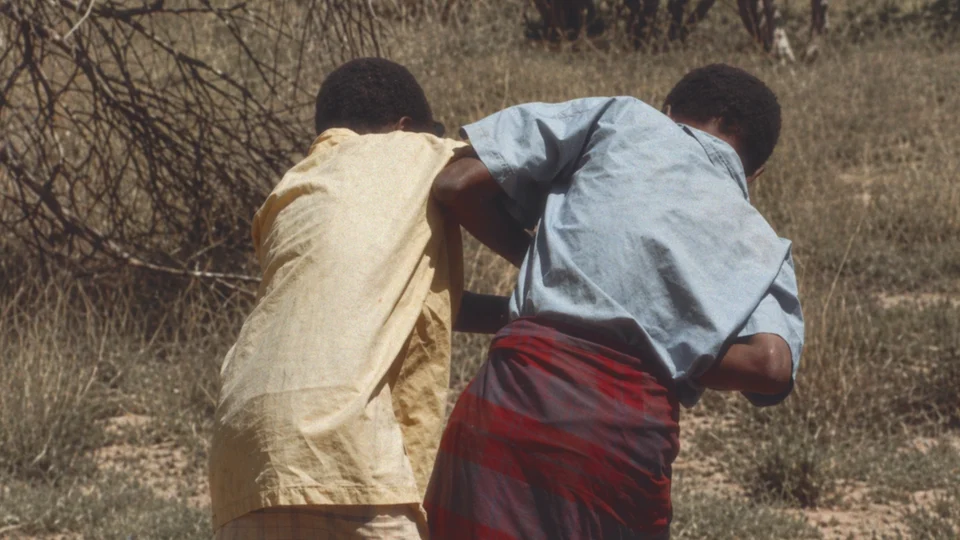
Accept My Plea for Burial is a social drama/thriller set in Somalia. And it was among the works-in-progress presented at the 2026 edition of Open Doors, the Locarno Film Festival‘s co-production platform and talent development program for filmmakers from equity-seeking communities and regions where artistic expression is at risk.
The story from director Mohammed Sheikh (Barni, 2025) is produced by Kadir Harbi of Somalia’s
Aleel Films.
The project, presented during the second edition of Open Doors with a focus on films from Africa, is a co-production between Djibouti, Somalia and Qatar. At the Locarno Open Doors program, Accept My Plea for Burial was one of the two main winners of the Open Doors Grant .
THR has compiled highlights about the movie and insight from Sheikh about the project and the themes it explores.
Synopsis
In a remote Somali pastoral village, 12-year-old boys, Waasuge and Warmooge, spend their days herding goats and playing games. Their playful rivalry turns tragic when Warmooge dies after falling into a steep dry riverbed during a game. No one sees exactly what happened, and the only witness, a mentally unstable man, gives conflicting accounts that deepen the uncertainty
As the village gathers, grief hardens into accusation. Warmooge’s mother, Saluugla, refuses to bury her son without justice, believing burial without accountability would erase his death. The elder, Alamagan, attempts to resolve the conflict through customary law and religious counsel, but the absence of truth fractures the community. Rituals are performed, oaths proposed and broken, and tensions escalate as the unburied body decays. Despite Waasuge’s age and the lack of evidence, the village demands resolution. Understanding what the adults cannot admit, Waasuge makes a choice that ends the conflict.
Director’s note
I am drawn to stories that stay with the audience long after the credits roll, films like Yiyi, 12 Angry Men, and A Separation, where ordinary people are placed inside moral conflicts with no easy answers. These films don’t rely on spectacle; they rely on tension, silence, and human contradiction. With Accept My Plea for Burial, I want to explore that same territory through a Somali lens that is rarely seen with this level of intimacy and restraint.
This film is not about proving guilt or innocence. It is about what happens when truth cannot be fully known, yet a community still demands resolution. In many societies, especially close-knit rural ones, peace often matters more than facts. I am interested in how grief distorts reason, how tradition both protects and fails people, and how children inherit the consequences of adult decisions. The story reflects that political reality.
What was the inspiration for you to want to make this film?
The inspiration for this film is very personal. I grew up in a community similar to the village in the film, and I experienced an incident very close to the one that happens to Warmooge. I was fortunate that I survived, but the experience stayed with me.
How universal are the themes of the film, and why should people outside Somalia see it?
Although the film is about a specific Somali pastoral community, the emotions and questions at its center are universal. The film explores loss, grief, love, family, justice. What does justice mean when the truth is uncertain? How far can grief take us? And can a community choose peace when revenge feels easier?
What is the next step for you and your collaborators after Open Doors?
I already have an advanced draft, and the next step is to find the right co-production partner and co-production country to help bring the film into production.
>

EXCLUSIVE: International sales and distribution agency Lightdox has acquired Giuseppe Schillaci’s documentary Auber 89 ahead of its world premiere at the Giornate degli Autori‘s Notti Veneziane (Venetian Nights), a sidebar of the Venice Film Festival.
The nonfiction feature examines the experience of Fatsah Bouyahmed, a French Algerian actor who suffered memory loss after an accident. When the filmmaker discovered archival footage of Bouyahmed from his childhood and youth in the Aubervilliers social housing estate outside Paris, he invited him to view it and that triggered a process of reconnecting Bouyahmed with his past.
“As Fatsah revisits the footage forty years later, memories of family, friendship, music, and daily life resurface alongside the social tensions of the time: rising racism, inequality, and exclusion,” notes a synopsis. “Moving between past and present, Auber 89 revisits a fleeting moment of hope before disillusionment reshaped the Parisian suburbs, while the textures of television and VHS ground the story in the sensory world of the 1980s.”
‘Auber 89.’
Courtesy of Lightdox
Auber 89 premieres September 10 at Giornate degli Autori, where it will be followed by a Q&A.
“Auber 89 is a rare kind of film, where one man’s fractured memory becomes a way into the buried history of an entire community,” said Lightdox founder Anna Berthollet. “Giuseppe Schillaci takes a remarkable archival discovery and turns it into something urgent and deeply human, carried by Fatsah Bouyahmed’s extraordinary journey back to himself. This is a film that gives the French suburbs their complexity back, beyond the clichés that have long defined them.”
‘Auber 89.’
Courtesy of Lightdox
Auber 89 is produced by Label Vidéo (Véronique Holley and Raffaele Ventura) in France, in co-production with Revolver (Paolo Maria Spina) in Italy, Via93 (Sylvain Poubelle and Bruno. Niepceron), and E2P (Pierre-Jean Bartheye) in France. Lightdox is handling international sales.
Schillaci, born in Palermo, Sicily and based in Paris, is a novelist and filmmaker. His 2024 feature documentary Bosco Grande also premiered in the Giornate degli Autori in Venice and went on to win the Grand Prix at the National Competition at FIPADOC Biarritz. His additional directing credits include Tranzicion – art et pouvoir en Albanie (2017), L’ombra del padrino (2016), Apolitics Now! (2013), and The Cambodian Room: Situations with Antoine D’Agata (2009), co-directed by Tommaso Lusena.
In a director’s statement, Schillaci recalled sharing the archival video of Bouyahmed with his protagonist.
“He came to my editing studio, sat down in front of a screen, and I showed him the footage of his youth,” Schillaci writes. “The screen became, in the truest sense, a machine for recovering memory: frame by frame, something reawakened within him. From that day on, this encounter between a man and the ghosts of his own youth became the film’s driving force, its backbone.”
>


Search For Canadian TV Actor Stewart McLean Now Homicide Investigation


These ’90s fashion trends are making a comeback in 2017
According to Dior Couture, this taboo fashion accessory is back
Model Jocelyn Chew’s Instagram is the best vacation you’ve ever had
Your comprehensive guide to this fall’s biggest trends
9 Celebrities who have spoken out about being photoshopped
Emily Ratajkowski channels back-to-school style
A photo diary of the nightlife scene from LA To Ibiza