
Tech
Microsoft Merges Copilot Apps as Features Disappear Starting Aug. 18

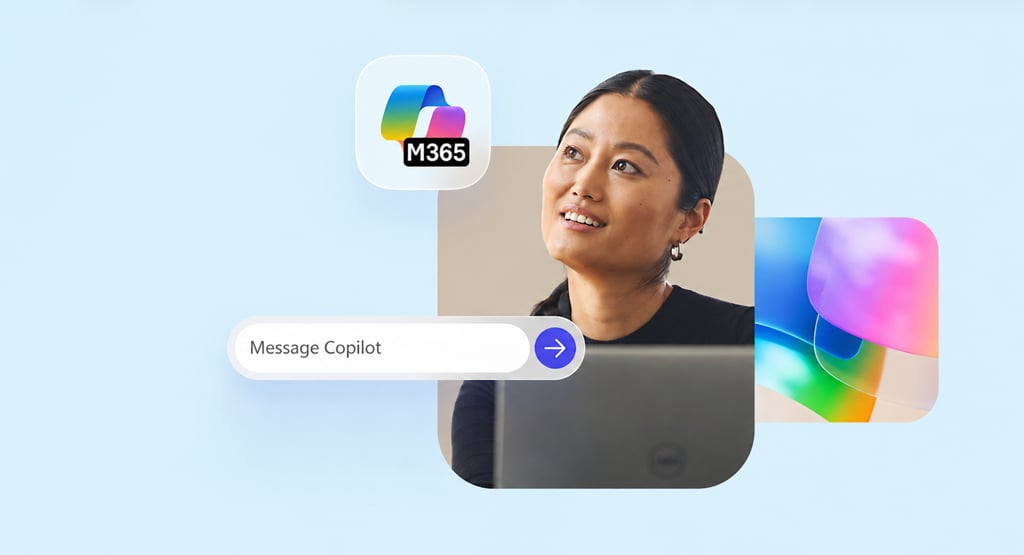
Microsoft is collapsing its consumer Copilot and Microsoft 365 Copilot apps into one experience as several consumer features approach retirement. The first cuts begin Aug. 18, while the broader app migration will continue into September.
Mobile and web rollout begins globally in mid-August, followed by Windows and Mac in mid-September. Personal, work and school accounts will share the updated app, but Microsoft says their chats, content and data will remain separated by account type.
Microsoft’s Copilot consolidation retains the Microsoft Copilot name and combines chat and image creation with Microsoft 365 capabilities. Existing Copilot users will move to the updated app with their chats and content, while Microsoft 365 Copilot app users will see navigation and icon changes plus access to Copilot Chat.
The move follows a similar simplification in Edge, where Microsoft retired the separate Copilot Mode in May and folded its AI browsing features into the browser.
Several Copilot features disappear starting Aug. 18
Podcasts has the firmest deadline. Microsoft will retire the feature on Aug. 18 for free and paid users. Previously created podcasts and shared links will no longer be accessible afterward.
Deep Research is also leaving consumer Copilot. Its retirement begins Aug. 18, but Microsoft 365 Premium subscribers can continue creating detailed reports with Researcher. Premium subscribers will retain saved reports through Researcher, while Personal and Family subscribers can access earlier reports through chat history.
Group Chats will also change during the migration. The Verge reports that existing threads, messages and shared content will not carry into the updated experience, so users should review conversations containing information they may need later.
Mico is leaving standard Copilot Voice in waves. The animated character, introduced in October 2025, is moving to Microsoft’s Learn Live experience, while Copilot Voice will remain available.
Microsoft has also warned that Copilot Health may be temporarily unavailable during parts of the rollout. The consumer service’s health-data privacy model has drawn scrutiny as Microsoft expands Copilot into more specialized experiences.
One app, separate enterprise identities
The merger changes the interface without combining personal and corporate identities. Microsoft says existing enterprise security, compliance and governance controls will continue to apply, while Microsoft Entra work and school accounts remain separate from personal Microsoft accounts.
Administrators may still need to identify workflows that depend on disappearing features and communicate the migration schedule. Research users have a Microsoft-provided alternative, while Podcasts and Group Chats require more attention before the affected experiences disappear or change.
The merger also precedes Microsoft’s wider effort to combine Copilot chat, coding, Cowork and Autopilot capabilities. CEO Satya Nadella outlined that broader Copilot “super app” on July 29, while Microsoft’s Project Solara work shows how the company is extending AI agents toward managed workplace devices.
Microsoft has not yet detailed the licensing or administration model for the larger product. For now, administrators should prepare for feature retirements beginning Aug. 18 and the desktop app migration in September.
Read more: Organizations planning other Microsoft migrations this year can also review the major support deadlines still ahead in 2026 across Windows, Office, servers and Azure.
>

Anthropic is reportedly considering a $6 billion acquisition of Decart, which develops AI training and operational optimization tools alongside models designed for real-world applications, according to Bloomberg.
The startup would provide two potential benefits for Anthropic: improving the efficiency of its own AI model training and operations, and expanding the AI lab’s model portfolio.
It is not clear which part of Decart Anthropic is more interested in. The chip efficiency software could provide much-needed improvements in training costs, reducing the overall compute burden for the lab. At the same time, Decart’s physical AI models have a wide range of potential use cases, from autonomous vehicle operations to retail.
One example is Lucy, an AI model that can take a short video of a person and generate a real-time video of them trying on an item of clothing. This has attracted interest from ecommerce companies such as eBay, which is an investor.
Anthropic stepping up its dealmaking
If completed at the reported price, the Decart deal would represent a major escalation in Anthropic’s acquisition strategy. Its previous largest disclosed acquisition was the $400 million purchase of Coefficient Bio earlier this year.
Compared with its rivals, Anthropic has been relatively inactive on the M&A front. OpenAI has spent more than $7 billion, with acquisitions ranging from Jony Ive’s io hardware startup to business talk show TBPN. SpaceX has made even larger splashes, including its $60 billion acquisition of Cursor.
The tech giants have also been less acquisition-heavy than in previous technology cycles, largely due to the difficulty of getting major deals past regulators. Instead, Meta, Google, and Microsoft have completed several acqui-hires in the AI space.
More must-read AI coverage
Demand for AI spurring higher spend
Anthropic is in the market for greater efficiency and more resources. It has reportedly been in discussions with Samsung about developing a custom AI chip, following similar efforts by the tech giants and OpenAI. The chip would be designed specifically to improve the efficiency of Anthropic’s AI model training and operations.
At the same time, Anthropic has increased its spending on compute as it tries to meet huge demand for its services. It signed a $1.25 billion-a-month deal with SpaceX, one of its key rivals, to access the company’s Colossus 1 data center. It has signed similarly large deals over the past few months, including a 20-year lease with bitcoin miner Riot Platforms worth $9.1 billion and another agreement with bitcoin miner TeraWulf worth $19 billion.
While the AI lab was initially hesitant to sign such large contracts, it has changed its tune as revenues have skyrocketed. It even reportedly recorded its first profitable quarter in June, a significant milestone for a company spending so heavily on compute and staff.
A Decart acquisition would suggest Anthropic is beginning to think about infrastructure differently. The company has already committed billions of dollars to securing the compute needed to train and operate its models; buying Decart could give it technology designed to make that compute go further.
Whether Anthropic ultimately spends $6 billion to do that remains uncertain. But even the reported talks point to a growing reality for the AI industry: competing at the frontier increasingly means investing not just in more computing power, but in ways to use that power more efficiently.
More Anthropic news: The Claude maker is reportedly in talks with Samsung to develop a custom AI chip as it looks to cut compute costs and reduce its reliance on Nvidia hardware.
>
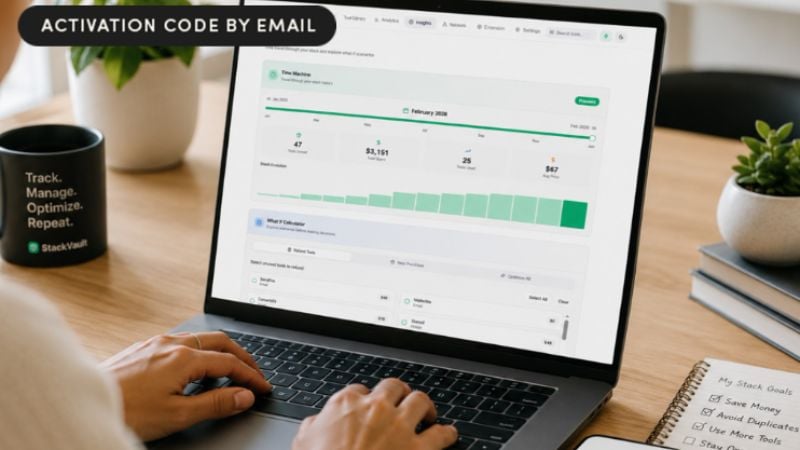
TL;DR: If your software collection has grown into a sea of forgotten lifetime deals, StackVault Pro Plan gives you one place to track up to 25 tools, spot duplicate purchases, and more. Lifetime access is $39.99 (MSRP $99.99).
Your software collection can turn into a digital junk drawer pretty quickly. A few lifetime deals here, a handful of subscriptions there, and suddenly you’re paying for or buying tools you already have — without a clear idea of which ones are actually worth keeping. The StackVault Pro Plan brings those purchases into one dashboard for $39.99 (MSRP $99.99), giving you a clearer picture of what you own and whether those tools are actually earning their keep.
Once place to track and manage costs
The web app lets you track up to 25 software tools and organize your lifetime deals without maintaining yet another spreadsheet. More importantly, it can help prevent some of the easiest ways to waste money:
- Duplicate detection flags overlapping tools before you buy something you already own
- ROI and score tracking helps you see which products you’re actually using and which ones are collecting digital dust
- Spending charts give you a clearer view of where your software budget is going
- Refund deadline alerts help make sure a purchase doesn’t sail past its return window unnoticed
That makes StackVault particularly useful for freelancers, entrepreneurs, developers, and marketers who regularly experiment with new software.
StackVault Pro Plan includes lifetime access, future updates, and browser-based access from desktop or mobile devices.
Get lifetime access to StackVault Pro Plan for $39.99 (MSRP $99.99).
StackSocial prices subject to change.
>

The FBI has been using hacking techniques and tools, such as spyware, since at least 1998, but to date there is no public data counting how often the feds were deploying them. That’s about to change — at least for the use of spyware for tapping into someone’s real-time communications.
Starting in 2029, U.S. judiciary will publicly disclose precisely how many times judges authorized the use of wiretaps to be carried out with hacking tools and spyware, which fall under the category of what the feds call network investigating techniques, or NITs.
For almost two decades, the Administrative Office of the U.S. Courts, which coordinates operations across the judiciary, has issued annual Wiretap Reports. These reports detail how many wiretaps were authorized every year, breaking the numbers down by whether federal or state judges ordered them, in which states the wiretaps were conducted, what type of crime was investigated, and other data.
Wiretaps allow police to gain real-time access to people’s calls, messages, and other communications. Given how invasive wiretaps can be to a person’s privacy, law enforcement have to present a high bar of evidence that a crime is being committed before a judge will authorize the use of a live tap. As such, wiretaps are generally issued in far fewer numbers than search warrants, but can still sweep up a large amount of people’s communications. Years ago, for example, one wiretap allowed a massive surveillance operation that collected millions of text messages over the course of three months.
The annual wiretap reports break down the type of wiretaps authorized during the year: from audio wiretaps that can collect real-time voice from phone calls; oral taps that rely on using real-world microphones and other eavesdropping techniques; and, the electronic tapping of text messages, emails, and other messages as they pass through a provider’s network.
The Administrative Office of the U.S. Courts told Democratic senator Ron Wyden this week that it will begin tracking the new “spyware/hacking” surveillance category starting in the 2028 Wiretap Report, which will be published the following year.
A spokesperson for the Administrative Office of the U.S. Courts confirmed the change in an email to TechCrunch: “The Wiretap Report is compiled from individual forms submitted from throughout the country and throughout the year. Before the new data can appear in the annual report, reporting forms and procedures need to be updated to accommodate the new categories,” the spokesperson said.
It’s important to note that this statistic will only reveal when authorities have used spyware to intercept communications, such as Signal and WhatsApp calls and messages, and not when they use tools to remotely hack into a phone and extract data stored inside of it, such as images, files, and their location. The first is a wiretap, and the latter is a search, which is an altogether different kind of legal process and not relevant here.
Wyden, who has criticized “the unnecessary secrecy around electronic surveillance orders” and has called for this kind of data to be published since 2017, celebrated the change.
“The American people remain largely in the dark about the different ways that the government is spying on them,” Wyden said in a statement to TechCrunch. “I am thankful that the federal courts agreed to collect and publish data about hacking, but Congress must go further and pass my Government Surveillance Transparency Act,” a draft bill that Wyden and others reintroduced earlier this year.
Getting this kind of transparency, according to privacy experts, is a huge win.
“Up until now, we have only been able to guess at the size of the problem,” said Eva Galperin, the director of cybersecurity at the Electronic Frontier Foundation and an expert on government spyware.
Galperin said that once these statistics become public, it will help hold the U.S. government accountable when there are abusive uses of spyware, as it will be harder for the authorities to deny that the tools were used.
“Being able to point to a report saying that spyware was used X number of times will help with accountability, especially if it turns out that number is quite high,” Galperin added. “It’s hard to say that you’re using spyware as a surgical tool when you’ve deployed it tens of thousands of times.”
Brett Max Kaufman, a senior counsel in the American Civil Liberties Union’s Center for Democracy, said the change is “an important and long-overdue step forward for transparency around government hacking and should lead to better-informed policy and law around these issues going forward.”
Other countries, such as Italy, already publish detailed data on the use of spyware. For example, in 2023, spyware was used against 4,321 targets in the country, according to publicly available data.
When you purchase through links in our articles, we may earn a small commission. This doesn’t affect our editorial independence.
>

European Athletics Championships: O’Connor in heptathlon contention after two events

Anthropic Reportedly Eyes $6 Billion Decart Acquisition

Champions League: Shakhtar Donetsk keen to play matches at Stamford Bridge
-

 movies3 months ago
Search For Canadian TV Actor Stewart McLean Now Homicide Investigation
-

 Fashion9 years ago
These ’90s fashion trends are making a comeback in 2017
-
Fashion9 years ago
According to Dior Couture, this taboo fashion accessory is back
-
Fashion9 years ago
Model Jocelyn Chew’s Instagram is the best vacation you’ve ever had
-
Fashion9 years ago
Your comprehensive guide to this fall’s biggest trends
-
Fashion9 years ago
9 Celebrities who have spoken out about being photoshopped
-
Fashion9 years ago
Emily Ratajkowski channels back-to-school style
-
Fashion9 years ago
A photo diary of the nightlife scene from LA To Ibiza