
Sports
Liverpool rarely sign loan players – and the ones they do rarely succeed. Ronald Araujo is their latest hope…

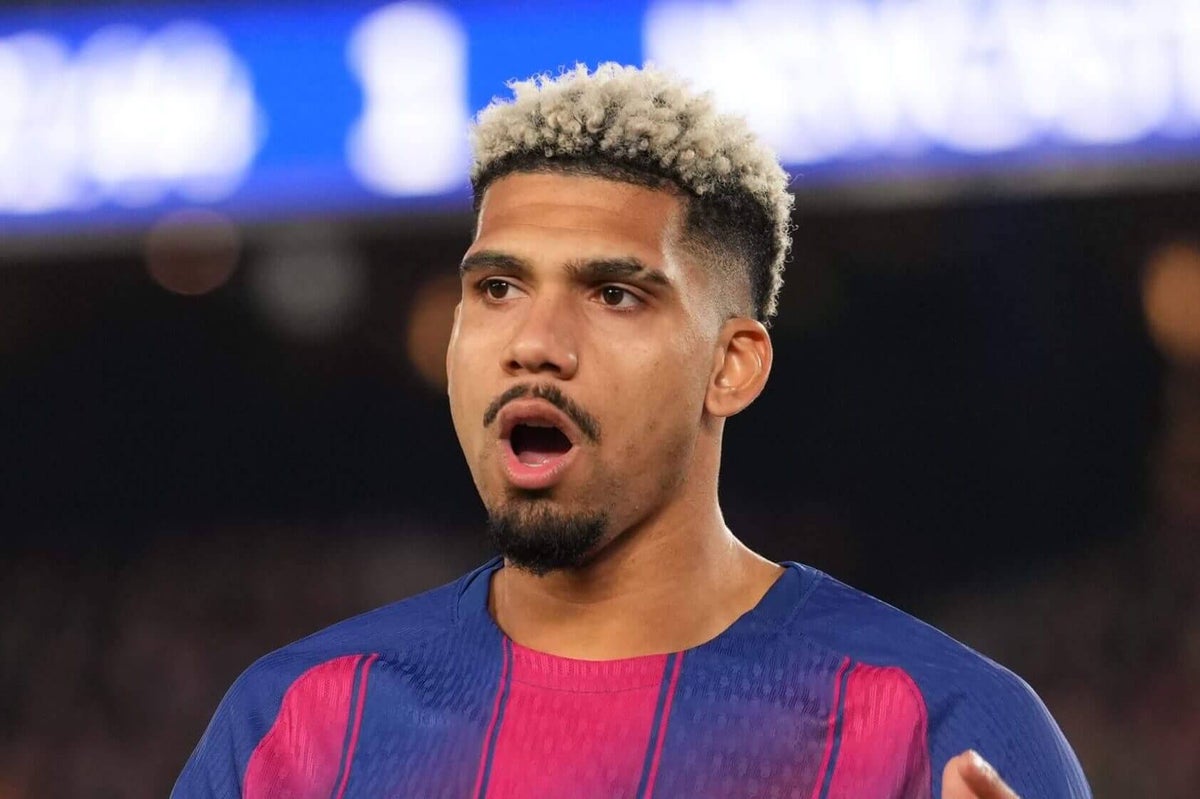
The reaction to a potential new Liverpool signing tends to follow a familiar script.
First comes the excitement. Then the frantic scramble to find out more, share the story, pass judgement, analyse, and, for the really creative few, produce that nugget of information that offers genuine insight — or failing that, generates a healthy supply of clicks and likes.
What’s certain is that it’s never as simple as one player coming in to replace another (or cover for those who are injured). No matter the age or profile of the player, there’s always something to discuss.
As Ronald Araujo discovered recently when the Uruguay international defender’s move from Barcelona managed to tick pretty much every box in the modern transfer-reaction handbook.
There was the initial reveal, a bit of a scramble and then deeper analysis. Fans will be split between two camps: those who think he’s what Liverpool need or not what they need, based on who and where they receive their information from.
Yet perhaps the strangest and most significant factor in this transfer is the scepticism surrounding it because of the nature of the deal. This might have been far less pronounced had Liverpool simply bought Araujo for the €55million (£47m; $63.7m) fee inserted as an option in what, to start with, is a season-long loan.

Araujo captained Barcelona last season en route to winning La Liga (Lluis Gene/AFP via Getty Images)
Instead, that loan element feels rather awkward for supporters, simply because Liverpool rarely do these types of deals — and more importantly, they rarely do them well.
Look at the names over previous years — Aly Cissokho, Javier Manquillo and Arthur Melo, to name a few — who failed to make an impact (there are many more) when borrowed from other clubs, and it’s clear where the concern stems from.
The sensible outlook, of course, would be to consider the move on merit and judge it for what it is. Unless something has gone badly wrong, Barcelona do not let 27-year-olds who captained them in the previous season and have 213 first-team appearances for the club leave lightly — or for such a future amount — so we’ll leave you to make your own conclusion on that.
But if this season goes well, Liverpool will have the chance to buy a player with one year of useful Premier League experience added to his Wikipedia page for a decent fee next summer.
And if it doesn’t work out, they can send Araujo back to Catalonia and move on with their own young defensive prospects Jeremy Jacquet, Giovanni Leoni, Ifeanyi Ndukwe and perhaps Mor Talla Ndiaye in 2027-28, and then consider a different option should they wish to recruit again.
Admittedly, that would be far too rational, though.
Supporters mostly only care about the here and now, and if Araujo turns out to be disappointing, then he’ll go straight onto the list of other Liverpool loan signings who failed to make an impact, with the “See? Told you so” comments to follow.
The most recent of those was Melo, a midfielder who played only 13 first-team minutes after joining from Juventus in September 2022, when Liverpool were suffering from a midfield crisis. Before the Brazilian came defender Ozan Kabak (Schalke) and before that, another centre-back in Steven Caulker (Queens Park Rangers).
Now you can see why there was some concern about a loan for Araujo, even though there’s no correlation between the new and the old, other than the simple structure of the deal.
That Liverpool have made only three loan signings across the past 10 years also highlights the rarity of such moves. Manchester City follow a similar strategy. They haven’t borrowed a player since goalkeeper Scott Carson joined from Derby County in summer 2019 to be their third-choice at the position.
The next four teams with the most points in the Premier League over that same decade have taken a very different stance, though.
Arsenal signed Piero Hincapie on loan last season, and Raheem Sterling and Neto in the previous one. David Raya, Martin Odegaard, Dani Ceballos, Mathew Ryan, Cedric Soares, Pablo Mari and Denis Suarez also joined them on that basis in the years between 2016 and 2023.
Manchester United haven’t been as prolific with their approach to this area of the market, but, excluding goalkeepers, have still arranged the loan arrivals of Sofyan Amrabat, Sergio Reguilon, Marcel Sabitzer, Wout Weghorst and Odion Ighalo during the same 10-year period. Most of those have struggled to make an impact.
Chelsea and Tottenham Hotspur, meanwhile, are on a completely different level.
In the past four years, Chelsea have had more loanees in through the door than Liverpool have had in a decade. Tottenham borrowed as many players last season as have moved to Anfield via that route in our decade-sized sample.
So why do Liverpool so rarely turn to loan signings?
Well, those who run the club will say it’s because they are organised operators who have their house in order through long-term squad building. Only in exceptional circumstances do they turn to these temporary fixes, but that’s where they find themselves heading into the season.
Joe Gomez is out injured for the next few weeks. The two recent young, big-money central-defensive signings, Jacquet and Leoni, are both returning from injuries. Ndukwe, 18, will have to head out on loan because he doesn’t qualify for a UK work permit.
The need for reinforcement at the position was huge.
Having a 35-year-old Virgil van Dijk as the only fit senior centre-back was not sustainable, especially as, like Gomez, he’s on course to be out of contract 10 months from now.
Whether Araujo was a good choice will take some time to determine. But it’s a push to think of many better alternatives with a matching profile who were available under similar conditions.
That said, while taking a wage cut to join Liverpool sounds like a bonus, Araujo is still going to cost a considerable amount of money. The club really need this to work out, especially with Jacquet and Leoni still developing.
If supporters are looking for an uplifting loan success story, then perhaps Nicolas Anelka fits the bill. When Liverpool borrowed him from Paris Saint-Germain in December 2001 following the departure of fan-favourite striker Robbie Fowler, there were questions about his character and attitude after previous spells at Arsenal and Real Madrid.

Anelka was a successful loan signing for Liverpool (Stu Forster/Getty Images)
Although it was a different type of gamble, Anelka proved to be a savvy signing and helped Liverpool finish second that season. The only mistake that followed was not signing him permanently at the end of it, when he went to City instead.
The hope at Liverpool is that Araujo proves more of an Anelka than an Arthur Melo, and is never compared to Kabak, Caulker, Cissokho or Manquillo.
>

Need help with today’s Connections: Sports Edition puzzle? You’ve come to the right place.
Welcome to Connections: Sports Edition Coach — a spot to gather clues and discuss (and share) scores.
A quick public service announcement before we continue: The bottom of this article includes the answers — and hints — for the four categories. So if you want to solve the board hint-free, we recommend you play before continuing.
You can access today’s game here. And when you’re done, try out our limited-edition Connections: Soccer Edition for an extra challenge.
Today’s difficulty
Game No. 691’s difficulty: 3 out of 5
Connections: Sports Edition hints for Aug. 15, 2026

Scroll below for one answer in each of the four categories.
.
.
.
.
.
.
.
.
.
.
.
.
.
.
.
.
.
.
.
.
Yellow: PADRES
Green: STARTER
Blue: ROYALS
Purple: SWING
Connections: Sports Edition answers for Aug. 15, 2026
Scroll below for the full answers to each of the four categories.
.
.
.
.
.
.
.
.
.
.
.
.
.
.
.
.
.
.
.
.
Yellow
Teams to never win a World Series: BREWERS, MARINERS, PADRES, ROCKIES
Green
Jobs at a golf course: CADDIE, GREENSKEEPER, STARTER, SUPERINTENDENT
Blue
Kansas City teams: CHIEFS, CURRENT, ROYALS, SPORTING KC
Purple
Anagrams of WNBA teams: CASE, MADRE, RIFE, SWING
What is Connections: Sports Edition?
Connections: Sports Edition is The Athletic’s first-ever game, a daily puzzle designed for players to find connections between 16 words on the game board.
The game’s objective is to group words or objects into four groups of four based on commonalities within each group as quickly as possible. Find the groups without making four mistakes. Each puzzle has exactly one solution, so watch out for words or items that seem to belong to multiple categories!
Category examples:
Sports ____ : Fan, Car, Bar, Radio
U.S. Summer Olympians: Biles, Phelps, Ledecky, Lyles
Each category group is assigned a color, revealed as you solve, ranging from straightforward (yellow) to medium (green) to challenging (blue) to tricky (purple).
Who creates the puzzles for Connections: Sports Edition?
That’s me! My name is Mark Cooper, and I create Connections: Sports Edition and work as a managing editor for college sports here at The Athletic. I was previously The Athletic’s managing editor for breaking news.
The next puzzle will be available at midnight in your time zone. Thanks for playing — and share your scores in the comments!
>
Sports
Two 60-minute games? Three 45-minute halves? Why Premier League clubs are playing weird friendlies
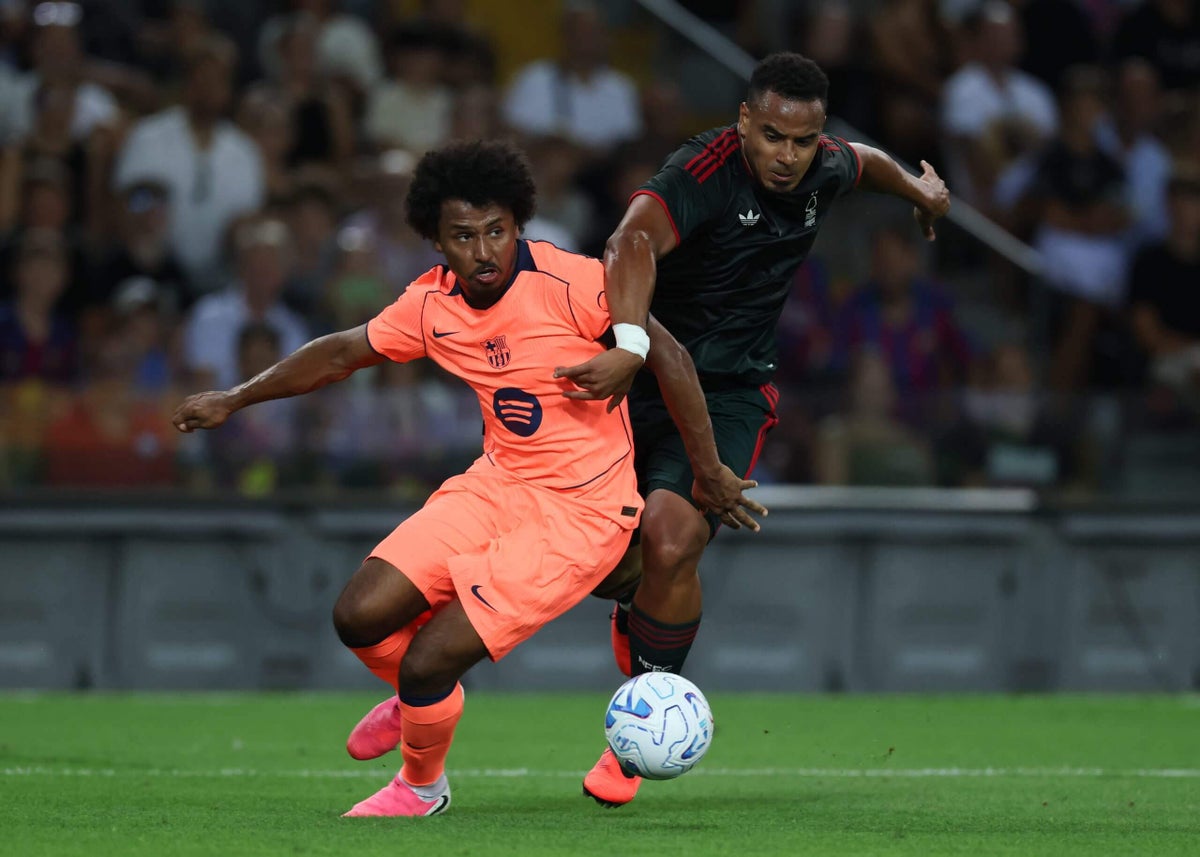
For almost 150 years, regulation time in football matches has consisted of 90 minutes to determine a result — but many teams appear to have had other ideas this pre-season.
Liverpool will play a total of 180 minutes against Serie A side Como across two games tomorrow (Sunday), one behind closed doors at their training ground at noon locally, the other at Anfield at 6pm. Leeds United and RB Leipzig played out a 120-minute friendly earlier this month — split into two 60-minute matches — while both Nottingham Forest and Crystal Palace have participated in tournaments where teams faced off for only 45 minutes at a time.
The trend even extends into non-League, where a tournament consisting of 45-minute games, the A23 Cup, was scheduled to take place between Slough Town, Hayes and Yeading United and Marlow Town in July. But Marlow were unable to field a side, meaning 90-minute matches between the other sides ensued.
From the outside, it appears unnecessarily complicated. With regular competitive 90-minute games now just days away for English clubs, there is a temptation to view these unusual formats as a gimmick.
So, what is the reasoning behind them?
Why 90 minutes isn’t always best in pre-season
Matches lasting 90 minutes early in pre-season present a few issues.
Players often arrive back from their summer breaks with a base level of fitness — enhanced by light and sporadic individual training during their holidays — and their natural athlete’s stamina.
Strategies for building on this vary across clubs, but the general aim is to begin pre-season with high-intensity, low-volume sessions, increasing the bulk of players’ stamina halfway through, before finding a balance between intensity and volume as the season approaches.
“Traditionally, it’s always been a challenge to achieve rounded squad fitness within the normal 90-minute game of pre-season,” Glen Driscoll, a former performance analyst at Liverpool, Celtic and Leicester City under manager Brendan Rodgers, tells The Athletic.

Liverpool during pre-season training in Chicago earlier this month (Nikki Dyer/Liverpool FC via Getty Images)
Managers naturally begin to settle on their preferred starting XIs and prioritise those players’ minutes towards the end of pre-season, but those in the squad who do not receive sufficient game time need to replicate the physical work they miss out on.
“The closer you get to the season, the more you universally create a divide between the players you’re preparing to start and everybody else,” adds Driscoll. “Then you are trying to run them after a game, which is difficult, because supporters are in the stadium, or security. Or you’re travelling, and there’s a flight waiting for you.”
Pre-season is also about building morale in the squad, and Driscoll says “you don’t want half the squad already feeling like they’ve been identified as the non-starters”.
Putting in the hard yards
In-season, English Football League (EFL) and top-flight sides in continental Europe will aim for their players to cover an average of around 30 kilometres (around 19 miles) in matches per week — whether that be in first-team fixtures or training games.
To reach those levels, they have to build up their pre-season work in the right way.
“In the first four weeks, we would expect players to be covering around that mark, while some clubs may push towards 40km,” says Anton McElhone, head of medical and performance at League One side Huddersfield Town.
“Few friendlies are played early on because the intensity is high, but once the matches start feeding in, the volume of minutes at once becomes higher, meaning the (training) drills between are less intensive.”
McElhone recommends players start by covering 30-35km in week one, but that would not include playing an intra-squad game in training or a friendly. The distance covered aim remains the same in week two, but he suggests players should take part in 45 minutes of action staged under match conditions, equating to roughly five to six kilometres.

Sports scientists recommend players’ distance covered is increased over the course of pre-season (Ash Donelon/Manchester United via Getty Images)
The target would remain at 30-35km in week three, but players would be expected to go through 60 minutes in game conditions.
By week four, the target distance would drop to 25-30km, but with an aim of 75 minutes in match-like scenarios. The latter would rise to 90 minutes from week five and beyond. “It’s all in the numbers,” McElhone says.
A 45-minute game might only account for around five to six kilometres of running, but the intensity makes that distance different from the distances players run during a training session.
As the season approaches, players need to prove they can reproduce that work at increasingly high intensity.
The benefit of different formats
The average club pre-season lasts six weeks, so there is a lot to cram in — and a regular 90-minute friendly does not always allow all your players the necessary game time.
“If you were following a textbook, you would start with shorter halves and progress gradually — for example, 25-minute halves, then 35, then up to 45,” says Alan McCall, a performance consultant who has worked across English and European football.
“But given the short timeframe and the number of players involved, football does not have that luxury, so you have to find other ways to balance the progression and load.”
EFL clubs Leicester and Bristol Rovers found an innovative solution for their friendly held in mid-July, playing a 120-minute match, which was split into four 30-minute halves. Both sides rotated halfway through, giving two ‘starting XIs’ 60 minutes of game-time each, balancing the load out equally across their squads.
Those 45-minutes-per-game triangular tournaments offer the lowest physical benefit according to the sports scientists The Athletic spoke to.
Both the Como Cup (held in that Italian city across five days from July 28 and involving six teams, including Crystal Palace) and the Friuli Venezia Giulia Cup (involving hosts Udinese, Barcelona and Nottingham Forest and played over three hours last Saturday night) were scheduled for the mid-to-latter stages of the clubs’ pre-seasons.

The Como Cup, in which Crystal Palace participated, featured three games of 45 minutes (Marco Luzzani/Getty Images)
This is when players would be expected to be logging more than 60 minutes in game scenarios across the week, and both Premier League sides fielded entirely different teams for the back-to-back 45-minute fixtures they participated in.
“The game would likely only be a small part of the load that week,” Driscoll says. “I would put a football strength training session either side of it, and the fact the game is split into two (separate matches) could extract more effort in the match subconsciously for the players.”
Closer to the season is when teams shift from building towards the demands of competitive football to trying to replicate them, while giving as many players as possible that experience. Yet the expectation is not to have every player at peak condition on the opening day of a league season, and very rarely do outfield players play the full 90 minutes in any conventional friendly.
“It will probably take three to four games into the season before players reach the fitness levels we target during pre-season,” McElhone says, “because nothing replicates the pressure that comes once the first ball is kicked.”
The expectation to provide a fully-fit squad on day one of a new campaign is not the primary aim of pre-season either, especially as game-frequency increases and squads grow in size, with returning players who have been involved in national-team tournaments and new signings.
“The introduction of five substitutes in a match (which became a permanent part of the Premier League in 2022-23) changed everything,” Driscoll says. “Before, you needed 11 players ready to play 90 minutes. Now, producing 16-20 players physically able to play 60 minutes looks more useful.”
These differing friendly formats are not new — all three specialists consulted said non-90-minute matches, whether played in public or behind closed doors, have been a regular part of pre-season for the past 20 years. The head coach or manager of a side will usually have the final say on how those friendlies look, with performance staff providing advice around individual player usage and recovery.
“We do not try to govern how many games need to be played, or who must play when,” McElhone says. “We usually work with the coaching staff and fit around them, offering guidance on minutes and planning our sessions around their loads and constant monitoring.”
Varying the lengths of your friendlies is not the ideal or most recommended way to help pre-season preparations, as these types of matches occur behind closed doors anyway on a weekly basis. As McCall says, “there is no exact formula for preparing players.” Or, as McElhoe puts it, “there’s a million ways to skin a cat.”
“The most important thing,” the latter adds, “is that whatever happens in pre-season means nothing once the first game of the season begins.”
>
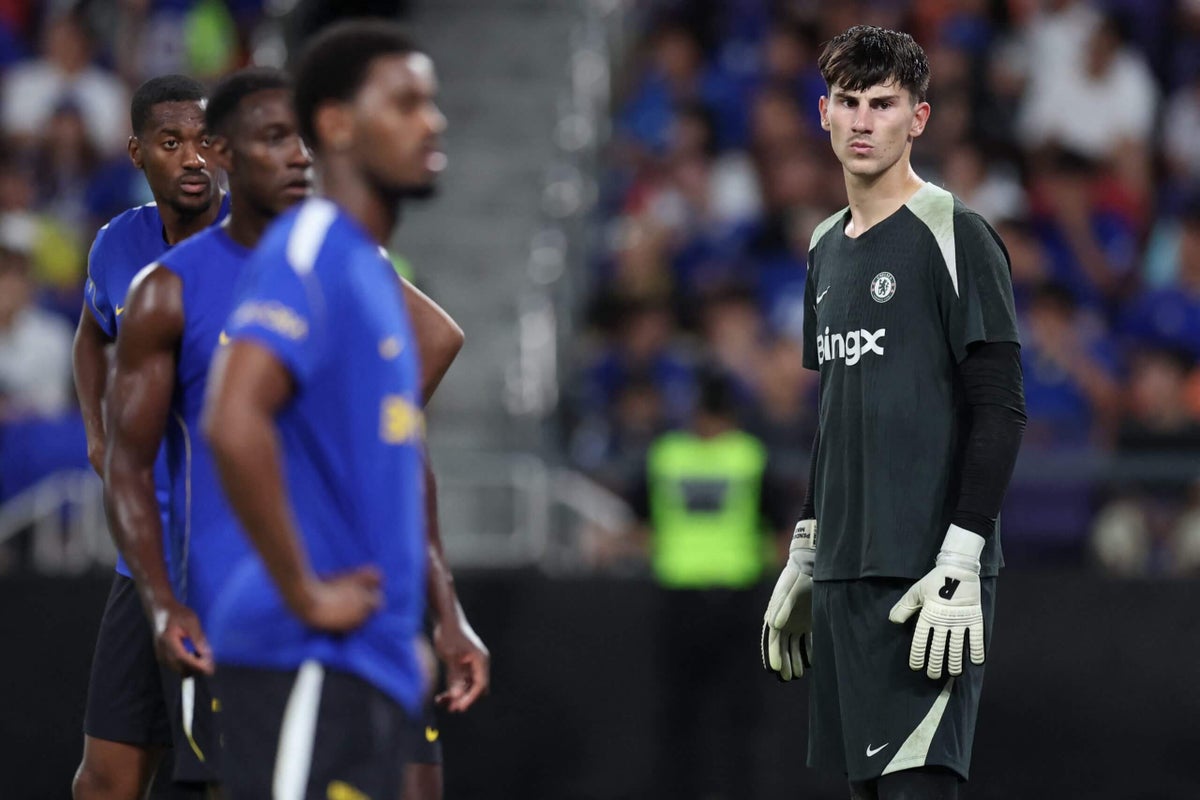
Xabi Alonso has made it very clear that Chelsea will not be signing a No 1 goalkeeper in this summer’s transfer window.
“I’m very happy with Rob (Sanchez), Mike (Penders) and Teddy (Sharman-Lowe),” the club’s new manager said in a press conference ahead of their pre-season match against Milan in Jakarta, Indonesia, last Saturday.
“Mike is a young goalkeeper who (had) a great season at Strasbourg (on loan for 2025-26). Rob, he has played many years in the club; in Chelsea, as well as the Premier League, he has experience. So to have this security in goal is important.”
The message, echoed in recent weeks by Chelsea sources speaking on the condition of anonymity to protect relationships, was clear: you Diogo Costa pushers, stand down.
Alonso’s team selections over the course of Chelsea’s five-game trip around Australia and East Asia have also created the expectation that Sanchez will begin his fourth season at Stamford Bridge as the starter ahead of Penders, who did not play a minute in last weekend’s double-header against Milan and Malaysian champions Johor Darul Ta’zim.
That stance will not satisfy the many Chelsea fans who have lobbied for some time to see an upgrade on the 28-year-old Spaniard, who has been benched on several occasions in the past three years and has failed to inspire much confidence among supporters, even in his better stretches of form.
Last season, Sanchez ranked eighth in the Premier League with 2.7 ‘goals prevented’ (defined by Opta as the number of goals that a goalkeeper was expected to concede as a proportion of the number of goals they actually conceded), but that relatively respectable level of performance has not translated into trust with many Chelsea followers.
Penders is positive by this metric too, ranking seventh in France’s Ligue 1 last season with 3.1 goals prevented. The previous season, his breakthrough campaign in Belgium’s top flight at Genk, yielded a total of 4.3.
Such statistics are more definitive over a much larger, multi-season sample size, but these numbers do at least give cause to believe that the 21-year-old could be a significantly better-than-average shot-stopper for Chelsea.
He already has the valuable endorsement of Christophe Lollichon, the club’s legendary former goalkeeping coach who worked with Petr Cech and Thibaut Courtois.
Lollichon saw Penders up close when his current employers, Dunkerque, faced Strasbourg in the French Cup last season and spoke to him afterwards.

Mike Penders impressed with his shot-stopping at Strasbourg last season (Sebastien Bozon/AFP via Getty Images)
“I saw a mature goalkeeper,” he said of the Belgian in an exclusive interview with The Athletic last month. “He has to improve with (the ball at) his feet, but at (his age), he’s very good. He has good positioning, he’s proactive and he wants to learn. I felt this attitude in our conversation. He asked me about the Premier League. We spoke for just 20 minutes but it was very interesting.
“This guy could be the next good one in Chelsea, because for a long time now the goalkeeper position is poor in Chelsea.”
Lollichon’s appraisal of Penders’ mindset was echoed by a Strasbourg source, who described the young Belgian as a hard worker, always eager to study video of his performances and ask the club’s coaches and analysts what he could do to improve, down to the finest technical details. That inner drive, coupled with his outgoing personality, made him well liked and respected.
Penders has just 78 senior professional league appearances to his name, however.
Cech had nearly double that figure when he arrived from French club Rennes as a 22-year-old in the summer of 2003. Courtois had been a league champion in Belgium and Spain, as well as a Champions League finalist, by the time Chelsea brought him back from three consecutive loan seasons at Atletico Madrid at that same age in 2014. So despite being only slightly older than Penders is now, both men were far more seasoned and polished.
What were football transfers like before the transfer window?
Tifo Football
None of the above means Penders is not ready to displace Sanchez sooner rather than later this season, but it does help to calibrate expectations.
“I think (competing for the No 1 spot) could be good for both of them,” says Matt Pyzdrowski, a former professional keeper and current coach who serves as goalkeeping analyst for The Athletic. “For Sanchez, it could light a fire under him that there’s a young guy who wants to learn, who’s very talented, and who will take his job if he doesn’t perform.”
Pyzdrowski likes what he saw from Penders at Strasbourg, particularly in adapting to a more expansive role in possession against a more testing level of opposition pressure.
“He’s always been a very modern goalkeeper,” he adds. “He loves playing very offensively in his position, both in the build-up and defensively. In build-up under Liam Rosenior at Strasbourg, he was playing like an inverted centre-back — very, very aggressive in his play, and he was very comfortable in that role.
“You could see his range of passing, specifically how he’s able to go, Ederson-esque, from defence to attack in a second and launch balls quite far up the field, but he’s comfortable with building out from the back as well.”
The graphic below maps Penders’ distribution in Ligue 1 last season.
His passing consisted largely of short balls out to central areas from open play, with the occasional longer hit from goal kicks when favourable circumstances presented themselves:

For the sake of comparison, below is the same breakdown for Sanchez in the Premier League last season.
It is important to note that goalkeeper distribution is always impacted by team style and tactical instructions, but the Spaniard went longer more frequently from goal kicks:

Penders’ 6ft 7in (200cm) stature and huge wingspan also make him a force to be reckoned with when high balls come into his penalty area, which should translate well to the modern, more set-piece-focused Premier League.
“You never know until they’re thrown into the deep end, they either sink or swim, but he has an incredible frame and really good timing,” Pyzdrowski says. “He reads the flight of the ball really well. It’ll be interesting to see how he handles having four or five guys surrounding him in the box, because that’s what was allowed in the Premier League last season.”
There are also some areas for Penders to continue to improve.
“He’s always been a good shot-stopper — the only reason I don’t say great is because there are a few things that he still needs to iron out,” Pyzdrowski says. “Specifically with his positioning. Sometimes he can get pulled a little bit too far towards his near post with wide shots and open up space towards the back post.
“Also, in one-v-one situations, he’s a very typical big goalkeeper in that he tries to use his frame, but he hasn’t really figured out how to control it yet. There are quite a lot of situations where he rushes out of his goal and then maybe the attacker chips him or places the shot around him. It would be better for him to be a bit more calm in his approach instead of just rushing out of his goal.
“He’s young, so this is not strange — it’s part of the development phase. If he can put the tools together, to be able to use that size with a bit more composure, he’ll be very tough to beat.”
Penders produced some hugely exciting flashes at Strasbourg. He also made some errors that would have been scrutinised far more harshly had he been playing for Chelsea. Player development is not an exact science and bringing him along at the right speed will be a delicate balancing act for Alonso, amplified by the pressure to keep piling up Premier League points.

At 6ft 7in, Penders commands his area effectively (Sebastien Bozon/AFP via Getty Images)
The good news is that Sanchez is already sounding a positive note about Penders’ arrival.
“I think it is great for him to come here,” he said in an interview with journalists including The Athletic last week. “It is great competition. He has massive potential. I think he is going to be a great goalkeeper in the future — massive.
“You need someone, another choice, to cover and push each other to elevate your level. If you do not have someone who is pushing you every day, you get lazy, and then the performance drops. I think it is always good to have one or two people pushing you every day.”
Alonso appears to be leaning towards playing Sanchez over Penders in goal when Chelsea begin their Premier League season away to west London neighbours Fulham next Monday, August 24, but Pyzdrowski is making no assumptions that the goalkeeping hierarchy will stay that way throughout the campaign.
“I would be surprised if Penders is the starter on day one, just because at his age you don’t want to rush and throw him to the wolves,” he says. “But if things don’t go well for Chelsea at the beginning of the season and Sanchez doesn’t perform, it opens the door.”
>

‘Frozen 3’ First Look Teases Anna’s Wedding, New Villain & More

Connections: Sports Edition today: Hints and answers for Aug. 15, 2026, puzzle No. 691

‘Zootopia 3’ In The Works At Disney
-

 movies3 months ago
Search For Canadian TV Actor Stewart McLean Now Homicide Investigation
-

 Fashion9 years ago
These ’90s fashion trends are making a comeback in 2017
-
Fashion9 years ago
According to Dior Couture, this taboo fashion accessory is back
-
Fashion9 years ago
Model Jocelyn Chew’s Instagram is the best vacation you’ve ever had
-
Fashion9 years ago
Your comprehensive guide to this fall’s biggest trends
-
Fashion9 years ago
Emily Ratajkowski channels back-to-school style
-
Fashion9 years ago
9 Celebrities who have spoken out about being photoshopped
-
Fashion9 years ago
A photo diary of the nightlife scene from LA To Ibiza