
Sports
Two 60-minute games? Three 45-minute halves? Why Premier League clubs are playing weird friendlies

For almost 150 years, regulation time in football matches has consisted of 90 minutes to determine a result — but many teams appear to have had other ideas this pre-season.
Liverpool will play a total of 180 minutes against Serie A side Como across two games tomorrow (Sunday), one behind closed doors at their training ground at noon locally, the other at Anfield at 6pm. Leeds United and RB Leipzig played out a 120-minute friendly earlier this month — split into two 60-minute matches — while both Nottingham Forest and Crystal Palace have participated in tournaments where teams faced off for only 45 minutes at a time.
The trend even extends into non-League, where a tournament consisting of 45-minute games, the A23 Cup, was scheduled to take place between Slough Town, Hayes and Yeading United and Marlow Town in July. But Marlow were unable to field a side, meaning 90-minute matches between the other sides ensued.
From the outside, it appears unnecessarily complicated. With regular competitive 90-minute games now just days away for English clubs, there is a temptation to view these unusual formats as a gimmick.
So, what is the reasoning behind them?
Why 90 minutes isn’t always best in pre-season
Matches lasting 90 minutes early in pre-season present a few issues.
Players often arrive back from their summer breaks with a base level of fitness — enhanced by light and sporadic individual training during their holidays — and their natural athlete’s stamina.
Strategies for building on this vary across clubs, but the general aim is to begin pre-season with high-intensity, low-volume sessions, increasing the bulk of players’ stamina halfway through, before finding a balance between intensity and volume as the season approaches.
“Traditionally, it’s always been a challenge to achieve rounded squad fitness within the normal 90-minute game of pre-season,” Glen Driscoll, a former performance analyst at Liverpool, Celtic and Leicester City under manager Brendan Rodgers, tells The Athletic.

Liverpool during pre-season training in Chicago earlier this month (Nikki Dyer/Liverpool FC via Getty Images)
Managers naturally begin to settle on their preferred starting XIs and prioritise those players’ minutes towards the end of pre-season, but those in the squad who do not receive sufficient game time need to replicate the physical work they miss out on.
“The closer you get to the season, the more you universally create a divide between the players you’re preparing to start and everybody else,” adds Driscoll. “Then you are trying to run them after a game, which is difficult, because supporters are in the stadium, or security. Or you’re travelling, and there’s a flight waiting for you.”
Pre-season is also about building morale in the squad, and Driscoll says “you don’t want half the squad already feeling like they’ve been identified as the non-starters”.
Putting in the hard yards
In-season, English Football League (EFL) and top-flight sides in continental Europe will aim for their players to cover an average of around 30 kilometres (around 19 miles) in matches per week — whether that be in first-team fixtures or training games.
To reach those levels, they have to build up their pre-season work in the right way.
“In the first four weeks, we would expect players to be covering around that mark, while some clubs may push towards 40km,” says Anton McElhone, head of medical and performance at League One side Huddersfield Town.
“Few friendlies are played early on because the intensity is high, but once the matches start feeding in, the volume of minutes at once becomes higher, meaning the (training) drills between are less intensive.”
McElhone recommends players start by covering 30-35km in week one, but that would not include playing an intra-squad game in training or a friendly. The distance covered aim remains the same in week two, but he suggests players should take part in 45 minutes of action staged under match conditions, equating to roughly five to six kilometres.

Sports scientists recommend players’ distance covered is increased over the course of pre-season (Ash Donelon/Manchester United via Getty Images)
The target would remain at 30-35km in week three, but players would be expected to go through 60 minutes in game conditions.
By week four, the target distance would drop to 25-30km, but with an aim of 75 minutes in match-like scenarios. The latter would rise to 90 minutes from week five and beyond. “It’s all in the numbers,” McElhone says.
A 45-minute game might only account for around five to six kilometres of running, but the intensity makes that distance different from the distances players run during a training session.
As the season approaches, players need to prove they can reproduce that work at increasingly high intensity.
The benefit of different formats
The average club pre-season lasts six weeks, so there is a lot to cram in — and a regular 90-minute friendly does not always allow all your players the necessary game time.
“If you were following a textbook, you would start with shorter halves and progress gradually — for example, 25-minute halves, then 35, then up to 45,” says Alan McCall, a performance consultant who has worked across English and European football.
“But given the short timeframe and the number of players involved, football does not have that luxury, so you have to find other ways to balance the progression and load.”
EFL clubs Leicester and Bristol Rovers found an innovative solution for their friendly held in mid-July, playing a 120-minute match, which was split into four 30-minute halves. Both sides rotated halfway through, giving two ‘starting XIs’ 60 minutes of game-time each, balancing the load out equally across their squads.
Those 45-minutes-per-game triangular tournaments offer the lowest physical benefit according to the sports scientists The Athletic spoke to.
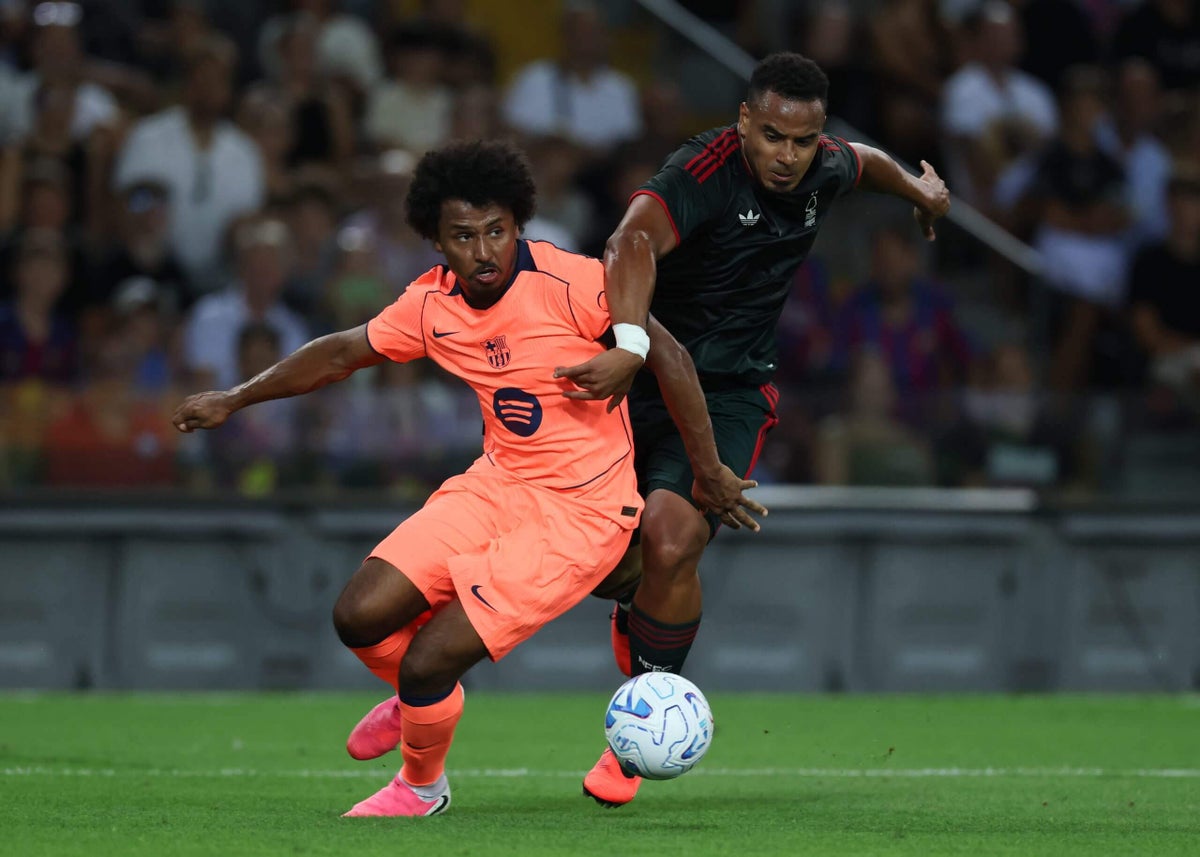
Both the Como Cup (held in that Italian city across five days from July 28 and involving six teams, including Crystal Palace) and the Friuli Venezia Giulia Cup (involving hosts Udinese, Barcelona and Nottingham Forest and played over three hours last Saturday night) were scheduled for the mid-to-latter stages of the clubs’ pre-seasons.

The Como Cup, in which Crystal Palace participated, featured three games of 45 minutes (Marco Luzzani/Getty Images)
This is when players would be expected to be logging more than 60 minutes in game scenarios across the week, and both Premier League sides fielded entirely different teams for the back-to-back 45-minute fixtures they participated in.
“The game would likely only be a small part of the load that week,” Driscoll says. “I would put a football strength training session either side of it, and the fact the game is split into two (separate matches) could extract more effort in the match subconsciously for the players.”
Closer to the season is when teams shift from building towards the demands of competitive football to trying to replicate them, while giving as many players as possible that experience. Yet the expectation is not to have every player at peak condition on the opening day of a league season, and very rarely do outfield players play the full 90 minutes in any conventional friendly.
“It will probably take three to four games into the season before players reach the fitness levels we target during pre-season,” McElhone says, “because nothing replicates the pressure that comes once the first ball is kicked.”
The expectation to provide a fully-fit squad on day one of a new campaign is not the primary aim of pre-season either, especially as game-frequency increases and squads grow in size, with returning players who have been involved in national-team tournaments and new signings.
“The introduction of five substitutes in a match (which became a permanent part of the Premier League in 2022-23) changed everything,” Driscoll says. “Before, you needed 11 players ready to play 90 minutes. Now, producing 16-20 players physically able to play 60 minutes looks more useful.”
These differing friendly formats are not new — all three specialists consulted said non-90-minute matches, whether played in public or behind closed doors, have been a regular part of pre-season for the past 20 years. The head coach or manager of a side will usually have the final say on how those friendlies look, with performance staff providing advice around individual player usage and recovery.
“We do not try to govern how many games need to be played, or who must play when,” McElhone says. “We usually work with the coaching staff and fit around them, offering guidance on minutes and planning our sessions around their loads and constant monitoring.”
Varying the lengths of your friendlies is not the ideal or most recommended way to help pre-season preparations, as these types of matches occur behind closed doors anyway on a weekly basis. As McCall says, “there is no exact formula for preparing players.” Or, as McElhoe puts it, “there’s a million ways to skin a cat.”
“The most important thing,” the latter adds, “is that whatever happens in pre-season means nothing once the first game of the season begins.”
>
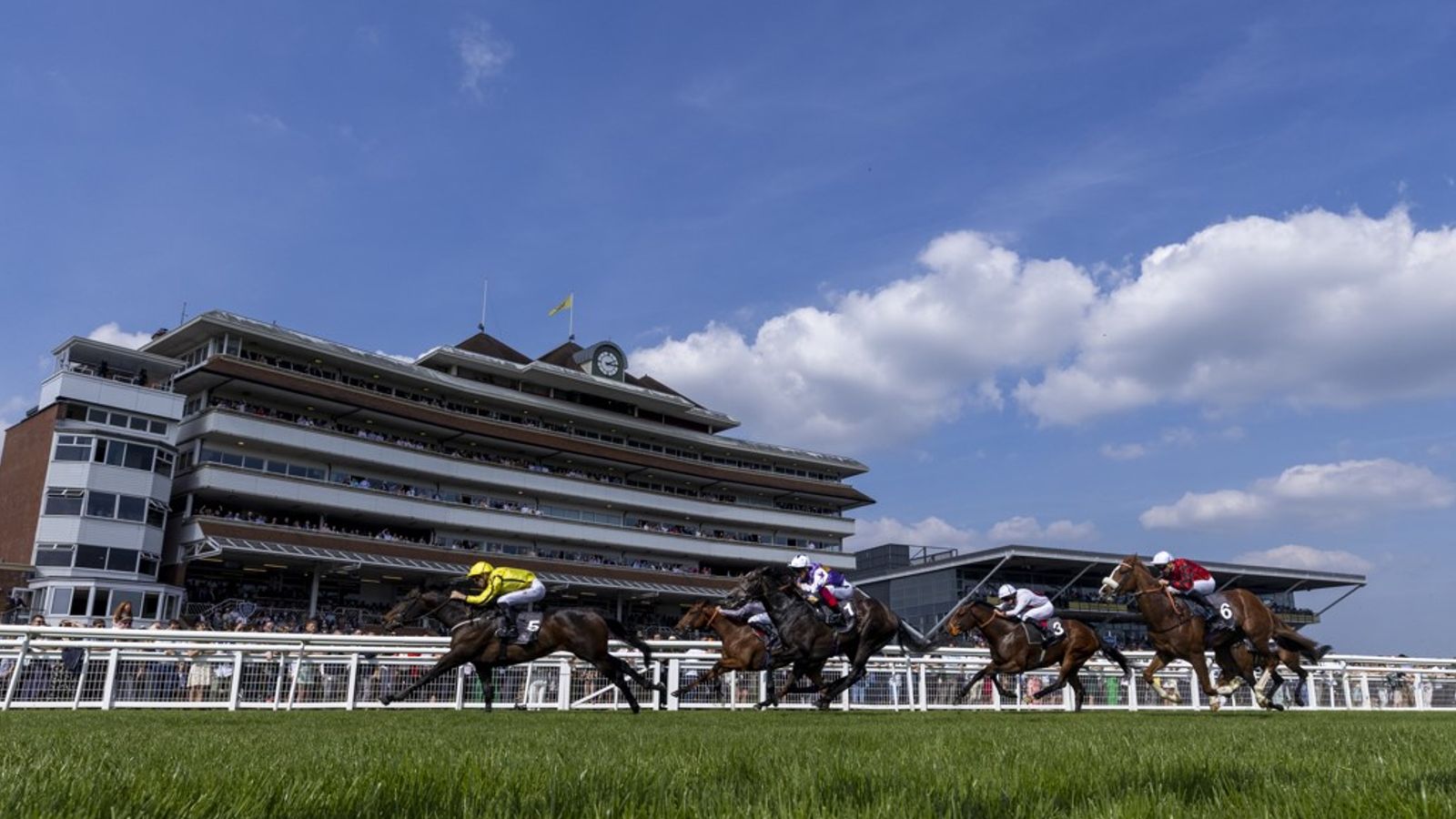
We have a busy day’s racing on Saturday with flat action from Deauville, Doncaster, Lingfield, Newbury and Ripon, live on Sky Sports Racing…
3.10 Newbury – Group Two Hungerford Stakes – Never So Brave and Coppull head competitive feature
Never So Brave and Coppull head a very competitive feature Visit Malta Hungerford Stakes at Newbury this afternoon.
Never So Brave holds the strongest form, having enjoyed a fruitful campaign last year, with wins in the Buckingham Palace Stakes at Royal Ascot, the Summer Mile and then topped off his season with success in the City Of York. Andrew Balding’s gelding is nought from four this year but has been keeping good company and far from disgraced himself in the Sussex Stakes last time out. Bold bid expected.
Coppull is still lightly raced and produced a career best last time out in the July Cup where he came home strongly to finish a narrowly beaten fourth of 11. He steps up to seven-furlongs for the first time today and there could yet be more to come.
Like Coppull, Symbol Of Honour is stepping up in trip and hasn’t been seen over this trip since his first start as a three-year-old. He has a fine record at Newbury, winning here on both starts and most notably last time out in the Group Three Hackwood Stakes.
William Haggas sends Extremely Zain went into the International Handicap at Ascot unbeaten and was a short-priced favourite to continue his winning sequence, however he could only manage fourth. He remains very unexposed and could take another step forward here.
1.25 Newbury- Group Three Geoffrey Freer Stakes – Dubai Honour returns to take on five rivals
Dubai Honour takes on five rivals as he returns in our opening race at Newbury today, the Highclere Thoroughbred Racing Geoffrey Freer Stakes.
This gelding is a credit to William Haggas and connections having won 12 races from 37 starts, winning four Group Ones and accruing over £5 million in earnings. We last saw him back in April when he finished a credible fourth in the Group One Queen Elizabeth Stakes at Randwick.
Mount Atlas and Tabletalk represent worthy adversaries and are set to clash for a fourth time. Mount Atlas, has got the better of his old foe on two of the three occasions that they’ve bumped heads but is three pounds worse off at the weights here having outbattled Tabletalk in a gripping finish to the John Smith’s Silver Cup.
Gamrai remains unexposed after being pipped to the Copper Horse Stakes at Royal Ascot. He has since been bought by Victorious Forever, duly switching yards to George Scott from John and Thady Gosden and there could be plenty of improvement left in the tank.
Rebel Rocket is the only three-year-old in the field and takes the step up in trip on his fourth start after last being seen finishing sixth in the Derby. He is of interest.
3.25 Ripon – Great St Wilfrid – Fast Track Harry, Lord Roxby and Dark Cloud Rising clash
Fast Track Harry, Lord Roxby and Dark Cloud Rising all clash in what looks to be a typically open renewal of the William Hill/MND Association Great St Wilfrid Handicap.
Clive Cox sends just his second runner in the last five years to the ‘Garden Racecourse’ this afternoon and could have a winning chance with Fast Track Harry who arrives here after a fine run behind Amazing Journey, who went on to win the International Handicap on King George Day. Having already won off of this mark of 95, he rates a danger to all.
Lord Roxby arrives here off the back of a course and distance success where he saw off the reopposing Dark Cloud Rising in convincing fashion. Both hold good claims here with the David O’Meara runner four-pounds better off at the weights, with a win over the track and trip of his own, and bids for a fourth win in the coveted contest for his handler.
Best of the rest
12.45 Deauville – Group Two Prix Alec Head – Rabbit’s Foot returns having not been seen since June where she beat recent Group One scorer Tiffany.
1.33 Deauville – Group Two Prix Guillaume d’Ornano – Daryzan and Montreal lock horns in a fascinating affair.
1.45 Ripon – Restricted Class Two novice, £15,462 to the winner.
2.35 Newbury – Unexposed Scoville dropped two-pounds in valuable race.
2.55 Ripon – Go Vince Go and Educating Rita clash in the Silver Cup.
3.25 Deauville – Group Three Prix de Lieurey – Narissa, The Prettiest Star and Esna all feature.
3.42 Newbury – Arabian Force, Sea The Casper and Golden Story’s half-brother debuts.
3.55 Ripon – Ralph Beckett sends hat-trick seeker Swiped.
4.00 Deauville – Group Three Prix Gontaut-Biron – Leffard and Cualificar take on the likes of Map Of Stars, Wimbledon Hawkeye and First Look.
10.06 Saratoga – Grade One Christophe Clement Turf Stakes – Ancient Egypt and Survie clash.
>
Sports
Britain’s Romell Glave: From two serious back injuries and 2022 in a back brace to European 100m champion – ‘Delayed but not denied’ | Athletics News
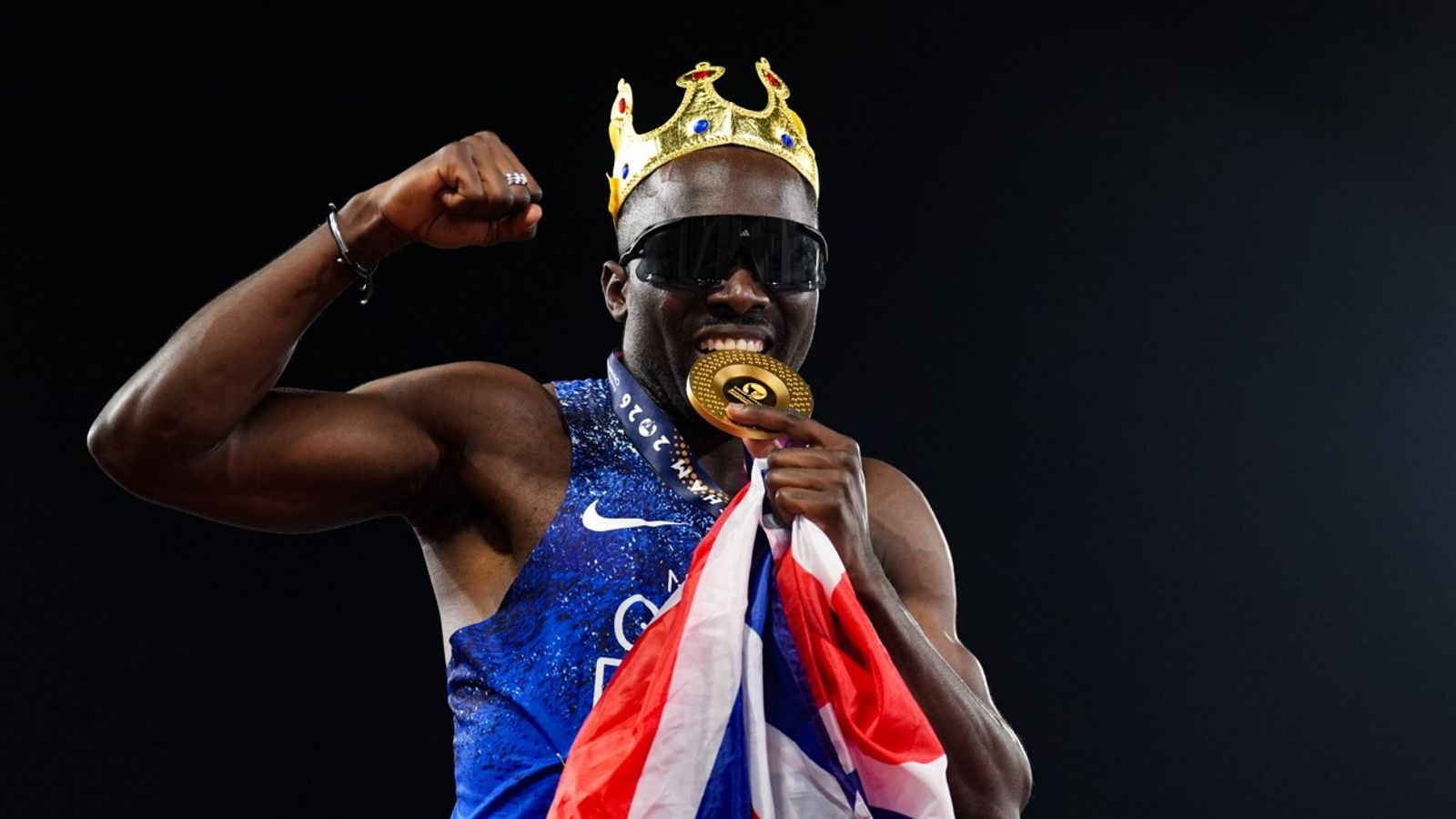
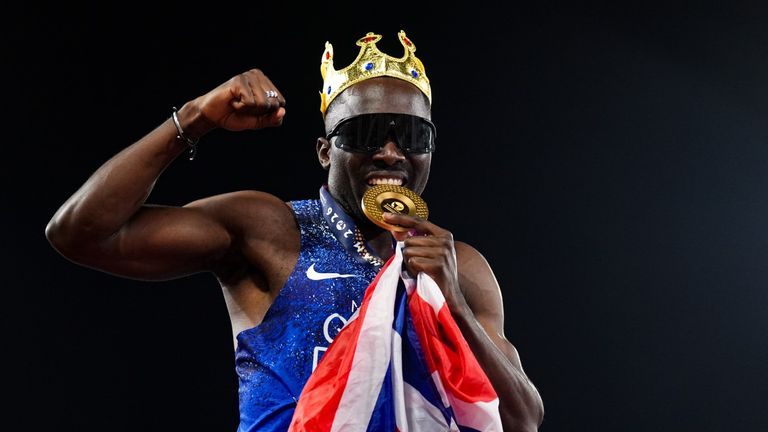
Romell Glave chats exclusively to Sky Sports following his 100m European Athletics success
“2026 was my year of redemption,” Romell Glave exclusively tells Sky Sports two days on from when he stood on the podium draped with a 100m gold medal at the European Championships.
The 26-year-old’s story and journey to the point of becoming European champion in athletics’ marquee event is a remarkable one. “Delayed but not denied,” Glave says, with a twinkle in his eye.
Born in Manchester, Jamaica, Glave moved to the UK at the age of 15, joined Croydon Harriers, and by the age of 17 was the fastest 100m sprinter on the planet for his age group, clocking a time of 10.21.
Injuries hit regularly and harshly over the intervening years. So much so that he spent the majority of 2022 in a back brace having fractured vertebrae – issues first occurring when he was forced to train on grass due to the Covid-19 pandemic.
His back injury meant he was only able to make his European Championship debut for Britain in 2024, aged 24.
At that competition, Glave qualified for the 100m final and claimed the bronze medal in a tight race, but though a quest for more followed, he then fractured and inflamed his back for a second time, forcing him to miss out on the Olympic Games in Paris.
In 2026, he returned with a vengeance to succeed. He won gold in the 60m at a World Indoor Athletics meet in Stockholm – defeating Olympic silver medallist Kishane Thompson. He broke the 10-second barrier legally for the first time when he ran 9.98 to win the British title in June, and lowered his personal best again to 9.97 in London the following month.
All his work then culminated in European Championship 100m gold in Birmingham on Tuesday.
“It’s been a journey and a half and also a total rollercoaster,” Glave tells Sky Sports. “And I know success was a long time coming.
“I just needed to stay healthy because I knew that with the support I’ve had for the last three years since I had my back fracture, from medical staff like Nick Allen and Peter Horobin who have been there for me, I had a great chance.
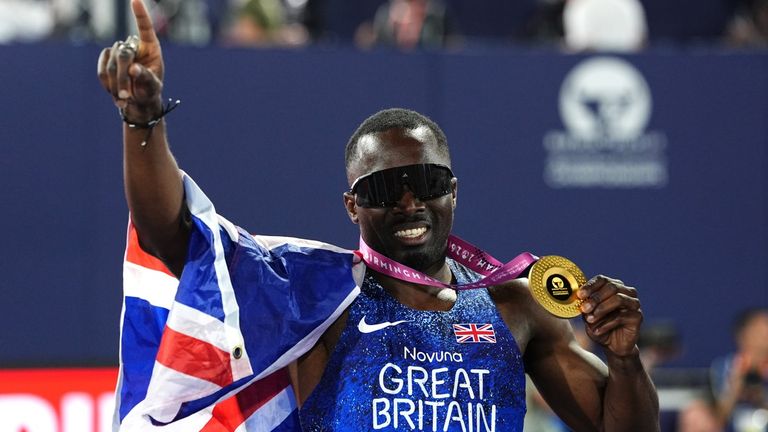
Glave was the world’s fastest 17-year-old but injuries held him back up to now
“To be able to stand here as a European champion means a lot. It’s testament to the hard work they put in to get me to the line and also to keep showing up for me because without them, I don’t know if this would be possible.
“It’s been a euphoric moment for me, an unreal feeling. Just a feeling of relief the job is accomplished. This is why we do this sport, it means so much to me.”
‘2026 was my year of redemption – nothing was stopping me from succeeding’
Hit by one injury knockback after another, many athletes may even have called it quits.
Instead, Glave tackled 2026 with an intensive determination to succeed. So much so that even when doubts, nerves or physical issues crept in he was able to channel them out.
It was notable watching the start line to the 100m final just how relaxed Glave appeared, a state very difficult to achieve ahead of an event that means so much and that he would have worked so hard towards. But this was an athlete totally in flow.
“I would say I came into this season just to show a bit of redemption after the loss of years, loss of seasons to injury,” Glave says.
“But to also start this season with a very resilient mindset of: ‘I want to go for everything.’ I was a 2024 bronze medallist at the European Championships and missed the gold medal by a small margin. So why not dream bigger and upgrade my medal to gold?
“That was the aim and objective for the season, from the start of the season. To be European champion and to be able to walk away from from that 100m being crowned king of Europe. It’s an amazing feeling.
“It brings me calmness. I’ve been dreaming of this moment and to be able to live it, it’s very surreal.
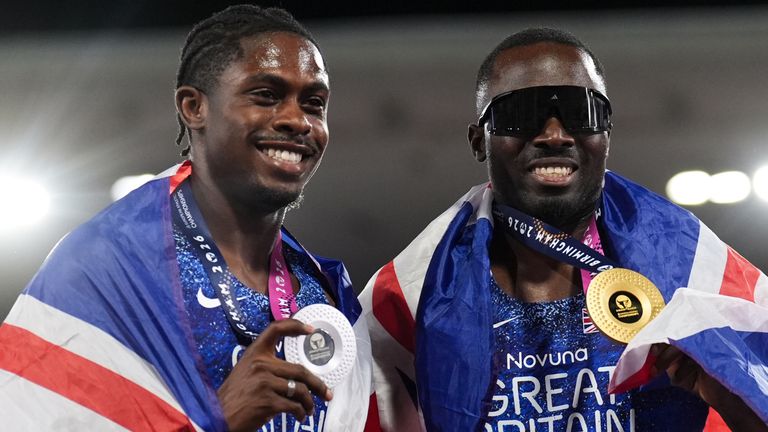
Glave and British team-mate Jeremiah Azu finished first and second in the 100m final
“Over the last few days, I have had discomfort in my abdominal muscles, but I was not going to let that stop me from obtaining my objective.
“I was able to go out there, regardless of how I was feeling, the discomfort I was enduring, and just focus on the job that was presented in front of me. I got the job done.
“I was ready for this moment, this occasion. I was ready mentally, most importantly, regardless of how I was feeling emotionally or physically, I wasn’t going to let that take away the moment from me because I prepared all season long for it.
“This season was all about redemption, that’s the theme, and speaking to my sports psychologist, we’ve been working on all of those formulas to make sure I’m preparing the best way possible to get through.”
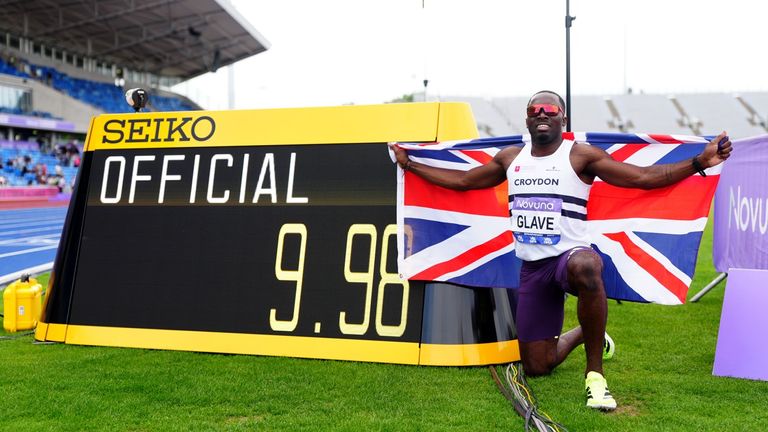
Glave has tackled 2026 in sensational fashion after a devastating turn in 2024 saw him miss the Olympics
‘2024 back injury left a void in my heart’
Thinking back, Glave lays bare the inner turmoil he experienced having battled through one serious back injury, won a European Championship bronze, but then suffered with his back again to miss an Olympics Games and virtually have to start his career all over again.
“It was very disappointing. After the 2024 European Championships, I could feel I was on that momentum, because the trials were two weeks afterwards.
“My first session back after I was crowned European bronze medallist, I picked up the injury and it was a very sad moment for me. My mind went to missing the Olympics, because everyone trains towards going to that.
“And to get a European bronze and have that momentum going into the Olympics, that’s what everyone wants. To cut the journey short at that moment, it left a a void in my heart. I’m never going to get that moment back, that’s gone.”
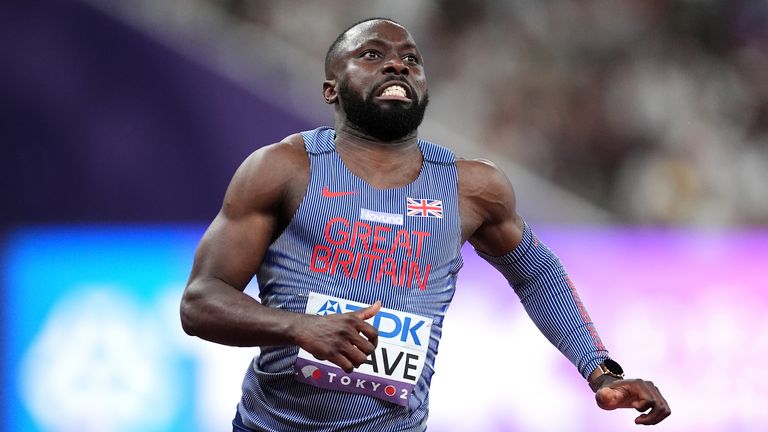
Glave had to endure a career filled with serious injuries and setbacks
One man Glave has repeatedly singled out in the aftermath of his success has been coach Michael Afilaka, someone he describes as more than just his sprint coach: “a mentor, life coach, a man of wisdom and integrity.”
Indeed, referencing his working relationship with Afilaka from serious injury to European champion proves very emotional for Glave.
“He’s been doing this for over 20 years and is a private person, but God presented him to me on this journey. Having him beside me has been a life-changing decision.
“During those darkest times of my life, he’s the only that is there. His belief, his dedication to continue to show up for me, I haven’t really seen that before. I haven’t really seen it in my life, in the way he has shown up.
“It’s very emotional just talking about it every time, because he didn’t have to do it, but because of his persona, he wants the best for me.”
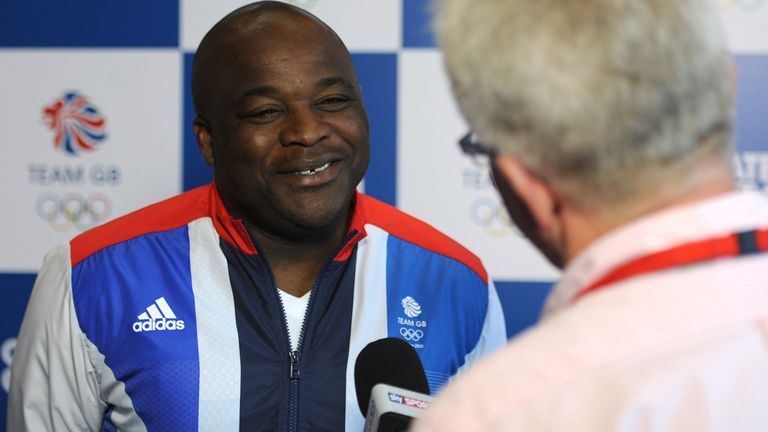
Glave spoke emotionally about the time and support coach Michael Afilaka has afforded him
‘The next goal is world domination’
In terms of what’s next, Glave is clear. He wants to challenge on a world level at the top of the sport.
“World domination is now the main goal, but just to have this stepping stone as European champion, I’m focusing on one step at a time.
“This season is like a stepping stone of what is to come for Romell Glave. I’m in a historic British team and now have the ultimate chance as well.
“So to be there and show up in a field of world-class athletes, that’s the main objective now. To perform against those athletes, the world’s best.”
>
Sports
Arsenal transfer news: Gunners lead race for Brighton midfielder Jack Hinshelwood – Paper Talk | Football News

The top stories and transfer rumours from Saturday’s newspapers…
Transfer news
Arsenal are leading the race to sign Jack Hinshelwood from Brighton. It’s believed that a bid within the range of £43m to £51m could lead to an agreement – The Sun
Pierre-Emile Hojbjerg has been stripped of Marseille‘s captaincy for turning down the £15m Newcastle transfer and ‘irritating’ club’s owner by refusing to leave – The Sun
Former Manchester United midfielder Fred – who joined Old Trafford for £60m in 2018 – has signed for his boyhood club Atletico Miniero after mutually agreeing to terminate his Fenerbahce contract – Daily Mail
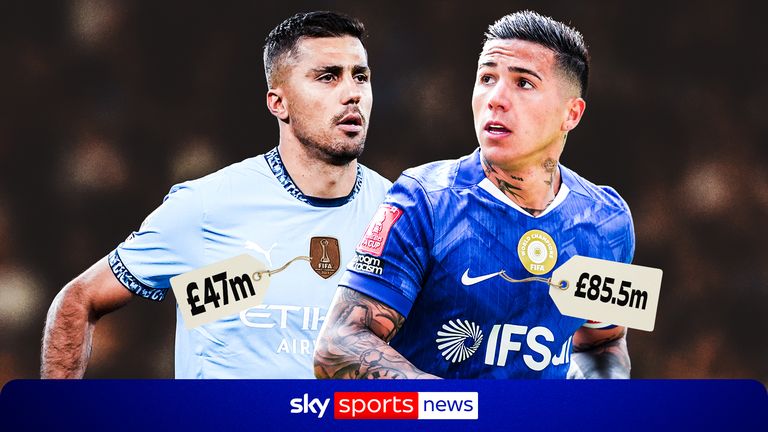
Between the Lines takes a closer look at why the transfer values of Rodri and Enzo Fernandez are so different
The agent of Mika Godts has said a move to PSG is very close for the 21-year-old – The Sun
Former Manchester United forward Jadon Sancho reportedly prefers a move abroad despite receiving offers from Premier League clubs – BBC Sport
Real Madrid are reportedly looking to move on Ferland Mendy and Raul Asencio before the transfer window closes – AS
Manchester United are maintaining their interest in Crystal Palace midfielder Adam Wharton as the summer unfolds – The Sun
Bayern Munich sporting director Max Eberl insists they will not be able to reach an agreement with Aston Villa for Joao Palhinha on the current terms – Daily Mirror
Coventry are keen on signing 20-year-old English defender Josh Acheampong from Chelsea – TalkSport
>

Politics Home Article | Students Urge Government To Make Registering To Vote Easier

Today on Sky Sports Racing: Deauville, Doncaster, Lingfield, Newbury and Ripon | Racing News

Britain’s Romell Glave: From two serious back injuries and 2022 in a back brace to European 100m champion – ‘Delayed but not denied’ | Athletics News
-

 movies3 months ago
Search For Canadian TV Actor Stewart McLean Now Homicide Investigation
-

 Fashion9 years ago
These ’90s fashion trends are making a comeback in 2017
-
Fashion9 years ago
According to Dior Couture, this taboo fashion accessory is back
-
Fashion9 years ago
Model Jocelyn Chew’s Instagram is the best vacation you’ve ever had
-
Fashion9 years ago
Your comprehensive guide to this fall’s biggest trends
-
Fashion9 years ago
Emily Ratajkowski channels back-to-school style
-
Fashion9 years ago
9 Celebrities who have spoken out about being photoshopped
-
Fashion9 years ago
A photo diary of the nightlife scene from LA To Ibiza