
Sports
Can anyone stop Arsenal from winning the Premier League again?

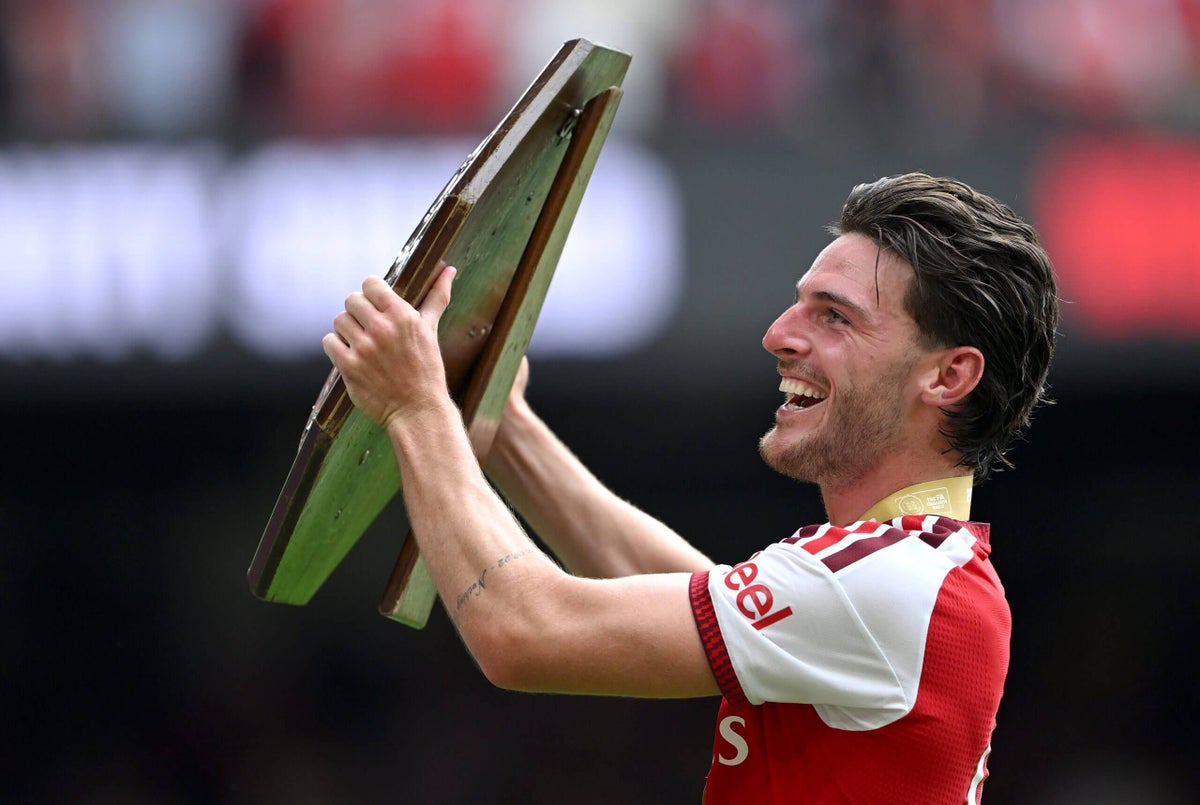
Can anyone stop Arsenal in the Premier League?
It should be too soon to be asking a question like that. We’ve got a whole season ahead of us, 380 Premier League matches in total, starting on Friday under the lights at the Emirates Stadium and finishing in May next year. That’s a lot of football to be played.
It’s also worth remembering that only three managers — Sir Alex Ferguson at Manchester United, Jose Mourinho at Chelsea, and Pep Guardiola at Manchester City – have won Premier League titles back-to-back across the last 34 years.
Rivals, typically, are re-energised, motivated and determined to put right what went wrong the season before. As for the reigning champions, aside from the fact that everyone wants to beat them, the biggest worry is whether it means as much to the players, or even the manager, the following season. To put it another way, is the hunger still there?
Arsenal’s comprehensive 3-0 victory over Manchester City in the Community Shield in Wales on Sunday afternoon provided some possible answers in that respect, and not just because of the goals they scored and the emphatic scoreline.
The clues were there in the off-the-ball actions of the Arsenal players too, in their body language and in the way that every duel seemed to mean so much to them, even in a fixture that still prompts debate among many football fans as to whether winning it actually qualifies as a trophy.

Arteta and his players looked sharp and motivated in Sunday’s game with Manchester City (Shaun Botterill/Getty Images)
Mikel Arteta smiled afterwards when a reporter highlighted to him examples of three Arsenal players (Gabriel, the defender’s international team-mate and new-signing Bruno Guimaraes, and Ben White) revelling in making a challenge or a block on an opponent.
“When you put your soul and your heart into a reaction, that’s what happens,” the Arsenal manager said.
Indeed, the underlying message felt clear at the Principality Stadium: Arsenal supporters might still be basking in the glow of their first league title in 22 years, but Arteta and his players are as driven and ambitious as ever, and that means being hellbent on holding onto the trophy that the club took so long to reclaim.
“Because you want to go through it again,” Arteta explained. “When the desire comes, I want to live that moment again, I want to live all the moments, even bigger than them. We know what it’s going to take, we know the difficulty of the task, that’s why we’ve never done it at this football club (in the Premier League era). So we know that it’s going to demand something special and we are ready for it.”
But are the rest of the Premier League clubs ready? Can a legitimate title challenger emerge from the usual suspects when there has been so much change and churn this summer? City, Liverpool and Chelsea all have new managers, while Michael Carrick is about to embark on his first full season in charge of Manchester United.
The contrast with Arsenal, where Arteta is now the longest-serving manager in English football’s top four divisions, is stark.
Against City, Arsenal looked what they are: a well-oiled machine where all the individual roles are clearly defined, where the movement patterns are familiar (Riccardo Calafiori making runs on the inside on the left, White overlapping on the outside on the right as soon as the wide attacker shifts infield; the two full-backs nearly combined for a goal at one stage), and where a way of consistently winning matches has long been established. And no, that didn’t involve a set-piece goal against City, in case you were wondering.

Myles Lewis-Skelly assisted a goal inside the first 30 seconds of Sunday’s game (Shaun Botterill/Getty Images)
It’s true that the Community Shield is rarely a reliable yardstick for what’s to come — only eight of its 34 winners before Sunday’s game have gone on to claim the Premier League title. This year’s curtain raiser featured a number of players who were making their first club appearance of any description this summer because of the World Cup. It’s a safe bet that Erling Haaland, who was one of those players, won’t be substituted again after 53 minutes this season unless he’s injured.
Equally, some potentially broader issues were impossible to ignore in Cardiff, not least how different Manchester City’s midfield looks without the effervescent Bernardo Silva and the influence of Rodri. Different is one way of putting it; weaker and lacking leadership is another. It’s unthinkable that City allow Rodri to leave this summer without signing a replacement, whether that’s Enzo Fernandez from Chelsea, or someone else.
As for Arsenal, they’ve already strengthened in that department, bringing in Guimaraes from Newcastle for £75million and prompting Mikel Merino to suggest a few days ago that Arsenal now have the best midfield in football. Arteta had a grin on his face when that line was put to him.
As comfortable as Guimaraes already looks in an Arsenal shirt — showing a trademark mix of brains and brawn against City — it was the two players alongside him who played pivotal roles in the goals: Myles Lewis-Skelly, with a lovely disguised pass for the opener after only 24 seconds, and the excellent Martin Odegaard, who had a hand in the second and elegantly scored the third.
“Can we play you every week?” sang the Arsenal supporters after the Norwegian made a fool out of Gianluigi Donnarumma, sitting the City goalkeeper on his backside with a beautiful dummy before slotting into an empty net.
“Are you Tottenham in disguise?” followed moments later.

Phil Foden played in a City midfield shorn of Rodri and Bernardo Silva (Glyn KIRK / AFP via Getty Images)
It was that sort of day for Arsenal, whose fans were greeting passes with “oles” before the hour-mark, taunting City’s new head coach Enzo Maresca about his short-term job prospects, and enjoying the sight of Christos Tzolis, their £34m signing from Club Brugge, mark his competitive debut with two assists. Short of asking the French referee Clement Turpin to play on the left wing, it’s hard to imagine Arsenal could have found a more perfect Leandro Trossard replacement than Tzolis.
All the while, David Raya continued to serve up the occasional reminder with his feet (drilled 40-yard passes into Tzolis) and hands (effortlessly claiming crosses and making an outstanding save to keep out Antoine Semenyo’s late effort) as to why he’s the best goalkeeper in the Premier League.
As the game got away from City (some would argue that was the case inside the first minute) and Arteta started to make widespread changes, there was a reminder of Arsenal’s strength in depth, too.
Bukayo Saka, Declan Rice, Martin Zubimendi, Piero Hincapie, Viktor Gyokeres and Eberechi Eze all came off the bench. Merino, a World Cup winner, was an unused substitute, along with the gifted teenager Max Dowman. As for Gabriel Martinelli, Ethan Nwaneri and Gabriel Jesus, they didn’t make the cut.
Despite all of that, there is still work for Arsenal to do in this transfer window, both in defence — Cristhian Mosquera performed well alongside Gabriel, but Arteta will want a more established centre-back to step into the shoes of the injured William Saliba — and in the forward positions, where an A-list attacker has eluded them so far this summer and will almost certainly be required in order for the club to take the next step in the Champions League.
In terms of the Premier League, though, it’s hard to escape the feeling that Arsenal, once again, will be the team for everyone to beat.
>
Sports
Cristiano Ronaldo and Lionel Messi are talking about retirement. What does football look like without them?
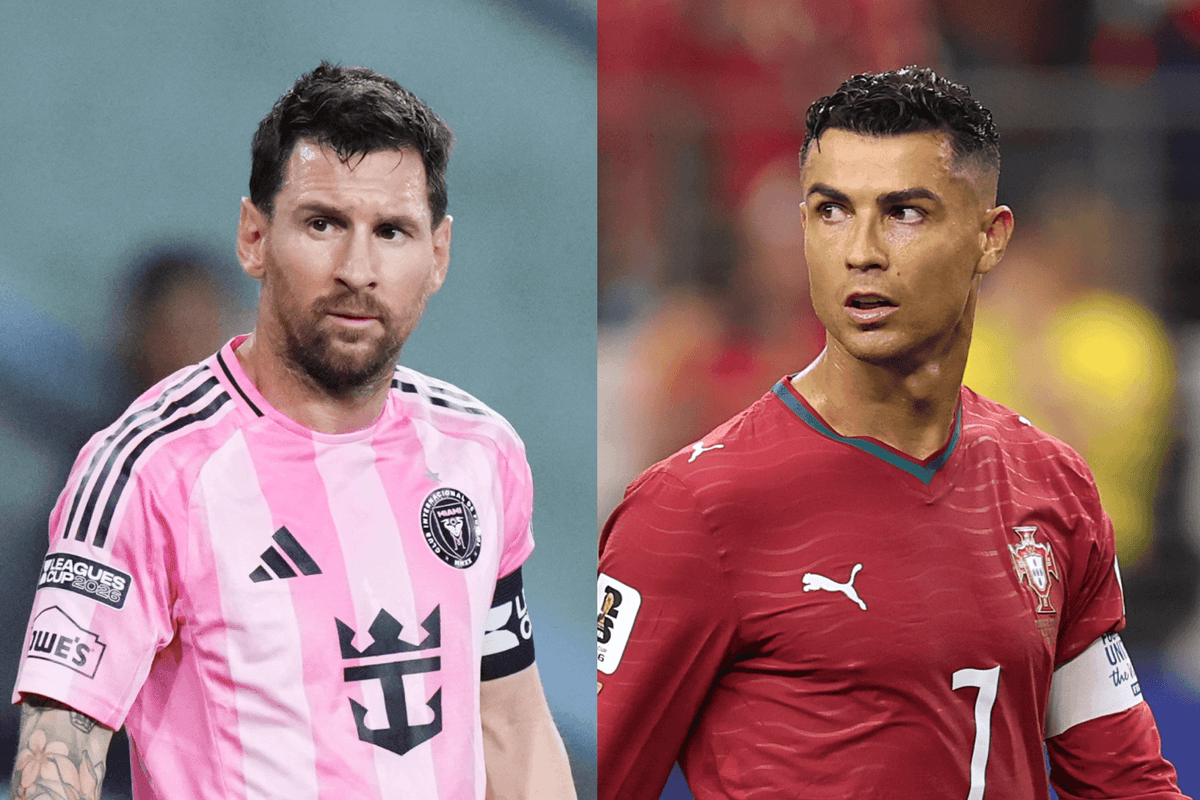
It was assumed this summer’s World Cup was the last time Lionel Messi and Cristiano Ronaldo would both be on the same stage at the same time.
At 39 and 41, it was implausible that they could soldier on through another four-year cycle and re-appear in 2030.
For differing reasons, the tournament cast an element of doubt over both’s finality. Messi’s majesty, with eight goals and four assists, suggested he could do this walking-genius shtick for a while longer. Ronaldo’s on-field tears and post-match comments suggested his inability to accept that Father Time had called.
“I’ve given my best. I’ve won three titles for Portugal. Before Cristiano, we hadn’t won any,” he said, referring to himself in the third-person, after a meek last-16 exit to Spain.
“The biggest title I won with the national team was in 2016 which, for me, has the same value. That’s what I repeat: I leave with a clear conscience.”
He sounded like a man trying, and failing, to convince himself that he was content with his lot. That Messi secured that elusive World Cup triumph in 2022 did not make him feel incomplete. Perhaps the lure of a home World Cup in Portugal would be too much to resist after all.
However, in an interview with Vogue this week, amid talk of his home wedding and lavish diamonds, he revealed that he expects his current contract at Al-Nassr to be his last.
“This is probably my last year of football, and I want to leave a spectacular legacy,” he said.
“I have my future all mapped out. I have so many things to keep me busy that to tell you just one thing is hard. Because football could leave a big hole, you have to fill your time in various ways, not just one.”
Padel was, of course, mentioned. You cannot legally be an ex-professional footballer without a penchant for the racquet sport.
What was so striking, however, was that he sounded like he had finally made peace with the thought of retirement. The admission came in the same week that his great nemesis Messi also hinted at retirement.
Messi’s contract at Inter Miami runs until 2028, but the death of his father Jorge this month has thrown his future into doubt. As the man who had overseen his career since he brokered the trial at Barcelona, he was Messi’s inspiration. Shorn of that connection, the reasons for continuing are harder to find.
“You were by my side from the beginning; there was so little left until the end. Why couldn’t you hold on just a little longer so we could finish it together?” he asked on his social media tribute.
“I don’t know what I’m going to do without you. I don’t know how to carry on. I used to just play football, and now I’m really not sure if I’ll carry on doing it for much longer.”

Messi with his father Jorge at the 2022 World Cup (Robert Michael/picture alliance via Getty Images)
The Messi-Ronaldo duopoly has dominated the sport since 2008 when they first met in the Champions League semi-final.
Across 15 years, they played 36 competitive matches against each other, sharing almost 3,000 minutes on the pitch. They made Spain’s El Clasico a must-watch global event between 2009 and 2018 and challenged each other to break records. La Liga was an annual proxy war for the Ballon d’Or, a title they shared equally for 10 unbroken years — until Messi added another three in the twilight of his career. The latest came in 2023, when Messi was an Inter Miami player.
In the past five years, however, the longevity of Messi’s genius has practically upended the narrative of the previous two decades. By leading Argentina to two Copa America titles and the World Cup in 2022, he ticked off the only remaining boxes in his career. Before then, Ronaldo’s Euro 2016 triumph and league trophies in England, Spain and Italy had afforded weight to the argument he was the more complete, more adaptable force.
These triumphs, underlined by more mesmerising moments at this summer’s World Cup, have reframed the debate.
It is no longer Messi vs Ronaldo. It is Messi and everyone else. To sit at the top of every other player in your era is an incredible achievement, but for so much of Ronaldo’s career they were inextricably linked. The goals, the trophies, the legacy. Messi’s brilliance is surely part of what drove Ronaldo, a less gifted player, to extraordinary heights — in some years, above the Argentine.

Ronaldo celebrates after winning Euro 2016 (VALERY HACHE/AFP via Getty Images)
Legacy is a subjective term that is hard to measure.
Ronaldo has more than 1,000 goals and holds the record for most international games and goals. Messi has won eight Ballons d’Or, scored a record 91 goals in a calendar year and has won the most European Golden Boots.
The list of records is endless, but their choice of final destination, where they would hang up their boots, was a bet on their legacy. There was no romantic return to Barcelona or Newell’s Old Boys for Messi. No full-circle year at Sporting CP or Nacional, where Ronaldo started out on the island of Madeira.
Both players hitched their wagon to emerging markets. Messi went to PSG in 2021, owned by Qatar, and then onto Inter Miami in MLS. Ronaldo kickstarted Saudi Arabia’s attempts to become a football superpower when he moved to Al Nassr.
Ronaldo has to shoulder the criticism of associating with a nation accused of sportswashing its human rights record, but he surely has an interest in the league achieving its ambition of becoming a major player in the sport. If it does, he is the face of the project. If it does not and the investment fades, it will look like he backed the wrong horse.
It is a shame that there was no last dance between the two at the World Cup. Instead, their last meeting was a 2023 friendly between Messi’s PSG and Ronaldo’s Al Nassr in Riyadh. That was their first goodbye to the world stage. Now the final one is coming, perhaps sooner than many wish.
Is football ready for life after the big two?
Kylian Mbappe, Lamine Yamal and Erling Haaland are the three individuals primed to take over the spotlight, but can they fill it in the same way?
Maybe no two players can recreate the same fervent wrestle for GOAT status. There might be more televised matches and more sponsorship deals than ever, but the way fans consume football has changed. It has become more fragmented. Shorter attention spans have created a clips climate in lieu of live match viewing. A more transactional and fickle association to teams, fuelled by social media, means it is often a player rather than a team that millions follow.
Messi and Ronaldo at their peak would have been the perfect prototypes for this era. Walk around London now and you will see Miami and Al Nassr tops sporting the same names on the back.
Those factors would suggest a climate in which individual rivalries would flourish. But perhaps what made Messi and Ronaldo’s era special was that, while they were competing for supremacy, they also had to achieve team supremacy. To be the king, you had to win your team the crown.
All sports rely on cults of personality. Tennis is still grappling with that reality following Roger Federer and Rafael Nadal’s retirement. Football is, of course, a team sport and the World Cup proved that there is no shortage of spell-binding characters. Vinicius Jr, Jude Bellingham and Michael Olise are all highly marketable figures.
The only issue is that, still, no player stirred the imagination the way a 39-year-old Messi was able to. No player’s struggles engendered such attention as Ronaldo’s demise.
They remain dominant, even as faded figures. If they are soon to be ghosts, given how so much of their careers have run parallel, it would be fitting if they exit stage left together. A final piece of narrative symmetry.
>
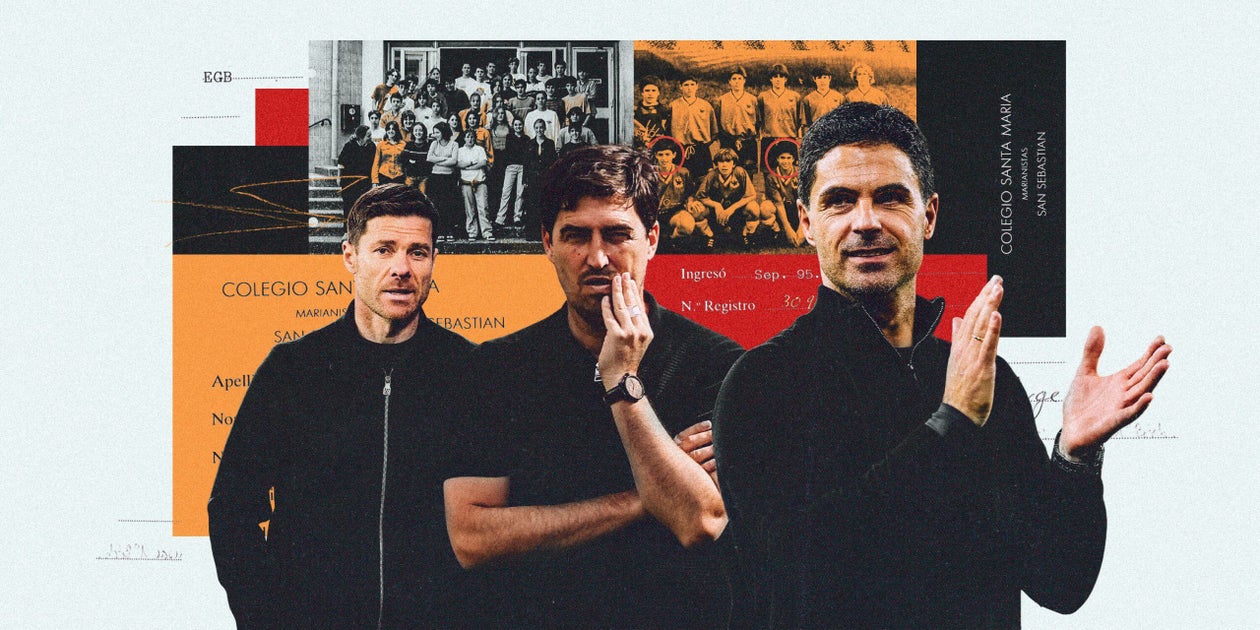
The walk to Plaza Errotatxo takes you past the golden sands and turquoise waters where the three boys at the centre of this story began their football education.
If you are not familiar with this part of San Sebastian in northern Spain, it is easy to miss the entrance to Antiguoko KE’s headquarters, tucked behind a row of moped bays in the shadow of an eight-storey apartment block. The sign above the wooden door confirms this is the right place. And behind that door, who can blame them for showing off a little?
“We now have three Antiguoko coaches in the Premier League,” says Roberto Montiel, one of their long-standing coaches, with a smile to acknowledge how this small area has delivered the managers or head coaches of Arsenal, Liverpool and Chelsea — surely one of the more implausible statistics of modern football or, indeed, any sport.
“At the start of summer, there were only three English coaches in the Premier League,” Montiel adds. “And the three from Antiguoko are at top-tier clubs of the highest level.”
Antiguoko are special: a Basque dream team based a couple of hundred metres from La Concha Bay, with a 40-strong list of alumni who have come through their junior system and gone on to make top-division careers.
It was here that a schoolboy Andoni Iraola set out on the journey that has led to his appointment, 35 years later, as Liverpool head coach.
One of his old No 15 shirts from playing days at neighbouring Bilbao’s Athletic Club is among the many framed on the walls. “Para mis amigos del Antiguoko, que algo me habran ensenada,” reads the message above his signature — For my friends from Antiguoko, they must have taught me something.

Andoni Iraola’s signed shirt at his old club (Daniel Taylor/The Athletic)
Yet that tells only part of the story when it comes to Antiguoko’s influence in England’s top division and why Edorta Salegi, their president, throws out his hands when he is asked how many people attend their youth fixtures. “Two hundred, sometimes,” he says. “Including 50 scouts.”
On the far wall, a pair of Xabi Alonso’s boots are displayed in a glass cabinet — the ones the newly-appointed Chelsea manager wore playing for Liverpool in the iconic 2005 Champions League final against Milan. “They smell of anxiety,” is the joke. Anxious or not, Liverpool fought back from 3-0 down at half-time, won on penalties and Alonso held the trophy to the skies.
A pair of Mikel Arteta’s boots are encased, museum-style, on that same wall, and there are plenty of tales about the Arsenal manager, too. Arteta was the star boy, the special one, the leader, as this pioneering neighbourhood team forged their reputation, travelling to tournaments in Sweden, Italy, the Netherlands, Mexico even, and almost always winning.

Mikel Arteta’s old boots and shirt at Antiguoko (Daniel Taylor/The Athletic)
“I was coaching the under-nines,” says Salegi. “One of the player’s fathers came up to me and said, ‘Hey, there’s a really good player at school, this boy’s a phenomenon’. Lots of parents were saying the same. I said, ‘I’ll go and have a look’. It was Mikel Arteta. And he stood out from everyone. That kid was doing things, at the age of nine, that weren’t normal.”
Around the corner, sitting outside one of the neighbourhood’s pintxo bars, another of Antiguoko’s former players, Alvaro Parra, shares his memories of Arteta. One is that, even as a boyhood Barcelona fan, the young Arteta would always choose to be Arsenal when they were playing the FIFA computer game.
Their school years come to mind. “There was a boy in Mikel’s class with Down’s syndrome,” says Parra. “When they played football, Mikel was so good he would dribble past the whole team to reach the opposition goal. Then he’d stop, pass it to this boy and he’d score.”
Iraola was born in June 1982 — midway through Spain hosting the World Cup — three months and six miles from Arteta’s birth in the March. Alonso was in the next year up at school, with Aritz Aduriz, the future Athletic Club and Spain international striker. All four were often in the same Antiguoko team, which makes it easier to understand why the club have run out of space in their trophy cabinets.
“There’s one particular memory of going to Benidorm for a tournament,” says Parra, then a centre-back. “We all started playing in different positions. For example, Aritz Aduriz was in goal, Xabi Alonso up front, Iraola on the left of midfield.
“We started losing every match, and the organisers gave us a bit of a telling-off, as if to say, ‘Bloody hell, you’ve just won the league, and you’re making a right fool of yourselves’. They put us back in our proper positions, and we ended up winning the final, with a goal from Xabi Alonso from the centre circle.”
Team photographs from the time show the boys lined up in their shiny blue Antiguoko kits, staring back at the camera from beneath mops of dark hair.

A team photo featuring Iraola, bottom left, and Arteta, middle of the front row (Antiguoko KE)
Alonso, everyone agrees, was “very small, very frail” and “not that good”, until he shot up in size at the age of 17.
“In one under-17 final, we left him on the bench,” says Salegi. “We saw more of Mikel Alonso, his brother. But it turns out that Xabi had a growth spurt and took control of midfield.”
As for Iraola, he grew up as an only child in ‘caserio’, to use the Basque term, meaning the countryside around Usurbil, south-west of San Sebastian.
“My first impression was of a very quiet and shy lad,” says Parra, who can joke about being one of the team’s players who did not make it at a professional club. “The real impression came when I saw him play and thought, ‘Wow’. He was slight, not physically strong, but he dribbled very well, and you could immediately see he had a lot of quality.
“He always played as a right-winger for us and, when he joined Athletic, Ernesto Valverde moved him back, dropping him deeper. At first, he was worried, because he didn’t know how to defend. He was thinking they were playing a dirty trick on him. But Valverde told him, ‘You’re going to be the best right-back in Spain’.”
From the age of 13, Iraola was enrolled at the Marianistas school in San Sebastian. It has been knocked down since those days, rebuilt and is now called Summa Aldapeta. But they still have his old registration form and class photographs.

One of Andoni Iraola’s school reports (Summa Aldapeta)

Iraola (circled, back row) at school (Summa Aldapeta)
From here, it is just a short stroll down the hill to the Barandilla de la Concha, the ornate white balustrades for which the city’s seafront is famous. Here, Parra explains, is where Iraoloa’s story was really launched.
“The Antiguoko scouts would always go to the beach. From the promenade, they’d watch and say, ‘Who’s that?’ And that’s where they’d sign them up: La Concha beach. We’d set up portable goals and, instead of playing on real football pitches, we’d play on the sand when the tide was out.”
Locally, they make the point that beach football in northern Spain isn’t always how you might imagine. The sun isn’t always shining in San Sebastian, and the freezing-cold winds whipping in off the Cantabrian Sea can be fierce. Hence the three sculptures at the western end of La Concha Bay known as the Comb of the Wind.
“There were crossbars and posts that we’d set up,” confirms Montiel, who coached Iraola for six years. “You’d mark out the pitch where the beach was driest, and then you’d play your match. Sometimes there were puddles. You had to deal with the puddle, get past the puddle, and any wet patches in the sand.”

The San Sebastian beach where Iraola, Arteta and Alonso learned their trade (Daniel Taylor/The Athletic)
Salegi remembers it, too.
“The beach requires extra physical effort,” the Antiguoko president says, sitting in the clubhouse bar. “That shapes a player’s character. I’ve played on the beach when, as you were about to take a corner, suddenly a wave would come in.”
The stories are wonderful. Another goes back to the time, in the under-14s, when Iraola, Alonso and Arteta used to train on a gravel pitch beside Campo de Futbol Municipal Berio, the pretty little ground where Antiguoko run teams up to under-19s level.
“At that time, we were playing in a league where the other teams were older than us,” says coach Montiel. “We’d win a lot of matches 1-0. So I said to them, ‘Let’s try something. I’m going to kick the ball up to Andoni, he’ll bring it down and three of you, without fouling him, are going to try to take the ball off him. Go at him with everything you’ve got — let’s see how long he can keep possession’.

Roberto Montiel (left) and Edorta Salegi (Daniel Taylor/The Athletic)
“Well, a minute went by, and they didn’t take it off him. Three players were trying to get the ball off him. I said to them, ‘That is what we have to do when there are five minutes remaining. We have to hold onto the ball. And there’s a lad here (Iraola) who’s got God-given quality. What do you have to do? Give the ball to him’.”
Salegi’s association with Antiguoko goes back over four decades. He says there are “no secrets or mysteries” behind their success, just “tremendous passion, character, talent, physical attributes, avoiding injuries, good family environments, many things have to come together”.
Or consider the way Parra sums it up. “Antiguoko is the most famous youth academy in Spain right now — after Barcelona, because they have La Masia, but more so than Real Madrid. And in terms of ratio, probably even more so than Barcelona.”
It is no surprise, therefore, that bigger, professional clubs want to tap into their knowledge, especially when you hear about some of their past victories, scoring five goals against Real Sociedad and putting four past Madrid. Just look at the framed shirts decorating Antiguoko’s walls.
“And we’ve got (midfielder Martin) Zubimendi at Arsenal, as well,” says Salegi, eyes twinkling.

The memorabilia for Xabi Alonso (Daniel Taylor/The Athletic)
Various coaches started here, too. Benat San Jose, for example, who has followed in Iraola’s footsteps in managing Rayo Vallecano, and Lander Garcia, an assistant with Portuguese club Braga.
“The thing is, people don’t listen to me,” says Salegi, laughing. “Once, when I was in Manchester at the house of Txiki Begiristain (Manchester City’s former director of football), he asked me, ‘Who would you sign from Real Madrid now?’ And I replied, ‘Right now, I’d sign Antoine Griezmann for Manchester City — he’s a lad not many people know about, he’s just starting out (at Real Sociedad). Sign Griezmann’.
“Txiki said, ‘I’ll think about it’. And years later, I said to him, ‘Well? What do you think? You don’t listen to me!’”
People should listen. The whole of football should listen, in fact, given Antiguoko’s track record — a story that feels worthy of being turned into a movie.
“It was a local club, a small club, but at the same time it was like a mini national team,” says Parra. “They called it the Dream Team. It was a wonderful time. I was a young lad. You have fun, make friends and, on top of that, you go to tournaments and win everything.”
An hour’s drive away, you will find the sleek, modern San Mames stadium in Bilbao, home of Athletic Club, where the biggest club in the Basque region have a partnership agreement with Antiguoko until 2030.
At the Berio, you can tell the place has benefited financially from its production line. The gravel pitch of old has been replaced with artificial turf. There is a small stand on one side, with the greenery of San Sebastian’s hills as the backdrop. Each dressing room is numbered and painted in the club’s colours.

Facilities have improved as Antiguoko profile has grown (Daniel Taylor/The Athletic)
The old guard here once thought, mistakenly, that Iraola’s family must be involved in the fishing industry because there was one Christmas, Monteil recalls, when “his father gave me a kilo of Glass Eels.”
The boy in question was quiet, studious and ultra-competitive but did not have the natural presence, perhaps, of the team-mate who would lead Arsenal to the 2025-26 Premier League title. “Arteta used to walk home kicking the ball against the wall, playing one-twos with himself,” recalls Parra. “A couple of elderly ladies would pass by and stop to watch him in amazement, saying ‘This boy…’”
Arteta was signed up by Barcelona while Alonso, who would become one of Spain’s 2010 World Cup winners, began his professional career at Real Sociedad, going on to become a serial trophy collector playing for Liverpool, Madrid and Bayern Munich.
Iraola, meanwhile, became a mainstay at Athletic Club and eventually returned from New York City of MLS at the end of his playing career to coach Antiguoko’s youth players.
“He wasn’t the typical passionate coach, like Unai Emery (the Aston Villa manager is another local), Arteta or Pep Guardiola,” says Montiel, his coaching mentor.
“He wanted to stay involved in football and worked as an assistant coach for us. When I tried to renew his contract, I said, ‘Hey, next year you could be the head coach’. But (laughing) he had other offers.”
Iraola still comes back to see his old mates. “He has never been your typical footballer,” says Parra. “He’s never been the sort to drive fancy cars or wear fancy clothes. He’s got his own life, and football is his job. Nothing more.”
A pedant might point out Gary O’Neil’s June appointment at promoted Ipswich Town means there are now four English managers/head coaches in the Premier League. But that will not lessen Antiguoko’s influence on England’s top division in the oncoming season.
The conveyor belt rolls on. And, back where it all began for Alonso, Arteta and Iraola, they will be watching the 2026-27 Premier League with extra interest.
Salebi smiles.
“It just so happened that all three were very quiet, good students with a good head on their shoulders.”
>
Sports
The Athletic’s Premier League predictions for 2026-27: Final table, best signing and much more
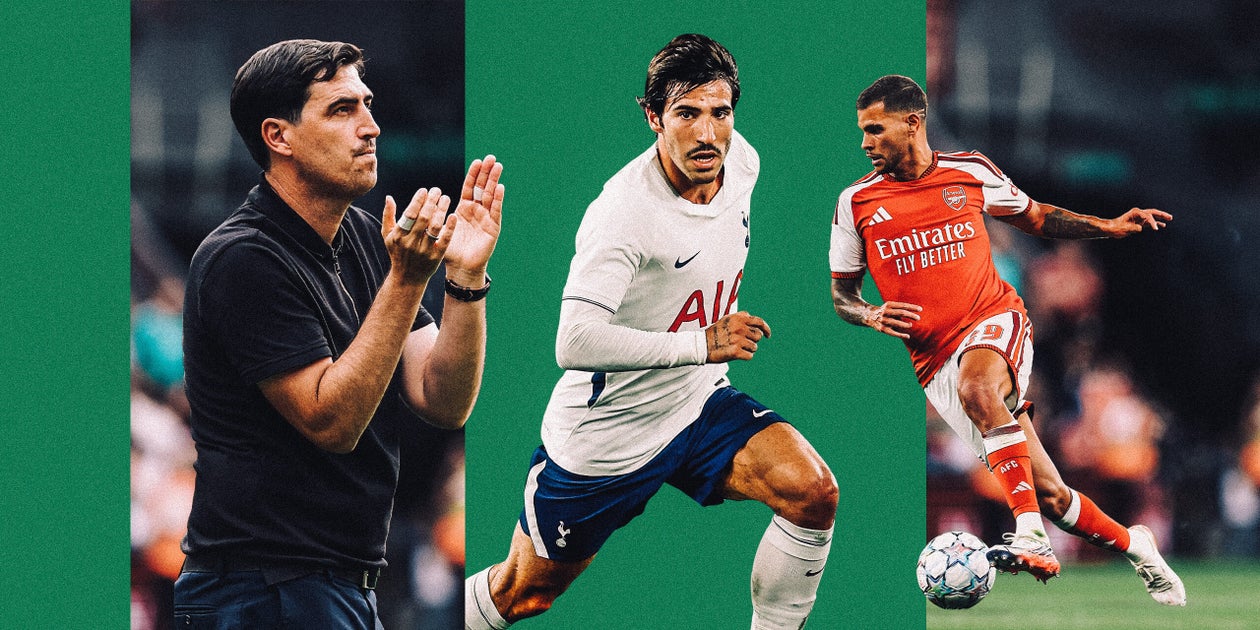
The Premier League season returns on Friday, when promoted Coventry City travel to defending champions Arsenal for their first top-flight game in 25 years.
In one sense, this campaign may be more unpredictable than any other in recent memory, since nine clubs start the season with a new manager. Two more — Manchester United’s Michael Carrick and Tottenham Hotspur’s Roberto De Zerbi — have not been in permanent control of their teams for much longer.
Five of the traditional Big Six — Chelsea, Liverpool, Manchester City, Manchester United and Tottenham — begin 2026-27 with a manager who was not in charge this time last year. Of the title favourites, only Arsenal have stability in the dugout.
How will the new men in charge fare? Which teams have recruited best? And is there any hope for the promoted sides?
Our writers from across The Athletic’s global newsroom have joined forces to predict the final Premier League table, which you can see here:

And Carl Anka, Seb Stafford-Bloor, Nick Miller, Tim Spiers, Cerys Jones, Thom Harris, Stuart James and The Athletic FC podcast host Emma Paton have combined to discuss how they see the season going.
Who will be much better than last season?
Anka: Many will surely give one of Tottenham or Nottingham Forest as an answer here. Both teams should be much closer to the Europa League positions than the relegation zone. I’m also looking forward to watching a fully fit Yoane Wissa again. Newcastle United fans barely got a glimpse of how good he can be; it’ll be nice if he can return to peak form.
Stafford-Bloor: Florian Wirtz should really benefit from playing for Andoni Iraola, whose work with the midfield and attacking players at Bournemouth was so profoundly successful.
Whether it was Alex Scott, Junior Kroupi, Antoine Semenyo or Evanilson, every player within that part of Iroala’s Bournemouth side improved as an individual, implying that he should be able to draw something from a player who, despite suffering a really difficult first season, is immensely talented.

Florian Wirtz struggled to make an impact under Arne Slot last season (Naomi Baker/Getty Images)
Miller: Lads, it’s Tottenham, but I’ve also convinced myself, not for the first time, that Manchester United are going to be genuinely good this season. At various points last season, Bruno Fernandes, Bryan Mbeumo, Matheus Cunha and Benjamin Sesko all looked pretty good, just not all at the same time. They still need a few enhancements, but if those attackers are all on it, together, with Youri Tielemans in midfield behind them, I think they’ll be much improved.
Harris: I’m excited to see how Chelsea click under Xabi Alonso, and expect them to comfortably improve on their 10th-place finish last season. Recruitment looks to have been geared towards facilitating the 3-4-2-1 shape that Alonso used at Bayer Leverkusen, and I think Cole Palmer could thrive in one of the No 10 positions.
Jones: Chelsea (from a low bar), having balanced out their squad with more experience, added even more attacking quality in Morgan Rogers, and had a full pre-season under Alonso. As for Tottenham, they could do with strengthening a few other departments, but the signings they’ve made so far should be enough for a significant improvement.
Spiers: Nottingham Forest have been disconcertingly quiet in the transfer market (just two permanent additions at the time of writing), but you’d imagine that with Oliver Glasner at the helm and a very talented squad, they will improve considerably on 16th. Snaring Glasner feels like a real coup.
James: Tottenham. A caveat here — finishing as low as 10th would be “much better” than fighting relegation. But Spurs, I’m sure, will be higher than that. De Zerbi is a top coach and I like the look of their recruitment — signing proven Premier League players and breaking their transfer record to bring in Mateus Fernandes. A quick fix.
Mateus Fernandes abrindo os trabalhos com um golaço 🚀😱 pic.twitter.com/KCDlTtRgZU
— Tottenham Hotspur (@Spurs_PT) July 22, 2026
Paton: Leeds. At some point around February, Daniel Farke’s side quietly stopped being a team that survives and became one that was tough to beat. Now add in three terrific signings in James Trafford, Harry Wilson and Tarik Muharemovic. They’ve had a solid pre-season, and for me, the top half is there for the taking.
Who will be worse than last season?
Anka: Obvious answers here revolve around teams who have qualified for Europa League/Conference League competition. Can Sunderland/Bournemouth deal with the Thursday-Sunday treadmill? But I’ll plump for Fulham. Marco Silva’s work there went under the radar, and I’m unsure about Alvaro Arbeloa and his new signings.
Stafford-Bloor: Aston Villa. Tielemans gone, Rogers gone, Amadou Onana injured. Johan Manzambi is going to become a really good player and Joao Gomes already is one, but clearly they have taken a step back. Brian Madjo looks terrific — although he and Gomes are expected to miss the start of the season — but there’s an onus on him to be a reliable source of goals behind Ollie Watkins, which is a heavy burden for a teenager.
Miller: I think Villa are going to struggle, in relative terms anyway. It’s not just that the players they have lost haven’t necessarily been replaced with ones of current commensurate ability; it’s that Unai Emery has been pretty bad at integrating new signings. When it’s, say, Tammy Abraham, it’s not a huge issue because you can just stick him on the bench and broadly forget about him, but when it’s half the team…
Harris: Sunderland spent almost £200m and brought in 18 players last season; so far this summer, they have only signed 34-year-old Thomas Meunier on a free. Their squad is still very strong, and they can beat anyone with the crowd on their side at home, but they did hit a few sticky patches last season, and were actually ranked 18th on expected-goal difference. Europe could distract them too.
Jones: Sunderland did spectacularly well last season and I don’t think they have strengthened anywhere near enough to continue that relative overperformance, especially with the distraction of the Europa League. Villa could drop down the table (though not drastically), with their transfer business so far seeing key personnel leave to directly strengthen rivals for Champions League places.

Sunderland coach Regis Le Bris could have a tough job on his hands this season (Sameer Al-DOUMY / AFP via Getty Images)
Spiers: It’d be good banter to say Spurs at this point (adopts Frank Lampard persona; ‘But seriously, they should do really well’) but the obvious answer is Bournemouth. Sixth last year, they’ve lost the best thing about them in Iraola. Sunderland will also probably drop like a stone, unfortunately.
James: Sunderland. As with Forest the season before, Sunderland finished seventh in the Premier League in 2026, which was exceptional. But we all know what happened to Forest next — a season of struggle. Combining the Premier League with playing in Europe will be a major challenge and it feels inevitable there will be a tail-off.
Paton: I agree with others saying Sunderland because of how impressive they were last season, but I’ll go for the other team in the North East, Newcastle. Bruno Guimaraes, Sandro Tonali and Anthony Gordon out the door for over £200m, Eddie Howe gone, and in walks Matthias Jaissle to conduct an orchestra that has just sold its string section.
Which of the nine new managers will prove to be the best appointment?
Anka: If Glasner can maintain a good working relationship with Evangelos Marinakis, then Nottingham Forest should be in for a good season. A coach of known quantity and brilliant qualities.
Stafford-Bloor: Iraola, by process of elimination. I can come up with reasons to doubt the eight other coaches — because of inexperience, potential difficulty with ownership, or otherwise style, squad and tactical concerns — but Iraola is hard to find fault with. He’ll work well in Liverpool’s structure, as a cog in the machine, and the players he’s inheriting have so much potential.

(Darren Staples / AFP via Getty Images)
Miller: Probably Glasner, if only because there are pretty big caveats about the others, mostly not their fault: can you realistically expect Alonso to make sense of Chelsea in one season, for example? Glasner is proven, and broadly speaking has a squad suited to his system, so long as he can keep a lid on the default chaos of Nottingham Forest…
Harris: Marco Rose should oversee a pretty seamless transition in terms of playing style at Bournemouth. It looks as if they have retained Alex Scott and Kroupi, while the arrivals of Antonio Silva and Alvaro Rodriguez are particularly ambitious and exciting. They’ll be a nightmare to play against once again.
Chelsea’s attacking depth is ridiculous
Tim Spiers and Liam Tharme
Jones: I’m a big fan of Iraola’s work, but I wonder if his demands for intensity will have teething problems given how thin the squad currently looks. I’m not as confident as others that things will be stable under Glasner at Forest, and think Maresca will take time to settle at City. I think Rose has the best chance of hitting the ground running, and that Alonso will improve his team the most over the course of this season.
Spiers: It may prove to be an impossible task to follow Pep Guardiola, but in someone a lot of the players know, who has enjoyed success at two English clubs and whose style will be similar to Guardiola but different enough to feel fresh, Maresca is a good appointment.
James: I totally understand the appeal of Glasner. But I’m going to take a chance and say Alonso. Chelsea’s flawed player-trading model has made it hard for any coach to work with continuity and stability in recent years, but there are signs of a shift in that approach, and there’s a lot to like about Alonso.

Paton: Xabi Alonso at Chelsea. Alonso builds teams the way he played: nothing wasted, everything on purpose. Give him a full season (never guaranteed at Stamford Bridge) and I think Chelsea will be one of the best-coached sides in England.
Who will win the title?
Anka: Arsenal by more than five points. There are minor question marks over their attack and what happens if Declan Rice or Bukayo Saka get injured, but Mikel Arteta has built a formidable football machine. Arsenal have the best out-of-possession setup in the Premier League, if not across Europe. Bruno Guimaraes will give them new ways of unlocking low blocks, so changes to referee rules on set pieces shouldn’t be too much of an issue.
Stafford-Bloor: Arsenal. I think they will start slowly and spend much of the autumn and early winter waiting for key players to return to full fitness, but having that group — Rice, William Saliba, Saka — fresh in the new year should serve them well. And Guimaraes is a super player, so there’s that too.
Miller: Arsenal, and I don’t think it will be particularly close, if only because the other realistic candidates all have new managers, whereas they have stability, a deep squad and a defined way of playing, even if that’s not especially pleasing aesthetically. They need another proper attacker of some nature to succeed in Europe, but I think they’ll be fine domestically with what they have.
Harris: I’ll go against the grain and say City. Erling Haaland was lethal at the World Cup, while Antoine Semenyo, Jeremy Doku and Rayan Cherki are all game changers. Phil Foden has a point to prove, and while the potential loss of Rodri will sting, the signing of Elliot Anderson will help to plug some of the defensive gaps.
Jones: Dull, but Arsenal, because they are starting from the strongest position. They have strengthened a title-winning squad without tearing it up. Chelsea, City, and Liverpool are adapting to new managers, while United are adapting to being back in Europe. City look the strongest challengers but if their new-look midfield and new manager take a while to gel, I think Manchester United can barge into the title race.

Arsenal have strengthened their midfield with the signing of Bruno Guimaraes (David Price/Arsenal FC via Getty Images)
Spiers: I can see Chelsea potentially clicking quite quickly and mounting a challenge, plus they’ll benefit from having no European football, but Arsenal and City should be a level above the rest with the squads they have. Arsenal still have the best defence, so they’re favourites for now.
James: Arsenal. Liverpool, Chelsea and Manchester City all have new managers and, to varying degrees, are going through a transitional phase on the pitch, too. As for Manchester United, it’s too soon. Arsenal, in contrast, have an established way of playing (and winning) under Arteta. Wait 22 years for a title and… like London buses and all that.
Paton: Arsenal. Boring, I know. Having strengthened the deepest squad in the Premier League by adding even more quality in Bruno Guimaraes, plus Christos Tzolis (who was a real difference-maker at Club Brugge), I think they’re going to take some stopping.
The Athletic writers tip Arsenal to win the league
| Team | 1 | 2 | 3 | 4 | 5 | 6 | 7 | 8 | 9 | 10 | 11 | 12 | 13 | 14 | 15 | 16 | 17 | 18 | 19 | 20 |
|---|---|---|---|---|---|---|---|---|---|---|---|---|---|---|---|---|---|---|---|---|
|
64.10% |
28.21% |
7.69% |
||||||||||||||||||
|
28.21% |
35.90% |
23.08% |
10.26% |
2.56% |
||||||||||||||||
|
15.38% |
30.77% |
23.08% |
20.51% |
7.69% |
2.56% |
|||||||||||||||
|
12.82% |
20.51% |
38.46% |
17.95% |
10.26% |
||||||||||||||||
|
7.69% |
7.69% |
17.95% |
23.08% |
38.46% |
2.56% |
2.56% |
||||||||||||||
|
2.56% |
7.69% |
41.03% |
28.21% |
17.95% |
2.56% |
|||||||||||||||
|
2.56% |
12.82% |
30.77% |
28.21% |
12.82% |
7.69% |
2.56% |
2.56% |
|||||||||||||
|
10.26% |
20.51% |
25.64% |
20.51% |
7.69% |
7.69% |
7.69% |
||||||||||||||
|
2.56% |
5.13% |
17.95% |
33.33% |
5.13% |
20.51% |
7.69% |
5.13% |
2.56% |
||||||||||||
|
10.26% |
10.26% |
7.69% |
17.95% |
2.56% |
7.69% |
10.26% |
20.51% |
7.69% |
5.13% |
|||||||||||
|
5.13% |
15.38% |
10.26% |
12.82% |
5.13% |
5.13% |
12.82% |
12.82% |
7.69% |
7.69% |
2.56% |
2.56% |
|||||||||
|
2.56% |
2.56% |
7.69% |
2.56% |
20.51% |
10.26% |
15.38% |
5.13% |
7.69% |
15.38% |
10.26% |
||||||||||
|
5.13% |
2.56% |
7.69% |
12.82% |
2.56% |
20.51% |
12.82% |
20.51% |
7.69% |
5.13% |
2.56% |
||||||||||
|
2.56% |
10.26% |
10.26% |
2.56% |
20.51% |
17.95% |
17.95% |
12.82% |
5.13% |
||||||||||||
|
2.56% |
2.56% |
2.56% |
5.13% |
7.69% |
20.51% |
12.82% |
5.13% |
12.82% |
17.95% |
5.13% |
2.56% |
2.56% |
||||||||
|
2.56% |
2.56% |
2.56% |
7.69% |
7.69% |
12.82% |
17.95% |
15.38% |
23.08% |
5.13% |
2.56% |
||||||||||
|
2.56% |
2.56% |
2.56% |
5.13% |
10.26% |
5.13% |
10.26% |
23.08% |
23.08% |
12.82% |
2.56% |
||||||||||
|
15.38% |
20.51% |
48.72% |
15.38% |
|||||||||||||||||
|
2.56% |
2.56% |
10.26% |
48.72% |
33.33% |
2.56% |
|||||||||||||||
|
2.56% |
2.56% |
12.82% |
82.05% |
Who is the best signing so far?
Anka: Brentford signing Mamadou Sangare is a shrewd acquisition. The Mali international is a whirling dervish of tackles, interceptions and defensive battling. Give him a few months to acclimatise to the Premier League (he may rack up a few yellow cards before Christmas) and he’ll be the conversation for best player outside the top six.
Stafford-Bloor: Xaver Schlager on a free to Nottingham Forest is good business. He’s not going to attract much attention — he won’t be Fantasy Football gold or anything like that — but he’s an excellent, versatile midfielder and a really solid professional who is still in his prime.
Miller: Christos Tzolis has looked lively in pre-season, and Manzambi will be proper for Aston Villa once he gets settled, but I reckon Tielemans will prove to be an absolute bargain for Manchester United.

(Ash Donelon/Manchester United via Getty Images)
Harris: Sangare is an absolute steal, but I’ll shine the light on Ipswich. Florentino Luis is one of the hardest-working defensive midfielders in Europe, while Abdul Fatawu and Emersonn are exciting attacking pick-ups. Julio Enciso could be the pick of the bunch if it goes through — he is a brilliant dribbler, dangerous long-distance shooter and can lead the line himself.
Why are swap deals so rare in the Premier League?
Patrick Boyland and Reuben Pinder
Jones: City need to bring their midfield back to its best to go back to challenging for the title, and Elliot Anderson brings much of what they need to do that. That transfer feels almost old news now, but its importance to City (and therefore the title race) shouldn’t be underestimated.
Spiers: Aston Villa’s recruitment has been poor in recent seasons, but in Joao Gomes, the player who’s made more tackles than anyone in the top five European leagues since 2023, they have a Brazil international who should be one of the best box-to-box midfielders in the division.
James: Is it OK to feel not as excited as previous seasons by the transfer window so far? As it stands, I’m going for Manzambi, the one that got away from Newcastle’s point of view and a player who was a joy to watch at the World Cup.
Paton: James Trafford to Leeds. I’ve tried to look for players outside of the big-money transfers this summer — so £40m for a 23-year-old goalkeeper who may well be England’s next No 1 — is my pick! It’s a bit of a cliche but a good goalkeeper saves you 10-plus points a season… and nobody notices until you haven’t got one.
Which player are you most looking forward to watching?
Anka: Tielemans’ £35million ($47m) move to Manchester United might be the best “cost-to-quality” transfer this summer. The 29-year-old should reduce the creative burden on Bruno Fernandes and Kobbie Mainoo and give Carrick’s side new ways to break down stubborn defences. I’m also interested in how Caleb Yirenkyi gets on at Coventry. The 20-year-old has been dubbed ‘the next Michael Essien’ in Ghana. Now he gets to train under Frank Lampard.
Stafford-Bloor: I’m intrigued by Bazoumana Toure, who has joined Newcastle from Hoffenheim. He improved so quickly during his time in the Bundesliga and was developing at such a pace that it’s natural to wonder what’s next. He’s far from a sure thing and I have a few concerns about his size and the necessary physical adaptation that lies ahead, but the talent is there.

(Clive Brunskill/Getty Images)
Miller: Not a new addition, but I really hope Wirtz can thrive under Iraola. He’s clearly class, but it felt like he got slightly overwhelmed last season by a new league and in a team that didn’t really make sense. On a slightly lower level but for similar reasons, James McAtee at Forest looks like he fits much better under Glasner than any of the four managers he had last season.
Harris: We didn’t see much of Cherki at the World Cup, but I can’t wait to see him effortlessly open up some defences again. Only Haaland and Fernandes averaged more goal contributions per 90 minutes last season.
What were football transfers like before the transfer window?
Tifo Football
Jones: A familiar face: now that Manchester United have reinforced to take some of the burden off him and hopefully allow him a little bit of rest (if he’ll accept it), I wonder if Bruno Fernandes will be even better. A new signing: Daizen Maeda’s performances for Japan at the World Cup, and of course that overhead kick against Rangers for Celtic, have me excited to see what he can offer the Premier League at Ipswich.
Spiers: With Mohamed Salah’s departure, the Premier League only has one genuine global superstar left. In fact, if/when Rodri leaves, probably only one player would be in a ‘top 10 best footballers in the world’ list. It’s Haaland, and we should cherish the Nordic human goal machine while we still can.
James: A big part of me wants to say Max Dowman because his talent is off the scale and I’m fascinated to see how he develops at Arsenal over the next couple of years, in particular how quickly he establishes himself in the first team as a regular starter. England could be calling soon, too.

(Alex Caparros/Getty Images)
Paton: Morgan Rogers. While he’s not a new arrival in the Premier League, I’m looking forward to seeing him excel at Chelsea. Yes, £117m is astronomical but he’s not just another signing for the future, he’s a player for now. I genuinely believe Alonso will unlock another level to his game.
Which manager is under the most pressure?
Anka: Iraola worked wonders at Bournemouth, but he’s inherited a Liverpool squad with multiple problem positions. A match-sharp Alexander Isak should help, and I’m curious to see how Iraola balances midweek Champions League fixtures with his high-intensity style of football.
Stafford-Bloor: Enzo Maresca. For the obvious reason, because following Guardiola is arduous enough, but he has also been given Elliot Anderson, one of the most expensive players in British football history, as a welcome gift. It needs to go well, quickly.
Miller: Take your pick from any of the new appointments at the big clubs, but Maresca is probably the choice: taking over from Guardiola, probably with an entirely new midfield and some of your most experienced players gone. All the best!

(Yu Chun Christopher Wong/Eurasia Sport Images/Getty Images)
Harris: Matthias Jaissle is very well thought of in the coaching community, but having lost Bruno Guimaraes, Sandro Tonali and Anthony Gordon before he even walked through the door, he has a real job on his hands.
Jones: Not in the sense of their jobs being at risk, but expectations are highest on Arteta to follow his own masterclass and Maresca to succeed in the driving seat of a lavish but rusty winning machine. In terms of who could be on their way soonest… if Everton stagnate, patience with David Moyes could run out, and I think the pressure is on Glasner to deliver at Forest, where patience never seems to be in great supply.
Spiers: He’s not under the most pressure, but I do think Arteta needs to evolve Arsenal’s industrial style because results last season masked the natives getting a little restless with the long throws and set pieces. Anyway, the correct answer is clearly Iraola.
James: Maresca. Who would want to follow Guardiola? Some old heads have gone on the pitch too — the departure of Bernardo Silva feels the most significant. But I guess the long and short of it is that City won’t want to finish second again, and that — winning the title — is a tall order for any new coach.
Paton: I can’t disagree with those saying Enzo Maresca. Succeeding Pep Guardiola has got to be up there as one of the toughest acts to follow…ever. The squad is still brilliant but the margin for error is still zero.
Who will be top and bottom at Christmas?
Anka: I’ll be boring here. Arsenal top. All three promoted clubs in the relegation zone.
Stafford-Bloor: Liverpool top, Hull bottom.
Miller: Arsenal top, and they’ll stay there. I think Hull will ultimately finish bottom but wonder if they will start quite well, so maybe Ipswich Town in 20th at Christmas.
Harris: Manchester City top, Hull bottom.

(Alex Pantling/Getty Images)
Jones: Hull bottom. I’ll play it safe and say Arsenal top — but I think both Manchester teams could be there too.
Spiers: Chelsea to be the surprise Christmas leaders, Hull the unsurprising basement dwellers sweating on beating Derby’s low-points record.
James: Apologies if you’re looking for something unexpected here. Arsenal top. Hull bottom.
Paton: Top, Arsenal (sorry, boring again). Bottom, Hull. Promotion on a shoestring is romantic, right up until the fixture list turns Premier League-shaped!
Will any of the three promoted teams survive?
Anka: Lampard’s Coventry are far better out of possession than his Chelsea and Everton teams were. I’m really interested to see how Gary O’Neil gets on at Ipswich, but I don’t see enough goals across the trio of clubs to stay above the line.
Stafford-Bloor: Ipswich, I think. Quietly, they have had a really bold summer, making signings to strengthen their spine. Issa Diop and Sasa Lukic from Fulham. Luis, the defensive midfielder from Burnley. And Emersonn, the centre-forward from Toulouse, who looks physical, technical and capable of causing some problems in the Premier League.
Miller: Regrettably not. Coventry probably have the best chance, but even then I don’t know if I’m saying that for purely nostalgic ‘I’m happy a team from my Premier League youth is back’ reasons.
Harris: I agree with Seb and think Ipswich will stay up. I see parallels with Sunderland last season, who bolstered their squad with top-level quality and athleticism to double down on their threat on the transition. Coventry look to be in good shape too, but I don’t know which other two sides drop into the relegation zone for both to survive.
Jones: No. Not because I think they’re particularly poor — I like Coventry, and Ipswich have made some good signings — but because I don’t see others in the Premier League who look that vulnerable to slipping below them.
Spiers: Coventry will bloody a few noses but probably lack the goals to stay up. Ipswich’s transfer business has been interesting — Fatawu is a lot of fun, Maeda is an intriguing addition, and O’Neil has done well with Wolves before… so put them down for 20th.

Maeda joined Ipswich from Celtic after an excellent spell in Scotland (Justin Setterfield/Getty Images)
James: No. Sunderland and Leeds staying up last season needed to happen because the Premier League was in danger of becoming a closed shop. With Ipswich, Hull and Coventry, I think it will be back to the old routine, largely because I struggle to see who could go down at their expense.
Paton: Possibly? Maybe? Hopefully? I’m looking forward to seeing what Coventry can do but it goes without saying that it will be a big challenge adapting to the Premier League. I think Ipswich have the infrastructure for a better stay than last time – they’ve got the league’s fourth-highest net spend this summer and a manager who’s equipped to keep them up.
Which game in the opening weeks will tell us a lot about the season to come?
Anka: The Manchester derby on September 13. Both fanbases have reasons to be confident about 2026-27, but also reasons to be confused, too. This game will have a lot of people trying to make grand conclusions about the state of football in the city.

Will there be a power shift in Manchester now Pep Guardiola has gone? (Darren Staples / AFP via Getty Images)
Stafford-Bloor: Newcastle against Liverpool on the opening Sunday looks really interesting. Both teams have an immediate chance to alter the negative mood around them and generate some early momentum. Whatever the outcome, it will draw a big reaction after that first weekend.
Miller: This might not qualify as the opening weeks, but the first weekend after the mega international break will be good fun: there’s the first Liverpool vs Manchester City game, Manchester United vs Tottenham and Glasner goes back to Crystal Palace with Forest, which should be enjoyably spiteful.
Harris: Arsenal versus Chelsea on matchday three. I think Chelsea can be competitive and if they land a blow, it will have plenty of people prematurely reconsidering their top-four predictions.
Jones: The highest xG (expected giddiness) game will be that early Manchester derby. Both sides will be thinking about the title, and it’s each manager’s first chance to make a statement.
Spiers: The opening weekend will tell us how seriously referees and lawmakers intend to clamp down on time-wasting. There are new countdown clocks for goal kicks and throws, substitutes have 10 seconds to leave the field, and outfield players have to go off temporarily if a goalkeeper goes down ‘injured’. Hmmm.
James: Arsenal versus Coventry, Friday night — because, as with Mr Spiers, I’m intrigued to see the impact of the rule changes (time-wasting in particular, which was ridiculous last season), how well they’re enforced and how different the game looks as a result.
Paton: Newcastle vs Liverpool on the opening Sunday. Two clubs conducting very public experiments in the same 90 minutes. Jaissle’s first competitive game in front of a home crowd that’s still trying to process the summer, and Iraola’s first afternoon as the man asked to make Liverpool feel like Liverpool again. Buckle up!
The thing we’ll all be saying in May is…
Anka: “I can’t believe Bruno Fernandes broke his own assist record…”

(Jan Kruger/Getty Images)
Stafford-Bloor: We’ll be reflecting positively on the time limits placed upon restarts. It won’t quite be a salute to refereeing standards, but these law changes worked well at the World Cup and should be a subtle but welcome addition to the Premier League.
Miller: “Sean Dyche leading Chelsea out of trouble. Didn’t see that one coming… .”
Harris: “How can anyone compete with Manchester City’s limitless riches?”
Jones: “Shame about Coventry.”
Spiers: “Will this interminable season never end? Anyway, June’s Conference League final between Brighton and Monaco should be good.”
James: “I thought Eddie Howe would have taken a job by now.”
Paton: “Who knew…a shaved head really suits that United Strand guy.”
>

Cristiano Ronaldo and Lionel Messi are talking about retirement. What does football look like without them?

Inside the Basque ‘dream team’ that produced Iraola, Arteta and Alonso

Bleach: Thousand-Year Blood War – The Calamity Anime Casts Yūki Kaji – News
-

 movies3 months ago
Search For Canadian TV Actor Stewart McLean Now Homicide Investigation
-

 Fashion9 years ago
These ’90s fashion trends are making a comeback in 2017
-
Fashion9 years ago
According to Dior Couture, this taboo fashion accessory is back
-
Fashion9 years ago
Model Jocelyn Chew’s Instagram is the best vacation you’ve ever had
-
Fashion9 years ago
Emily Ratajkowski channels back-to-school style
-
Fashion9 years ago
9 Celebrities who have spoken out about being photoshopped
-
Fashion9 years ago
Your comprehensive guide to this fall’s biggest trends
-
Fashion9 years ago
A photo diary of the nightlife scene from LA To Ibiza