Tommy John was on the phone to deliver the kind of heat at age 72 that he did not throw decades earlier from the mound. This was October 2015, after agent Scott Boras had tried and failed to compel the New York Mets to limit their ace, Matt Harvey, to 180 innings that year.
On the eve of Harvey’s Game 3 start against the Los Angeles Dodgers in the Division Series, I asked the left-hander with 288 big-league victories over 26 years what he thought Harvey, a graduate of Tommy John surgery, should have done when Boras prioritized his client’s right elbow over the Mets’ championship aims.
“I would have called Scott and said, ‘Sit down and shut your f—ing mouth. You work for me, and I’ll tell you what to do,’” John shot back before simmering down, temporarily, and conceding that he knew the agent was only trying to protect Harvey’s future earnings and that he, too, would have wanted Boras to represent him in his prime.
“But he can’t see the future …” John continued. “In the 13 years after I had the surgery, I never missed a start. Never had any arm pain. None.”
Over this lengthy conversation with a man I had never covered, a remarkable pitcher who died Saturday at 83, John opened a window on his competitive soul that helped explain how he had claimed 164 of his victories after the landmark 1974 surgery — performed by Dr. Frank Jobe — that quite literally changed the game.
John was a 13-3 starter for the Dodgers in the summer of 1974 when he threw a pitch to Hal Breeden of the Montreal Expos that, he said, left him feeling as if his left arm had detached from his body and gone sailing off into the outfield. John responded to that uniquely painful sensation by actually throwing another pitch before realizing something was terribly wrong.
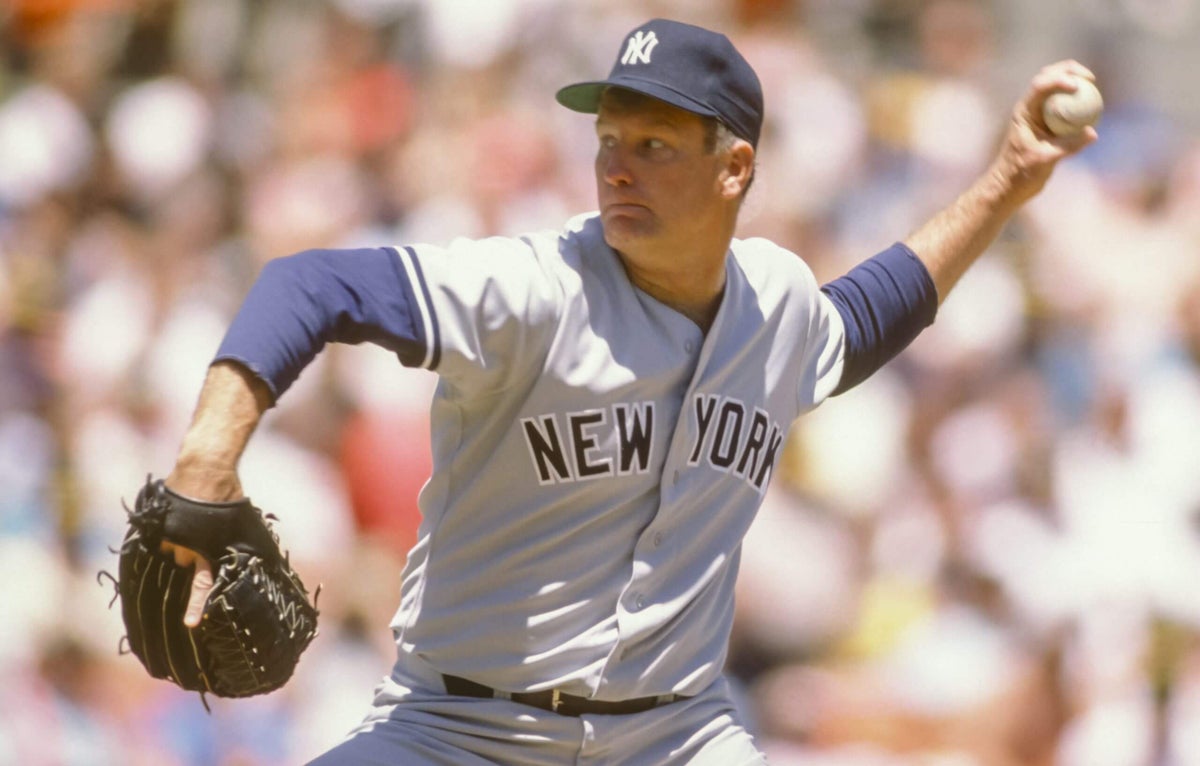
Jobe famously rebuilt his ulnar collateral ligament with a wrist tendon, and John famously handled the rest. He had made his major-league debut as a 20-year-old with Cleveland in 1963, during the final months of President John F. Kennedy’s life, and yet was still pitching as a New York Yankee in the first months of President George H.W. Bush’s administration in 1989, becoming the oldest winning Opening Day starter ever as he approached his 46th birthday. In the game’s modern era, only Nolan Ryan played more seasons (27) than John did.
But his durability wasn’t defined by Ryan-like velocity or anything remotely close to it. To watch John pitch was to wonder how it was possible he could be so good for so long. He didn’t strike out many hitters, and he didn’t move with the easy athleticism you might expect from a basketball prospect out of the Hoosier state, Indiana, who fielded numerous Division I offers.
The sinkerballer instead beat people with his willpower and guile. He became what the Yankees called Sunday “a bedrock of our rotation” and, despite failing to win a World Series ring, finished his career with a record of 6-3 and an ERA of 2.65 in 14 postseason games.
Most impressively, after the surgery cost him all of 1975, John pitched 1,182 innings over the next five seasons, including 207 in ’76. This was why, in our 2015 interview, he said he couldn’t accept Boras’ push for the Harvey limit (the Mets’ ace ultimately pitched a combined 216 regular-season and postseason innings that year before losing much of the following season to surgery for thoracic outlet syndrome) or the Nationals’ choice in 2012 to bench another client returning from Tommy John surgery, Stephen Strasburg, after 159.1 innings logged for a playoff-bound team.
“Dr. Jobe told everyone that the longer you go without any post-op setbacks, the less chance you have of getting injured,” John said. “That doesn’t mean Matt Harvey won’t get hurt; nobody can guarantee that. But I would’ve been so pissed off if I were busting my butt on that Nationals ballclub when Strasburg was shut down.
“If Matt’s not hurting, he needs to pitch as hard as he can for as long as he can. Don’t abuse him, but pitch him. It’s the playoffs. His team hasn’t been to the World Series in 15 years, and this is what he’s been wanting to do his entire life. We’re all actors, and right now he’s on center stage. He’s got all winter to rest his arm. It’s time to perform.”
After Harvey successfully lobbied manager Terry Collins to let him carry a 2-0 lead over Kansas City into the ninth inning of Game 5 of the World Series, the Royals tied it and eventually eliminated the Mets in the 12th. Harvey was never the same ace again.
But this isn’t about whether Tommy John was right or wrong about Harvey and Strasburg or any other pitcher whose career was rescued by the surgery bearing his name. It’s about John’s inner fire. He was a flamethrower without the radar-gun readings to show for it.
He spoke that day about what Harvey should do in his Division Series start if he faced the Dodgers’ Chase Utley, whose dirty Game 2 slide into the Mets’ Ruben Tejada had broken the second baseman’s leg. John said Harvey should publicly threaten “to get that SOB and get him good” to rattle Utley and then to avoid hitting him — to help the Mets’ chances of winning. (Utley didn’t end up playing in Game 3.)
John’s reasoning? In 1968, after the Tigers’ Dick McAuliffe charged the White Sox lefty and separated his shoulder, John went on the record with a promise to seek retribution ASAP.
“And I never threw at him, ever,” John said. “All I wanted to do was put doubt in his mind, to have him thinking, ‘Is he going to get me this at-bat or the next at-bat?’ McAuliffe never did much against me after that.”
In his goodbye letter that the Yankees shared on Aug. 8, Old Timers’ Day, John wrote that on the day he left home to start his career as a pro, his father told him, “Whether you make it in the big leagues or you don’t, you’ll always just be Tommy John from Terre Haute, Indiana.”
But he made it in the biggest markets in the sport — Chicago, Los Angeles, New York — and finished with more victories than any modern pitcher not in the Hall of Fame other than Roger Clemens. John was also tough enough to forever own a career-saving operation that has allowed so many injured baseball stars to continue playing the game at the highest level.
So in his dying days, when Tommy John told his fans, “I will never forget you,” here’s hoping he understood that sentiment works both ways.