
Tech
Apple Maps Ads Launch in US and Canada: What Businesses Need to Know

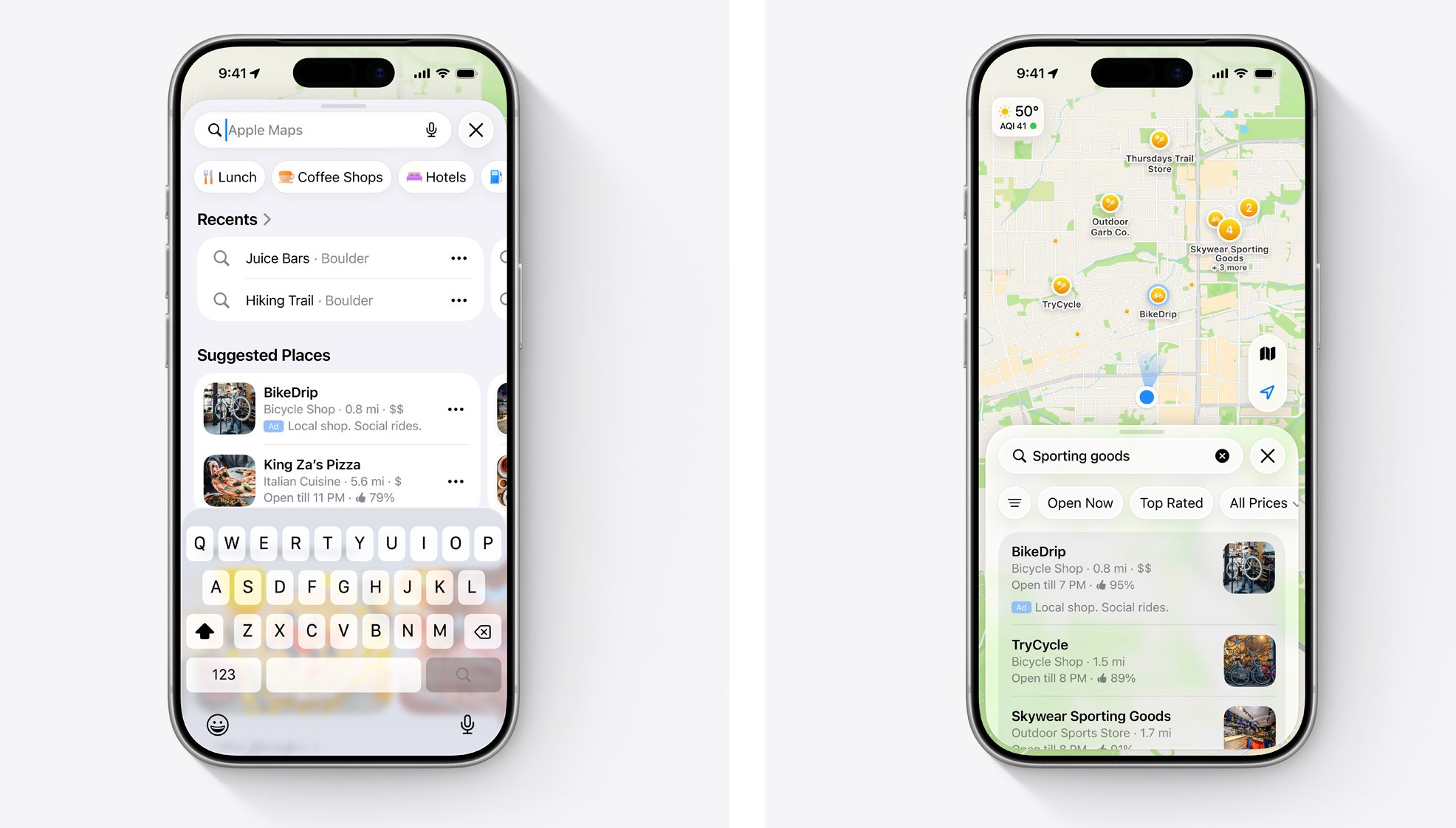
Apple has opened its Maps advertising platform to businesses in the U.S. and Canada, allowing eligible companies to pay for greater visibility when customers search for nearby businesses.
The platform launched Aug. 14 after Apple announced in March that Maps advertising would arrive in summer 2026. Businesses can create campaigns, choose monthly spending limits, upload photos and add promotional messages, according to MediaPost.
Ads can appear at the top of relevant search results or at the top of Maps’ Suggested Places section before a user searches. Apple says sponsored locations will be clearly labeled, as platforms face broader scrutiny over how paid search results are presented. Customers can call a business or get directions directly from an ad.
Apple is selling high-intent searches
The appeal for advertisers is straightforward: Maps users are already looking for somewhere to go.
Apple says more than 1 billion relevant searches for businesses occur on Maps each month and that one in two results in a user taking action. Gen Z and millennials also account for 57% of Maps users, based on a GWI Core Study cited by Apple.
Businesses can use Apple Business for an automated campaign experience, while agencies and advertisers seeking greater control can use the Apple Ads platform. Apple Ads supports campaign scheduling, keyword selection, location targeting and additional bidding options. Its API also allows advertisers to manage campaigns and retrieve reports programmatically.
Apple is also offering an introductory incentive. Eligible businesses can receive a monthly statement credit equal to 15% of their ad spending for up to one year, capped at $1,000 per month per brand. Apple says eligibility restrictions and additional terms apply.
Apple is positioning Maps ads as a privacy-focused alternative to advertising based on detailed personal profiles. The company says targeting uses contextual signals such as approximate location, search terms and the visible map area rather than precise location history, age or gender. Apple also says users’ personal data is not collected or stored for these ads or shared with advertisers.
Not every business can buy space
The new marketplace comes with significant restrictions. Apple limits Maps advertising primarily to businesses with physical locations customers can visit.
Home-service companies, including plumbers, electricians, locksmiths, HVAC businesses, roofers and pest-control companies, are barred. Other restricted categories include gambling, dating, alcohol, religious advertising, cryptocurrency ATMs and some medical services. Political advertising is also prohibited.
A new battleground for local advertising
Unlike traditional display advertising, location-based placements can reach customers close to making a purchase or visit — a market Google is also expanding through specialized local ads. That makes the placement potentially valuable for businesses competing for nearby customers, but it also means advertisers will have to prove that paying for the top spot produces enough calls, directions and visits to justify the cost.
Apple is effectively turning Maps into another commercial doorway alongside its existing advertising business. For local businesses, that creates another place to spend money — and another platform to measure carefully before committing a larger budget.
Read more: Apple’s privacy positioning extends beyond advertising, but a multibillion-dollar lawsuit involving facial analysis in Apple Photos shows how closely its on-device data practices are being scrutinized.
>
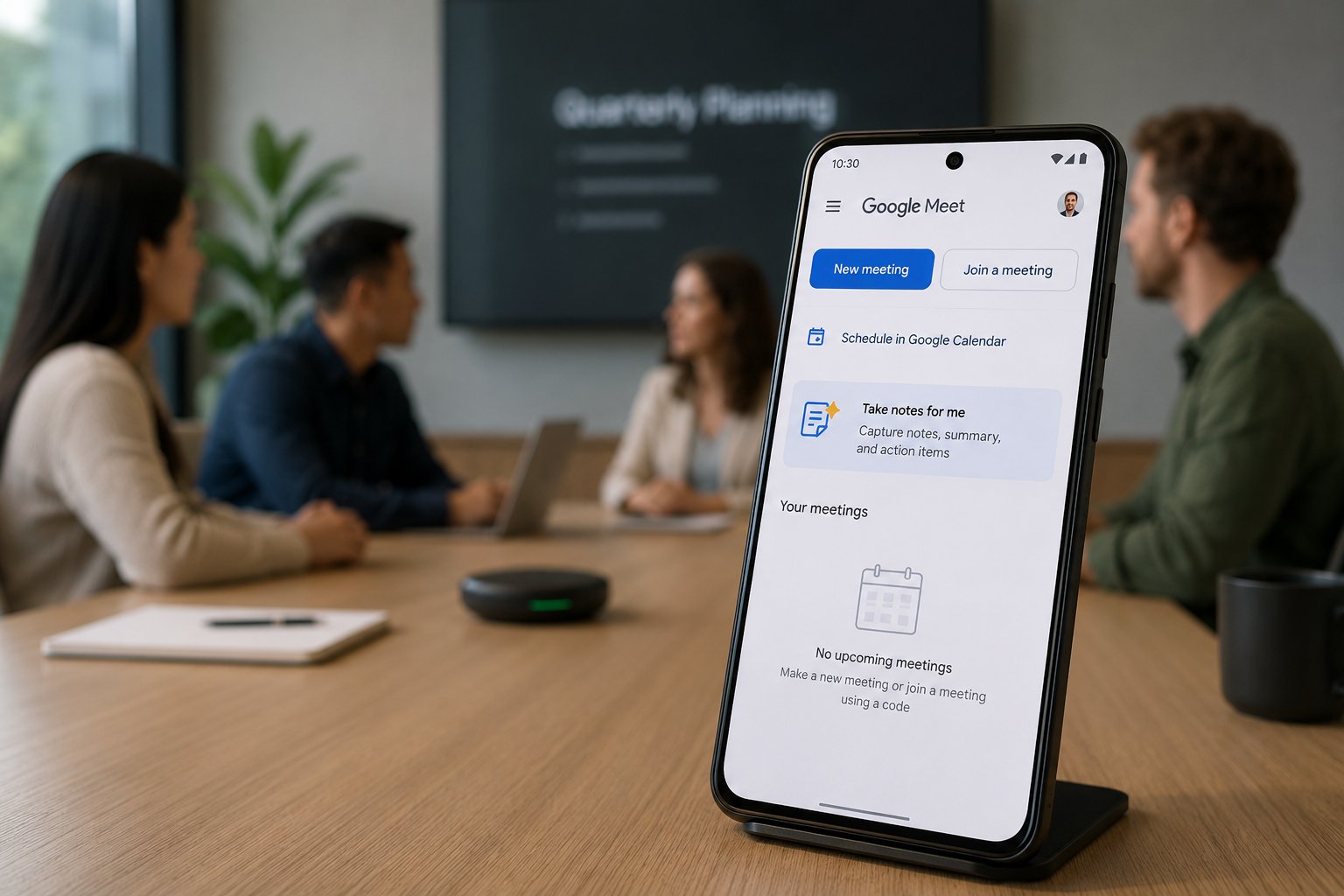
Google Meet’s Gemini-powered “Take notes for me” is expanding beyond video calls to capture in-person conversations. Users with access can start notes from the Meet home screen on mobile or desktop, and Google says the feature can also document conversations hosted on Zoom or Teams.
Gemini turns the conversation into a Google Doc with a summary and action items. Access depends on an eligible Google Workspace edition or Google AI plan and administrator settings.
How to take in-person meeting notes with Google Meet
Google announced the expansion at Cloud Next 2026, alongside broader Workspace AI upgrades. Once the feature is available on your account, the process is straightforward:
- Open Google Meet. Launch Meet on a supported mobile device or desktop and stay on the home screen. You do not need to start or join a video call.
- Select “Take notes for me.” Choose “Start taking notes” to begin capturing the in-person conversation. Place the device where it can clearly hear participants so Gemini can document the discussion accurately.
- Pause or stop capture when needed. Google’s current instructions say “Pause” pauses both transcription and note-taking. Selecting “Stop” ends the session after confirmation.
- Open the generated notes. After the session, Gemini creates a Google Doc containing the meeting notes and action items. The document is emailed to the person who started the session and saved in that user’s Drive.
If a remote participant needs to join, the session can transition into a normal video call. Google also says the same note-taking workflow can run while a meeting is hosted on Zoom or Teams.
The feature supports English, French, German, Italian, Japanese, Korean, Portuguese, and Spanish, but only one language at a time.
Teams that regularly switch languages should not assume the generated notes will capture the full discussion accurately. Google also says generated documents follow the organization’s Meet retention policy.
What admins should check before using it in a room
Google now lets Workspace admins require explicit participant consent before note-taking, recording, or transcription begins on supported devices. The setting is off by default and can be applied at the domain, organizational-unit, or group level.
A physical-room participant who never joins from a device may not see an on-screen consent prompt. Organizations should therefore establish a room-level notice and consent process before capture begins and confirm any applicable workplace, privacy, or recording requirements with legal or compliance teams.
Admins can also set the default audience for generated notes to internal guests, all invited guests, or hosts and co-hosts, and can prevent hosts from overriding that choice. Before broad deployment, verify those sharing settings and the organization’s retention policy with a test meeting.
Google warns that AI-generated meeting summaries can be incomplete or inaccurate. Run a pilot in both a quiet room and a noisier space, compare the notes with what was actually said, and confirm who receives the document afterward.
Review generated notes before using them for sensitive, legal, or personnel decisions.
Also read: Google says Gemini has surpassed 1 billion monthly active users, making it the company’s 14th product to reach that milestone.
>
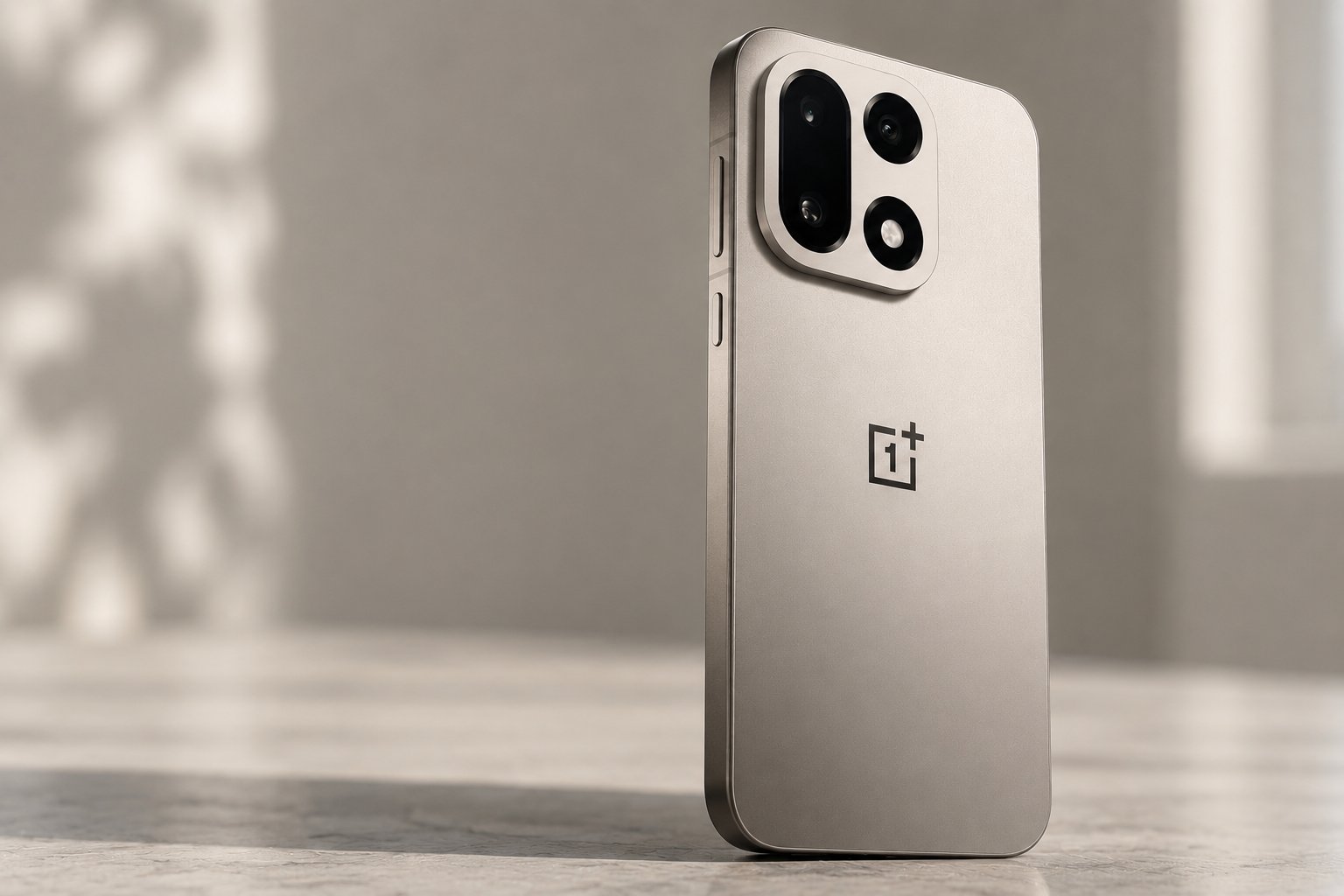
Leaks suggest the OnePlus 16 is getting a major battery upgrade, with capacity reportedly jumping to around 9,000mAh.
A battery that size would be roughly 23% larger than the OnePlus 15’s 7,300mAh pack. The rumored phone is also expected to feature a 200MP main camera, a 185Hz BOE display, Qualcomm’s Snapdragon 8 Elite Gen 6 Pro chip, and LPDDR6 RAM. Most details remain unconfirmed, and reports suggest the flagship may initially stay in China.
OnePlus 16 could pack a much larger battery
Notebookcheck reported that the OnePlus 16 is expected to feature a battery of around 9,000mAh, alongside Qualcomm’s Snapdragon 8 Elite Gen 6 Pro processor and LPDDR6 RAM.
That would be a big jump from the OnePlus 15’s 7,300mAh battery. Gadgets 360 noted that the current model supports 120W wired and 50W wireless charging.
The reports do not give charging speeds for the OnePlus 16, so the larger battery tells us little about how quickly it will recharge. Actual battery life will also depend on the display, processor, and software tuning.
A 200MP camera and 185Hz display are also tipped
Notebookcheck also listed a 200MP main camera among the OnePlus 16’s expected specifications, up from the 50MP main camera used on the OnePlus 15.
The report does not support earlier claims of a 200MP telephoto camera, so the sensor’s exact role should not be treated as confirmed until OnePlus provides official details.
OnePlus has provided more support for the 185Hz display claim. Notebookcheck reported that OnePlus China president Li Jie confirmed the refresh rate, while tipster Digital Chat Station said OnePlus and BOE jointly developed a new X4 light-emitting material for the panel.
According to Android Headlines, the X4 material is claimed to use less power, last longer, and outperform Samsung’s M-series display material in internal testing. No independent testing has confirmed those claims yet.
Gadgets 360 also said that the display could have slimmer bezels on all four sides while retaining a flat design.
The OnePlus 16 may stay in China
Notebookcheck said that the OnePlus 16 has received SRRC certification in China under model number PYB110, another sign that the phone may be getting closer to launch. Pricing is expected to start at around $815 for a 12GB RAM and 256GB storage configuration.
Whether it will launch outside China is another question. Notebookcheck and Android Headlines both suggested the flagship could remain focused on the Chinese market.
OnePlus has yet to confirm most of these specs. If the leaks hold up, the OnePlus 16 would push battery capacity, display speed, and camera resolution well beyond its predecessor.
For more on what OnePlus already offers, check out our OnePlus 15 cheat sheet, which covers its features, OxygenOS, pricing, and more.
>
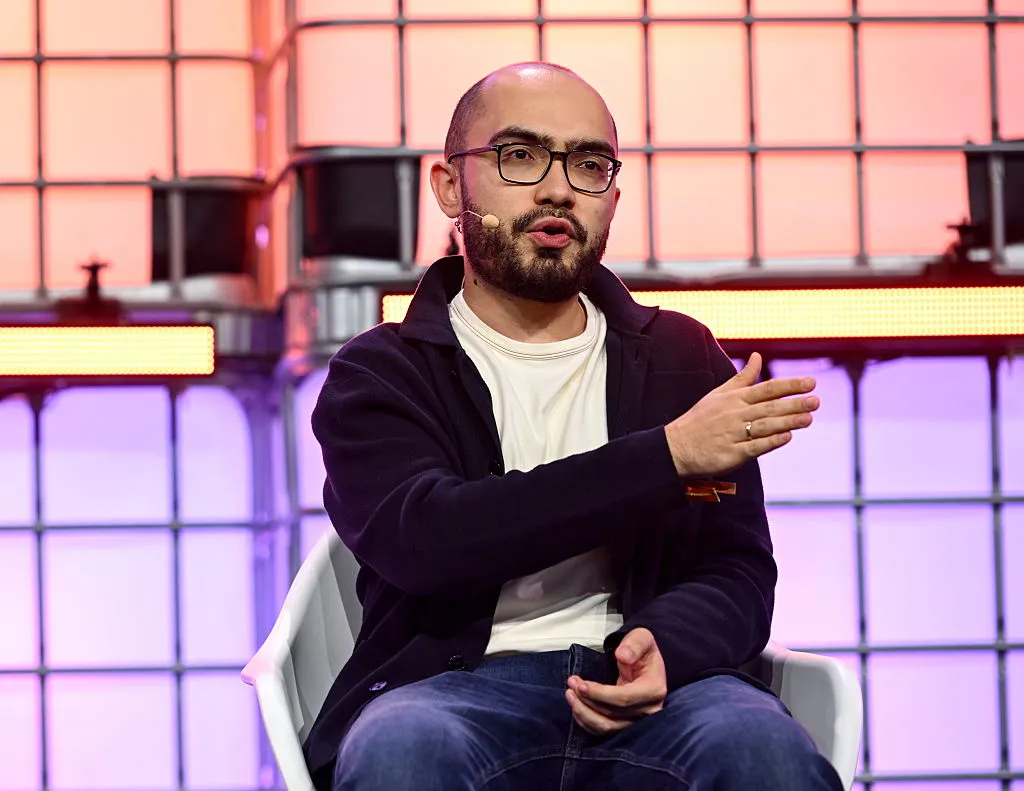
Higgsfield announced Monday that it has raised a $400 million Series B at a $5.4 billion valuation. This new round is just eight months after nabbing a $1.3 billion valuation.
Higgsfield, founded by former Snap exec Alex Mashrabov in 2023, lets users create AI images and videos. It made headlines this past year for premiering AI-generated movies at both Cannes and in New York. It has tools like the Cinema Studio to help filmmakers direct AI films and the Marketing Studio for marketing and advertising teams. In a release announcing the round, the company touted $700 million in annualized revenue and 30 million users across 200 countries.
One growing market for the company has been enterprises. It is now working with 390 of the Fortune 500, it said. Mashrabov told TechCrunch that Higgsfield expects “enterprise adoption of video AI to become much more deeply embedded in everyday marketing and creative workflows.”
The fresh capital will fund the usual business needs like hiring and product development. But it will also help pay for compute. “Video is one of the most compute-intensive domains in AI,” Mashrabov explained. Just one minute of video is like processing 60,000 words. Securing reliable compute capacity has therefore become a necessary expense to remain competitive with others in the industry like Synthesia and Runway.
DST Global led the latest round, with many other investors piling in including Goldman Sachs Alternatives, Valor Capital, and Tribe Capital.
>

Commanders to release K Jake Moody, give starting job to rookie Drew Stevens

How to Take Notes for In-Person Meetings With Google Meet

‘Mormon Wives,’ ‘Love Island’ Stars Sign With Select Management Group
-

 movies3 months ago
Search For Canadian TV Actor Stewart McLean Now Homicide Investigation
-

 Fashion9 years ago
These ’90s fashion trends are making a comeback in 2017
-
Fashion9 years ago
According to Dior Couture, this taboo fashion accessory is back
-
Fashion9 years ago
Model Jocelyn Chew’s Instagram is the best vacation you’ve ever had
-
Fashion9 years ago
Emily Ratajkowski channels back-to-school style
-
Fashion9 years ago
9 Celebrities who have spoken out about being photoshopped
-
Fashion9 years ago
Your comprehensive guide to this fall’s biggest trends
-
Fashion9 years ago
A photo diary of the nightlife scene from LA To Ibiza