
Entertainment
Indie Films Should Tour Like a Band

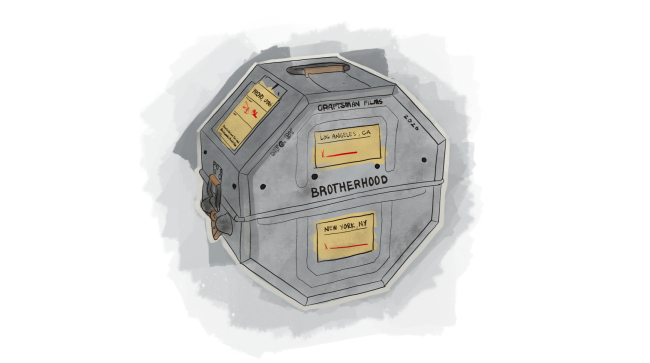
Editor’s note: This is the twelfth chapter of “A Producer’s Path,” an ongoing column for IndieWire’s Future of Filmmaking from independent producer Daren Smith. Read previous chapters here.
Q: How do independent films normally get screens in theaters?
A: They don’t.
We see it time and time again. Indie filmmakers put all of their energy into making the movie, then when it comes time to get the film to an audience, a lot of hope is involved. As I’ve said before, hope is a terrible strategy.
Raising as much money as you can, shooting the film, then hoping it gets into a festival in hopes that someone offers to distribute it. You end up with a finished film, a trailer, maybe a laurel or two, and no reason for a booker to believe in you. If you do manage to get distribution, the showtimes often land the week of release if they land at all, and by then it’s too late to market it.


Every independent producer has lived this experience. On my last film, “Faith of Angels,” we had a confirmed special screening on Friday in my hometown of Sacramento, but we didn’t find out until Wednesday at 3pm what the time was. We were left with 48 hours to sell out the screening.
For “Brotherhood” and the films I’m producing through Craftsman Films, I knew I needed a better strategy. I wondered what it would take to make it easy for a booker to say “yes.” Would 1,000 tickets be enough? That would be $12-15,000 in ticket sales (based on 2026 average ticket prices), enough to be in the top three per-screen averages for most theaters nationally. If I came to a theater chain in Provo, where I live now, and said, “We pre-sold 1,000 tickets. Do you want them?” would that be enough to get us showtimes weeks out from opening weekend rather than days?
All I needed now was a mechanism to presell 1,000 tickets in every city…
Going On Tour
In my former life I was a live sound engineer, touring the country with bands like Imagine Dragons, Neon Trees, and The Moth and The Flame. I saw firsthand the leverage created by touring, taking the album directly to an audience of people who were willing to pay anywhere from $20 to $250 to see the band perform the songs live.
I wondered if it could work for indie film. Not a roadshow, four-walling theaters and selling tickets to the movie. No, something different. An event, at a venue that wasn’t a movie theater, with live, in-person elements that only happen once in each city.
We started the planning back in November of 2025. Our key cultural consultant and consulting producer, Liliana Bolaños, was tasked with finding partners and venues, enough to do a 20-city tour across major cities in the US. By January we had a list of cities, and a few partners interested, though they all wanted to wait and see if the movie was any good.
Once we wrapped production in May, we quickly got an edit together that we could send out. This rough screener enrolled many more partners who started helping us find venues, sponsors, and even different cities. In one case, we weren’t finding much support in Los Angeles, and we were getting close to needing to lock our dates so we could book travel and give our partners time to help promote. I wasn’t sure what to do — and was a little disheartened to not have a tour stop in LA, the center of the film industry — but then someone reached out to me through my email list and asked, “How can we get this in Twin Falls, Idaho?” We pivoted, and now have one of the highest RSVPs in any city thanks to that partner and her network.
For the tour, general admission is free. The point of going on tour is about generating proof. It’s not a standalone product. A full house on a Saturday night in Provo, Utah is not only data that we can put in front of distributors, but by actually pre-selling tickets at the event we end up with real leverage we can take to a distributor. That’s how we get showtimes a month out from our theatrical release.
It may feel like leaving money on the table, but let me walk you through the economics.
At each of our 21 events — 18 tour stops and three premieres across 20 cities — we have 50 VIP tickets available at a pay-what-you-want rate that starts at $197. 100% of that revenue goes to marketing the film.
The venues are mostly donated or covered by sponsors. Five of the tour stops and the three premiere theaters are paid out of pocket by Craftsman Films, though we do have a sponsor for the Salt Lake City premiere.
We handle all of the ticketing ourselves unless the venue requires otherwise (which two of them have). We sell the VIP tickets directly through Luma, so there aren’t any fees besides the Stripe fees we pay through that platform. The monthly “plus” subscription costs $69, which we’ll cancel after the tour ends. All of the emails and customer data is pushed to my Kit account so that we can send automated follow-up emails and sequences before and after the event.
Sponsors — title, regional, and local — cover the costs of the venues when applicable, as well as our travel and accommodations, plus the labor involved in putting on a tour. We are traveling with 6 people: a tour producer; Ross (the writer-director); the two leads, Mauricio Martínez and Casey Elliott; and Lili, as well as a technician to run lights, sound, and video.
The total cost of the tour will end up just under $120,000, and our tour sponsors will cover the entire cost.
The whole goal of this tour is to create enough proof that it gives us the leverage we need to be low-to-no risk for the theater circuits when we ask for showtimes. Those conversations are underway, especially as they watch the first week of the tour and how well we are selling tickets.
We are opening narrow on purpose, in the cities where the tour has already put us in front of an audience. 50 sold out screens in our 20 tour cities are better than 500 screens at 10% capacity. One gets to stay for another week, the other is gone in 6 days.
We presell tickets to the movie at the end of each night’s program for $17. We sell those through our own Stripe account as well. We are working with Atom tickets to give those customers codes that can be converted to tickets using their app once the showtimes become available. That way we can give our pre-sell ticket holders first crack at the best seats at their preferred showtimes before the rest of the public is aware. In follow-up sequences we sell more tickets to the attendees’ families, friends, church groups, and organizations.
The end of the evening on tour is the highest-intent moment we will have. The room has just spent the night in the world of the movie — Ross sharing why he wrote it, songs performed live by the two leads, and a discussion about the themes of the film with local partners. The tension will be high to see this movie, and at that very moment we let them buy a ticket — or many, if they choose.
Everything about the tour is engineered to create that tension, then provide the release in the perfect moment. I’ve seen how hard (near impossible) it is to sell people movie tickets through ads or billboards or social media content. This is a different model.
Now, I often hear, “But this won’t work for my film…”
You’re right. Not with that attitude. And I have chosen, strategically, to lean into values-based, family-friendly films because there are existing communities — churches, organizations, non-profits — that are hungry for films like this, for opportunities to gather, and for stories that they can use in their own work. But it also took us 10 months to get to the point where we can do a tour like this. It doesn’t happen overnight, so you have to start planning the day you get your greenlight for the film. If you don’t have an existing audience, start building your email list, connecting with organizations and partners, and doing outreach so that you have one when it’s time for your film to go on tour. Visibility comes first, not last, after all.
Looking forward, I want to expand on this idea after we’ve proven that it works (or not) with the “Brotherhood” tour. The first stop of our tour is August 29th, which is in three days. The night is sold out. 667 people in one room this weekend. I told you I would tell you about the path I’m walking as I’m walking it. I expect this tour to reach around 10,000 people in-person, and sell between 25,000-30,000 tickets. That’s at least 1,000 tickets in each city for the film’s opening weekend. A presold ticket still has to be redeemed, but it is a buyer who has already paid and wants to see the movie. That comes with plenty of earned media and coverage, which is also by design.
What I expect to see from that point is circuits coming to us asking to screen the movie, the film expands in theater count in weeks two and three, and has a nice run through the holidays. My goal has been to sell one million tickets in theaters. I can’t control that number, but I believe if I can sell the first 25,000 and then influence the next 75,000, at 100,000 tickets the film has to stand on its own. Either word of mouth takes the film to great heights or it doesn’t.
I’ll certainly report back in October after the film is released.
If we sell fewer than 10,000 tickets, that would be a miss in my book, and I’ll share the results either way.
Now, the “far” bet. Free general admission plus a paid VIP tier is one configuration of the tour. I want to see if there’s an experiment worth running where every seat is $100 at a tour stop. It’s a screening with a Q&A and a meet and greet, an exclusive night out with the creatives behind the project, a way to see it in a way no one else gets to.
One night only, 20 cities, 500 seats per venue, and $100 per ticket. Add a $10k sponsor per city to cover the costs, and the question becomes: can you generate a million dollars in revenue before a film ever reaches theaters?
Daren Smith is the founder of Craftsman Films and managing member of Producer Fund I. His latest film, “Brotherhood: A Cinematic Musical,” opens in theaters October 2. All artwork for the Producer’s Path series is created by Steven de Groot.
>
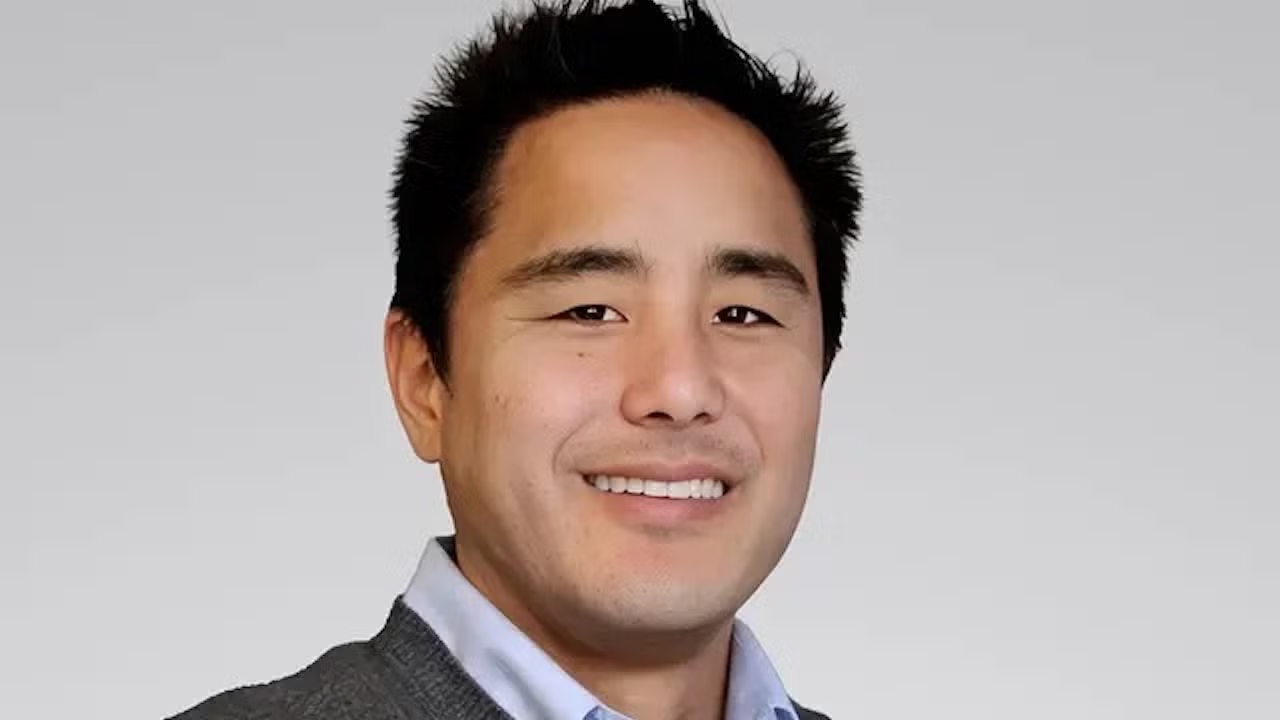
Anonymous Content has tapped The North Road Company’s Steve Shikiya as its new chief operating officer.
Shikiya, who will report directly to Anonymous’ President and CEO Darren Walker, will oversee day-to-day business operations, including finance, corporate development, business affairs and human resources. He will work closely with leadership across the management, production and brand studio businesses and support the company’s continued growth.
Shikiya marks the latest executive appointment under Walker, following Liza Burnett Fefferman as Chief Communications and Marketing Officer and Michael Sinclair as Chief Legal Officer.
“Anonymous Content has an extraordinary legacy, an exceptional roster of artists and a clear commitment to building a truly global, creator-led company,” said Shikiya added. “The opportunity to work with Darren and the leadership team to help build the infrastructure, capabilities and strategic partnerships for Anonymous’ next chapter is enormously excited and I look forward to getting started.”

Prior to Anonymous, Shikiya served as the North Road Company’s chief financial officer, leading day-to-day business operations across finance, accounting, corporate development, business affairs, physical production, human resources, technology and the company’s international subsidiaries.
Before that, he was COO of Imagine Entertainment for nearly a decade. He also served as deputy COO of Endemol Shine North America, the joint venture between 21st Century Fox and Apollo Global Management, overseeing business operations across its scripted, unscripted and digital divisions.
Additionally, Shikiya held dual COO and CFO responsibilities at Shine Group North America, where he streamlined the company’s U.S. operations and served as its primary liaison with parent company leadership in London and New York. He also held senior leadership roles at Twentieth Century Fox and executive
positions at Metro-Goldwyn-Mayer Studios, Launch Media, Universal Studios and Disney.
“Steve has spent his career helping ambitious, independent companies like ours build the foundation to grow and scale while preserving the culture that makes them unique,” Walker said in a statement. “On the heels of Anonymous’ strong momentum, his financial expertise and experience executing complex transactions will be instrumental in advancing our strategic priorities – we can’t wait for him to join us.”

>
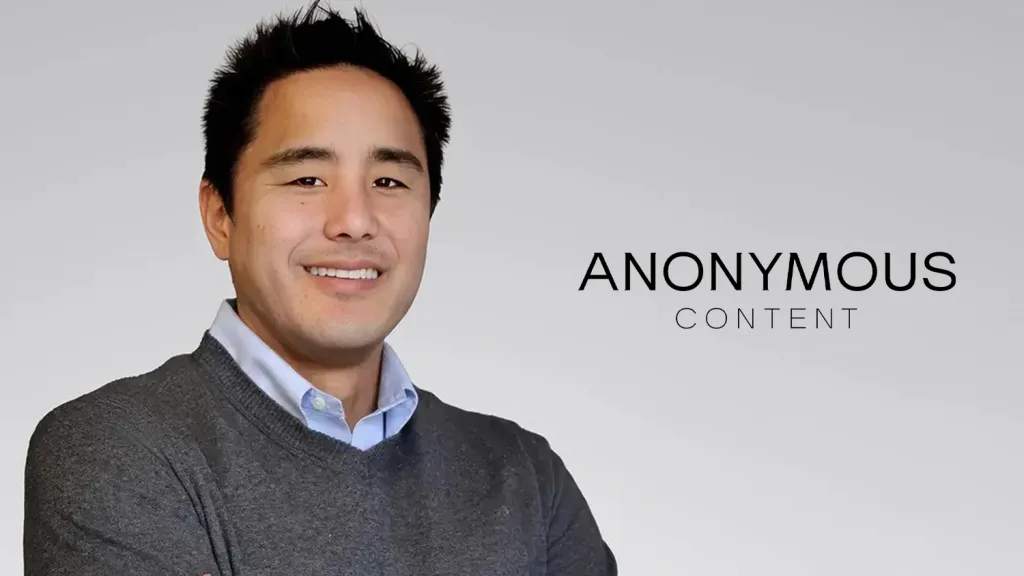
Veteran media and entertainment executive Steve Shikiya has been named Chief Operating Officer of Anonymous Content.
Reporting directly to President and CEO Darren Walker, Shikiya will oversee Anonymous’s day-to-day business operations, including finance, corporate development, business affairs, and human resources. He will work closely with leadership across the management, production and brand studio businesses and support the company’s continued growth.
Shikiya’s appointment follows the recent hires of Liza Burnett Fefferman as Chief Communications and Marketing Officer and Michael Sinclair as Chief Legal Officer.
“Steve has spent his career helping ambitious, independent companies like ours build the foundation to grow and scale while preserving the culture that makes them unique,” said Walker. “On the heels of Anonymous’ strong momentum, his financial expertise and experience executing complex transactions will be instrumental in advancing our strategic priorities – we can’t wait for him to join us.”
Most recently, Shikya served as Chief Financial Officer of North Road Company, where he led day-to-day business operations across finance, accounting, corporate development, business affairs, physical production, human resources, technology and the company’s international subsidiaries. Prior to North Road, Shikiya served for nearly a decade as Chief Operating Officer of Imagine Entertainment.
Previously, Shikiya served as Deputy Chief Operating Officer of Endemol Shine North America, the joint venture between 21st Century Fox and Apollo Global Management, overseeing business operations across its scripted, unscripted and digital divisions. Before the formation of Endemol Shine, he held dual Chief Operating Officer and Chief Financial Officer responsibilities at Shine Group North America, where he streamlined the company’s U.S. operations and served as its primary liaison with parent company leadership in London and New York.
Earlier in his career, Shikiya held senior leadership roles at Twentieth Century Fox and held executive positions at Metro-Goldwyn-Mayer Studios, Launch Media, Universal Studios and The Walt Disney Company. He began his career at Arthur Andersen LLP.
Shikiya holds a Master of Business Administration from the UCLA Anderson School of Management and a Bachelor of Science in Business Administration from the University of Southern California.
“Anonymous Content has an extraordinary legacy, an exceptional roster of artists and a clear commitment to building a truly global, creator-led company,” said Shikiya. “The opportunity to work with Darren and the leadership team to help build the infrastructure, capabilities and strategic partnerships for Anonymous’ next chapter is enormously exciting and I look forward to getting started.”
>

Ted Kaczynski doesn’t deserve Jacob Tremblay (Room, Sovereign), but that is who portrays the infamous Unabomber in Netflix‘s upcoming film named after the domestic terrorist. The rest of the cast are pretty good glow-ups of their real-life characters as well: Unabomber also stars Russell Crowe (Gladiator, A Beautiful Mind), Shailene Woodley (Paradise, The Fault in Our Stars), Annabelle Wallis (Star Trek: Discovery), Alexander Ludwig (Vikings), Steven Ogg (The Walking Dead) and Marc Menchaca (Ozark).
Directed by Janus Metz off a screenplay by Sam Chalsen and Nelson Greaves, Unabomber follows Ted Kaczynski’s (Tremblay) transformation from 16-year-old Harvard prodigy into the infamous Unabomber. Subjected to controversial psychological experiments by Professor Henry Murray (Crowe), Kaczynski’s troubled past resurfaces decades later when his manhunt, led by FBI agent Joanne Miller (Woodley), brings to light the chilling consequences of ambition and isolation.
Kaczynski’s attacks killed three people and injured 23 others.
The hunt for the Unabomber spanned 17 years. Kaczynski’s first bombing took place in 1978; he was finally found in a cabin in the woods in 1996. It was the longest manhunt in U.S. history.
Unabomber is executive produced by Greaves, Donald J. Lee and Sam Chalsen in association with MRC. Sophie Cassidy produces for 2.0 Entertainment. Unabomber releases globally on Netflix on Sept. 25, 2026.
Watch the trailer:
Kaczynski died in prison in 2023. He was 81. Kaczynski hanged himself after being diagnosed with late-stage rectal cancer — probably the most fitting final days of all time.
>

How to watch Royals vs. Blue Jays: TV channel and streaming options for August 27

Anonymous Content Adds Steve Shikiya as COO

Anonymous Content Names Steve Shikiya Chief Operating Officer
-

 movies3 months ago
Search For Canadian TV Actor Stewart McLean Now Homicide Investigation
-

 Fashion9 years ago
These ’90s fashion trends are making a comeback in 2017
-
Fashion9 years ago
According to Dior Couture, this taboo fashion accessory is back
-
Fashion9 years ago
Model Jocelyn Chew’s Instagram is the best vacation you’ve ever had
-
Fashion9 years ago
Emily Ratajkowski channels back-to-school style
-
Fashion9 years ago
9 Celebrities who have spoken out about being photoshopped
-
Fashion9 years ago
Your comprehensive guide to this fall’s biggest trends
-

 Anime3 months ago
Rurouni Kenshin: Hokkaido Arc Manga Takes 1-Issue Break – News