Connect with us

Sports

Zeev Buium, Filip Hronek and 3 other key Canucks questions for 2026-27

Published

on

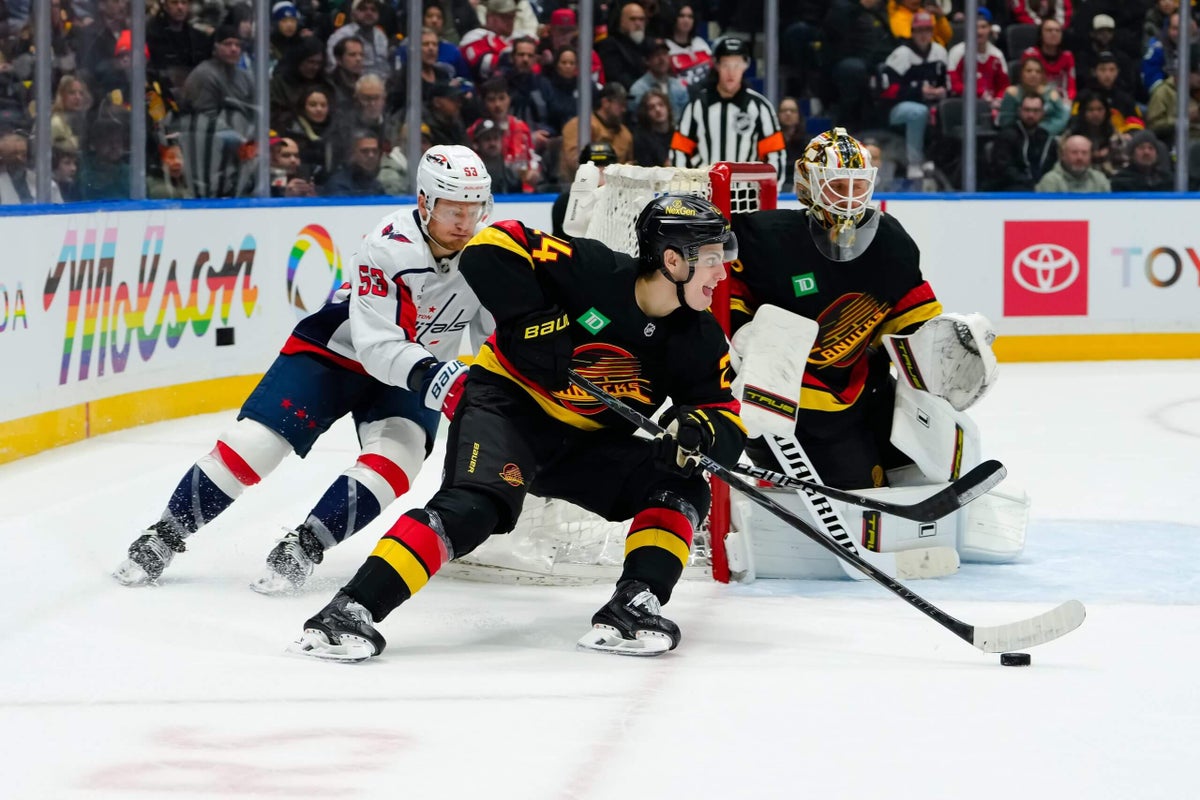
Zeev Buium was the most promising young player in the Vancouver Canucks lineup last season.

Despite his being dealt midway through his first full NHL season and logging major minutes in a sewered environment for a dysfunctional team as a rookie, Buium’s hockey IQ and skill level stood out. No matter how miserable the team’s results, Buium kept trying things and kept challenging defenders one-on-one from the blue line. Off the ice, he maintained his competitive edge. It’s commendable he never seemed to accept the results.

For all of the character and skill Buium demonstrated, and for all of the pedigree he possesses as a recent first-round pick who put together one of the most impressive resumes in recent NCAA hockey history with Denver University, Buium’s profile contains some measure of fragility the Canucks will need to be thoughtful about managing.

As promising as Buium is, he remains a somewhat undersized left-handed defenceman. The 20-year-old will need to put on some weight and add some physical heft to his 6-foot, 183-pound frame to hold up in tough minutes. Given his work ethic, however, there’s little question he’ll manage precisely that as he ages and approaches his prime.

The fragility of Buium’s profile, however, is less about the heaviness in his game and more about the player archetype he could come to represent if the Canucks aren’t thoughtful about his development path.

There are, of course, left-handed defencemen under 6-1 who represent significant value at the NHL level: Quinn Hughes, Lane Hutson, Josh Morrissey and Vince Dunn come to mind as prominent examples. Those players, however, share a key common trait — they’re top-end point producers with hard-won reputations as high-end power-play quarterbacks.

On the other side of the ledger, there’s a long list of NHL lefties under 6-1 who have been consistently undervalued around the league. The Pittsburgh Penguins’ Sam Girard, for example, is a legitimate top-four-calibre defenceman. Still, he required his former team, the Colorado Avalanche, to attach a second-round pick to offload his entirely reasonable contract with 1 1/2 seasons remaining. Matt Grzelcyk was a 40-point player in Pittsburgh during the 2024-25 season and still had to wait until fall to sign a one-year contract with the Chicago Blackhawks last offseason.

Even some high-end power-play options, such as recent Stanley Cup winner Shayne Gostisbehere, have had journeyman career paths, their professional resumes littered with Girard-like trades and one-year contracts despite consistent production and performance.

This variance in Buium’s profile must be accounted for in Vancouver’s thinking ahead of this upcoming season. It’s tricky, however, because Buium will require power-play reps if he’s ever going to hit his ceiling as an NHL player. And yet Buium struggled on the power play last season — especially relative to veteran teammate Filip Hronek, who was absolutely sensational.

Hronek played just over 150 power-play minutes during the 2025-26 season and was remarkably efficient in those minutes. In fact, he led all NHL defencemen who logged at least 150 power-play minutes last season in points per 60 with 7.94. More than just Hronek’s individual success, the calibration of Vancouver’s power play and the space he opened up as a shooting threat at the top of the Canucks’ 1-3-1 formation just clicked when he was promoted full time to the top unit.

There is no sound hockey argument to remove Hronek from the top power-play unit, and yet the path to Buium’s becoming a star-level contributor requires his development into a first-unit mainstay, which he’ll never do if he isn’t given significant run in that spot. With Hronek intent on remaining in Vancouver, there is no easy solution to this logjam, but the team is going to need a sharp, considered plan.

For Manny Malhotra and the coaching staff, how to navigate Buium’s power-play usage and carve out an opportunity to feature him offensively is easily the deployment decision with the most significant long-term ramifications of this Canucks season.

2. Will Manny Malhotra have the discipline, and options, to manage Filip Hronek’s minutes?

Hronek will turn 29 in November and has a no-move clause through the conclusion of 2027-28. For now, the top-pair Czech defenceman wants to remain in Vancouver with the rebuilding Canucks. That’s admirable on some level, and it’s also his contractually negotiated right.

There is a massive gap in quality between Hronek and the other options Malhotra will have on the back end. Especially in the wake of Marcus Pettersson’s departure, Hronek is really Vancouver’s only established top-of-the-lineup option on the blue line. You can hope the likes of Buium or Tom Willander take a significant step forward this season, but hope is not a plan, and it’s rare for 22- and 21-year-old defencemen to be capable matchup options at the NHL level.

Given Hronek’s age and Vancouver’s rebuilding future, the Canucks will need to be disciplined about managing his ice time. Last season, for example, Hronek played more than 25 minutes in 19 out of 25 games after the Olympic break. In aggregate, he logged 30 more minutes than any other defenseman after the Olympics. On a per-game basis, only Zach Werenski (whose team was in a playoff race) and Quinn Hughes (whose team was scrapping for home-ice advantage) got heavier usage than Hronek.

Hronek is a tough, efficient defenceman and can handle logging significant minutes, but he’s also missed large chunks of time as a result of shoulder injuries in two of the past four seasons. In any event, the Canucks will need to find some other options to share the load. Vancouver simply has too much asset value tied up in Hronek and too little meaningful ambition this upcoming season to risk deploying him in some of the heaviest usage in the league.

It’s incumbent on Malhotra not to give in to the temptation to overextend Hronek during a rebuilding season.

3. Can Jamie Oleksiak and Luke Schenn play well enough to flip at the trade deadline?

Luke Schenn has a full no-move clause in his one-year, $2.25 million contract. Jamie Oleksiak has a relatively team-friendly 12-team no-trade clause included in his two-year, $10 million contract.

Schenn and Oleksiak are high-character players and battle-tested in the playoffs. They have the sort of profile teams generally want to add to their lineup at the NHL trade deadline when they’re planning for a long playoff run.

Defence-minded defencemen, however, are often the players whose stock falls most precipitously when they’re logging significant minutes for overmatched teams during a rebuild. You wouldn’t have known it to watch Marcus Pettersson play last season, for example, that his five-on-five defensive impact — in terms of limiting the rate at which Vancouver surrendered goals and expected goals against — was borderline elite. You just noticed how frequently Vancouver was fishing pucks out from the back of its net when he was on the ice.

As unrestricted free agents, Oleksiak and Schenn will bring solidity to the organization. There’s no questioning the level of professionalism and defensive experience they’ll be able to contribute. Can they hold up well enough, however, to maintain or enhance their trade value ahead of the trade deadline? That’s a very different question.

4. How will young defencemen fare with the coaching change?

Buium had some sensational offensive moments. Willander was productive and, on occasion, even looked like a strong second-pair transitional defenceman. It was a different story for Elias Pettersson, who struggled mightily to replicate the defensive authority he flashed down the stretch of the 2024-25 season, but his potential as a heavy, throwback defensive blueliner is obvious.

Across the board, however, all of Vancouver’s young defencemen looked overmatched night to night last season. The defensive habits were nonexistent, and elementary mistakes — allowing a free stick in the slot, missing an assignment, keeping too loose a gap through the neutral zone — were constant.

That level of performance, however, wasn’t especially alarming. In truth, the mistakes weren’t isolated solely to the younger players. The 2025-26 Canucks were nothing short of the most disorganized, confused structural team I’ve ever covered. There was simply no sense of defensive solidity, no predictability in how they executed. It was sometimes difficult to even parcel out blame when a mistake had been made, given several players seemed unsure of their role or assignment on any given breakdown.

The context of Vancouver’s structural failings makes it difficult to evaluate exactly how their younger defencemen are tracking. Truthfully, none of them performed to the level of a good NHL blueliner last season, but that’s a data point that might reveal more about the team’s environment than it does about the individual quality, form or NHL readiness of Buium, Willander and Pettersson.

We’ll wait to see what systems Malhotra implements and how it might affect Vancouver’s young defencemen. The baseline, however, is relatively low. Structurally speaking, it simply can’t get any worse than it was last season.

5. Setting reasonable expectations for Thatcher Demko

Thatcher Demko is now a 30-year-old coming off a second hip surgery, which is virtually unprecedented for an NHL goaltender, and hasn’t been able to stay healthy since a knee tear in Vancouver’s first game of the 2024 playoffs.

At this point in his career, Demko has never put together an NHL season in which he checked off all of the following criteria: A. Start 60 games or more. B. Manage an above-NHL-average save percentage. C. Be healthy at the end of the year.

Looking even beyond a lengthy injury history, he hasn’t been the same positionally perfect, athletically dominant goaltender of yore in a few years. Demko’s save percentage across 43 appearances over the past two years checks in well below the NHL average.

For the Canucks and their fans, it’s important to sit with that. It’s unreasonable to expect Demko to perform like a conventional starter, and it’s incumbent on the organization to manage his pitch count rigidly this season. For fans, meanwhile, it’s unfair to apply “Demko could ruin the tank” expectations to a goaltender who really shouldn’t start frequently enough next season for that to be a relevant part of the dialogue.

>

Continue Reading

Sports

How to watch Brewers vs. Mets: TV channel and streaming options for August 27

Published

on

The Milwaukee Brewers and New York Mets play a rubber match on Thursday at 7:10 p.m. ET, with the series deadlocked at 1-1. Jacob Misiorowski (13-5, 1.68 ERA) will start for the Brewers, who are 82-51 this season and first in the NL Central. Sean Manaea (4-5, 4.31 ERA) is expected to start for the Mets, who are 60-73 and fifth in the NL East.

How to watch Milwaukee Brewers vs. New York Mets

Brewers vs. Mets odds

  • Favorite Moneyline: Brewers -208
  • Underdog Moneyline: Mets +170
  • Total: 7
  • Total Over Odds: -115
  • Total Under Odds: -105

Injury reports

Brewers

Abner Uribe: 15 Day IL (Forearm), JoJo Romero: 15 Day IL (Appendix), Joel Kuhnel: 15 Day IL (Shoulder), Brandon Woodruff: 60 Day IL (Shoulder), Rob Zastryzny: 60 Day IL (Shoulder), Brian Fitzpatrick: 60 Day IL (Elbow), Angel Zerpa: 60 Day IL (Forearm), Quinn Priester: 60 Day IL (Wrist), Dustin May: day-to-day (Shoulder)

Mets

Mark Vientos: 10 Day IL (Hand), Jorge Polanco: 10 Day IL (Ankle), Juan Soto: 10 Day IL (Calf), Cionel Perez: 15 Day IL (Forearm), Devin Williams: 15 Day IL (Shoulder), Tylor Megill: 60 Day IL (Elbow), Justin Hagenman: 60 Day IL (Rib), Reed Garrett: 60 Day IL (Elbow), Bo Bichette: day-to-day (Hand)

Stats to know

  • Brice Turang is hitting for a .259 BA, .354 OBP and .436 SLG with a 24.6% strikeout rate and a 12.9% walk rate. His OPS is .790 and he has scored 79 runs. In 560 plate appearances, he has hit 17 home runs and driven in 79 runs (18th in MLB). Turang has been crafty on the base paths, recording 18 steals on 23 attempts.
  • In 476 plate appearances, Jake Bauers is hitting .272/.382/.501 with a .884 OPS and nine steals on 13 attempts. He has hit 23 long balls, driven in 75 runs and scored 76 times.
  • Carson Benge is hitting for a .281 BA, .341 OBP and .429 SLG with a 21.1% strikeout rate and a 7.2% walk rate. His OPS is .770 and he has scored 68 runs. In 525 plate appearances, he has hit 16 home runs and driven in 53 runs. Benge has recorded 19 steals on 23 attempts.
  • In 568 plate appearances, Bo Bichette has hit 14 long balls, tallied 66 RBIs and scored 64 runs. He is batting .264/.312/.393 and has posted an 18.1% strikeout rate and a 6.5% walk rate.

This watch guide was created using technology provided by Data Skrive.

Betting/odds, ticketing and streaming links in this article are provided by partners of The Athletic. Restrictions may apply. The Athletic maintains full editorial independence. Partners have no control over or input into the reporting or editing process and do not review stories before publication.

Photo: Jamie Squire, Ishika Samant, Scott Taetsch, Alika Jenner / Getty Images

Connections: Sports Edition Logo

Connections: Sports Edition Logo

Connections: Sports Edition

Spot the pattern. Connect the terms

Find the hidden link between sports terms

>

Continue Reading

Sports

Leon Goretzka: What will he bring to Aston Villa and does he still have the legs?

Published

on

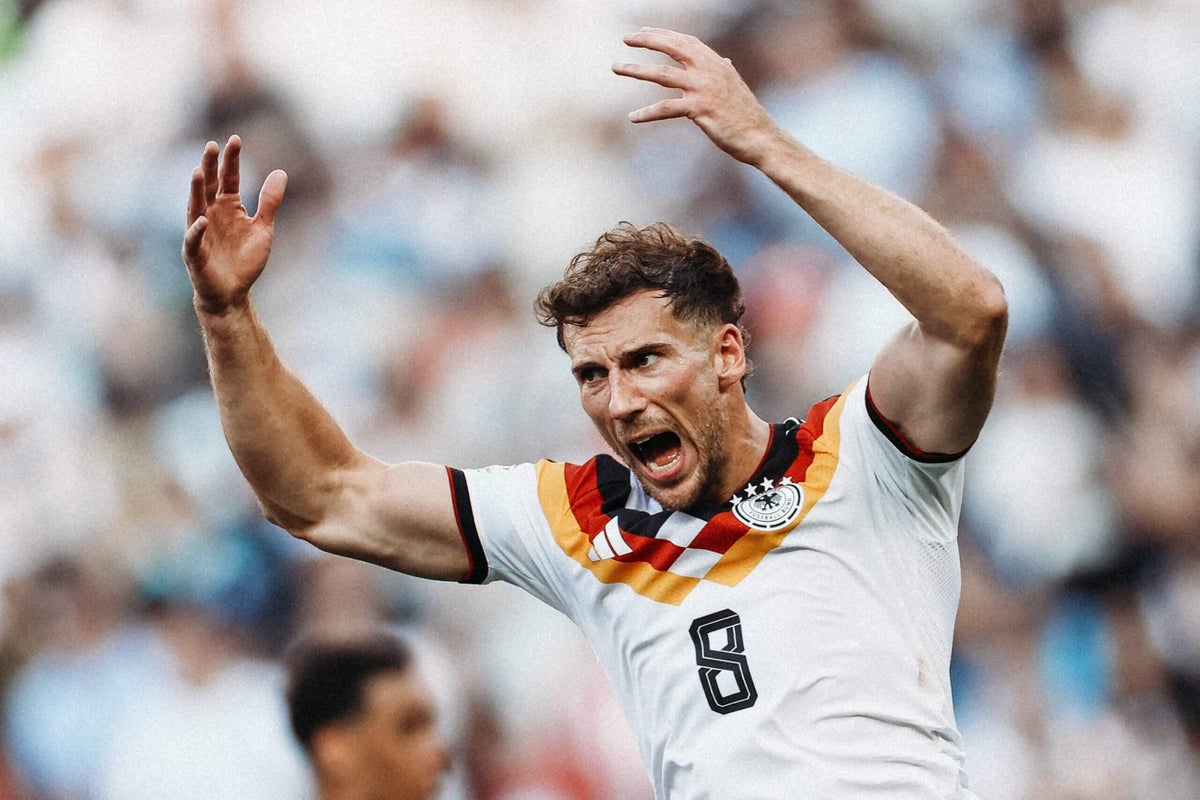
Leon Goretzka’s Bayern Munich career did not end as it was supposed to.

The German midfielder, who has signed for Aston Villa on a free transfer, won everything there was to win during his eight years at Allianz Arena. He was a cornerstone of Bayern’s imperial era, during which they won the Bundesliga seven times, the DFB-Pokal three times and the Champions League in 2020.

Goretzka, now 31, was one of the world’s most prominent midfielders during that run. There was even a period, for maybe two or three years, when he might have been considered Europe’s pre-eminent box-to-box midfielder. Physical, destructive, but with excellent attacking instincts and timing that allowed him to complement Bayern’s more technical or tactically adroit players.

But prior to his release this summer, Goretzka had become a player out of time and a symbol of a decadent era. It’s a situation that needs explaining.


In 2021, he signed a highly lucrative, five-year contract. He was one of several players, alongside Serge Gnabry and Kingsley Coman, who tied their future to the club, but who accounted for a sizeable chunk of Bayern’s wage bill.

In time, as his impact lessened, it made Goretzka a target. When he joined in 2018 (moving from Schalke on a free transfer), he was the ideal signing. Thiago Alcantara was still orchestrating Bayern’s midfield, Javi Martinez was anchoring it, and Goretzka provided a set of attributes that the team needed.

However, as the conditions around him changed, that value declined and — increasingly — the focus fell more on his flaws. Goretzka is not a playmaker; he lacks the passing ability and the delicate touch. He is also not the most tactically aware player and cannot be used simply to provide quality.

Instead, at his best, he is a rogue element, stealing into penalty boxes and attacking space, or otherwise turning midfields inhospitable and making opponents uncomfortable. That kind of player always needs the right chemistry around them. Increasingly, he did not. That also meant that as Bayern tried to pivot between eras, the big contract he signed in 2021, which made his sale virtually impossible, recast him as someone who had outstayed his welcome.

The prevailing narrative among his detractors portrayed him as being content to see out a contract that would not be on offer elsewhere. But that’s not really fair. He may have become less relevant to the first team and he may no longer be in his prime, but Goretzka repeatedly fought for his career in recent seasons.

In the summer of 2024, Vincent Kompany arrived at Bayern with a mission to perform an overhaul. Joshua Kimmich would anchor the midfield, Aleksandar Pavlovic had graduated from the academy by then, and Joao Palhinha had joined from Fulham. Those three players would provide the platform for the attacking half of the side, and Goretzka was advised that he should either leave or accept a greatly reduced role.

Goretzka chose to stay. But while his contract may have influenced that decision, his attitude was commendable.

Kompany complimented the midfielder for his professionalism in training and his approach to a humbling situation, and by the turn of the year Goretzka had been reinstated. Bayern reclaimed their Bundesliga title that season, and while Goretzka was not “back” and was not the force he had once been, he had some excellent games domestically and in Europe, even earning a recall to the German national team.

In February 2025, Bayern travelled to Stuttgart to face one of the final hurdles before becoming league champions. It pitted Goretzka, by then a regular in the side again, against Angelo Stiller, who was and remains one of the most regarded German midfielders in the Bundesliga. Goretzka monstered him. He scored, he pressed Stiller into a bad mistake, and Bayern won 3-1.

Goretzka is still a rough-and-tumble player (Alex Grimm/Getty Images)

In the summer of 2025, history repeated. He was again expected to leave — encouraged to, even — but chose to stay. Bayern were an outstanding side in 2025-26. At the beginning of the season, they also signed Tom Bischof. Young and German, with a left foot to die for, Bischof was far more suited to the midfield that Kompany wanted and someone for whom supporters had more enthusiasm. Goretzka played fewer than 200 minutes in the Champions League across the year, and there was never any serious hope of a contract extension.

But he is still a good player. The caveats remain. He is not as physically rambunctious as before, but he can be tremendously effective in the right system, with the right players in support. The Premier League is a rough-and-tumble league. Goretzka is still a rough-and-tumble player who can press well, arrive in the box at the right moments, and win duels.

Signing players on the downslope of their career is a tricky business. Even more so when they have already won everything that club football has to offer. But while Goretzka became less important to Bayern in recent years, he never acted as if that was the case. He always played in the same way, with all the intensity and commitment expected of a serial winner, and generally found a way to be an asset.

Villa have clearly noticed that. Having lost Amadou Onana to a long-term injury, they needed to replicate his physicality, among other abilities. Having sold Ezri Konsa, Youri Tielemans and Lucas Digne this summer, the club also felt the need to sign someone who can help set dressing-room standards and replace some of the seniority and leadership that has now been lost.

To deal with those issues, Goretzka might have been among the best players available. He will be coming to England to play, to compete and, as he has done for his entire career, hopefully to win.

>

Continue Reading

Sports

‘The Athletic Football Show’ previews the 2026 Baltimore Ravens

Published

on

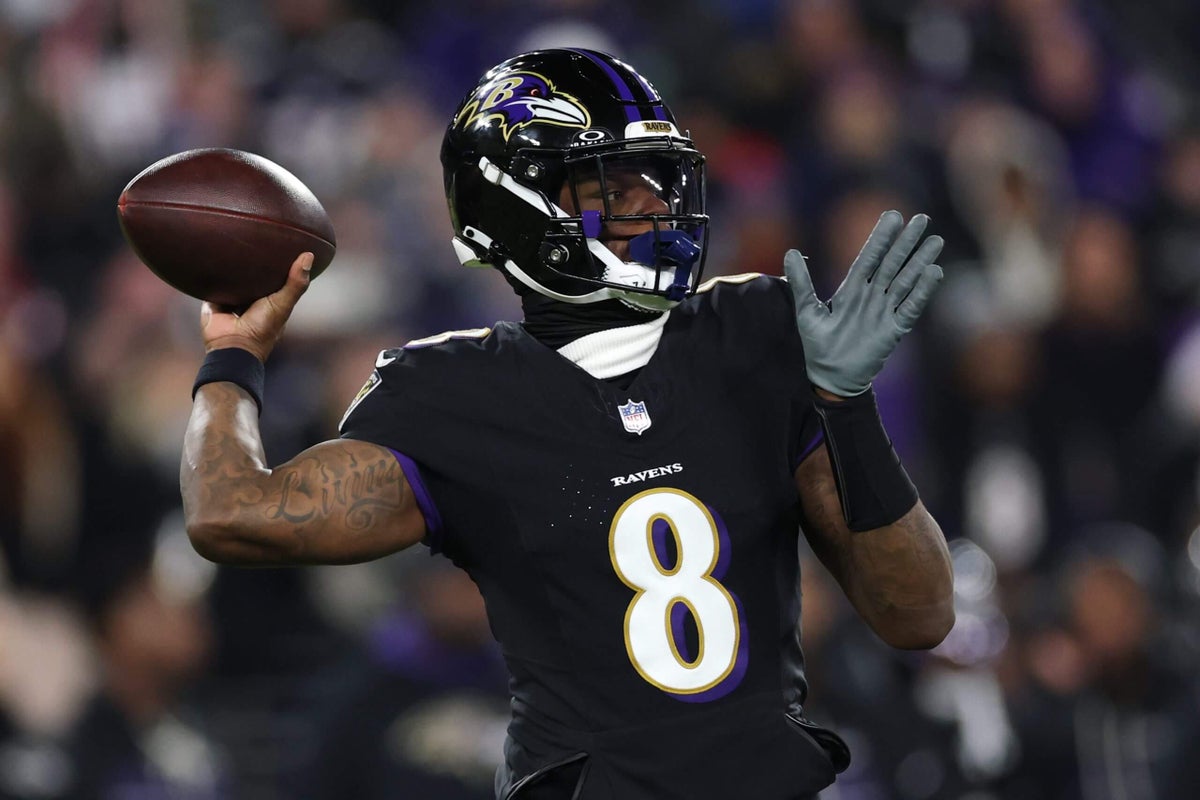
“The Athletic Football Show” is previewing all 32 teams leading up to the start of the 2026 NFL season. Below are select quotes from the show’s preview of the Baltimore Ravens. The quotes are edited for clarity. You can watch the whole preview on YouTube and in the embedded video below, or listen to the full AFC North preview wherever you get your podcasts.

Robert Mays on what excites him most about the Ravens: I’m excited to see what Jesse Minter can do with some serious dudes. The Chargers have a decent collection of personnel. Derwin James is a good player. Khalil Mack is pretty ageless at this point. Tuli Tuipulotu had a nice season. They have Teair Tart, who they’ve gotten a lot out of, but a lot of the excitement about the Chargers over the last couple of years is their ability to get more than they’ve paid for with some of these guys. The Ravens have invested in some big-name guys all the way across that defense, and I’m excited to see what Minter can do with this level of defensive talent on the high end. Kyle Hamilton. Nate Wiggins. We’ll see what we get from Nnamdi Madubuike. Malaki Starks was a first-round pick. Trey Hendrickson, who they paid a (ton) of money.

I’m interested in not only the overall quality of this, but also how they play. Do they feel like they can play a little bit more man coverage because they have Wiggins and Marlon Humphrey on the outside? Do they get a little bit matchier? The Chargers played two-and-a-half times the amount of quarters that the Ravens played last year. When the Ravens were at their best with this core of pieces two years ago when Mike Macdonald was there, it was these ideas. Even if the system and the language were the same with Zach Orr, stylistically, they had really drifted away from a lot of the stuff that they were doing with Macdonald when this was the best defense in the NFL. And so I think we’ll see them move back in that general direction. And I think with this collection of players and just what we’ve seen from Minter over the last couple of years, it’s a group that’s pretty easy to get excited about.

Dave Helman on what’s keeping him up at night: I’m rooting for him, but Ja’Kobi Lane’s super camp is jumping the shark a little bit. And all of a sudden being excited about a young receiver is doing a lot to distract us from what is otherwise a pretty OK group of pass catchers. I’ve come around on Zay Flowers, I commend the Ravens for getting the deal done early, and I think Zay’s production last year flew under the radar for myself and many others. Even with Zay in the mix, what’s getting you excited about the Ravens pass catchers, unless Lane really is just a rookie phenom? I guess that’s possible, but I wouldn’t bet on it.

Mark Andrews was third on the Ravens roster and 46th in the league among tight ends in yards per route run. That’s down from seventh in 2024 and third the year before that. Behind Andrews, Durham Smythe is going to have a role in what the Ravens want to do. He’s not a pass-catching threat.

Derrik Klassen on what would be a successful season for the 2026 Ravens: I still think that this is a team that should, at worst, get to the divisional round and play a pretty strong game in the divisional round, and I think that they can be even better than that. I still think that this is a really good team and roster. Last year’s disappointment was just that things got a little bit stale and the quarterback was banged up, but I still ultimately think that this is one of the better teams in the NFL.

Subscribe to “The Athletic Football Show” on YouTube

>

Continue Reading

Trending

Copyright © 2017 Zox News Theme. Theme by MVP Themes, powered by WordPress.