
Entertainment
Keke Palmer, Raven-Symoné Rail Against Hollywood for Failing Child Stars


Keke Palmer and Raven-Symoné are taking Hollywood to task for failing child actors.
While talking on Raven’s podcast with wife Miranda Maday, titled “Tea Time,” Palmer tore into Hollywood for abandoning child actors once they age out of the industry.
“That’s what they do to child entertainers. That’s what people don’t understand – ‘why so-and-so went crazy,’” Palmer said. “First of all, I don’t believe people go crazy. I don’t. I don’t believe it’s just like that. Child entertainers – you have to understand, people say, ‘You are a has-been.’ Your life hasn’t even begun. You’ve done all of this stuff, and you’ve created all you’ve done. You’ve done years and years of work, and then people have decided you’re done just because you got older.”
Raven, who was a child star herself, having starred on “The Cosby Show,” “That’s So Raven” and the Disney Channel Original Movie “The Cheetah Girls,” agreed with Palmer. She said it should come as no surprise that so many former child stars act out once they reach a certain age.
“And then they wonder why we act the way we – I say we very clearly,” Raven said. “We get old. So, you’re saying that I’m only useful in this life when I’m younger and making you money and making you laugh? The rest of my life doesn’t matter to you?”
The pair’s conversation comes in the wake of Hayden Panettiere’s death. The actress was a major star in her youth – appearing in things like “Remember the Titans” and NBC’s “Heroes.” When news of her death hit, plenty were quick to call out the Hollywood system and how people did not do enough for Panettiere or those like her.
“I’ll miss you. I’m so sorry you suffered,” Jack Coleman, who played Panettiere’s father on “Heroes,” wrote. “I’ll remember how happy you were on set and on the European press tour; how you championed Tess when she was being bullied; your commitment to animal welfare and the courage to put yourself in harm’s way to protect them. I only wish you had been given that same protection.”
Palmer did think that with the continued rise of content creators, there was a signal of how things could be better. Now that so many more are having their lives out there from an early age, she hopes people will offer more care for child stars as they grow.
“Everybody’s online and being perceived like we were being perceived as kids, and you know, it was only a certain avenue you could go to be looked at publicly like that,” Palmer said. “Now you can be a YouTube family, and they could know you when you came out the womb. So more people are actually having the same experience that we’ve had in different scales, in different niches, or worldwide.”
She added: “I think it lets people say, ‘Well, hey, wait a minute. There’s something we’re not talking about here.’ I think that’s something we’ve had a lot of experience with.”

>
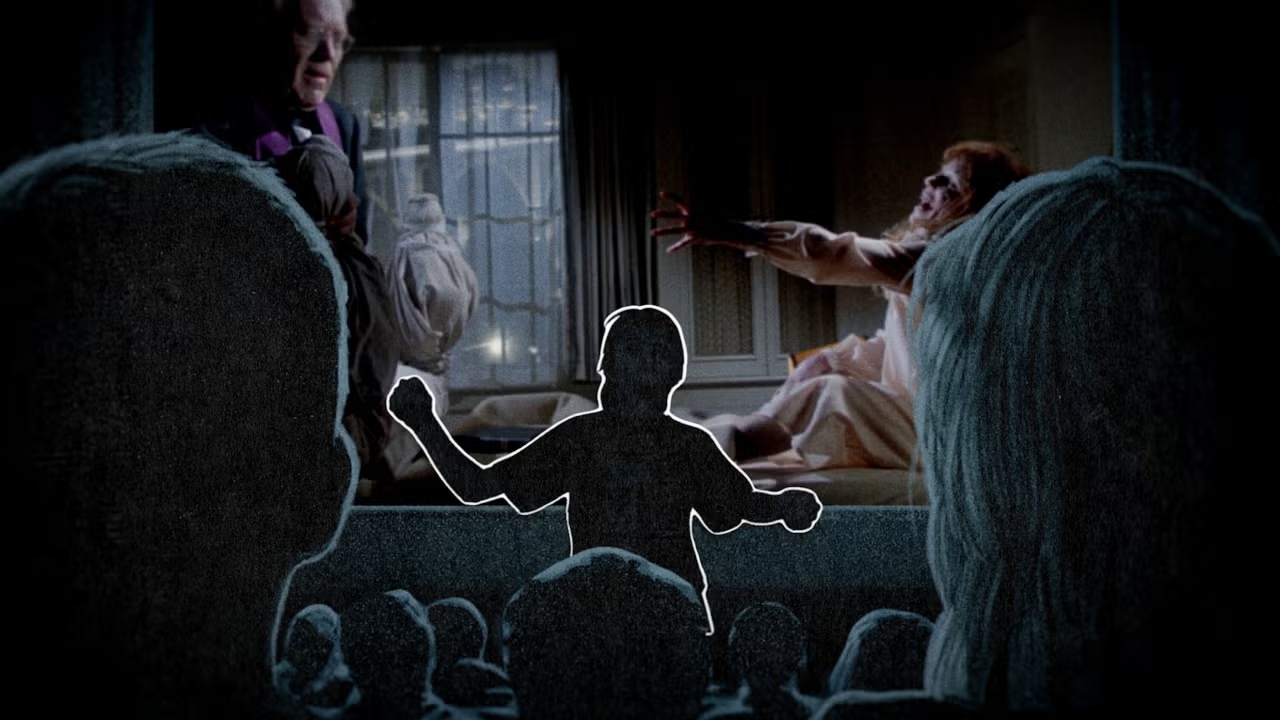
When John Boorman’s gonzo “Exorcist II: The Heretic” opened in 1977 as the sequel to William Friedkin’s original 1973 masterpiece, it was promptly pilloried by critics.
(Gene Siskel, in his zero-star review, recounted how a man at his screening had playfully threatened Siskel’s life “if you say one nice thing about that lousy movie.” The man’s wife made sure the critic knew her husband was kidding.)
Similarly, the movie’s box office disappointed. “Exorcist II” made $30.7 million, compared to the original’s $441.3 million, cementing the perception that the movie wasn’t just bad but was one of the worst movies ever. Over the years that idea was repeated – that it wasn’t just a lackluster sequel but by filmmaker Friedkin’s own measure “a freaking disgrace.”
Time has been kind to Boorman and to “Exorcist II,” and a reappraisal has slowly occurred in the decades since its release. Its outrageousness is now celebrated and its striking dissimilarity to the original is a feature, not a bug. Special edition home video releases have been produced and Boorman, one of our most underrated auteurs, is finally being acknowledged for his influence and artistic achievements.
But the biggest contribution to the continued rehabilitation of “Exorcist II” arrives this week, in the form of “Boorman and the Devil,” a dynamite documentary that charts the production, release and response to Boorman’s film – and the ensuing fallout. It includes a lengthy interview with Boorman himself, along with commentary by filmmakers like Joe Dante (who defended the movie in Film Comment upon its initial release) and Mike Flanagan (who is currently making an “Exorcist” movie for Universal and Blumhouse) and critics like New York Magazine’s Bilge Ebiri, who appreciates what the movie tried to do, even if they don’t love the final product. (Everyone agrees that the berserk score by Ennio Morricone is an obvious highlight.)
“Boorman and the Devil” director David Kittredge said that he was always fascinated by “Exorcist II” but was encouraged to make a documentary on the film by documentarian Jeffrey Schwarz, who pointed out that a number of the principals were aging – so if not now, then when?

Kittredge begrudgingly agreed and reached out to Boorman, whose interviews make up the emotional core of “Exorcist II,” which took some doing.
“It was a bit of a courtship. And he agreed to have me come out to Ireland to shoot him in his home for a day,” said Kittredge. “That was the first interview, and that was back in 2018. And after that interview, I knew I had a responsibility to tell this story because it wasn’t just about the making of this infamous movie from the’ 70s. It was about art and artists and what it means to be an artist and how you have to take risks.”
At the time, as Kittredge points out, Boorman was in an interesting place in his career. In 1972, he had directed “Deliverance,” an intense thriller that was a huge hit for Warner Bros. But he followed it up with “Zardoz,” a divisive sci-fi movie best remembered today for Sean Connery in a red diaper. When they came to Boorman for “Exorcist II,” it carried with it the biggest budget in the studio’s history – Boorman could do anything. And he did.
“So many things that all cross-connected that are of my interest – this moment in the ‘70s where you could have big budgets and take huge risks; and this artist who’s trying to find out where he’s going in his career. That’s what I want to celebrate. I want movies that take crazy risks again,” said Kittredge. “You need to be able to put it on the line, even if it fails.”
Part of what makes “Boorman and the Devil” so fascinating is that it illuminates the studio system at the time that could have allowed for Boorman to go completely unhinged. For one, even though it was the most expensive movie in Warner Bros. history, it still wasn’t that expensive, costing around $15 million. There was also something, that the documentary points out, called “blind bidding,” where theaters would bid on the movies they wanted to play months, sometimes years in advance.
This had an adverse effect on “Exorcist II” because it had to make a release date, even after Boorman got sick because of particulates in the air and production had to be paused. Ironically, in the blowback from “Exorcist II,” blind bidding was put to an end.
“Blind bidding was just the studios basically covering their ass. They would get movies paid for upfront, even after, but way before they finished the movie. Sometimes before they even shot the movie, based on just a cast list, a title, a director, and a synopsis,” said Kittredge. “And it locked the studio into the release date, which in this case was a problem after the movie was shut down because of Borman’s illness and everything running long. They started late. They finished late. All of the post-production was rushed. They did not have a chance to test it and really get the movie to a cut that Boorman was really thrilled with. I think that if Borman had had another six months, it may have been a different film. It may not have been better or more interesting.”
That crunch actually led Boorman to keep editing the movie, even after it was released.

“The ending was the thing that everybody got upset about because it’s a happy ending, and how can this be? It’s an ‘Exorcist’ movie!” said Kittredge. After the movie had come out, they took it and edited out six minutes of footage, which then played the Fox Westwood. (“It did OK,” Kittredge said.)
But the decision was made by Warner Bros. executives not to strike new prints and send those prints out nationwide because the damage had already been done.
“There was no getting people back in the theaters to see it, no matter how you recut it, so the new cut would then play in Europe, and that was the only cut,” Kittredge explained. Today, “Exorcist II” viewing options like the fabulous Shout Factory special edition Blu-ray has both cuts.
One anecdote that didn’t make it into the movie was a story about Richard Burton, who plays a weary priest in “Exorcist II.” They were shooting in Arizona in an attempt to match some footage from Africa, and at the time Burton was very much hitting the bottle. He convinced his assistant to break into a local bar that was closed. They got a fire ax and “busted into the bar to try and get the liquor.” Warner Bros. paid to have this covered up.
If only that kind of passion transferred to the screen.
“There is no performance going on. Here he is, saying the lines. There is nothing behind those eyes. He does not care. He is taking a paycheck,” said Kittredge. “And Boorman was really upset about it.”
Towards the end of the documentary, critic Ebiri puts forth a hypothesis that everybody has a favorite Boorman movie, and appreciation for the director seems to be on an upswing. Not only is “Boorman and the Devil” being released, but earlier this year new 4K restorations of “Excalibur,” released by Arrow, and “Point Blank,” put out by Criterion, have presented two of his masterworks in a way that literally has never been seen before. (“Excalibur,” for example, is showcased in its original theatrical aspect ratio for the first time ever on home video.)
We posed this question to Kittredge. Could “Exorcist II” be his favorite Boorman?
Well, no.
“’Exorcist II’ is in a different category for me. I love this film. I love it for all of its flaws and all of its weirdness. But I think my favorite Boreman movie, if you’re going to say, What is the most John Borman movie? It’s ‘Excalibur,’ and especially that new Arrow 4K, which is beautiful,” said Kittredge.
“John Boorman and the Devil” is in New York this weekend and will expand next weekend. Don’t miss it.

>
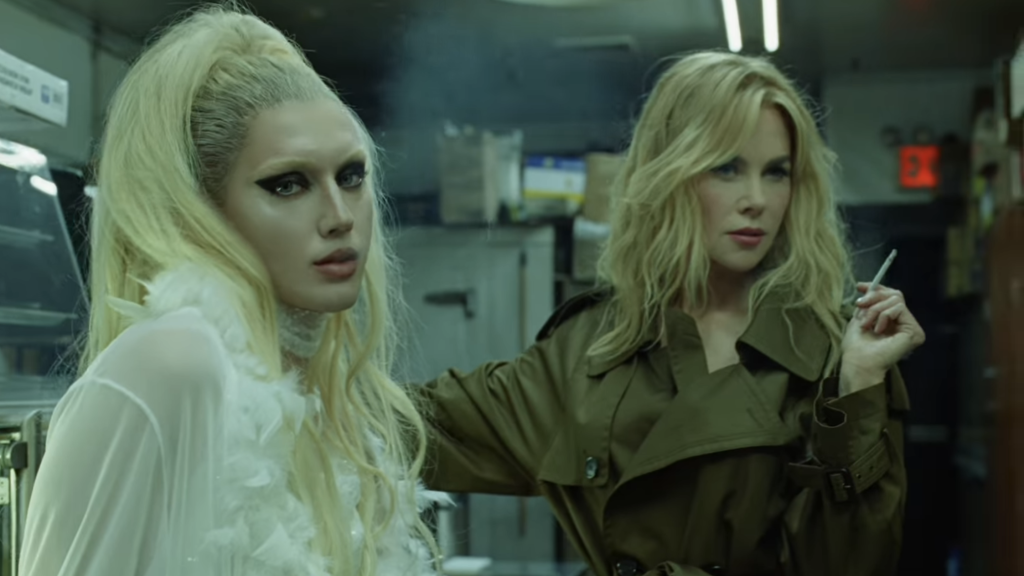
Nicole Kidman seems to be popping up onscreen everywhere the past few years, and Troye Sivan‘s latest music video was no exception.
After the Oscar-winning actress made a surprise appearance in the 3x Grammy-nominated artist’s “She’s the Best” music video earlier this month, she recently explained the “spontaneous” decision.
“I love him. I’ve known him for such a long time,” Kidman told Attitude. “He called me up and just said: ‘Will you be in this with me?’ I didn’t even need to read anything, I didn’t need to have any information, I just said: ‘Yeah! I’m in!’ But that’s me! I make very spontaneous decisions!”

Marking the lead single on Sivan’s upcoming fourth studio album of the same name, the video for “She’s the Best” features Kidman on a night out in New York City, where Sivan serenades and dances with her at a bar before slipping into drag.
Kidman’s appearance in her fellow Aussie’s video came after they co-starred in the 2018 Joel Edgerton-helmed adaptation of Garrard Conley’s memoir Boy Erased, recounting the author’s experience as an LGBTQ kid in conversion therapy.
Announced a day before the video dropped, She’s the Best is scheduled for an Oct. 9 album release via Interscope’s EMI Records.
>
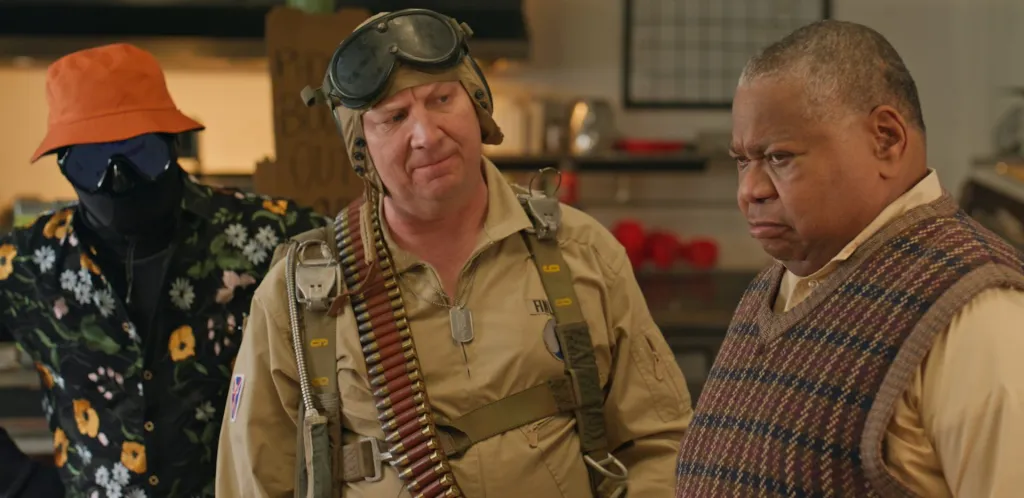
EXCLUSIVE: The fifth installment of Attack of the Killer Tomatoes, titled Attack of the Killer Tomatoes: Organic Intelligence, is coming to VOD platforms on Sept 22. This is following a theatrical release that began on Aug. 7 for the David Ferino directed comedy.
The release comes via a strategic distribution partnership between Starboard Entertainment and Stonecutter Media. Additional titles distributed through the collaboration will be announced in the months ahead.
In the latest installment to the series which first launched in 1978, a young biotech prodigy develops a revolutionary genetically engineered vegetable intended to solve humanity’s greatest problems. When the experiment spirals out of control, it unleashes a new generation of killer tomatoes and sets the stage for another wildly unpredictable chapter in the cult saga. The production was shot in Southern California and stars John Astin (The Addams Family), reprising his role as Professor Gangreen, David Koechner (Anchorman), Academy Award nominee Eric Roberts (The Dark Knight), Catherine Corcoran (Terrifier), Dan Bakkedahl (Veep), Myrna Velasco (Star Wars Resistance) Vernée Watson (Shrinking, The Fresh Prince of Bel-Air), Paul Bates (Coming to America), Zachary Roozen (Romeo and Juliet Killers), Samantha Bailey (Just Add Magic) and Noor Razooky (The Old Man).
“Stonecutter Media is in the business of distributing and promoting edgy, over-the-top films, and Attack of the Killer Tomatoes: Organic Intelligence fits right in our wheelhouse,” said Steven Karel, Owner and President of Stonecutter Media.
“These types of films have proven time and time again to have a sales edge that you don’t get with softer movies,” he added.
“Steve and I have known each other for years, and we always believed we would eventually find the right project to work on together,” said Starboard found Thomas Zambeck.
“Attack of the Killer Tomatoes: Organic Intelligence is exactly that project. It has a worldwide fan base, an unmistakable identity and the kind of bold creative vision that cuts through a crowded market. Stonecutter understands how to reach the audience for a film like this, and this partnership gives us an opportunity to build something that extends well beyond a single release,” Zambeck added.
Stonecutter delivers film, sports and entertainment content across broadcast, cable, pay-per-view and major VOD and OTT platforms, developing release strategies designed to connect distinctive programming with its core audience. Stonecutter Media has distributed such movies as Red Wing, featuring Glen Powell in his first leading film role alongside Bill Paxton and Luke Perry.
Attack of the Killer Tomatoes: Organic Intelligence produced in association with Atomic Toybox Entertainment. The film continues the creation of original Attack of the Killer Tomatoes filmmakers Costa Dillon and Steve Peace.
Editor’s note: David Ferino is a former head of video production at Deadline Hollywood
>

Boorman and the Devil Director David Kittredge Talks Exorcist II

Jerry Sandusky accuser to recant testimony, cites ‘psychological manipulation’ by prosecution

St. Louis City nearing record deal for Rapids’ Rafael Navarro: Sources
-

 movies3 months ago
Search For Canadian TV Actor Stewart McLean Now Homicide Investigation
-

 Fashion9 years ago
These ’90s fashion trends are making a comeback in 2017
-
Fashion9 years ago
According to Dior Couture, this taboo fashion accessory is back
-
Fashion9 years ago
Model Jocelyn Chew’s Instagram is the best vacation you’ve ever had
-
Fashion9 years ago
Emily Ratajkowski channels back-to-school style
-
Fashion9 years ago
9 Celebrities who have spoken out about being photoshopped
-
Fashion9 years ago
Your comprehensive guide to this fall’s biggest trends
-

 Anime3 months ago
Rurouni Kenshin: Hokkaido Arc Manga Takes 1-Issue Break – News