
Tech
Snap says its $400M deal with Perplexity ‘amicably ended’


Snap no longer has a deal with Perplexity, the company revealed on Wednesday as part of its quarterly earnings report. The deal, announced last November, would have seen Perplexity’s AI search engine integrated directly into Snapchat. Perplexity was set to pay Snap $400 million in cash and equity over one year as part of the deal.
Snap said that the companies “amicably ended the relationship in Q1″ and that its sales guidance “assumes no contribution from Perplexity.” When Snap announced the deal as part of its third-quarter earnings last year, it said it expected revenue from the partnership to begin contributing to its financials in 2026.
The deal would have seen Perplexity integrated into Snapchat’s “Chat” interface, allowing users to ask questions and receive conversational answers directly within the app. Although the integration was being tested with select users, it never fully rolled out.
Snap CEO Evan Spiegel said at the time of the announcement that the deal reflected the company’s vision to use AI to enhance discovery on Snapchat, and that Snap was looking forward to “collaborating with more innovative partners in the future.”
Snap said in February that companies had “yet to mutually agree on a path to a broader roll out.”
Perplexity did not immediately respond to TechCrunch’s request for comment.
Snap revealed on Wednesday that Snapchat’s global daily active users (DAU) rose 5% year-over-year to 483 million, while monthly active users (MAU) also grew 5% to reach 965 million. The company attributed the growth to new features across the app, including Snap Map and its Lenses AR filters.
Techcrunch event
San Francisco, CA
|
October 13-15, 2026
“In Q1, we returned to growth in daily active users, accelerated revenue growth, expanded margins, and generated strong free cash flow,” Spiegel said in a press release. “We remain focused on disciplined execution as we invest in Specs and our longterm opportunity in intelligent eyewear and look forward to sharing more at AWE on June 16th.”
Snap said in April that it was laying off roughly 16% of its global workforce, impacting around 1,000 full-time employees, citing advancements in AI for the cuts.
When you purchase through links in our articles, we may earn a small commission. This doesn’t affect our editorial independence.
>
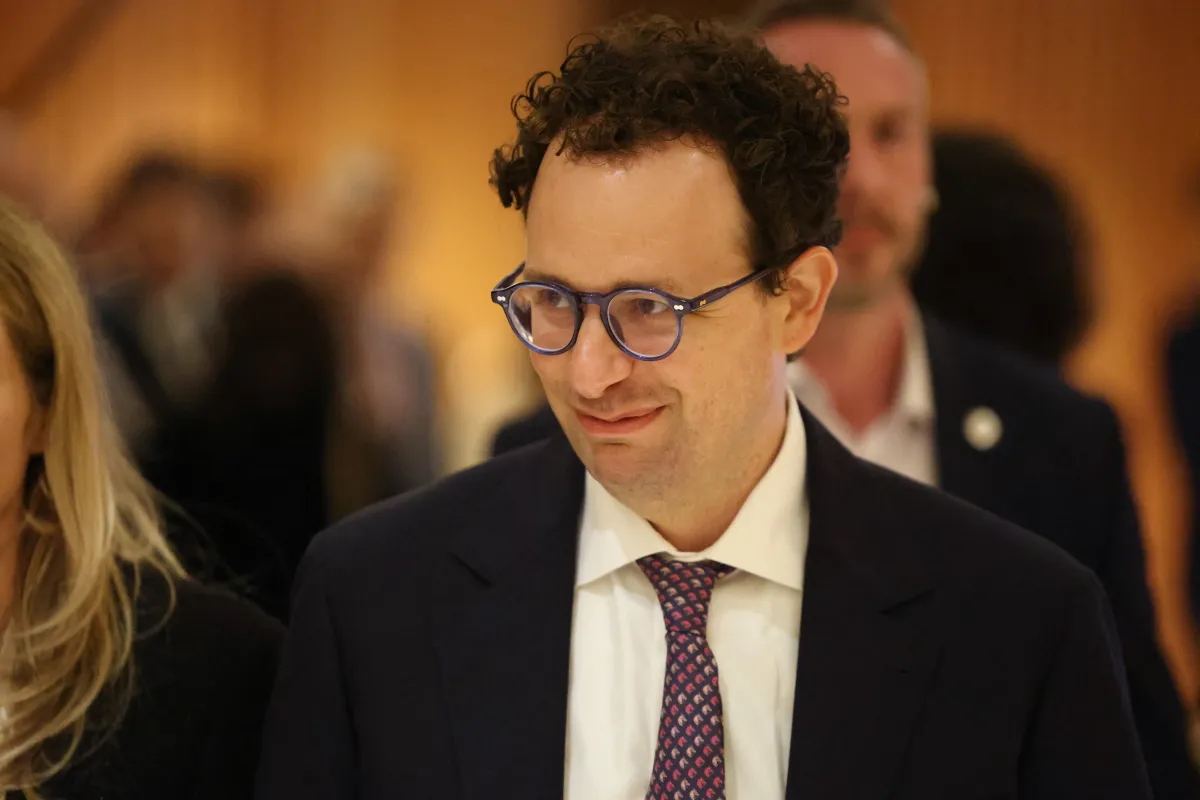
Anthropic CEO Dario Amodei seems to be everywhere this weekend: He was lampooned on the season premiere of Saturday Night Live, and tonight, he’s set to have dinner with President Donald Trump at the White House.
Axios first broke the news of Amodei’s dinner plans, which were subsequently confirmed by other publications.
This will be the first one-on-one meeting between the two men, who recently found themselves on opposite sides of the AI safety debate. Amodei released a plan to slow AI development (or at least proceed with more caution), while Trump has insisted, without evidence, that the AI backlash is a Democratic hoax; he also wants to rebrand the technology as “super intelligence.”
Even before the current back-and-forth, Amodei and Anthropic have to had a fraught relationship with Trump’s administration. Earlier this year, the Pentagon designated Anthropic a supply-chain risk in response to the company’s attempt to put guardrails around the use of its technology (Anthropic has been fighting the designation in court), although other administration officials have been friendlier.
>
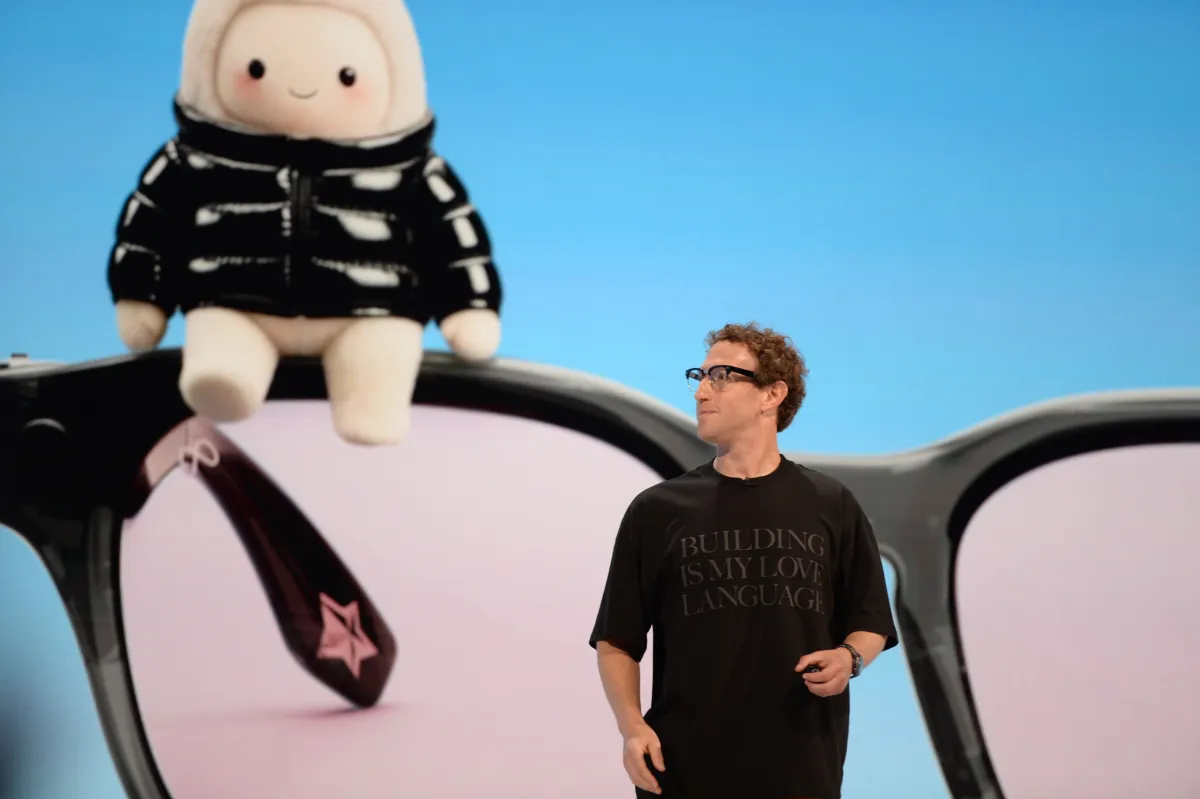
Meta’s new AI agent Muse took the spotlight at the company’s annual Connect event, where CEO Mark Zuckerberg made it clear that Facebook’s parent company plans to push AI features everywhere.
On the latest episode of TechCrunch’s Equity podcast, Kirsten Korosec, Sean O’Kane, and I discussed Meta’s AI announcements seemed to steal the spotlight during a week of new model launches from OpenAI and Anthropic.
With other big AI companies focused on coding and enterprise tools, it was a little surprising to see Meta move in the opposite direction, with a consumer focus and a cute, Tamagotchi-style AI device that Meta insists is for adults only. But as Kirsten noted, this could be playing to Meta’s strengths.
Sean tried Muse for himself, and while he was pleased that the agent actually found him some unclaimed money, he described the feature as more “a party-trick type thing,” rather than something that will drive ongoing usage. Plus, there’s the question of whether users can trust Meta’s AI with sensitive information.
“Meta’s business is to sell you ads,” Sean said. “And yes, they’ll make the argument that the more they know about you, the more accurate and interesting the ads will be — wake me up when we get to that fever dream.”
Keep reading for a preview of our full conversation, edited for length and clarity.
Kirsten Korosec: So how do you put Muse, which is this new personal AI agent that’s just been released by Meta and [is] clearly a bet on consumer — how does that fit into what you just described, at least with other frontier AI model companies seeing opportunity and business within enterprise? Because Meta Connect, which is their big annual event, just happened, and they are all-in on Muse, that is very clear.
Anthony Ha: That was definitely very head spinning for me, because it certainly feels like what we’ve been talking about has been this shift towards enterprise — not exclusively, but certainly that’s where the money, the attention is going.
Maybe some of that is because of the relative position of these different companies — OpenAI and Anthropic are in the lead in a lot of ways, but also, they’re planning to go public either this year, or next year in the case of OpenAI. And so there’s this feeling of, “I think we’ve got to actually make money now.” Not to say that they’re not making money [already], but because the costs are so high and the valuations are so high, they have to make money on this scale that’s essentially unprecedented. And I think they’re seeing enterprise as the way to do that.
And I wonder if Meta, for a variety of reasons, sees a different opportunity. There’s a part of me that’s like, “Wait, did they not get the memo?” But I think more charitably, you could say, “Well, if that’s where OpenAI and Anthropic are going, then maybe there is more of an opportunity for Meta to make the more consumer-friendly [version and] continue advancing AI on the consumer side.”
Kirsten: I mean, we can complain about or criticize or critique Meta all day long, but they’re very good and have [an] established track record of embedding themselves in everyday people’s lives. I mean, there’s a reason why Facebook has so many users — Instagram, WhatsApp. And I’ve never really thought of them as an enterprise product anyway. So I think it’s smart for them to continue to push on the consumer piece.
Sean, you’ve already tried Muse, which has already been out for a couple weeks. And I’m wondering if you see what your impression is, and if you see it being successful in the bid to become part of every part of your life.
Sean O’Kane: I mean, not really. I understand why some people think that is going to be the case. I’m sure a lot of people understand this, but this is roughly Meta’s kind ground-up version of an on-your iPhone, or on your Android, app of OpenClaw, which we talked about a couple months ago, which Meta went out and basically bought and integrated those folks’ work. It was the first big explosion of like, “Holy smokes, these agents can do all this stuff for me while I’m out and about, and I can just text with it and let it control my whole computer.” There’s a lot of the same elements of that at play. And having it in your hand, on an app that works like a relatively good chatbot as the interface, it does seem pretty powerful.
One of the first things that I did with it was — because it makes a bunch of suggestions for you, as to things that it can do, and one of them was, “I’ll scan to see if you have any unclaimed funds,” this thing that I think no one ever really thinks about and often is going to completely miss, because there’s just not a lot of unclaimed property funds out there in your name. Surprise, surprise, there were some for me.
It helped me make some money on my first day, and that was pretty cool. I wouldn’t have done that if I hadn’t been prompted by this thing to do it. And there’s a check on its way to me in the mail. Fantastic. [But] that ends pretty quickly, right? That was a one-time shot, but it’s not a thing that’s repeatable. That’s more like a party trick-type thing.
Kirsten: I mean, you just killed your own argument. I don’t see how that wouldn’t become wildly popular.
Sean: The more sustainable version of that, and the thing that Meta’s talked up a lot over the last couple of days, is taking that idea and applying it to your real, true everyday financials, like giving it your information for your credit card, your Gmail account, all this other stuff, do things that we’ve seen other companies do, like Rocket Money or whatever, where it’ll go cancel subscriptions that you’re not using or identify double charges, things that frankly the credit card company should be doing already.
And at that point you just run into that trust wall with Meta. I think one of the reasons that I was willing to explore this and was curious to stick with it a little bit — even through to today — is that somewhat shockingly, when I downloaded it, I just assumed that it would like really instantly prompt me and like plug me right into Threads, Instagram, Facebook, which I don’t really use ever, and pull up that context immediately.
But it didn’t. And it was working with me like I was a stranger at first, which made me more willing to use it, because I didn’t feel like Meta had everything on me already. But you can see, as you start to use it, it really tries to grab you and pull those things into the system, so that it can learn all this stuff about you.
I don’t know that I will ever trust Meta the same way. I think it’s an interesting timing for me, having just upgraded my iPhone and getting onto the new iOS with the new Siri that actually works and can do some controls on your phone in a way that is surprising and helpful, that it’s never been able to do. [I’ve been] thinking about how much I’ve been using that over the last week and how much more how much more willing I would be to have the Siri version of Muse take that information, because I just trust Apple more with that really sensitive information and not only trust it with the information from a cybersecurity perspective, but from the fact that its business is not to sell me a bunch of crappy ads.
Meta’s business is to sell you ads. And yes, they’ll make the argument that the more they know about you, the more accurate and interesting the ads will be — wake me up when we get to that fever dream.
And beyond the one-time money lever that I got, which was great, I don’t feel like I’ve found anything else that’s really all that useful — other than the fact that it is, to Anthony’s point, really tailored at keeping it sort of consumer-y in your interactions with it, with which I do think helps it and is why people are talking about it so much.
When you purchase through links in our articles, we may earn a small commission. This doesn’t affect our editorial independence.
>
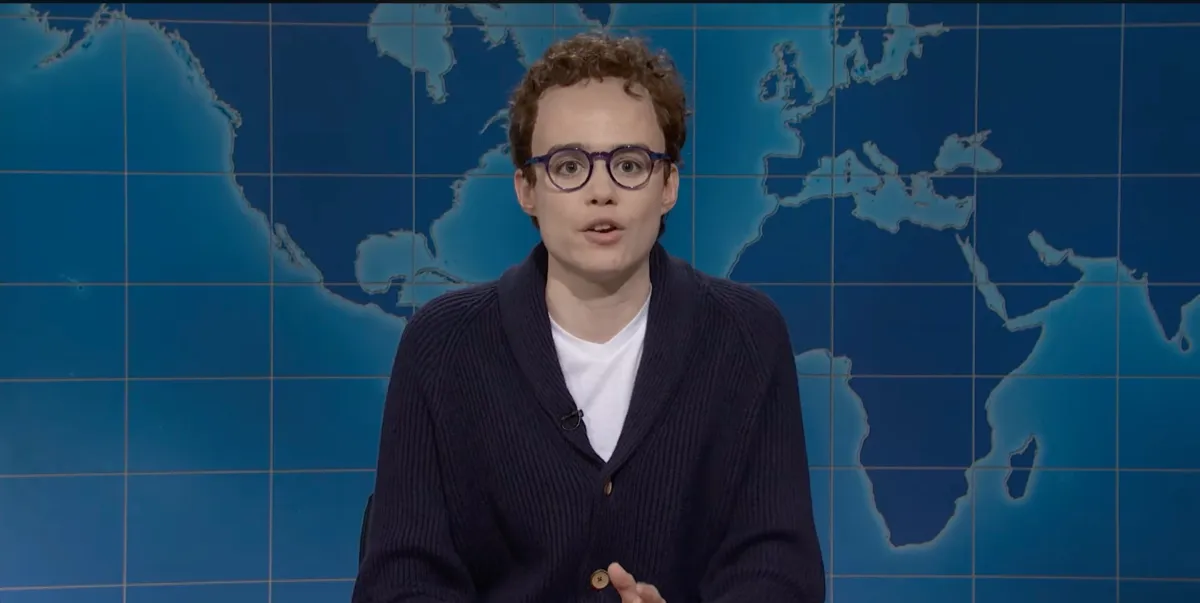
Saturday Night Live took on the AI industry’s recent warnings of doom last night, as cast member Jane Wickline offered her impression of Anthropic CEO Dario Amodei.
Weekend Update host Michael Che — who sounded a little uncertain about how to pronounce Amodei’s last name — kicked the segment off by describing the CEO as having “stumbled through a press tour” where he seemingly agreed with a former employee’s claim that artificial intelligence might destroy humanity.
Wickline’s version of Amodei sported an impressive wig and delivered halting answers that occasionally devolved into full-on Gollum-style exchanges with their dark side, at one point confessing, “AI is the devil and I its maker.”
Wickline-as-Amodei assured the audiences that AI executives “are all on the same page here: We do not condone what we are doing.”
“AI is not a weapon, it’s a tool: A tool for building weapons,” she declared. “And I urge you to urge me to stop.”
As for the technology’s supposed benefits, like potentially curing cancer, the fictional Amodei said, “Put it this way: In 10 years, there’s about a 10% chance that cancer won’t be a problem for anyone.”
>

4 of Dragon Ball Z’s Goku Voice Actors Perform Kamehameha Together – Interest
Connections: Sports Edition today: Hints and answers for Sept. 28, 2026, puzzle No. 735
Broncos come alive in second half to stun Rams. Is it time to worry about L.A.?
-

 movies4 months ago
Search For Canadian TV Actor Stewart McLean Now Homicide Investigation
-

 Fashion9 years ago
These ’90s fashion trends are making a comeback in 2017
-
Fashion9 years ago
According to Dior Couture, this taboo fashion accessory is back
-
Fashion9 years ago
Model Jocelyn Chew’s Instagram is the best vacation you’ve ever had
-
Fashion9 years ago
Emily Ratajkowski channels back-to-school style
-
Fashion9 years ago
9 Celebrities who have spoken out about being photoshopped
-

 Anime4 months ago
Rurouni Kenshin: Hokkaido Arc Manga Takes 1-Issue Break – News
-

 Anime3 months ago
HIDIVE to Stream English Dubs for The World Is Dancing, The Forsaken Saintess and Her Foodie Roadtrip in Another World, The Dangers in My Heart: The Movie Anime – News