
Sports
Calls to investigate potential sanctions against Man City owner Sheikh Mansour over Sudan conflict


Over the past two years, the latest conflict in Sudan has claimed at least 150,000 lives, according to aid agencies and U.S. government officials.
Now, human rights organisation FairSquare has provided the latest calls for the British government’s Foreign Office to consider sanctions and investigate the role of Sheikh Mansour bin Zayed Al-Nahyan — owner of Manchester City and deputy prime minister of Abu Dhabi — in the United Arab Emirates government’s alleged support of a paramilitary group accused of committing war crimes in the country.
This follows on from former Conservative Party leader Iain Duncan Smith stating in parliament in January that Mansour was “possibly the most high-profile UAE investor in the UK economy” and arguing that the Foreign Office should undertake a “full assessment of whether representatives of the UAE Government may meet the criteria for sanctions”.
International bodies such as the European Union (EU) and the United Nations (UN) have produced statements about the UAE’s role in arming the Rapid Support Forces (RSF), one of the civil war’s belligerents. The UAE strongly denies being a party to the conflict or supporting either side.
The UK government has already sanctioned several private individuals and organisations in connection with the atrocities taking place in Sudan, which UN officials have stated carry “hallmarks of genocide”.
“We will seek to dismantle the war machine of those who perpetrate or profit from the brutal violence in Sudan, and we will send a message to every individual responsible for commanding these armies and committing these atrocities that they will one day be held to account,” foreign secretary Yvette Cooper stated in February while announcing sanctions.
Sanctions available to the British government include a range of measures designed to put pressure on a target state, including asset freezes and a prohibition on transactions with UK businesses — both of which were levied on former Chelsea owner Roman Abramovich shortly after Russia’s invasion of Ukraine as a result of his perceived closeness to the Kremlin, an allegation he denies, forcing him to sell the club.

Sheikh Mansour bought Manchester City in 2008 (Andrew Yates/AFP via Getty Images)
FairSquare says “if the UK government is serious about disrupting this horrendous conflict”, then Sheikh Mansour provides “a very obvious point of leverage”.
In November, Manchester City games at the Etihad Stadium saw several protests against Sheikh Mansour and the Sudan conflict, with activists outside the stadium holding up cartoon posters of the royal and calling on the UAE to cease any funding of the RSF.
The Athletic explains what has been alleged and the potential implications.
What has happened in Sudan?
The latest conflict in Sudan began in April 2023, and can be broadly understood as a fight between two groups — the military government-aligned Sudanese Armed Forces (SAF) and the paramilitary Rapid Support Forces (RSF).
Both armies hold control over large swathes of Sudan. The SAF occupies most of the country’s south east, including the capital, Khartoum, while the RSF has seized the south-western region of Darfur, including the city of El Fasher, the epicentre of recent horrific violence.
The RSF is led by Mohamed Hamdan Dagalo, known as Hemedti, and has historic ties to the nomadic Janjaweed tribe from the country’s west. In 2005, he was named by multiple human rights organisations as one of the figures behind the Darfur genocide, while he has also been linked to mass killings in 2014, 2015, and 2019.
Hemedti is one of Sudan’s richest men, with extensive ties across north Africa and the Middle East through his conglomerate, Al-Junaid, including controlling the majority of the country’s lucrative gold mines. Several of Hemedti’s companies are registered in the UAE — some of which have since been sanctioned by the United States under former U.S. President Joe Biden’s administration.
While both sides are accused of having committed war crimes, Hemedti’s RSF forces have been linked with the bulk of the most serious atrocities, including mass killing, sexual violence, forced displacement, and ethnic cleansing.

Children play football at a refugee camp in Chad. Millions of people across the region have been displaced by the conflict in Sudan (Dan Kitwood/Getty Images)
In October, for example, the World Health Organisation and Sudan Doctors Network reported that 460 people had been killed by the RSF at a maternity hospital in El Fasher. The city had been under siege since May 2024, before falling to RSF forces after almost 18 months.
“The picture that is emerging is appalling: organised, widespread, mass criminality including mass executions,” International Criminal Court (ICC) deputy prosecutor Nazhat Shameen Khan said in January.
“Atrocities are used as a tool to assert control. This criminality is being repeated in town after town in Darfur. It will continue until this conflict, and the sense of impunity that fuels it, are stopped.”
Government officials and aid agencies say an estimated 150,000 deaths have occurred since the start of the conflict, just over two years ago, while the World Food Programme warned that 26 million people face “acute hunger”.
The Yale Humanitarian Research lab, meanwhile, recorded claims that at least 10,000 died on October 28 and 29 alone, the first two days after El Fasher fell.
The ICC concluded in January that “it is the initial assessment that both crimes against humanity and war crimes have been committed in El Fasher”. The body’s investigations are continuing as they work to “confirm the identity of individual perpetrators responsible for these crimes”.
What links does the UAE have to Sudan?
It is not surprising that the UAE has an interest in the turmoil in Sudan. It has several strategic interests in Sudan, including its water access to the Red Sea, extensive gold reserves, and agricultural potential. The RSF had previously supplied troops to Emirati forces in Yemen.
Both the UN Panel of Experts and EU officials, as well as UK politicians, have raised concerns that the UAE is not neutral in the conflict and may be providing support to the RSF, something the UAE strongly denies.
The UN Panel of Experts stated in a January 2024 report that there was “credible” evidence that the UAE was providing military support to the RSF through the Amdjarass airport in neighbouring Chad.
“Several sources in eastern Chad and Darfur, including among local native and administrative leaders and armed groups operating in those areas, reported to the panel that, several times per week, weapons and ammunition shipments were unloaded from cargo planes arriving at Amdjarass airport, then loaded on trucks,” the panel wrote, stating that they had tracked these flights arriving from Abu Dhabi international airport.
“Small convoys, comprising one to three trucks escorted by an armed Landcruiser, left the airport through the western gate and reached the Darfur border (…) where shipments were handed over to RSF, which transported the shipments to its base in Zuruk (…) Some weapons were distributed to RSF positions in Darfur, while most of them were transported from Zuruk to Khartoum through desert roads in a north-east direction usually used by smugglers.”

General Mohamed Hamdan, known as Hemedti (Ashraf Shazly/AFP)
However, the UAE strongly denies the claims, saying that the location at Amdjarass is a field hospital, which is only used for humanitarian work. It was built using contributions from the Khalifa Bin Zayed Al Nahyan Foundation, whose chairman is Sheikh Mansour, the Zayed Bin Sultan Al Nahyan Charitable and Humanitarian Foundation, where Mansour is a trustee, and the Emirates Red Crescent Authority.
Sudan itself has accused the UAE of being complicit in genocide by supporting the RSF, bringing a case against the UAE to the International Court of Justice (ICJ) in early 2025. The UAE categorically denied the allegations, which it called a “cynical publicity stunt”, and the ICJ rejected the case in May 2025, after ruling that it lacked the jurisdiction to rule on claims of genocide against the UAE.
This February, when asked to explain their diplomatic status with the UAE regarding the Sudan conflict, EU officials stated at a press conference that they had, “during its political dialogues and exchanges with the UAE, been raising its concerns about reported UAE support for the RSF at various levels, and will continue engaging with the UAE to reach a permanent ceasefire”.
The international concerns were such that they were raised in a UK parliamentary debate in January this year when Labour MP Lloyd Hatton stated that: “Evidence compiled by the UN, experts and journalists has shown that the UAE and its officials have been secretly supplying weapons to the RSF via neighbouring Chad — a position that the Gulf state denies, but the overwhelming evidence suggests otherwise.”
Other investigations into the UAE’s alleged role have continued to unfold. After extensive battlefield research, Amnesty International accused the UAE in May 2025 of having “almost certainly” supplied the RSF with “weapons, ammunition and armoured personnel carriers (APCs)”, describing it as “advanced Chinese weaponry provided (…) in breach of arms embargo”. They reached their conclusions after examining captured armaments and establishing that the UAE was the only country in the world that imported this particular type of weaponry from China.
News agency Reuters reported in February that the UAE had funded a camp in neighbouring Ethiopia which was training RSF fighters, while in September 2025, Sudan’s representative to the UN, Al-Harith Idriss Al-Harith, accused the UAE of recruiting and financing foreign mercenaries to supplement RSF forces, particularly from Colombia. A further investigation from April 2026, carried out by the Conflict Insights Group (CIG), which used data obtained from tracking the mobile phones of Colombian mercenaries, echoed Al-Harith’s concerns, claiming these units were paid by companies with “documented ties” to senior Emirati officials.
“This is the first research where we can prove UAE involvement with certainty,” claimed CIG director Justin Lynch. “We are making public what governments have long known — that there is a direct link between Abu Dhabi and the RSF.”
The UAE denies all allegations.
Is Sheikh Mansour said to be involved?
Concerns focus on the fact that Sheikh Mansour is the brother of Mohammed bin Zayed (MBZ), the ruler of the UAE, and is currently the country’s vice president and deputy prime minister — and as such, is a key figure in the UAE government accused of involvement in Sudan.
It appears that Mansour knows Hemedti, having been pictured spending time with the Sudanese warlord at an arms fair in 2021, while the pair had a long meeting during a formal visit to the UAE in March 2023, according to the governments of both nations. The conflict in Sudan erupted one week later.
According to reporting in The New York Times, U.S. intelligence officials have intercepted regular phone calls between Hemedti and the leaders of the Emirates, including Mansour.
What are FairSquare, Duncan Smith, and other politicians calling on the UK government to do?
Following Duncan Smith’s comments in January, FairSquare has become the latest body to call on the government of the United Kingdom to consider potential sanctions on Mansour.
“FairSquare is writing to request that the FCDO (Foreign, Commonwealth & Development Office) examine the role of the UAE deputy prime minister, Sheikh Mansour bin Zayed Al-Nahyan, in providing support to the RSF in Sudan and consider the imposition of sanctions under the Sudan (Sanctions) (EU Exit) Regulations 2020,” the organisation wrote last month.
“This request takes place in the context of what the UK government has described as overwhelming evidence of RSF atrocities in Sudan, which has included multiple massacres and instances of widespread sexual violence. The UK government has already sanctioned multiple individuals and entities linked to either the RSF or the Sudanese Armed Forces (SAF), who have been in armed conflict since June 2023.”
Duncan Smith, speaking in parliament four months ago, had called on the Foreign Office to investigate potential sanctions on Mansour as a representative of the UAE government.
“As the ultimate owner of Manchester City football club, Sheikh Mansour is possibly the most high-profile UAE investor in the UK economy,” Duncan Smith said in the debate. “What are we going to do about that? That is a signal and serious problem for us.
“Will the (Foreign) Minister confirm that, given the appalling crimes of the RSF, which fall squarely in the purview of the global human rights sanctions scheme, the department has carried out a full assessment of whether representatives of the UAE government may meet the criteria for sanctions, given the significant role the UAE is alleged to play in support of the RSF and the substantial influence of the UAE on investments in the UK economy and public life?”

A 2010 image of a banner inside Manchester City’s stadium thanking Sheikh Mansour (Martin Rickett/PA Images via Getty Images)
Liberal Democrat MP Dr Al Pinkerton added: “International law must apply to everyone, without exception, and that includes senior figures in the UAE for their personal and institutional support for the still unfolding atrocities in Sudan.” Pinkerton did not give any examples of personal involvement of any senior UAE officials.
The UK government has not publicly confirmed whether potential sanctions against Mansour are being considered.
Responding at the time on behalf of the FCDO, Labour minister Stephen Doughty said: “We impose sanctions to isolate those responsible, to restrict their ability to act and to change their behaviour, as well as to send deterrent and other messages beyond those we target. However, sanctions must be focused, enforceable, legally sound and backed by the right resources and credible evidence.”
When contacted for further comment by The Athletic in April, Duncan Smith said: “It’s a significant problem. Nobody is being held to account for this brutal war. The UK government has to decide if it is going to stand up to those supporting that brutality or whether it is going to turn a blind eye.
“My view is that they should consider sanctions against the UAE because, if not, there is nothing to stop them carrying on. It has to stop.”
What problems could any sanction cause Mansour and Manchester City?
Should Mansour be sanctioned by the British government, the Emirati royal would likely be forced into a position where he would have to sell Manchester City.
The best precedent here involves former Chelsea owner Roman Abramovich, whose assets were frozen by the UK government in 2022 following Russia’s invasion of Ukraine. That necessitated the sale of Chelsea for £4.25billion ($5.25bn at the time) to a consortium led by Todd Boehly and Clearlake Capital, with Abramovich and the UK government locked in a legal battle over how the proceeds are used.
Any sanction imposed on Mansour would mean that the Manchester City owner would be in breach of Premier League rules if he retained his interest in the club. Under its regulations, every individual in a position of significant control at a club must pass the “Owners’ and Directors’ Test” (OADT). If certain conditions are breached, then that individual is prohibited from taking up or maintaining their role at the team.
Officially, Mansour owns Manchester City as a private individual rather than on behalf of the state of Abu Dhabi, meaning he is subject to the OADT and is named on the league’s register of club directors.
Some prohibiting conditions include involvement with another Premier League or English Football League club, unspent criminal convictions, breaching betting on football laws, and being subject to insolvency proceedings — but crucially, the rules also include a ban for any sanctioned individual, which is why Abramovich was forced to sell Chelsea.

Sanctions led to Roman Abramovich selling Chelsea (Ben Stansall/AFP via Getty Images)
In a letter sent to FairSquare, seen by The Athletic, the Premier League stated: “We are not the appropriate body to make judgments about the designation of individuals under the UK sanctions regime. That is a matter for the government, informed by the work of organisations such as your own.
“In relation to the UK sanctions regime specifically, Rule F.1.28 of the Premier League Rules is clear: a person is disqualified from acting as a director (as defined under the rules) where they become a UK Sanctions Restricted Person. At the date of this letter, none of the club’s directors have been designated as such. As a matter of policy, we will not comment publicly on individual owners outside the framework of the rest.”
Over the coming year, the independent football regulator (IFR) will take responsibility from the Premier League for vetting the suitability of individuals to own clubs.
While the conditions of its own OADT have not been formally announced, the body has stated that it will “draw on similar ‘fit and proper persons’ tests applied by other regulators including the Financial Conduct Authority (FCA), His Majesty’s Revenue and Customs, and the Solicitors Regulation Authority”, which all include limitations on sanctioned individuals.
The IFR has also said that the body has the power to order compulsory removal directions, and can appoint trustees to take actions on behalf of the owner.
What might the consequences of any sanctioning be?
Given the UK’s relationship with the UAE — the two nations have close links across business, defence, and technology — this would have the potential to become a major diplomatic incident.
As well as investing heavily across the city of Manchester, the UAE is one of the UK’s biggest trade partners — sanctioning the nation’s deputy prime minister would likely lead to major political ramifications for the UK, including the withdrawal of both current and planned investment.
The government’s delicate relationship with the UAE over football governance issues has already been demonstrated as a result of Manchester City’s ongoing legal action with the Premier League as they are investigated over an alleged 115 breaches of the league’s financial regulations, which they deny.
With the hearing having concluded in December 2024, the three-person independent panel is preparing its decision, which, given the scale of the alleged wrongdoing, could lead to significant sporting and financial repercussions for City if found guilty.
The Athletic reported in September 2023, based on a Freedom of Information request, that the UK Foreign Office and Abu Dhabi had been in contact over the charges. The UK government would not release the content of those discussions, citing diplomatic sensitivities.
What have Mansour, Manchester City, and the UAE said?
The Athletic contacted all three parties for comment on the allegations.
None of Sheikh Mansour, Manchester City, or the government of the UAE provided a response.
When asked if the UK government was considering sanctions, Jenny Chapman, minister of state for international development and Africa, told The Athletic: “We must secure a ceasefire and a diplomatic solution to end the suffering in Sudan. We have been absolutely clear that any external support to armed actors in Sudan, including the supply of weapons, fighters, and finance, must stop immediately.
“The UK is leading international efforts — at the UN Human Rights Council, the International Criminal Court, and through our support for the UN Fact-Finding Mission — to ensure perpetrators of appalling crimes committed in Sudan face consequences.
“We have imposed sanctions on RSF commanders responsible for heinous abuses in El Fasher and ensured their designation at the UN.”
>
A day after announcing Wilson won’t return, the Mariners made significant changes to their MLB coaching staff.
>
The summer of celebration is over for the Knicks. Now it’s time for the team to defend its NBA championship.
>
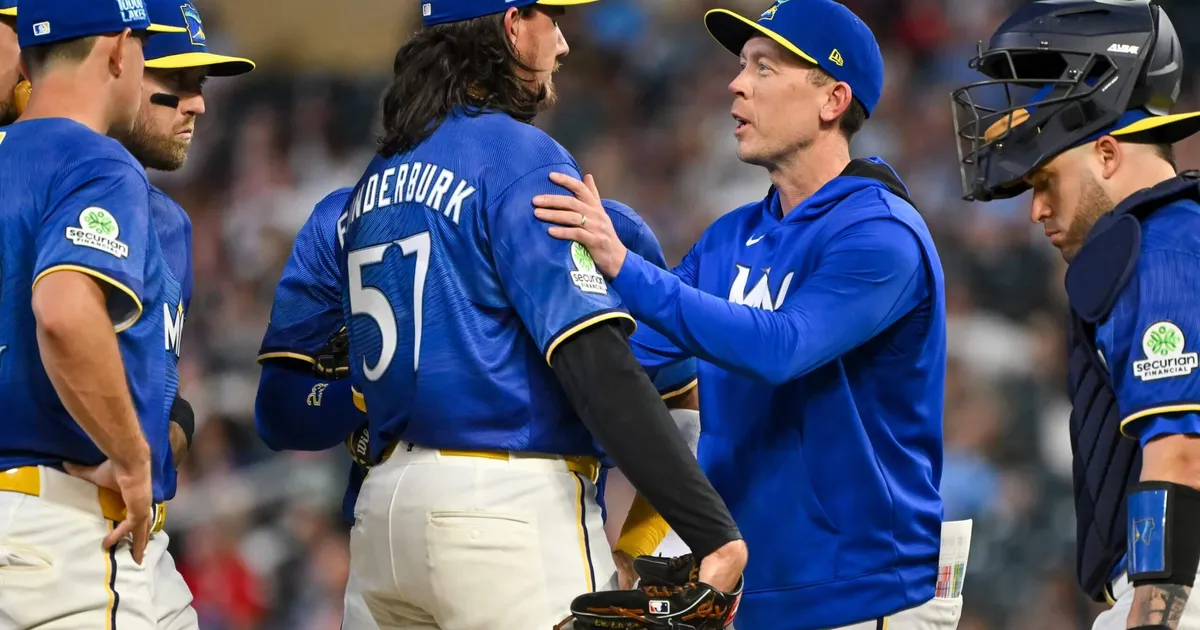
MINNEAPOLIS — The Minnesota Twins announced on Monday they fired pitching coach Pete Maki and assistant pitching coach Luis Ramirez, two of five holdovers from the former manager’s coaching staff.
Both pitching coaches were inherited by Derek Shelton when he was hired to replace Rocco Baldelli as the Twins’ new manager last October.
The Twins, who fell short of the playoffs for a third straight season, ranked 25th in the majors in ERA in 2026.
Maki took over as the team’s interim pitching coach in July 2022 after Wes Johnson shocked the club by leaving in the middle of the season to become the pitching coach at Louisiana State University. Maki was officially appointed Twins pitching coach ahead of the 2023 campaign.
From 2023-26, FanGraphs ranked the Twins 20th in ERA (4.31), tied-eighth in Fielding Independent Pitching (4.01) and ninth in Wins Above Replacement (66.3).
When Shelton took over ahead of the 2026 season, he had a hand in building out the bulk of his new staff. Under Shelton, the Twins added hitting coach Keith Beauregard, bench coach Mark Hallberg, first-base coach Grady Sizemore, assistant bench coach Mike Rabelo, bullpen coach LaTroy Hawkins and field coordinator Toby Gardenhire to the staff.
In addition to Maki and Ramirez, third-base coach Ramon Borrego and assistant hitting coaches Trevor Amicone and Rayden Sierra were the only other coaches retained after Baldelli’s ouster.
Before he took over for Johnson, Maki was the team’s bullpen coach from 2020-22. He also spent two seasons as the team’s minor-league pitching coordinator from 2018-19.
A veteran of the organization for 21 seasons, Ramirez was named the team’s assistant pitching coach in November 2021. Ramirez originally joined the Twins in 2006, spending the first part of his career working with pitchers at the team’s Venezuelan academy.
Before he left the academy, Ramirez was elevated to the Gulf Coast League Twins in 2012. He became the GCL pitching coach in 2014 and then made stops along the way at four different Twins minor-league affiliates, last serving as the team’s Double-A pitching coach in 2021.
The Twins also announced the exit of assistant athletic trainer Jason Kirkman, who was in his seventh season with the club.
>
After parting ways with Dan Wilson, the Mariners move on from several coaches
What happened at Knicks 'media day? Karl-Anthony Towns, Josh Hart extension questions loom

Twins fire pitching coach Pete Maki, assistant Luis Ramirez
-

 movies4 months ago
Search For Canadian TV Actor Stewart McLean Now Homicide Investigation
-

 Fashion9 years ago
These ’90s fashion trends are making a comeback in 2017
-
Fashion9 years ago
According to Dior Couture, this taboo fashion accessory is back
-
Fashion9 years ago
Model Jocelyn Chew’s Instagram is the best vacation you’ve ever had
-
Fashion9 years ago
Emily Ratajkowski channels back-to-school style
-
Fashion9 years ago
9 Celebrities who have spoken out about being photoshopped
-

 Anime4 months ago
Rurouni Kenshin: Hokkaido Arc Manga Takes 1-Issue Break – News
-

 Anime3 months ago
HIDIVE to Stream English Dubs for The World Is Dancing, The Forsaken Saintess and Her Foodie Roadtrip in Another World, The Dangers in My Heart: The Movie Anime – News