
Politics
Politics Home Article | The Emerging Labour Leadership Camps And Their Visions For The Country


Wes Streeting stood down as health secretary on Thursday (Alamy)

14 min read
As rivals prepare to challenge Keir Starmer’s leadership after Labour’s bruising local election results, PoliticsHome examines the emerging contenders, the factions forming around them, and the ideologies underpinning them.
The Parliamentary Labour Party was plunged into crisis after the party’s disastrous results in last week’s local and devolved government elections, which saw Labour lose the Senedd in Wales for the first time, fail to make inroads against the SNP in Scotland, and lose around 1,500 seats on local councils in England.
More than 90 MPs have since called for the Prime Minister to resign or set out a timetable for doing so, and five ministers, including one Cabinet minister, have resigned from their posts.
A formal leadership challenge has not yet been launched to topple Starmer but either a contest or a coronation are widely seen as likely soon, after Wes Streeting resigned as Health Secretary on Thursday, and Greater Manchester mayor Andy Burnham announced that he would attempt to stand in a parliamentary by-election to re-enter Parliament.
With Starmer looking increasingly unlikely to hold on to power, questions are turning to where the support lies for his potential successors.
The picture of which MPs would support which contender is complex and does not necessarily track straightforwardly from left to right of the party, or directly mirror who MPs nominated in the deputy leadership race in the autumn.
From Streeting’s modernising allies in the Labour Growth Group to Burnham’s growing soft-left coalition around “Manchesterism”, Labour MPs are beginning to coalesce around competing visions for the party’s future, shaped by geography, political style, economic outlook, and MPs’ personal loyalties.
Wes Streeting
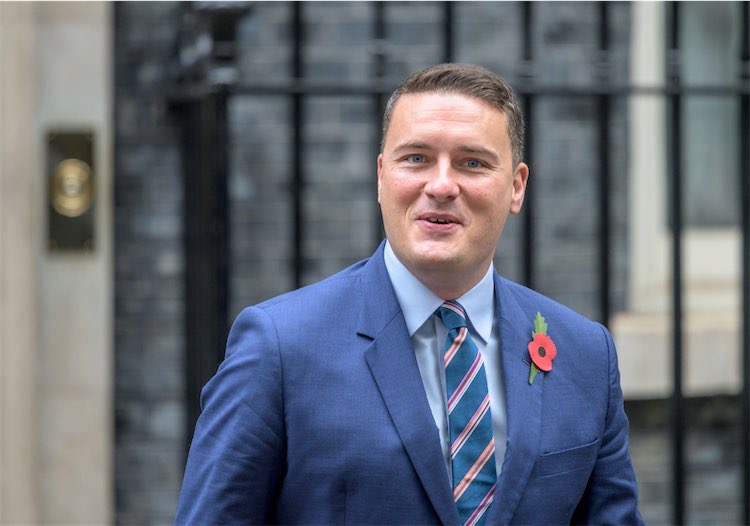
Wes Streeting is widely seen as the most prepared to stand in a leadership contest. In January, some of his supporters claimed that he had 200 MPs lined up to back him in the parliamentary party, though this figure was disputed. His allies now claim that he does have the required number of 81 MPs – or 20 per cent of sitting Labour MPs – to launch a leadership challenge.
In his resignation letter on Thursday, Streeting wrote that Labour MPs and Labour unions “want the debate about what comes next to be a battle of ideas, not of personalities or petty factionalism”, arguing for a “broad” contest with the “best possible field of candidates”.
So, what are Streeting’s ideas?
Streeting is widely considered a Blairite, broadly associated with the ‘right’ of the Labour Party. However, in 2022, he objected to being “pigeonholed” and said there was “no future for the Labour party if it’s locked in a battle between two competing visions of the past”.
The House examined Streeting’s approach to leading the Department for Health and Social Care earlier this year, speaking to allies who described him as relentlessly focused on delivery and presentation, but also overtly political. During his tenure, Streeting repeatedly made clear that he views public service reform as politically existential for the Labour Party.
The former health secretary has not articulated a fully coherent ideological doctrine, but the emerging politics around his camp combine public service reform and pro-growth supply-side economics with producerist tax reform and a strong emphasis on state capacity and delivery.
A report by the Labour Growth Group (LGG) – a group associated with Streeting’s wing of the party – was published on Tuesday, calling for a rise in capital gains tax to pay for a 2p cut in national insurance. It also argued for greater powers for regional mayors over tax and spending, and for energy policy to shift away from a primarily climate-focused agenda towards lowering consumer costs.
The LGG, chaired by 2024-intake MP for Milton Keynes Chris Curtis, was one of the earliest caucuses of Labour MPs formed after the 2024 general election, advocating for an economic model focused on rewarding work over asset ownership, planning reform, infrastructure delivery and regional growth. Broadly, the new report ties together ideological influences from former Starmerite think tank Labour Together (now rebranded as Think Labour), Bidenomics and Yimbyism.
PoliticsHome understands the LGG report was circulated not only among allies of Streeting, but also to figures close to Burnham and former deputy leader Angela Rayner. Sources stressed that the group does not view the report as belonging exclusively to the Streeting wing of the party, with some of its proposals seen internally as ideologically closer to Burnham’s regionalist and producerist approach.
Despite having been considered as one of the most right-wing members of the Cabinet, Streeting has made comments moving leftwards in recent months on issues such as Gaza, with his constituency increasingly vulnerable to pro-Gaza independents. He only narrowly retained his seat at the 2024 general election, holding on with a majority of 528 over independent candidate Leanne Mohamad in a constituency with a large Muslim population. This could make him a risky bet as leader and prime minister, with his seat looking far from safe at the next general election.
Who are Streeting’s supporters?
PoliticsHome has spoken to many MPs, particularly from the 2024 intake, who feel Streeting is an excellent communicator and claim he has the widest support across the party.
Multiple MPs who are leaning towards supporting Streeting told PoliticsHome that their support was not so much predicated on ideology, but more on their perception that Streeting has delivered positive changes in his time as health secretary. Supporters particularly point to the fact that he has improved NHS waiting list performance enough for the government to hit interim treatment targets, with the NHS treatment waiting list having fallen by over 312,000 last year, the largest year-on-year reduction in 16 years.
Some MPs who have yet to make up their minds want to see a firm policy offering rather than a leadership pitch based primarily on his communication style. Others, particularly those on the left of the party, say they would support “anyone but Streeting” in a contest.
Among those who would support Streeting as a future leader are one of his former junior ministers, Zubir Ahmed, who became the fourth minister to quit government on Tuesday, and Joe Morris, one of Streeting’s PPSs. Gordon McKee is widely known as a supporter of Streeting, too, as is Alan Gemmell.
Jess Phillips, another of the four ministers who have so far resigned, is a close friend of Streeting, and cabinet ministers Peter Kyle and Liz Kendall are also known to be his allies.
The health secretary has significant support across the Labour Growth Group, and a particularly strong contingent of supportive Scottish Labour MPs, with many MPs north of the border especially keen for a strong communicator who can challenge the SNP and reconnect with voters who feel left behind by Westminster.
However, before the local elections, one minister told PoliticsHome that Streeting had been “damaged” by the controversies surrounding former US ambassador Peter Mandelson. In February, Streeting released a tranche of correspondence between himself and Mandelson in an attempt to show he did not “have something to hide” about their friendship.
Andy Burnham
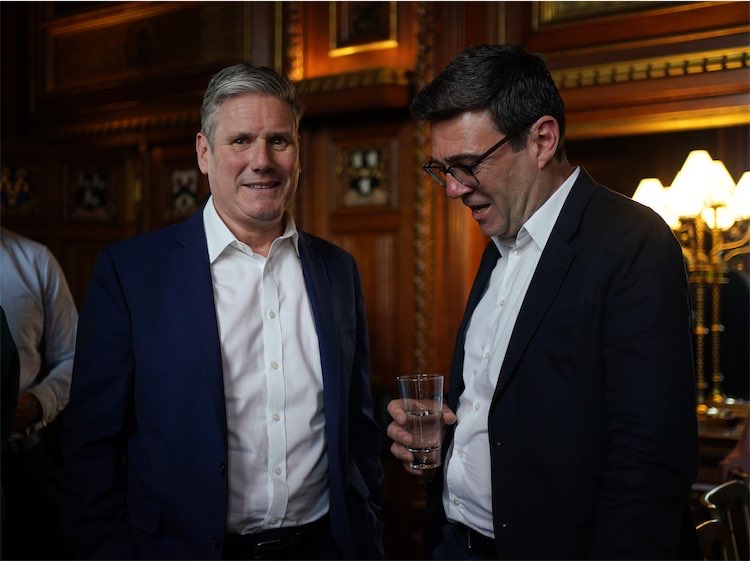
Greater Manchester mayor Andy Burnham is seen by many Labour MPs as the most popular politician in the country, topping YouGov polling with a 35 per cent popularity rating – ahead of Nigel Farage at 29 per cent.
Burnham was already manoeuvring for a potential leadership contest in the autumn when he criticised the government ahead of the Labour Party conference and confirmed he would seek to stand against Starmer if a contest took place. He later attempted to return to Parliament through the Gorton and Denton by-election in February, but was blocked by Labour’s National Executive Committee.
However, his potential path to Downing Street is starting to look more possible. The National Executive Committee, Labour’s ruling body, confirmed on Friday evening that it would allow the mayor to stand for selection in the Makerfield parliamentary by-election, after Labour MP Josh Simons announced he would stand down to make way for Burnham. The Manchester mayor would still need to win the by-election before nominations open for any Labour leadership race – a tough ask in an area where Reform is topping the polls and performed strongly in last week’s local elections.
What are Burnham’s politics?
Burnham is now considered to be a figure on the ‘soft left’ of the Labour Party, but was a proud Blairite when he served as a minister in the New Labour governments under Tony Blair and Gordon Brown.
He has run for the Labour leadership twice before: in 2010, he lost to Ed Miliband, and in 2015 to Jeremy Corbyn. His 2015 pitch included a commitment to “a policy of progressive renationalisation of the railway system” and several economic policies such as a new levy to fund social care, extending the higher minimum wage to under-25s, and banning zero-hour contracts.
Now, his political ideology is much more focused on the regional devolution of power. This approach has been coined ‘Manchesterism’: an attempt to build a new Labour political economy around regional power, public service reform, and economic growth driven from cities around the country rather than just Whitehall.
Mathew Lawrence, the director of the think tank Common Wealth, wrote in the New Statesman that ‘Manchesterism’ should be seen as part of an economic approach which supports the state taking over where the private sector is failing. Burnham-aligned campaign group Mainstream is expected to publish a report soon, which will expand on this idea.
“What has been done for buses can be done with similar ambition for energy, water, housing, and care,” Lawrence wrote, describing ‘Manchesterism’ as “decentralised, plural and democratically accountable”.
PoliticsHome has spoken to multiple Labour MPs since the local elections, including ministers, who feel there needs to be greater emphasis on local delivery that residents can directly see and feel. Burnham’s reforms to the Greater Manchester transport system – the ‘Bee Network’ – are regularly cited as a model for this approach.
Burnham has significant support among Labour MPs in the soft-left Tribune group. Some members of the group, including former transport secretary Louise Haigh, published a series of essays in the journal Renewal earlier this week, putting forward different policy ideas that they hope could be taken up by a future leader.
The proposals included stripping the Treasury of responsibility for delivering growth, reforming and lengthening the time frame for the fiscal rules, and overhauling property taxation by abolishing stamp duty. The Tribune group appear to put more emphasis than the LGG on making space for more borrowing to invest in capital infrastructure projects.
Burnham is also a supporter of reforming the electoral system to proportional representation, and wants to see an elected House of Lords.
Who are Burnham’s backers?
Burnham has strong support among the soft left, particularly the newly regrouped Tribune group, but also among MPs on the more radical left of the party who would prefer his style of politics over that of Streeting.
MPs who support Burnham include Louise Haigh, Sarah Owen, Paula Barker, Clive Lewis, Richard Burgon, Connor Naismith, Miatta Fahnbulleh and Rachael Maskell. Some of those figures are on the soft-left wing of the party, while others, including Burgon, sit in the Socialist Campaign Group on the party’s further left.
The renewed Tribune group of Labour MPs wants to help the government fight “multiple different” electoral threats from both the left and right. The Tribune group reached more than 100 members in January, making it one of the largest organised groupings in the Parliamentary Labour Party.
The group was revived by former cabinet minister Haigh, former government whip Vicky Foxcroft, Women and Equalities Select Committee chair Sarah Owen, and multiple MPs from the 2024 intake, including Yuan Yang and Beccy Cooper. While the full membership is not public, it includes multiple Cabinet ministers.
Yang and Cooper previously told PoliticsHome that the group would be a “progressive left alliance for policy development”, which it hoped could feed ideas directly into government.
There is also particular interest in Burnham among MPs representing Greater Manchester constituencies, many of whom view him as one of the only high-profile Labour figures now capable of helping the party retain its traditional voter base in the region, after a devastating set of local election results in which both Reform UK and the Green Party made huge gains.
Other potential leadership contenders
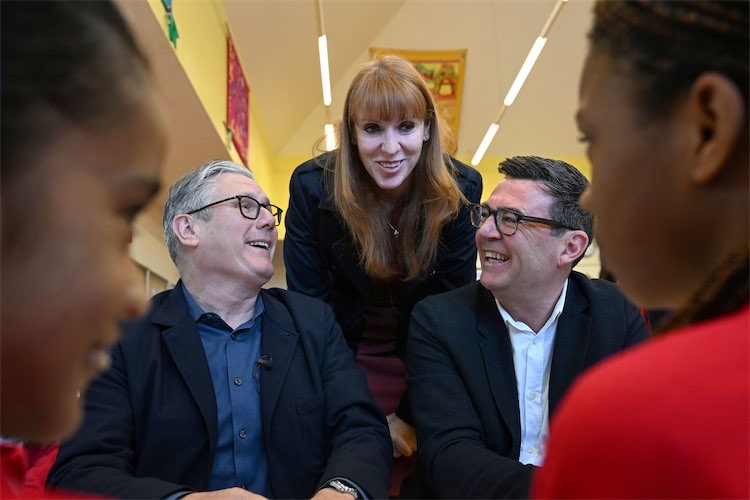
Other potential candidates on the soft left could include former deputy prime minister Angela Rayner and Energy Security and Net Zero Secretary Ed Miliband.
Rayner has long been seen as a potential successor to Starmer, and this week announced that she has resolved her tax affairs with HMRC following an investigation.
In September, Rayner stood down as deputy prime minister and housing secretary after admitting she underpaid stamp duty on her £800,000 flat in Hove. Now that the investigation has been resolved, it potentially frees her up to make a bid for the leadership herself.
Rayner’s potential supporters have so far remained notably quiet, and she has given little indication publicly that she intends to run herself if Starmer steps down. However, she did issue a 1,000-word statement following the local elections, which was scathing about Starmer’s leadership and accused him of presiding over “a toxic culture of cronyism”.
She called for Labour to offer regional mayors more economic powers, raise the minimum wage, and promote new forms of public and cooperative ownership. The former deputy PM warned against Labour becoming a party for “the well-off, not working people”.
While Rayner has not directly endorsed Burnham, she said it had been a “mistake” for the NEC to block him from standing in the Gorton and Denton by-election.
Miliband has also been floated as a potential leadership candidate, but he has repeatedly insisted he does not want to run, having previously led Labour between 2010 and 2015 before losing a general election to David Cameron’s Conservatives.
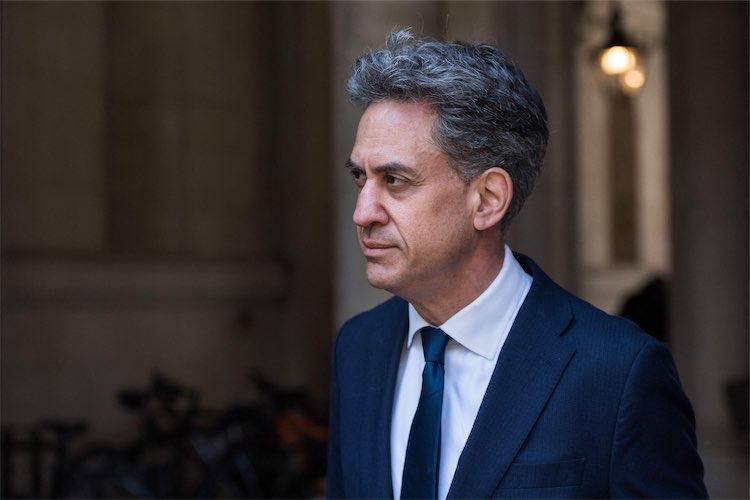
Viewed broadly as a soft-left social democrat, Miliband has spent his time as energy secretary framing climate policy as a way to promote environmentalism alongside industrial strategy, energy security, national resilience, and economic renewal. He has argued that the green transition can create jobs while also reducing dependency on fossil fuels and lowering bills.
Supporters of Miliband feel that he has proven himself as an effective leader in the Department for Energy Security and Net Zero, while others see him as already having tried and failed to lead Labour into a general election victory – making it more likely he could become a ‘kingmaker’ rather than leader himself.
MPs have floated the idea that Miliband, a former Treasury aide to Gordon Brown, could serve as a future chancellor under a Burnham premiership, with both figures broadly located in Labour’s soft-left tradition. Allies of Burnham have reportedly been in conversations with the Manchester mayor in recent months.
Some soft-left Tribune members would like to see Miliband himself as prime minister, while others regard Burnham as more electorally viable.
On the right of the party, Home Secretary Shabana Mahmood has been mentioned privately by some MPs in recent months as a strong potential option – particularly among those representing constituencies won from the Conservatives and are now fending off Reform, in areas where voters tend to favour a tougher stance on migration.
However, even those who admire Mahmood told PoliticsHome they generally acknowledge that she would struggle to secure enough support either in the Parliamentary Labour Party or among members.
Armed forces minister Al Carns is viewed as one potential dark horse in the contest and has a small base of support among MPs – particularly those representing Red Wall seats threatened by Reform UK, as well as some peers and former MPs.
Chancellor of the Duchy of Lancaster and Chief Secretary to the Prime Minister Darren Jones also sparked suspicion among colleagues after the May election results came in that he was quietly sounding out support for a future leadership bid of his own.
While taking the temperature of the parliamentary party amid mounting calls for Starmer to resign, Jones was interpreted by some colleagues as privately testing support for his own prospects of becoming prime minister.
Tonia Antoniazzi, the MP for Gower and one of the more than 90 Labour MPs who have called on Starmer to resign, became the first MP to publicly back Jones when she spoke on Times Radio on Tuesday.
>
Politics
The House | Fit For Service? Royal Navy Fitness Test Pass Rates Fall Sharply Over Last Decade

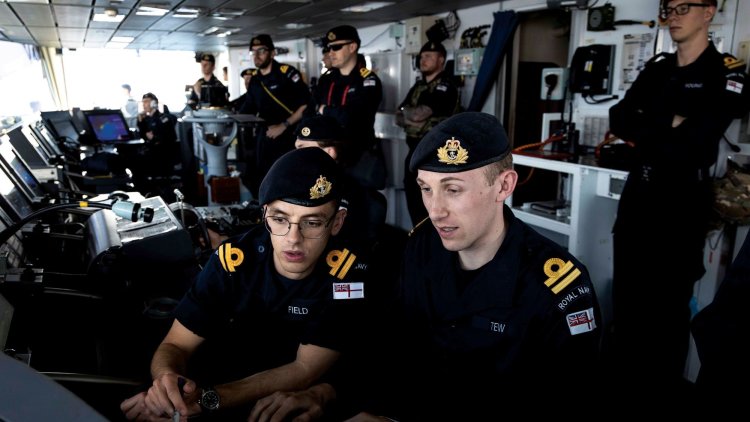
Officers at work on the bridge of HMS Dragon as it sails into Limassol, Cyprus, 27 April 2026 (Photography, LPhot Helayna Birkett. UK MOD © Crown copyright 2026)
6 min read
The Iran conflict has drawn attention to gaps in Royal Navy capability but, as Tom Scotson finds, it’s not just its ships that need to get into better shape
In the early days of the Iran conflict, as UK allies in the Gulf – and even Cyprus – were being hit by drones and missiles, Keir Starmer pledged to send a warship to help defend them.
The only problem was the only available vessel, HMS Dragon, was undergoing a refit in Portsmouth. The effort to get the ship ready was extraordinary but there was no escaping the embarrassment.
The Royal Navy has been the object of ridicule from US secretary of war Pete Hegseth and, repeatedly, Donald Trump himself. It is widely acknowledged that the UK has an inadequate number of warships currently available, with new frigates only coming into service at the end of the decade.
But a navy is about more than its vessels – and data uncovered by The House suggests that not all is well with its personnel.
On the face of it, the health of the Royal Navy is improving after decades of cuts. By January 2026, it was reported that there had been a 14.5 per cent uptick in the numbers of people joining the navy, with the fleet boasting a strength of around 32,160 personnel.
But according to a Freedom of Information request made by The House, the number of personnel who passed their fitness tests between 2014 and 2024 fell dramatically.
Between 2014 and 2015, 96.6 per cent of both men and women in the fleet passed their fitness tests on first attempt. However, 10 years later only 77 per cent of people passed the exams initially – a drop of almost 20 percentage points.
The number of Royal Navy personnel who failed their fitness tests at the first time of asking but passed within a year increased from 21 people to 1,219, 10 years later. Meanwhile, the same data found that Royal Navy personnel who failed their fitness tests on their first attempt then passed more than a year later rose from six people in 2014 to 86 a decade later.
As the navy grapples with falling standards and recruitment shortfalls, how can it restore and improve standards within its ranks?
Fred Thomas, Labour MP for Plymouth Moor View and a former Royal Marines officer, tells The House why he believes the numbers have declined.
“The overall offer was eroded year by year under the Conservative Party when they heavily cut funding,” he says. “The combined total of: how enjoyable is the job, what does it pay, what perks do you get including housing and medical benefits, how much status does it confer in society? How proud are you of your work for the navy and what sacrifices are you willing to make for the job?
“This will sound political but they hollowed out the military and it’s in a bad place now. It’ll take many years to turn it around. And at the same time we desperately need to modernise our capabilities.”
Many of the navy’s problems do not emanate from just cash flow problems either. Experts argue that in an increasingly competitive job market there are more careers out there which attract people’s interest – whether they be easier or more glamorous.
Commodore (Ret’d) Steve Prest, Rusi associate fellow, says people join the navy for one reason and that is it is better than the alternatives.
He adds: “Now it is different because young people, especially, often don’t want to be away and disconnected. A recent patrol had submariners away for 205 days under water, where they don’t have the ability to send information off the submarine. In the modern era, people expect to remain connected; when they see a blue tick, they expect a response instantaneously.
“It’s not to say a career in the Royal Navy is not rewarding. I know of people who were recently on that trip and thought it was one of the best things they ever did. It’s just harder to persuade people to go into the navy when everywhere else is so connected.”
Prest admits numbers have gone up a little, as recruitment has improved – despite the trained strength in the fleet having dropped. This means that the overall experience in the navy has reduced, with experienced staff leaving faster than the experience which can be grown in newcomers.
This will sound political but they hollowed out the military and it’s in a bad place now. It’ll take many years to turn it around
“With limited opportunities for people to gain sea experience, owing to the paucity of seagoing vessels, this is a real concern,” Prest tells The House.
“It means the ships’ companies bringing the new-build frigates into service will be vastly less experienced than their predecessors.
“We need a more balanced pipeline. The new recruits all need time at sea and interesting places to visit. There are no shortcuts to learning under those who know the ropes.”
The navy has also been affected by falling wages, which have cut across the public sector.
From day one, new officer recruits earn £34,676 per year. This will increase to £41,456 after their first promotion, followed by £52,815 as a lieutenant. The highest captain within the fleet will earn £122,849.
With a healthy pension and access to subsidised accommodation, the offer on the face of it looks good. Yet the problem is two-fold: talented people can earn far more in the private sector, in blossoming careers such as software engineering and coding; secondly, experts say demand is still depressed from cuts inflicted during austerity.
Admiral Lord West, former first sea lord and chief of the Naval Staff from 2002 to 2006, says: “Part of the problem is there was no pressure to recruit more people, the manpower was cut. When you depress something it’s difficult to try and bring it up to the same level again.”
He tells The House that the bottom line is that there is not enough money for the MoD – like most government departments.
And without greater investment, existing naval talent is going to waste, warns Prest: “If we don’t have enough ships to get them out on missions, then we can lose some of the best recruits as they idle ashore – that’s not what they joined to do.”
>


5 min read
After chancing upon an old parliamentary board game, Daniel Brittain persuaded two hereditary peers to join battle
There was something about it that wasn’t quite like the other chess boards piled in a corner as if hiding. It was the day after Boxing Day and I was idling in a favourite shop in the town of Corbridge, between Newcastle and Hexham. With little else to do, I investigated and so stumbled on an artefact at once trivial and timely. For instead of the regulation black and white squares, this board carried slogans such as One Man One Vote, Home Rule and Abolition of the Lords.
What was this? The front of the board proclaimed it to be House of Commons – The New Parliamentary Game. New it might once have been: the packaging suggested that it had not been new for at least a century.
Delight at unearthing this piece of parliamentary ephemera was tempered by the fact that were no playing pieces – and no rules. Further investigation was needed. I handed over my £3 and embarked on the quest.
The first point of inquiry after the Christmas recess was Patrick Vollmer, chief librarian of the Lords. Did this game exist in the parliamentary archives, a virgin copy kept in one of its vaults?
No, but he did pass on some leads to chase. A website for board game geeks gave the rules (extraordinarily complicated), and more surprisingly a link to the Bodleian Library, surely the repository of historic and valuable manuscripts? True, but also it turns out the home of 1,600 games and pastimes gifted this century. And there it was, on the Bodleian website, a photo of five of the eight required playing pieces, featuring pictures of prominent Liberal and Conservative MPs and peers from the game’s 1896 creation.
Jo Maddocks, the Bodleian’s curator of ephemera invited us (my wife Clare had by now joined the quest) up to Oxford to take a look, where we discovered that although the library has some of the playing pieces it doesn’t possess the rules or the board. We reunited them all for photos. Asquith, Campbell-Bannerman, Rosebery, Devonshire and Chamberlain re-emerged into the limelight. Turned out we were the first people to have requested a view.
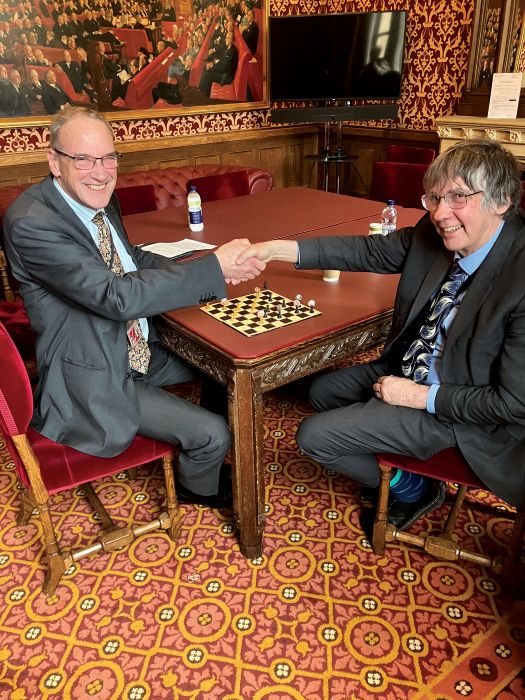
Back in Parliament, a plan was hatched to play the game, possibly for the first time in 100 years. Given that ‘Abolition of the Lords’ (in its all hereditary form) is one of the squares on the board, two hereditaries were my obvious target.
While Clare brilliantly copied the Bodleian pieces and made the required additional three, I went on the trail of game hereditary peers. Fortuitously, the Earl of Clancarty was enthusiastic, and he was about to meet up with the Earl of Lytton. A brace of earls, result!
A week later we gathered in one of the splendid rooms formerly part of the Lord Chancellor’s flat. For Lord Lytton, Parliament’s foremost expert on Planning and Building law, it was a special day (his last in the Lords), having decided a year ago to retire at 75. The minister, Baroness Taylor of Stevenage, had paid tribute to him. Opposite: Lord Clancarty a prominent champion of the arts and the creative industries. He’s just discovered that he is to be one of the few outgoing hereditaries to receive a life peerage. Both crossbenchers, Lord Clancarty gamely took the governing Tories’ side, Lord Lytton the opposition Liberals. Shaking hands, the game commenced.
Poor old backbench pawns move just one square at a time
Of course, the object of the game is for the government to pass acts on the subjects depicted on the board by landing a player on each of the two similarly named squares. The opposition’s job is to prevent that. According to the rules, the PM and what the board refers to as the Chief Opposition Spokesman can move in all directions across the board, while his cabinet and their shadows (a term formalised in the 1920s) rather fewer. Poor old backbench pawns move just one square at a time.
Let battle commence. First bill? Abolition of the Lords of course. Lord Lytton scored an early victory in saving the House; on the rematch Lord Clancarty got it abolished. Soon a whole radical manifesto was laid before them: licensing laws, payment of MPs, Home Rule, disestablishment and voting rights. It’s a fun game, perhaps the parliamentary shops should bring out a new edition?
Having reached an honourable draw, the two earls went their way. Lord Clancarty to a meeting, Lord Lytton heading off for a last stint in the Chamber, say his goodbyes and clear his desk after some 30 years. As the politician playing pieces were packed away, I noticed that all the measures on the board have been tackled since the game’s creation. All except one: Disestablishment of the Church of England. That thorny question has even managed to outlive the hereditaries in the House of Lords.
>
Politics
Politics Home | Burnham Expected To Be Allowed To Stand Despite Labour Fears Of “Bankruptcy”


Andy Burnham, 2025 (Alamy)
3 min read
Senior Labour figures are concerned that the party will be dragged towards “bankruptcy” if Andy Burnham successfully stands as its candidate in the Makerfield by-election, triggering a mayoral by-election and possibly a leadership contest.
Former minister Josh Simons announced on Thursday that he would be giving up his Makerfield constituency – after being elected for the first time just two years ago – to allow the Greater Manchester mayor a shot at re-entering Parliament via a by-election.
The Labour Party is now expected to open up its candidate selection process for Makerfield imminently, at which point Burnham will formally ask for the waiver to stand despite being a mayor.
The core group of Labour’s national executive committee (NEC) officers will then meet to discuss the waiver – a meeting sources expect to take place this weekend. It is widely expected that Burnham’s request will be granted, after Downing Street briefed that it would not block Burnham as it did in January.
NEC officers will either make the decision themselves or refer it to a meeting of the full NEC, which next meets on Tuesday.
Views still vary on whether to refer the decision, with concerns that doing so would set a precedent. On the other hand, it is understood that reprieve from the scrutiny the nine officers have received on their decisions around Burnham would be welcomed by some on a personal level.
NEC officers are expected to meet this weekend and, while it is possible that the vote is not unanimous, they are likely to approve Burnham’s waiver.
While Burnham’s bid is highly likely to be approved, senior figures have reservations over the costs incurred his potential return. If successful, it would trigger a mayoral by-election in Greater Manchester and potentially a subsequent leadership contest.
One Labour NEC member told PoliticsHome these costs would be “bankruptcy territory” for the party.
It is understood that the by-election will involve sending a number of Labour HQ staff door-knocking in the seat, which will involve acommodation and travel costs.
Makerfield comes after the Gorton and Denton by-election, which a Labour source said was the costliest in the party’s history, as well as the May 7 elections.
If Burnham wins the by-election, the party will also be faced with a mayoral election in Manchester, which is expected to cost the party hundreds of thousands of pounds and the public likely more than £4m.
Others rejected claims of anxiety over party finances, however, in anticipation of a Burnham leadership attracting new party members. One minister said:“We will get a lot of new members with Andy – we will be fine.”
Labour has already put on a large number of canvassing sessions in Makerfield, and on Friday dozens of activists and MPs made the journey to the constituency to join the effort.
Deputy leader Lucy Powell told the FBU conference on Friday morning that she had it on “good authority that absolutely no attempt” to block Burnham would be made. She also revealed she would be the political lead in the by-election.
“None of the concerns have changed, but the party would explode if he wasn’t allowed to apply,” said one Labour MP.
“He’s got a better chance than anyone else, but Reform will be very strong there – it’s like a 100 per cent Denton seat with no Gorton-type voters.”
PoliticsHome understands that Burnham allies have been eyeing Makerfield as a potential constituency for weeks, as it is next door to where the Manchester mayor lives in Leigh.
The seat will be a tough test for Burnham after Reform UK had success in the wards of the constituency at the recent local elections.
In its eight wards, Reform won 50.4 per cent of the vote while Labour secured just 22.7 per cent. Burnham supporters point out that at the 2024 Manchester mayoral election Burnham won 62 per cent in Makerfield.
The Labour Party has been contacted for comment.
>

2026 Commonwealth Games: Scots pick three more Olympians for swimming squad

Che Guevara’s Last Comrades Speak In Cannes Film Festival Documentary

Rhian Wilkinson: Wales head coach signs two-year contract extension
-

 Fashion9 years ago
These ’90s fashion trends are making a comeback in 2017
-
Fashion9 years ago
According to Dior Couture, this taboo fashion accessory is back
-
Fashion9 years ago
Model Jocelyn Chew’s Instagram is the best vacation you’ve ever had
-
Fashion9 years ago
Your comprehensive guide to this fall’s biggest trends
-
Fashion9 years ago
A photo diary of the nightlife scene from LA To Ibiza
-
Fashion9 years ago
Emily Ratajkowski channels back-to-school style
-
Fashion9 years ago
9 Celebrities who have spoken out about being photoshopped
-
Fashion9 years ago
The tremendous importance of owning a perfect piece of clothing