
Politics
Politics Home Article | Race For Next Labour Leader Heats Up As Starmer’s Authority In Peril


(Alamy)
5 min read
Andy Burnham remains the favourite to succeed Keir Starmer as prime minister, after the Labour leader faces his biggest crisis to date.
At last week’s local elections, Labour lost more than 1,000 councillors to Reform UK, the Greens, and the Tories in its northern heartlands, London and even Wales, where it has held power since the Senedd’s inception.
Starmer attempted to reset his premiership with a speech on Monday but it fell flat, leading to more than 90 MPs calling for him to resign, four junior ministers qutting government, and Wes Streeting leaving his job as health secretary.
Meanwhile, former minister Josh Simons announced on Thursday that he would be giving up his Makerfield constituency – after being elected for the first time just two years ago – to allow Burnham a shot at re-entering Parliament via a by-election.
The core group of Labour’s national executive committee (NEC) officers will then meet to discuss the waiver – a meeting sources expect to take place this weekend. It is widely expected that Burnham’s request will be granted, after Downing Street briefed that it would not block Burnham as it did in January.
The Prime Minister remains a damaged figure with his authority ebbing away each day. Even serving ministers are now openly calling for the party’s ruling body to allow the Manchester mayor to stand as a candidate in Makerfield.
If he wins the by-election – which is far from a shoo-in – some MPs expect there to be a ‘Burnham coronation’, where he becomes leader without the contest going to the members.
Winning Makerfield would also increase Burnham’s standing in the Parliamentary Labour Party, showing his colleagues that he can defeat Reform UK at the ballot box.
“There are going to have to be some big pivots,” one MP on the Right of the party told PoliticsHome, “but I think he is the only one who can unite the party.”
While Burnham’s bid is highly likely to be approved, senior figures have reservations over the costs incurred over his potential return. If successful, it would trigger a mayoral by-election in Greater Manchester and potentially a subsequent leadership contest.
Yet many are expecting there to be a surge in the number of MPs joining the party and regularly donating to Labour in the wake of Burnham becoming Labour leader.
“I think there will be [a bounce] – he’s clearly the members’ favourite,” a soft-Left source told PoliticsHome. “There’s a clear argument for allowing him back on the grounds of reviving the party as well as winning the by-election.”
On Friday morning, Team Burnham got their heads together for the first time this morning to think through what the campaign will look like. Many MPs and activists have also travelled up this morning to start campaigning for Labour ahead of what will be a hotly contested by-election.
So far there is no sign of who the Reform UK candidate will be. A name which is being circulated is Robert Kenyon, the Makerfield candidate who won 32 per cent in 2024. One aide told the Spectator magazine “he’s our Hannah Spencer,” referring to his job as a plumber. It would help the party emphasise its local roots in a high-profile, high-stakes race.
Meanwhile, Streeting’s stock has risen again after facing a barrage of briefing from ministers and No 10.
He resigned from Cabinet on Thursday after saying it was “clear” Starmer will not lead the Labour Party into the next general election. Streeting has also backed Burnham’s desire to be selected as the Labour candidate in the Makerfield by-election.
A Streeting supporter told PoliticsHome: “I think we have two great talents and Andy has had the freedom to say what he thinks and now Wes over the next few weeks will have the same freedom and people will be pleasantly surprised at the personality and ideas that emerge.”
Figures in No 10 were claiming he had just over half the number of MPs needed to trigger leadership election and formally challenge the prime minister. However, Streeting aides have since said that he has more than the required 81 MPs needed, but have claimed many of his supporters remain in government and stressed that they do not want to bring down the Prime Minister’s administration.
Streeting’s support comes from the moderate wing of the party and the 2024 intake of Labour MPs, particularly the Scottish PLP which includes Zubir Ahmed – who resigned as health minister this week – Mel Ward and Alan Gemell.
Out of all this Angela Rayner is likely to be the king maker in any leadership contest between Streeting and Burnham.
Rayner has dealt with her tax affairs with HMRC after paying back £40,000 in unpaid stamp duty.
The Ashton-under-Lyne MP in a statement after the local elections said it was a grave mistake to block the Manchester mayor from running as a candidate in the Gorton and Denton by-election.
Fundamentally, only two candidates are likely have the numbers to challenge Starmer and they are Streeting and Burnham – if the latter can win a difficult by-election.
Burnham aides have been bandying around the acronym ABC – Andy By Conference, allowing him to settle in as Labour leader and set out a new vision by September to the party faithful in Liverpool.
Whatever happens, events seem to be out of the prime minister’s control and his authority irreparably wounded.
MPs, even those who have been loyal to him throughout this government, believe the end is near for the prime minister. Whether they like it or not, the majority of the PLP expect a new leader by the autumn – with a pivot to the Left.
>
Politics
Politics Home | Burnham Expected To Be Allowed To Stand Despite Labour Fears Of “Bankruptcy”


Andy Burnham, 2025 (Alamy)
3 min read
Senior Labour figures are concerned that the party will be dragged towards “bankruptcy” if Andy Burnham successfully stands as its candidate in the Makerfield by-election, triggering a mayoral by-election and possibly a leadership contest.
Former minister Josh Simons announced on Thursday that he would be giving up his Makerfield constituency – after being elected for the first time just two years ago – to allow the Greater Manchester mayor a shot at re-entering Parliament via a by-election.
The Labour Party is now expected to open up its candidate selection process for Makerfield imminently, at which point Burnham will formally ask for the waiver to stand despite being a mayor.
The core group of Labour’s national executive committee (NEC) officers will then meet to discuss the waiver – a meeting sources expect to take place this weekend. It is widely expected that Burnham’s request will be granted, after Downing Street briefed that it would not block Burnham as it did in January.
NEC officers will either make the decision themselves or refer it to a meeting of the full NEC, which next meets on Tuesday.
Views still vary on whether to refer the decision, with concerns that doing so would set a precedent. On the other hand, it is understood that reprieve from the scrutiny the nine officers have received on their decisions around Burnham would be welcomed by some on a personal level.
NEC officers are expected to meet this weekend and, while it is possible that the vote is not unanimous, they are likely to approve Burnham’s waiver.
While Burnham’s bid is highly likely to be approved, senior figures have reservations over the costs incurred his potential return. If successful, it would trigger a mayoral by-election in Greater Manchester and potentially a subsequent leadership contest.
One Labour NEC member told PoliticsHome these costs would be “bankruptcy territory” for the party.
It is understood that the by-election will involve sending a number of Labour HQ staff door-knocking in the seat, which will involve acommodation and travel costs.
Makerfield comes after the Gorton and Denton by-election, which a Labour source said was the costliest in the party’s history, as well as the May 7 elections.
If Burnham wins the by-election, the party will also be faced with a mayoral election in Manchester, which is expected to cost the party hundreds of thousands of pounds and the public likely more than £4m.
Others rejected claims of anxiety over party finances, however, in anticipation of a Burnham leadership attracting new party members. One minister said:“We will get a lot of new members with Andy – we will be fine.”
Labour has already put on a large number of canvassing sessions in Makerfield, and on Friday dozens of activists and MPs made the journey to the constituency to join the effort.
Deputy leader Lucy Powell told the FBU conference on Friday morning that she had it on “good authority that absolutely no attempt” to block Burnham would be made. She also revealed she would be the political lead in the by-election.
“None of the concerns have changed, but the party would explode if he wasn’t allowed to apply,” said one Labour MP.
“He’s got a better chance than anyone else, but Reform will be very strong there – it’s like a 100 per cent Denton seat with no Gorton-type voters.”
PoliticsHome understands that Burnham allies have been eyeing Makerfield as a potential constituency for weeks, as it is next door to where the Manchester mayor lives in Leigh.
The seat will be a tough test for Burnham after Reform UK had success in the wards of the constituency at the recent local elections.
In its eight wards, Reform won 50.4 per cent of the vote while Labour secured just 22.7 per cent. Burnham supporters point out that at the 2024 Manchester mayoral election Burnham won 62 per cent in Makerfield.
The Labour Party has been contacted for comment.
>
Politics
Politics Home | Labour Ruling Body Approves Andy Burnham Standing For Selection In Makerfield By-Election



1 min read
Andy Burnham has received approval from Labour’s ruling body to run for selection in the Makerfield parliamentary by-election, bringing the Greater Manchester mayor one step closer to being able to run in a leadership contest to replace Prime Minister Keir Starmer.
The National Executive Committee (NEC) has announced it is allowing Burnham to run for selection in the Makerfield by-election, potentially giving him a route back to Parliament. The by-election will reportedly take place on 18 June.
If he wins the by-election and returns as an MP, this would make him eligible to launch a leadership challenge against Starmer.
The current Labour MP for Makerfield, Josh Simons, announced on Thursday that he was stepping down to make way for Burnham. However, the Manchester mayor will still have to win the selection to stand in the seat, and then win the by-election itself in an area where Reform UK has been polling strongly and performed well in last week’s local elections.
The NEC had previously blocked Burnham from standing in the Gorton & Denton by-election earlier this year, which the Green Party’s Hannah Spencer went on to win.
The timeline for the selection contest for the Makerfield by-election has also been announced by the NEC. Applications will close on Monday 18 May, and a selection meeting will take place on 21 May.
>
Politics
Politics Home Article | The Emerging Labour Leadership Camps And Their Visions For The Country


Wes Streeting stood down as health secretary on Thursday (Alamy)
14 min read
As rivals prepare to challenge Keir Starmer’s leadership after Labour’s bruising local election results, PoliticsHome examines the emerging contenders, the factions forming around them, and the ideologies underpinning them.
The Parliamentary Labour Party was plunged into crisis after the party’s disastrous results in last week’s local and devolved government elections, which saw Labour lose the Senedd in Wales for the first time, fail to make inroads against the SNP in Scotland, and lose around 1,500 seats on local councils in England.
More than 90 MPs have since called for the Prime Minister to resign or set out a timetable for doing so, and five ministers, including one Cabinet minister, have resigned from their posts.
A formal leadership challenge has not yet been launched to topple Starmer but either a contest or a coronation are widely seen as likely soon, after Wes Streeting resigned as Health Secretary on Thursday, and Greater Manchester mayor Andy Burnham announced that he would attempt to stand in a parliamentary by-election to re-enter Parliament.
With Starmer looking increasingly unlikely to hold on to power, questions are turning to where the support lies for his potential successors.
The picture of which MPs would support which contender is complex and does not necessarily track straightforwardly from left to right of the party, or directly mirror who MPs nominated in the deputy leadership race in the autumn.
From Streeting’s modernising allies in the Labour Growth Group to Burnham’s growing soft-left coalition around “Manchesterism”, Labour MPs are beginning to coalesce around competing visions for the party’s future, shaped by geography, political style, economic outlook, and MPs’ personal loyalties.
Wes Streeting
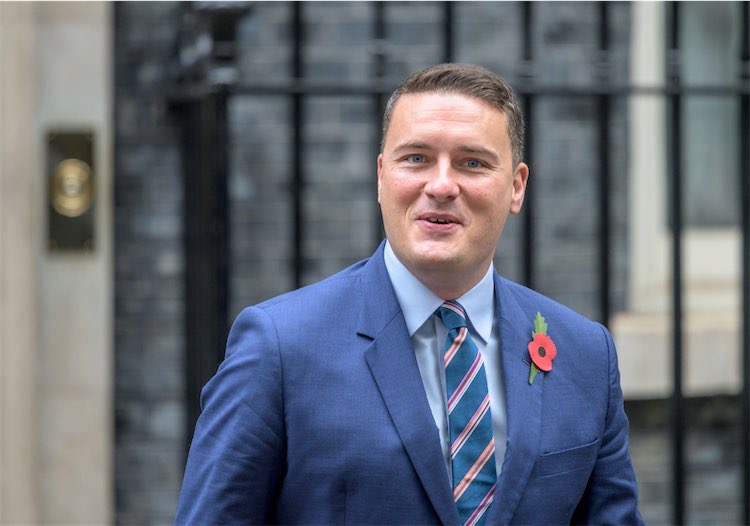
Wes Streeting is widely seen as the most prepared to stand in a leadership contest. In January, some of his supporters claimed that he had 200 MPs lined up to back him in the parliamentary party, though this figure was disputed. His allies now claim that he does have the required number of 81 MPs – or 20 per cent of sitting Labour MPs – to launch a leadership challenge.
In his resignation letter on Thursday, Streeting wrote that Labour MPs and Labour unions “want the debate about what comes next to be a battle of ideas, not of personalities or petty factionalism”, arguing for a “broad” contest with the “best possible field of candidates”.
So, what are Streeting’s ideas?
Streeting is widely considered a Blairite, broadly associated with the ‘right’ of the Labour Party. However, in 2022, he objected to being “pigeonholed” and said there was “no future for the Labour party if it’s locked in a battle between two competing visions of the past”.
The House examined Streeting’s approach to leading the Department for Health and Social Care earlier this year, speaking to allies who described him as relentlessly focused on delivery and presentation, but also overtly political. During his tenure, Streeting repeatedly made clear that he views public service reform as politically existential for the Labour Party.
The former health secretary has not articulated a fully coherent ideological doctrine, but the emerging politics around his camp combine public service reform and pro-growth supply-side economics with producerist tax reform and a strong emphasis on state capacity and delivery.
A report by the Labour Growth Group (LGG) – a group associated with Streeting’s wing of the party – was published on Tuesday, calling for a rise in capital gains tax to pay for a 2p cut in national insurance. It also argued for greater powers for regional mayors over tax and spending, and for energy policy to shift away from a primarily climate-focused agenda towards lowering consumer costs.
The LGG, chaired by 2024-intake MP for Milton Keynes Chris Curtis, was one of the earliest caucuses of Labour MPs formed after the 2024 general election, advocating for an economic model focused on rewarding work over asset ownership, planning reform, infrastructure delivery and regional growth. Broadly, the new report ties together ideological influences from former Starmerite think tank Labour Together (now rebranded as Think Labour), Bidenomics and Yimbyism.
PoliticsHome understands the LGG report was circulated not only among allies of Streeting, but also to figures close to Burnham and former deputy leader Angela Rayner. Sources stressed that the group does not view the report as belonging exclusively to the Streeting wing of the party, with some of its proposals seen internally as ideologically closer to Burnham’s regionalist and producerist approach.
Despite having been considered as one of the most right-wing members of the Cabinet, Streeting has made comments moving leftwards in recent months on issues such as Gaza, with his constituency increasingly vulnerable to pro-Gaza independents. He only narrowly retained his seat at the 2024 general election, holding on with a majority of 528 over independent candidate Leanne Mohamad in a constituency with a large Muslim population. This could make him a risky bet as leader and prime minister, with his seat looking far from safe at the next general election.
Who are Streeting’s supporters?
PoliticsHome has spoken to many MPs, particularly from the 2024 intake, who feel Streeting is an excellent communicator and claim he has the widest support across the party.
Multiple MPs who are leaning towards supporting Streeting told PoliticsHome that their support was not so much predicated on ideology, but more on their perception that Streeting has delivered positive changes in his time as health secretary. Supporters particularly point to the fact that he has improved NHS waiting list performance enough for the government to hit interim treatment targets, with the NHS treatment waiting list having fallen by over 312,000 last year, the largest year-on-year reduction in 16 years.
Some MPs who have yet to make up their minds want to see a firm policy offering rather than a leadership pitch based primarily on his communication style. Others, particularly those on the left of the party, say they would support “anyone but Streeting” in a contest.
Among those who would support Streeting as a future leader are one of his former junior ministers, Zubir Ahmed, who became the fourth minister to quit government on Tuesday, and Joe Morris, one of Streeting’s PPSs. Gordon McKee is widely known as a supporter of Streeting, too, as is Alan Gemmell.
Jess Phillips, another of the four ministers who have so far resigned, is a close friend of Streeting, and cabinet ministers Peter Kyle and Liz Kendall are also known to be his allies.
The health secretary has significant support across the Labour Growth Group, and a particularly strong contingent of supportive Scottish Labour MPs, with many MPs north of the border especially keen for a strong communicator who can challenge the SNP and reconnect with voters who feel left behind by Westminster.
However, before the local elections, one minister told PoliticsHome that Streeting had been “damaged” by the controversies surrounding former US ambassador Peter Mandelson. In February, Streeting released a tranche of correspondence between himself and Mandelson in an attempt to show he did not “have something to hide” about their friendship.
Andy Burnham
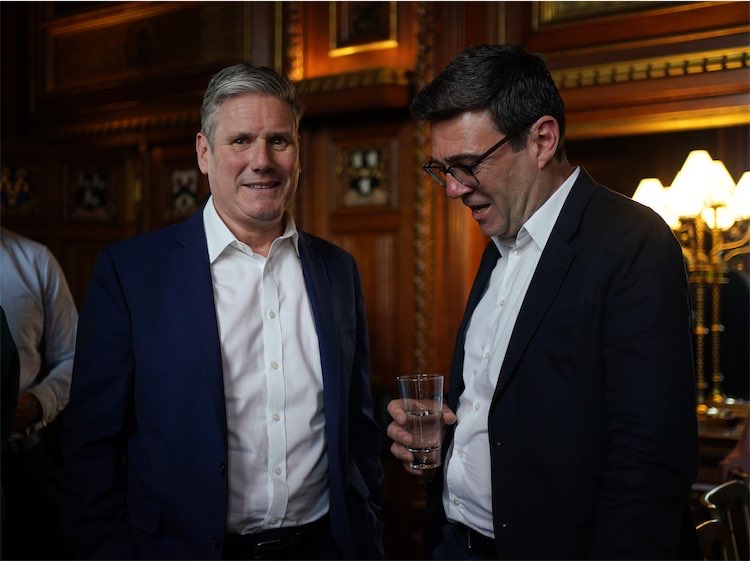
Greater Manchester mayor Andy Burnham is seen by many Labour MPs as the most popular politician in the country, topping YouGov polling with a 35 per cent popularity rating – ahead of Nigel Farage at 29 per cent.
Burnham was already manoeuvring for a potential leadership contest in the autumn when he criticised the government ahead of the Labour Party conference and confirmed he would seek to stand against Starmer if a contest took place. He later attempted to return to Parliament through the Gorton and Denton by-election in February, but was blocked by Labour’s National Executive Committee.
However, his potential path to Downing Street is starting to look more possible. The National Executive Committee, Labour’s ruling body, confirmed on Friday evening that it would allow the mayor to stand for selection in the Makerfield parliamentary by-election, after Labour MP Josh Simons announced he would stand down to make way for Burnham. The Manchester mayor would still need to win the by-election before nominations open for any Labour leadership race – a tough ask in an area where Reform is topping the polls and performed strongly in last week’s local elections.
What are Burnham’s politics?
Burnham is now considered to be a figure on the ‘soft left’ of the Labour Party, but was a proud Blairite when he served as a minister in the New Labour governments under Tony Blair and Gordon Brown.
He has run for the Labour leadership twice before: in 2010, he lost to Ed Miliband, and in 2015 to Jeremy Corbyn. His 2015 pitch included a commitment to “a policy of progressive renationalisation of the railway system” and several economic policies such as a new levy to fund social care, extending the higher minimum wage to under-25s, and banning zero-hour contracts.
Now, his political ideology is much more focused on the regional devolution of power. This approach has been coined ‘Manchesterism’: an attempt to build a new Labour political economy around regional power, public service reform, and economic growth driven from cities around the country rather than just Whitehall.
Mathew Lawrence, the director of the think tank Common Wealth, wrote in the New Statesman that ‘Manchesterism’ should be seen as part of an economic approach which supports the state taking over where the private sector is failing. Burnham-aligned campaign group Mainstream is expected to publish a report soon, which will expand on this idea.
“What has been done for buses can be done with similar ambition for energy, water, housing, and care,” Lawrence wrote, describing ‘Manchesterism’ as “decentralised, plural and democratically accountable”.
PoliticsHome has spoken to multiple Labour MPs since the local elections, including ministers, who feel there needs to be greater emphasis on local delivery that residents can directly see and feel. Burnham’s reforms to the Greater Manchester transport system – the ‘Bee Network’ – are regularly cited as a model for this approach.
Burnham has significant support among Labour MPs in the soft-left Tribune group. Some members of the group, including former transport secretary Louise Haigh, published a series of essays in the journal Renewal earlier this week, putting forward different policy ideas that they hope could be taken up by a future leader.
The proposals included stripping the Treasury of responsibility for delivering growth, reforming and lengthening the time frame for the fiscal rules, and overhauling property taxation by abolishing stamp duty. The Tribune group appear to put more emphasis than the LGG on making space for more borrowing to invest in capital infrastructure projects.
Burnham is also a supporter of reforming the electoral system to proportional representation, and wants to see an elected House of Lords.
Who are Burnham’s backers?
Burnham has strong support among the soft left, particularly the newly regrouped Tribune group, but also among MPs on the more radical left of the party who would prefer his style of politics over that of Streeting.
MPs who support Burnham include Louise Haigh, Sarah Owen, Paula Barker, Clive Lewis, Richard Burgon, Connor Naismith, Miatta Fahnbulleh and Rachael Maskell. Some of those figures are on the soft-left wing of the party, while others, including Burgon, sit in the Socialist Campaign Group on the party’s further left.
The renewed Tribune group of Labour MPs wants to help the government fight “multiple different” electoral threats from both the left and right. The Tribune group reached more than 100 members in January, making it one of the largest organised groupings in the Parliamentary Labour Party.
The group was revived by former cabinet minister Haigh, former government whip Vicky Foxcroft, Women and Equalities Select Committee chair Sarah Owen, and multiple MPs from the 2024 intake, including Yuan Yang and Beccy Cooper. While the full membership is not public, it includes multiple Cabinet ministers.
Yang and Cooper previously told PoliticsHome that the group would be a “progressive left alliance for policy development”, which it hoped could feed ideas directly into government.
There is also particular interest in Burnham among MPs representing Greater Manchester constituencies, many of whom view him as one of the only high-profile Labour figures now capable of helping the party retain its traditional voter base in the region, after a devastating set of local election results in which both Reform UK and the Green Party made huge gains.
Other potential leadership contenders
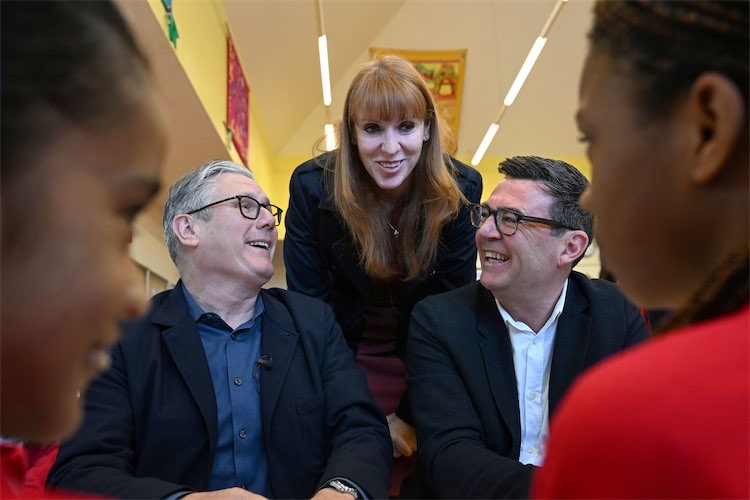
Other potential candidates on the soft left could include former deputy prime minister Angela Rayner and Energy Security and Net Zero Secretary Ed Miliband.
Rayner has long been seen as a potential successor to Starmer, and this week announced that she has resolved her tax affairs with HMRC following an investigation.
In September, Rayner stood down as deputy prime minister and housing secretary after admitting she underpaid stamp duty on her £800,000 flat in Hove. Now that the investigation has been resolved, it potentially frees her up to make a bid for the leadership herself.
Rayner’s potential supporters have so far remained notably quiet, and she has given little indication publicly that she intends to run herself if Starmer steps down. However, she did issue a 1,000-word statement following the local elections, which was scathing about Starmer’s leadership and accused him of presiding over “a toxic culture of cronyism”.
She called for Labour to offer regional mayors more economic powers, raise the minimum wage, and promote new forms of public and cooperative ownership. The former deputy PM warned against Labour becoming a party for “the well-off, not working people”.
While Rayner has not directly endorsed Burnham, she said it had been a “mistake” for the NEC to block him from standing in the Gorton and Denton by-election.
Miliband has also been floated as a potential leadership candidate, but he has repeatedly insisted he does not want to run, having previously led Labour between 2010 and 2015 before losing a general election to David Cameron’s Conservatives.
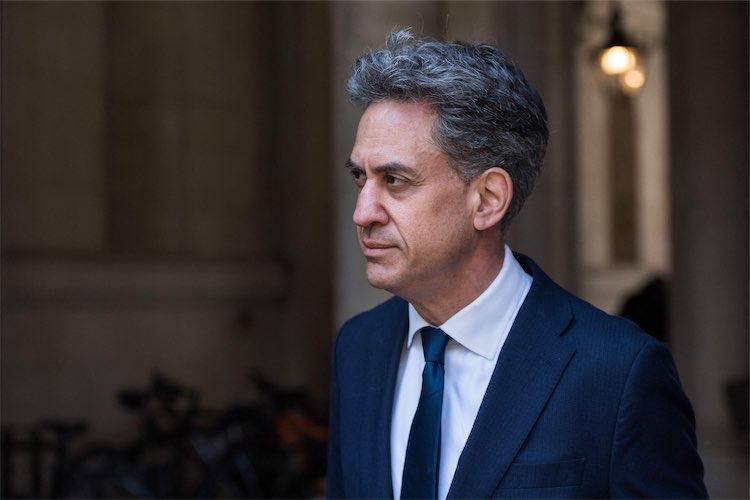
Viewed broadly as a soft-left social democrat, Miliband has spent his time as energy secretary framing climate policy as a way to promote environmentalism alongside industrial strategy, energy security, national resilience, and economic renewal. He has argued that the green transition can create jobs while also reducing dependency on fossil fuels and lowering bills.
Supporters of Miliband feel that he has proven himself as an effective leader in the Department for Energy Security and Net Zero, while others see him as already having tried and failed to lead Labour into a general election victory – making it more likely he could become a ‘kingmaker’ rather than leader himself.
MPs have floated the idea that Miliband, a former Treasury aide to Gordon Brown, could serve as a future chancellor under a Burnham premiership, with both figures broadly located in Labour’s soft-left tradition. Allies of Burnham have reportedly been in conversations with the Manchester mayor in recent months.
Some soft-left Tribune members would like to see Miliband himself as prime minister, while others regard Burnham as more electorally viable.
On the right of the party, Home Secretary Shabana Mahmood has been mentioned privately by some MPs in recent months as a strong potential option – particularly among those representing constituencies won from the Conservatives and are now fending off Reform, in areas where voters tend to favour a tougher stance on migration.
However, even those who admire Mahmood told PoliticsHome they generally acknowledge that she would struggle to secure enough support either in the Parliamentary Labour Party or among members.
Armed forces minister Al Carns is viewed as one potential dark horse in the contest and has a small base of support among MPs – particularly those representing Red Wall seats threatened by Reform UK, as well as some peers and former MPs.
Chancellor of the Duchy of Lancaster and Chief Secretary to the Prime Minister Darren Jones also sparked suspicion among colleagues after the May election results came in that he was quietly sounding out support for a future leadership bid of his own.
While taking the temperature of the parliamentary party amid mounting calls for Starmer to resign, Jones was interpreted by some colleagues as privately testing support for his own prospects of becoming prime minister.
Tonia Antoniazzi, the MP for Gower and one of the more than 90 Labour MPs who have called on Starmer to resign, became the first MP to publicly back Jones when she spoke on Times Radio on Tuesday.
>

Benjamin Sesko’s first Manchester United season – ‘We always knew we were buying a player with growth’

How to watch the women’s Grand Prix De Son Altesse Royale La Princesse Lalla Meryem: TV channel and streaming options for the Semifinal

Colbert Bids Farewell to ‘Late Show’ With a Swan Song

-

 Fashion9 years ago
These ’90s fashion trends are making a comeback in 2017
-
Fashion9 years ago
According to Dior Couture, this taboo fashion accessory is back
-
Fashion9 years ago
Model Jocelyn Chew’s Instagram is the best vacation you’ve ever had
-
Fashion9 years ago
Your comprehensive guide to this fall’s biggest trends
-
Fashion9 years ago
A photo diary of the nightlife scene from LA To Ibiza
-
Fashion9 years ago
Emily Ratajkowski channels back-to-school style
-
Fashion9 years ago
9 Celebrities who have spoken out about being photoshopped
-
Fashion9 years ago
The tremendous importance of owning a perfect piece of clothing
