
Tech
Waymo expands pause to four cities as robotaxis keep driving into floods

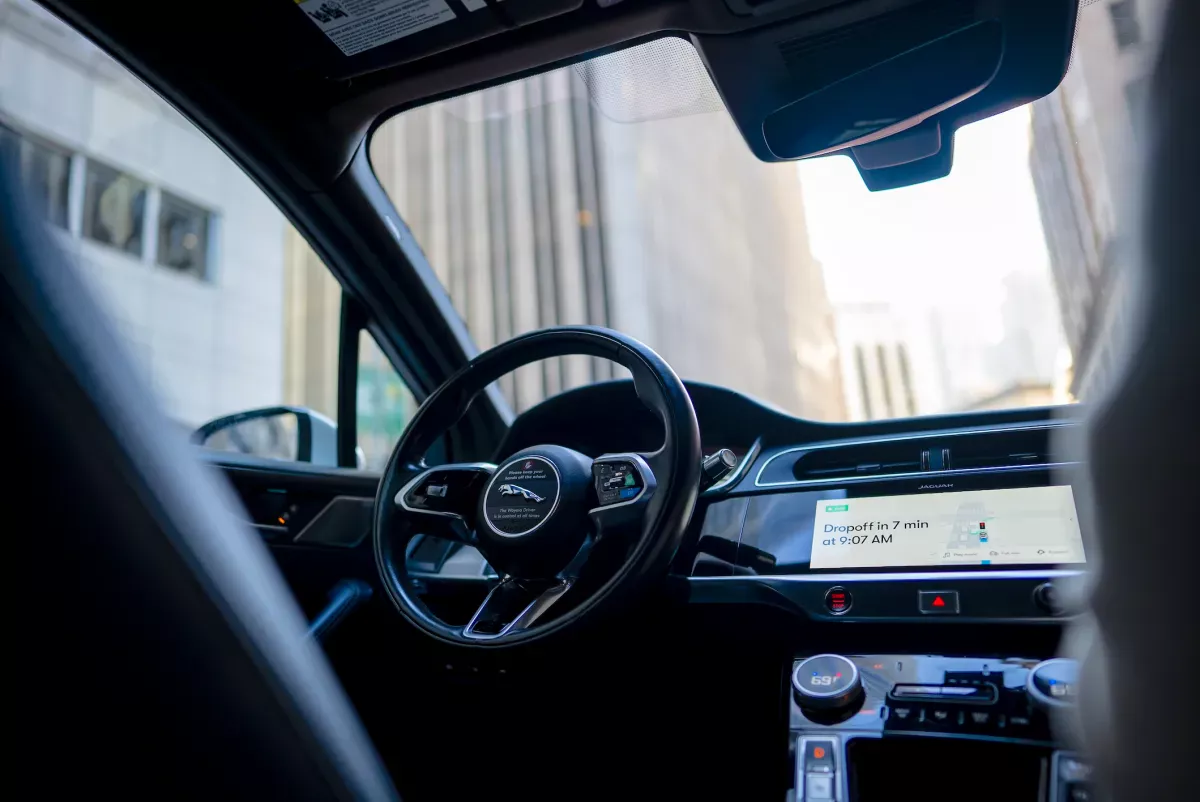
Waymo has now paused service in four cities because its robotaxis are struggling to deal with heavy rain and flooded roads, a problem that already prompted the company to issue a recall last week.
One of Waymo’s robotaxis was spotted driving through a flooded street in Atlanta, Georgia, on Wednesday before it ultimately got stuck for about an hour, according to local news reports. The vehicle was recovered and removed from the scene, Waymo told TechCrunch. Waymo says it paused service in the city, just like it has in San Antonio, Texas, while it figures out a solution.
“Safety is Waymo’s top priority, both for our riders and everyone we share the road with. During a period of intense rain yesterday in Atlanta, an unoccupied Waymo vehicle encountered a flooded road and stopped,” the company said in a statement.
Waymo also halted service in Dallas and Houston because of severe weather across Texas this week, the company told Bloomberg News late Thursday.
Waymo admitted that it hadn’t finished developing a “final remedy” for avoiding flooded areas when it issued its software recall last week. Instead, the company said that it shipped an update to its fleet that placed “restrictions at times and in locations where there is an elevated risk of encountering a flooded, higher-speed roadway,” according to documents released by the National Highway Traffic Safety Administration (NHTSA).
But even those precautions apparently were not enough to stop the Waymo robotaxi from entering a flooded intersection in Atlanta. Waymo told TechCrunch on Thursday that the storm in Atlanta produced so much rainfall that flooding was happening before the National Weather Service had issued a flash flood warning, watch, or advisory. The company said those alerts are part of a larger set of signals it relies on to prepare the vehicles for poor weather.
“NHTSA is aware of this incident, is in communication with Waymo, and will take appropriate action if necessary,” a spokesperson for the safety regulator told TechCrunch regarding the robotaxi that got stuck in Atlanta.
This is not the first time Waymo has struggled to quickly stamp out problematic behavior with its robotaxis. When people started to notice Waymo robotaxis illegally passing stopped school buses last year, the company shipped a fix that was supposed to address the issue — only for its fleet to continue making illegal maneuvers around school buses.
Waymo’s behavior around school buses is at the center of one of two sets of active investigations into the company.
Both the NHTSA and the National Transportation Safety Board (NTSB) are looking into this problem. Waymo has already produced a batch of documents for the NHTSA, all of which were redacted to the public. On May 15, the NHTSA sent a second document request to Waymo because the company’s initial response “necessitates that [NHTSA] receive further data and information.”
The other set of investigations from the NHTSA and NTSB involve a January 23 incident where a Waymo robotaxi crashed into a child in Santa Monica, California. Waymo has said that its robotaxi braked to around six miles per hour before it struck that child and that she suffered minor injuries.
This story has been updated with more information about how Waymo uses National Weather Service alerts, and to include new service pauses in Houston and Dallas.
When you purchase through links in our articles, we may earn a small commission. This doesn’t affect our editorial independence.
>
Tech
Finnish phone-maker HMD bundles Indian AI chatbot onto new smartphone in push to reach local market
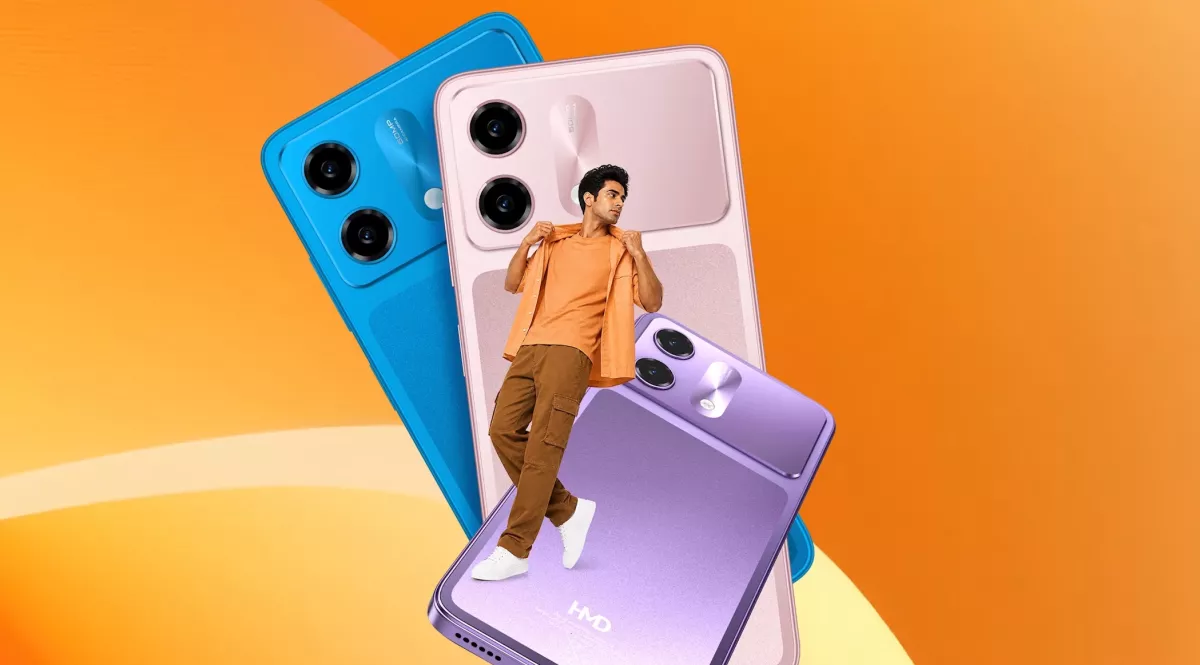
Finnish phone maker HMD today launched its first smartphone, called the Vibe 2 5G, which comes preloaded with Indian AI company Sarvam’s chatbot Indus. Both companies had first announced the partnership during the India AI summit held in New Delhi in February.
The Indus app is powered by Sarvam’s locally trained 105-billion-parameter model — a measure of the AI’s scale and sophistication — and launched at the AI summit. The app supports 22 Indic languages and mid-sentence code-switching (the ability to fluidly mix languages mid-conversation, like switching between Hindi and English), which helps the assistant better understand the context of a query. Currently, the application doesn’t support offline usage, and it doesn’t have any integrated feature with the device to invoke the AI assistant through a shortcut.
The partnership is a potential testing ground for both companies to gauge the appetite for an India-focused chatbot.
“With this partnership, the first thing we want to do is get the Indus app to consumers,” said Ravi Kunwar, HMD’s CEO and Vice President for India and APAC, in an interview with TechCrunch. “Once they start using it, we will move to phase two to focus on driving more traction and stickiness. Right now, by pre-loading the app, we want to be more accessible to users,” he said.
The Vibe 2 5G is a mid-range Android phone with a 6,000mAh battery and a price tag of ₹10,999($114). Kunwar added the devices in the Vibe series of smartphones will also get the chatbot, and the company is also expected to launch a feature phone with Sarvam AI integration in the coming months.
That feature phone integration may ultimately prove more significant for both companies. HMD held a 4% share of India’s feature phone market in 2025, but its smartphone share was negligible — the company doesn’t even appear in the top 15, according to analyst firm IDC.
While it’s early days for Indus, the download numbers reflect that. Nearly three months after its launch, the app has been downloaded just over 293,000 times in India across platforms, according to Appfigures. By comparison, ChatGPT was downloaded 43.9 million times in the country.
It’s a big gap, but the strategy behind the HMD deal may matter more than the early numbers. Bundling a regional AI assistant with affordable hardware — particularly feature phones — is one of the more direct distribution plays available in a market as large and linguistically diverse as India, where English-language AI tools have limited reach. For investors and operators watching how AI adoption gets seeded in emerging markets, this partnership is worth tracking.
Sarvam has been one of India’s marquee AI startups. Beyond the Indus app launch, the company has focused on enterprise partnerships, especially for voice-based solutions. It is on track to become one of the most funded AI startups in the country, with reports suggesting a funding round of $300 million at a $1.5 billion valuation is in the works.
When you purchase through links in our articles, we may earn a small commission. This doesn’t affect our editorial independence.
>
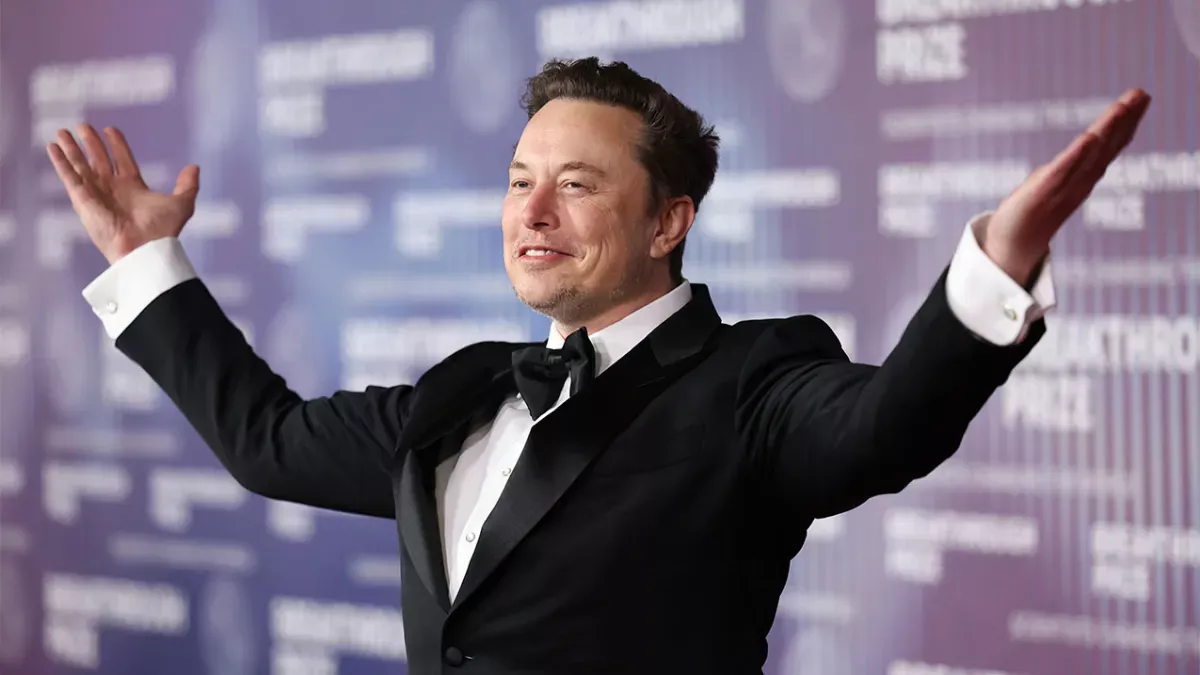
Elon Musk has incredible sway over the companies he leads. And while he already calls himself “TechnoKing” at Tesla, he is a real ruler over SpaceX, wielding an unprecedented level of control over one of the most valuable companies in the world.
Musk’s monarchical grip on SpaceX was finally laid bare in the company’s IPO filing made public on Wednesday.
Post-IPO, Musk will be CEO, CTO, and chairman of SpaceX’s board. His current 85% voting power will drop following the IPO, but it will still be above 50%, giving him the ability to appoint directors as he sees fit. He essentially cannot be fired.
The company has placed limits on how shareholders can file legal challenges, and it will benefit from a far more permissive regulatory regime in Texas, its home state – an environment Musk helped create when he loudly moved Tesla’s incorporation there from Delaware.
As SpaceX bluntly tells prospective investors in the filing: “This will limit or preclude your ability to influence corporate matters and the election of our directors.”
More control than Mark
Tech founders have enjoyed increased control over public companies over the last two decades, especially as Google, Meta (then Facebook) and other tech firms went public with dual-class shares.
But Musk and SpaceX are taking things much further, according to Ann Lipton, professor of law at the University of Colorado.
Lipton argued, in a blog published last Friday, that Musk is obliterating the three most powerful levers that shareholders can typically pull to pressure a public company’s top executive.
The first is voting. SpaceX uses a dual-class structure, with Musk holding 93.6% of the Class B super-voting shares that won’t be available to the public in the offering.
Despite aiming to become the largest IPO in history, Musk will still hold more than 50% of the voting power once SpaceX lists. That makes it a “controlled company” by stock exchange standards, and controlled companies are allowed to exempt themselves from rules requiring independent oversight.
SpaceX states in its IPO filing that regular shareholderss (who will own Class A shares) “will not have the same protections afforded to shareholders of companies that are subject to all of the corporate governance requirements of Nasdaq.”
Crucially, Musk’s voting control means he will be able to decide anything requiring shareholder approval. That includes decisions such as mergers and acquisitions. If Musk eventually wants to somehow merge with or acquire Tesla, as many people have speculated, he won’t need to convince SpaceX shareholders.
Voting control is the biggest difference between Musk’s power at SpaceX versus Tesla. Musk only has around 20% voting control at Tesla and has had to put tremendous pressure on the company in recent years – including, at one point, threatening to leave altogether – to be granted more stock. (Tesla obliged last year by concocting a $1 trillion compensation package approved by shareholders.)
A legal shield
The second lever SpaceX is curtailing is the ability to sue.
By incorporating in Texas, SpaceX has ensured shareholders can’t file what’s known as a “derivative suit” unless they own at least 3% of the company’s shares. (At the expected $1.75 trillion valuation, that would amount to a position worth roughly $52 billion.)
Derivative suits occur when shareholders sue a company’s directors on behalf of the company itself – like when a small shareholder sued Tesla’s board over the $56 billion pay package awarded to Musk in 2018.
What’s more, SpaceX has included language in its bylaws, funneling most lawsuits to either the new Texas Business Court, which only started operating in 2024, or through mandatory arbitration.
In other words, Lipton told TechCrunch: “Forget it, that’s it. There isn’t going to be a lawsuit” in most cases.
This wasn’t the case prior to Musk ripping Tesla out of Delaware and moving it to Texas, she said.
In fact, Lipton said that up until a few years ago, Delaware was increasingly scrutinizing the exact kind of controlled company SpaceX has become.
“You could have the dual-class shares, and that would give you outsized voting power, but it also meant that you were subject to a greater amount of oversight by the Delaware court system,” she said.
Vote with your feet
The final lever of shareholder power that SpaceX has broken, Lipton argued, is the ability to sell shares and walk away.
SpaceX has successfully lobbied the Nasdaq stock exchange to loosen rules governing how and when it adds companies to its Nasdaq 100 index – a group of large-cap companies that it bills as “fundamentally sound and innovative.”
That process used to take months, but now it’s expected that SpaceX will be added to the list in a matter of weeks.
When companies are added to these indexes like the Nasdaq 100 or S&P 500, they become automatic buys for large financial institutions (like 401k providers).
Therefore, Lipton argues SpaceX’s stock price will be buoyed in the early days of public trading by that impending inclusion, since traders will want to buy before institutional investors come in and drive the price up even higher.
“Normally, if you can’t vote, and you can’t sue, you can at least sell and drive down the price, and that hurts,” Lipton said. “It hurts the controller [of the company], it hurts executives who are paid in stock. But now even that is being manipulated.”
Chan Ahn, a former executive at Goldman Sachs and JPMorgan, and the current CEO of tokenized private equity company Tessera, said he broadly agrees that rapid inclusion in the Nasdaq 100 could drive the price higher.
But, he told TechCrunch, shareholders will still be able to “vote with their feet” and sell their stock – it just may not have the same impact.
“You don’t have to buy, and if you have it, and if you don’t like it, you can sell,” he said.
All the money
On top of this control, Musk stands to make a historically anomalous amount of money from SpaceX going forward.
Not only will the IPO likely make him the world’s first trillionaire, he was granted a compensation package consisting of 1 billion Class B shares.
Those shares don’t vest until Musk makes the company worth $7.5 trillion and, crucially, accomplishes the “establishment of a permanent human colony on Mars with at least one million inhabitants.”
But while the “Mars colony” requirement may make the package seem unobtainable to many, Musk can still extract a ton of value from these shares long before SpaceX ever reaches the red planet.
In the stock award agreement attached to the IPO filing, SpaceX reveals that Musk can vote with these shares even before they vest. What’s more, he can also pledge them as collateral for loans. It’s a popular move for the ultra-rich to get access to lots of cash without being taxed on unrealized gains, and it’s something Musk has often done in the past with his shares of SpaceX and Tesla.
While borrowing against these Mars colony shares technically requires board approval, Musk controls the board. Ultimately, the decision will be up to him.
These incredibly valuable shares become normal common stock if and when Musk sells them.
But there is one notable exception. Musk can place them in trusts to retain their super-voting status, meaning it’s possible that the king of SpaceX – who has at least 14 children that we know of – is positioning himself to create dynastic control.
When you purchase through links in our articles, we may earn a small commission. This doesn’t affect our editorial independence.
>

SpaceX has scrubbed the first launch of its third-generation Starship rocket system from its headquarters in Starbase, Texas. The company is expected to make another attempt on Friday.
It’s a crucial launch for the company — and not just because it’s the first real test of the upgraded Starship V3 hardware; it also comes at a pivotal moment for SpaceX financially. The company recently filed for an IPO and is expected to go public within weeks, putting added pressure on SpaceX to demonstrate that its next-generation rocket program is making meaningful progress.
This launch — Starship’s 12th — will mark the first flight of Starship since the company’s last attempt in October 2025. SpaceX has spent the interim months working on developing and testing this third version of Starship, which has encountered a few problems. In November, for example, one of the first V3 boosters suffered an explosion during testing.
The company pushed back the Thursday liftoff a number of times and ultimately tried to send the rocket into space near the end of its expected launch window. Starship and its massive rocket booster were fully fueled, and the countdown dipped under T-40 seconds, but issues with the various rocket and launchpad systems caused the company to re-cycle the countdown multiple times.
SpaceX CEO Elon Musk said in a post on X that the “hydraulic pin holding the [launch] tower arm in place did not retract,” and added that the company will try again on Friday at 5:30 p.m. local time if the issue “can be fixed tonight.”
This new version of Starship represents a massive upgrade in vehicle design and how the company’s launchpad infrastructure works. One of the bigger changes were to SpaceX’s third-generation Raptor engines, which put more thrust in a streamlined design. The third-gen Starship booster is supposed to be easier for the launch tower to catch and has one fewer grid fin.
SpaceX has also made a number of changes that are supposed to make this version of Starship more reliable. For example, the new design is supposed to stop leaking propellant from building up inside certain sections of the Starship upper stage — which has presented problems on multiple previous Starship test flights. The goal is to make the entire vehicle totally reusable, similar to the company’s workhorse rocket, the Falcon 9.
This particular flight, if it goes as planned, will not accomplish all the goals that SpaceX has set for proving out Starship V3. The company is not trying to recover the booster or the Starship vehicle itself. Both are expected to perform “soft landings” in the water — the booster in the Atlantic Ocean, and Starship in the Indian Ocean. Starship also won’t be flying in a true Earth orbit, meaning SpaceX will still have to wait another mission or two to prove that this mega-rocket’s upper stage is capable of delivering commercial payloads.
SpaceX needs Starship V3 to become a reliable launch system in large part because the company has made a massive bet on Starlink, which generated $11 billion in revenue last year, according to the company’s now-public IPO filing. SpaceX has demonstrated Starship’s ability to deploy dummy versions of its upgraded Starlink satellites in previous launches, but has yet to put a working payload into space with the new rocket system.
When you purchase through links in our articles, we may earn a small commission. This doesn’t affect our editorial independence.
>

Investec Champions Cup final: From bankruptcy to ‘people’s team’ – Bordeaux Begles

How to watch the men’s Hamburg European Open: TV channel and streaming options for the Semifinal

Trent Alexander-Arnold out of England World Cup squad, Djed Spence in
-

 Fashion9 years ago
These ’90s fashion trends are making a comeback in 2017
-
Fashion9 years ago
According to Dior Couture, this taboo fashion accessory is back
-
Fashion9 years ago
Model Jocelyn Chew’s Instagram is the best vacation you’ve ever had
-
Fashion9 years ago
Your comprehensive guide to this fall’s biggest trends
-
Fashion9 years ago
A photo diary of the nightlife scene from LA To Ibiza
-
Fashion9 years ago
Emily Ratajkowski channels back-to-school style
-
Fashion9 years ago
9 Celebrities who have spoken out about being photoshopped
-
Fashion9 years ago
The tremendous importance of owning a perfect piece of clothing