
Entertainment
First Paper Tiger Trailer Highlights James Gray’s Cannes Breakout

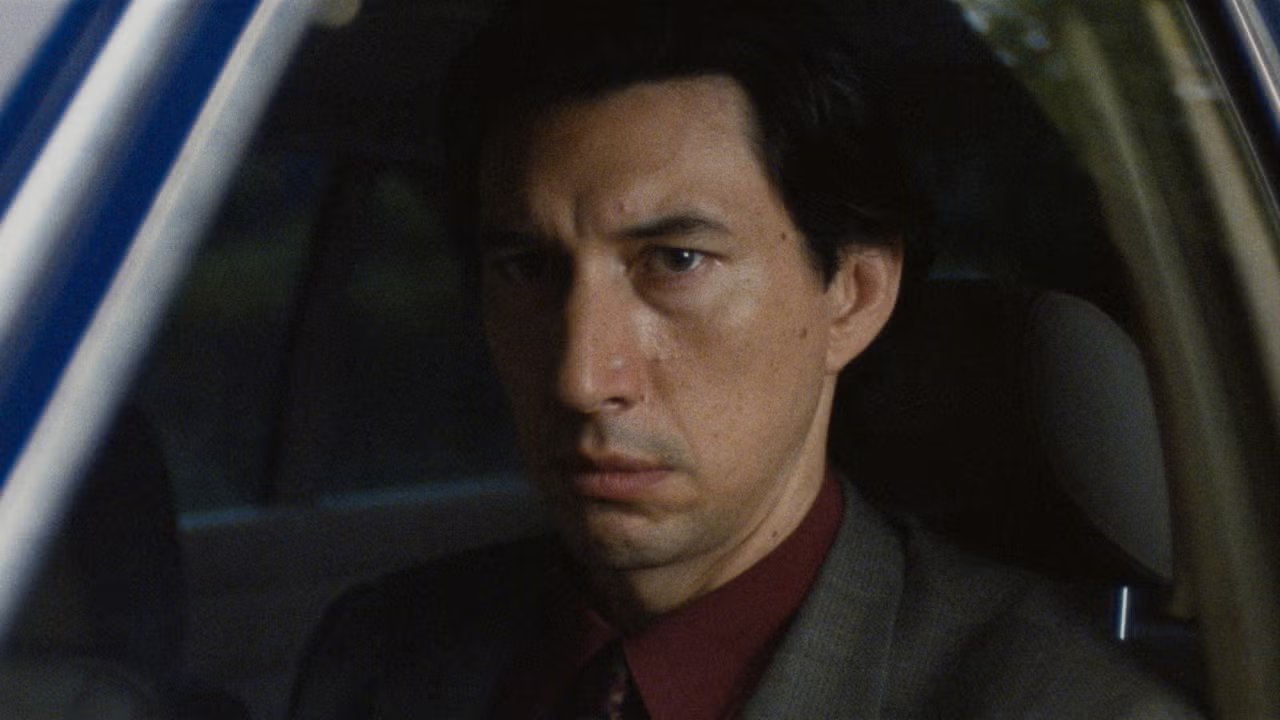
James Gray’s “Paper Tiger,” starring Adam Driver, Miles Teller and Scarlett Johansson, dazzled audiences at this year’s Cannes Film Festival. And now the movie, which is also slated to open the New York Film Festival later this fall, has a brand-new trailer.
Driver and Teller play brothers who get entangled with the Russian mafia in 1980s New York City. Johansson plays Teller’s wife, in a role originally earmarked for Anne Hathaway (this would have, perhaps, been one Anne Hathaway film released in 2026 too many).
“Paper Tiger” premiered at Cannes, where it was in competition for the Palme d’Or and where it received a 10-minute standing ovation following its initial screening (reportedly). Our own reviewer was similarly dazzled, writing: “A taut exercise in suspense, with a couple of bravura sequences that stretch the tension to the breaking point as hubris and wishful thinking lead a family into dangers they didn’t know existed – but it’s also a warmhearted study of family members who can argue and be wildly at odds, but who almost always walk away from each other with the parting words, I love you.”
The film marks Gray’s first feature since 2022’s underrated autobiographical drama “Armageddon Time,” which was far afield of his 2019 space epic “Ad Astra,” starring Brad Pitt and Tommy Lee Jones, which was taken away from Gray during the edit and monkeyed with, much to his displeasure. (The movie is still very good.) Gray is one of the most exciting American filmmakers working today, with projects as varied as the intimate drama “Two Lovers” to broader historical pieces like “The Immigrant” and “The Lost City of Z.” Truly, every new movie of his is an event. As such, “Paper Tiger” is one of the more exciting movies coming out this fall.
Neon will release “Paper Tiger” on Nov. 13. See it with the sibling you’re not quite sure about.

>


Why does Hollywood keep making sequels? Is it because they’re all out of ideas? Or is it because they make a lot of money? On second thought, do they even make a lot of money, or is Hollywood’s obsession with sequels a vicious cycle of chasing a perceived upside that isn’t there? It’s time to really dive into the numbers.
Since 2000, over 530 movies that are a direct sequel have been released in theaters and grossed at least $5 million domestic, according to data provided to IndieWire by Rentrak. That doesn’t include remakes, prequels, spinoffs, streaming films, movies that made less than that, or just ripoffs of better movies. Together, those films have grossed over $74.3 billion at the domestic box office in that span of 25+ years. Does that sound like a lot? Perhaps it even sounds low compared to what we’ve come to expect from studios.


But consider that of the roughly 18,450 movies that have been released in that 25-year span, 530 films is not quite 3 percent of all theatrical films, yet in that span the domestic box office has brought in roughly $245.2 billion, and those sequels have accounted for 30 percent of the overall gross. Granted, nearly all of those sequels hail from major studios, and if we only looked at studio output in that span, with no indies that drive a good chunk of the box office, the overall percentage of sequels to studio titles would likely be far greater.

The current narrative is that original films, not franchises, are driving more of the box office. Audiences are seeing movies like “Obsession,” “The Odyssey,” “Backrooms,” and “Project Hail Mary” while new “Star Wars,” “Minions,” and others have underperformed. In fact, through July of this year (not including “Spider-Man: Brand New Day”), sequels have made $1.4 billion at the domestic box office. More than halfway through this year, that’s slightly less than half of the $3.1 billion sequels brought in throughout all of 2025. That’s even down 33 percent from the $4.70 billion sequels made in 2024. 2024 however, which included films like “Inside Out 2,” “Moana 2,” “Beetlejuice Beetlejuice,” “Twisters,” and “Dune: Part 2,” was the third-largest year for sequels since 2000, only slightly behind 2019 ($4.79B) and 2017 ($4.73B), not adjusted for inflation.
So the questions are twofold: Does making as many sequels still make the same financial sense as it once did when the audience appetite for franchise films was at its highest, and which studios are making the best decisions over time when it comes to sequels? We were surprised by some of the takeaways.
Do More Sequels Translate to More Money?
When you look at how many sequels were made year over year, the curve looks pretty similar to the above chart of dollars brought in by those sequels, with a few exceptions. Hollywood in 2016 released 30 movies that were sequels, more than any other year, and the box office for those 30 films was $3.6 billion domestic, with an average of just $120 million per sequel, which was as low as it had been since 2008. But in 2015 and 2019, the two highest years for sequel box office, studios produced nearly as many sequels as at any point, and their average was similarly higher, $175M and $171M respectively, than at any point prior.

It sounds like more sequels meant more money, but correlation is not necessarily causation. The box office for those movies went up because there were more of them, generally. But at least for a while, the fact that they were sequels didn’t necessarily lead to outsized box office results.
So let’s look at the overall percentage of those sequels’ box office dollars compared to the complete annual box office. Between 2002 to 2014, sequels hovered somewhere between 20 to 30 percent of the overall annual box office, with a few peaks and valleys in between. Starting in 2015 through 2019, the peak Marvel years, that percentage surged, with the high points of 2015 and 2019 also accounting for a whopping 42 percent of the overall box office for the year. Truly, sequels dominated the conversation. Yes, those years included “Avengers: Age of Ultron” and “Avengers: Endgame,” respectively, but they also included some big hits like “Taken 3,” “Furious 7,” “Mad Max: Fury Road,” “Jurassic World,” “Magic Mike XXL,” “Mission: Impossible – Rogue Nation,” and more in 2015, and in 2019 “The Lego Movie 2,” “John Wick 3,” “Toy Story 4,” “Frozen 2,” and “Star Wars: The Rise of Skywalker.”

Unfortunately post-pandemic, we all know that the box office, especially the lower end of it for anything that’s not an “event” to get people out of the house, has meant that Hollywood’s reliance on sequels has gotten even worse. In 2023, Hollywood released 29 sequels, as many as some of the peak years, and even released 25 sequels in the pandemic-addled 2021. In 2022, a year that included “Top Gun Maverick,” “Black Panther: Wakanda Forever,” “Thor: Love and Thunder,” “Minions: The Rise of Gru,” and “Avatar: The Way of Water,” sequels accounted for a whopping 60 percent of the overall gross for the year.
In 2025, 24 sequels made an average of $130.5 million and were 36 percent of the overall box office for the year. That average is below the average across all 25 years, roughly $138 million, even though the overall percentage of the box office is on par with what we saw in the few years pre-pandemic. It may portend that while the massive highs for sequels are still achievable, the floor is much lower, leading to worse results overall, and the possibility that Hollywood needs to reassess how many sequels it is putting into the pipeline.
Should Studios Rethink Their Sequel Strategy?
Gun to your head, if you had to guess which of the Big Six major studios made the most money from sequels over the last 25 years, you’d probably guess Disney. You’d of course be right. Since 2000 according to the Rentrak data, Disney movies — and that is movies solely with “Disney” as the listed distributor, not 20th Century Studios or Searchlight movies in more recent years that encompass most notably the “Avatar” sequels — have made $18.1 billion at the domestic box office. The next highest, Universal, which again does not include Focus Features or some DreamWorks titles, made $11.6 billion.
Incredibly though, Universal led all major studios with 83 released sequels in that 25 year span. Though Universal has no superhero IP to speak of, it has milked the “Fast & Furious” franchise, the “Despicable Me” and “Minions” franchises, “Jurassic World,” “Shrek,” “Meet the Fockers,” “Bourne,” “The Purge,” and so much more. Disney, remarkably, came in fourth among all studios, with just 61 total sequels behind Warner Bros. (76) and Sony (66), though that total goes up to 68 if you add in seven 20th Century Studios titles. It would eclipse all studios if you included the 51 movies 20th Century Fox released in its span before being absorbed by Disney in 2019. Paramount came in fifth with 59 sequels, and Lionsgate came in behind 20th Century Fox with 46 sequels.


So what does all this mean? Is Universal making too many sequels? Is Lionsgate not making enough? That’s a little too simple. Keep in mind that these are studios that have undergone massive change in this 25 year span, including the introduction of streaming changing the calculus for theatrical films, new regimes coming in and calling the shots, and in the case of Disney and 20th Century Fox, Warner Bros. and New Line, or Amazon and MGM, entire studios absorbing entire other studios. It’d be impossible to make a one-to-one comparison over such a long period of time.
So we looked at a few other breakdowns to see if we could spot some trends. Universal in three of the last 25 years, including most recently in 2025, released 7 sequels in that given calendar year. No other studio at any point in time released more than 6. Last year Universal released “Five Nights at Freddy’s 2,” “Wicked: For Good,” “Black Phone 2,” “Nobody 2,” “The Bad Guys 2,” “Jurassic World Rebirth,” and “M3GAN 2.0.” Those films made a combined $1 billion, more than any studio last year (Disney was second with $795M).

On the other side of the coin, each of the major studios, with the exception of Warner Bros., had at least one year in which the studio released no sequels per our tally, though they were certainly mining IP or doing reboots in those given years. We also looked at which studios led the way at the box office with their sequels: Disney consistently was the leader, winning the year of sequels 11 times, including every year between 2015 and 2019. Every other studio though, including Fox, Paramount, Sony, Universal, and WB, had at least three years a piece in which their sequels collectively grossed more than their competitors. Some years they led the way because they released more films, in some years a single title or two dominated the year, and others they lagged behind despite releasing the most titles that year.
But some studios had more dramatic swings than others or curves over time. Disney during its peak Marvel years saw its box office rising year after year from sequels, even surpassing $1 billion domestic from sequels for the first time, and post-pandemic/”Endgame,” it has struggled to reach those same highs, something that has been well-documented and observed by the powers that be at Disney and Marvel.

A few other trend lines jumped out. Paramount had an impressive stretch in the early 2000s between 2003 to 2005 when it was releasing all original films, films like “School of Rock,” “Mean Girls,” “Team America: World Police” and a few remakes like “The Longest Yard” and “The Manchurian Candidate.” It followed that period up with a run where it became increasingly enamored with sequels that would do better and better. Franchises like “Transformers” and “Mission: Impossible” were cleaning up for Paramount, and it even had the distinction of releasing “Iron Man 2” and some of the “Shrek” sequels. It hit a peak in 2011 that fell all the way until 2022 with “Top Gun Maverick.” Movies in the “Terminator” franchise started to fizzle, and it saw diminishing returns from “Paranormal Activity” by the fourth and fifth entries. Now it has tapped into some revived franchises with “Scream” and the launch of the “Sonic the Hedgehog” franchise.

Universal had a massive spike year in 2015 between “Jurassic World,” “Ted 2,” “Furious 7,” and “Pitch Perfect 2,” and since then, it has stepped up the number of sequels it makes each year, between 4-7, but also increased its floor, landing around $500 million even in its down years and closer to $800 million in other years. The new “Super Mario Galaxy Movie” and the latest “Minions” has Uni in good shape for another boom year in 2026.

And Lionsgate was doing as well as any studio with its slate of sequels in the mid 2010s, when the “Twilight” films and “Hunger Games” movies were all going strong, not to mention some of the “Saw” movies.” But it has struggled to retain that former glory, with the “John Wick” franchise its only true standout in recent years.
It all suggests that other than the dominant run for Disney, studios are going to have wins and losses, hits and bombs, highs and lows, and the like. That’s not surprising. None of this factors in budgets or expectations, but perhaps the real surprise is that such sequels, by literally every studio, are treated like sure things, the safe choice in a given year compared to the risks that original films are perceived to be. For pretty much any studio, that may never have really been the case.
>
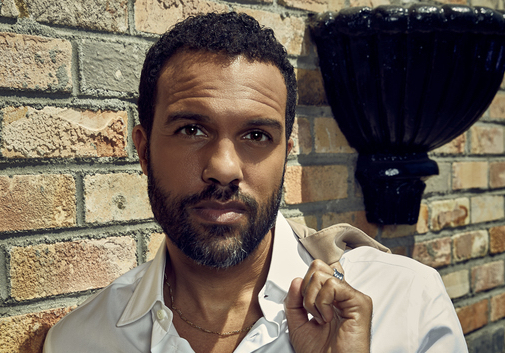
EXCLUSIVE: Artists First has signed O-T Fagbenle for management.
An actor, director, writer and creator, Fagbenle is best known for his role of Luke Bankole, husband of Elisabeth Moss’s June Osborne, in Hulu’s The Handmaid’s Tale, which ran for six seasons. More recently, he’s appeared alongside Elizabeth Banks and Matthew MacFadyen in the Peacock series The Miniature Wife, as well as in Wonder Project/Prime Video’s The Old Stories: Moses as the domineering Pharaoh, and Hulu’s All’s Fair alongside Naomi Watts.
Other recent notable credits include the hit Apple TV series Presumed Innocent, the Neon comedy Splitsville, the Netflix series No Good Deed with Lisa Kudrow and Ray Romano, and Showtime’s The First Lady, where he portrayed Barack Obama opposite Viola Davis’s Michelle.
Previously, Fagbenle has also been seen in Marvel’s Black Widow with Scarlett Johansson and the animated Netflix series Tomb Raider with Hayley Atwell. Additionally, he wrote, produced and starred in the Hulu/Ch4 series Maxxx, a comedy revolving around a disgraced former boy band star.
Fagbenle continues to be represented by Buchwald Talent Agency and attorney Barry Littman of Hansen, Jacobson, Teller.
>
Data from Inception Point AI suggests there are over 175,000 podcast episodes available on Spotify or Apple that are generated by artificial intelligence, and AI companies are churning out thousands of new episodes a day as part of a multi-billion industry. Spotify has even introduced features that essentially let you prompt your own podcast you want to listen to, because as if there weren’t enough podcasters in the world, you might want to create hosts that are just for you.
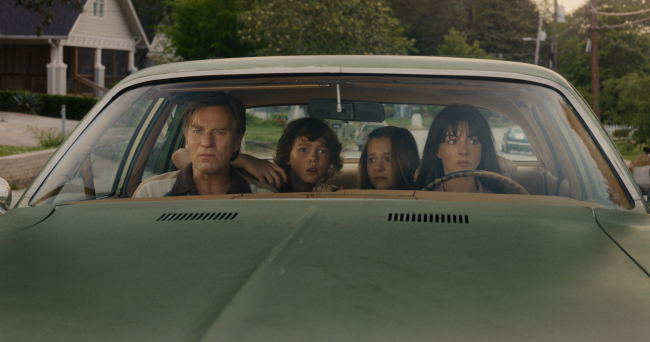
It’s the sheer numbers here that probably led someone in the marketing department at Warner Bros. to come up with the partnership with “Dog Pack,” a “podcast” hosted by two AI-generated dogs, as a means to promote its upcoming movie “The End of Oak Street.”

The two digital dog hosts, Goldie and Frenchie, welcomed onto their “show” Starbuck, who is the dog featured in “The End of Oak Street,” to ask about who was the best trained of his human co-stars, Ewan McGregor or Anne Hathaway, and what it was like being chased by dinosaurs on a tennis ball. The clip shows some behind the scenes footage of one of the real dog actors playing around on set, though Starbuck in the film is at times crafted from visual effects.
Look, this promo is pretty benign. This isn’t even a real “podcast” in which these AI dogs prattle on for an hour about the movie. It’s a 90-second ad, and frankly there are more important things to get angry about online than this. We can’t all be interviewing real life dogs all the time, as much as we love to.
But there was genuine annoyance and backlash to this clip when it dropped this weekend, calling it out as the type of thing that will actively turning people off seeing “The End of Oak Street,” like this guy who got some engagement out of his outrage. Others are wondering whether this also entails that there’s other AI-generated material in the movie (there’s not) or why someone would promote their movie this way when the biggest recent blockbusters like “Project Hail Mary” and “The Odyssey” have all sold themselves on their practical effects.
It also feels like a weird about-face for the movie’s own marketing. “The End of Oak Street” was originally sold with a bit of mystery and cloak and dagger, concealing what happens to this family after it seems as though their suburban home, along with their entire street, has been transported to some other dimension. Now the marketing very explicitly features dinosaurs chasing the family, to the point that Starbuck is talking about it and trying to appeal to moms on Facebook who might be among the nearly million followers to this AI feed.
It’s hard too to imagine director David Robert Mitchell — the guy who directed “It Follows” — seeing this ad campaign and saying yeah, I dig it. But we could be wrong. And maybe Warner Bros. is smart to make this film a bit more 4-quadrant. The film is projected for an opening between $25-35 million, a solid start for an original property opening in mid-August.
Warner Bros. did not respond to a request for comment on the marketing campaign.
>

Clicks’ Power Keyboard brings BlackBerry-style typing to any phone — with some compromises

Do Movie Sequels Make More Money? Box Office Data Shows Mixed Results

How to watch Tempo vs. Dream: TV channel and streaming options for August 10
-

 movies3 months ago
Search For Canadian TV Actor Stewart McLean Now Homicide Investigation
-

 Fashion9 years ago
These ’90s fashion trends are making a comeback in 2017
-
Fashion9 years ago
According to Dior Couture, this taboo fashion accessory is back
-
Fashion9 years ago
Model Jocelyn Chew’s Instagram is the best vacation you’ve ever had
-
Fashion9 years ago
Your comprehensive guide to this fall’s biggest trends
-
Fashion9 years ago
9 Celebrities who have spoken out about being photoshopped
-
Fashion9 years ago
Emily Ratajkowski channels back-to-school style
-
Fashion9 years ago
A photo diary of the nightlife scene from LA To Ibiza