
Tech
How a $250 million acquisition collapsed into allegations of fraud and forged signatures


When VideoVerse announced its acquisition in September 2025, it felt like a victory for startups across India. VideoVerse was a simple clipping service, but after years of startup incubators and pitching clients, the company had pulled off a $250 million exit.
The acquirer was Minute Media, an international sports publisher split between New York and Tel Aviv, with plans to scale VideoVerse’s clipping software beyond its Indian niche and into the lucrative world of international sports.
Less than a year after the announcement, the deal has unraveled.
Investors are still waiting for their share of the $250 million windfall, and founder Vinayak Shrivastav is now at the center of multiple legal cases. Even the acquirer, Minute Media, seems to be backing away. In May, the company said it was terminating its contract with VideoVerse, underscoring that the two had continued operating as separate legal entities even after the acquisition closed.
Reached by TechCrunch, a Minute Media representative said that “after, among other things, significant discrepancies were discovered in VideoVerse’s representations, Minute Media decided to terminate its engagement with the company.”
If the allegations are true, this was more than just a deal that fell through. Across multiple legal filings, creditors and investors paint a picture of a serially untruthful CEO, who used the guise of a successful business to accumulate cash-generating debts and side deals until the pretense became untenable. The result is an alarming reminder of the limits of due diligence and how much the business of startups still relies on trust.
The sheer volume of legal cases shows that trust is now in short supply. Bluestone Capital, which backed VideoVerse in its 2023 round, is now suing the company for fraud, alleging that the startup violated its investment terms and refused to pay out proceeds from the acquisition. In a separate suit, a creditor is seeking to recover $64 million from a loan that Shrivastav took out shortly after the acquisition closed.
The same complaint alleges that Shrivastav committed fraud during the acquisition itself, claiming he “used fraudulent merger documents that did not reflect the business terms on which Mr. Shrivastav and Minute Media had agreed to induce Clippings’ shareholders to approve the merger.”
Even VideoVerse executives have begun lobbing accusations. The company’s COO alleges in a separate case that Shrivastav forged his signature on loan and share-repurchase agreements, extracting tens of millions of dollars from the company, in the wake of the Minute Media deal.
The Business of Clipping
While not a household name, VideoVerse became a key player in the billion-dollar clipping industry, providing automated tools for editing long-form broadcasts into the shorter clips that travel well on social platforms.
Its flagship product, Magnifi, is an AI-powered tool that can automatically identify key players and moments. Using the software, clients could easily generate packages of every three-point shot in a basketball game, for instance. Backed by an extensive human support team, the platform attracted high-profile clients like the Indian Premier League, FIFA+ and Nippon TV.
It is a lucrative niche, and one in which Minute Media had hoped to expand to the U.S. market before VideoVerse’s internal problems surfaced.
Even across the multiple cases against Shrivastav, there are conflicting claims and inconsistencies, as investors struggle to make sense of the current state of the company. What is clear is that tens of millions of dollars are missing, and there are already disputes about where the money went and how much is owed to whom.
In October, Shrivastav approached the investment firm Lingotto, arranging a $55 million structured loan — supposedly to satisfy an earlier creditor. With the Minute Media merger already public at more than four times that amount, it appeared to be a safe bet. The financing was even backed by statements from the creditor and Minute Media’s own CEO. According to a court filing from Lingotto, $53 million was transferred to an account controlled by Clippings on October 1, backed by a standard repayment schedule.
But Lingotto now says critical documents provided by Shrivastav were forged. Minute Media’s CEO never signed the documents, the lawsuit alleges, and screenshots purporting to show internal bank balances were also fabricated.
According to the terms of the loan, Lingotto was owed a $4 million payment on March 31, but it never arrived. When the investment firm called in the full amount of the loan with interest, it discovered a long list of people waiting to be paid by VideoVerse. A separate loan from Bluestone Capital had gone into settlement a few months prior, with similarly overdue payments. By the end of April, Shrivastav was out as CEO.
The following months have produced a web of overlapping court claims, as Minute Media, Lingotto, and Bluestone each seek restitution in Delaware Chancery Court. A separate claim from former COO Sabya Das alleges a more complex tangle of fraud involving secondary sales and a confidential high-interest loan.
Shrivastav did not respond to multiple attempts to contact him for this story. His most recent listed address, which appears in Das’s complaint, is on the Palm Jumeirah islands in Dubai.
When you purchase through links in our articles, we may earn a small commission. This doesn’t affect our editorial independence.
>
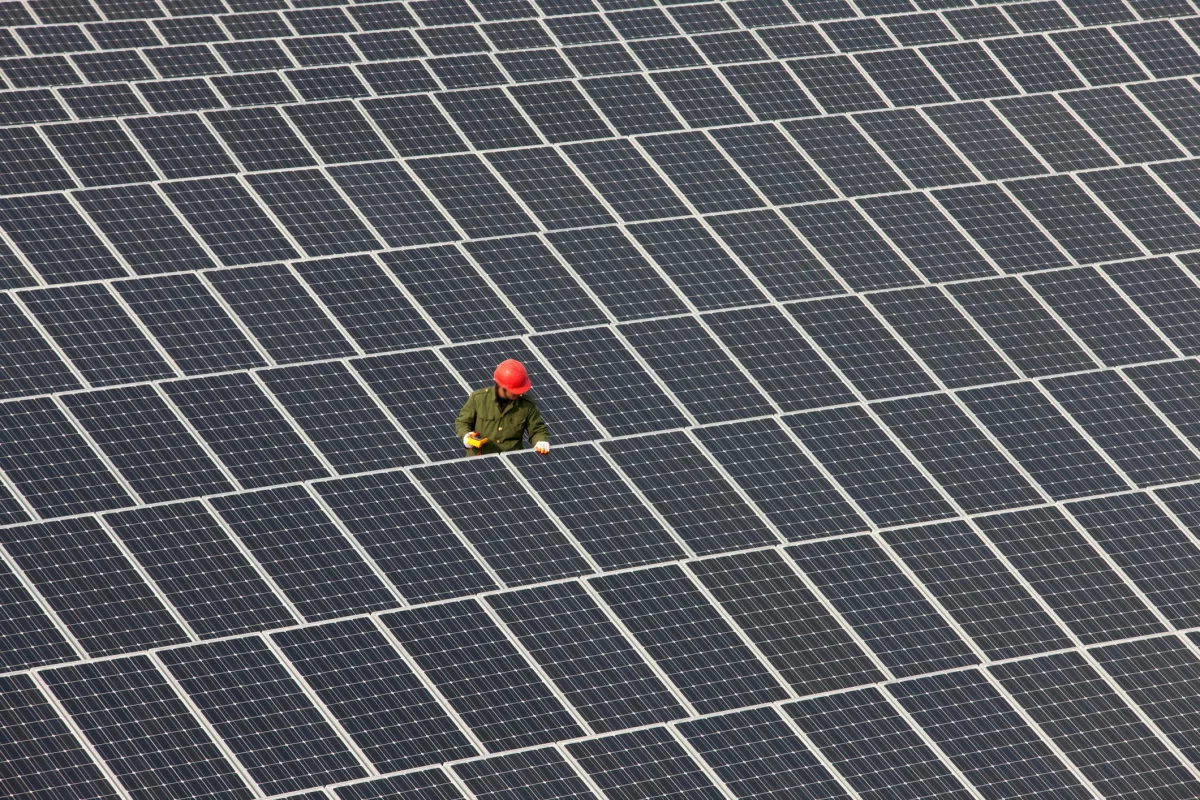
Tesla intends to build a massive solar panel factory 45 minutes southwest of Houston, according to documents filed with the state of Texas.
The new factory, called Project Crystal Sun, could cost as much as $10.1 billion. Tesla has applied for tax incentives to partially offset the cost, saying that it is exploring other sites “across multiple U.S. states.” The factory would create about 9,700 full-time jobs, Tesla said.
Without incentives, Tesla’s accountants estimated that the property tax liability for the project would be about $1.1 billion over 37 years.
The project aims to break ground this year and be completed by 2028, and Tesla said the first solar panels would roll off the line in 2029. The company hasn’t indicated whether the panels would be destined for terrestrial installations or satellites. However, Tesla CEO Elon Musk, who also runs SpaceX, is famously bullish on orbital data centers.
In the filings, Tesla did not publicly disclose the factory’s annual output, though it has said that it plans to build 100 gigawatts worth of manufacturing capacity in the U.S. by 2028.
>


More Information
The last decade of AI progress was built on text, but the frontier has shifted toward data from the physical world. Video, LiDAR point clouds, sensor streams, and other high-dimensional data now drive systems that perceive, reason, and act in physical space. This report, based on a 2026 survey of more than 700 professionals, documents how teams actually build physical AI today. It finds that data problems cause the majority of model failures, and that curating data matters more than chasing larger architectures. Annotation remains costly and wasteful, because teams often label everything and then discard much of it before production. The findings show why data work, not data collection, separates teams that ship from teams that stall.
More Content from this Sponsor
>

Europe’s favorite vibe-coding startup Lovable has confirmed previously reported whispers that it was raising another mega round at a $13.3 billion valuation. Lovable said on Wednesday that it has raised $400 million in a Series C round led by Menlo Ventures and the Scaleup Europe Fund, with more than a dozen other investors participating.
This new funding comes after Lovable hit $500 million in annualized run rate revenue in June, the startup told TechCrunch. Its previous round, announced in December, brought in $330 million at a $6.6 billion valuation and was also led by Menlo Ventures, with CapitalG as co-lead.
As the startup has grown — it now says it hosts 60 million projects that attract 900 million monthly visitors — so has its backend needs and sophistication, the company says. Lovable, for instance, offers its own in-house trained AI model, as well as the usual frontier model options. In June, it signed a multiyear deal with Google Cloud, a fivefold increase in usage. Lovable has also backed other European startups, such as Danish startup Atech, which is building vibe-coding software that designs tech hardware.
Note: one of Lovable’s new Series C investors is Regent, the investment firm that also owns TechCrunch.
When you purchase through links in our articles, we may earn a small commission. This doesn’t affect our editorial independence.
>

‘Son Of A Critch’: Trailer For Final Season Of Canadian Sitcom Lands

Chainsmoker Cat Anime Casts Yumi Hara – News

How to watch Reds vs. White Sox: TV channel and streaming options for August 12
-

 movies3 months ago
Search For Canadian TV Actor Stewart McLean Now Homicide Investigation
-

 Fashion9 years ago
These ’90s fashion trends are making a comeback in 2017
-
Fashion9 years ago
According to Dior Couture, this taboo fashion accessory is back
-
Fashion9 years ago
Model Jocelyn Chew’s Instagram is the best vacation you’ve ever had
-
Fashion9 years ago
Your comprehensive guide to this fall’s biggest trends
-
Fashion9 years ago
9 Celebrities who have spoken out about being photoshopped
-
Fashion9 years ago
Emily Ratajkowski channels back-to-school style
-
Fashion9 years ago
A photo diary of the nightlife scene from LA To Ibiza