Connect with us

Sports

Skip Bertman, architect of LSU baseball dynasty, dies at 88

Published

on

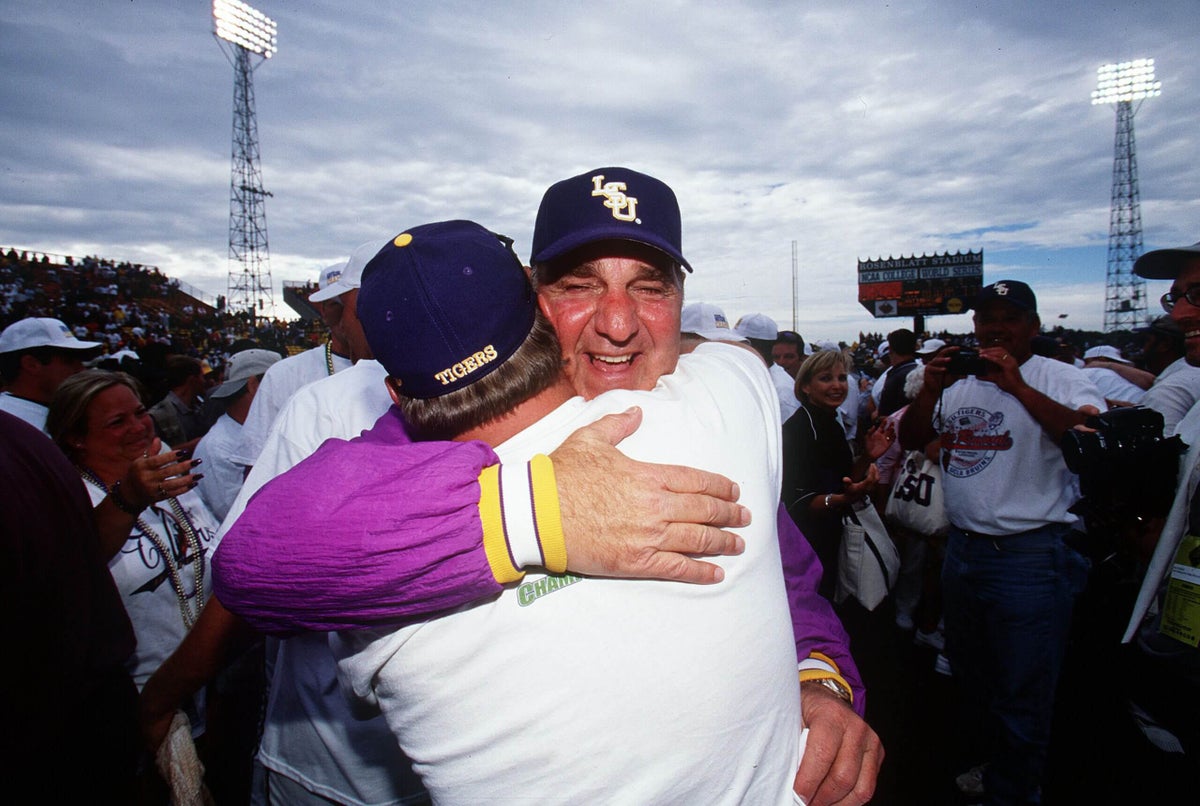
Skip Bertman being congratulated after winning the national championship in 2000.

Before Skip Bertman was hired in 1982, LSU had a winning SEC record only once in its previous eight baseball seasons. Jamie Schwaberow/NCAA Photos via Getty Images

Skip Bertman, the LSU baseball coach who led the Tigers to five College World Series titles before becoming the school’s athletic director, died at the age of 88, the university announced Friday morning.

Bertman was hired at LSU in 1982 and transformed the Tigers into the preeminent baseball program in the nation. He went 870-330-3 in 18 seasons and won national titles in 1991, 1993, 1996, 1999 and 2000.

As an AD, he presided over two BCS National Championship football titles, first in 2003, led by coach Nick Saban, and then in 2007, coached by Les Miles, whom Bertman hired.

His record in SEC games was 328-159-2, and he had only one season without a winning league mark — his first, when he went 12-12. Before his arrival, LSU had a winning SEC record only once in its previous eight baseball seasons.

Bertman played collegiately at Miami and later served as an assistant coach at his alma mater for eight seasons before taking over at LSU.

Connections: Sports Edition Logo

Connections: Sports Edition Logo

Connections: Sports Edition

Spot the pattern. Connect the terms

Find the hidden link between sports terms

>

Continue Reading

Sports

Malik Willis, Romeo Doubs among top post-120 ADP targets for fantasy football 2026

Published

on

Every year, it’s the same thing. In a display of unadulterated home-league madness, your faithful narrator attempts the impossible — to win a championship after trading my first 10 picks for the overall 1.01. Do I possess an irrational love for Jahmyr Gibbs? Am I slightly off my rocker? Perhaps an eclectic combination of both? The answer to this question, along with many more like it, is a resounding, “Yes!” So, using all my fantasy prowess, along with whatever enlightenment I can find in the deep recesses of my spreadsheets, comes my All-120+ ADP team for fantasy football 2026. Sounds cooler than sleepers, right?

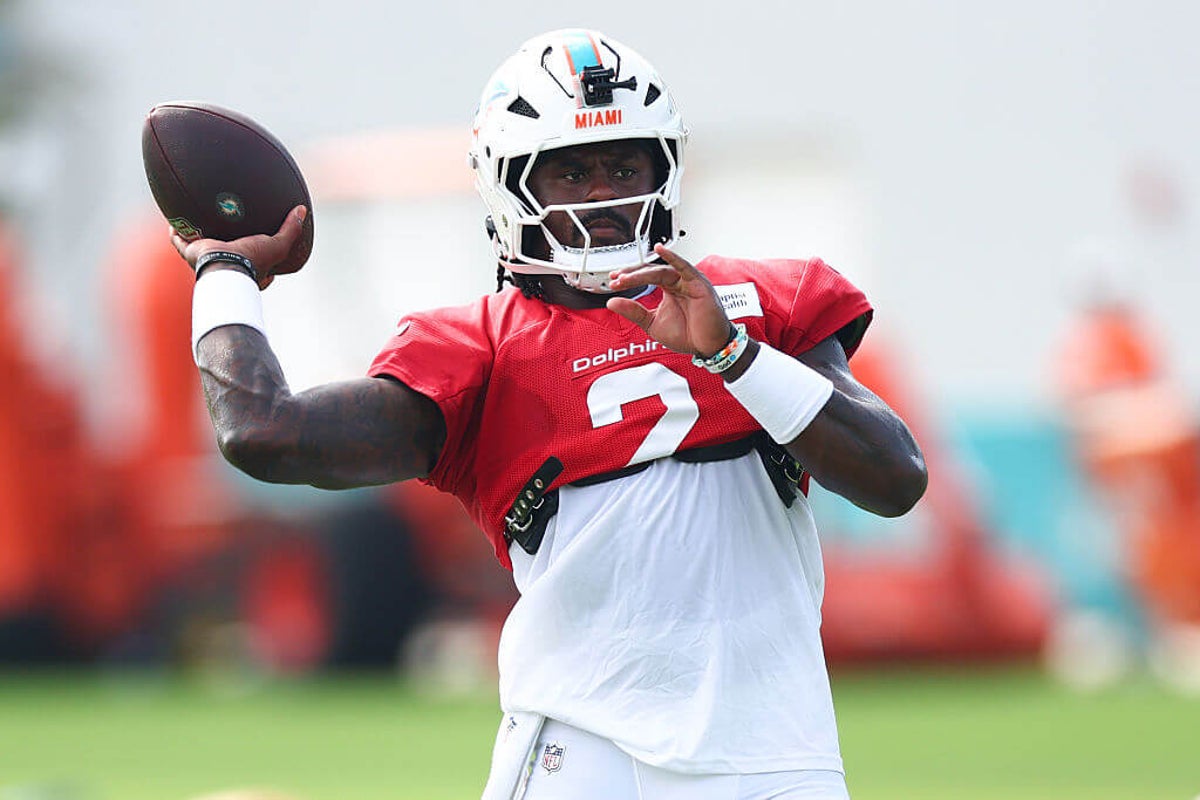
QB: Malik Willis, MIA — ADP 158

Forever fascinated with market machinations and shifts in player pricing, sometimes it’s the moves that don’t happen that interest me most. Enter Willis, Miami’s newest shot caller. Recently receiving a pretty heavy bag from the Dolphins (three years, $67.5 million), he’s still getting treated as if there’s some sort of QB competition or elevated bench risk. There isn’t.

In years past, there’s no telling how high a supremely talented, dual-threat QB like Willis could rise. Don’t believe me? Look no further than Justin Fields’ or Anthony Richardson’s ADP rises in the recent past as proof. If I’m not mistaken, each has gone in the top-50 overall at some point in the past few years. And how different is Malik Willis archetypally? Not much, if at all.

I’d argue the way Willis differentiates is in a positive manner, only adding to my confusion surrounding the price. What do I mean? I actually trust him to throw for a first down on a drive or over 200 yards in a game! Granted, while the environment is different and the sample is small, I’d contend all of that and more is baked into the low, low price. During a two-week stretch as a starter last year in Green Bay, Willis ranked as the QB6 … and it wasn’t on the back of running alone. Again, the data set is tiny, but it’s all we have. That also doesn’t take away from the fact that Willis finished top 3 in expected points added (EPA) per attempt (+0.85), completion rate (84.4%), yards per attempt (12.8), off-target rate (3.4%) and first down rate (53.1%). Not too shabby.

Maybe it’s the surrounding contextual environment in Miami, the departure of Mike McDaniel, or the perception of QB positional depth (none of which are untrue); I still can’t wrap my mind around the price. I can’t remember another time in my fantasy career that we’re being afforded such a clear shot at a repeatable top-eight weekly finish from the QB21. Twenty quarterbacks are better?!? No way. Give me Willis’ rushing upside with some maturity baked in for my favorite fantasy shot caller of the double-digit rounds.

— FOX Sports: NFL (@NFLonFOX) December 21, 2025

RB: Chris Rodriguez, JAX — ADP 136

Thank goodness I already swung a deal for Jahmyr Gibbs, since it’s borderline impossible to build a viable fantasy squad without a running back in the top-120 picks. I’d go so far as to argue it’s never been tougher without an RB in the first four rounds, but that’s another story for a different day. Nevertheless, once pickings get slim, I shift sole focus to high-value touches. Again, in this exercise there’s no waiting for handcuffs or injury-related opportunities — we need production right out of the box.

There’s been lots of back-and-forth this summer in analytical circles trying to hash out Jacksonville’s backfield situation. My answer’s been consistent and simple. Why not both? If you’re buying the Liam Coen uberkind hype (like I am) and believe there’s a huge step forward coming for an already exciting offense (like I do), it’s easy as pie. Rodriguez could and should have standalone value right out of the gate, with potential to hang a David Montgomery-esque RB2 finish even as a complement in his own backfield.

The Jaguars’ acquisition of Rodriguez was no happenstance — he played under Liam Coen at the University of Kentucky in what was incidentally his best season at any level (225 rushes, 1,379 yards, 9 touchdowns). At 6-foot-0, 217 lbs, Rodriguez archetypes perfectly as a short-yardage runner, with well above-average career metrics for the role, especially when considering he faced heavy boxes in three-quarters of snaps (4.6 yards/attempt, +0.04 EPA/carry, 50% success, 12.6% ≤0 yd rush rate). If you’re bullish on the Jags’ offense in 2026, Rodriguez is holding down the pole position for a lion’s share of goal-to-go carries.


Fantasy Football Draft Assistant

Want a quick reference for your draft evaluations? Use our new Draft Assistant to compare up to five players side-by-side to see fantasy scouting reports, rankings and point projections before or during your draft.


WR: Romeo Doubs, NE — ADP 122

What if I told you that after pick 120 there’s an every-down wide receiver available on a top-10 scoring offense from 2025, with the highest EPA/dropback and yards per pass attempt? That’s precisely the case with brand new Patriot Doubs, coming off a productive season with Green Bay as the WR36. For reference, he’s currently being drafted as the WR48. Why? Beats me. Keep in mind, all that output happened on just 410 routes amidst a massive target logjam. Now he’s off to New England to serve as the Pats’ clear-cut WR2, running intermediate routes underneath A.J. Brown, who’s getting the majority of any defense’s attention. Sounds good.

For starters, even in somewhat of a shared role, Doubs posted strong efficiency stats in 2025 (20.7% target/route, 1.77 yards/route, 10.0 routes/1st Down). Admittedly, the odds for a WR1 breakout are slim to none, but that’s all figured into draft cost. Doubs can do a little bit of everything — succeed against man or zone coverage, plus earn deep looks as well as represent a legitimate end zone threat. And as I mentioned before, it’s not like he’s headed to a bad situation either. I’m struggling to wrap my mind around the current price tag, but I’m also not letting that stop me from drafting Doubs aggressively.

WR: Matthew Golden, GB — ADP 135

Another player set to benefit from the aforementioned Doubs signing is Green Bay’s 2025 first-round selection, Golden. Maybe it was the zero regular season TDs scored, but I’m frankly unsure if there’s another player whose narrative represents such disparity from the spreadsheets. Obviously, last year’s output isn’t what drafters signed up for, but we’ve jumped the ADP shark on a projected every-down player in a good situation.

The Packers’ 23rd overall pick in 2025 played most frequently in the first seven weeks of the season before Christian Watson returned, posting decent rookie WR efficiency numbers (16.0% target/route, 1.73 yards/route). It’s especially encouraging given the steep NFL learning curve, plus five different wideouts simultaneously earning double-digit route participation rates. Green Bay has been vocal this offseason about consolidating their offensive scheme, which could, of course, be a lie. However, there’s only honesty found in roster moves, and the runway is clearing 30 routes a game for one of the league’s fastest players.

WR: Jayden Higgins, HOU — ADP 140

The further we get from Pick 120, the more faith-based our arguments get. Sticking with the running theme of post-hype rookie WRs, few players generated more positive camp buzz this summer than Higgins. The 34th overall pick in last year’s draft logged a full, healthy season for the Texans, which might be the nicest thing I have to say based purely on the data. Hold on, it gets better.

It’s no secret that Houston’s offense completely cratered in 2025 due to injuries and mismanagement of the offensive line, something presumedly addressed by signing Ed Ingram and Wyatt Teller in free agency. The Texans weren’t done making moves there, further bolstering the trenches with a first-round pick out of Georgia Tech, Keylan Rutledge. Ten pundits will give you 11 different answers on their O-line predictions because no one really knows, but I’m remaining optimistic on the rebuild. Adding an actual NFL-quality running back in David Montgomery won’t hurt either.

Not to zoom in too close on a small sample, but if you’re doing that, make sure it’s impactful. And nothing’s more high leverage than the NFL playoffs, where Houston turned to Higgins when they needed him most. During those two games, Higgins averaged 32 routes per contest, with healthy underlying efficiency metrics (21.9% target/route, 1.53 yards/route) and strong splits against man or zone. All we need is that small step forward from Houston as a whole to shoot Higgins into the backend WR3 conversation. Get that from the WR55, and you’re cooking with fantasy Crisco.

TE: Colby Parkinson, LAR — ADP 190

Tempted as I was to chase those chronically online narratives surrounding Terrance Ferguson’s ascent into the Rams’ primary slot receiver role, this squad needs bankable production now. And while I’m absolutely lending credence to valuing the Rams’ use of multiple tight end sets, the far safer profit for my money rests with Parkinson. Off to a slow start in 2025 due to injury, Parkinson’s numbers after Week 9 stand out against the field so starkly, it’s truly hard to imagine he’s going off the board as the TE31.

Don’t take my word for it — the numbers don’t lie. The longer I look at this stuff, the less I understand why Parkinson’s not going closer to T.J. Hockenson, somewhere in the 140s. Pretend exercise or not, Parkinson should be a must-circle type target, especially if you waited on the position. Los Angeles just led the league in scoring, offensive yards and passing touchdowns — honestly, I don’t get it.

Of 35 TEs with +25 targets after Week 9 (not some cherry-picked sample, mind you), Colby Parkinson ranked …

Metric Numbers Rank

Total PPR Points

119

6

PPR Per Game

11.9

7

PPR Points Per Target

0.59

2

PPR Points Per Route

2.58

1

Targets Per Route

23.90%

6

Yards Per Route

1.74

13

Yards After Catch Per Reception

6.7

5

Routes Per First Down

9.6

5

+20-yard TD

2

T-1

Red Zone Targets

17

2

Honorable Mentions — Best of the rest

QB: Tyler Shough, NO — ADP 147

RB: Dylan Sampson, CLE — ADP 158

WR: De’Zhaun Stribling, SF — ADP 140

WR: Adonai Mitchell, NYJ — ADP 165

TE: Terrance Ferguson, LAR — ADP 179

>

Continue Reading

Sports

Takeaways from Chargers’ preseason win over the Texans: QB2 battle is on

Published

on

The Los Angeles Chargers opened their preseason with a 27-7 victory at the Houston Texans on Thursday night.

Here are my takeaways.

1. Trey Lance had an opportunity to slam the door on a backup quarterback competition. He did not seize that opportunity.

Lance started the game for the Chargers and certainly had some bright moments, especially in the early stages. He executed a number of the timing throws that are staples in coordinator Mike McDaniel’s offensive scheme. He looked comfortable in McDaniel’s diverse play-action looks. He created in off-script situations as a runner and passer.

The issue: He did not protect the ball. Lance threw a dreadful pick at the end of the second half that took points off the board. He tried to connect with rookie receiver Brenen Thompson on an in-breaker. Lance did not see Texans safety Kamari Ramsey lurking to the inside. This was questionable vision from Lance, and it came at an inexcusable point of the game, when the Chargers were well within kicker Cameron Dicker’s field goal range.

Ramsey also almost picked off Lance earlier in the second quarter. The Chargers were backed up in their own end. Lance attempted to rip an out route to the left sideline. Ramsey jumped it and should have intercepted the pass. Although it shows up in the box score as an incompletion, it was another bad decision and dangerous throw from Lance.

Top Plays from Chargers @ Texans

Coach Jim Harbaugh said earlier this week he wanted to give a half each to Lance and DJ Uiagalelei. Lance started the second half after his first half ended with the interception. He played one series, leading the Chargers on a field goal drive.

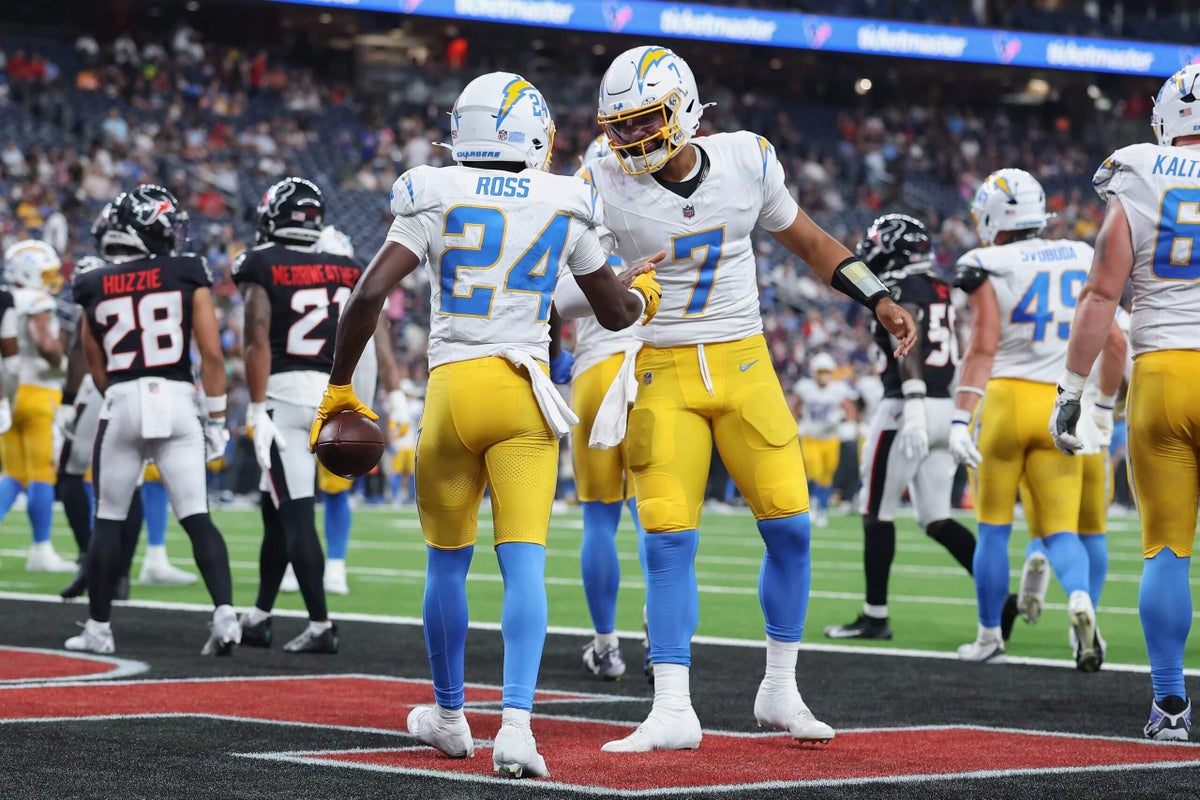
The Chargers built a convincing lead in the second half. Uiagalelei did not receive nearly as many opportunities as Lance did in the passing game. Uiagalelei finished 6-for-9 passing for 120 yards, one touchdown and, importantly, no turnovers. He guided the Chargers to an easy win, partly thanks to an impressive second-half performance from the defense. Uiagalelei showed off his ability to throw on the run on multiple occasions, including a bootleg touchdown pass to rookie receiver Devonte Ross.

Lance backed up Justin Herbert in 2025, but Uiagalelei is pushing him for that role this season. This is officially a real competition.

2. Second-year running back Amar Johnson was the star of the game for the Chargers. He finished with 85 scrimmage yards and two rushing touchdowns. Johnson set up the Chargers’ third touchdown of the game in the fourth quarter with a 55-yard catch-and-run down the left sideline. That throw came from Uiagalelei.

Johnson spent last season on the Chargers’ practice squad. He saw action in two games while the Chargers were dealing with a slew of injuries at running back.

Johnson will have a tough time earning a spot on the 53-man roster, with Omarion Hampton, Keaton Mitchell and Kimani Vidal firmly entrenched on the depth chart, but there are three running backs fighting for 2026 practice squad spots among Johnson, Jaret Patterson and rookie Greg Desrosiers.

Johnson is leading that group after this performance. Desrosiers showed some explosion as a runner Thursday night, and he made a special teams tackle on punt coverage. Patterson averaged 5.0 yards per carry on five carries.

3. New defensive coordinator Chris O’Leary had a tremendous showing in his first NFL game as a play caller. The Chargers gave up some yardage on the ground, but their pass defense was excellent against a pretty established backup in Davis Mills. The Texans totaled just 105 passing yards. They averaged 4.8 yards per attempt.

Sound familiar? It should. This was the DNA of Jesse Minter’s Chargers defenses. Playing with fewer bodies in the box leads to some disadvantageous looks in run defense, but it allows the defense to play suffocating coverage. O’Leary’s unit executed the vision effectively in Houston.

This defense will not be exactly the same, however. We wondered through the offseason what dials O’Leary might twist one way or the other to put his own stamp on the scheme. We got an initial answer Thursday night: O’Leary turned up the heat with his blitzes.

The Chargers did not blitz frequently under Minter. Last season, they ranked 29th in blitz rate at 11.7 percent, according to TruMedia. Against the Texans, O’Leary blitzed on six of 28 defensive snaps in the first half, or over 20 percent. He blitzed less in the second half as the Chargers built their big lead, but even then, O’Leary produced one of the turning points of the game when he brought defensive back Myles Purchase on a blitz that resulted in a lost fumble from Mills.

Linebacker Lander Barton recovered. The Chargers scored five plays later to put the game away.

A more aggressive blitzing approach could be one of the key elements that differentiates O’Leary from Minter.

Davis Mills of the Houston Texans, wearing No. 10, fumbles the ball under pressure by Myles Purchase of the Los Angeles Chargers, wearing No. 41.

Myles Purchase delivered one of the game-altering plays when he came on a blitz to force a fumble. (Tim Warner / Getty Images)

4. Rookie offensive lineman Jake Slaughter started Thursday’s game at center. He shifted to left guard for the start of the second quarter, when the Chargers made substitutions along the front. Slaughter stayed at left guard into the second half.

Slaughter’s move to left guard coincided with the best stretch from the Chargers offensive line in the game. Travis Burke was a left tackle, Jacob Spomer was at center, Trevor Penning was at right guard, and Branson Taylor was a right tackle. Taylor started the game at left guard.

The Chargers drove 67 yards on eight plays for a touchdown. They went the final 39 yards of the drive on six straight runs. The offensive line was creating consistent movement.

Overall, Slaughter looked comfortable at left guard. We’ll need to dig into the film for a more comprehensive look at his performance.

Of note, Penning played only at right guard in this game, further evidence he has fallen out of the starting left guard battle. Kayode Awosika started the game at right guard and played there for the first two series.

5. The Chargers have five interior defensive linemen who are locks to make the 53-man: Teair Tart, Dalvin Tomlinson, Jamaree Caldwell, Justin Eboigbe and rookie Nick Barrett. Fitting a sixth into the roster will be difficult. But TeRah Edwards, who spent last season on the Chargers practice squad, is making a case.

Edwards blew up a fourth-down sneak from Texans quarterback Graham Mertz late in the second quarter for one of two turnovers on downs for the Chargers. Edwards led all defensive linemen with four tackles in run defense.

6. An important attribute to look for in young cornerbacks is how they respond to down moments. Failure is inevitable at the position. Resolve is essential to be successful at this level. Rookie cornerback Avery Smith passed that test Thursday night.

Smith got beat in a one-on-one situation for the game’s opening touchdown. On the next series, Smith came back with a third-down pass breakup. In the fourth quarter, Smith shot through a gap and stuffed a fourth-down run for a turnover on downs. Smith played the best of the young corners fighting for that fifth corner spot on the depth chart behind Donte Jackson, Cam Hart, Tarheeb Still and Deane Leonard.

>

Continue Reading

Sports

Sizing up Fernando Mendoza’s preseason debut, according to the rookie QB and his coach

Published

on

LAS VEGAS, Nev. — Fernando Mendoza did much to impress in his preseason debut. The rookie quarterback played a clean game in the team’s 27-14 loss to the Arizona Cardinals.

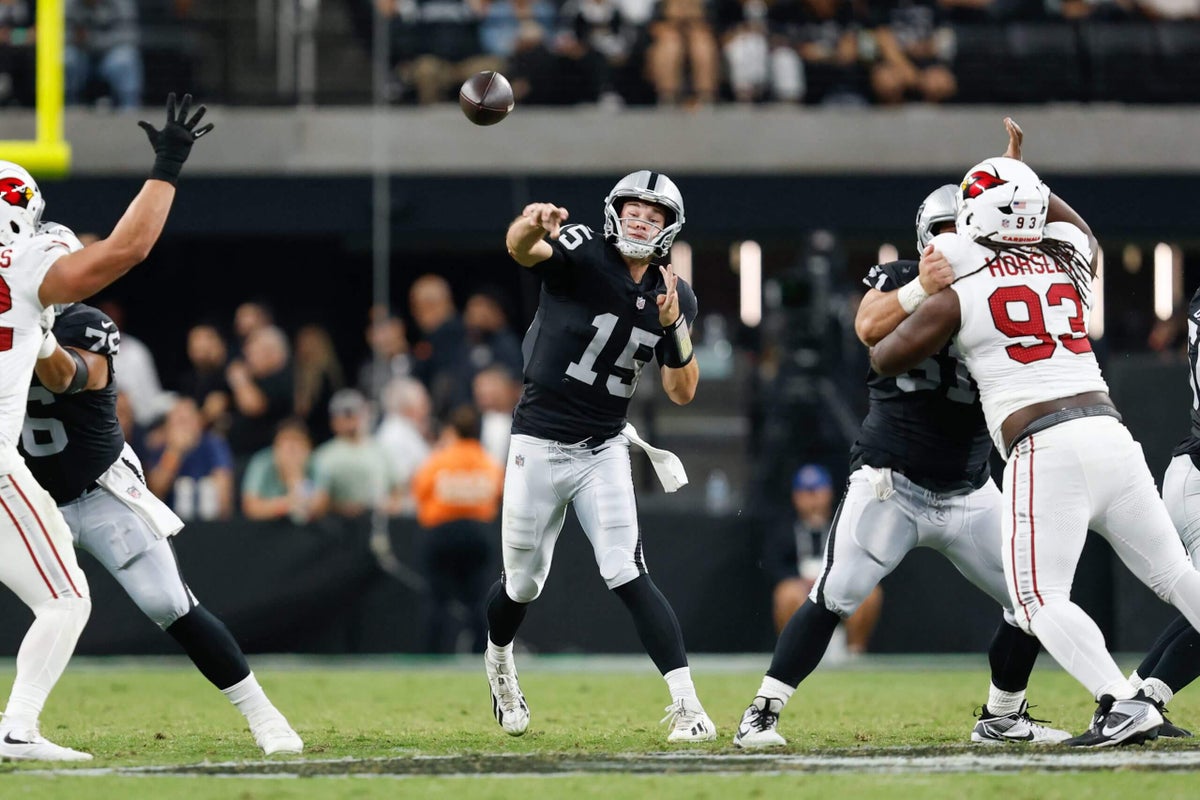
Mendoza led the Raiders down the field on his second possession, finishing the drive with his first professional touchdown (albeit in exhibition action), connecting with receiver Jack Bech in the end zone for a six-yard score. He then completed four straight passes on his final drive to push the Raiders into the red zone before narrowly missing receiver Deven Thompkins for another TD.

“I see an ascending player,” head coach Klint Kubiak said of Mendoza postgame. “We’ve just got to keep getting better.”

Mendoza finished 10-of-16 for 97 yards and a touchdown. His connection with fellow rookie Malik Benson — off a play-action dropback and through three defenders — displayed the arm talent necessary for NFL throws and showed his ability to play from under center. Finding poise to throw a touchdown a few plays after running into a sack also showed the resiliency that’s needed to play the position at this level.

“He did a great job,” quarterback Kirk Cousins said. “He moved the football, he scored points, gave us a chance to score points and operated well.”

Top Plays from Cardinals @ Raiders

Mendoza, however, chose not to relish in his highlights.

“Unfortunately, I let my teammates down today,” Mendoza said. “But it’s a growing experience. I feel like we’re all growing and it helped me show that I need to grow a lot.”


The top pick of April’s NFL Draft has brought nothing but positive energy since arriving in Las Vegas. But at the end of an evening that served, in part, as a celebration of the franchise’s new era, he chose to focus on his faults.

Subbing in after Cousins led the starters on a touchdown drive, Mendoza said he felt sped up on his first snaps. He extended his first possession with a third-down completion to Bech on the sideline, but threw rookie running back Mike Washington Jr. into a hard-hitting pass breakup a few plays later. As the Raiders were forced to punt, Mendoza said he needed to “come back to the sidelines and learn from my mistakes.”

He was pleased with his touchdown drive; he gave credit to Washington for setting the score up with a 53-yard breakaway run. He added that Bech made a great catch and the offensive line made great blocks to allow for the third-and-goal touchdown. Mendoza was more interested in talking about his missed reads on his third drive — a three-and-out that concluded with a pair of incompletions — than his first professional touchdown pass. And there was no mention of his string of completions on his final drive, just the missed connection with Thompkins.

The rookie recapped his mistakes while being his jovial self. He joked about players being faster than he thought at the NFL level, preventing him from bending a corner on a scramble. He obliged to take reporters through his gameday routine, detailing his first drive to the stadium and his stretching procedure. But undertones of dissatisfaction carried through his first postgame press conference.

Mendoza’s demanding assessment of his play may stem from what he saw before him. The rookie watched as the veteran Cousins diced up the Cardinals defense on his lone drive, completing five of his six passes for 50 yards, including a 13-yard score to tight end Michael Mayer. Mendoza praised Cousins’ precision.

“Kirk has this time and anticipation. It’s like boom, boom, boom,” Mendoza said. “That’s an area I have to grow in.”

The Raiders have emphasized their quarterback competition is symbiotic, with Cousins and Mendoza working with each other, not against each other. Still, comparison is only natural. Mendoza has seen Cousins compete throughout camp, but watching the Cousins’ command of Kubiak’s offense in-game was more of an awakening of where he stands. Cousins’ performance also made the head coach reaffirm the veteran remains the favorite to start Week 1.

“It’s his job to lose,” Kubiak said of Cousins.

The Raiders’ preference to play Cousins early could ease the pressure on Mendoza; the rookie instead seems to be putting more pressure on himself to meet the veteran’s standard.

Mendoza said that, on Wednesday night, minority owner Tom Brady addressed the team ahead of the preseason game, offering a message to those playing their first NFL snaps.

“He said, ‘No matter how good of a high school or college player you were, the NFL’s a different level,’” Mendoza said. “I felt that tonight, and I have a lot to grow from.”

>

Continue Reading

Trending

Copyright © 2017 Zox News Theme. Theme by MVP Themes, powered by WordPress.