
‘VisionQuest’ poster
Disney+


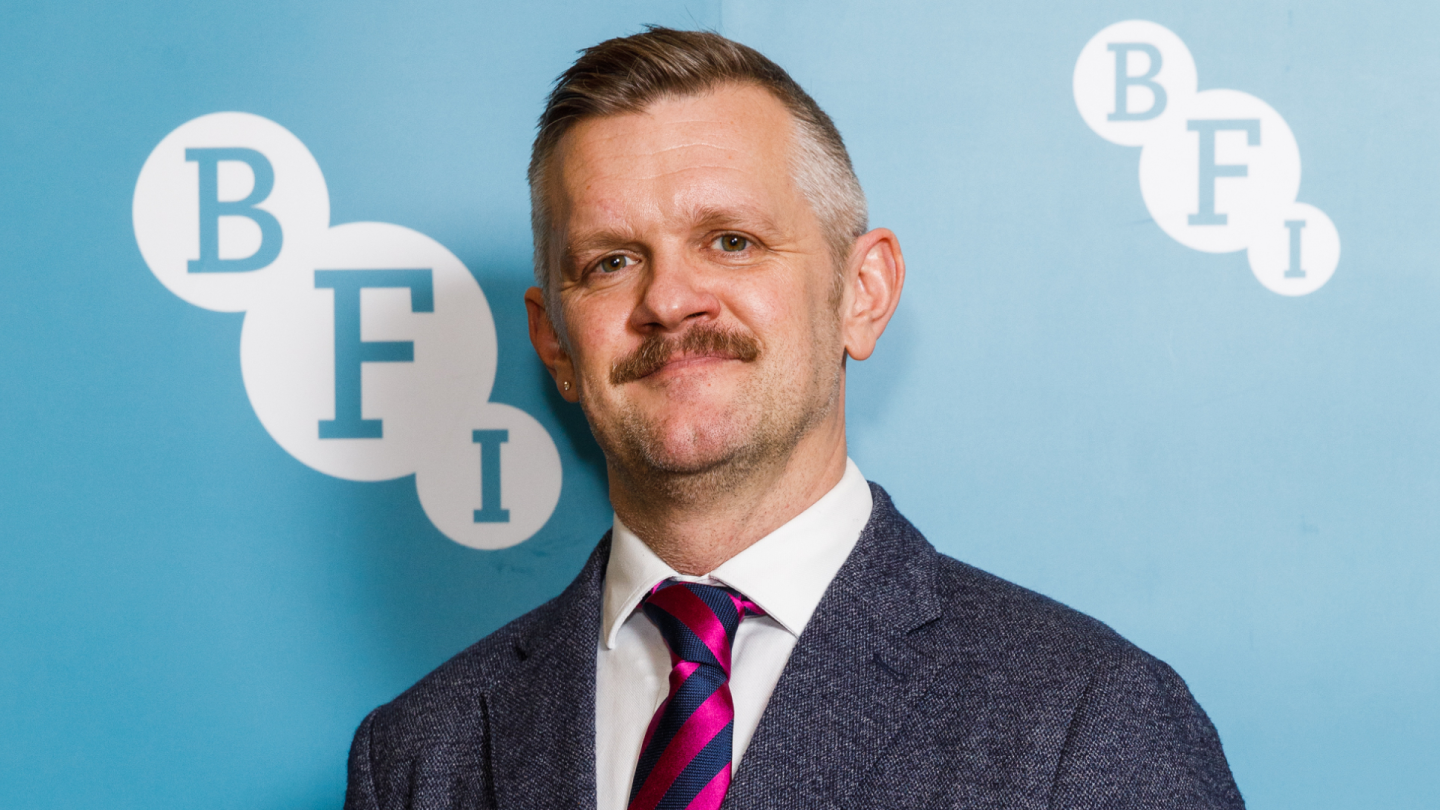
British Film Institute CEO Ben Roberts and creative director of Picturehouse Clare Binns took to Edinburgh Film Festival’s Central Hall on Saturday for a keynote discussion on the future of British independent film.
Binns was asking Roberts about how the BFI spends its money — the organization has £150 million ($203m) to disburse over three years, much of it given to the organization via government grants and National Lottery revenue — and kicked off by discussing how difficult it is to get smaller projects off the ground and to a wide audience.
“We often forget to talk about the actors that have been discovered or platformed through lottery-funded or publicly funded films and gone on to be huge stars,” Roberts began. “Tom Holland, his second film was called How I Live Now [released in 2013] with the great Kevin Macdonald and funded with lottery money, [and] that [put] him on a particular path. Olivia Colman’s first standout work that moved her from sketch comedy to dramatic feature film was Paddy Considine’s [2011 film] Tyrannosaur. So I think there are many markers of success in a film.”
The pair soon came onto genre, specifically when Roberts was explaining that there’s a “misconception that a lot of money needs to be spent in order to create something that’s got value.” He said there are things “we have to be greater [at] in the U.K. as an independent sector.” Binns probed: “Which are?”
Roberts answered: “I don’t think we’re great at comedy… Obviously, [Edinburgh is] working with really strong comedies like this year, [like the opening night film] The Incomer. I’m not saying we don’t do it, but it’s also really a skill to do it well. And we know audiences love horror, and I think we can pull our punches in horror and comedy in independent film.”
Roberts and Binns covered a range of topics over the course of an hour and a half, including the BFI’s audience development fund, Escapes, as well as cinema chains and their own pricing models, support from the U.K.’s Department of Culture, Media and Sport, and promoting the value of cinema hubs as “vital community hubs that contribute significantly to the wider high street economy.”
Roberts later conceded about the BFI’s distribution model: “It’s a really complex model running a charity that’s got all these very big, expensive elements, but a relatively flat amount of funding from the government, and we’re the one organization that can’t apply for lottery money because we give it out. We support lots of other distributors with lottery funds as well.”
Binns even asked Roberts about the new U.K. Prime Minister Andy Burnham, whose first few weeks in charge has been marked by his push to drive political power out of London and up north. “We’ve got people quite distributed [across the U.K.] since COVID,” he said. “We’re London-centric insofar as the [BFI] IMAX is London, quite a few of our staff are headquartered in London. We actually have five buildings — two cinemas in London, an office building, and then two archive buildings that are not in London. They’re in other parts of England. Lottery money is brilliant because we are able to work at a U.K.-wide level, [and] we’ve got very clear and specific targets on how that money should be distributed.”
Roberts maintains that “you don’t have to design your film for commercial success.” He said that this year’s box office has demonstrated this plainly, and referenced James Harris and Mark Lanes’ Tea Shop Productions, a British production company that backed Curry Barker’s Obsession. “The number of original films [this year]… It’s been less IP-heavy, and should be [sending] a signal to everybody that you can get out there. It’s easy for me to say, sitting and running an organization: ‘Get out there and do it.’ I mean, the guys that made Obsession, two producers who own Tea Shop who never really had support from the BFI.”
He continued about Barker’s industry-shaking horror: “It’s grossed £20 million in the U.K. on a $750,000 budget… And they cut their teeth,” he added, explaining that Tea Shop earned industry experience by making shark movies.
Later in the session, Roberts and Binns took audience questions. A member of the audience asked: “Do you think cinema has almost become a sanctuary away from the AI slop on people’s phones, and that’s why there is a bit of a renaissance from the Gen Z audience [going to see films]?”
“Definitely, we’re seeing a lot more young people,” answered Binns about Picturehouse data. “But I think one of the most interesting things I found is that we’re working with the likes of Netflix and Amazon, Sky, and Disney, and they talk very much about fan events — fan events are where you get people who are watching something at home, and they all want to be together. And when we’ve done those events, it tends to be very young people coming in who want to be in the cinema because they don’t want to be at home on their own.”
“But certainly with Obsession and Backrooms and Spider-Man and The Odyssey,” she continued, “what we’ve always needed is just good content. If you’ve got good content week in, week out… [Right now] there’s three really good films [in cinemas] and people are coming back. And yes, I think the younger audience have an appetite for being together in the cinema. It’s very hopeful.”
Roberts jumped in on another audience question on AI: “I don’t think we’re anywhere near using AI for decision-making. I think there might be some productivity tools that we can use to make the application processes easier… We actually ask filmmakers on our application forms: ‘Have you used AI in this application?’”
“[But] we’re not keen to have a conversation that frames AI entirely as a negative space.”
The 2026 Edinburgh International Film Festival runs Aug. 13-19. Industry talks have included sessions with Christine Vachon, Ken Burns and Ewan McGregor.
>

Are you ready for I Live in V.I., a social class satire from Nigeria? The project from director
Ugochukwu Azuya was among the works-in-progress showcased at the 2026 edition of Open Doors, the Locarno Film Festival‘s co-production platform and talent development program for filmmakers from equity-seeking communities and regions where artistic expression is at risk.
Azuya, whose short film Swimming in Sea of Trauma was released in 2023, is working on the movie with producer Olubunmi Ogunsola of Nigeria’s Ensemble.
The team behind the project, presented during the second edition of Open Doors with a focus on films from Africa, won the Tabakalera-San Sebastian Film Festival Residency Award.
THR has compiled highlights about the movie and insight from Azuya about the project and the themes it explores.
Synopsis
Florence (23) leaves her small town in Akwa Ibom for the big city of Lagos to start a new job in the hospitality industry, after the sudden loss of her father.
However, Lagos is not what it promised to be. From the poor living conditions of her apartment, the strenuous commute to Victoria Island (V.I.), insomnia and unprocessed grief, Florence begins to unravel. To cope with the demands of her job, she decides to squat in an abandoned construction site of a government building project from the 80s, much closer to her workplace. Her sudden punctuality puzzles her co-workers. Florence comes up with a lie, one where she lives in V.I, a neigborhood strictly for the wealthy, with her once-famous now forgotten aunt. All this to sustain the illusion of ‘living the good life’ in Lagos. With its möbius-strip-esque structure, this surreal social class satire about grief, urban alienation and gentrification in the city of Lagos explores the lost hope of the Nigerian dream.
Director’s note
“We are all just a city.” Florence is a surrogate for myself and countless young people trying to make the most of their situations while dealing with survival in Lagos, Africa’s most populous city. Just like us, she can be evasive about the emotions that make her vulnerable, constrained under capitalism. Like Florence, many leave their home states for Lagos in search of opportunity.
Lagos is a city of fantasies where exorbitant displays of wealth exist alongside failing infrastructure and displaced people. With an ensemble of characters and dramatic situations that are colored with different aspects of the Nigerian collective psyche – our eccentricities, our bravado, the spirit of adapting to the most dire of situations with sheer ingenuity – the Nigerian sense of humor with its gleefully sardonic texture is what shapes this story. I want to showcase the poetry of the city: brutal, magical, chaotic. From Yaba to Oshodi, Elegushi to Obalende, Ojo to Gbagada, we all form a constellation.
What was the inspiration for you to want to make this film?
My inspiration comes from my personal experiences as a young person. As someone who has lived in Lagos and experienced the mechanisms of life in this materialistically driven, very classist society. The story was also borne of my experience of other people I have crossed paths with, young people, mostly women who mirror the working-class background of the film’s protagonist, Florence.
I’ve always been interested in the ways in which society is constructed and how this forms our psyche both as individuals and also as a collective, especially living under capitalism as we are. I Live in V.I explores how this manifests through various social strata, i.e class, gender, social background.
How universal are the themes of the film, and why should people outside Nigeria see it?
I think anyone living anywhere in the world can understand what it is to leave their hometown for the promise of an urban cosmopolitan city in order to assert their identity and their hopes of changing their material conditions, whether the city is Lagos, Tokyo, São Paulo or New York City.
Cities are unique milieus where millions live together at a peculiar rhythm which is intrinsic to the psyche of the city dweller. To an outsider who isn’t used to this tempo, city life can feel overwhelming and a lack of human connection can lead to loneliness against this massive concrete backdrop.
What is the next step for you and your collaborators after Open Doors?
Our focus as a film team at our production company Ensemble is to give the film the adequate development cycle it needs. The Tabakalera-San Sebastian Residency award, which we won at this year’s edition of Open Doors, represents the direction we want to take development in, and we are honored to have been awarded such an opportunity.
>
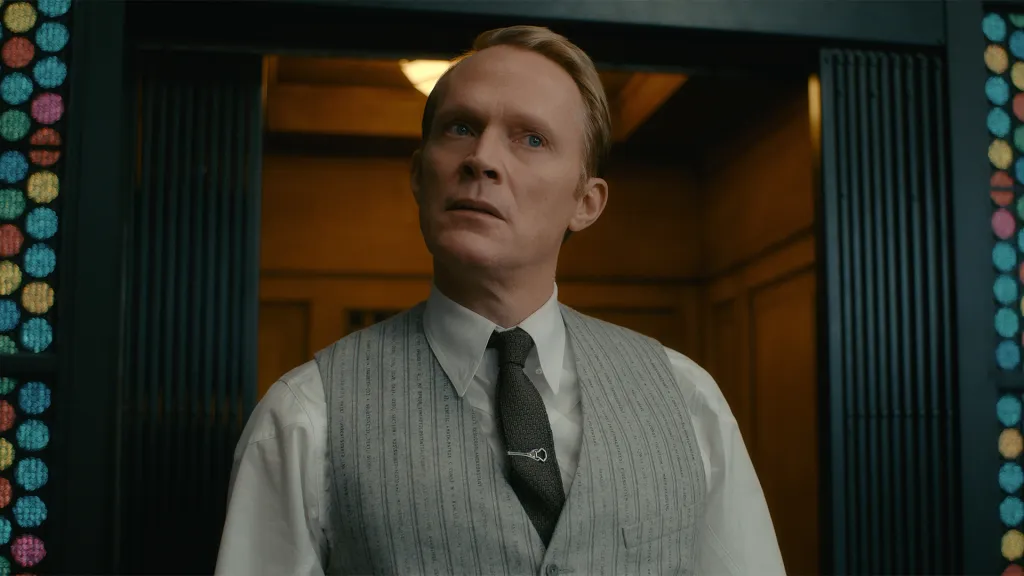
It’s the beginning of the end for the WandaVision trilogy.
Nearly two years after the series finale of Agatha All Along — and 5½ years after WandaVision ended — the Disney and Marvel released the first trailer for VisionQuest on Friday at D23 in Anaheim. Have a look above.
Paul Bettany stars as Vision, a former Avenger who was introduced in 2015’s Age of Ultron killed in the 2018 Infinity War film but was resurrected without emotions or memories.
RELATED: Deadline’s Full Coverage Of Disney’s D23 Fan Event
Vision, rebooted and having escaped from those who sought to weaponize him, has been in hiding. Searching for new meaning, he consults the AI personas embedded in his programming, including F.R.I.D.A.Y., E.D.I.T.H., J.A.R.V.I.S., and the infamous Ultron. His discreet existence ends when a bounty placed on his head thrusts him on the run with Thomas Shepard, a mysterious boy who may be Vision’s son, reincarnate. As Vision evades capture, he must confront his nature, resist Ultron’s influence, and unravel the enigma that is his young companion if he’s to survive.
‘VisionQuest’ poster
Disney+
The VisionQuest also features James Spader as Ultron, Todd Stashwick as the morally ambiguous mercenary Paladin and Faran Tahir reprising his role of Raz from the MCU kickstarter pic Iron Man. The cast also includes Lauren Morais, Diane Morgan, Orla Brady, Diane Morgan, Polly Frame, Henry Lewis, Jonathan Sayer, with Emily Hampshire and James D’Arcy.
VisionQuest premieres October 14 on Disney+.
The series is a spin-off of Disney+ and Marvel Studios first series WandaVision. This was the first Marvel Studios series to hit the streamer and was not only a hit on the streamer but would go on to gain awards accolades that included a best limited series nomination. The series starred Elizabeth Olsen and Paul Bettany reprising their roles as as Wanda Maximoff and Vision.
Erik Pedersen and Justin Kroll contributed to this report.
>
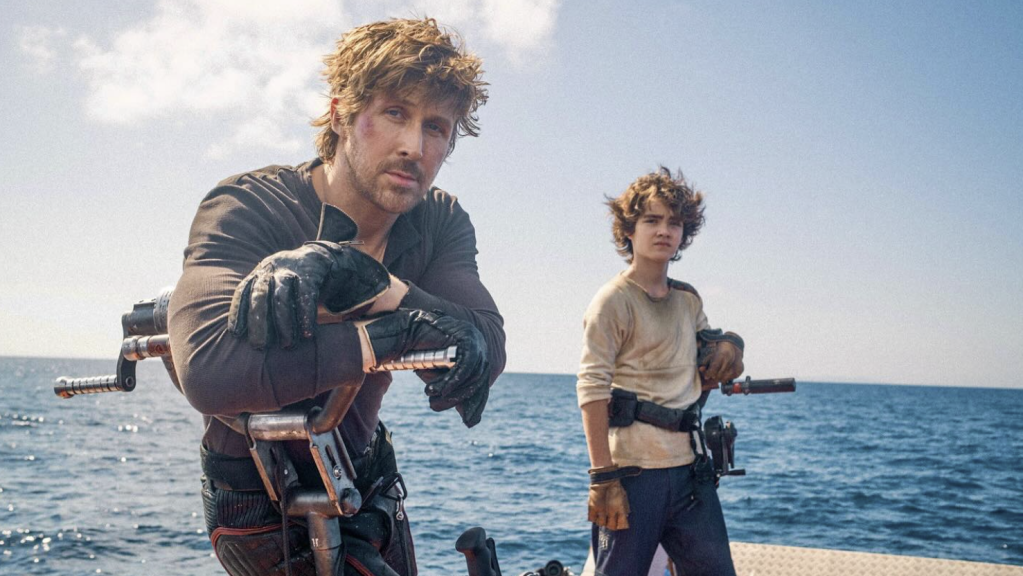
We finally have some more details about the Shawn Levy directed, Ryan Gosling starring Star Wars: Starfighter movie after a first look was unveiled tonight at Disney’s D23 fan confab.
Previous details revealed that the movie was set a brand new galaxy in the Star Wars canon, free of Skywalker family plot-lines. The Jonathan Tropper penned screenplay is set at the future most point in the Star Wars timeline.
What we learned tonight is that Gosling plays a pilot Kade, a guy who has the swagger of his Drive persona, Driver. The footage begins with Flynn Gray’s young man walking into a rusty spaceship garage. He uncovers a spaceship (almost looks like a speeder). Gosling’s Kade enters and says, “Didn’t I tell you not to touch anything?”
The kid asks what it is. “It’s a decommissioned G17,” says Kade, “the fastest straighter ever built.”
While none of the characters we know from the Star Wars films, there’s a lot of touchstones, i.e. speeder bikes (zooming across swamps), big imperial looking starships and, remember the bridge that Luke Skywalker and Leia swing over? That bridge makes a cameo. As we knew from the first photo, the new Star Wars takes place on a sea-filled planet.
Star Wars: Starfighter comes out next Memorial Day weekend, May 28. Levy said it was the same date that the original Star Wars was released 50 years ago. After Lucasfilm deep-sixed with the lowest grossing live-action Star Wars movie this past summer in the $165M costing (before P&A), Star Wars: Mandalorian and Grogu, which bottomed out at $345M WW,the new hope is that Skyfighter will revive the franchise, thanks to the affable Gosling and Levy, the latter who delivered the highest grossing R-rated movie ever in Deadpool & Wolverine which made $1.33 billion.
Before showing any footage of Starfighter, Levy showed footage of young Gosling from Mickey Mouse Club. Gosling was also on stage tonight, wowing fans.
>


Search For Canadian TV Actor Stewart McLean Now Homicide Investigation


These ’90s fashion trends are making a comeback in 2017
According to Dior Couture, this taboo fashion accessory is back
Model Jocelyn Chew’s Instagram is the best vacation you’ve ever had
Your comprehensive guide to this fall’s biggest trends
Emily Ratajkowski channels back-to-school style
9 Celebrities who have spoken out about being photoshopped
A photo diary of the nightlife scene from LA To Ibiza