
movies
Disney’s ‘The Greatest Showman’ Musical Sets 2027 West End Opening, Cast

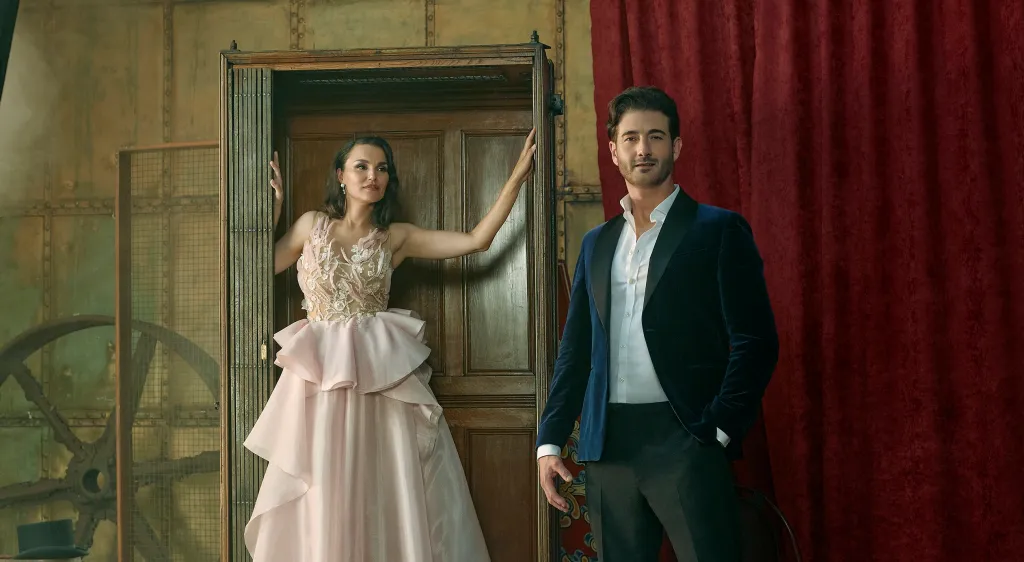
The Greatest Showman, the Disney Theatrical Group musical stage adaptation of the 2017 film, will premiere in London’s West End at Theatre Royal Drury Lane in Spring 2027, Disney announced at the D23 event in Anaheim last night.
Also revealed was the cast: The Greatest Showman will star Oliver Tompsett as P.T. Barnum, Samantha Barks as Charity Barnum, Ben Joyce as Phillip Carlyle, Vajèn van den Bosch as Jenny Lind and Malinda Parris as Lettie Lutz. Further casting is to be announced.
The musical had a sold-out, pre-West End run at The Bristol Hippodrome earlier this year. Deadline first reported last year that the project was headed to the West End with an eye toward Broadway. Disney has not disclosed plans for the latter.
The stage adaptation features songs by Benj Pasek and Justin Paul (La La Land, Dear Evan Hansen), a book by Tim Federle (High School Musical: The Musical: The Series), and direction and choreography by Casey Nicholaw (Mean Girls, The Prom).
Based on the 20th Century Studios motion picture with story by Jenny Bicks, The Greatest Showman is the first 20th Century Studios (formerly 20th Century Fox) title to be adapted for the stage by Disney Theatrical Group. The Seelig Group, a producer of the original film, is also a producer of the musical.
The synopsis: Inspired by the life of famed showman P.T. Barnum, the story follows Barnum as he sets out to create a spectacular new form of entertainment, assembling a troupe of performers and outsiders who become an unlikely family.
The musical will feature the Grammy Award-winning and Academy Award-nominated songs by EGOT winners Pasek and Paul , including “The Greatest Show,” “A Million Dreams,” “Come Alive,” “Rewrite the Stars,” “Never Enough” and the Globe-winning “This Is Me,” together with new songs written especially for the musical.
Calling the musical “open-hearted, exuberant and unapologetically joyous,” Anne Quart and Andrew Flatt of Disney Theatrical Group said in a statement, “The show is born of a collaboration with an incredible group of artists. Benj Pasek and Justin Paul return with the songs audiences will know and love, alongside exhilarating new numbers created especially for the stage; Tim Federle’s book captures a heartfelt love of theatre and show business; and two-time Tony Award-winning Casey Nicholaw directs an extraordinary cast led by the incomparable Oliver Tompsett and Samantha Barks.”
In the central role of legendary carnival huckster P.T. Barnum is Tompsett, whose stage credits include A Knight’s Tale, & Juliet in both Broadway and London, Pretty Woman, Kinky Boots, The World Goes Round, Rock of Ages and others. Film credits include Show Dogs and The Hard Way.
Barks has appeared in Les Misérables, Frozen, Chess, The Last Five Years, among others, and was one of the participants on the BBC series I’d Do Anything and won the 2025 series of The Masked Singer. Film credits include Tomorrow Morning, For Love or Money, Bitter Harvest and Les Misérables.
Joyce’s theater work includes The Hunchback of Notre Dame, Back to the Future and Jersey Boys. Television work includes The Power.
Van den Bosch appeared in Disney’s Frozen, Mary Poppins and Tarzan as well as Les Misérables, Kinky Boots, Grease and The Sound of Music. She received the Nickelodeon Kids’ Choice Award for ‘Favourite TV Star’ in 2017 and film work includes Eb, Bledders, Onze Jongens 3 and First Kiss.
Parris’ theater credits include Hadestown, Hercules, & Juliet and others, with film credits including Wicked and Everybody’s Talking About Jamie.
The creative team includes Alex Lacamoire (Music Supervision, Incidental & Dance Music Arrangements and Orchestrations), David Korins (Scenic Design), Gregg Barnes and Sky Switser (Costume Design); Natasha Katz (Lighting Design); Peter Hylenski (Sound Design), George Reeve (Video Design), Lorenzo Pisoni (Circus Creation & Design), Josh Marquette (Hair & Wig Design), Milagros Medina-Cerdeira (Make-Up Design), Jeremy Chernick (Special Effects Design), and Skylar Fox (Illusions Design). Justin Paul is also providing Vocal and Incidental Music Arrangements.
In the film, the characters announced today were played by Hugh Jackman, Michelle Williams, Zac Efron, Rebecca Ferguson and Keala Settle.
>
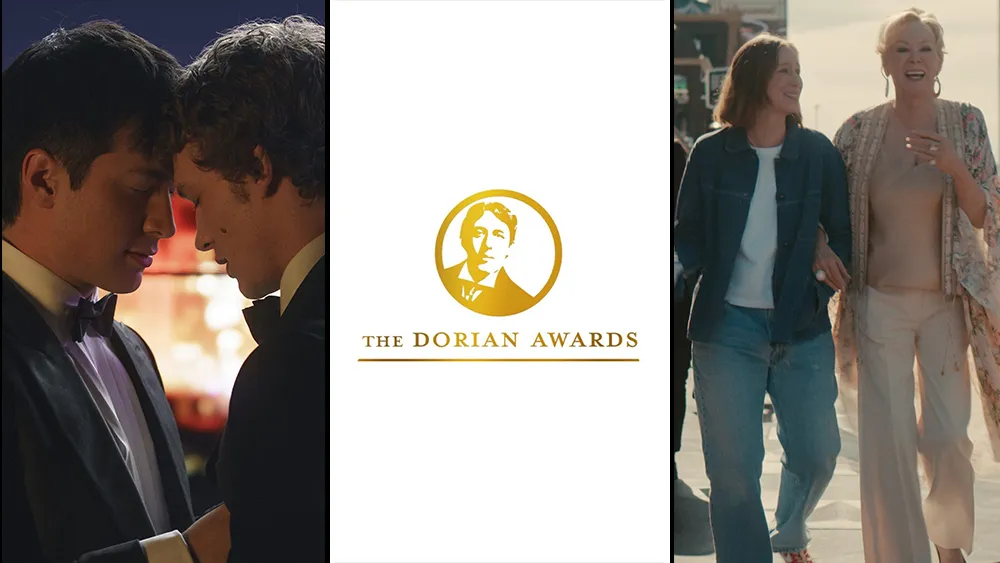
The Gay and Lesbian Entertainment Critics Association (GALECA) has voted on another year of the best in LGBTQ television.
On Saturday, GALECA announced the winners of the LGBTQ journalist organization’s 18th Dorian TV Awards, with shows like Heated Rivalry, Hacks, Pluribus and more taking some of the top honors.
Rhea Seehorn, Jean Smart, François Arnaud and Kate O’Flynn were among the talent recognized in the acting categories, while Hannah Einbinder, Lisa Kudrow and Jacob Tierney received special honors.
GALECA Vice President Gerrick Kennedy, this year’s Dorian TV Awards chair, said, “What excites me most about this year’s Dorian winners is the range—the swooning devotion of Heated Rivalry, the tender complexity of The Boyfriend, the bravery that cuts through Half Man, and the community memory being kept alive in Lilith Fair: Building a Mystery. To think, queer stories once needed to squeeze into a narrow lens to get made.
“There is always room for progress, but this year’s winners prove our community’s stories are as varied and worth telling as any other,” added Kennedy.
Here are the winners of the 2026 Dorian TV Awards:
BEST TV DRAMA
Heated Rivalry (HBO Max)
BEST TV COMEDY
Hacks (HBO Max)
BEST LGBTQ TV SHOW
Heated Rivalry (HBO Max)
BEST TV MOVIE OR LIMITED SERIES
Half Man (HBO Max)
BEST NON-ENGLISH LANGUAGE TV SHOW
Squid Game (Netflix)
BEST LGBTQ NON-ENGLISH LANGUAGE TV SHOW
The Boyfriend (Netflix)
BEST WRITTEN TV SHOW
Hacks (HBO Max)
BEST TV PERFORMANCE — DRAMA
Rhea Seehorn, Pluribus (Apple TV)
BEST SUPPORTING TV PERFORMANCE — DRAMA
François Arnaud, Heated Rivalry (HBO Max)
BEST TV PERFORMANCE — COMEDY
Jean Smart, Hacks (HBO Max)
BEST SUPPORTING TV PERFORMANCE — COMEDY
Kate O’Flynn, Widow’s Bay (Apple TV)
BEST TV MUSICAL PERFORMANCE
Bad Bunny, The Apple Music Super Bowl LX Halftime Show
BEST UNSUNG TV SHOW
Boots (Netflix)
BEST CURRENT AFFAIRS SHOW
The Late Show With Stephen Colbert (CBS)
BEST TV DOCUMENTARY OR DOCUMENTARY SERIES
Mr. Scorsese (Apple TV)
BEST LGBTQ TV DOCUMENTARY OR DOCUMENTARY SERIES
Lilith Fair: Building a Mystery (Hulu)
BEST GENRE TV SHOW
Widow’s Bay (Apple TV)
BEST REALITY SHOW
The Traitors (Peacock)
BEST ANIMATED SHOW
South Park (Paramount+)
MOST VISUALLY STRIKING TV SHOW
Alien: Earth (FX/Hulu) (tie)
Pluribus (Apple TV) (tie)
CAMPIEST TV SHOW
The Hunting Wives (Netflix)
WILDE WIT AWARD
Hannah Einbinder
GALECA TV ICON AWARD
Lisa Kudrow
GALECA LGBTQIA+ TV TRAILBLAZER
Jacob Tierney
>
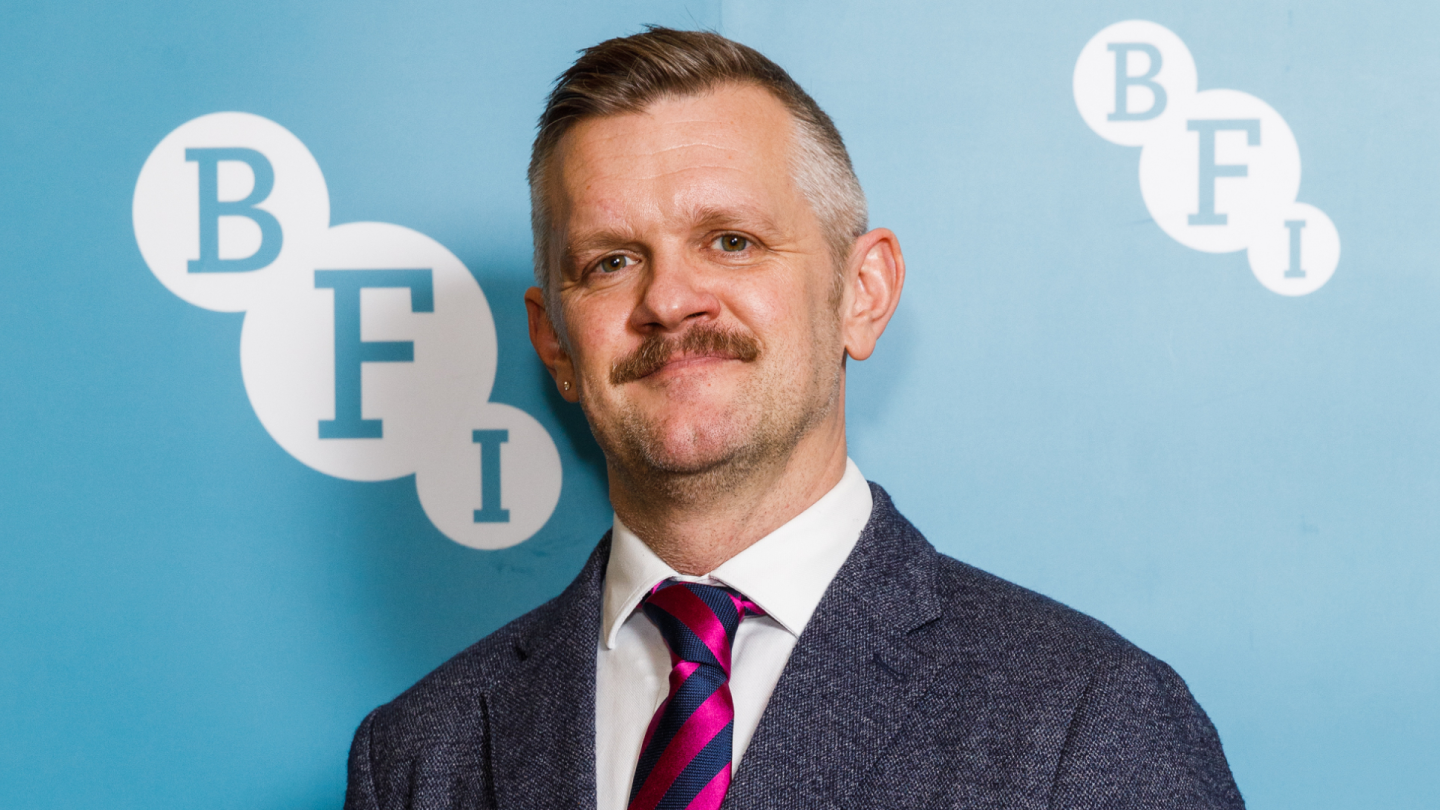
British Film Institute CEO Ben Roberts and creative director of Picturehouse Clare Binns took to Edinburgh Film Festival’s Central Hall on Saturday for a keynote discussion on the future of British independent film.
Binns was asking Roberts about how the BFI spends its money — the organization has £150 million ($203m) to disburse over three years, much of it given to the organization via government grants and National Lottery revenue — and kicked off by discussing how difficult it is to get smaller projects off the ground and to a wide audience.
“We often forget to talk about the actors that have been discovered or platformed through lottery-funded or publicly funded films and gone on to be huge stars,” Roberts began. “Tom Holland, his second film was called How I Live Now [released in 2013] with the great Kevin Macdonald and funded with lottery money, [and] that [put] him on a particular path. Olivia Colman’s first standout work that moved her from sketch comedy to dramatic feature film was Paddy Considine’s [2011 film] Tyrannosaur. So I think there are many markers of success in a film.”
The pair soon came onto genre, specifically when Roberts was explaining that there’s a “misconception that a lot of money needs to be spent in order to create something that’s got value.” He said there are things “we have to be greater [at] in the U.K. as an independent sector.” Binns probed: “Which are?”
Roberts answered: “I don’t think we’re great at comedy… Obviously, [Edinburgh is] working with really strong comedies like this year, [like the opening night film] The Incomer. I’m not saying we don’t do it, but it’s also really a skill to do it well. And we know audiences love horror, and I think we can pull our punches in horror and comedy in independent film.”
Roberts and Binns covered a range of topics over the course of an hour and a half, including the BFI’s audience development fund, Escapes, as well as cinema chains and their own pricing models, support from the U.K.’s Department of Culture, Media and Sport, and promoting the value of cinema hubs as “vital community hubs that contribute significantly to the wider high street economy.”
Roberts later conceded about the BFI’s distribution model: “It’s a really complex model running a charity that’s got all these very big, expensive elements, but a relatively flat amount of funding from the government, and we’re the one organization that can’t apply for lottery money because we give it out. We support lots of other distributors with lottery funds as well.”
Binns even asked Roberts about the new U.K. Prime Minister Andy Burnham, whose first few weeks in charge has been marked by his push to drive political power out of London and up north. “We’ve got people quite distributed [across the U.K.] since COVID,” he said. “We’re London-centric insofar as the [BFI] IMAX is London, quite a few of our staff are headquartered in London. We actually have five buildings — two cinemas in London, an office building, and then two archive buildings that are not in London. They’re in other parts of England. Lottery money is brilliant because we are able to work at a U.K.-wide level, [and] we’ve got very clear and specific targets on how that money should be distributed.”
Roberts maintains that “you don’t have to design your film for commercial success.” He said that this year’s box office has demonstrated this plainly, and referenced James Harris and Mark Lanes’ Tea Shop Productions, a British production company that backed Curry Barker’s Obsession. “The number of original films [this year]… It’s been less IP-heavy, and should be [sending] a signal to everybody that you can get out there. It’s easy for me to say, sitting and running an organization: ‘Get out there and do it.’ I mean, the guys that made Obsession, two producers who own Tea Shop who never really had support from the BFI.”
He continued about Barker’s industry-shaking horror: “It’s grossed £20 million in the U.K. on a $750,000 budget… And they cut their teeth,” he added, explaining that Tea Shop earned industry experience by making shark movies.
Later in the session, Roberts and Binns took audience questions. A member of the audience asked: “Do you think cinema has almost become a sanctuary away from the AI slop on people’s phones, and that’s why there is a bit of a renaissance from the Gen Z audience [going to see films]?”
“Definitely, we’re seeing a lot more young people,” answered Binns about Picturehouse data. “But I think one of the most interesting things I found is that we’re working with the likes of Netflix and Amazon, Sky, and Disney, and they talk very much about fan events — fan events are where you get people who are watching something at home, and they all want to be together. And when we’ve done those events, it tends to be very young people coming in who want to be in the cinema because they don’t want to be at home on their own.”
“But certainly with Obsession and Backrooms and Spider-Man and The Odyssey,” she continued, “what we’ve always needed is just good content. If you’ve got good content week in, week out… [Right now] there’s three really good films [in cinemas] and people are coming back. And yes, I think the younger audience have an appetite for being together in the cinema. It’s very hopeful.”
Roberts jumped in on another audience question on AI: “I don’t think we’re anywhere near using AI for decision-making. I think there might be some productivity tools that we can use to make the application processes easier… We actually ask filmmakers on our application forms: ‘Have you used AI in this application?’”
“[But] we’re not keen to have a conversation that frames AI entirely as a negative space.”
The 2026 Edinburgh International Film Festival runs Aug. 13-19. Industry talks have included sessions with Christine Vachon, Ken Burns and Ewan McGregor.
>
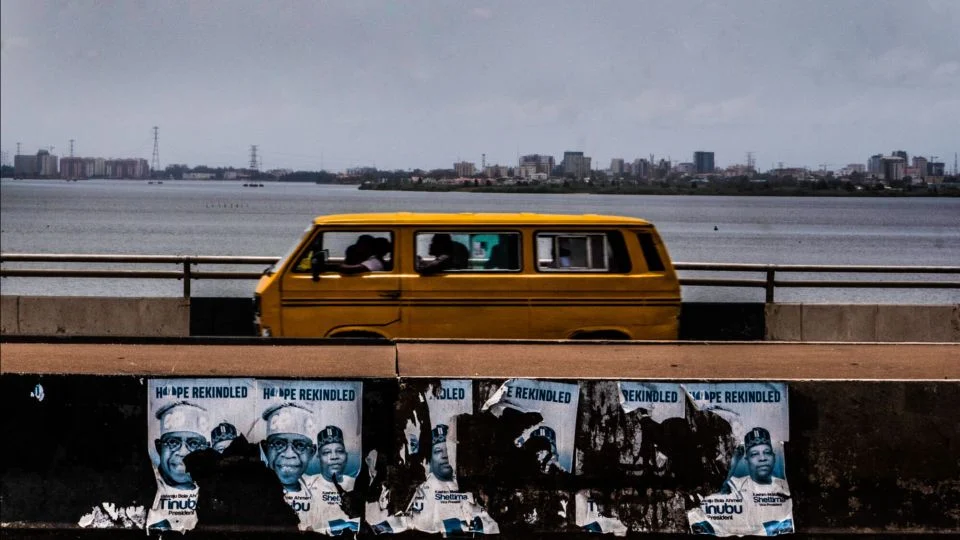
Are you ready for I Live in V.I., a social class satire from Nigeria? The project from director
Ugochukwu Azuya was among the works-in-progress showcased at the 2026 edition of Open Doors, the Locarno Film Festival‘s co-production platform and talent development program for filmmakers from equity-seeking communities and regions where artistic expression is at risk.
Azuya, whose short film Swimming in Sea of Trauma was released in 2023, is working on the movie with producer Olubunmi Ogunsola of Nigeria’s Ensemble.
The team behind the project, presented during the second edition of Open Doors with a focus on films from Africa, won the Tabakalera-San Sebastian Film Festival Residency Award.
THR has compiled highlights about the movie and insight from Azuya about the project and the themes it explores.
Synopsis
Florence (23) leaves her small town in Akwa Ibom for the big city of Lagos to start a new job in the hospitality industry, after the sudden loss of her father.
However, Lagos is not what it promised to be. From the poor living conditions of her apartment, the strenuous commute to Victoria Island (V.I.), insomnia and unprocessed grief, Florence begins to unravel. To cope with the demands of her job, she decides to squat in an abandoned construction site of a government building project from the 80s, much closer to her workplace. Her sudden punctuality puzzles her co-workers. Florence comes up with a lie, one where she lives in V.I, a neigborhood strictly for the wealthy, with her once-famous now forgotten aunt. All this to sustain the illusion of ‘living the good life’ in Lagos. With its möbius-strip-esque structure, this surreal social class satire about grief, urban alienation and gentrification in the city of Lagos explores the lost hope of the Nigerian dream.
Director’s note
“We are all just a city.” Florence is a surrogate for myself and countless young people trying to make the most of their situations while dealing with survival in Lagos, Africa’s most populous city. Just like us, she can be evasive about the emotions that make her vulnerable, constrained under capitalism. Like Florence, many leave their home states for Lagos in search of opportunity.
Lagos is a city of fantasies where exorbitant displays of wealth exist alongside failing infrastructure and displaced people. With an ensemble of characters and dramatic situations that are colored with different aspects of the Nigerian collective psyche – our eccentricities, our bravado, the spirit of adapting to the most dire of situations with sheer ingenuity – the Nigerian sense of humor with its gleefully sardonic texture is what shapes this story. I want to showcase the poetry of the city: brutal, magical, chaotic. From Yaba to Oshodi, Elegushi to Obalende, Ojo to Gbagada, we all form a constellation.
What was the inspiration for you to want to make this film?
My inspiration comes from my personal experiences as a young person. As someone who has lived in Lagos and experienced the mechanisms of life in this materialistically driven, very classist society. The story was also borne of my experience of other people I have crossed paths with, young people, mostly women who mirror the working-class background of the film’s protagonist, Florence.
I’ve always been interested in the ways in which society is constructed and how this forms our psyche both as individuals and also as a collective, especially living under capitalism as we are. I Live in V.I explores how this manifests through various social strata, i.e class, gender, social background.
How universal are the themes of the film, and why should people outside Nigeria see it?
I think anyone living anywhere in the world can understand what it is to leave their hometown for the promise of an urban cosmopolitan city in order to assert their identity and their hopes of changing their material conditions, whether the city is Lagos, Tokyo, São Paulo or New York City.
Cities are unique milieus where millions live together at a peculiar rhythm which is intrinsic to the psyche of the city dweller. To an outsider who isn’t used to this tempo, city life can feel overwhelming and a lack of human connection can lead to loneliness against this massive concrete backdrop.
What is the next step for you and your collaborators after Open Doors?
Our focus as a film team at our production company Ensemble is to give the film the adequate development cycle it needs. The Tabakalera-San Sebastian Residency award, which we won at this year’s edition of Open Doors, represents the direction we want to take development in, and we are honored to have been awarded such an opportunity.
>

2026 Dorian TV Awards Winners List: ‘Heated Rivalry,’ ‘Hacks’ & More

NFL preseason scores and live updates: Latest news and analysis from today’s games

Tottenham’s Ashley Phillips joins Middlesbrough in permanent deal
-

 movies3 months ago
Search For Canadian TV Actor Stewart McLean Now Homicide Investigation
-

 Fashion9 years ago
These ’90s fashion trends are making a comeback in 2017
-
Fashion9 years ago
According to Dior Couture, this taboo fashion accessory is back
-
Fashion9 years ago
Model Jocelyn Chew’s Instagram is the best vacation you’ve ever had
-
Fashion9 years ago
Emily Ratajkowski channels back-to-school style
-
Fashion9 years ago
Your comprehensive guide to this fall’s biggest trends
-
Fashion9 years ago
9 Celebrities who have spoken out about being photoshopped
-
Fashion9 years ago
A photo diary of the nightlife scene from LA To Ibiza